Six word Saturday

6ws-participating-in-bannerLast week PINK , this week blue!

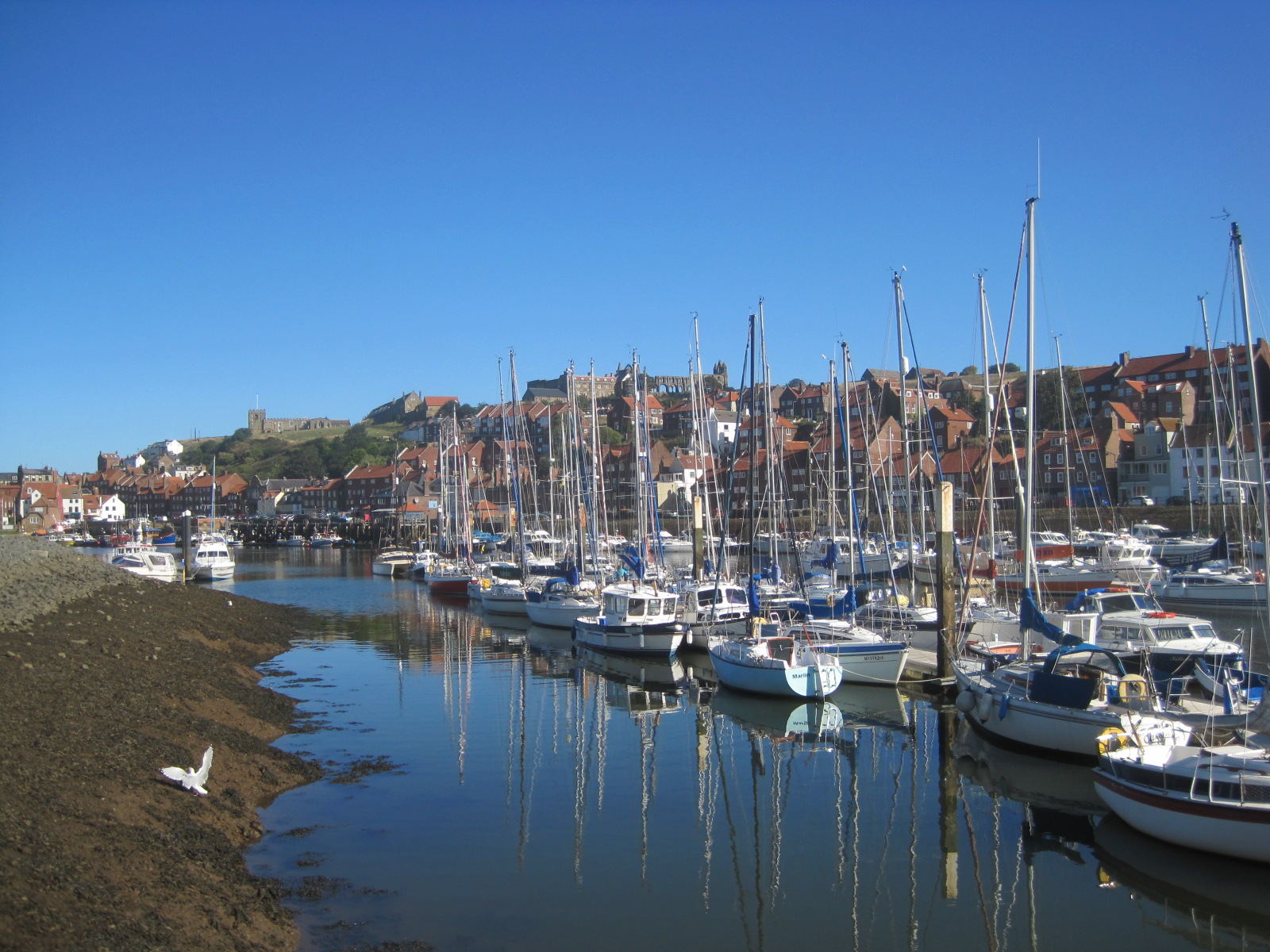
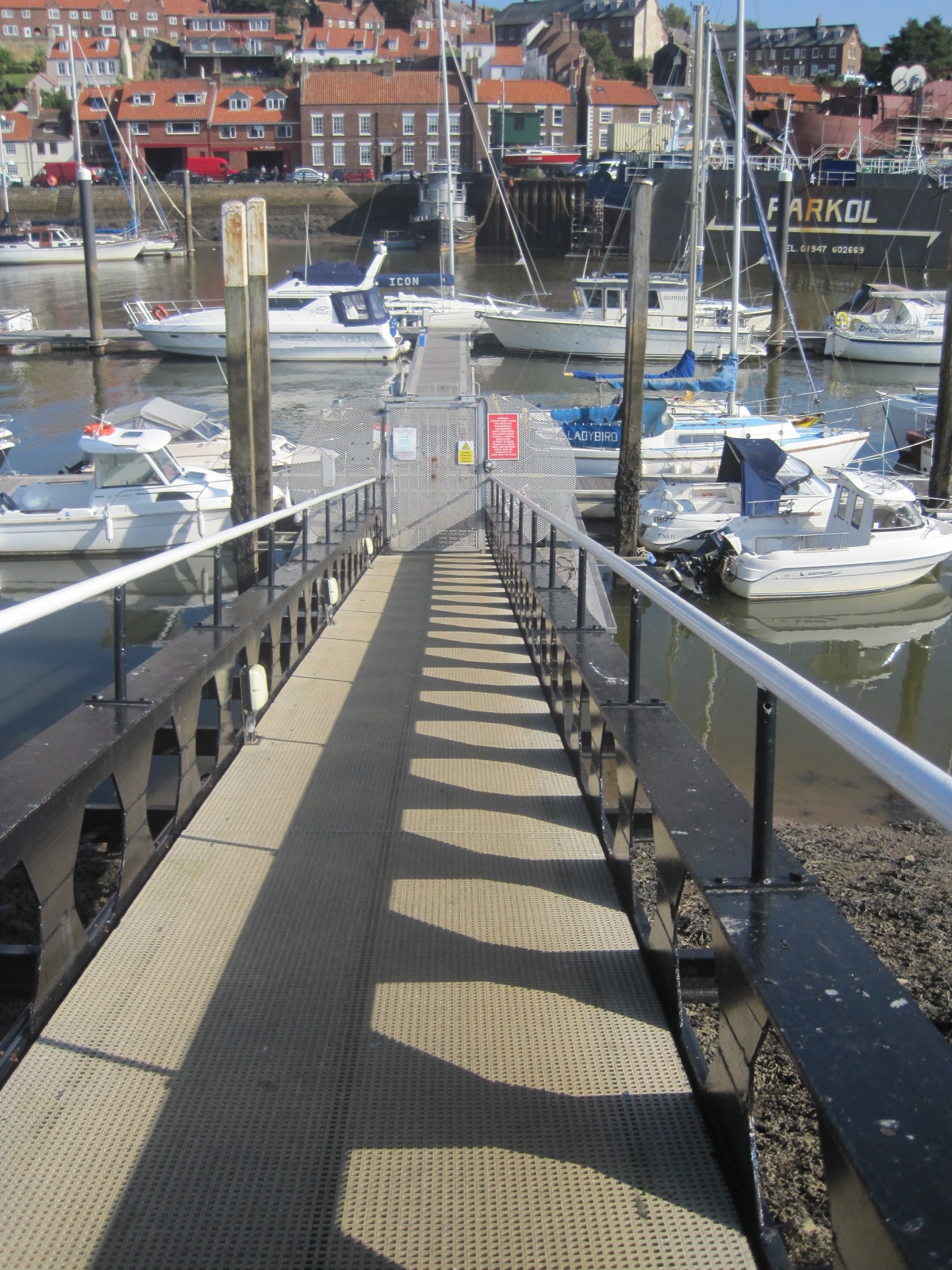
Whitby harbour, North Yorkshire

Whitby harbour, North Yorkshire

It’s been a very Whitby sort of week when it comes to the blog so I may as well finish as I started.  I’m often blue on grey days, but this week I didn’t have much excuse.

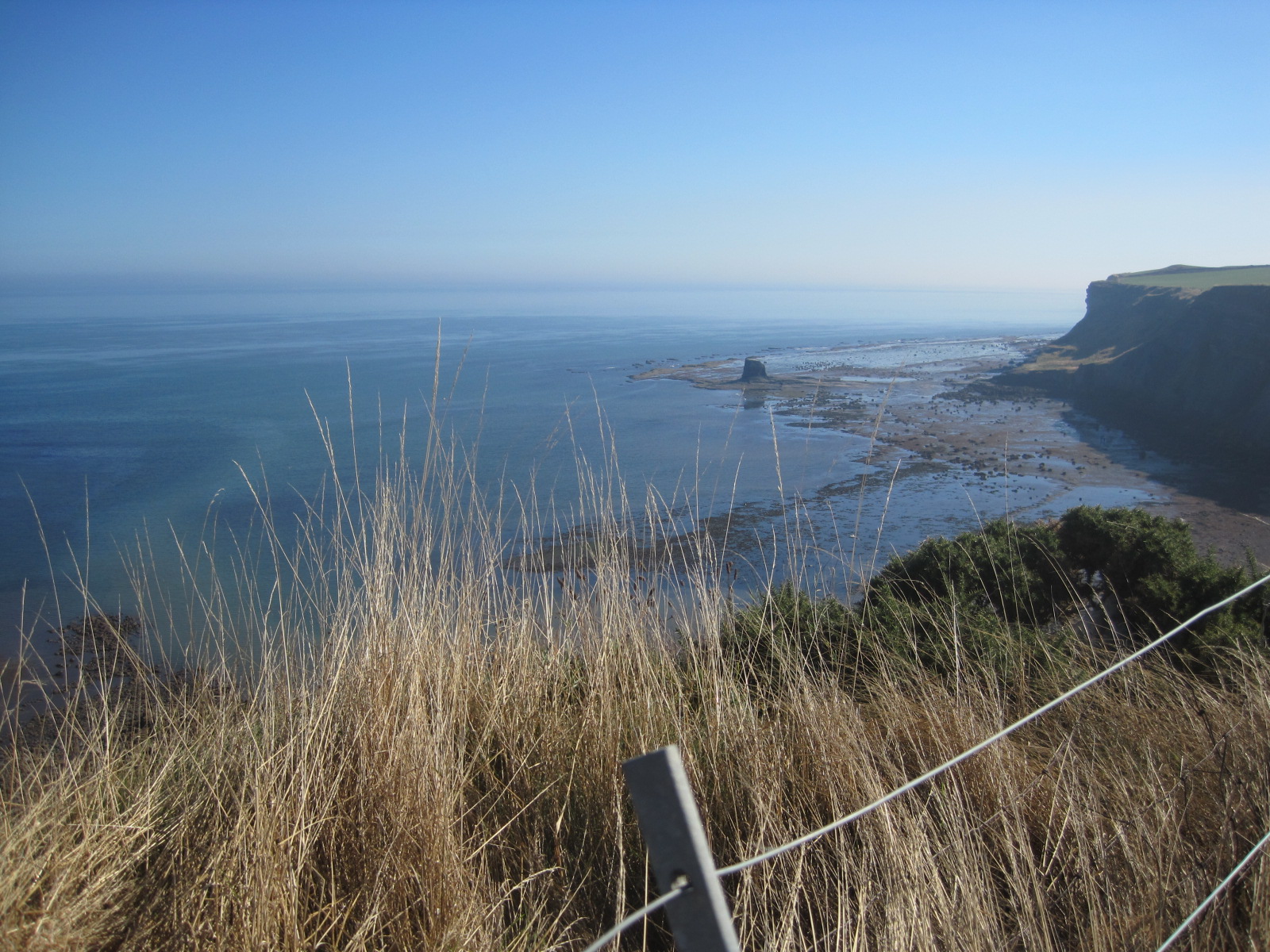
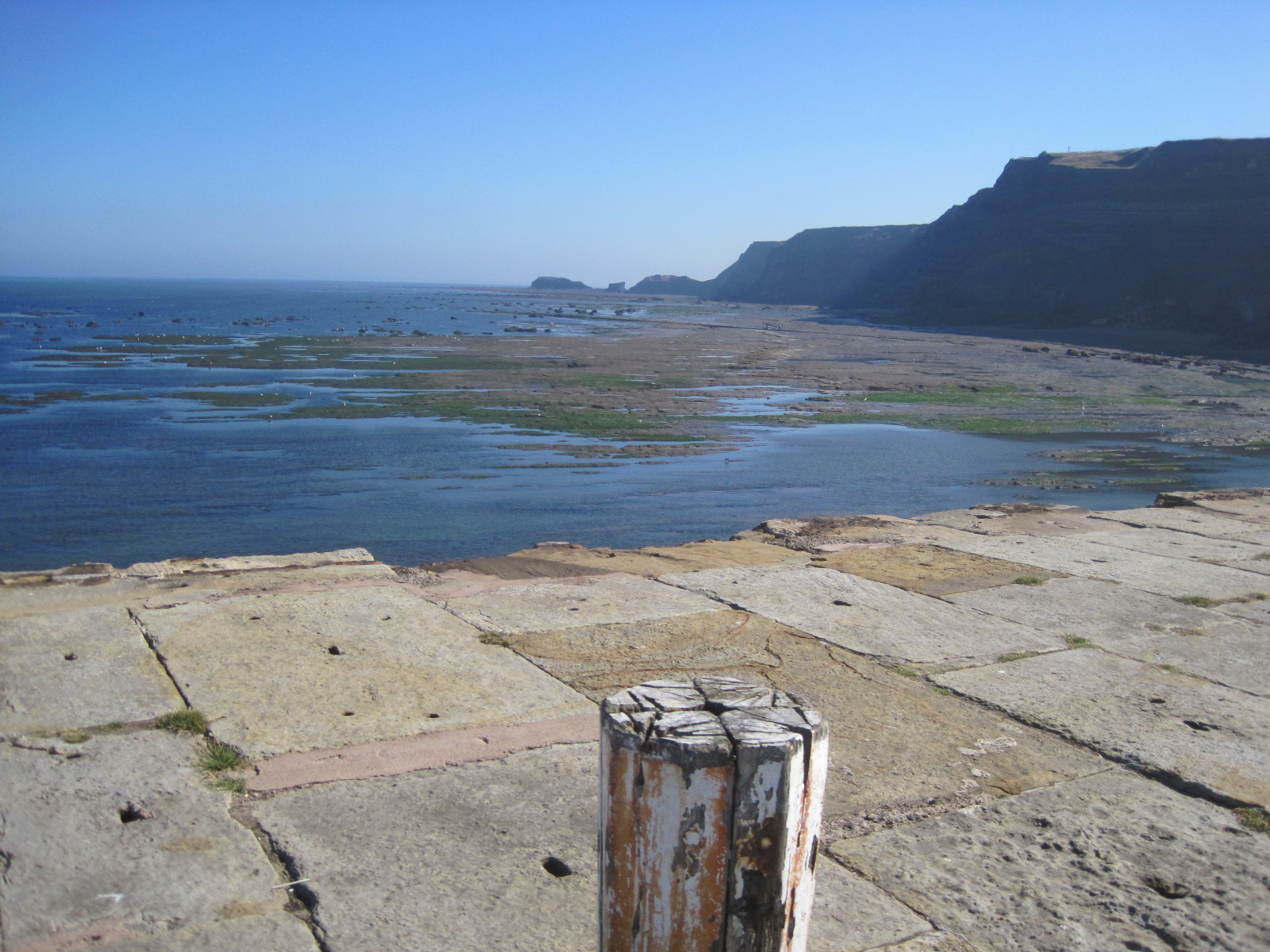
How's this for a cliff top view?

How’s this for a cliff top view?

Hope you enjoyed the trip?  I still have some more shots for a rainy day. Click on any photo to see the gallery.

My grateful thanks to Cate at Show My Face.  Her life seems much harder than mine.  Click on the link or the header to see what’s been happening in her week.

6wsButton

Thursday : Lingering look at Windows- week 37

Window panel on a cottage door in Whitby

Window panel on a cottage door in Whitby, North Yorkshire

Don’t you think this is lovely?  I’ve been visiting Whitby for many years and I always walk down the main pier for the lovely views back at the town and out across the bay.  Picture postcard pretty though it undoubtedly is, the weather can sometimes be bleak on that North Yorkshire coast.  This little window panel seemed to me to speak volumes of the nature of the place.

Out on the pier itself, in glorious weather, there are more windows to see.

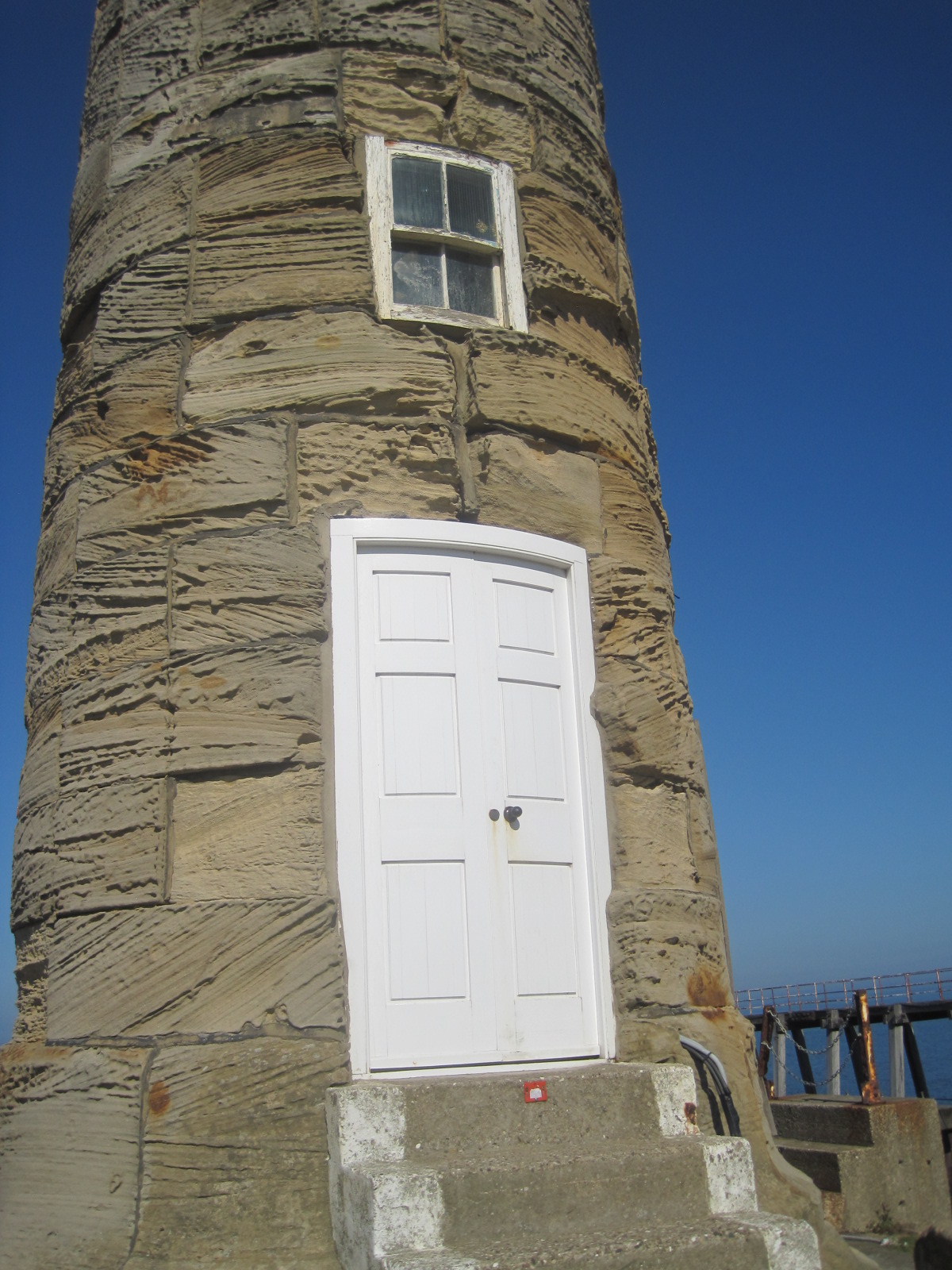
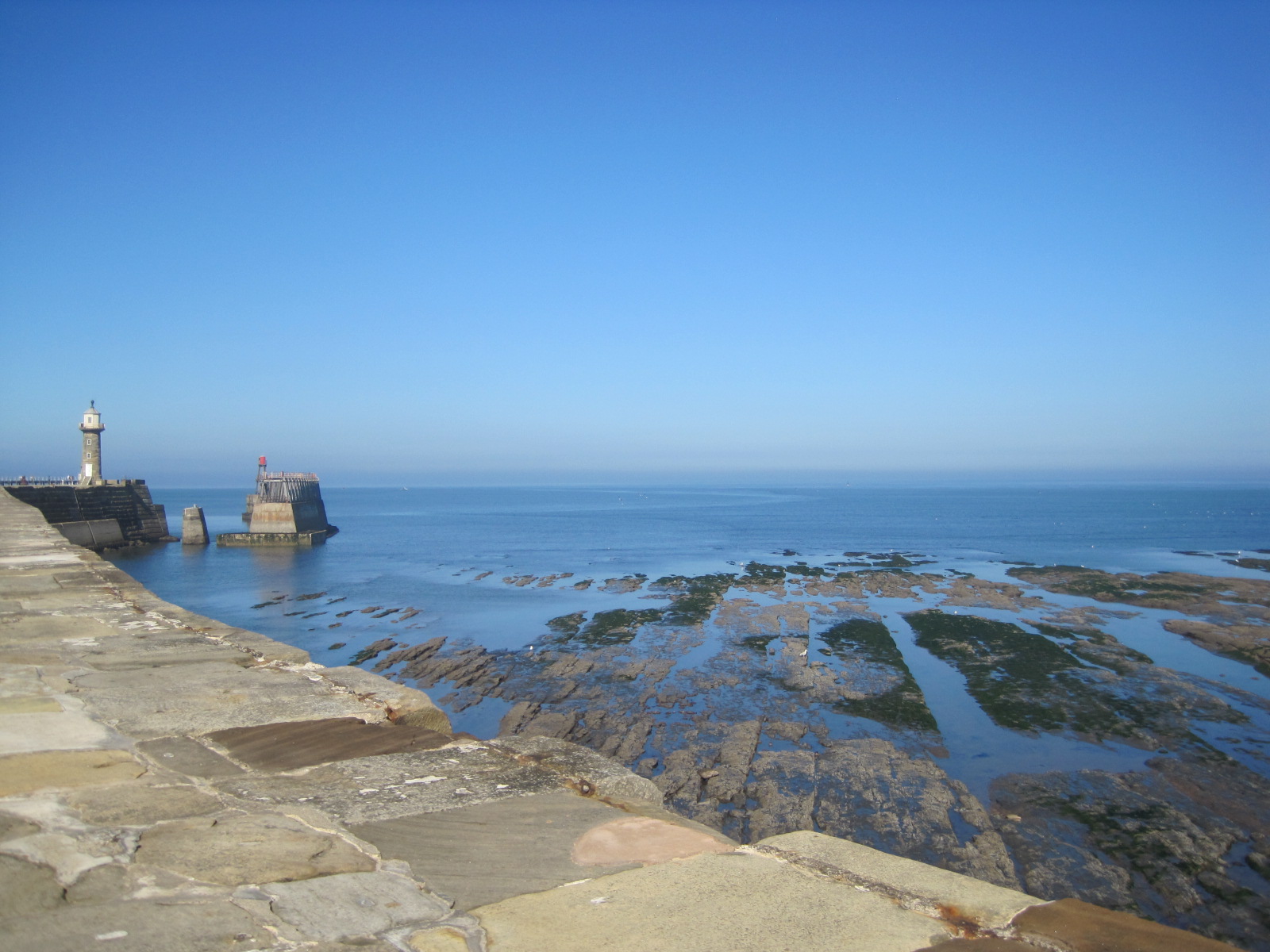
The bluest of skies accentuate the lighthouse.

The bluest of skies accentuate the lighthouse.

From top- to bottom!

From top- to bottom!

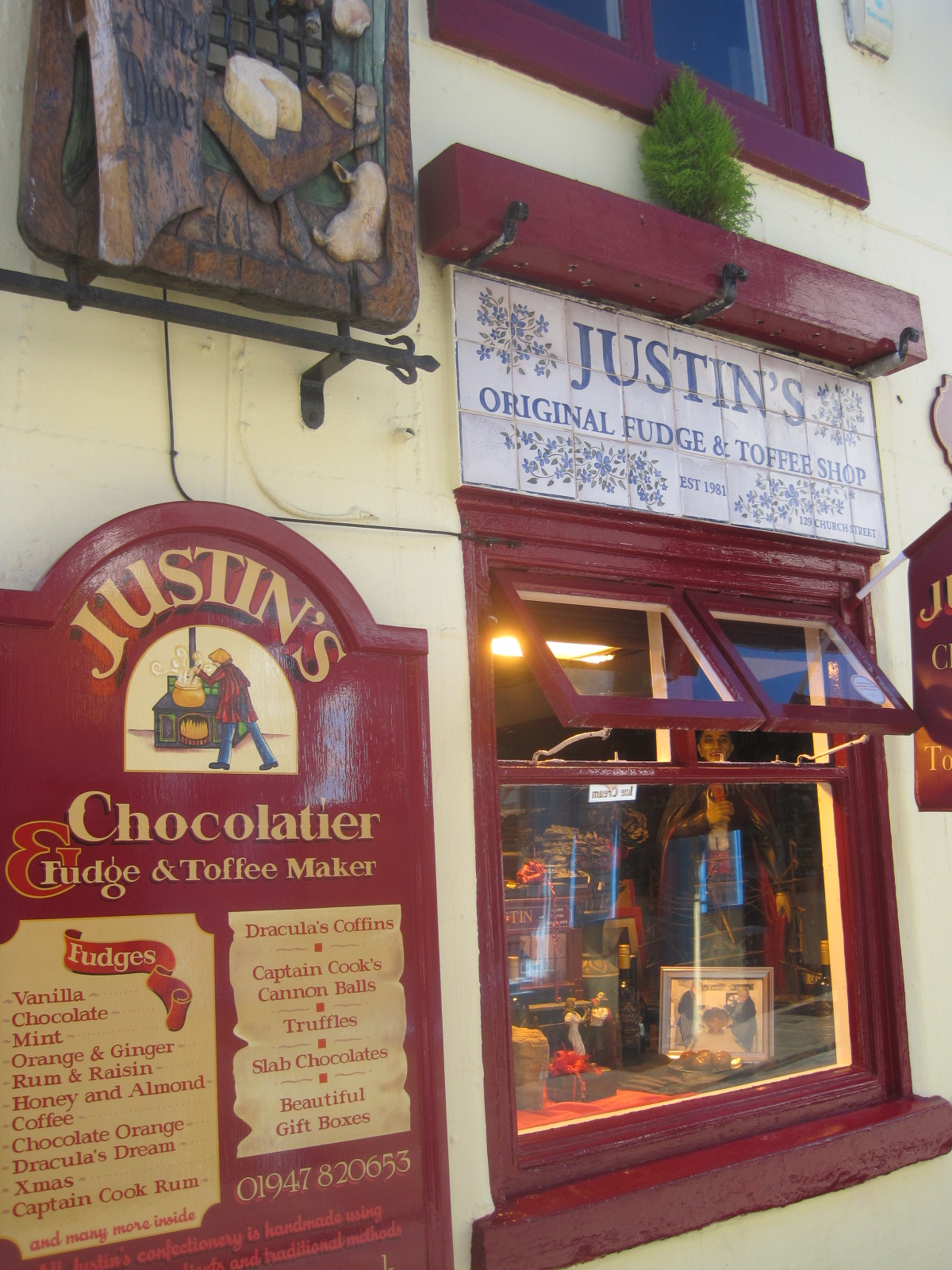
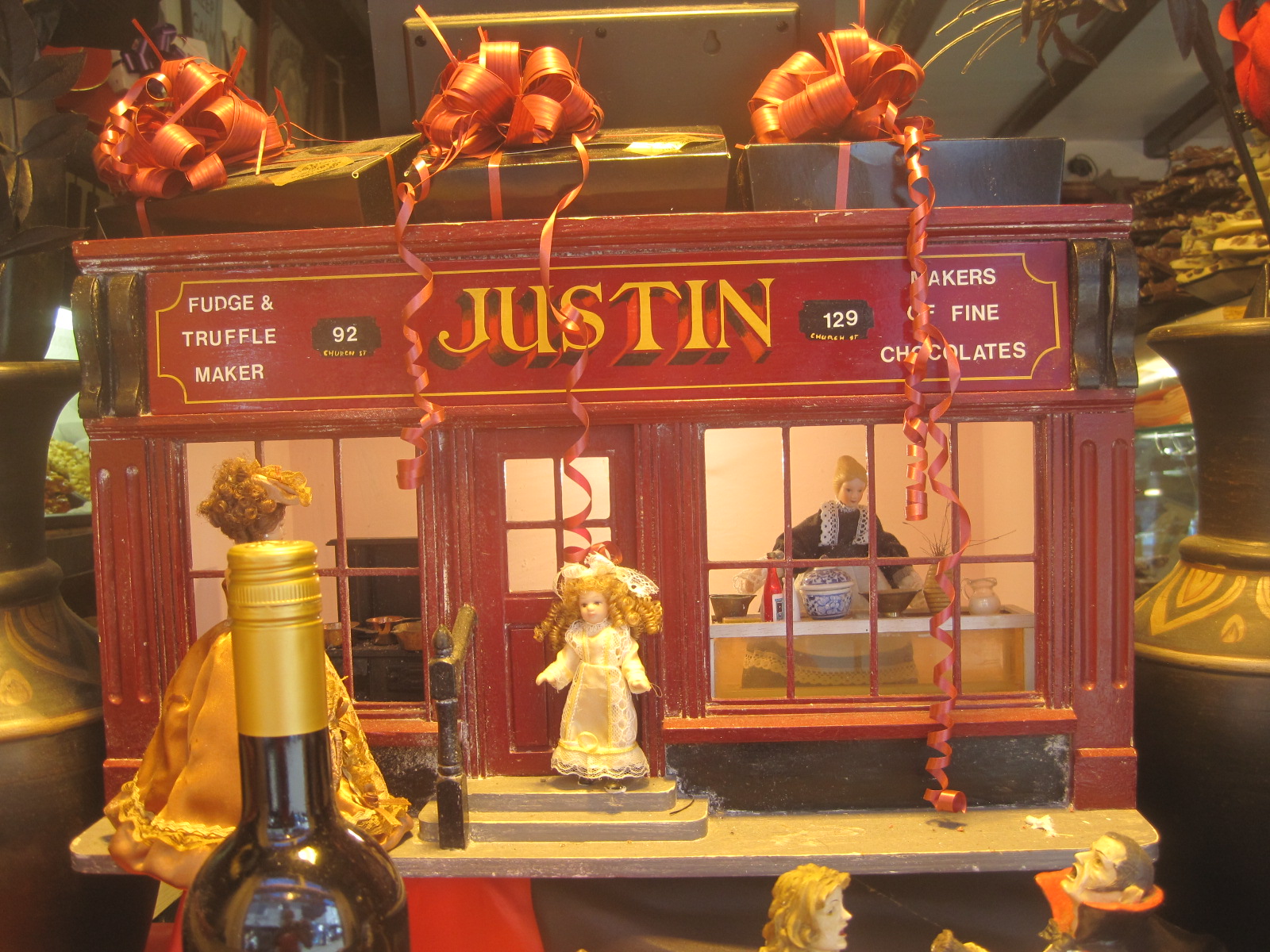
The beach is overlooked by a row of holiday cottages.  I’d already walked the clifftop and the pier, so time for a sit down and a bite to eat.  But the cobbled Whitby streets are always full of pirate treasures.

Justin's Chocolatier has a sumptuous window

Justin’s Chocolatier has a sumptuous window

The window in close-up

The window in close-up

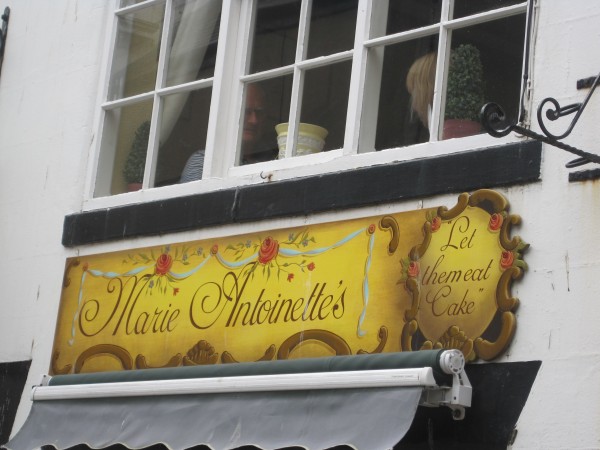
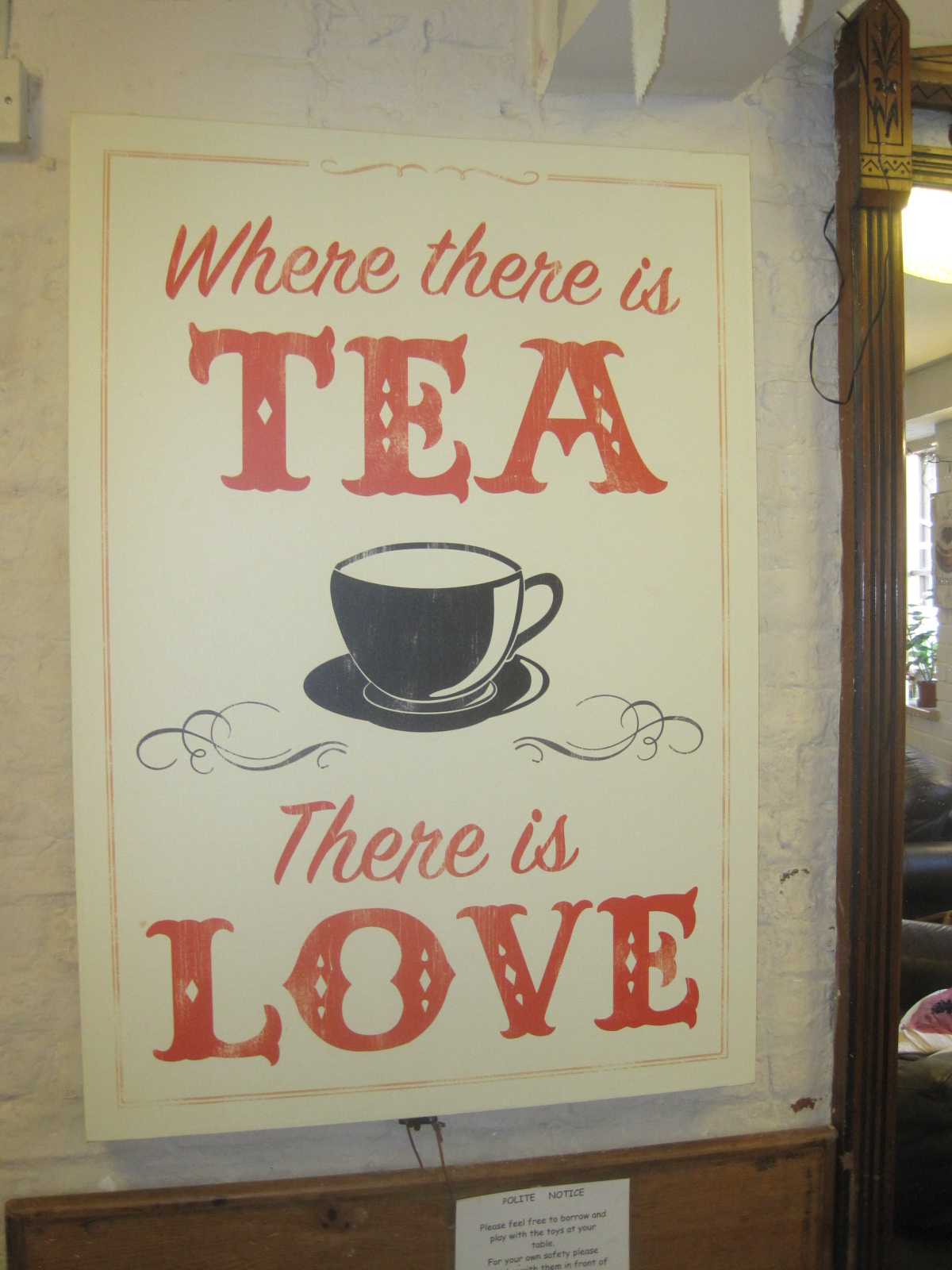
And “ye olde tea shoppes”!

Yes, please!

Yes, please!

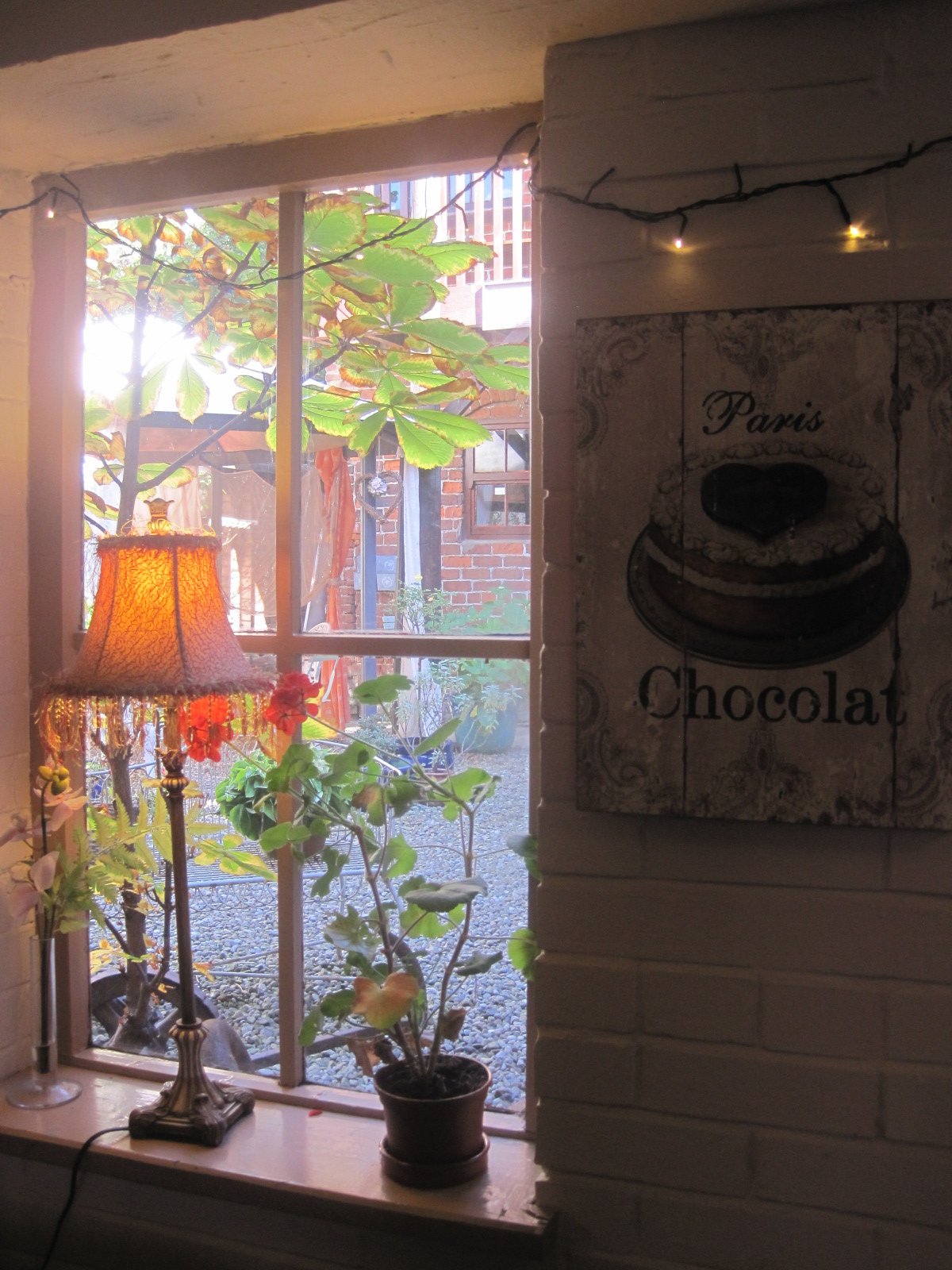
In the end we found an old favourite.

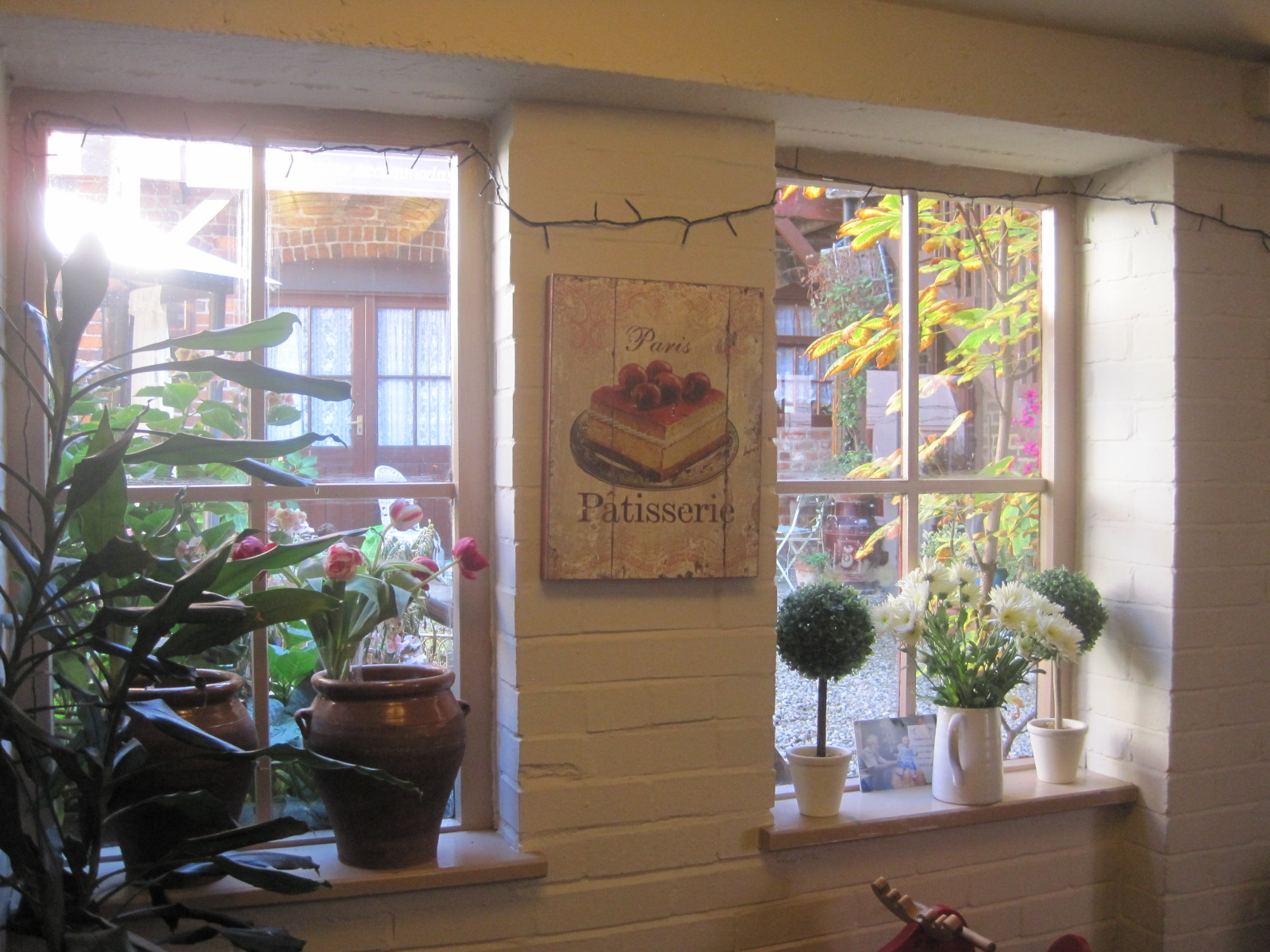
With it's cosy inside, looking out to the courtyard

With it’s cosy inside, looking out to the courtyard

It was just the ending needed to our day.

It was just the ending needed to our day.

Don't you think?

Don’t you think?  But I’m a coffee person, really!

I have to admit to having a naughty glass of wine, but then, the setting was so nice.  If you’re in Whitby, look out for Sanders Yard.

Meantime it’s thanks to Dawn at Lingering Visions for encouraging me to look through windows.  If you have some you’d like to share, follow the link and meet me there.

Weekly Photo Challenge : from lines to patterns

River Esk at Whitby

River Esk at Whitby

I really have no business being here this morning but the sky is grey again and I’m focussing my mind on the beautiful sunny day we walkers had at Whitby on Monday.  It was sparkling!

Out on the old pier

Out on the old pier

That's Saltwick Nab in the distance.

That’s Saltwick Nab in the distance.

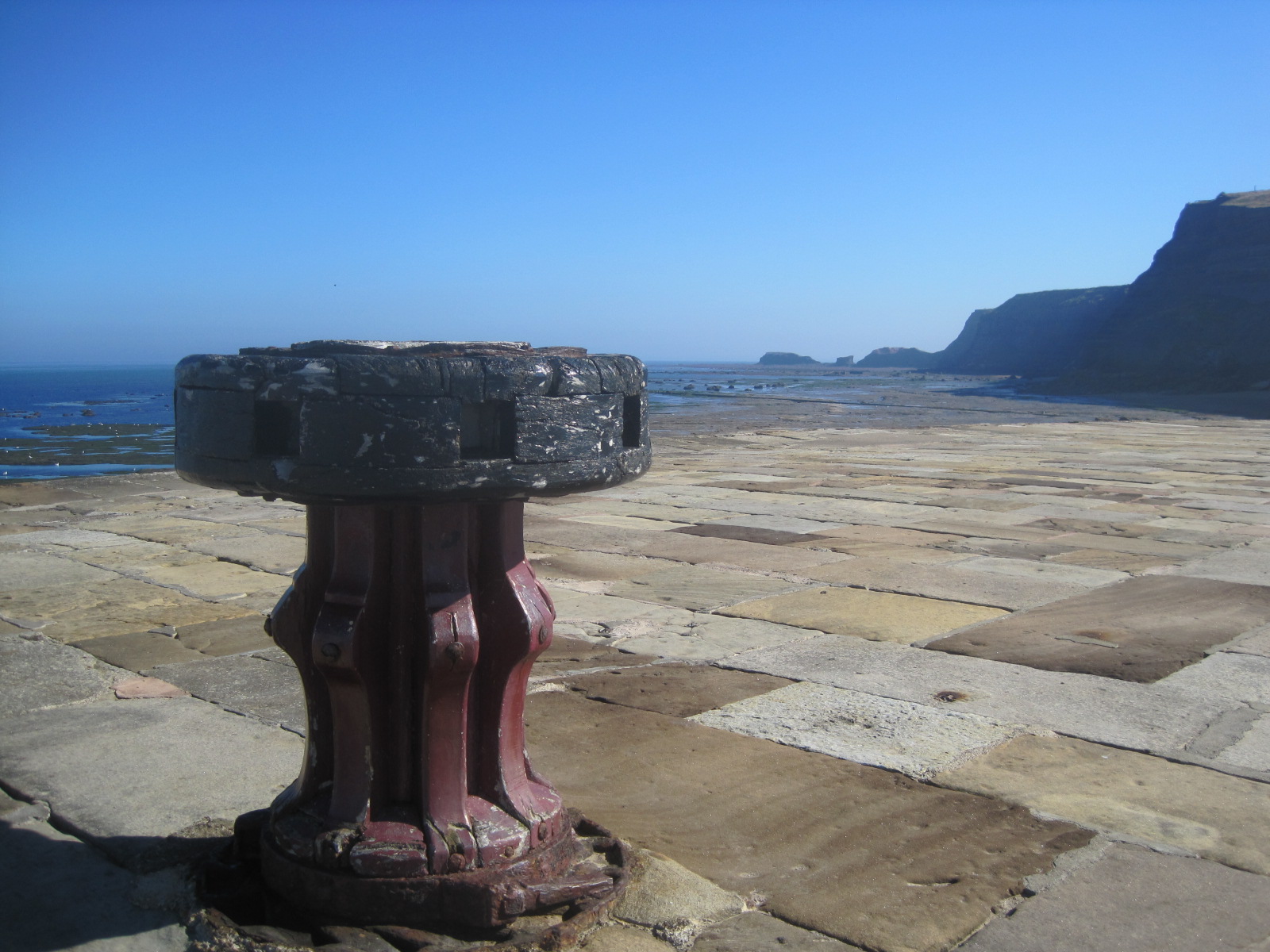
A bollard always makes a good shot, don't you think?

A bollard always makes a good shot, don’t you think?

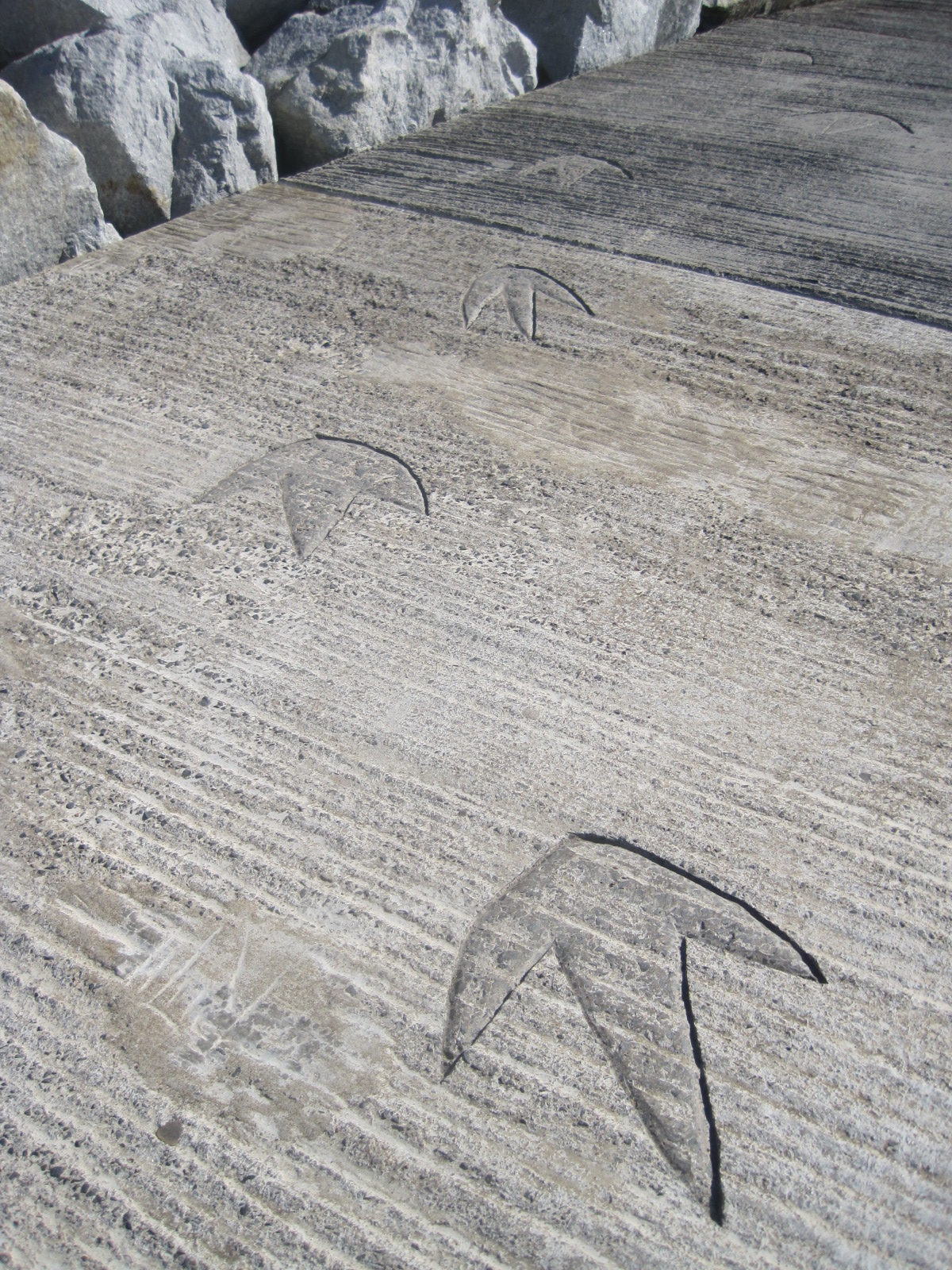
Or what about some "dinosaur's feet"?

Or how about some “dinosaur’s feet”?

Thanks to Cheri at the Weekly Photo Challenge for lifting my spirits.  Click on the link to lift yours.

L is for Lusia, Lodzia and Łódź

Poland-eagle-150squareThis is where my Polish friends might raise their hands in protest.  You see, in Polish there is a letter L and a letter Ł (ł in lower case).  The two are quite separate, but as there are 33 letters in the Polish alphabet and I am constantly short of time, I’m combining them in this post.  To English eyes they probably look very similar, but ł is pronounced like the English “w” in “wet”.

So, the city that I’m going to tell you a little about, Łódź, is pronounced Wooj, or something very like that.  I have never actually visited this city, which is the third largest in Poland, but it has always intrigued me for its name, which translates as “boat”.  This for a city which lies right in the centre of Poland, 84 miles south-west of Warsaw, and doesn’t even have a river running through it.  Apparently the city once had a total of 18 rivers, but they were covered over due to chronic pollution.

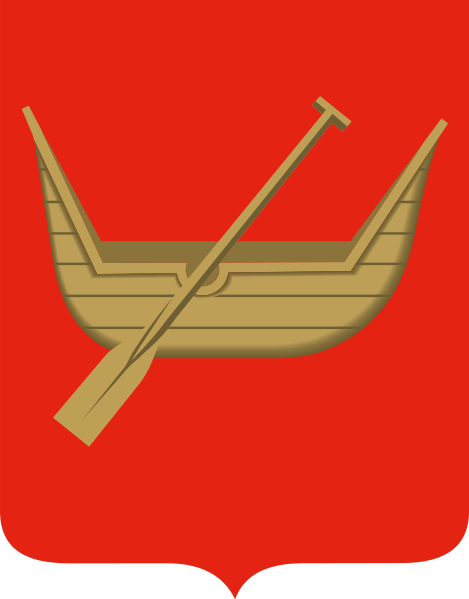
A boat, the coat of arms of Łódź- from Wikipedia

A boat, the coat of arms of Łódź- from Wikipedia

The first written record of Łódź appears in 1332 as the village of Łodzia, and in 1423 King Władysław Jagiełło (who you may remember from my J is for Jadwiga post) granted it city rights.  It was always at the crossroads of trade but at this time most of the inhabitants worked on grain farms in the surrounding flat lands. 

Like many another Polish city, the history of Łódź is colourful.  It lost its identity to Prussia in 1793, and then at the Congress of Vienna in 1815, became part of Russian Poland.  The Tzar gave territory deeds to German immigrants to clear the land and build factories and housing.  In 1825 the first cotton mill was opened and the textile boom began, with an eager Russian market on the doorstep.  Łódź has been likened to a “Polish Manchester” due to its prosperity from textiles.  Relationships with their Russian neighbours deteriorated rapidly, climaxing in the Łódź insurrection (or June Days) in 1905, which was violently put down by the Tzarists.
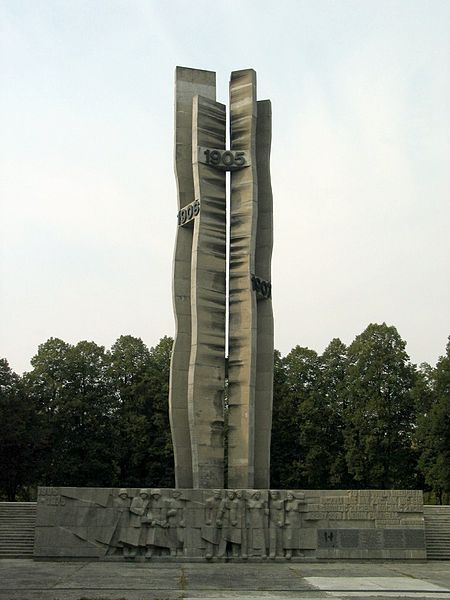
Łódź monument to the 1905 insurrection- from Wikipedia

Łódź monument to the 1905 insurrection- from Wikipedia

Many of the industrialists were Jewish, thus, during the Nazi occupation, the Łódź Ghetto was set up.  It was the last major ghetto to be liquidated due to the value of the goods the occupants produced for the German military.  The Germans requisitioned all factories and machinery and transported them to Germany so that Łódź was deprived of most of its infrastructure.  Refugees from Warsaw flooded into the city and in the aftermath of the Warsaw Uprising, Łódź became a temporary capital.  Apart from Kraków it was the only Polish city not to have been raised to the ground.

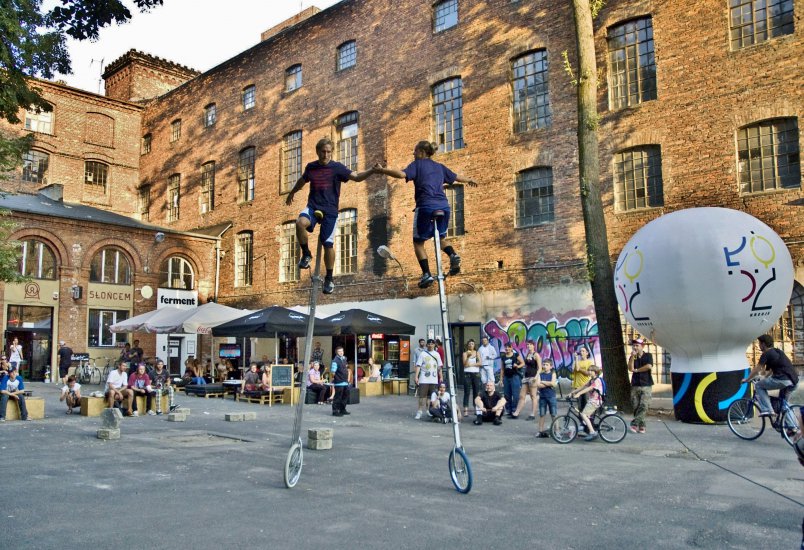
It’s not all doom and gloom.  I knew little about Łódź, but even I had heard of the National Film School, founded in 1948, and its famous student, Roman Polanski.  The film industry and new businesses locating in Łódź due to its excellent transport links have aided the slow rebirth of the city.  Renovation is ongoing on Ul. Piotrkowska, at 5km the longest main street in Europe. OFF Piotrkowska is a lively complex of cafes, restaurants and designer shops within 19th century former cotton mill buildings.

Sculpture of pianist Artur Rubinstein on Ul. Piotrkowska- from Wikipedia
Sculpture of pianist Artur Rubinstein on Ul. Piotrkowska- from Wikipedia

OFF Piotrkowska- from "In your Pocket" Łódź guide

OFF Piotrkowska- from “In your Pocket” Łódź guide

Even better news is that the rivers I referred to at the start of this post are now the subject of a restoration project.  Who knows where it all might end for the city of Łódź?  Manchester isn’t doing so very badly.

Lusia and Lodzia

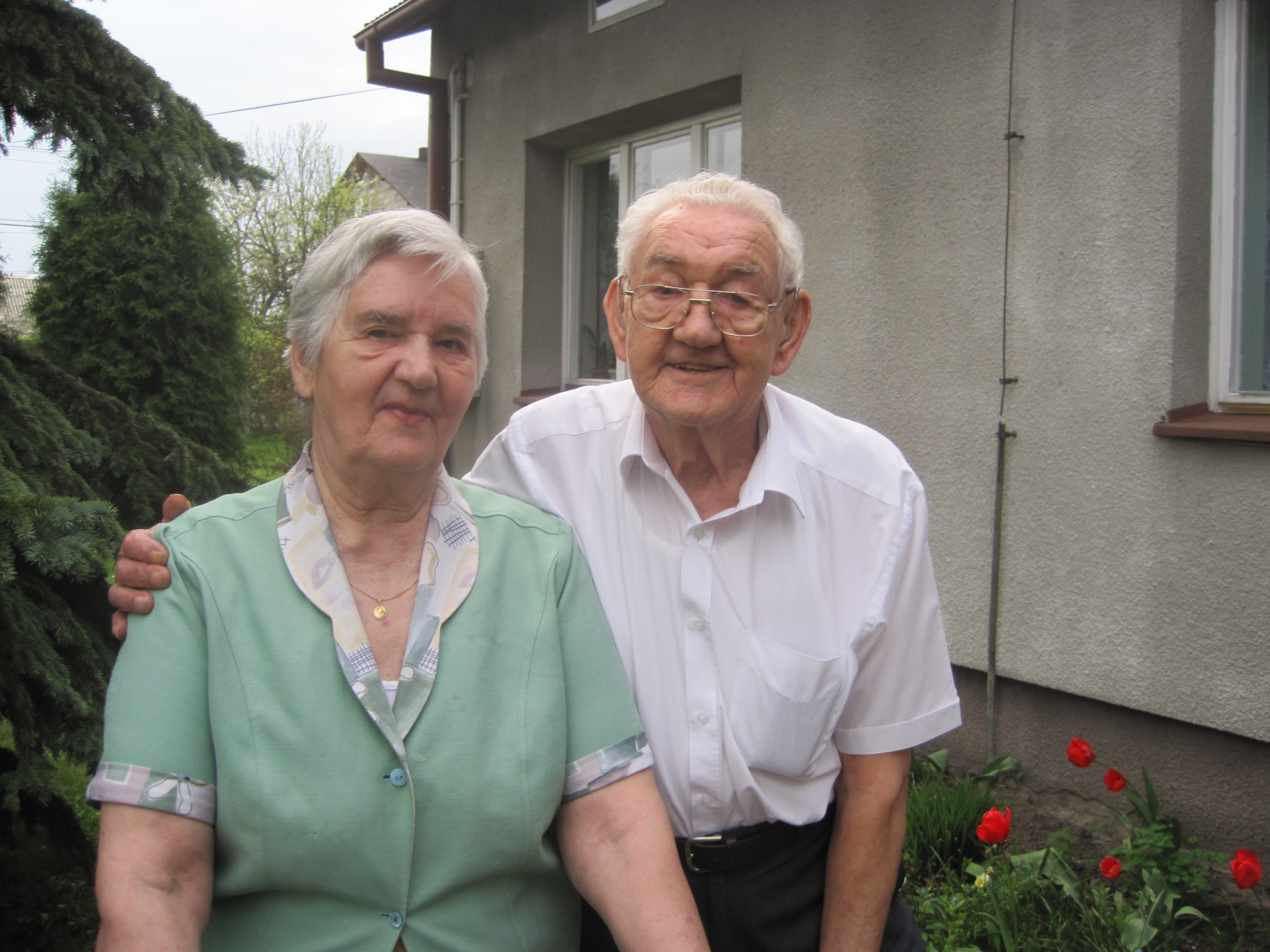
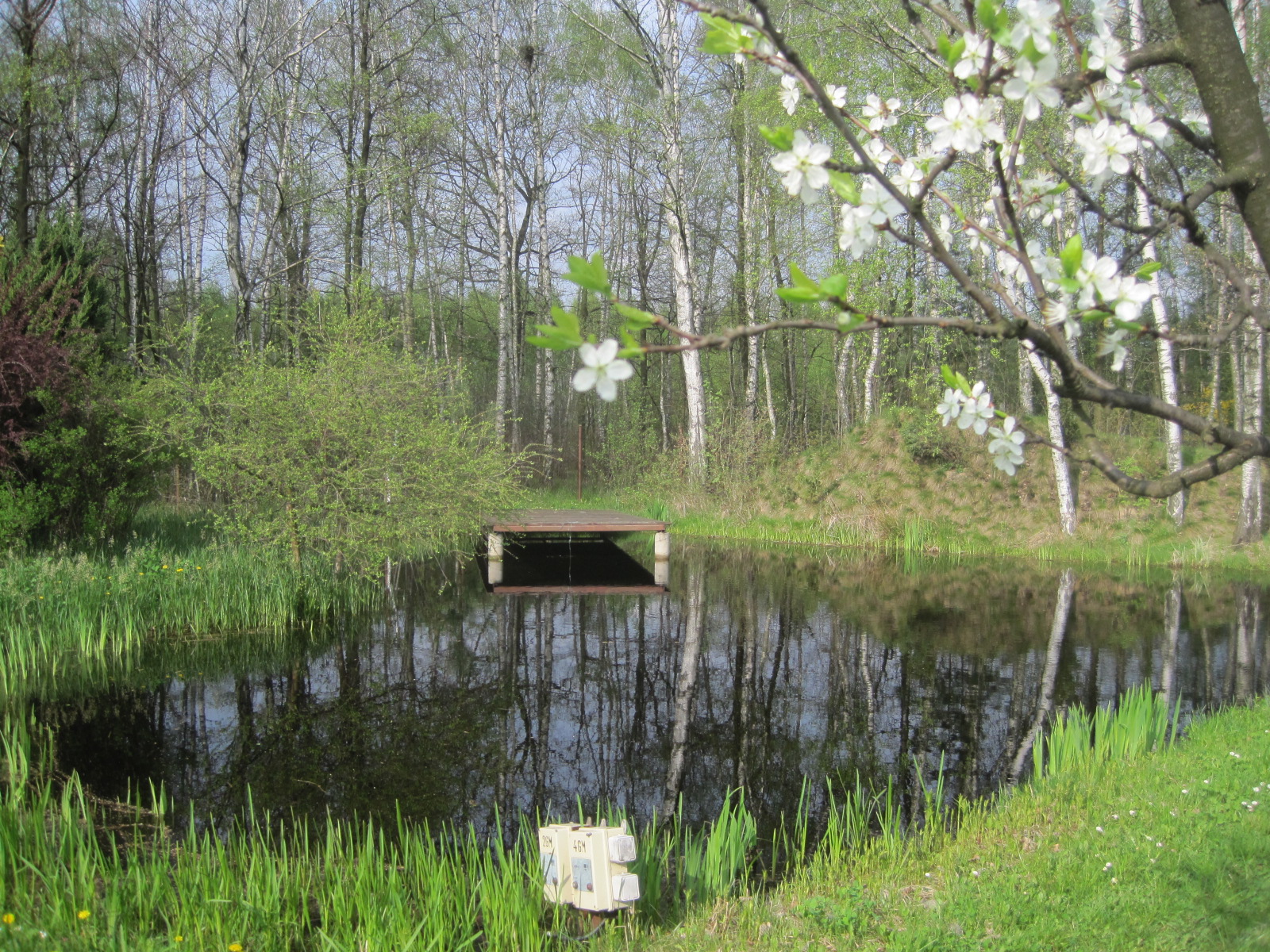
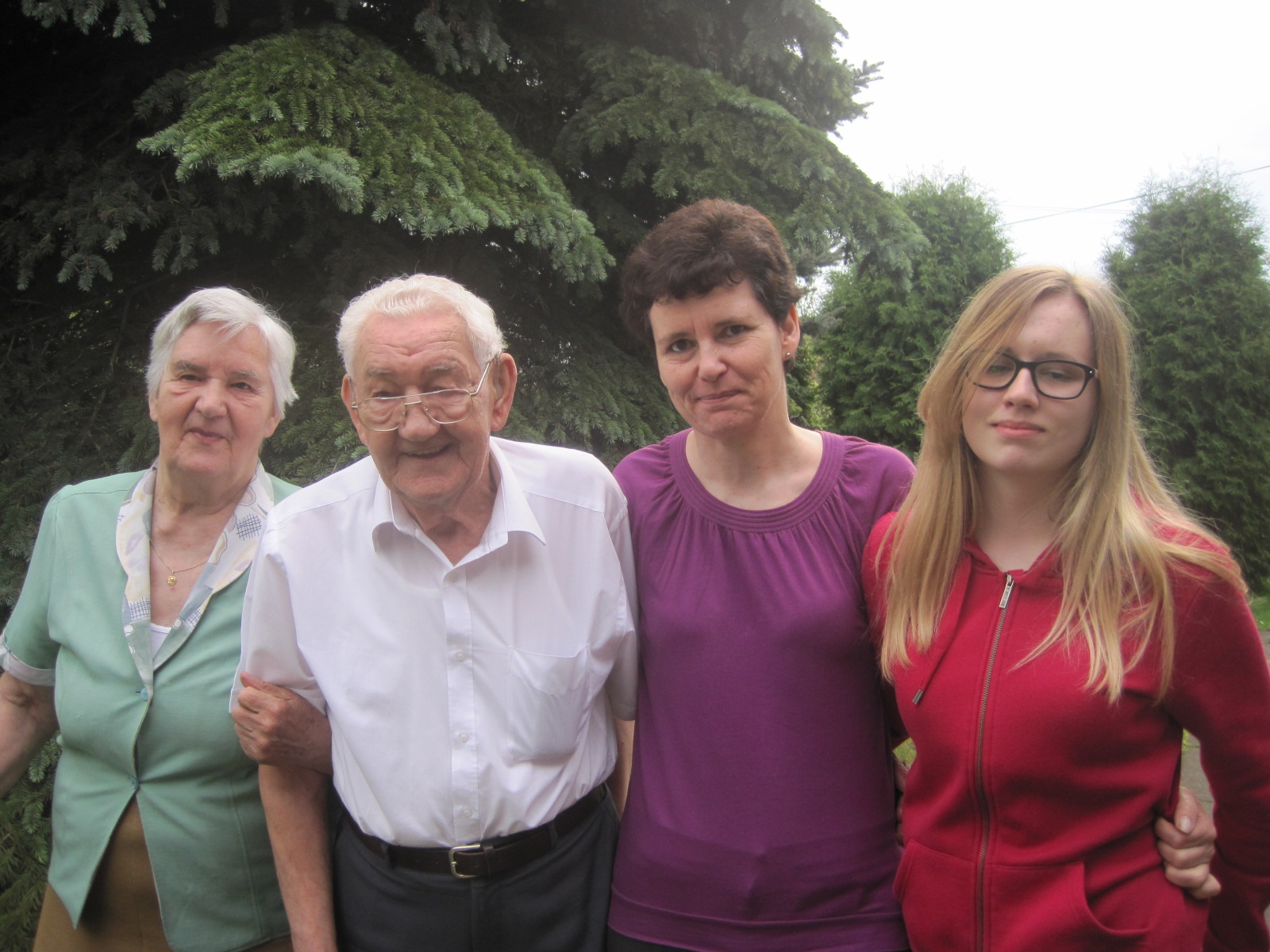
Most of my Polish family live in the neighbourhood of Bełchatów, about an hour south of Łódź.  As usual, when I was in Poland in May, I went to see my lovely Aunt Lusia in Zawady.  She is my Dad’s only surviving sister, and lives close to the farmstead where Dad grew up.  Her portion of land is a good size with a lovely pond and numerous fruit trees.  Lusia tended the huge vegetable plots herself when she was younger, but now much appreciates the help of her daughter Theresa, who lives with her.  Granddaughter Edyta completes the household (if you don’t count the rabbits, of which there are many!)
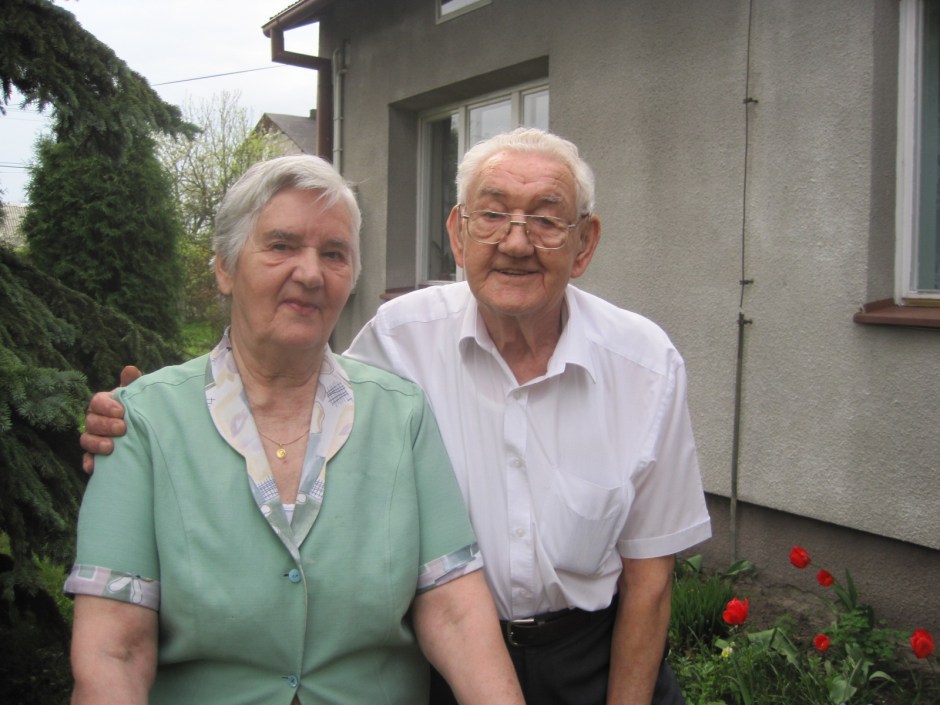
Lusia and Dad

Lusia and Dad

The pond at the bottom of the garden
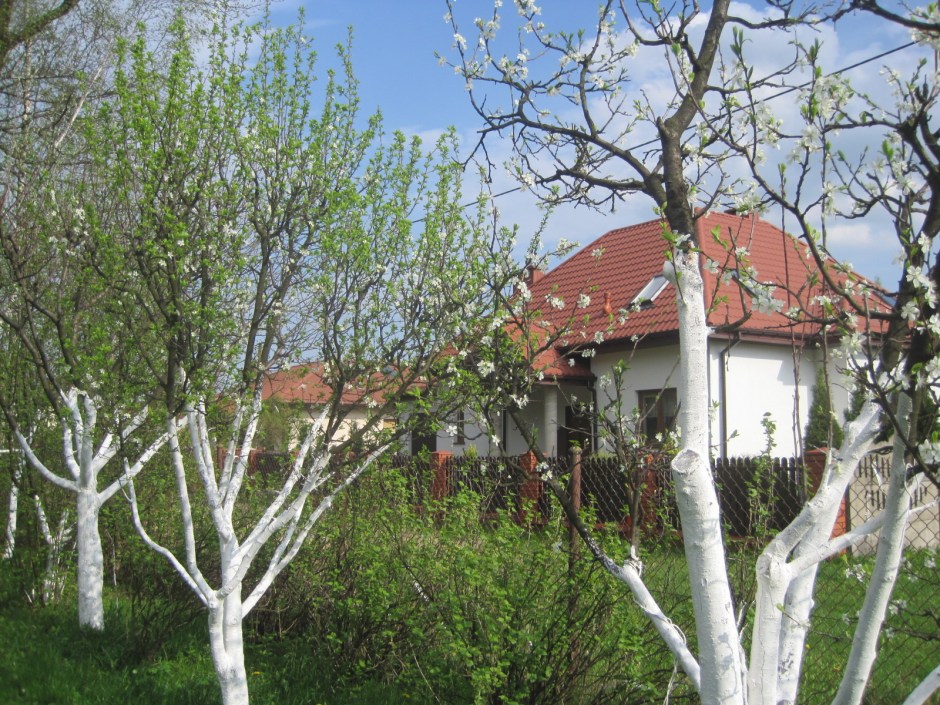
The pond at the bottom of the garden

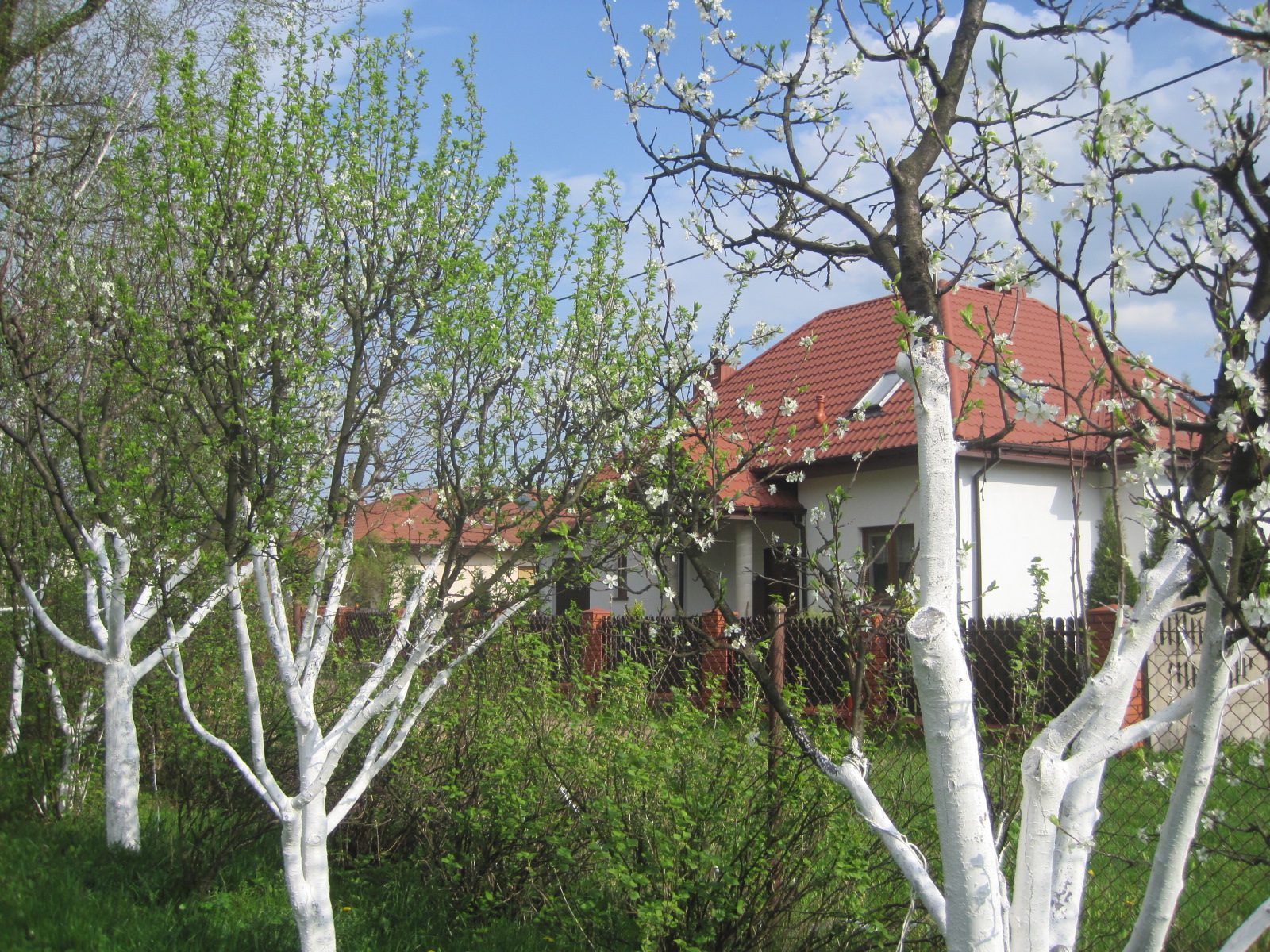
Fruit trees and the neighbours
Fruit trees and the neighbours

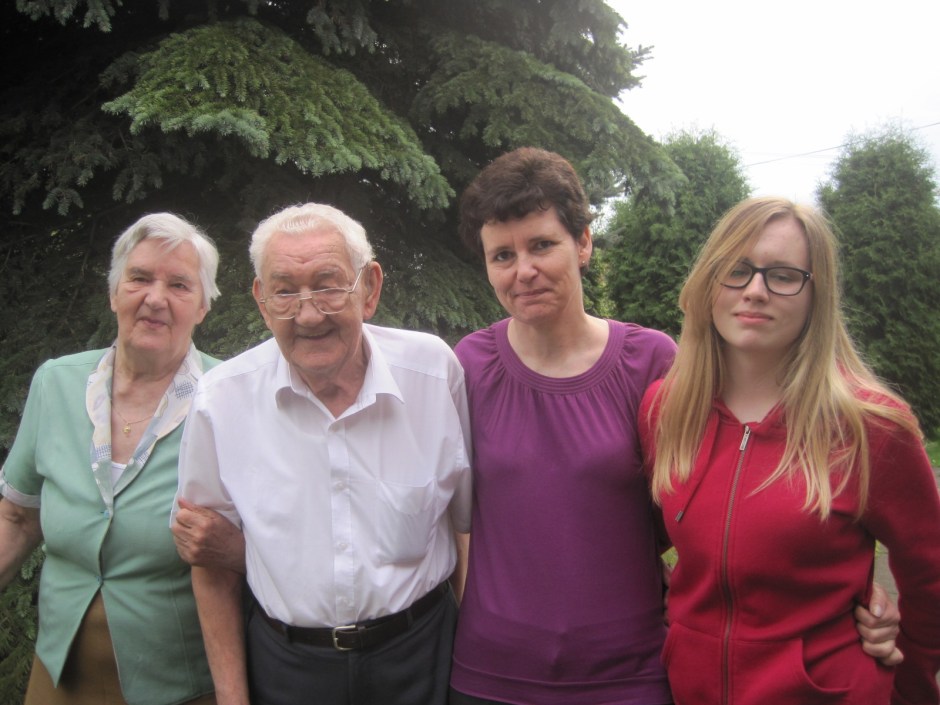
Lusia and Dad with Teresa and Edyta

Lusia and Dad with Theresa and Edyta

Most of the family have built houses on land from the original farm, and Lusia is now dividing hers to make life easier.  Her daughter Grażyna and son-in-law Marek live in a high rise flat in Bełchatów (I was there on my visit too!) and are now building a house next to Mum.  A widow for many years, I never met her husband  Zbigniew, but have seen photos of them as a happy young couple.  It will help Lusia to have family so close by.  A third daughter, Irena (who will feature in my letter “I”), also lives in Bełchatów.  One last little thing to share- Lusia’s given name is Otylia.  I’m not at all sure how Lusia comes from this, but that’s just how it is.

Just across the lane from Lusia is the home of Lodzia and her remaining unmarried family.  This is my Dad’s original home and was taken on by the oldest son Zygmunt, when their parents died.  Sadly Zygmunt himself died just months before the family reunion which brought Dad back to Poland.  He had tried so hard to find Dad, and maybe things would have gone differently if he had succeeded.

Lodzia has her sons Bolek and Piotrek helping on the substantial plot of land.  Dad remembers taking the cows to a stream when he was a small lad, but the cows are long gone (as is the stream, strangely enough).
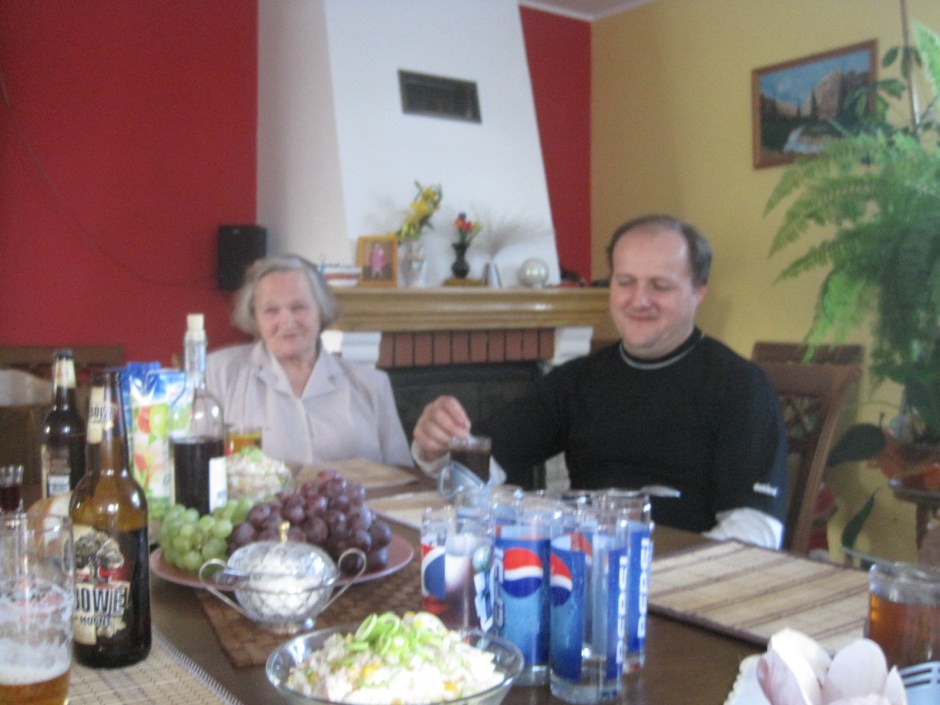
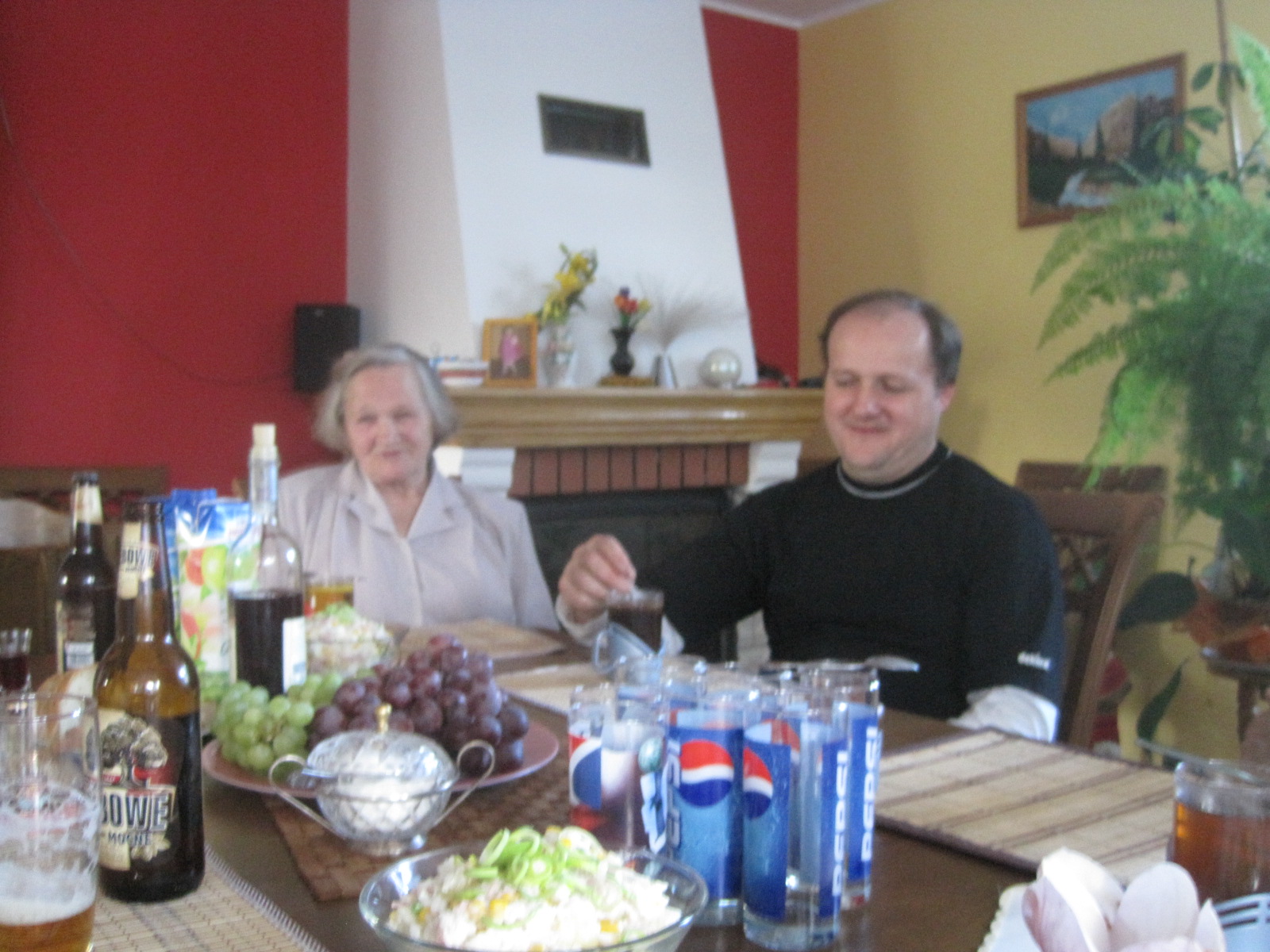
A slightly blurred photo of Lodzia and Bolek at Jadwiga's home

A slightly blurred photo of Lodzia and Bolek at Jadwiga’s home

You will have seen Lodzia on my blog before.  She is my lovely cousin Jadzia’s mum and we traditionally have supper at Jadwiga’s home, pictured above.  The farmhouse is now very run down and Lodzia does not have an easy life.  She also has the care of a blind son, Adam, who suffered the injury in an explosion many years ago.  Life is never all roses, is it?  My Polish family have had their share of tragedy, but they go on smiling and welcoming us each time.

 This post is part of my Personal A-Z of Poland, for which I owe thanks to Julie Dawn Fox.   I have put links to Wikipedia and my other posts for anyone who is interested.  The logo below will take you to Julie’s A-Z page, and I’m also linking to Frizz’s LLL-challenge, even though, as usual, I’m late!  MMM arrived this morning.

 banner4

Six word Saturday

6ws-participating-in-banner

Not enough week- too many challenges!

imagesCA3IIGP0So, I’m going to do “a challenge within a challenge”.

PINK! 

How boring, I thought!  That means girly things, flowers and sunsets.  But you know from last week that I love flowers and sunsets.  It’s two years this week since my first post and in all that time I’ve only done the CBBH Challenge four times, though I love Marianne’s work at East of Malaga.  Time to up the numbers!

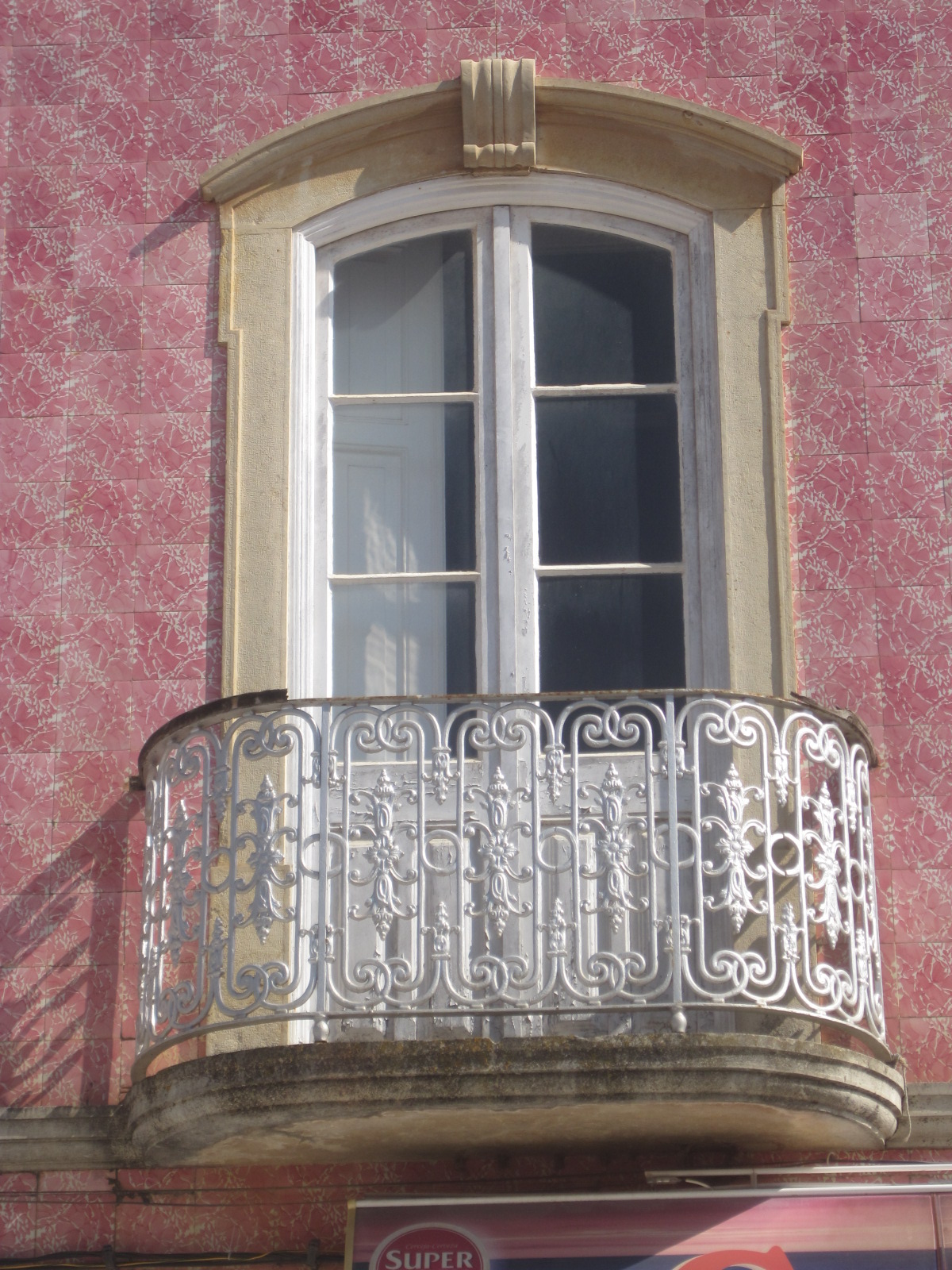
Pretty pink, in Silves

Pretty pink wall, in Silves, the Algarve

Enough of the flowers.  How about some girly things?  As usual, click on any of the gallery photos for close ups and my cheery commentary.

Anyone got a birthday today?

Anyone got a birthday today?

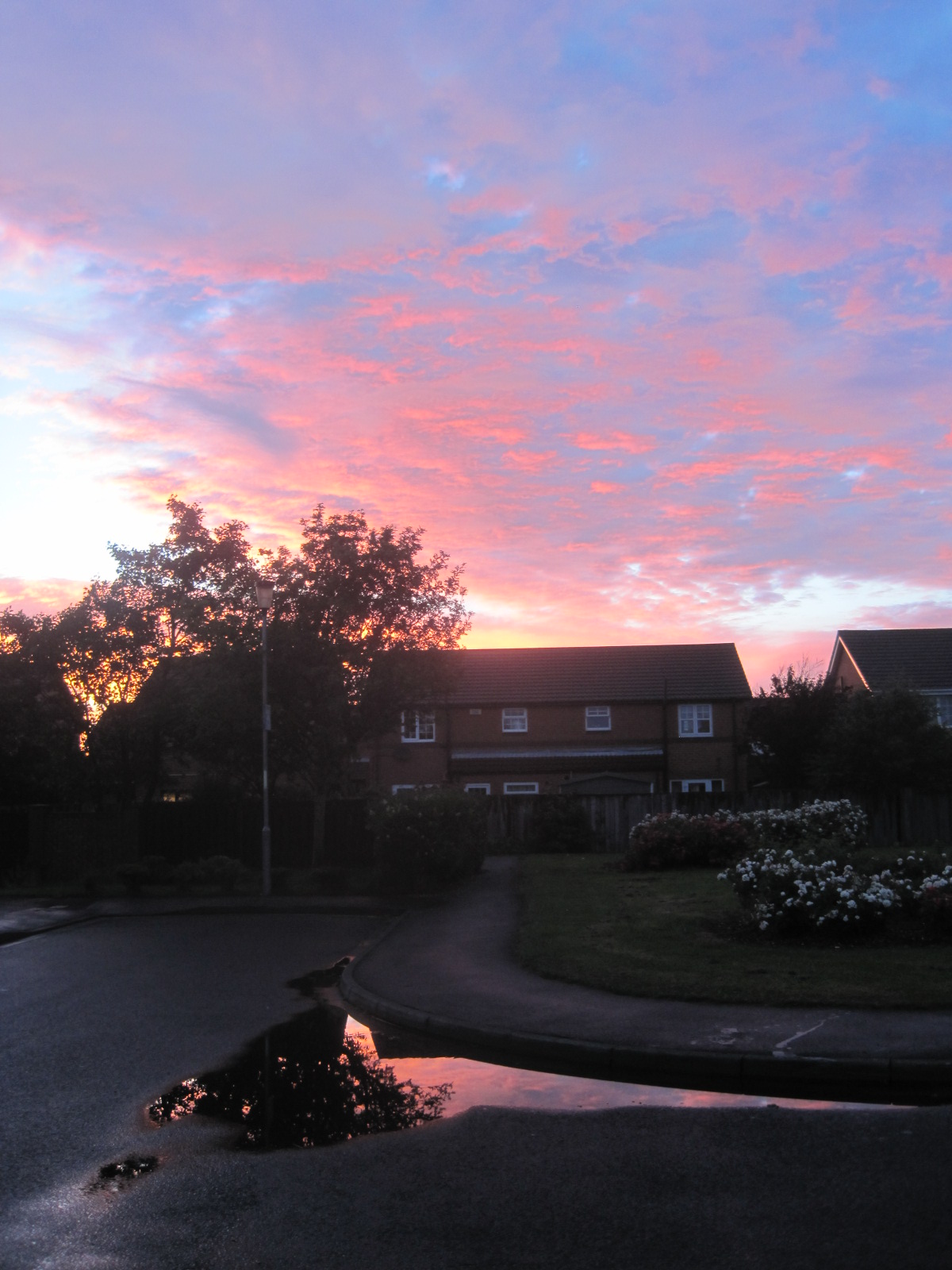
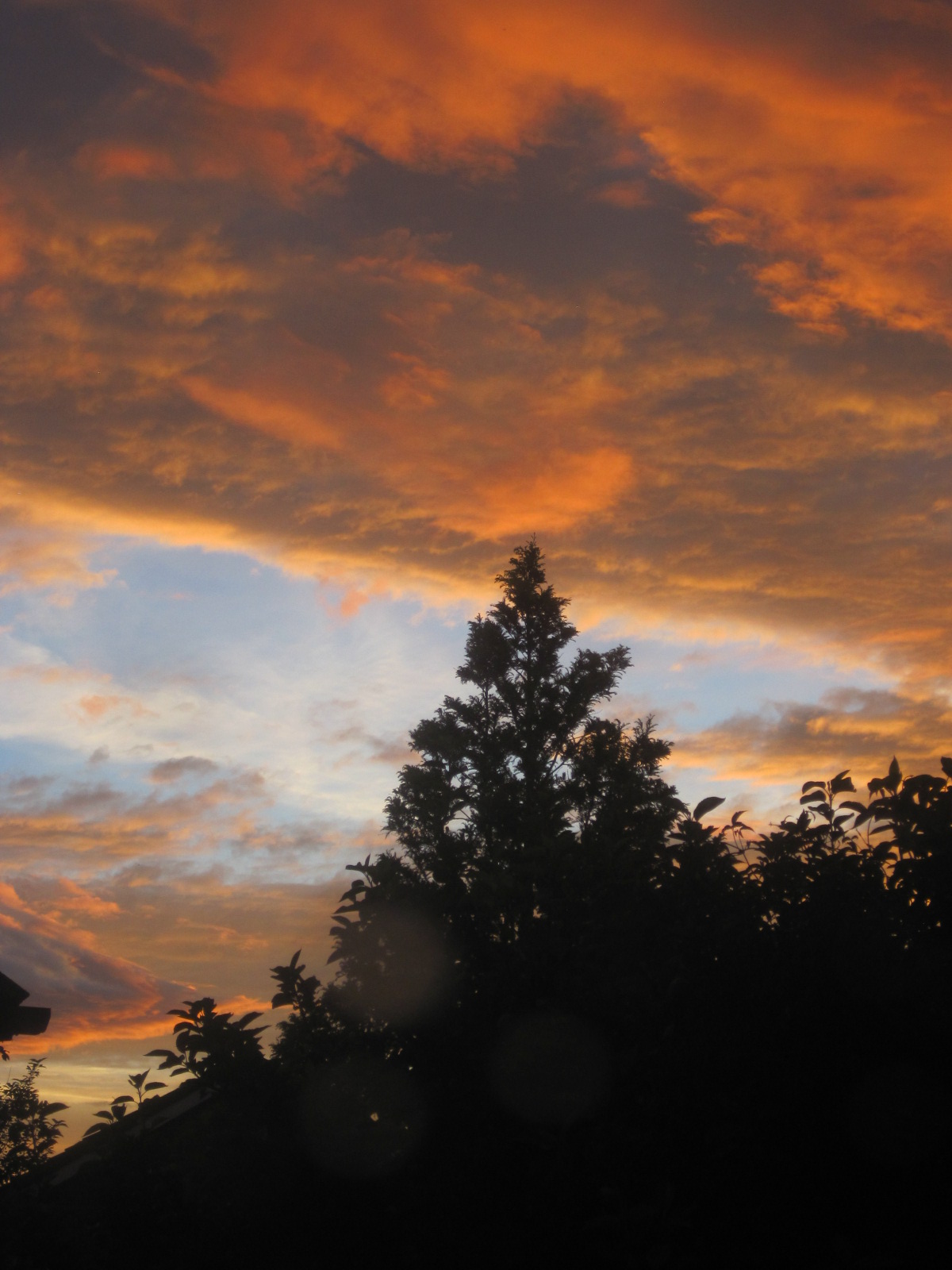
Which sunset to finish with?  That’s the question!

Do you like this one, reflected in the puddle?

Do you like this one, reflected in the puddle?

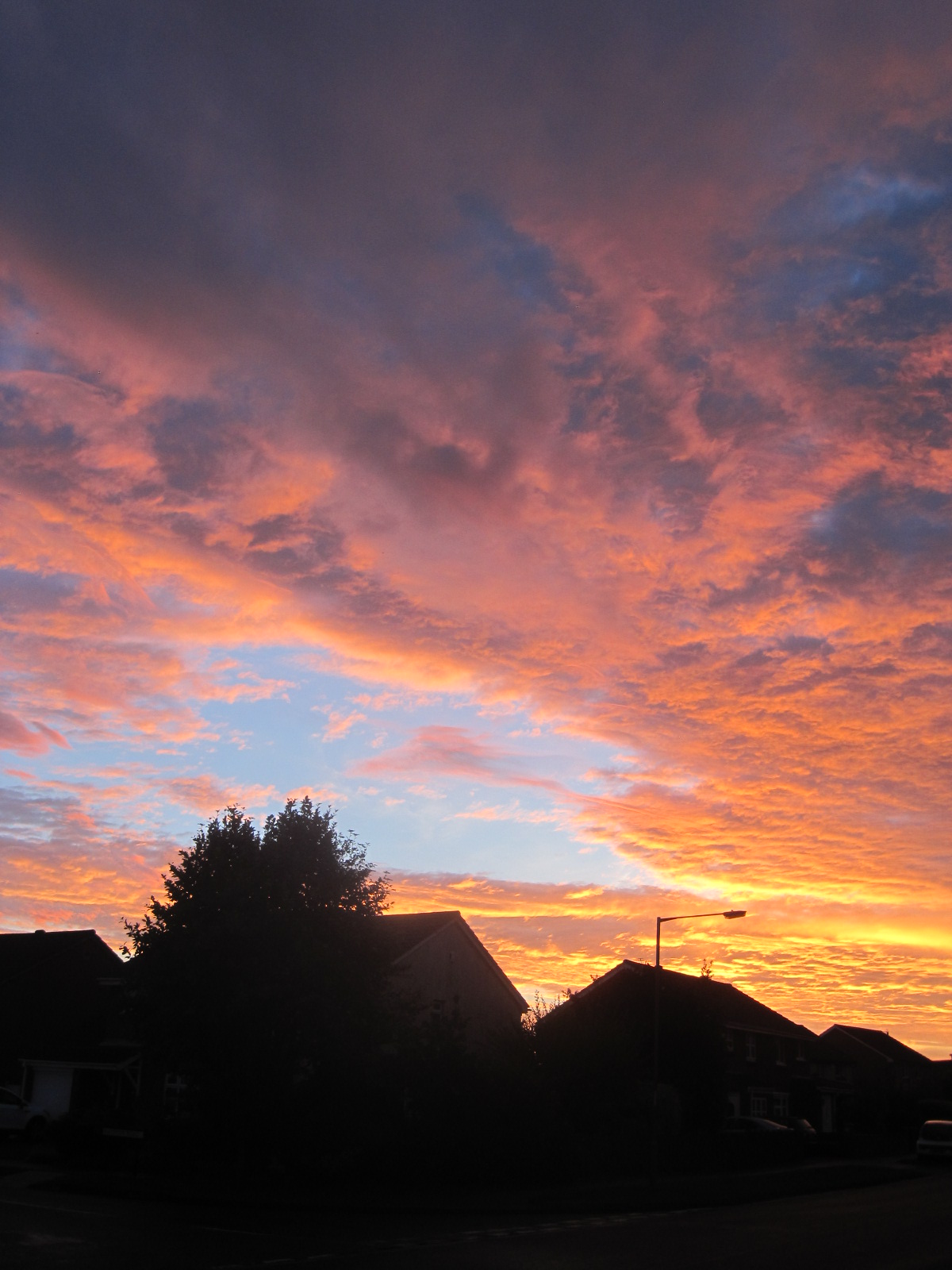
Or the drama of this one?

Or maybe the drama of this one?

Well, I guess that’s enough pink to complete this challenge, and hopefully entertain my Six word Saturday readers too.  Thanks, Cate, for double hostessing!

With her challenge, Marianne traditionally invites you to introduce two bloggers whose posts you have commented on in the past month.

I have been following Richard at A Bit of Culture since he started his blog, and long before that with his superb, informative articles on Simonseeks.  Go and say “hi” for me!
Having accepted that Christmas might just be around the corner, I thought you’d like to see Cath’s beautiful craftwork on Lizzie Rose Jewellery.  She likes Portugal too, so we’re bound to be friends.

Naturally, a pink logo to finish!  Don’t forget to visit East of Malaga.

6wsButton

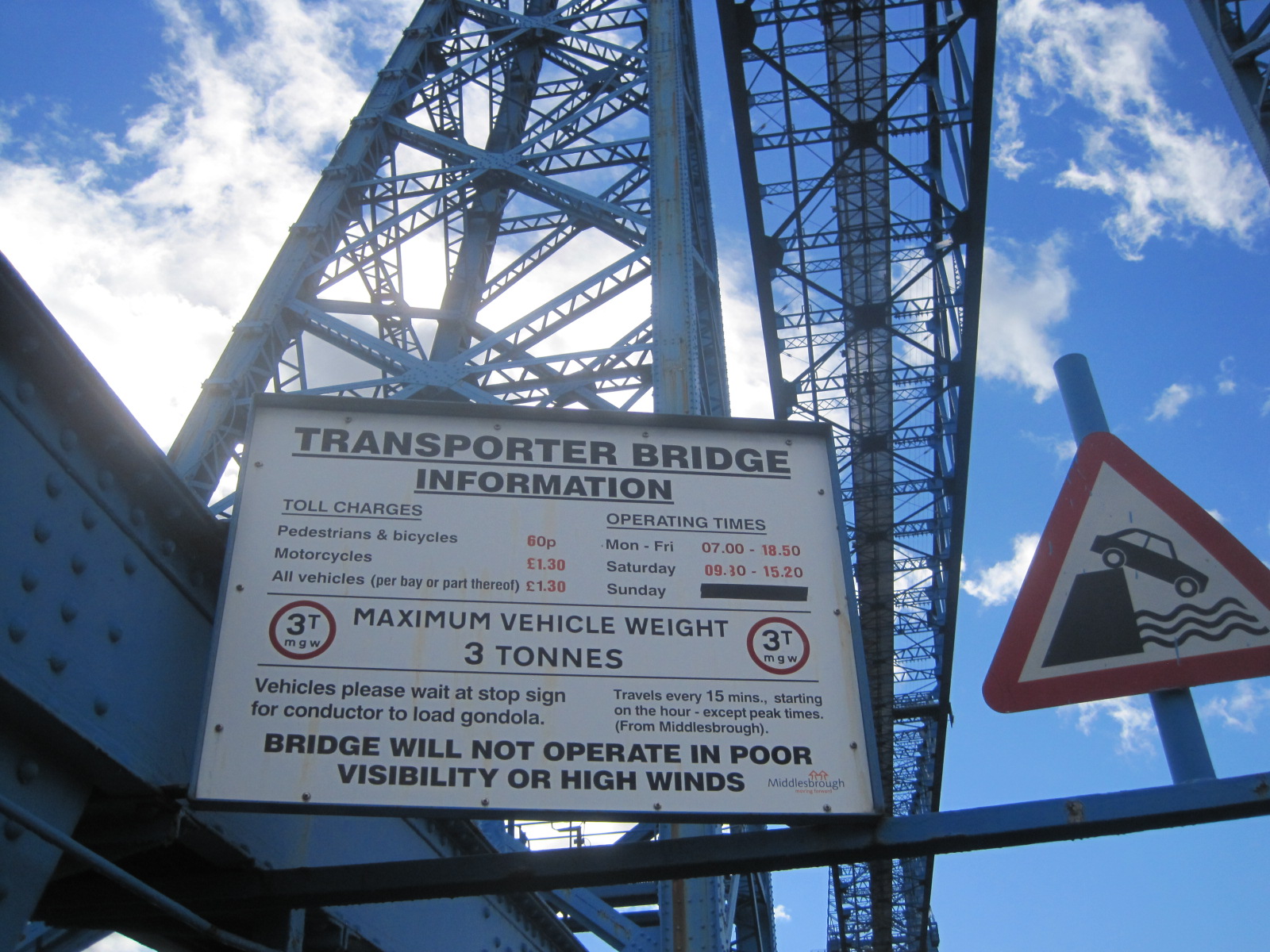
Thursday’s Special : the Transporter Bridge

Just a gentle warning not to cross when the bridge isn't there!

Just a gentle warning not to cross when the bridge isn’t there!

A while ago the distant silhouette of the Transporter Bridge appeared in the background of one of my photos.  Paula expressed interest in it, so I thought it might be nice if it were the subject of a Thursday’s Special.

It is, in fact, quite a special structure. The concept of the transporter bridge was invented in 1873 by Charles Smith (1844-82) the manager of the iron works in, would you believe it, my home town, Hartlepool.  It is a type of movable bridge that carries a segment of roadway across a river. The gondola is slung from a tall span by wires on a metal frame. The design is used to cross navigable rivers where shipping traffic needs to pass.  Fewer than two dozen of this type of bridge have ever been built, according to Wikipedia.

Unfortunately Mr. Smith’s proposal was rejected by the local council, but the Middlesbrough Transporter Bridge finally came into being in 1911.  At 259 metres wide and 69 metres high it is the second largest such bridge in the world.  The gondola can carry 200 people and 9 cars, and crosses the River Tees in 90 seconds.

The bridge never operates on windy days so I wasn’t surprised to find as I approached it that the gondola wasn’t moving.  It wasn’t till I returned home that I discovered that it’s currently closed for repair!  The good news for me was that I had uninterrupted views across the river.  The bad news- the gondola was stranded on the far shore so I couldn’t get across.  But I did discover a cycle track from which I could take even more shots.

It’s many years since I travelled that way regularly, in my commute to work.  Often on chilly Winter mornings I stood on the riverbank, waiting for the gondola’s approach.  When it landed and I stepped aboard there was always a frisson of excitement.  Now the bus boringly follows the road and crosses the Tees via Newport Bridge.

The Transporter is not so regularly used these days, but a Visitor Centre, on the far shore, pays tribute to its exciting past (and its star performance on the TV sit com Auf Wiedersehn, Pet) but that’s a trip for another day.  The links tell the full story, and if you click on any photo you’ll get my usual running commentary.

I hope that Paula enjoys her virtual visit to the Transporter Bridge with me, and that you’ll all join her on Thursday’s Special.  The pretty logo below will take you there.

jupiter-widget_text

J is for João and “javali”

404322_287595227969825_100001580503329_842365_806400363_n
It’s not often that my A-Z’s run parallel but, in trying to “patch the gaps” in the alphabet, I find that I’ve arrived at the letter J on both my Polish and my Portuguese challenges.  Well, “J is for Jo”, so, let’s try not to disappoint.

Javali means “wild boar” in English.

Wild boarNot always the most adventurous of eaters, I’m happy to say that I can quite happily trough away at wild boar.  It is delicious!  I first experienced it at the end of a morning’s walking with my group in the Algarve.  The reward for our walks is usually a restaurant, known to one of the group as being very good value. (us Brits like a bargain!)  The “wild boar” restaurant was the occasion of a 60th birthday so it was a bit special.  The meat arrived in huge pans and had obviously been slow cooked for hours.

The occasion ended in rather a traumatic fashion, as the partner of the lady who was 60 keeled over and an ambulance had to be summoned!  He suffers from low blood pressure.  The medics stepped in and would you believe it, another member of the party collapsed with heatstroke!  Both were fixed up, and nobody blamed the wild boar.  If by any chance you’re reading this, Jeff and Anne, very best wishes to you both.

João is the Portuguese form of the name John.  According to Wikipedia the diminutive is Joãozinho, but I’ve never heard it used.  I understood diminutives to be short forms, but it doesn’t surprise me that in Portuguese, it’s longer.  The feminine form, however, is Joana, and that’s me!

And now for the history lesson.  There have been six ruling King João’s in Portugal. To see them in context, click on the Wikipedia link.

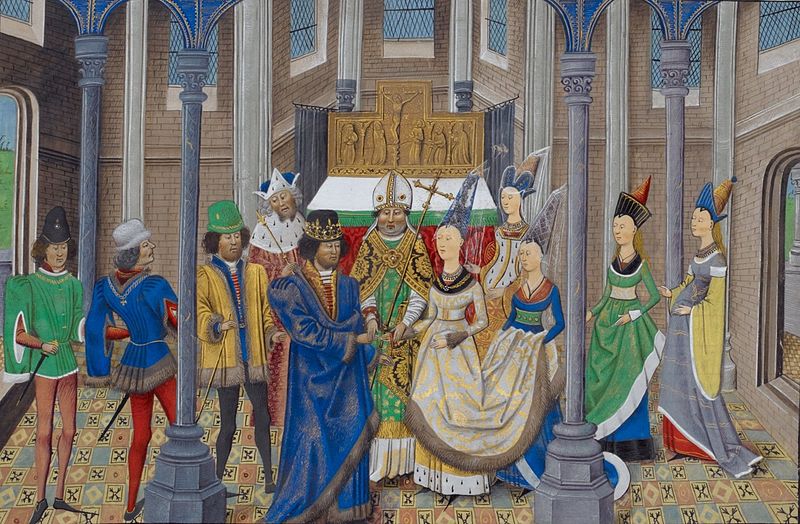
The wedding of King João 1, February 11th, 1387- from Wikipedia

The wedding of King João 1, February 11th, 1387- from Wikipedia

João 1 was King of Portugal and the Algarves from 1385 to 1433.  He came to the throne after a 2 year period of political anarchy, when Castile was laying claim to much of Portugal.  The overthrow of Castile and their French allies was accomplished with the aid of English troops.  When João married Philippa of Lancaster, daughter of John of Gaunt, in 1387, an Anglo-Portuguese alliance was secured which exists to this day.

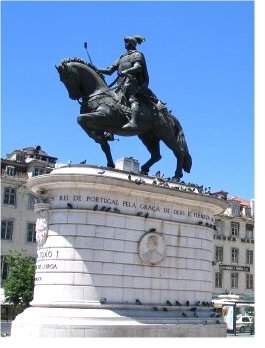
Dom João I, Lisbon

Dom João I statue, in Lisbon 

João II (reigned 1481-1495) was known as the Perfect Prince.  His chief priority was continuing the exploration of the African coast, hoping to discover a maritime route to India and the spice trade.

João III (reigned 1521-1557) has been referred to as the Grocer King.  He extended Portuguese possessions in Asia and the New World, securing the spice trade in cloves and nutmeg.  Brazil was colonised and the Portuguese became the first Europeans to establish contact with China (under the Ming dynasty) and Japan.

João IV (reigned 1640-1656)  The Portuguese Empire reached its zenith, totalling 12,000,000 km by his death.  He was a patron of music and the arts, amassing one of the largest libraries in the world.  Sadly it was destroyed in the Lisbon earthquake of 1755.

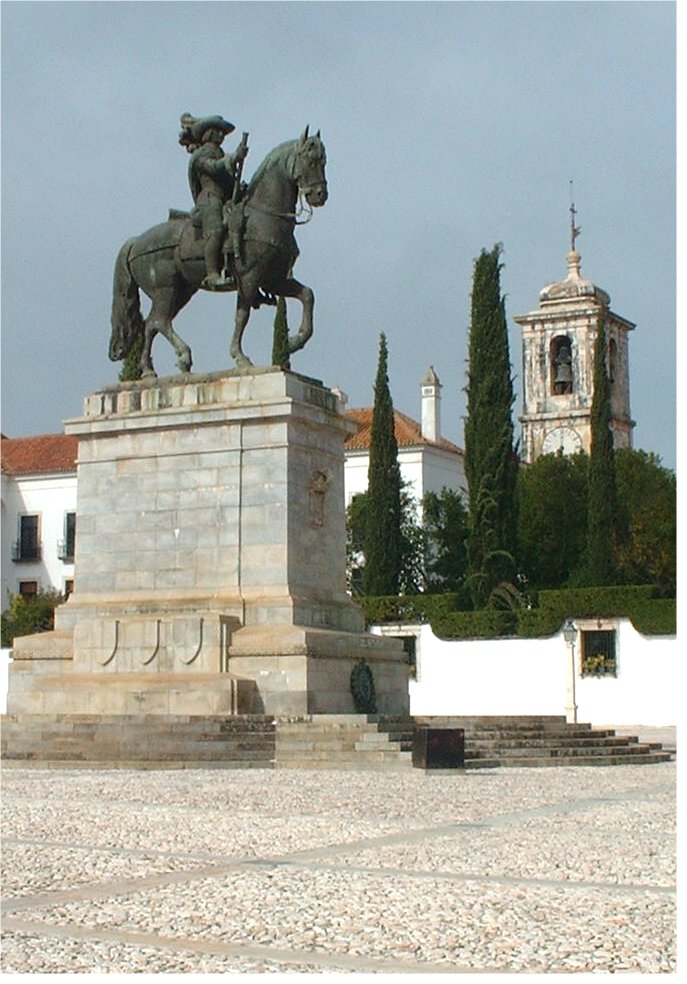
Dom João IV at Vila Vicosa

Dom João IV at Vila Vicosa, where he was born

João V (reigned 1707-1750) was nicknamed “The Magnanimous”.  He ruled at a time of enormous wealth for Portugal, with gold and diamonds from Brazilian mines filling the coffers.  Money was no object, and the Royal Palace at Mafra was built as a rival to Versailles.

João VI (reigned 1816-1826) had something of a turbulent time.  His kingdom included sovreignty of Brazil until independence was declared in 1825, and he had to flee there when Napoleon’s troops invaded Portugal.  He stayed in Brazil for 13 years, establishing a court and growing to love the place.  The loss of Brazil had an enormous effect on the Portuguese economy, and João was constantly embattled and plotted against on his return home.  His eventual death was believed to be as a result of poisoning.

Phew!  I hope you are not too exhausted by my tale of six Johns.  I’m linking this post to Julie Dawn Fox’s A-Z Personal Challenge and to Frizz’s A-Z.  You can follow their challenges through the links.  Many thanks for staying with me.

banner4

J is for Jadwiga

Poland-eagle-150square

This is a novelty, isn’t it?  For anyone new to my blog, you won’t have a clue what I’m up to, or why.  Old friends might just remember the logo.  I’ll explain a little later.

Jadwiga is a Polish feminine name (pronounced Yad-viga).  The diminutive, or affectionate family form, is Jadzia.  The name originates from the German Hedwighadu meaning “battle” and wig meaning “fight”.  You might not realise the significance of this until I tell you about Jadwiga, Queen of Poland.

Jadwiga, "king" of Poland- image from Wikipedia

Jadwiga, “king” of Poland- image from Wikipedia

Jadwiga was queen of Poland, or rather “king”, from 1384 till her death on 17th July, 1399.  She was a sovereign in her own right rather than a mere royal consort, entitling her to the title of king.

Jadwiga was the daughter of Louis 1 of Hungary and Poland, and Elizabeth of Bosnia.  When Louis died in 1382 his eldest daughter Maria was elected queen of Hungary, but the Poles opted to end the union between the 2 countries by choosing Jadwiga as queen.  She was then just 9 years old. After 2 years of negotiations with her mother, and civil war in Poland, Jadwiga came to Kraków to be crowned.  In 1386 she was married to Jogaila, grand duke of Lithuania, to form an alliance of territories much larger than the one with Hungary, changing the balance of power in Central Europe.

Coat of arms of Jadwiga- image from Wikipedia

Jadwiga’s coat of arms- from Wikipedia

The marriage opened the way to the conversion to Christianity of the largely pagan Lithuanians.  Jogaila was baptised Władysław in Kraków before the marriage took place, and they ruled jointly, but with Jadwiga as the leading figure.  She led 2 successful military expeditions, helping Poland to regain lost territories.  When Jadwiga died from childbirth, her husband became Władysław II Jagiello, founding the Jagiellonian dynasty.

Jadwiga was a great patron of religion and scholarship.  From the sale of her jewellery she financed the restoration of the Kraków Academy, which became the world renowned Jagiellonian University.

After her death, Jadwiga was venerated throughout Poland as a saint, and was said to have performed miracles.  Details of these and more of Poland’s convoluted history are to be found in the above links to Wikipedia.  She was finally canonised by Pope John Paul II in Kraków on June 8th, 1997.

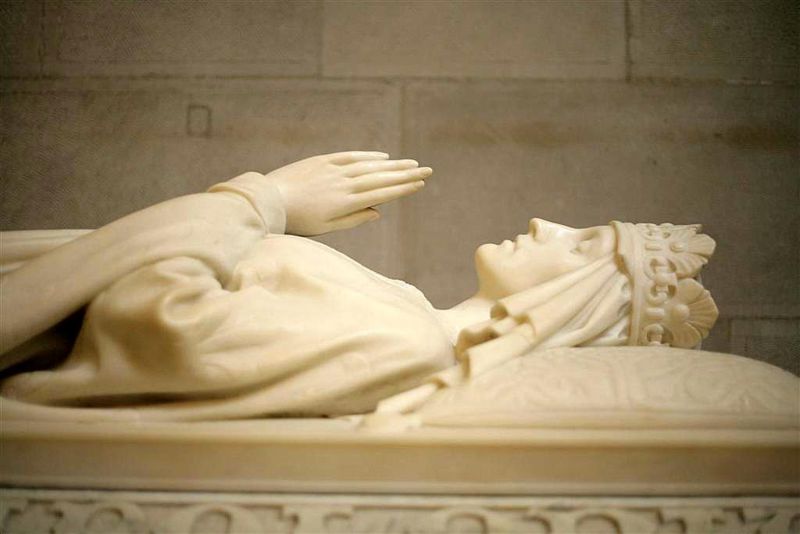
Jadwiga's tomb, in Wawel Cathedral, Krakow- from Wikipedia

Jadwiga’s sarcophagus, in Wawel Cathedral, Kraków- from Wikipedia

And now to my personal interest in the name Jadwiga. Time to meet my lovely cousin, Jadzia.  She is one of the daughters of my Dad’s older brother, Zygmunt, who died just months before the family were reunited, and so was never able to greet him on his return to Poland.  I have recounted Dad’s wonderful story in Exploring the Polish Connection, and have already introduced some of my cousins in this A-Z series.

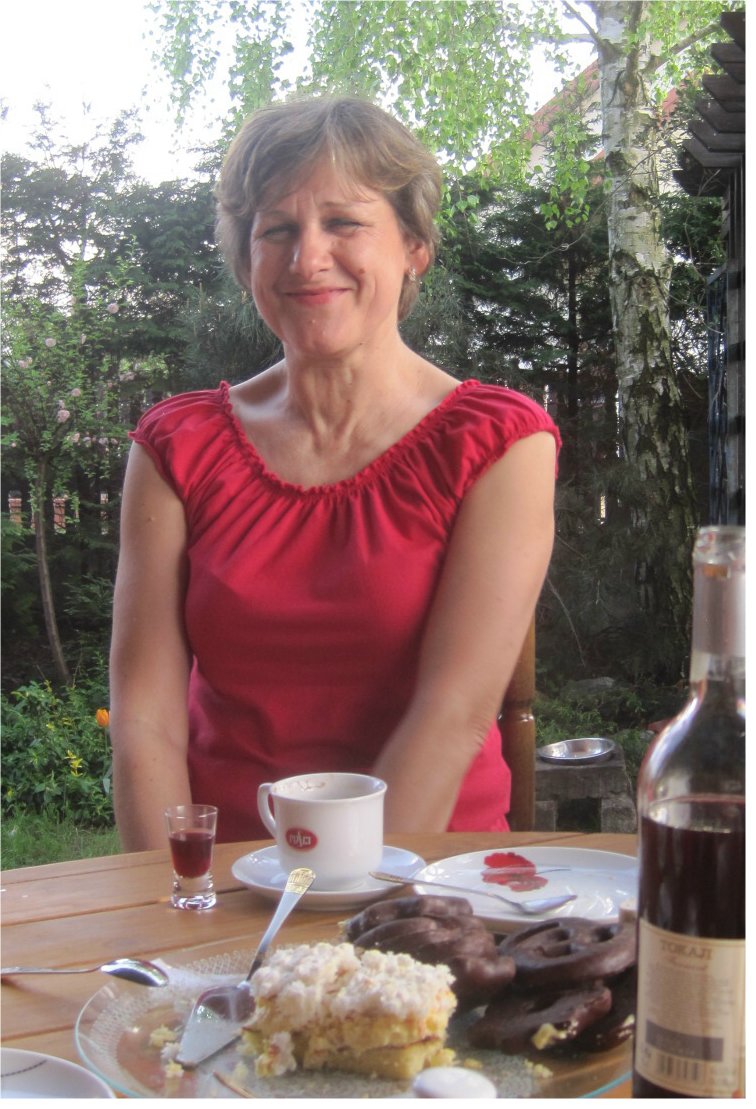
Jadzia with some of her delicious homemade cake

Jadzia with some of her delicious homemade cake

Jadzia, Mam and brother Bolek

Jadzia, Mam and brother Bolek in her lovely dining room (Dad in foreground)

I have many times sampled Jadzia’s wonderful hospitality, and been present at the weddings of both of her children, Ania and Krzysztof.  On each occasion our time together has been too brief.  Jadzia has a little English and I have a very little Polish.  When we exchange emails we do so in our native languages and leave the other to puzzle out the meaning.  Ania is fluent in English, and of course, my Dad is an old hand at Polish.

In writing this post I am linking back to the original A-Z Personal Challenge begun by Julie Dawn Fox.  Life has overtaken me a little so I’ve been slow in reaching completion.  I have pages dedicated to my A-Z’s, both for Poland and for Portugal, at the top of the page, so you can see just how far I’ve progressed.  I would also like to enter this post in Frizz’s A-Z.  I have his permission.  When I began this challenge I hadn’t even “met” Frizz.  Since then he has enhanced my world enormously.

banner4

Six word Saturday

6ws-participating-in-bannerSAD victim? Trying not to be!

Sad cloudThis is the time of year I dread, so I’m taking every opportunity to revel in light, beauty and colour.

Is anything as beautiful as a sunset?

Is anything as beautiful as a sunset?

And there’s always beauty to be found in flowers.  Click on an image and smile.

So, no reason to be SAD yet awhile.  Share your thoughts with Cate at Six word Saturday.  It’s a friendly place.

6wsButton

Thursday : Lingering look at Windows- week 35

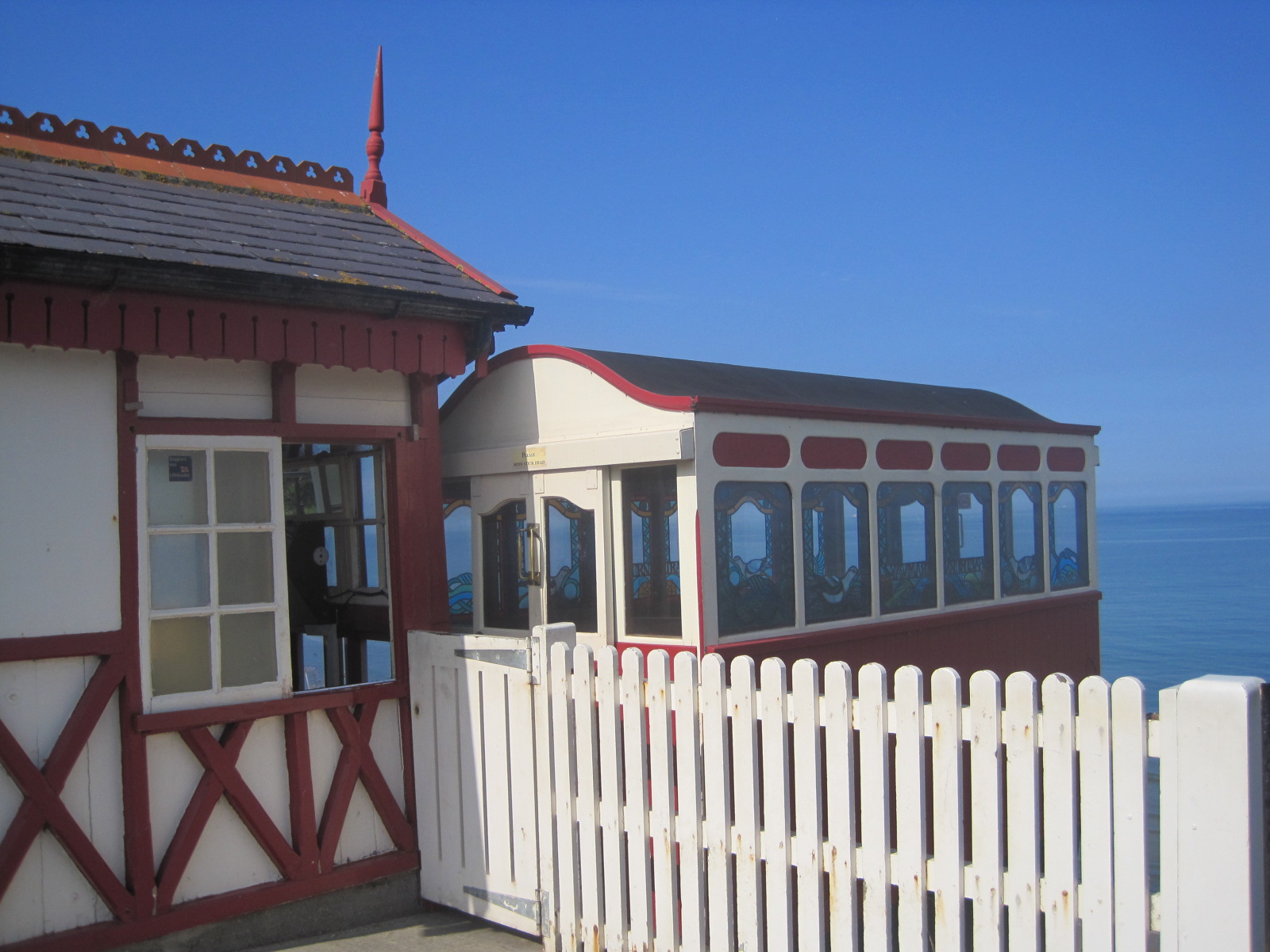
Saltburn cliff lift with its stained glass windows

Saltburn cliff lift with it’s stained glass windows

This is my third post about Saltburn-by-the-Sea in a week!  Something about “if a job’s worth doing” rings a bell. It is a charming town with a strong hint of Victoriana and quirkiness that has always appealed to me.  It’s situation on the North Yorkshire coast, overlooking Huntcliff Nab, is beautiful.  The cliff lift is the star attraction, and extremely useful if you don’t want to make the long haul up to the town from the beach.

If the cliff lift’s not in operation, a stroll through Valley Gardens will bring you back up to the town by a more leisurely (but still steep!) route.  After the recent floods you might need your wellies, but in Summer it’s a beautiful woodland stroll beside the tawny stream.  As a real treat the Prince Charles miniature steam train runs through the woods in the holiday season.  I had just missed it and it was safely stowed in the engine sheds, but I found these rather whimsical windows in the childrens’ wildlife-watching area.

Back on the cliff top, the town is full of grand old Victorian houses and a spattering of shops.  Maybe a little window shopping before you hunt out a cafe with a view?

This slideshow requires JavaScript.

If you didn’t see my post about the yarn bombing on the pier, have a look at Six word Saturday.  The sea creatures are delightful and the views of Huntcliff Nab are pretty wonderful too.

Meantime, many thanks to Dawn at Lingering Visions.  I love writing posts about windows.  How about you?  Click on the link to see this week’s entries.

Than