Nothing special this week. Just a short walk in the Algarve and a reminder that I will not be here to post a walk next week. I probably won’t have time to respond to many of you before I go, either, so I’ll have to crave your indulgence. You know I’ll catch you up when I’m back, don’t you?
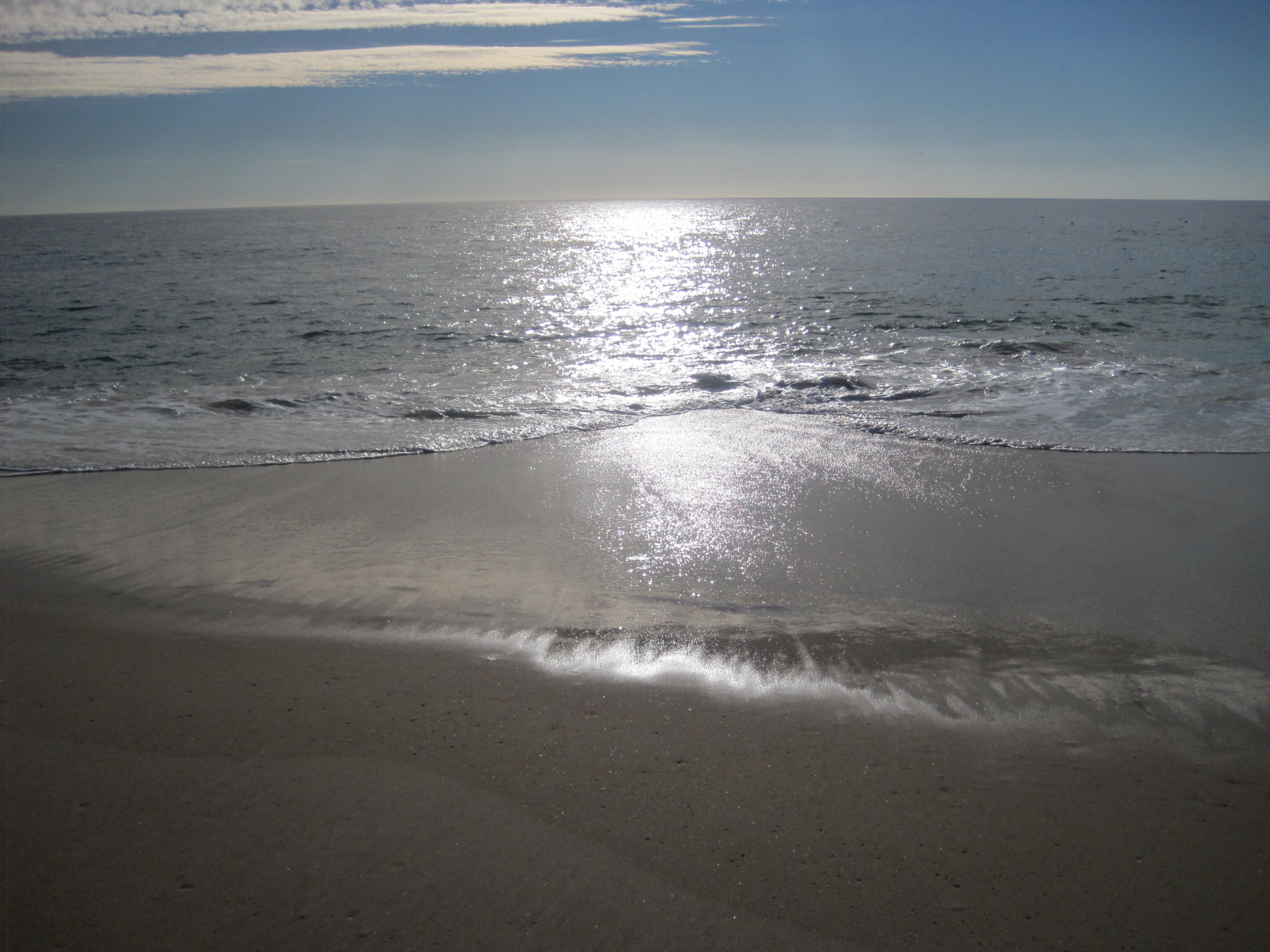
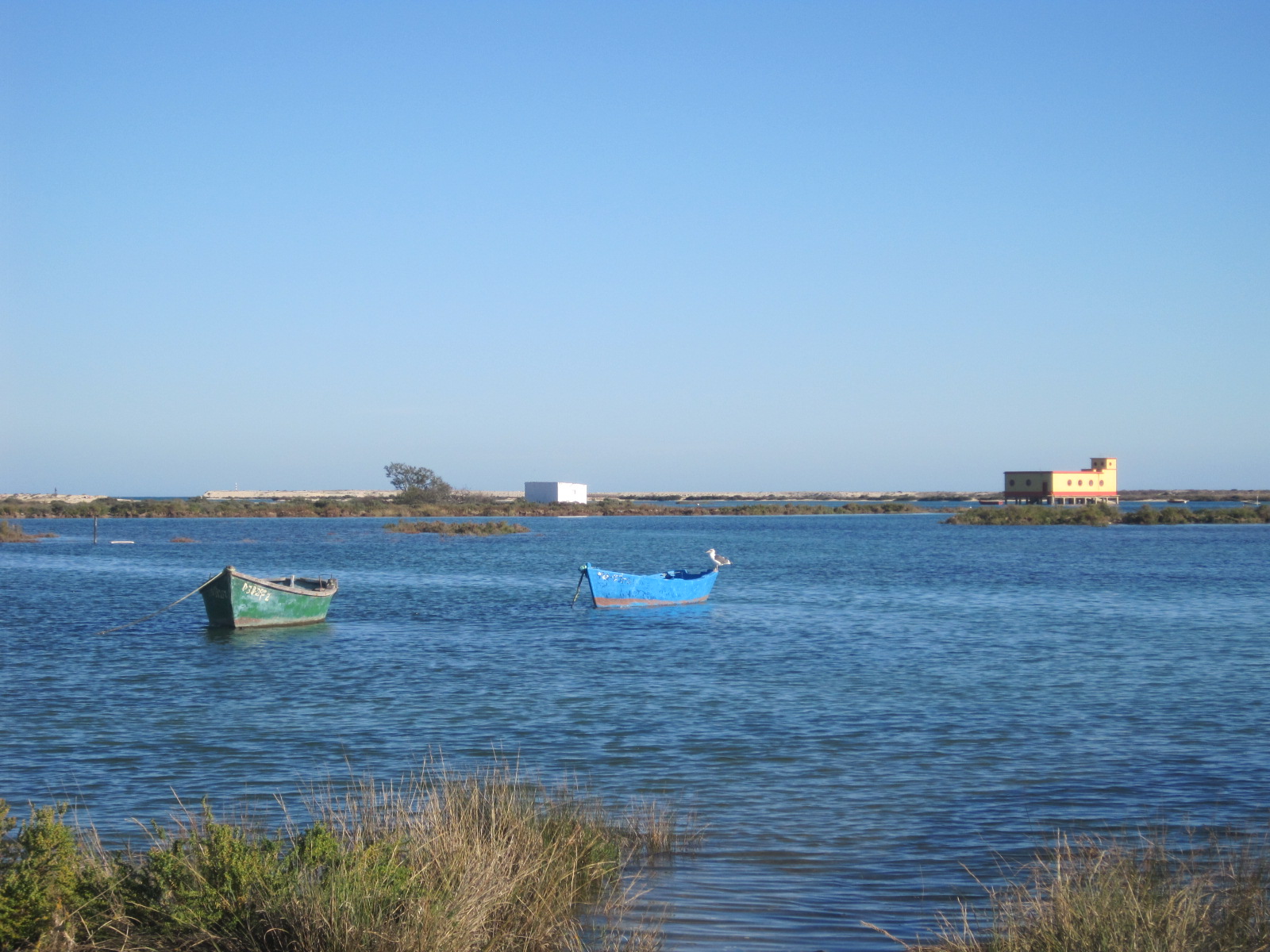
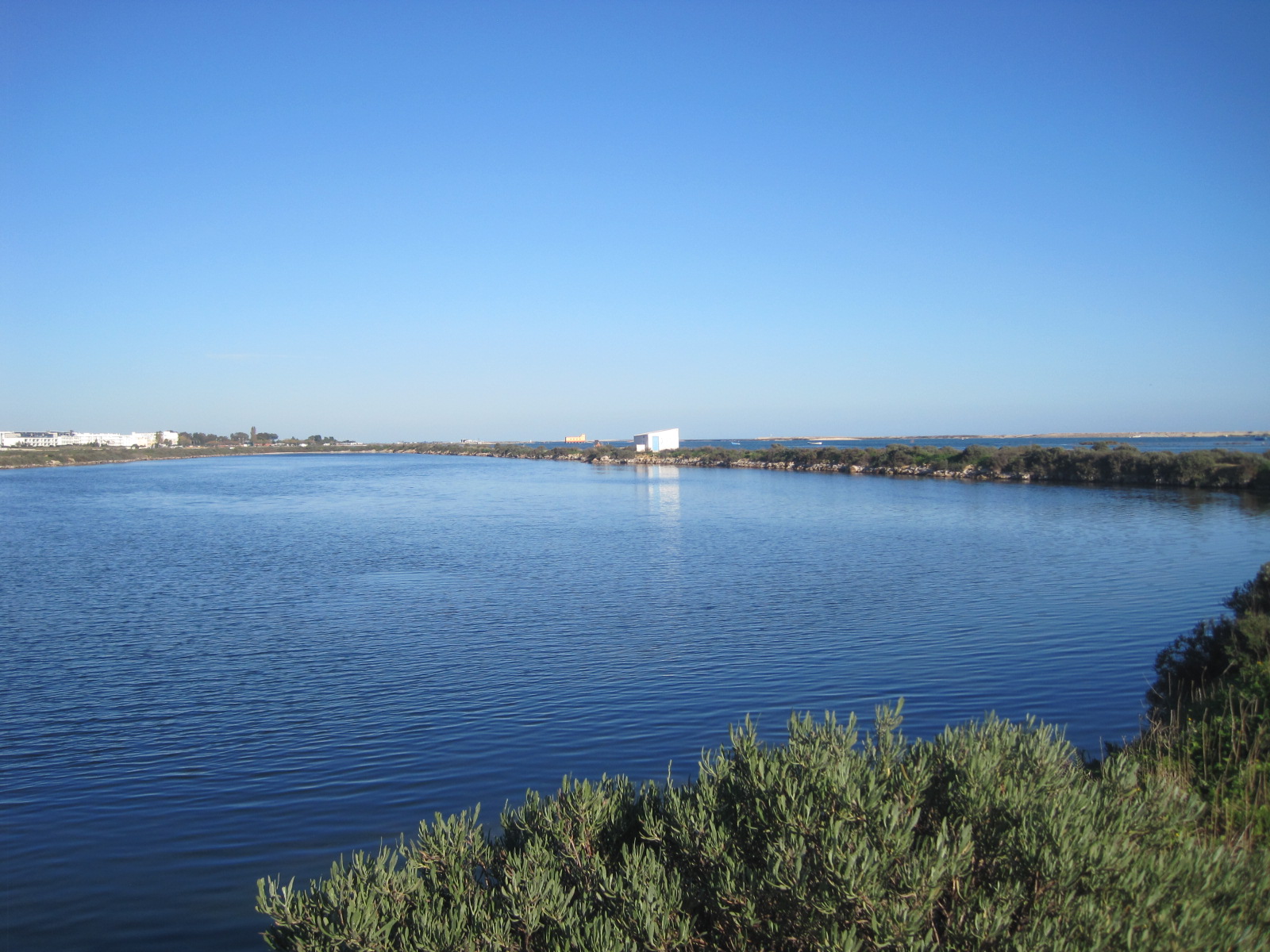
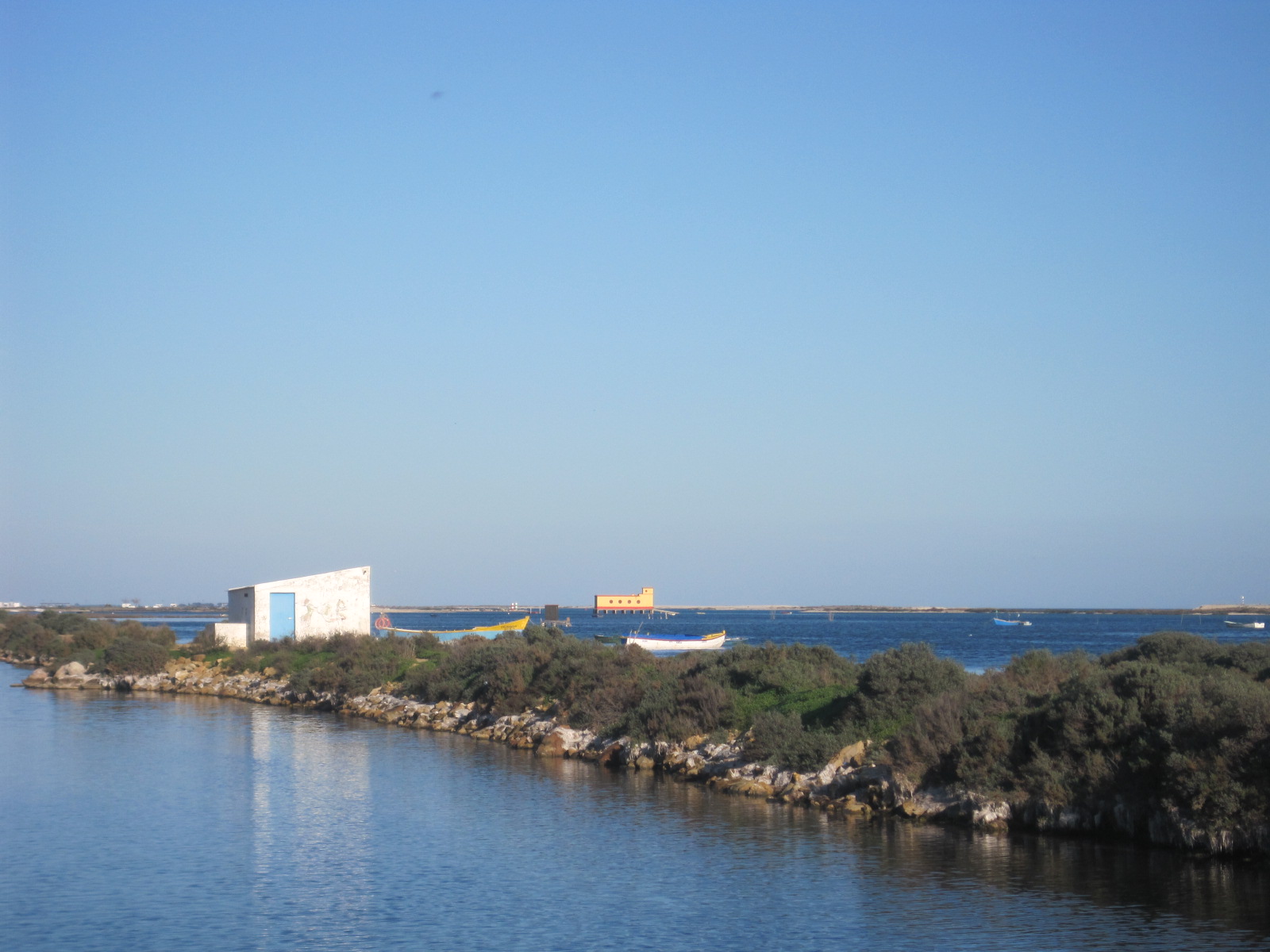
In all honesty, I was a little disappointed in this section of the São Lourenço Trail but there were compensations. It borders affluent Quinta do Lago, and appears to be used largely by joggers and cyclists, between rounds of golf. I approached the trail from the beach, crossing over the salt flats via the Ponte de Ancao, an extremely long foot bridge, easily visible when you fly over the Algarve.
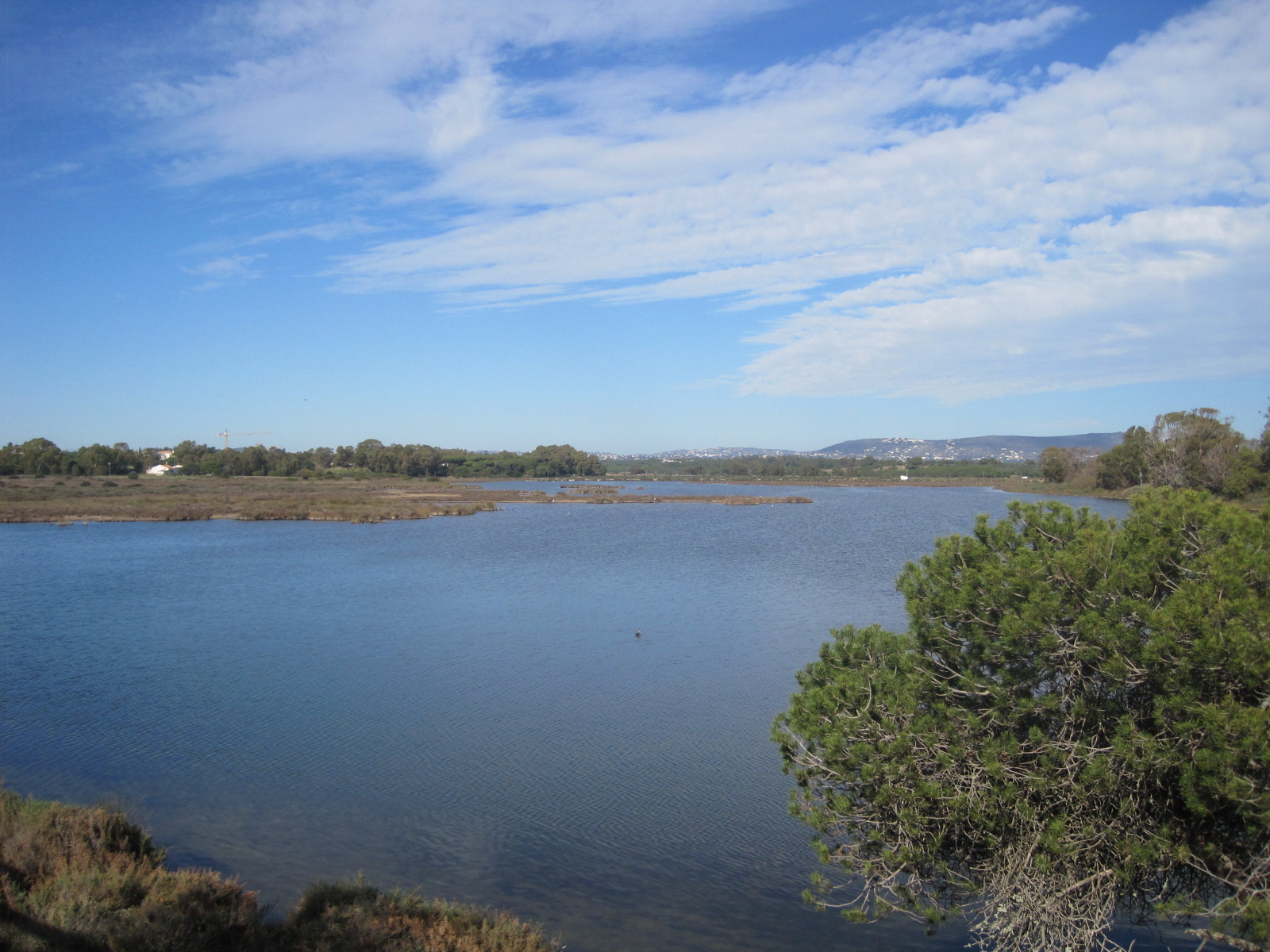
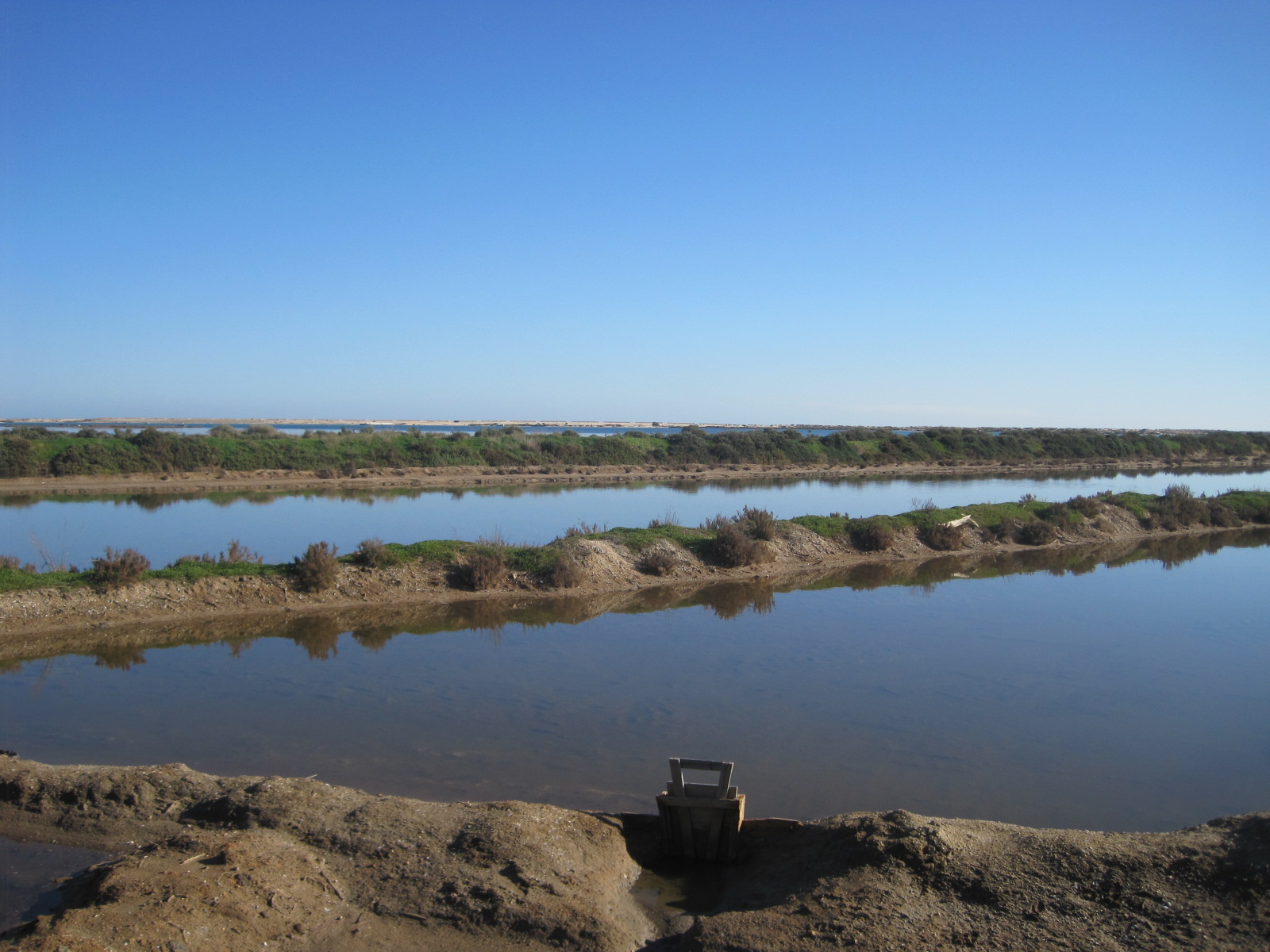
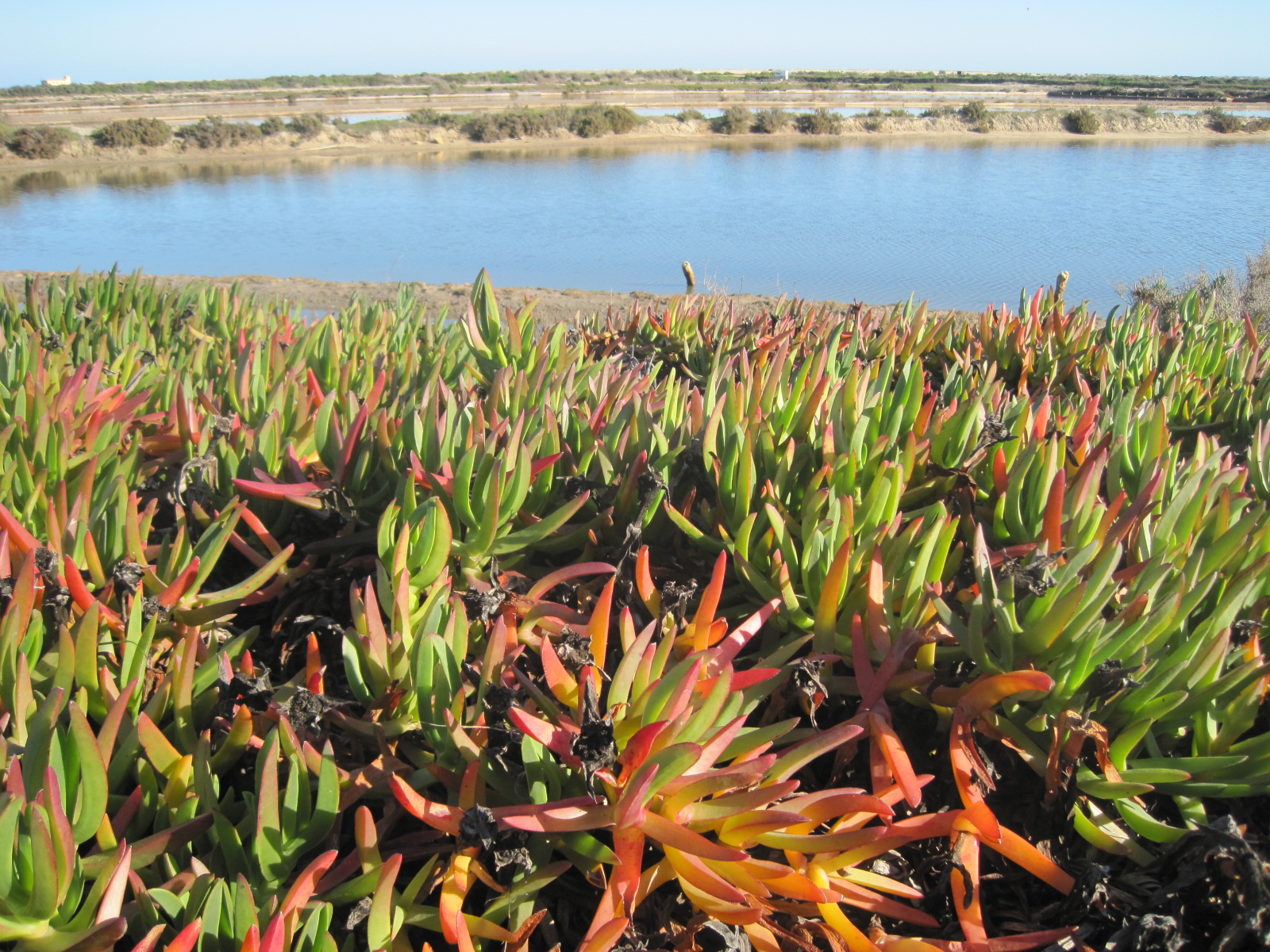
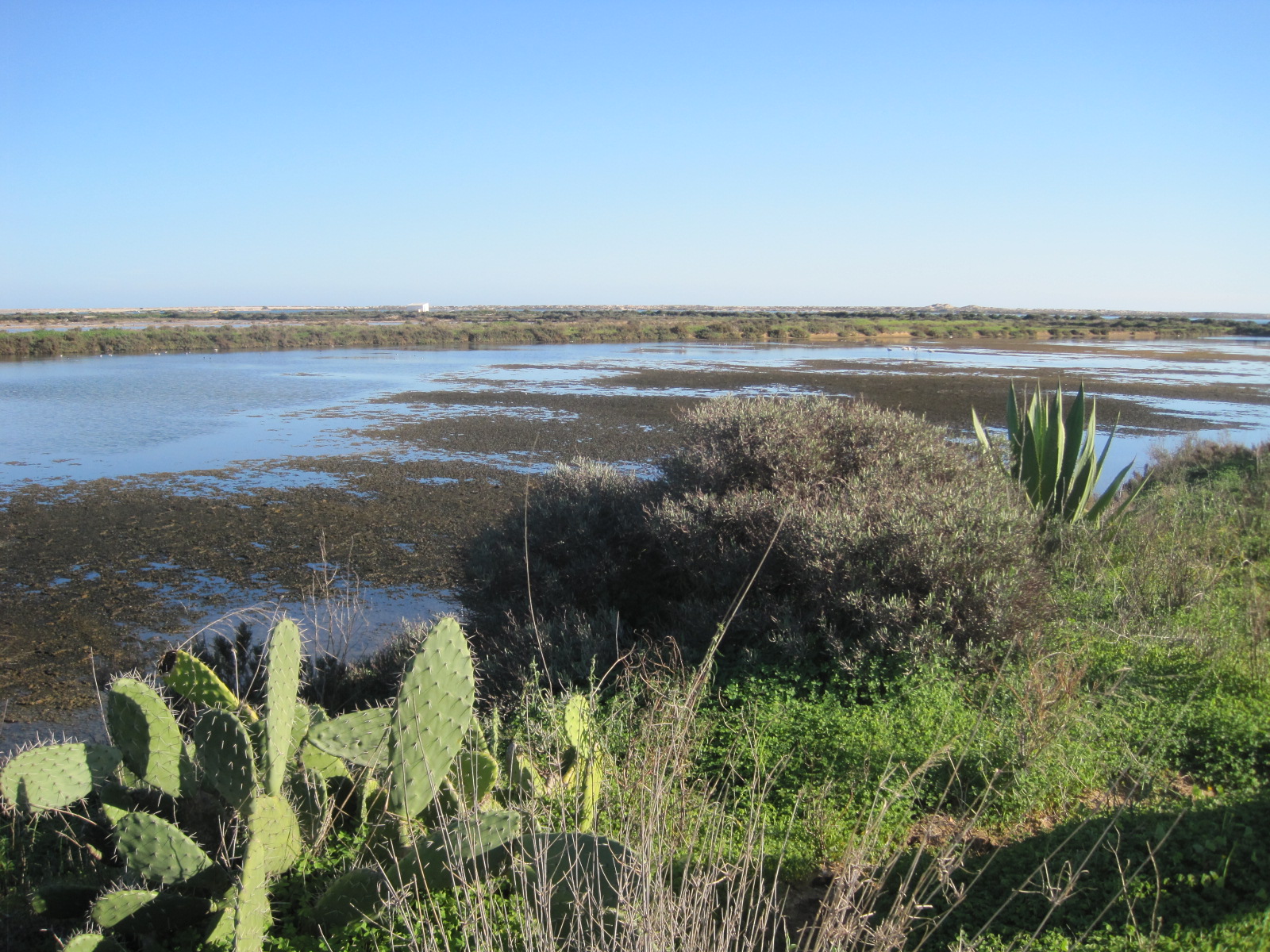
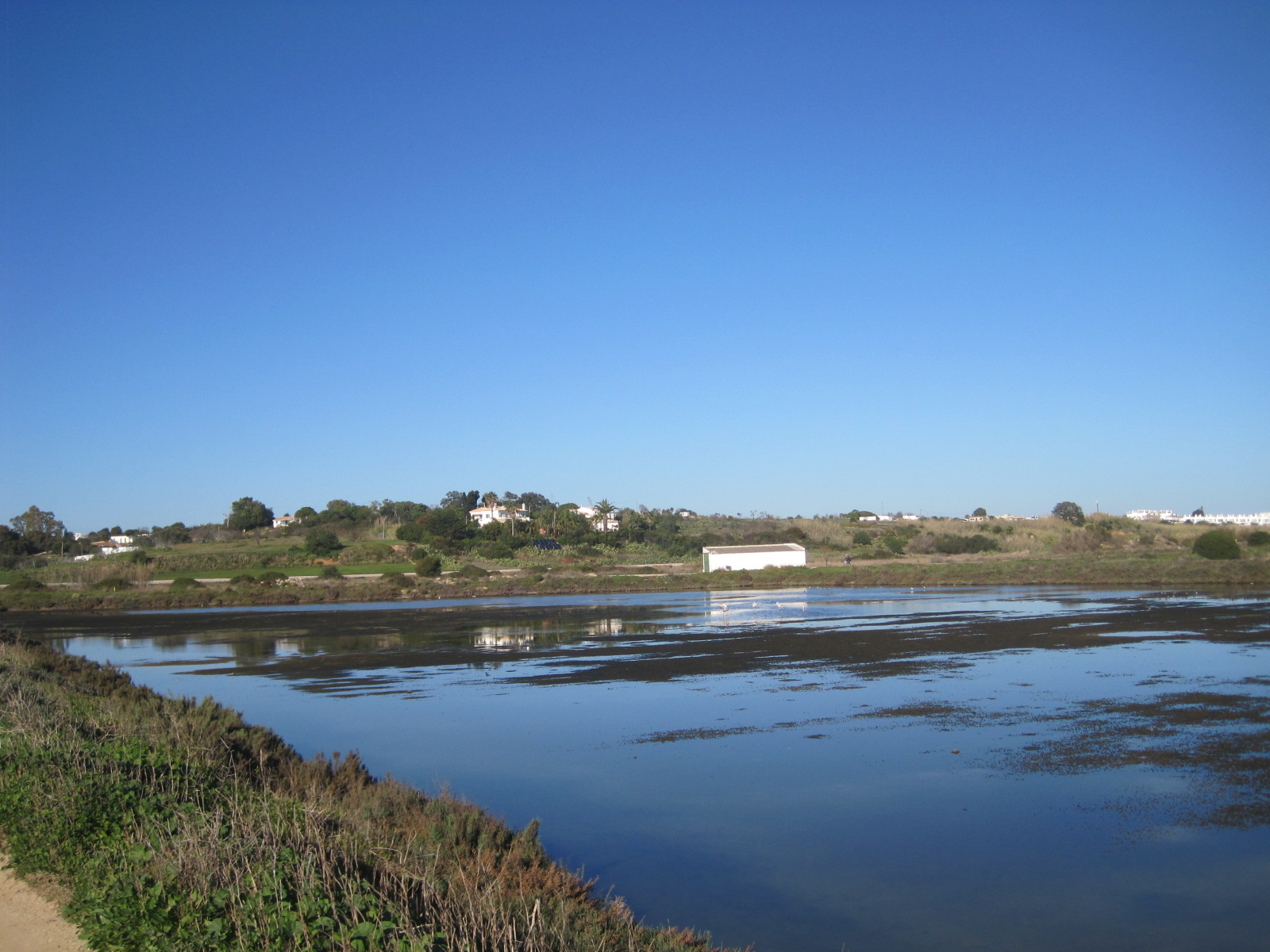
The last time I was in this neighbourhood I had turned left after the bridge, and been astounded at the beauty of the saltwater lake stretching before me. So I had high hopes on my return. A right turn after the bridge had me skirting the edge of a golf course, the salt marsh squidging at my toes. The tide was out, but it was obvious that when it came in, some of the trail would be underwater and a little paddling might be required. A good reason not to loiter, but it was not very obvious to me which was the trail.
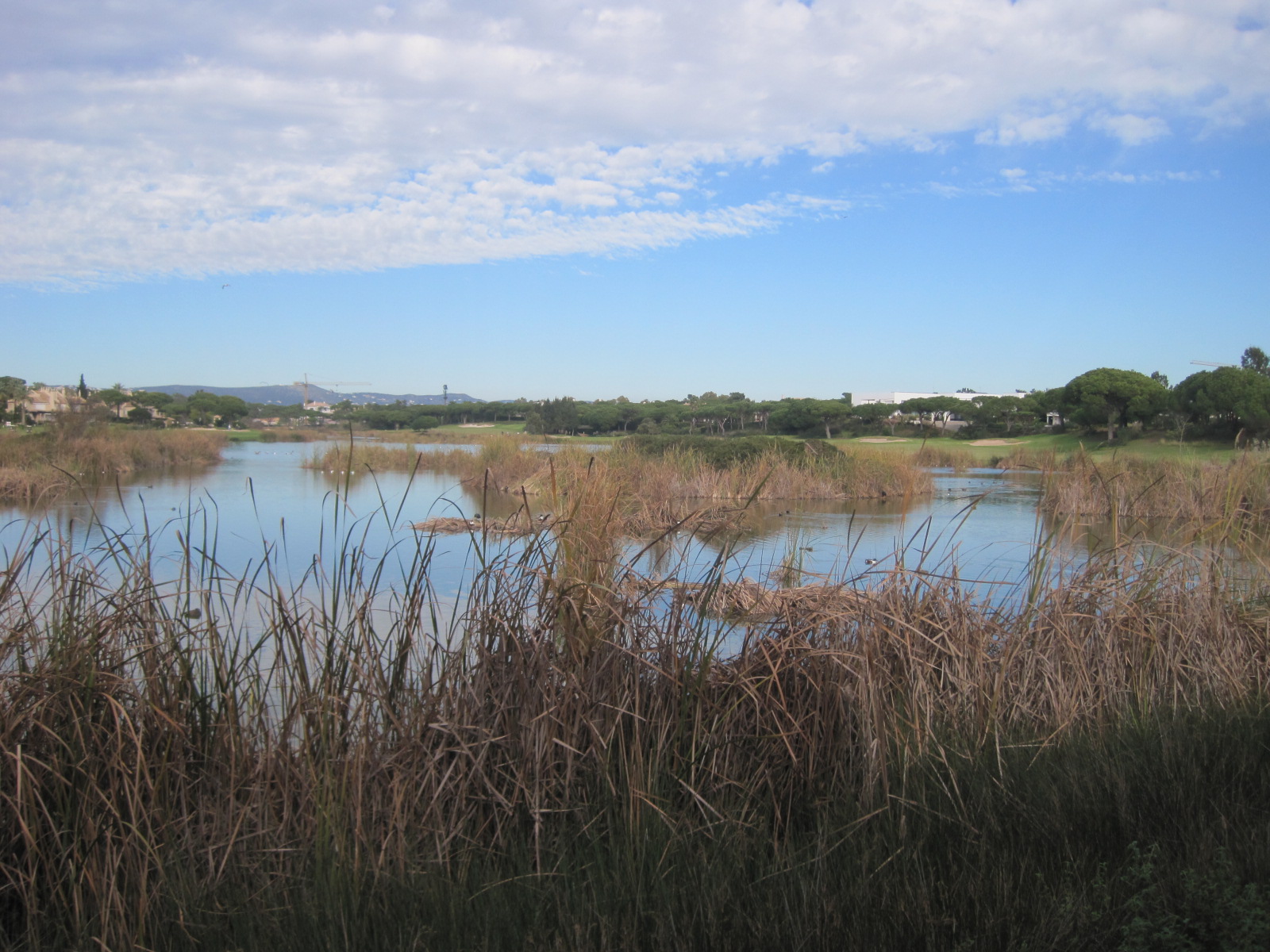
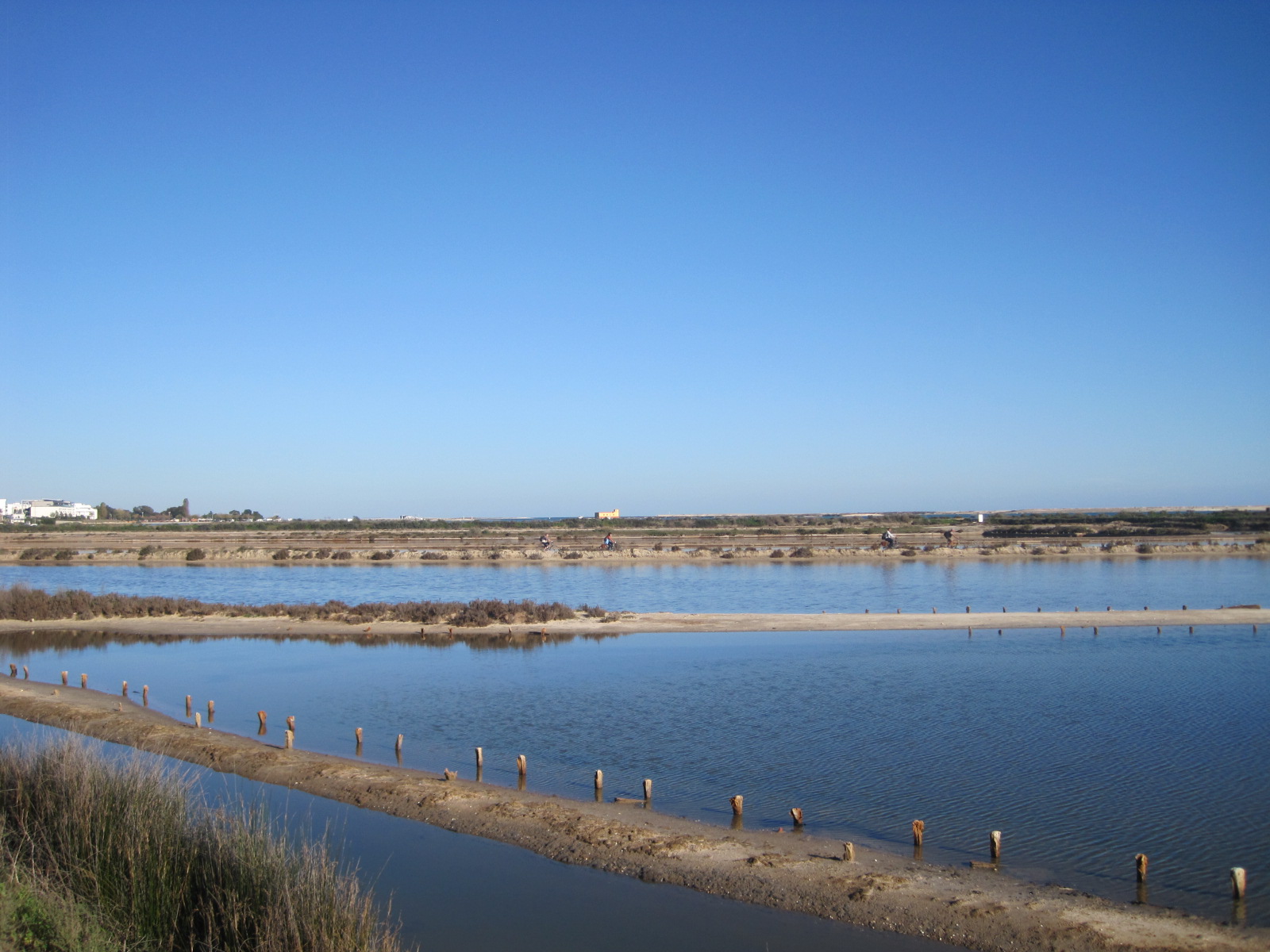
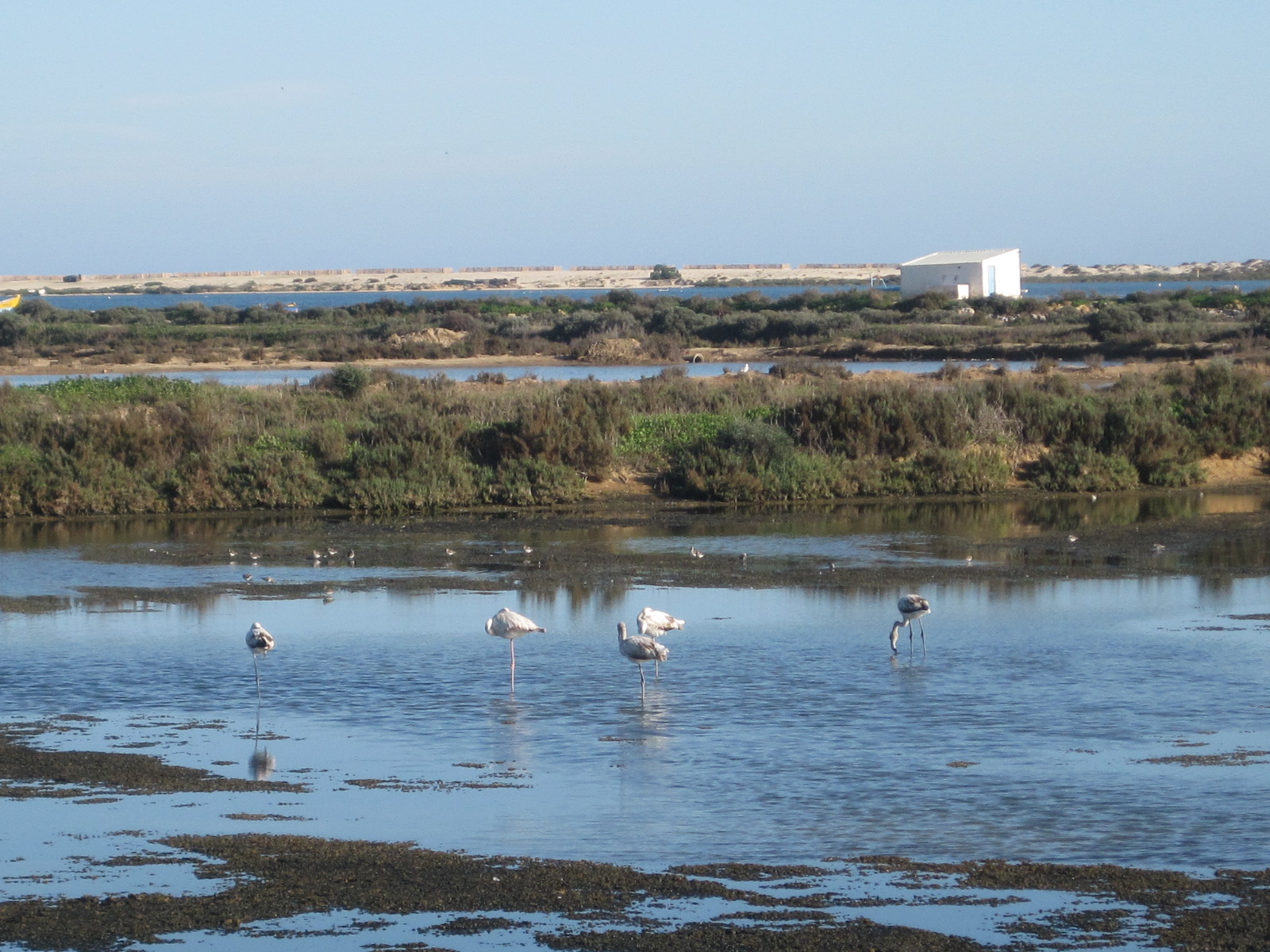
This new-looking red dust cycle track proved to be a false start. It led far into the distance, towards the airport, and seemed very popular with birdwatchers. Solid benches along the way attracted couples with binoculars, focused on the watery world. An about face proved necessary.
It was immediately apparent that I should have stuck close to the golf course, on a much more beaten track. I retraced my steps and headed into a stand of pines. Beyond them, a small lake was overlooked by a two-storey bird hide.
I spent a little while in the bird hide, enjoying the antics of the waterfowl, but I forgot to look for the two species of native terrapin. Azure-winged magpie are a common enough sight in Portuguese woods. The trail ends at some rather unprepossessing Roman ruins, former salting tanks used for the preservation of fish. A signboard describes the process.
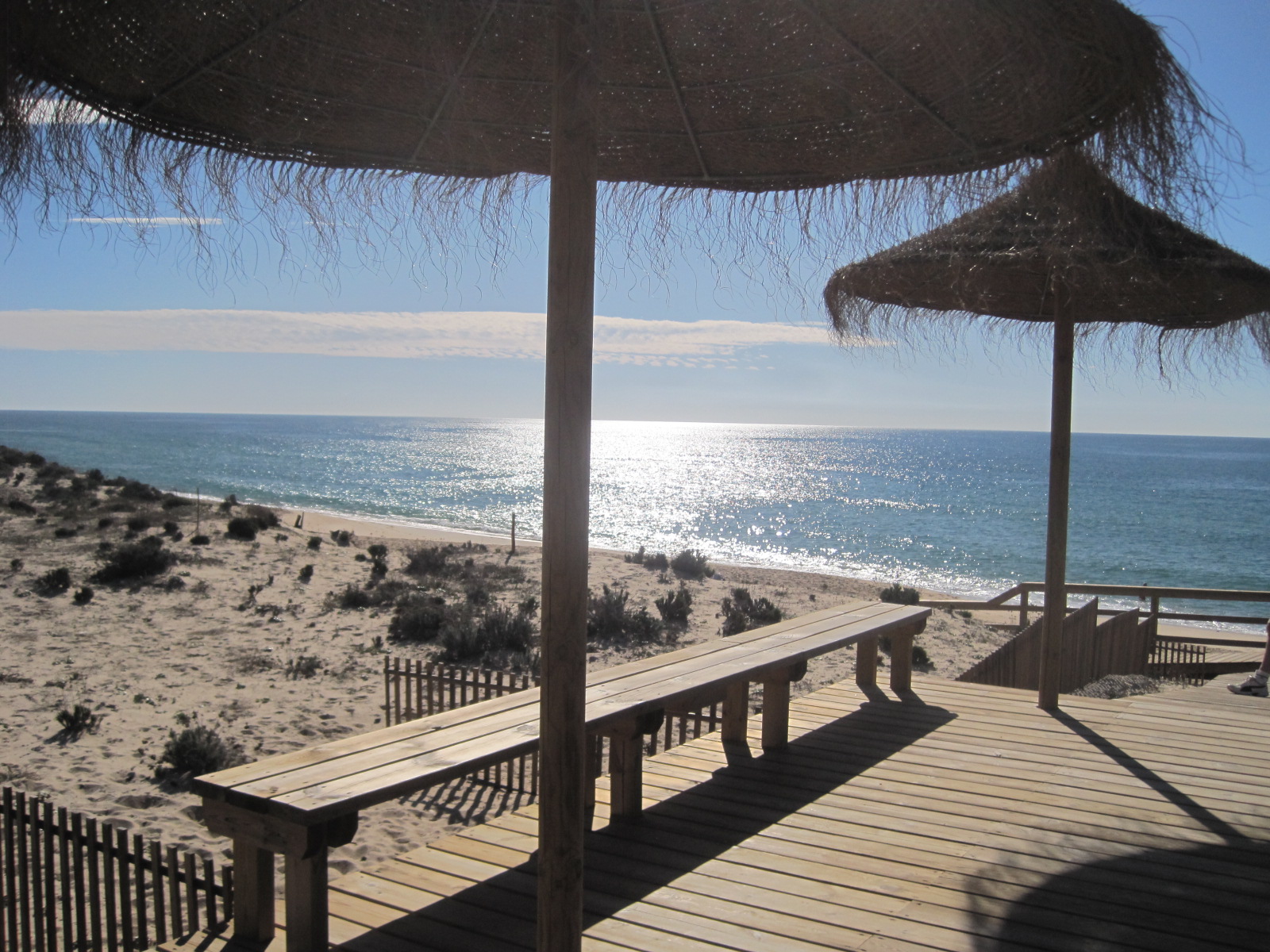
Time to retrace my steps the brief distance back to the bridge, the tide not having advanced too far. It was a warm day for late November and I had neglected to bring water. The price of my folly was high. I did say that this was wealthy Quinta do Lago, didn’t I? The cost of my glass of white at Gigi’s bar made me wince, but there was nowhere else in sight. I stayed as long as possible to gain maximum value from the view.
This is walk no. 42 from Walking Trails in the Algarve, a book I’ve used previously. Remember Carrapateira? Full details of how to get there, complete with maps, are shown in the guide.
And that’s it from me. I’m publishing this a little early to give me a head start, but I hope you’ll still put the kettle on and settle in for a good read.
As always, huge thanks to my contributors, and to those of you who just enjoy keeping me company. Details of how to join in can be found on my Jo’s Monday walk page, with a click on the logo above. Remember though, I’ll be missing next week.
……………………………………………………………………………………………………………………………….
Lots of snow about the blogs this week! Start us off, Anabel!
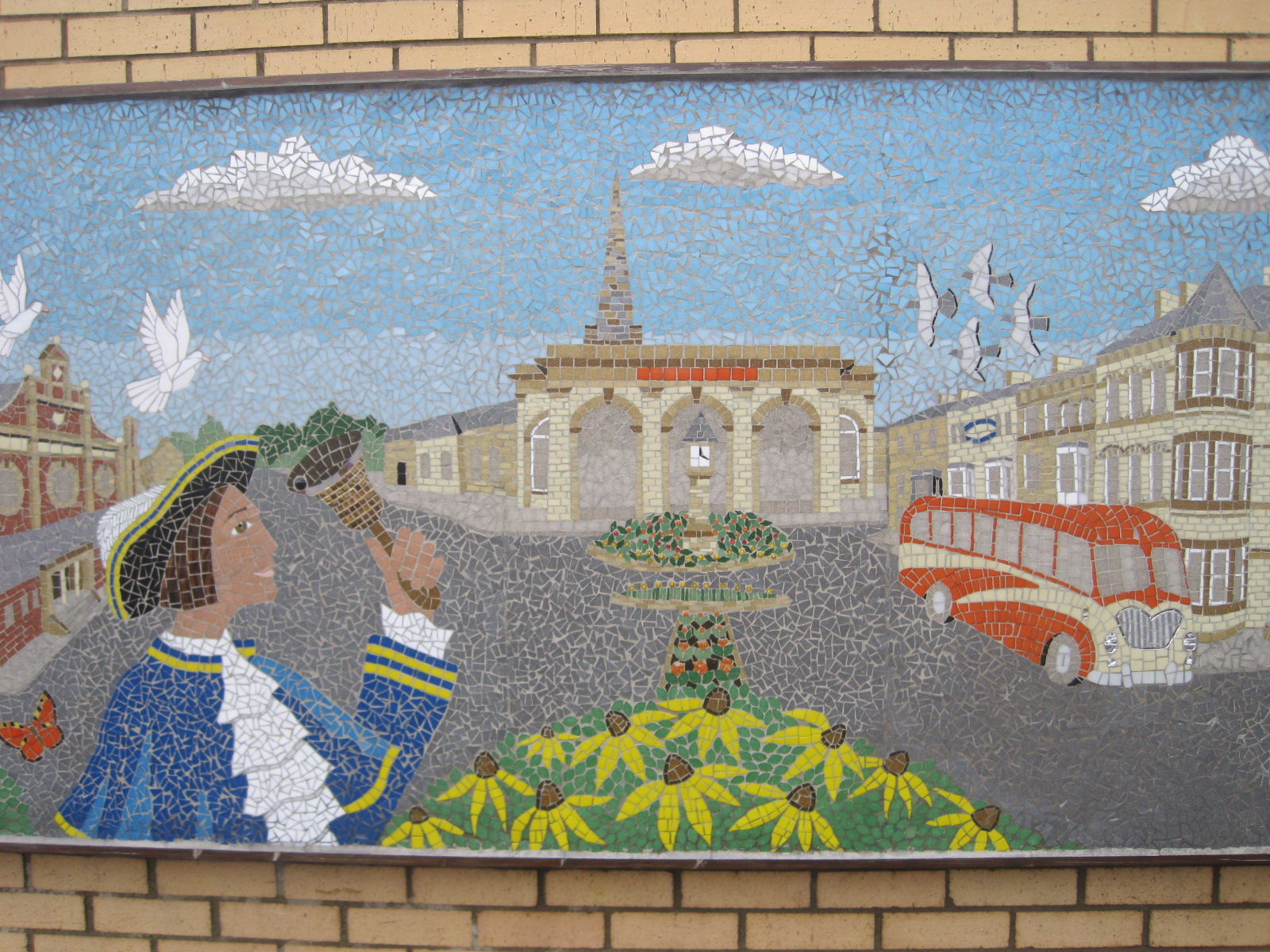
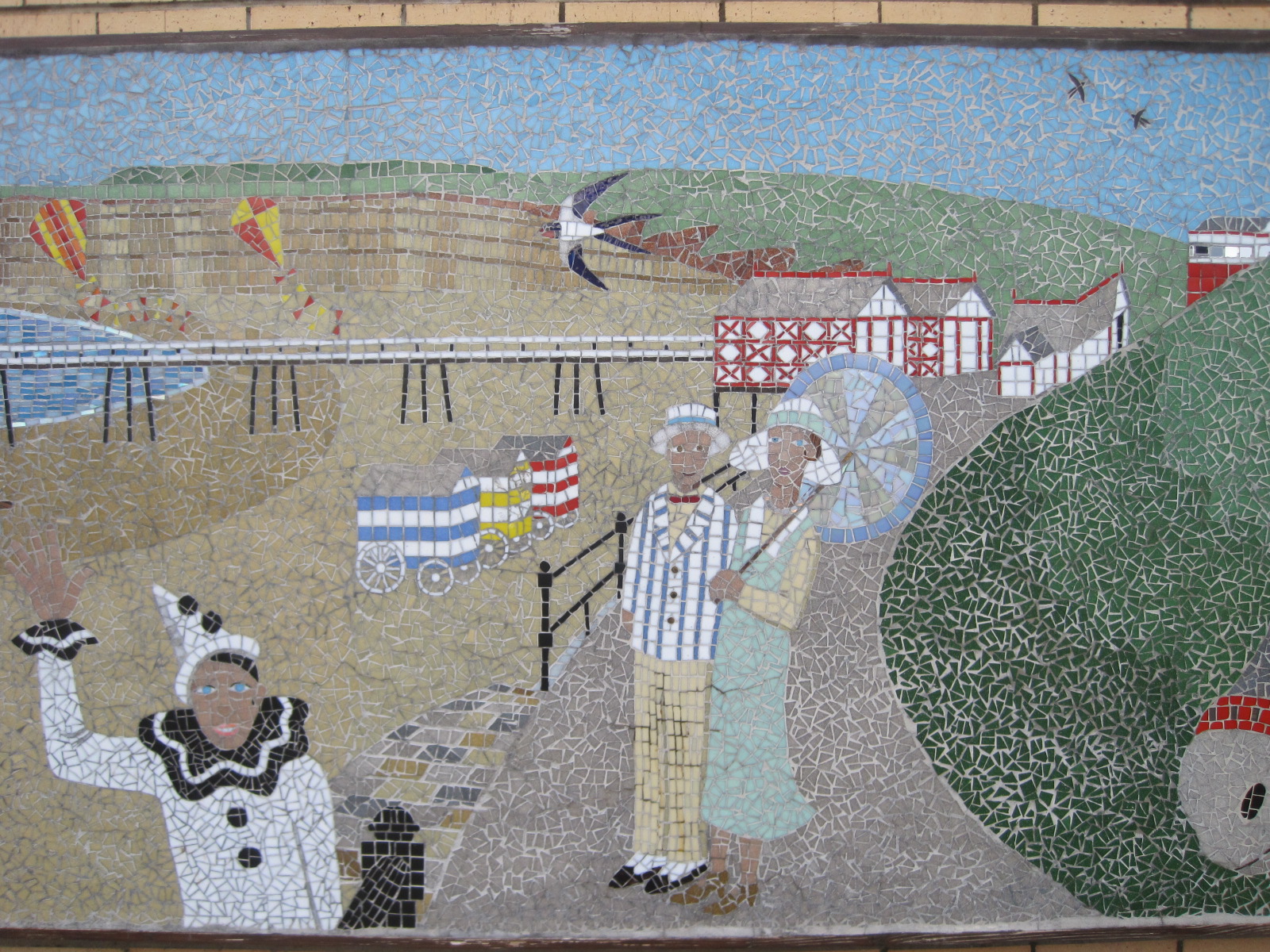
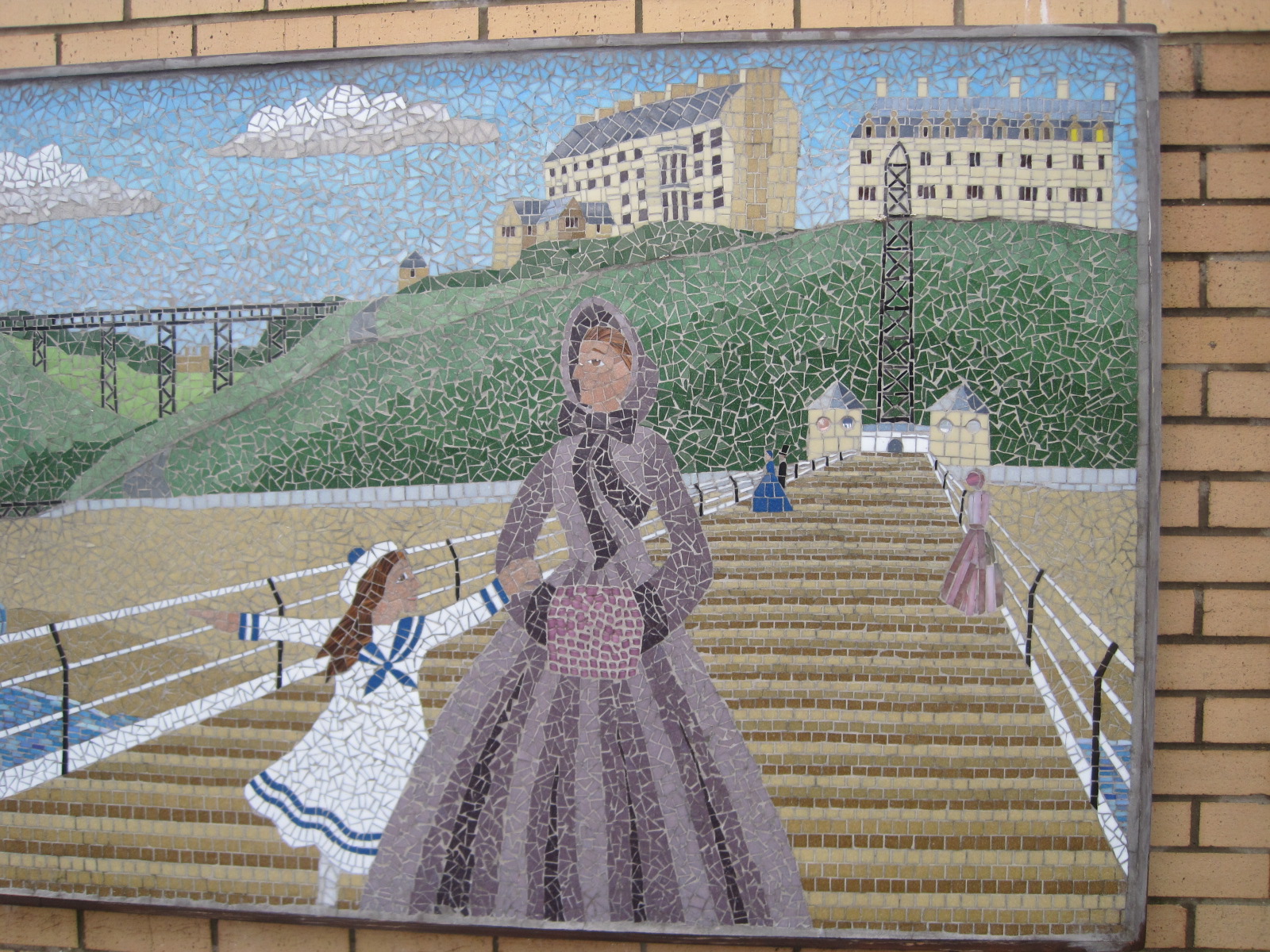
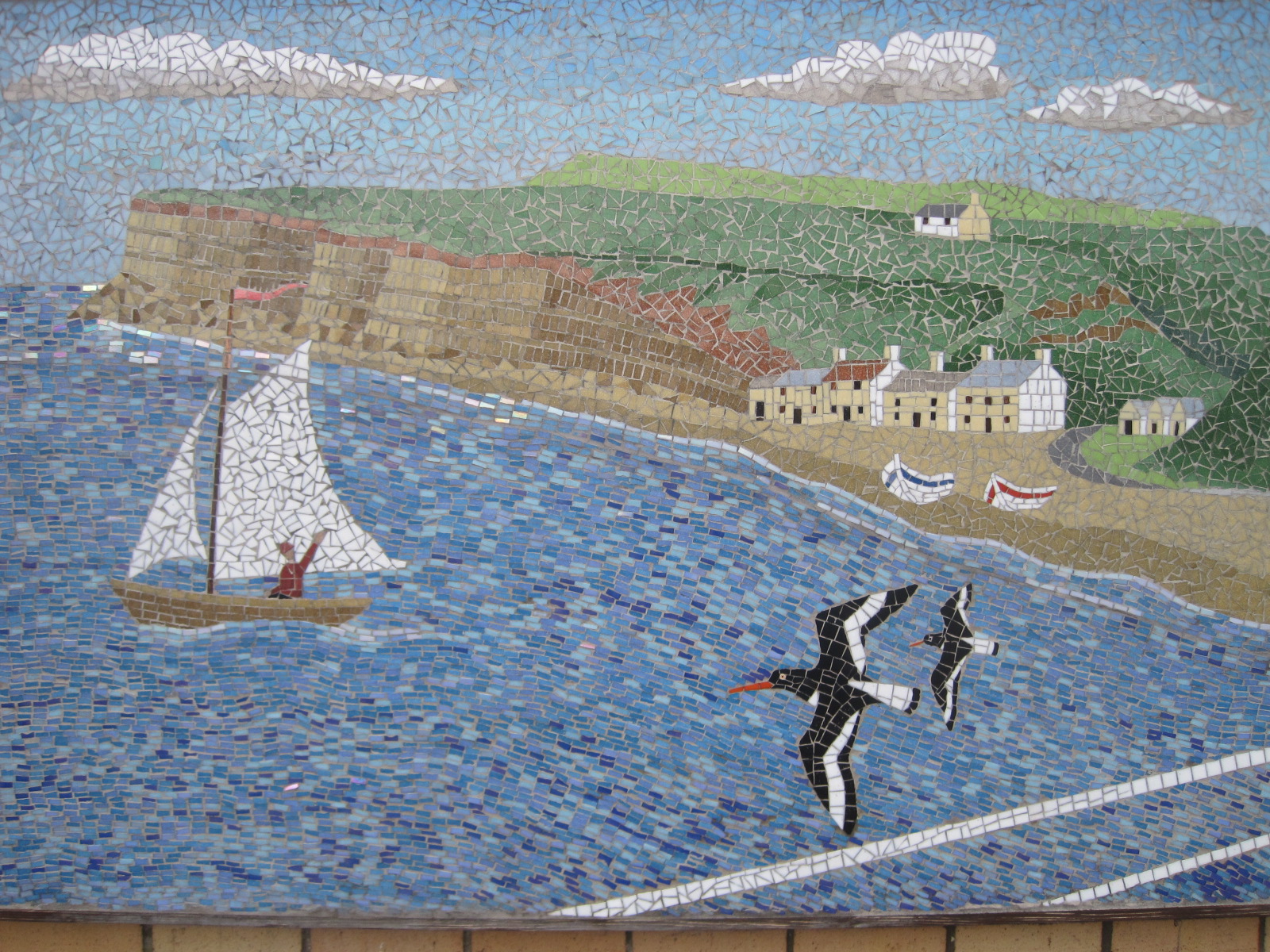
Some towns work really hard at making the best of what they have. Saltburn-by-the-Sea, on the North Yorkshire coast, is certainly one of those. The second you step out of the railway station, you are welcomed by a frieze of mosaics, colourfully depicting many of the town’s landmarks. The towering cliffs of Huntcliff Nab form a constant and beautiful backdrop at the end of the street.
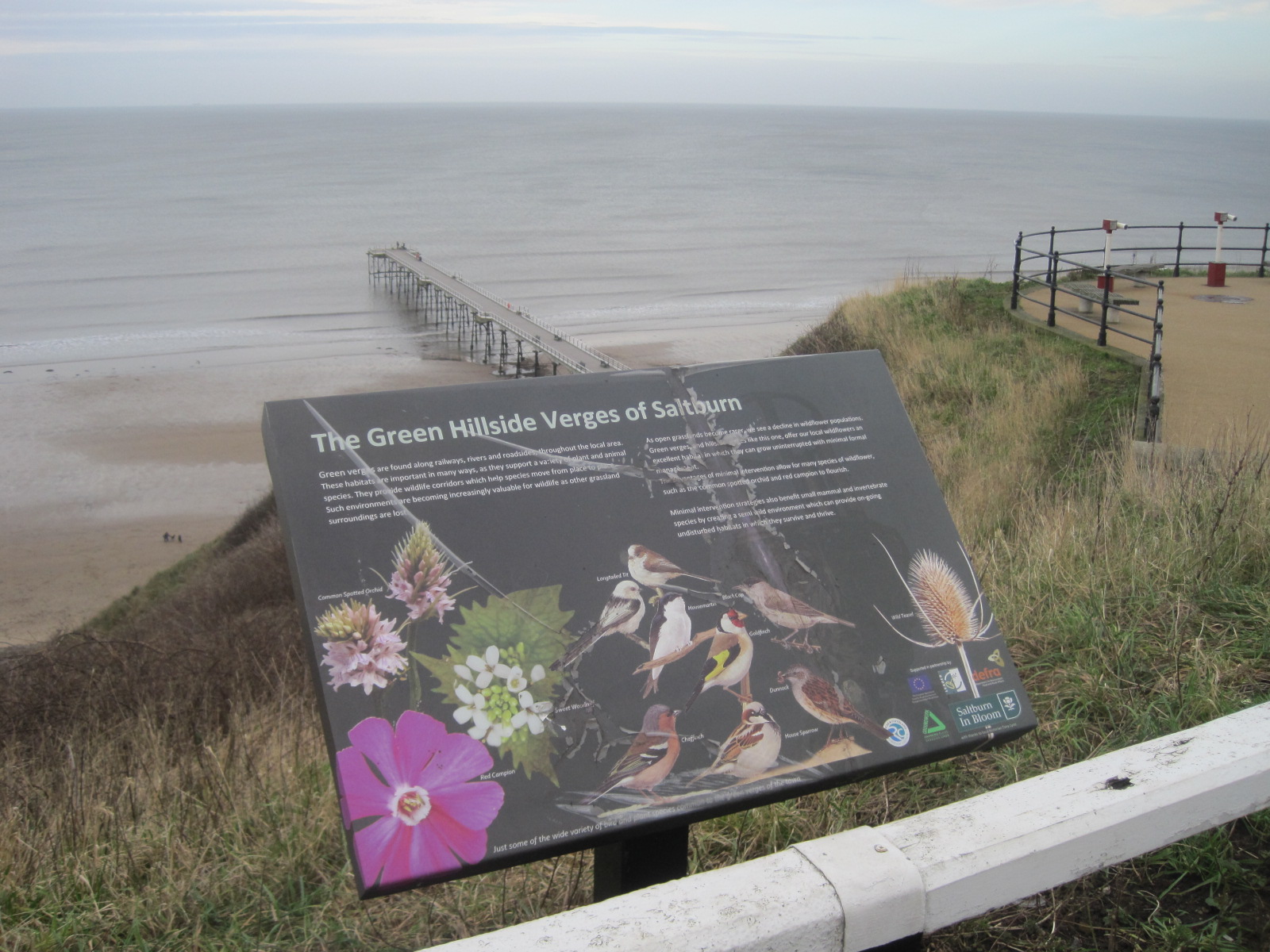
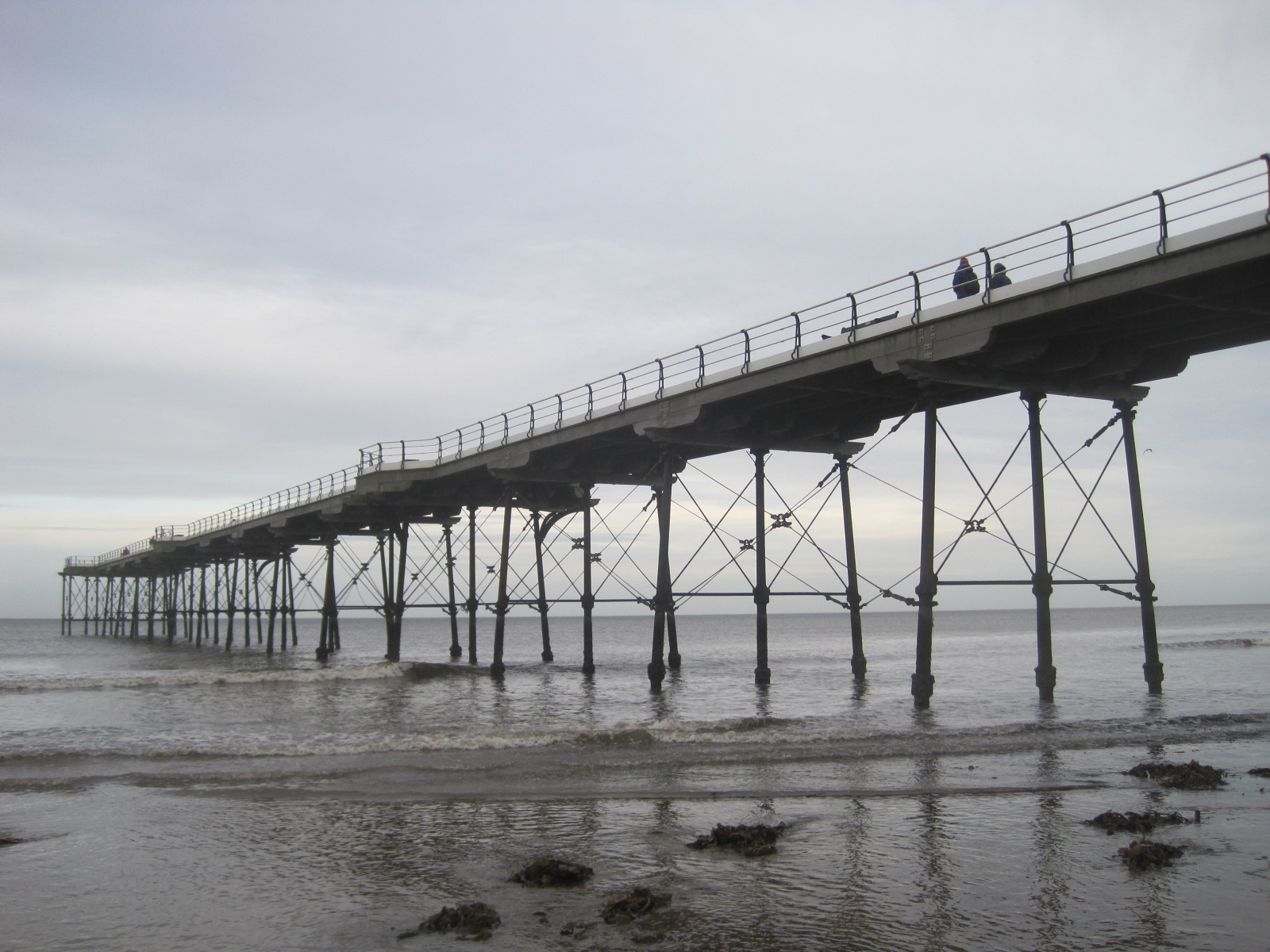
A saunter through majestic Victorian architecture will bring you down to the Valley Gardens. A miniature steam train, ‘Prince Charles’, chuffs the length of the valley in the summer months. Then there’s the beach, promenade and cliff lift, all offering their entertainments. The pier stretches out to embrace the salt spray of the North Sea. Parasols a-twirling, return to gaze upon Huntcliff Nab.
I love the whimsical nod to days gone by in these mosaics. It’s an easy enough stroll. Come with me and I’ll show you how it all looks this winter.
Followers of this blog will be no strangers to Saltburn. We’ve walked here together before. I hadn’t really intended to take you there today, but my husband was measuring the garden of a lovely old Grade II listed house, in the town. With a couple of hours to kill, I wasn’t going to waste an opportunity, now was I?
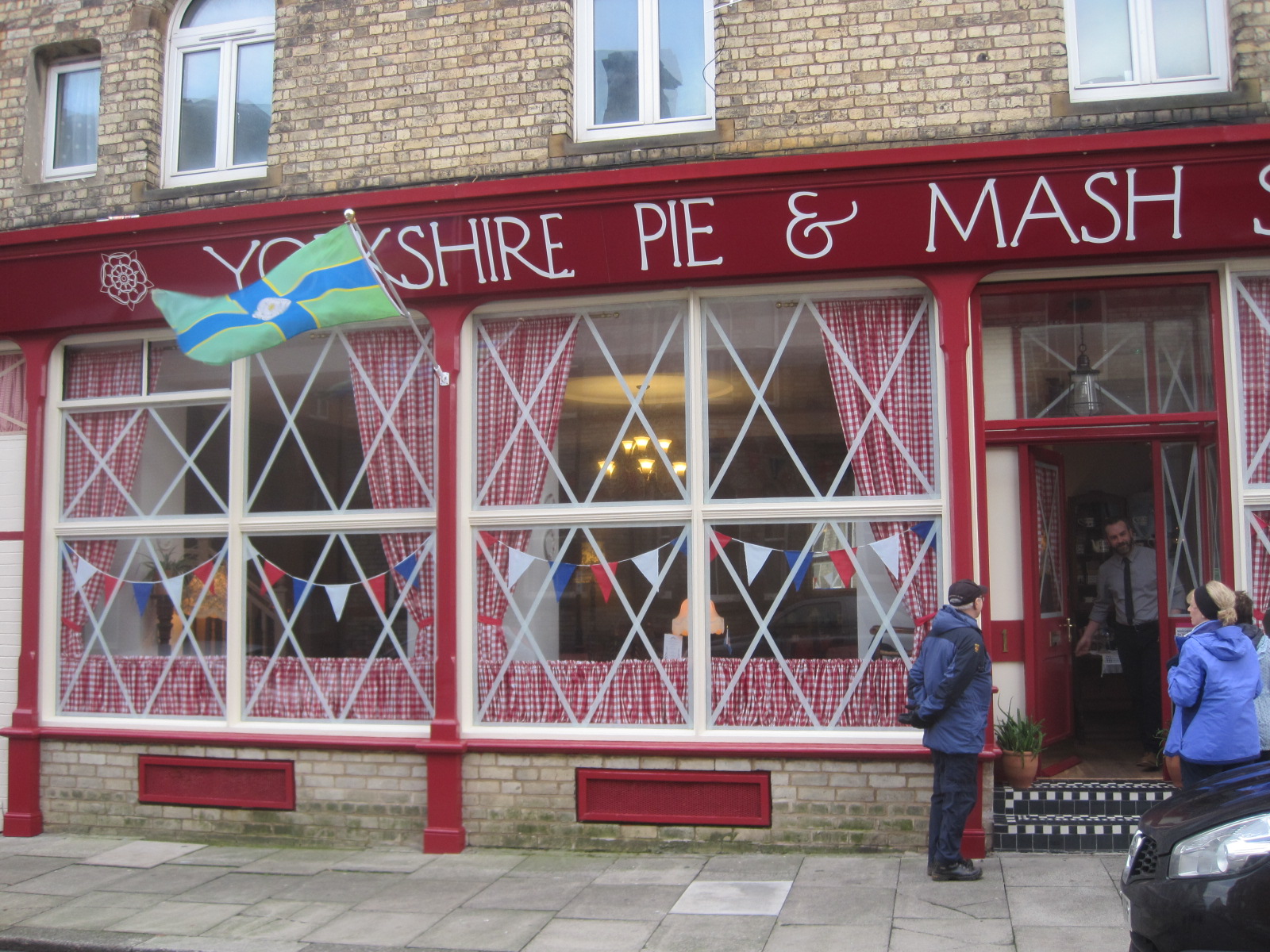
Let’s start with a look at some of the quirky shop fronts. Browsing here is seldom dull. See anything you like?
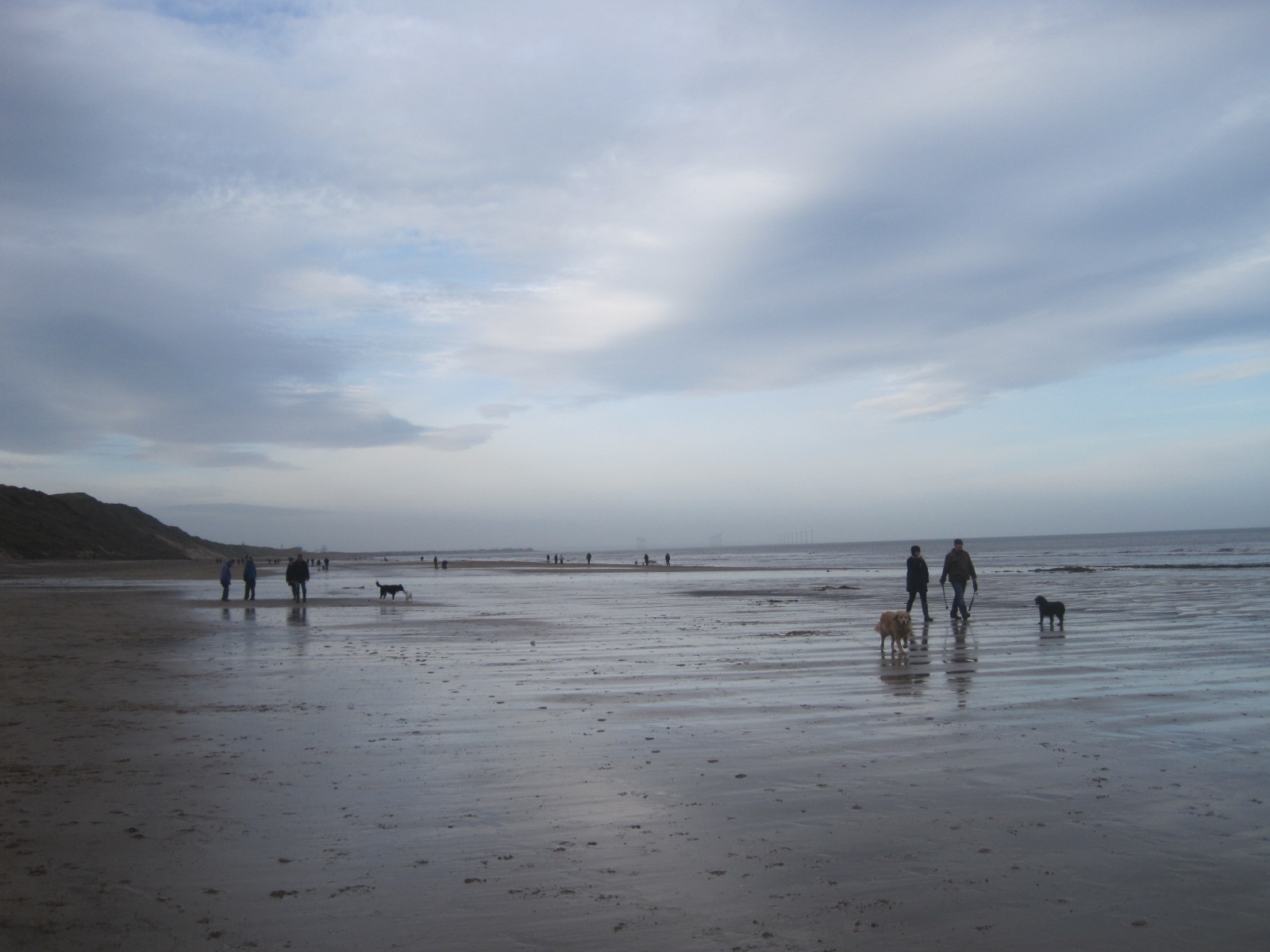
That’s quite enough of indulgence. Keep that pie and mash shop in mind for later. The owner looks very welcoming. First we need a little bracing air. It’s not too cold today, evidenced by the numbers on the beach. The cliff lift stands lonely in silhouette, steps taking us down to the shoreline.
No yarn bombing on the pier, as yet, but I’m sure that it will arrive in the summer. Remember Alice, from last year?
The beach stretches off into the distance. Children stamp and twirl gleefully on the sand. Dog walkers are out in abundance. A couple of opportunists sweep the beach in search of treasure. Their find, multi-coloured pebbles, unwinking, except where caught in a flowing stream. A life scored deep within their grooves and whorls. Strands of seaweed, unfurling briny curls.
It’s time to turn and head back beside the crumbling cliffs. Filigree patterns beneath the pier, and above, a bench to read on or simply watch the ebb and flow of tide.
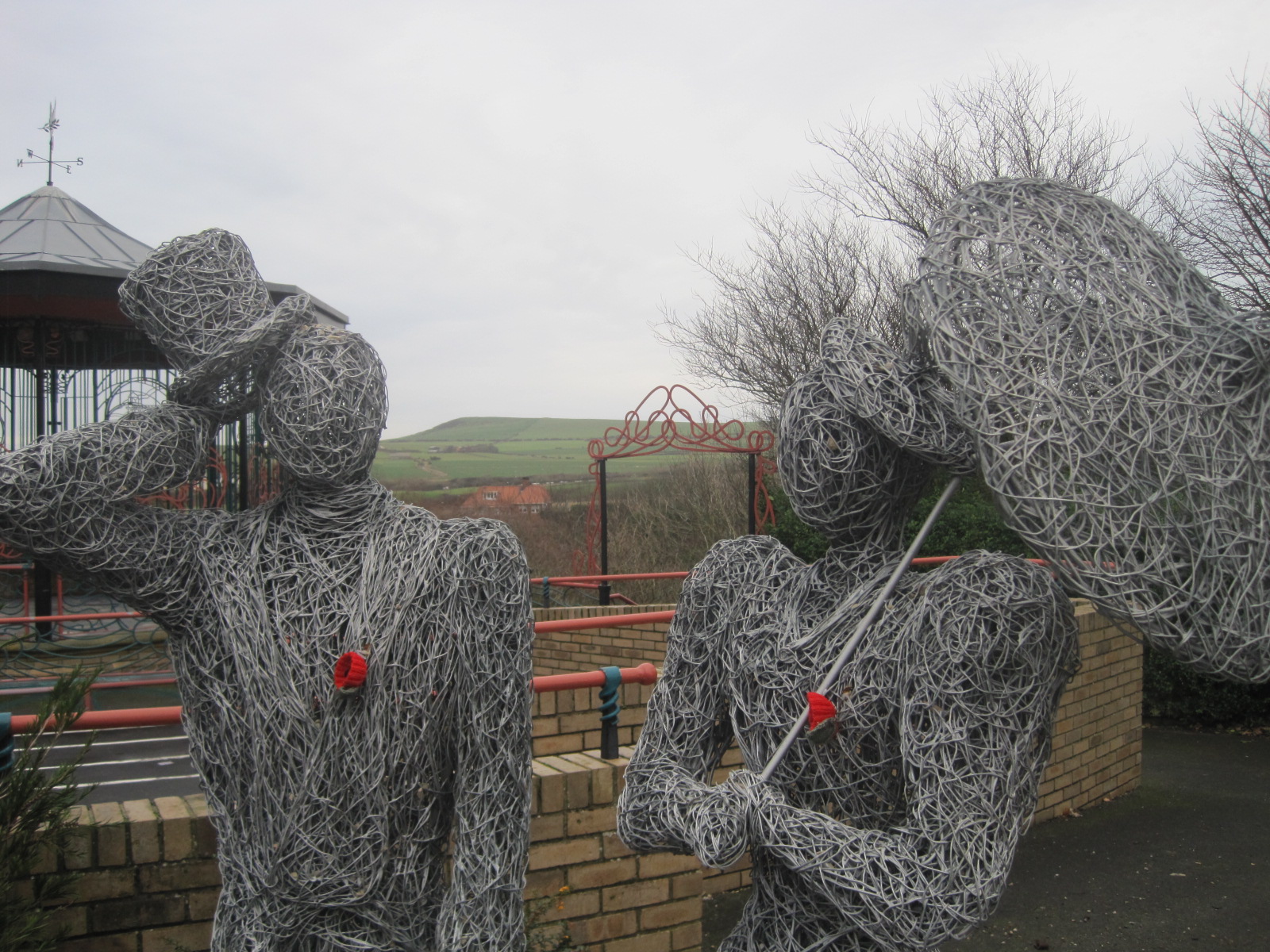
There’s a lovely corner cafe, beside Cat Nab, just before you reach the brig. You can watch the stream gushing into Valley Gardens from the outdoor terrace. It’s a little muddy through there today. So much rain in recent times! It’s a steep pull back up to the cliff top, where you’ll be welcomed by the Victorian wicker family. Some kind soul has knit them poppy buttonholes.
That’s it for another week! Pie and mash, or did you indulge at the corner cafe? Time to put the kettle on now, and join my walking friends.
Huge thanks, as always, to my contributors, and to those of you who simply like to keep me company. If you’d like to join in at any time, details are on my Jo’s Monday walk page. Just click on the logo above.
A great selection, aren’t they? I had intended to close my walks for 2 weeks, but my lovely husband pointed out that we don’t leave for the Algarve until next Monday afternoon. Plenty of time for another, he said! It’s not the walking that’s hard. It’s keeping up with the responses. We’ll see! Have a wonderful week, meantime.
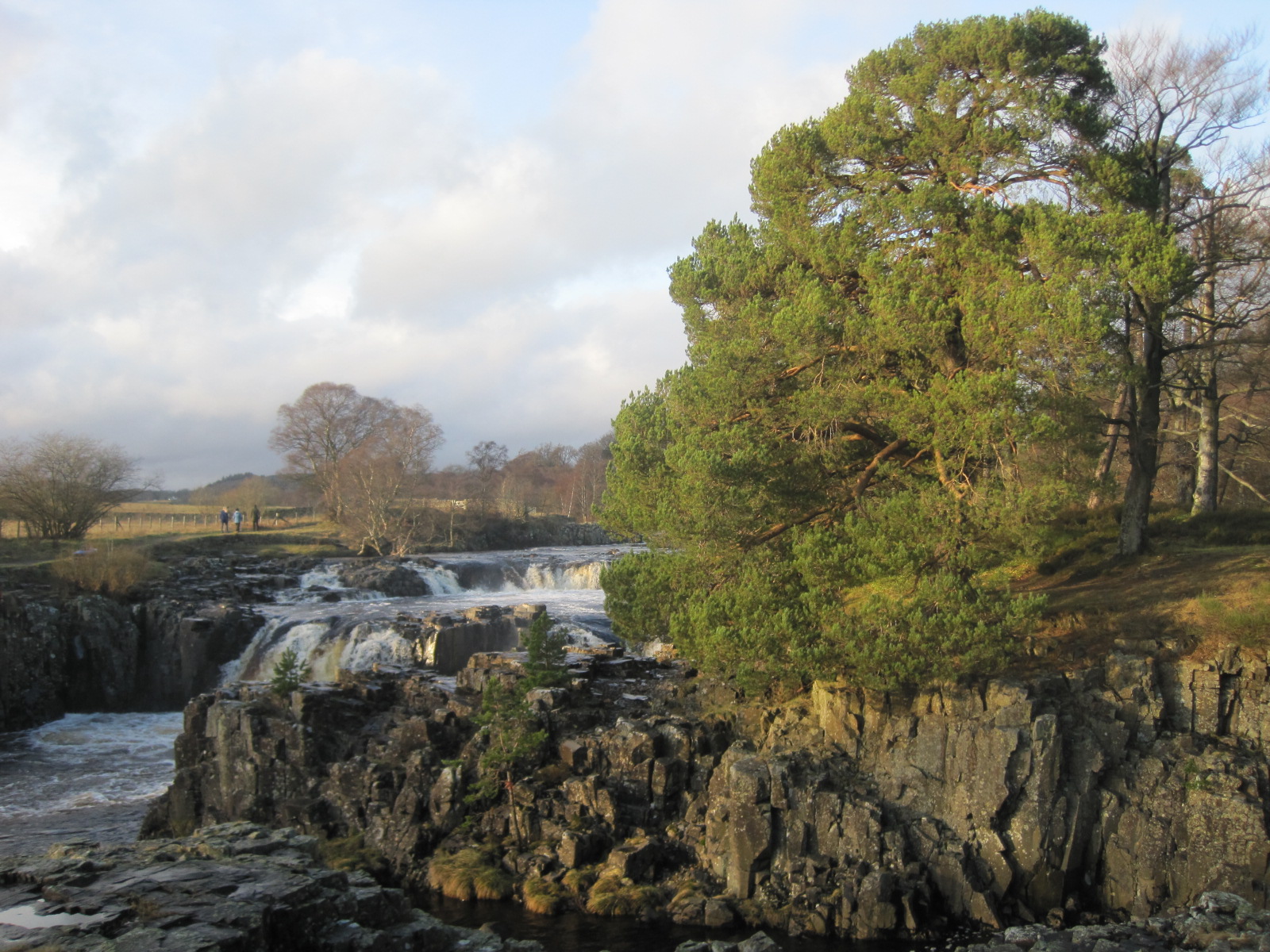
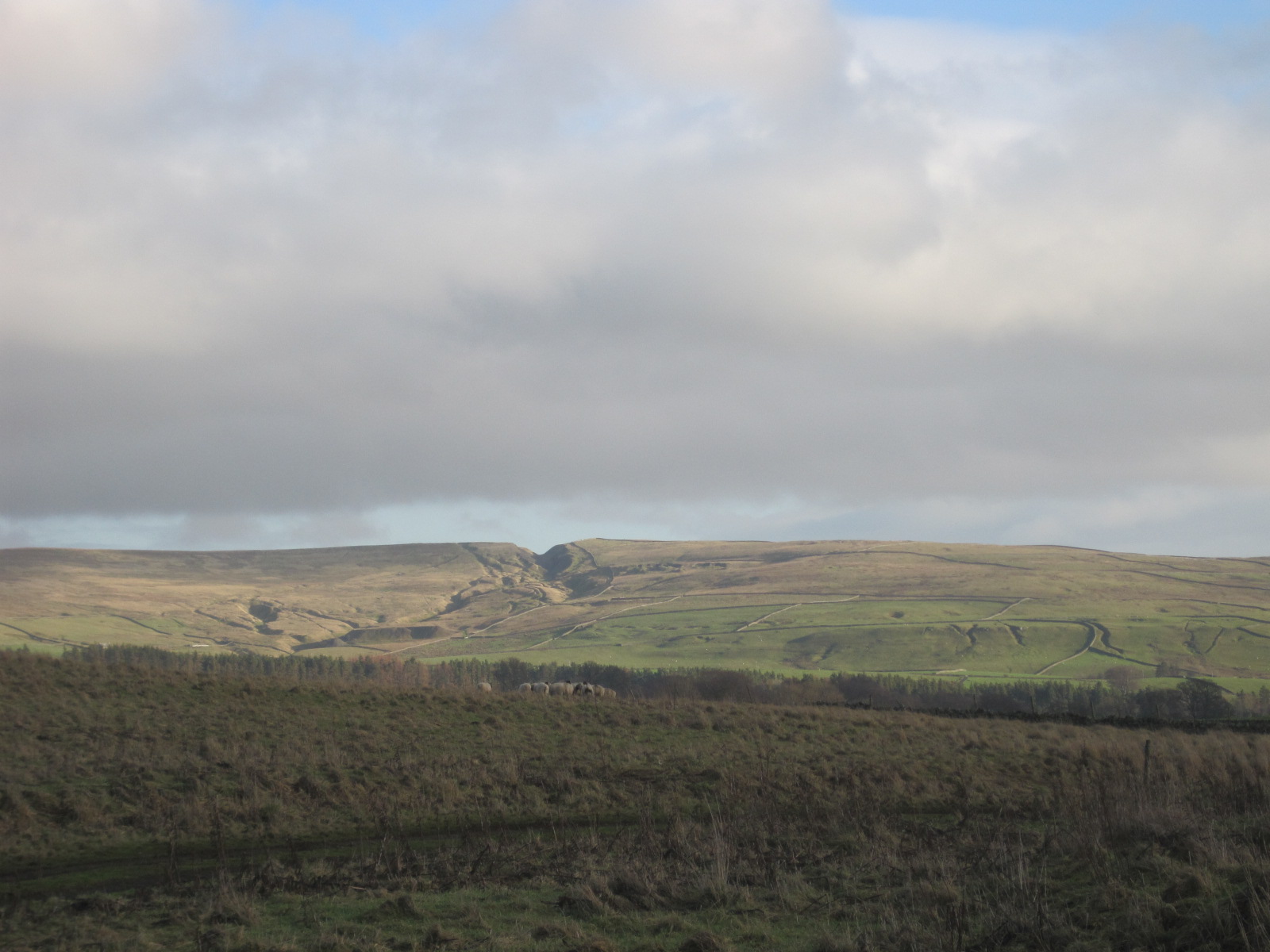
It’s almost like a watercolour, isn’t it? The light was so beautiful on that late December day in Teesdale, and the sense of freedom was intoxicating. The days on either side of it had sheeted with rain, and there was little doubt in my mind that the Tees would be in full spate. Where better to head than spectacular High Force waterfall, situated within the North Pennines Area of Outstanding Beauty?
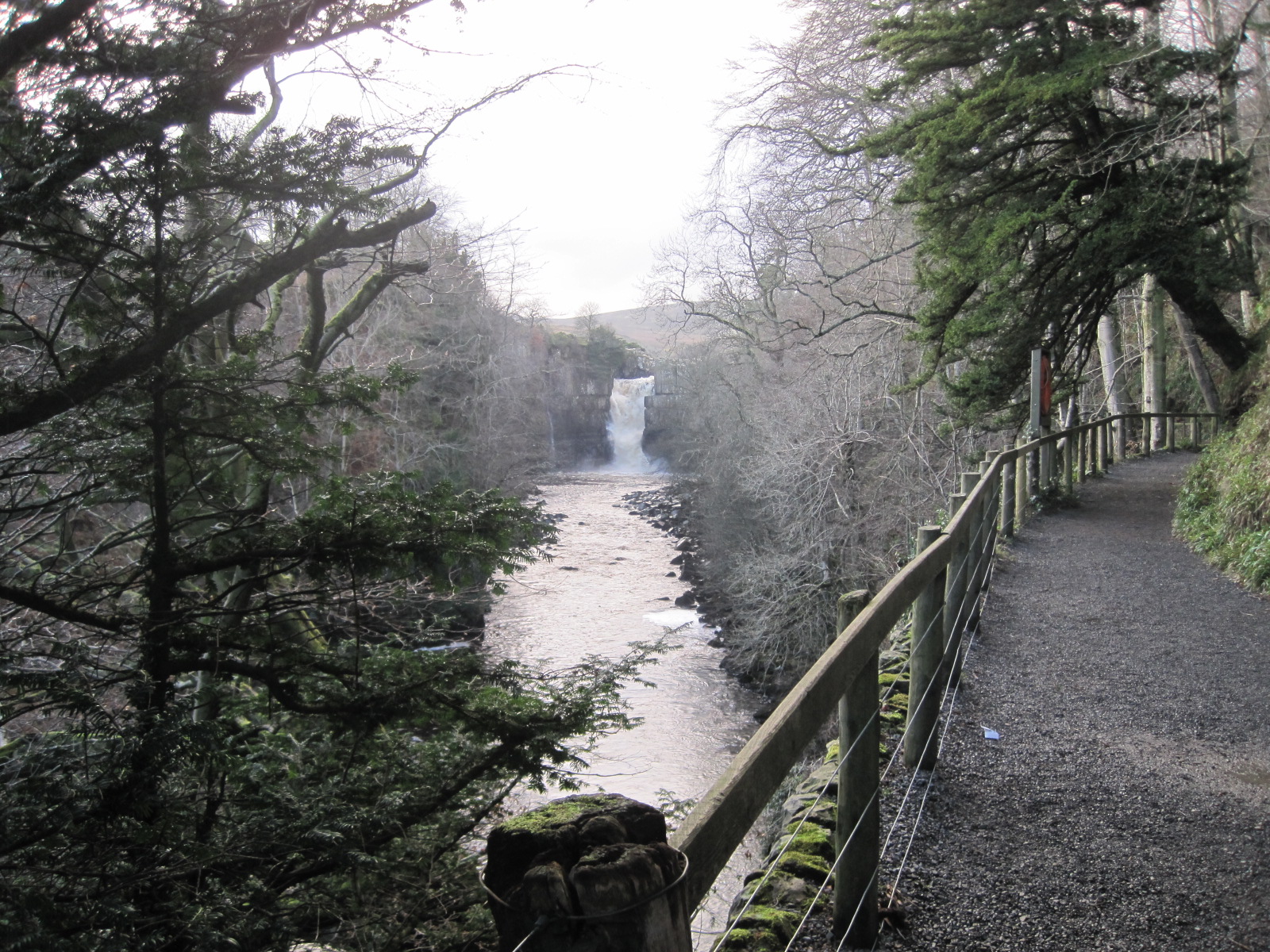
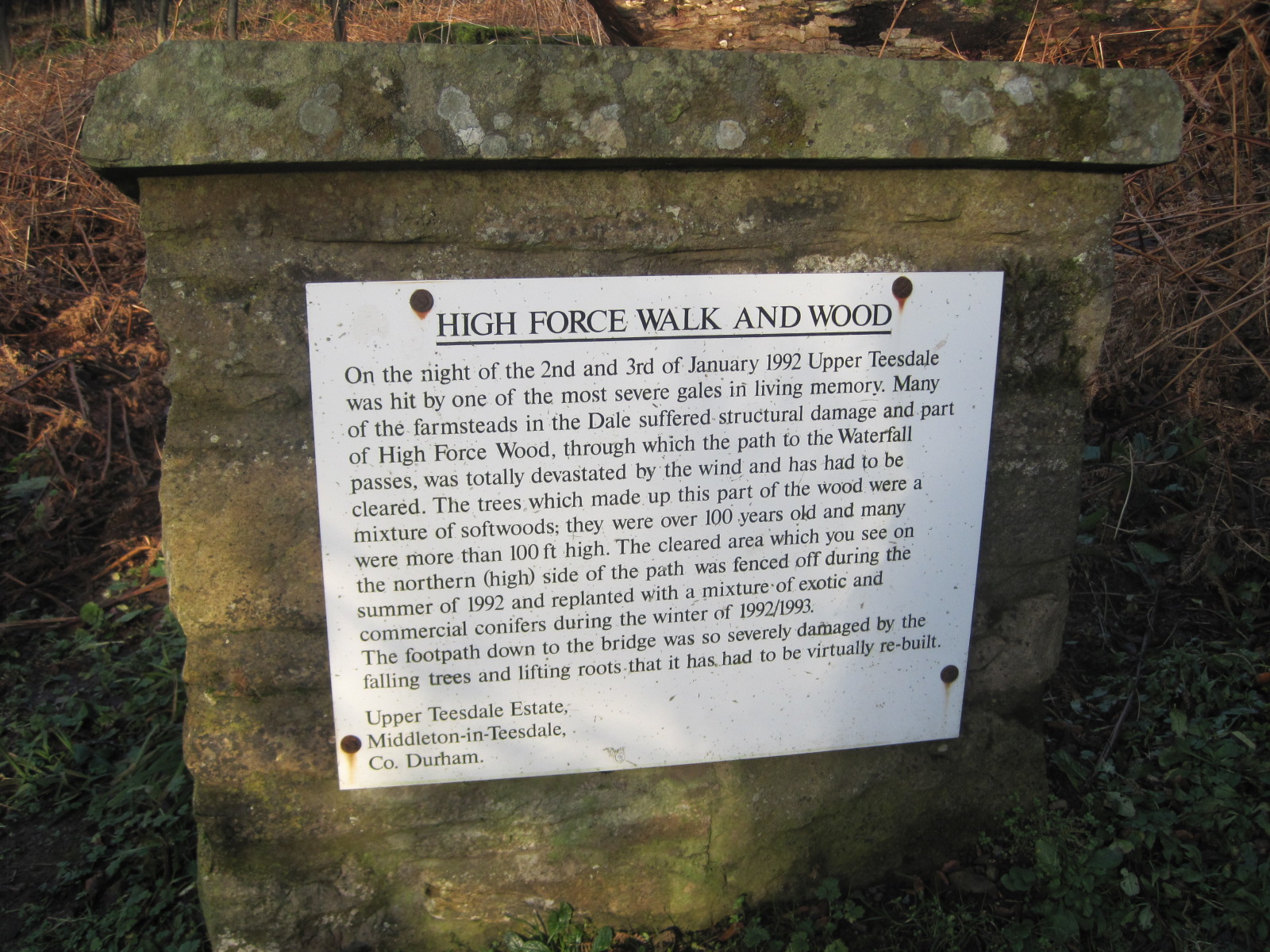
From the car parking at High Force, you can walk down to view the falls and then follow the river downstream to Low Force, pictured in my first photo. A sign at the top of the path grabbed my attention- a reminder that the power of nature is nothing new at all.
High Force formed where the River Tees crosses the Whin Sill– a hard layer of igneous rock. The waterfall itself is comprised of three different types of rock. The upper band is whinstone, or dolerite- a hard igneous rock which is slow to erode. The lower section is carboniferous limestone- much softer and easily worn away. Between the two, carboniferous sandstone was baked hard when Whin Sill was molten 295 million years ago. This combination means that the waterfall is slowly moving upstream as the rock wears away.
I had no sense of this, as I stood there, enveloped in a world of water. The temporary fine weather, and the respite between Christmas and New Year, had brought the crowds to gaze in wonder. I edged as close as I could, happy to worship alongside them.
As I walked back up the path, the rocks streamed with water, and the frailty of the trees was visible all around me. It’s many years since I was last at High Force, and I had to ask myself why. The countryside is so beautiful!
Looking at the map in the car park, I followed the river along to Bowlees Visitor Centre, and my attention was caught by a short walk to Gibson’s Cave. Something new to me! My husband knew from the glint in my eye that this was my next target.
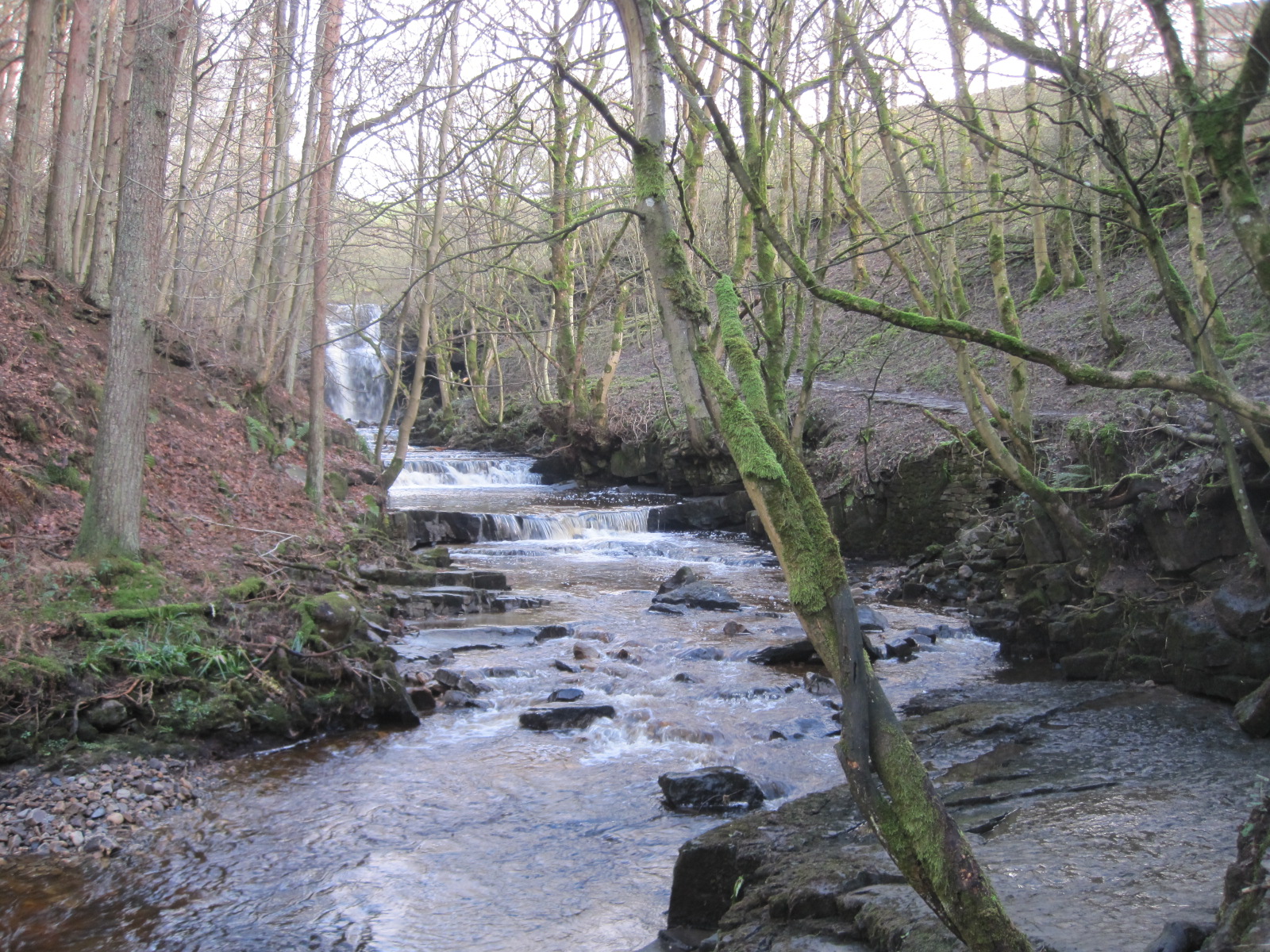
I was delighted to find that the somewhat muddy path followed a tributary of the river, and that there were more waterfalls in store.
The route bypasses abandoned Bowlees Quarry and I stopped to read the signs. It was too wet underfoot to do more.
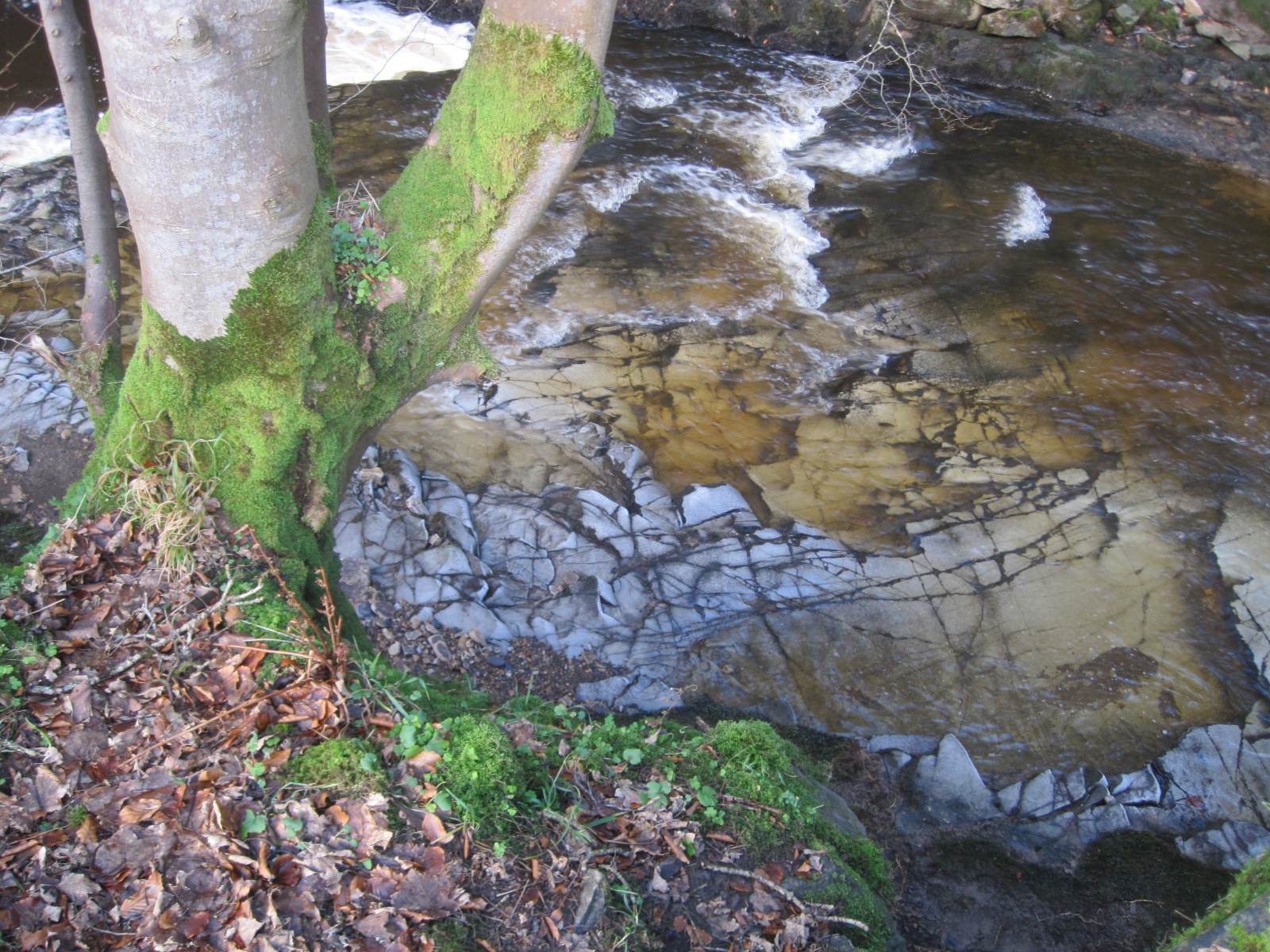
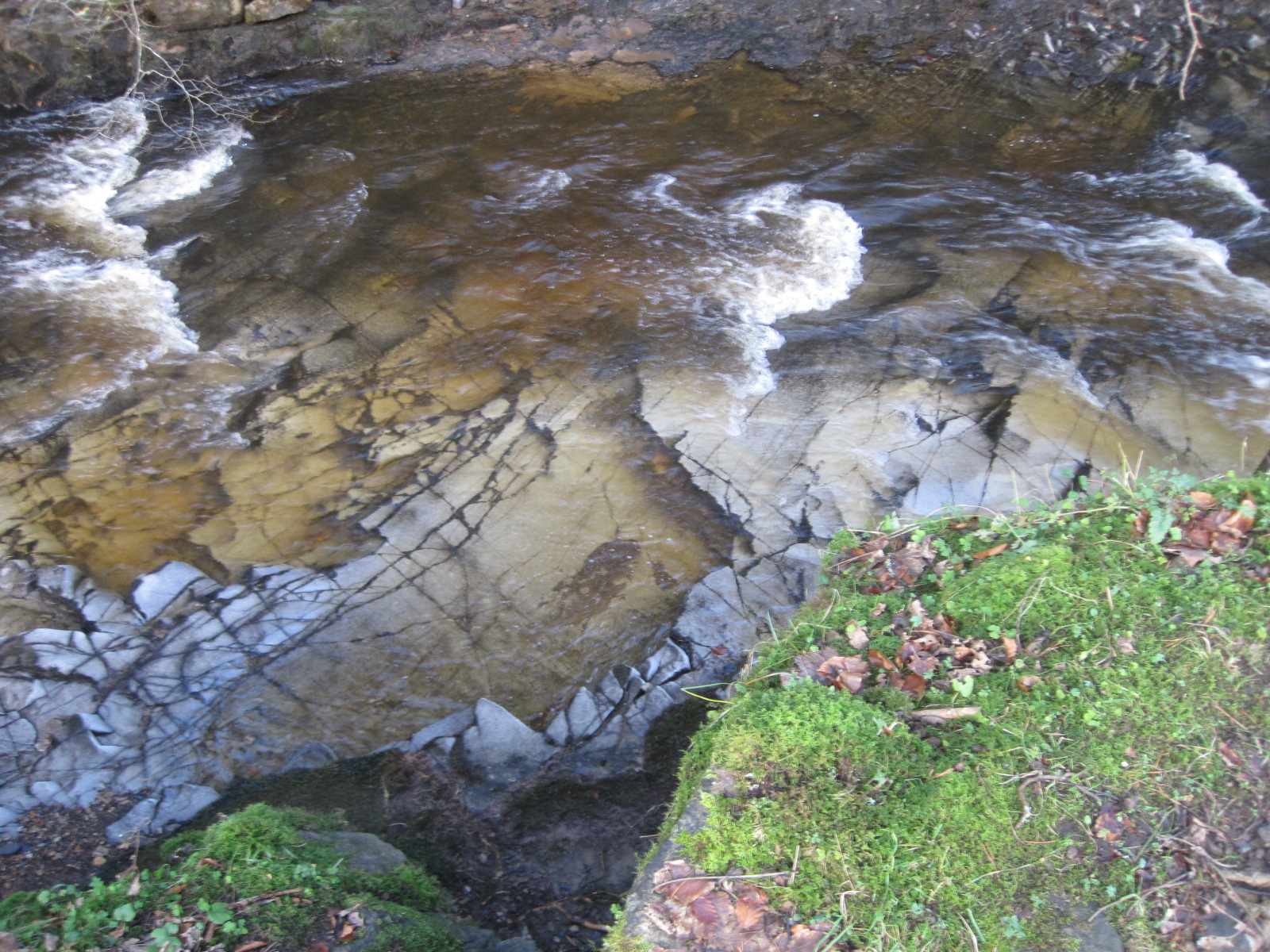
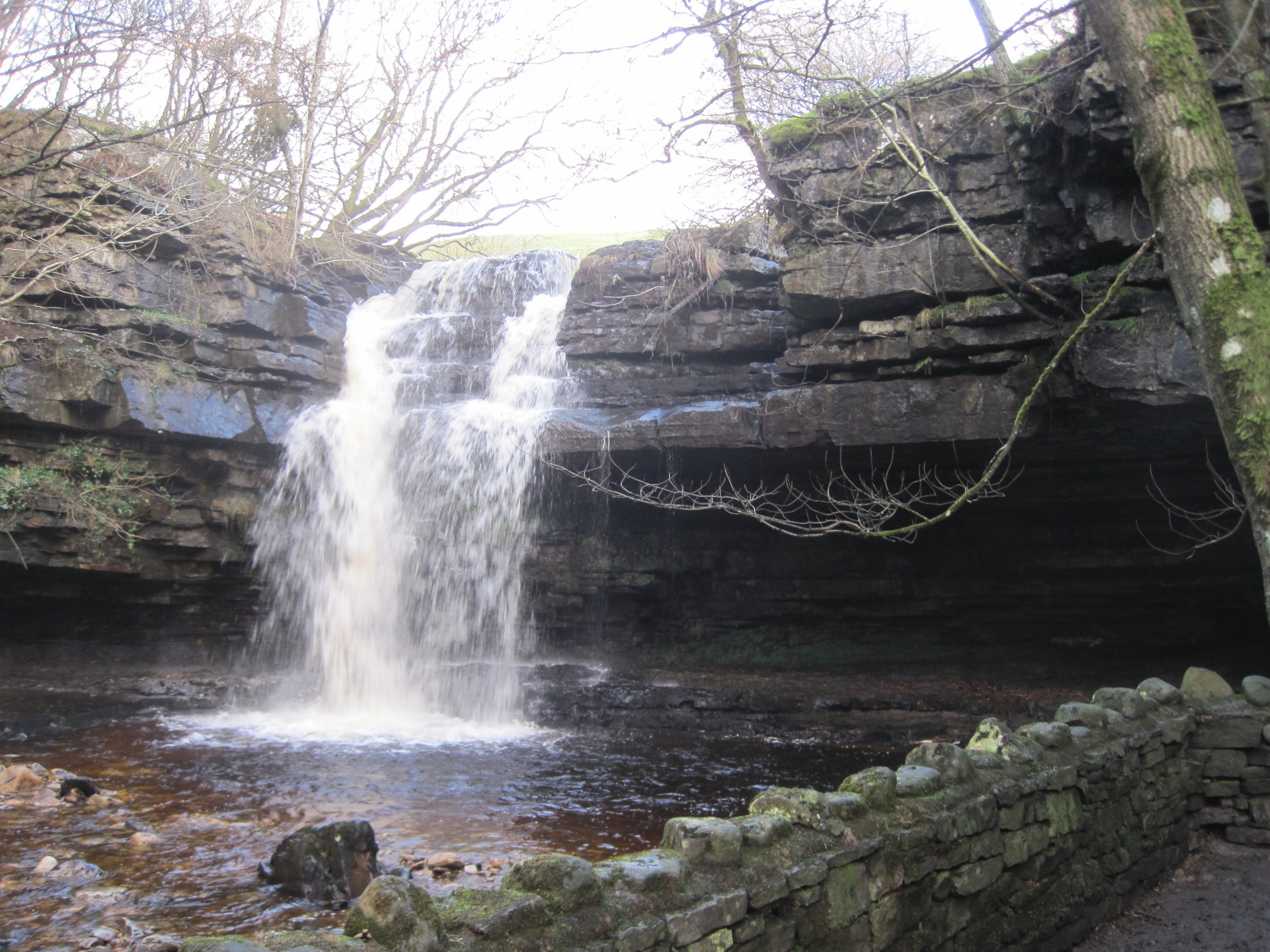
The drystone walls and even the fences were covered in spongy, green moss, but it was the bed of the river that captivated. The rock formation was unlike anything I’d seen before- an intricate scratching of patterns .
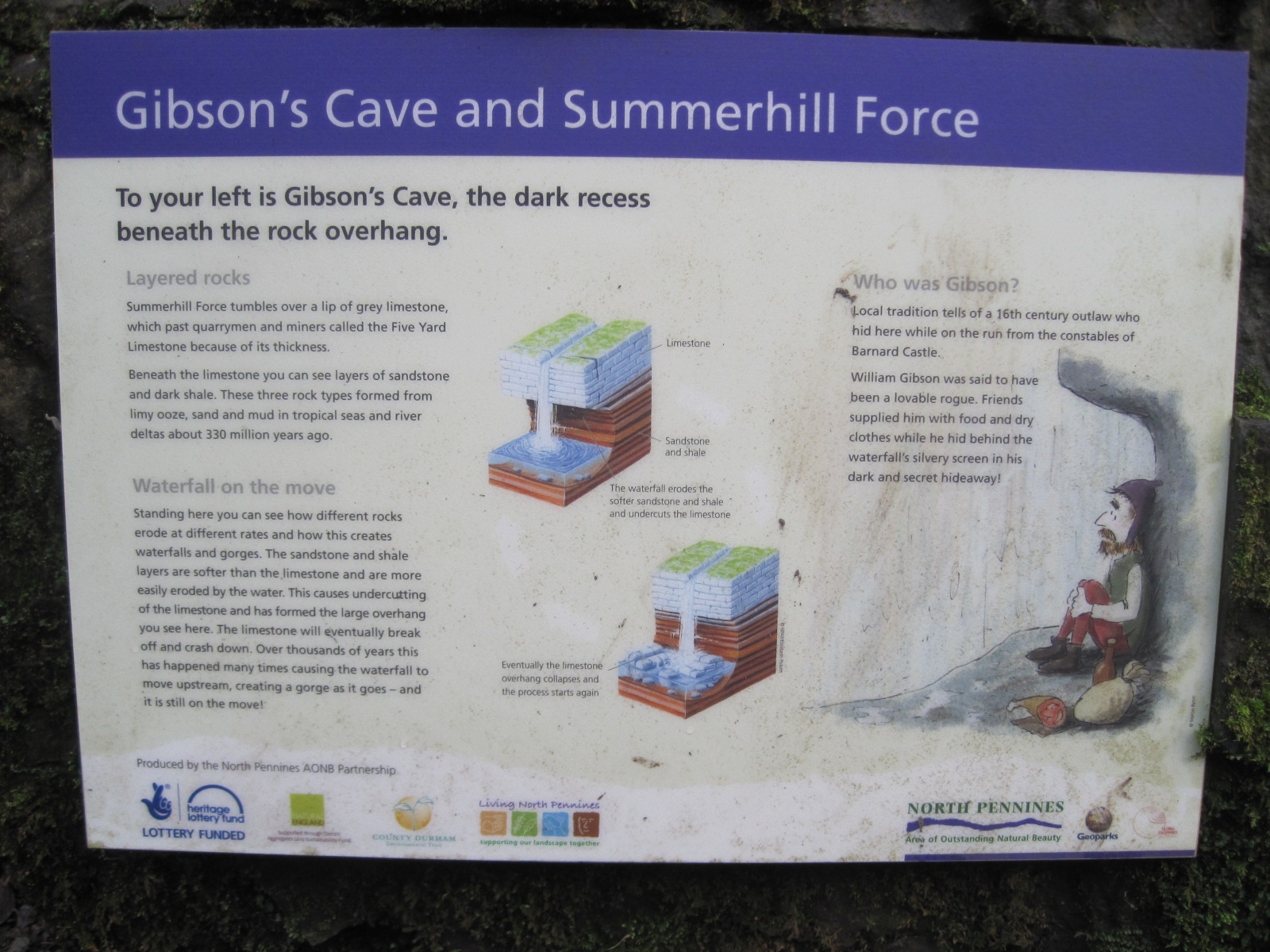
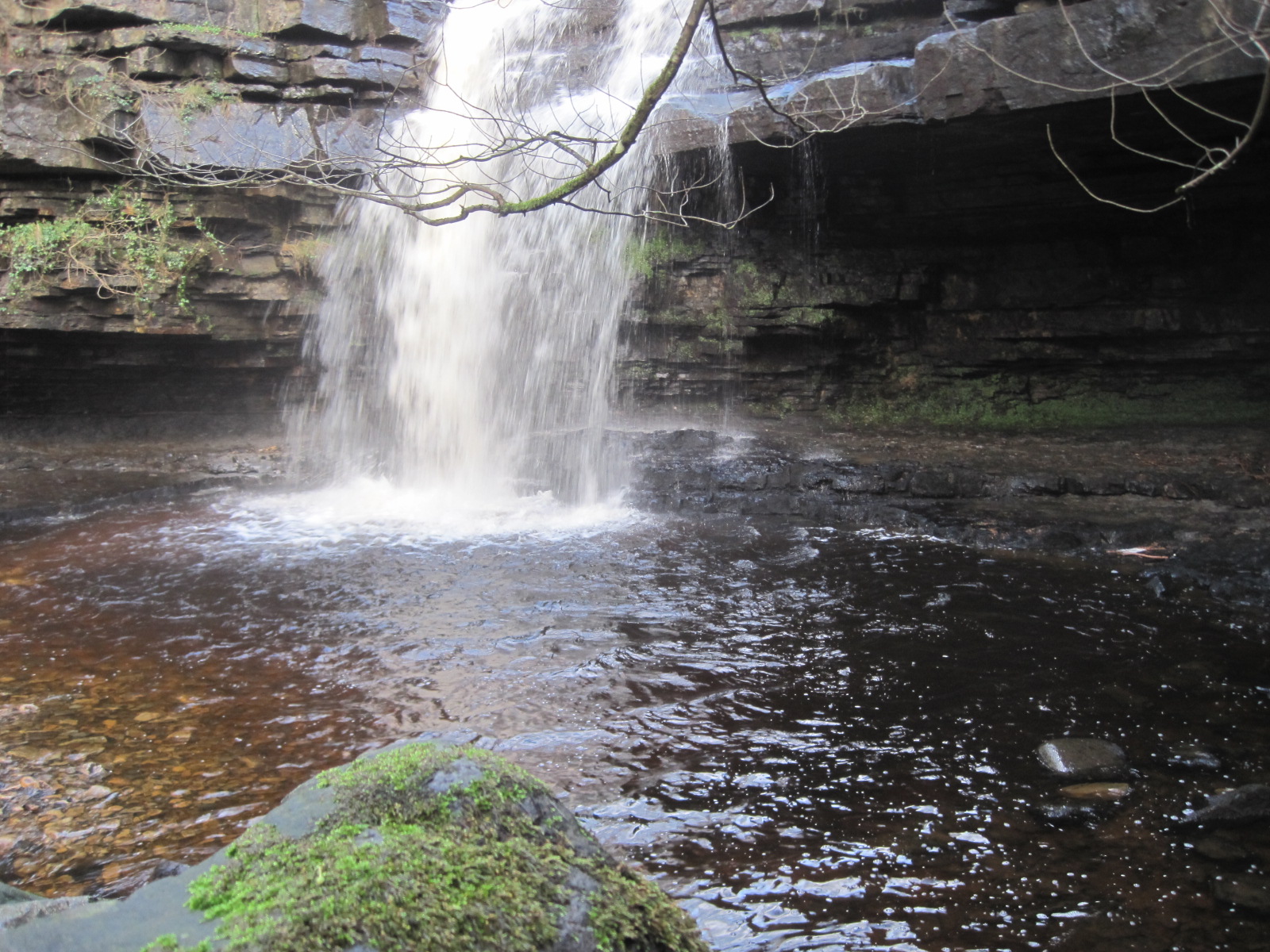
You can see the path, running alongside the falls. It was a little slippy in places and I had to scramble through a fallen tree, but the end was in sight- Gibson’s Cave. But who was Gibson? A ‘lovable rogue’, apparently.
Did you read the explanation of the patterns on the river bed? Layers of grey limestone, sandstone and dark shale, in a tropical sea about 330 million years ago. Quite incredible! And Gibson? A happy, 16th century outlaw.
That wasn’t the end of my adventures for the day, but I think that it’s a good point at which to stop. The Bowlees Visitor Centre is nearby and, if you’re lucky, it might be open. Cake, or something more substantial?
Next week we’ll carry on to Low Force. It’s just as lovely, so I hope that you can join me.
First things first- let’s put the kettle on and get settled for a good read. Huge thanks to my lovely contributors! If you have a walk you’d like to share I’m always happy to have you along. Details of how to join in are on my Jo’s Monday walk page. Just click on the logo above.
…………………………………………………………………………………………………………….
Let’s start with Debbie, and some beautiful views of Edinburgh :
That’s it for another week! My walking group will be out today, weather permitting. First walk together after the New Year, and we’re sticking to footpaths- no boggy fields! Take care of yourselves!
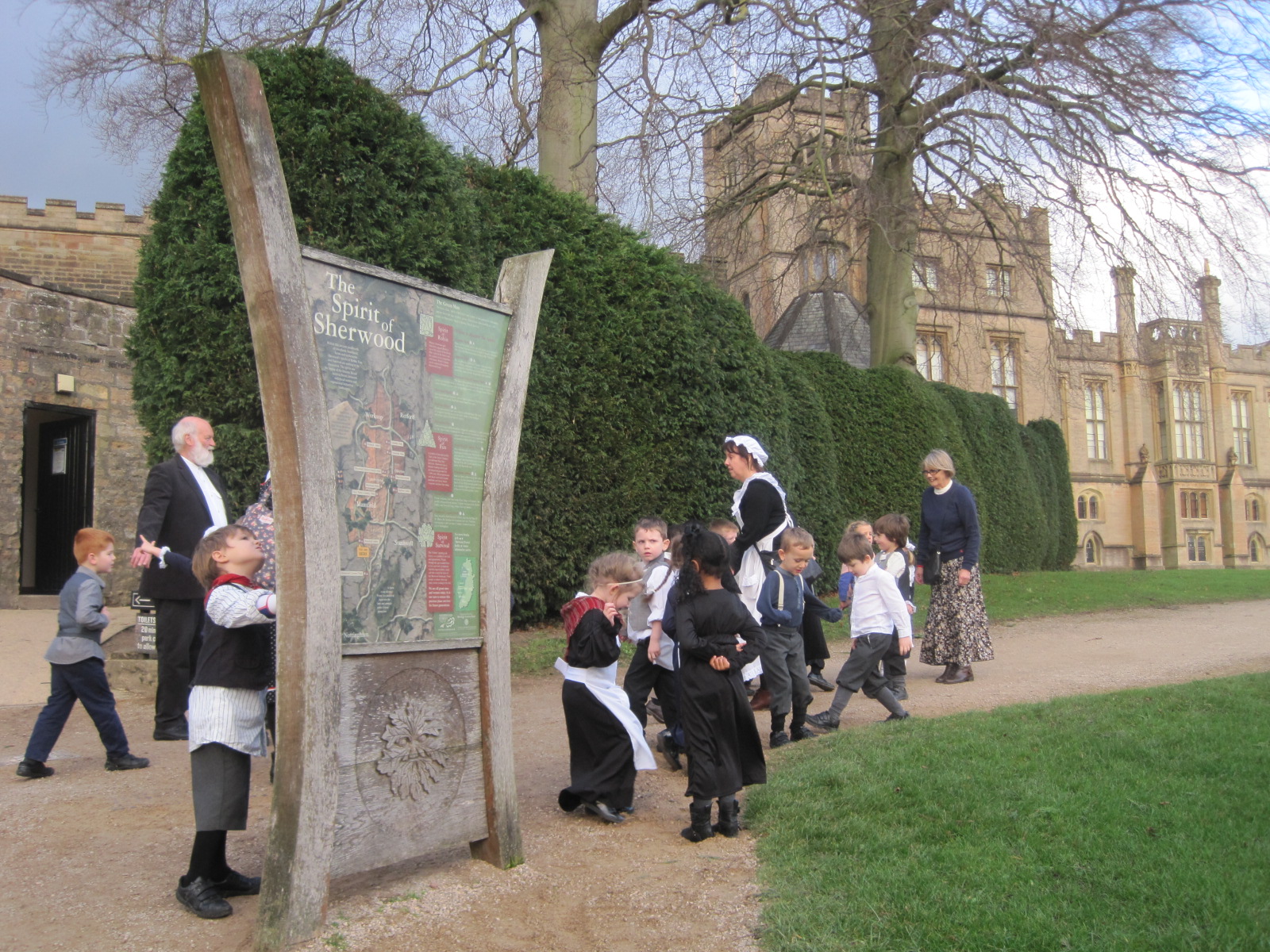
Newstead Abbey in Nottinghamshire is the perfect setting for a Victorian period drama. Yet I was unprepared for the small characters chattering excitedly in the grounds. The Abbey itself, formerly the home of poet Lord Byron, was closed to visitors, but I had come seeking fresh air and a stroll in the lovely grounds. I had company, and naturally my daughter was fittingly dressed for the occasion. To the manor born, without a doubt.
A long drive sweeps up to the house, thick with rhododendrons and camelia. There are over 300 acres of parkland and gardens, and cars can park quite near to the house. Let’s save a little energy and sashay straight into the gardens. A former monastic residence, the priory dates back to 1274. I showcased the house and the Byron connection on a previous visit (and got to meet Santa!) if you’d like to know more.
The Garden Lake swells out in front of the house, and you can walk all around it. The lakes, ponds and cascades that ornament these gardens are fed by the River Leen. Pass by the unappetisingly named Monk’s Stew Pond (probably once a fishpond for the monks) to delve into the Fernery.
This slideshow requires JavaScript.
The grotto has an interior made from Derbyshire tufa, whilst some of the old carved stones used in the Fernery probably came from the ruins of the priory church. Built into the wall with the alcove were terracotta stands, for the display of potted ferns.
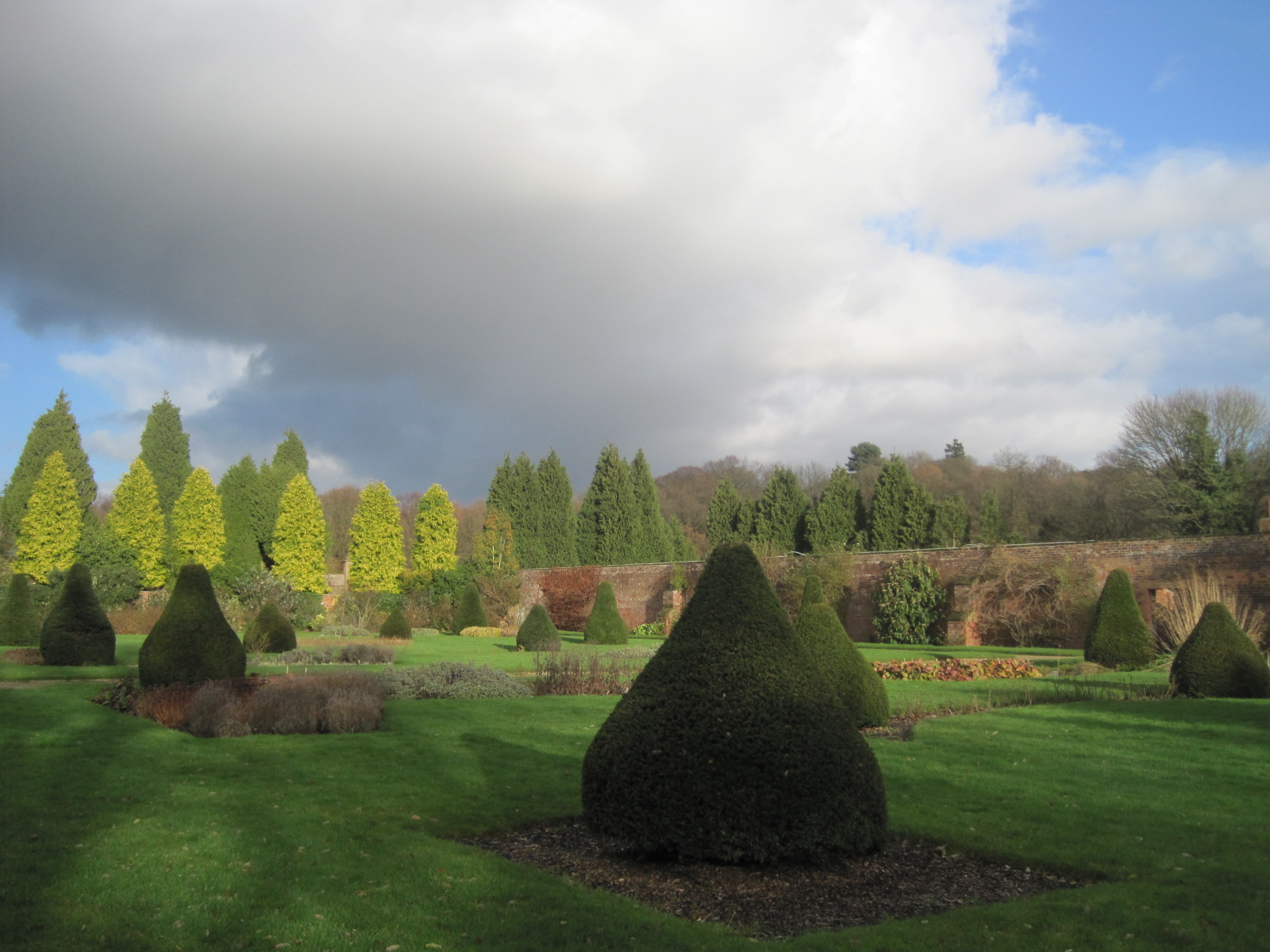
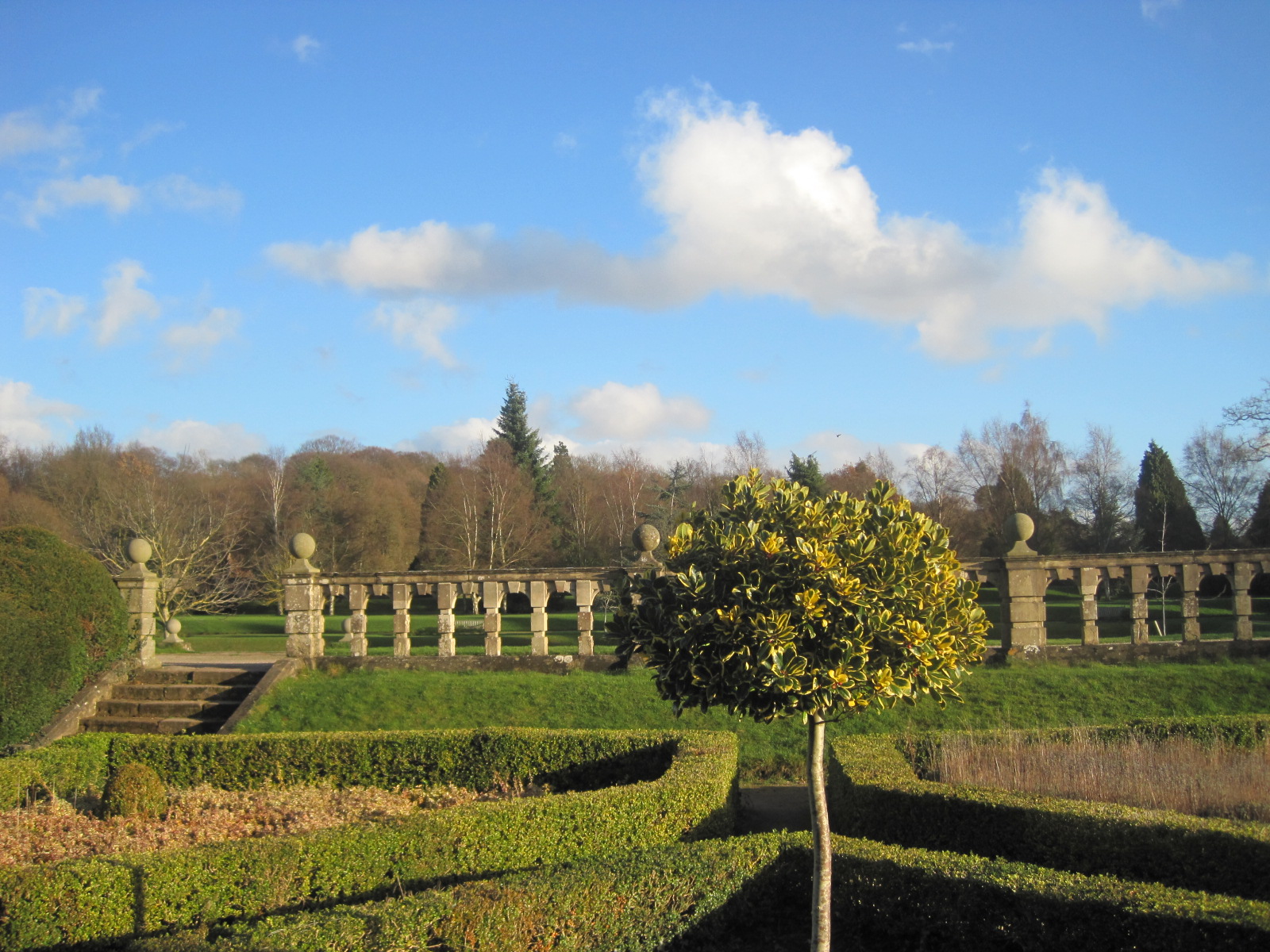
Bright berries gleam from the foliage and a drift of lemon whispers its presence in among the shrubs. For all that this is a garden in winter, there is no lack of interest. The rolling hedges are clipped pleasingly to the eye. It’s so easy to meander among them, beguiled by shapes and shadows.
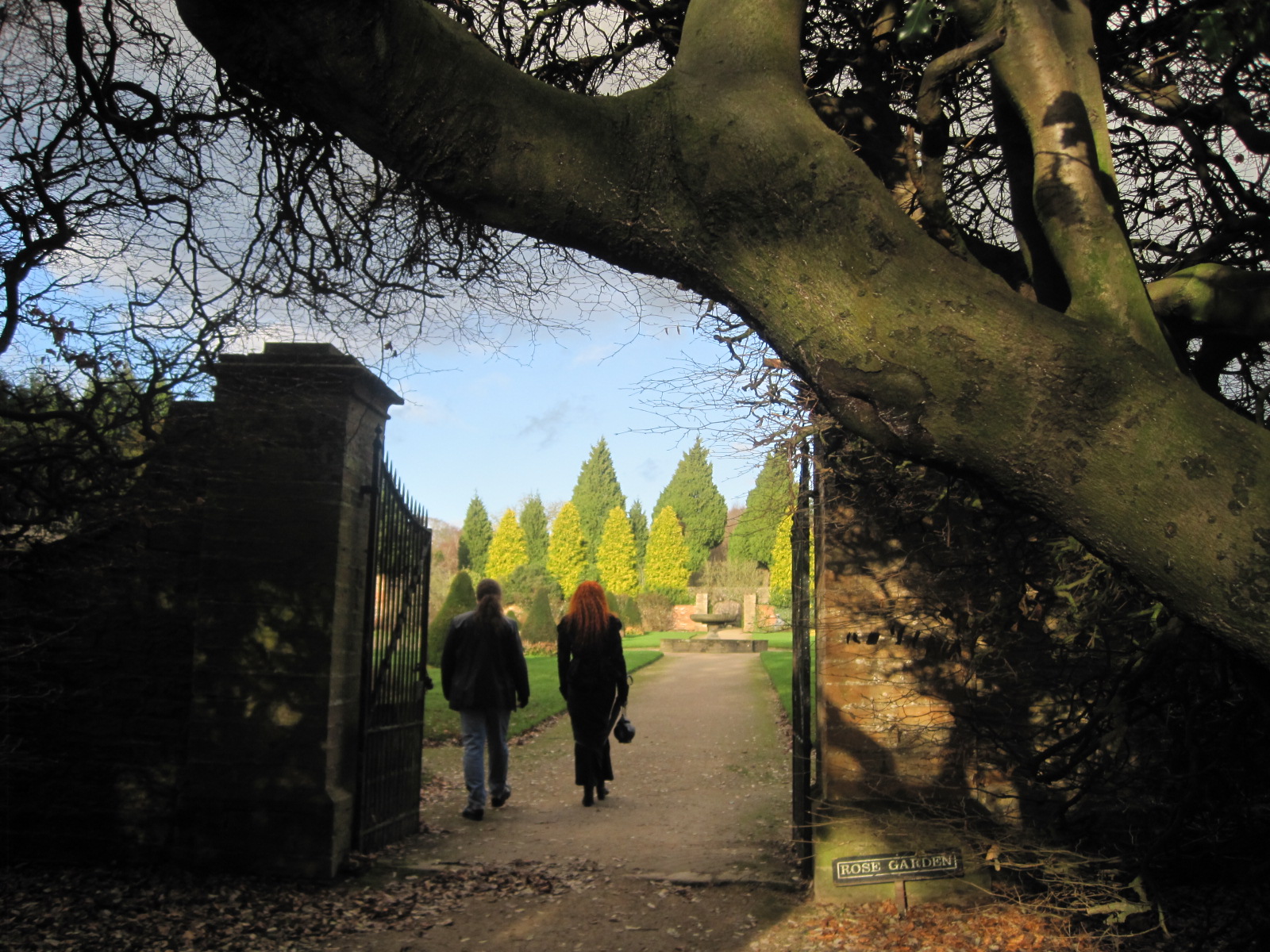
The formal shapes of the Rose Garden and Small Walled Garden invite closer inspection. Both were once part of a two and a half acre kitchen garden. In heated glasshouses, now demolished, grapes, melons, peaches and winter cucumbers were grown. Even in a mild December, roses were few, but I liked the quirky mesh gardeners who kept us company.
A willow sculpture catches my eye, complete with bench. Too late for THAT challenge, I’m afraid!
Behind the house, the Great Garden is a formal garden of terraced walks descending to a large rectangular pond. Two swans splashed each other playfully, just out of range of my camera. The adjacent French and Spanish gardens are among my favourites. Every Spring in the 1830s and 40s the gardener laid fresh red and white sand, in intricate patterns, directly onto the soil in the French Garden. It was affectionately known as the ’embroidery garden’.
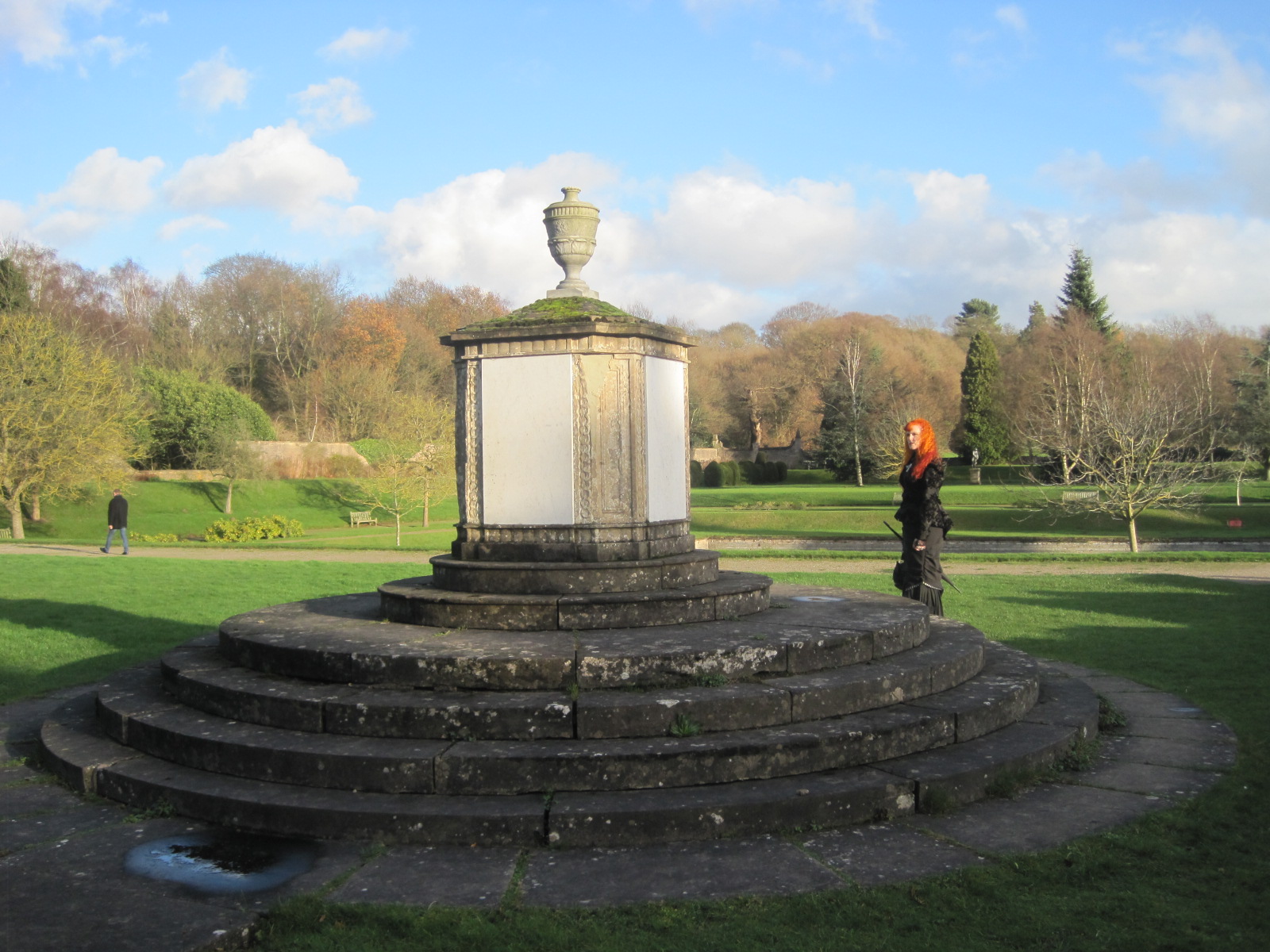
The Boatswain’s Monument sits mournfully at the centre of the lawn, Byron’s tribute to his beloved Newfoundland dog. The inscription speaks of ‘Beauty without Vanity, Strength without Insolence, Courage without Ferocity, and all the Virtues of Man without his vices’.
Are you beginning to flag yet? I believe the tearooms are open. Muffins and gingerbread latte, before or after we tackle the lake?
The shadows are lengthening and there’s a hint of chill in the air. Ominous clouds dot the sky so we won’t linger much longer. It’s not the time of year to view the yellow water lily, wild angelica, water forget-me-not, corn mint and the many species that surround the Garden Lake, but it is still undeniably beautiful, don’t you think?
The Japanese garden with its lovely cascades is looking a little bedraggled, but we can still cross the stepping stones to admire the lanterns. There’s one more feature I’ve left deliberately till the end, and someone’s waiting there to say goodbye. Accompany me to the waterfall?
The gift shop, with its pretty things, was calling to my daughter. We lingered just a shade too long, and came out into a deluge of a different kind! Brollies aloft, we scurried to the car. The day ended with a magical double rainbow and I felt truly blessed. I hope you have enjoyed our company today. (and that of the children from Woodthorpe school)
The Newstead Abbey website includes a detailed garden tour, which you might like to follow, plus details of how to get there.
You may already know that Jude has chosen to abandon her benches. Sigh! The challenge has run for a highly successful year, but it’s time to move on. My Winter garden, though not quite what she was hoping for, is my first contribution to the new challenge. I’ll definitely have to be honing my skills (or trying!) Her first post is a stunner, but I won’t spoil it for you. Go and look!
Meanwhile, it’s time to get the kettle on and share a few more walks. I hope that all of you, walkers or not, have enjoyed their Christmas break. Many thanks for all your contributions but, more importantly, your friendship. Join me whenever you like. Details are on my Jo’s Monday walk page, or the logo above.
………………………………………………………………………………………………………..
First, come beach combing with Drake on the lovely little Danish island, Samsø :
That’s it for now! Breathes big sigh! If I’m slow responding this week it’s because I have Polish family visiting for a few days (including a very special uncle) but normality (ha!) will be restored on Thursday. Take care till then!
P.S Those lovely ladies at Monday Escapes are back if you have 5 minutes to wish them Happy New Year.
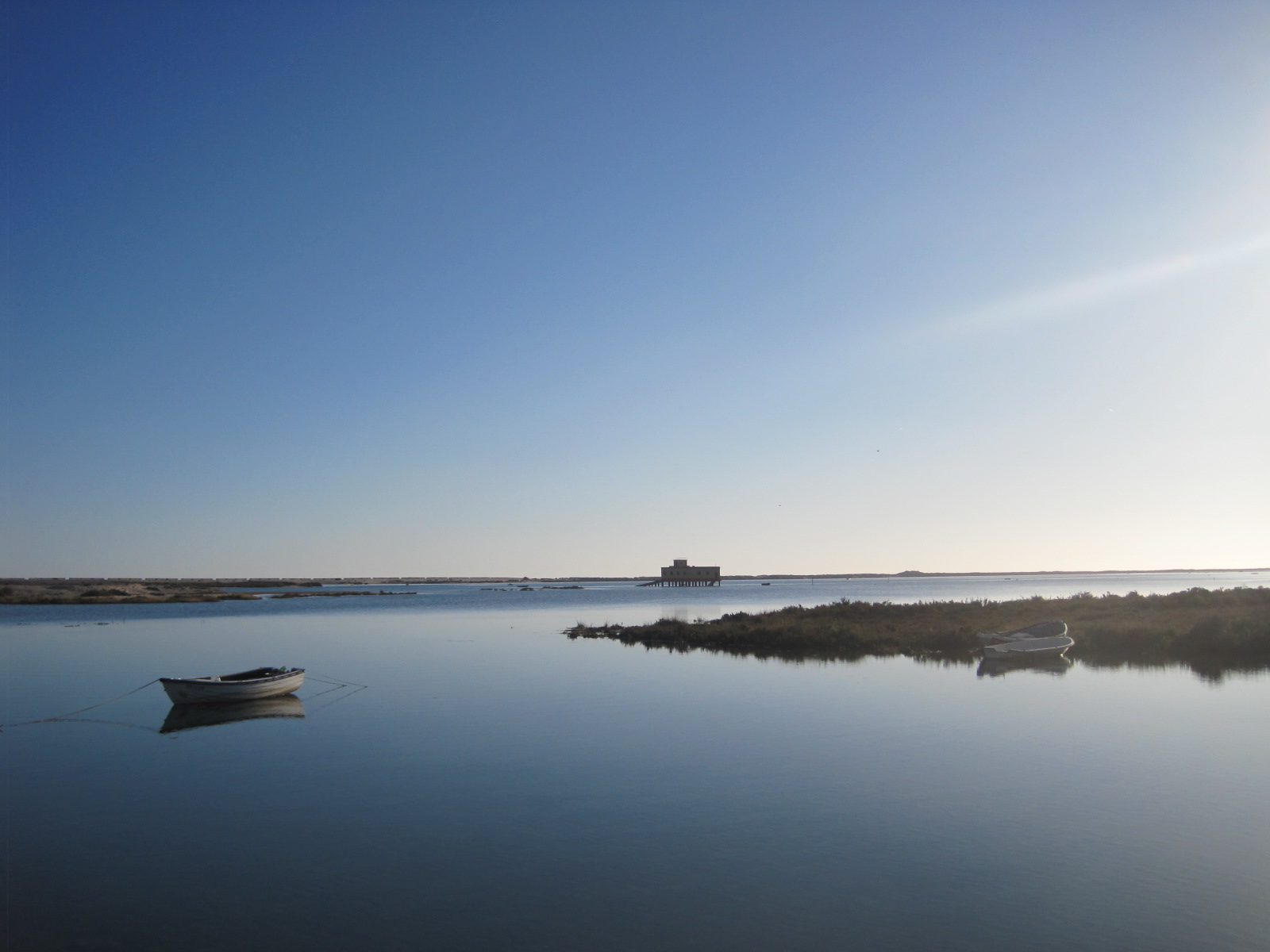
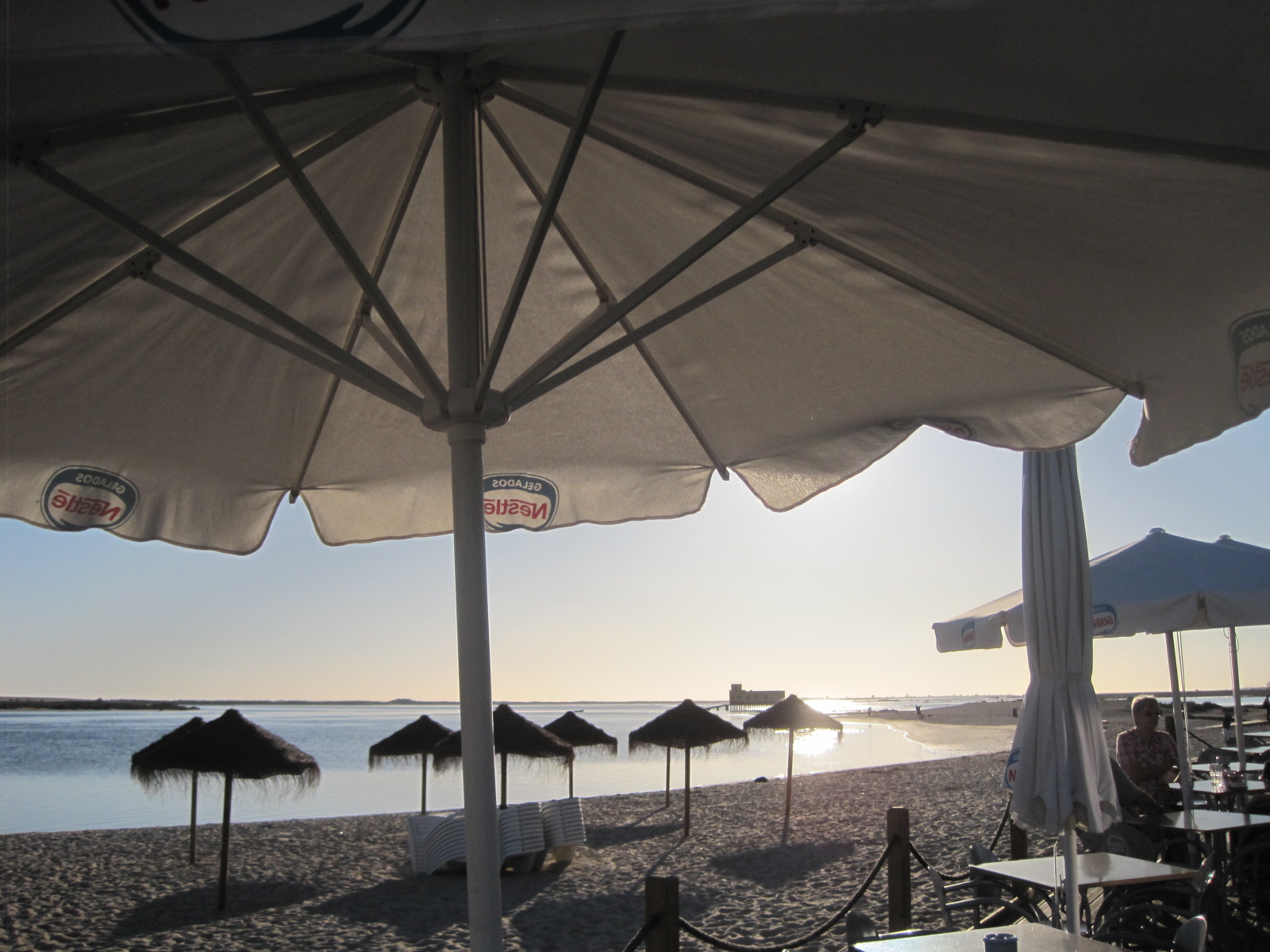
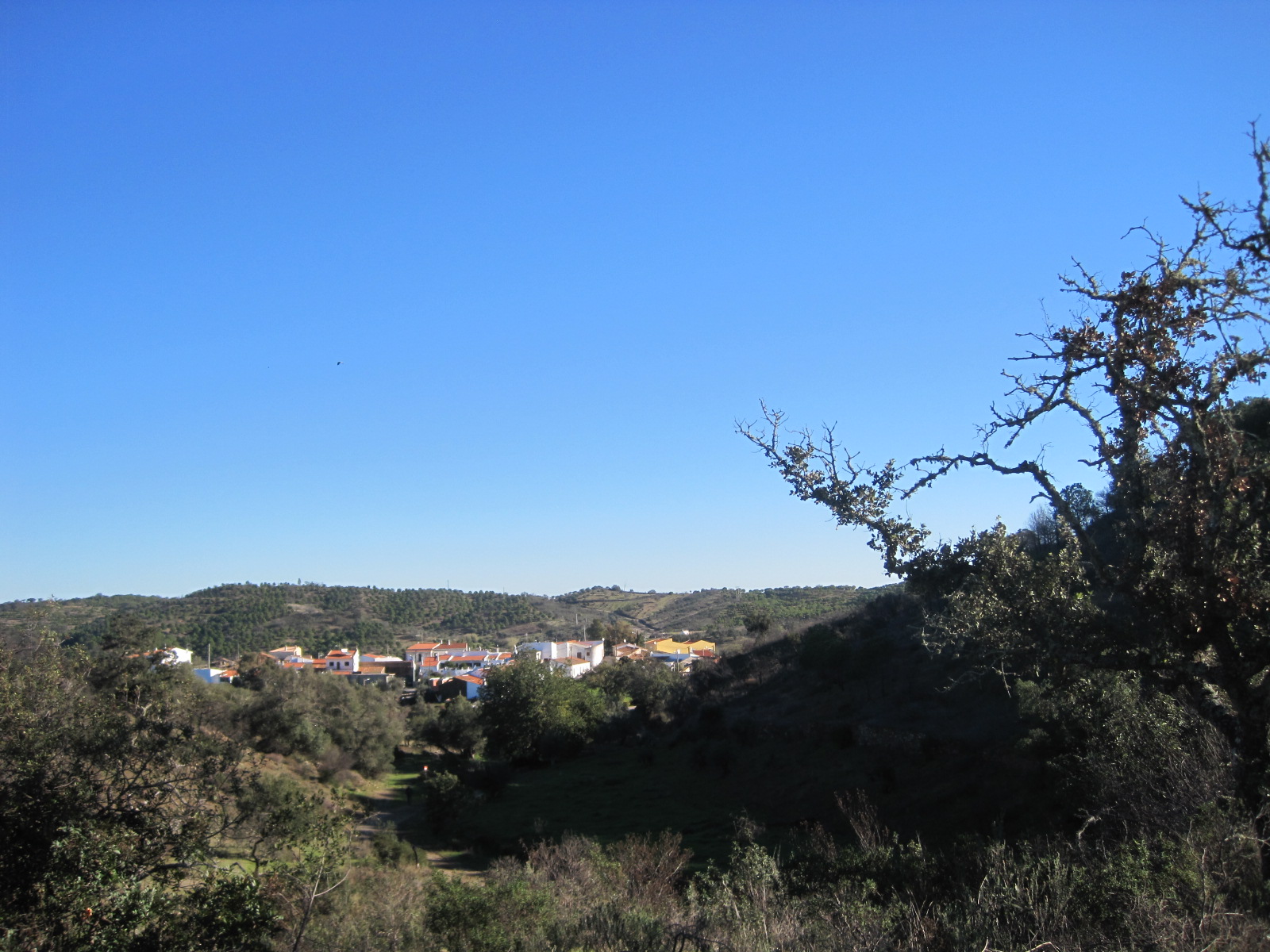
It’s that ‘betwixt and between’, Christmas time and the New Year. The weather has been atrocious in so many places and some people will be spending it mopping up and repairing their homes. I haven’t managed too much walking lately myself, but I do still have some happy memories to share. Shall we take a little salt marsh stroll in the Eastern Algarve? Nothing too strenuous! At day’s end, we can even linger by the beach awhile.
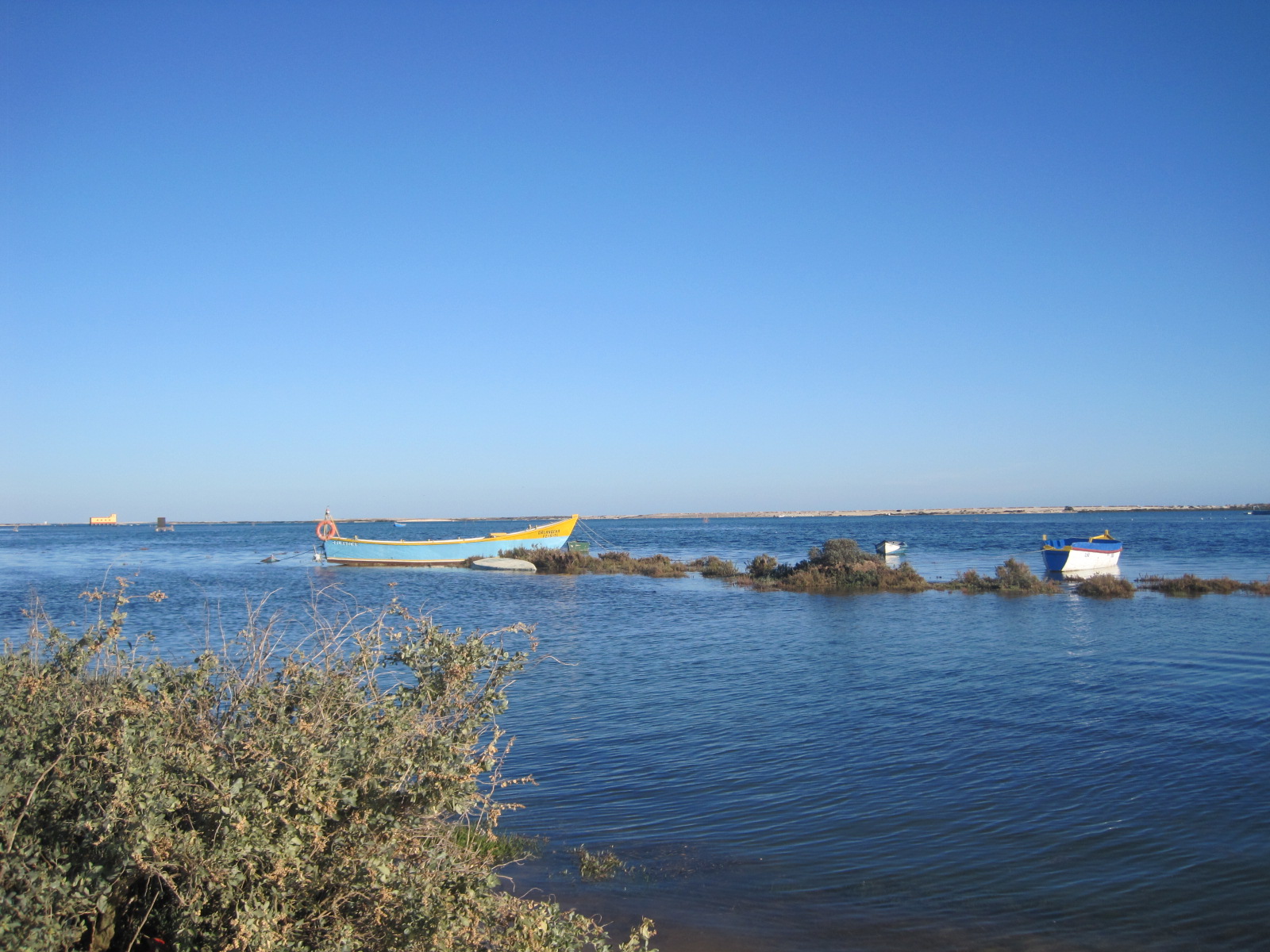
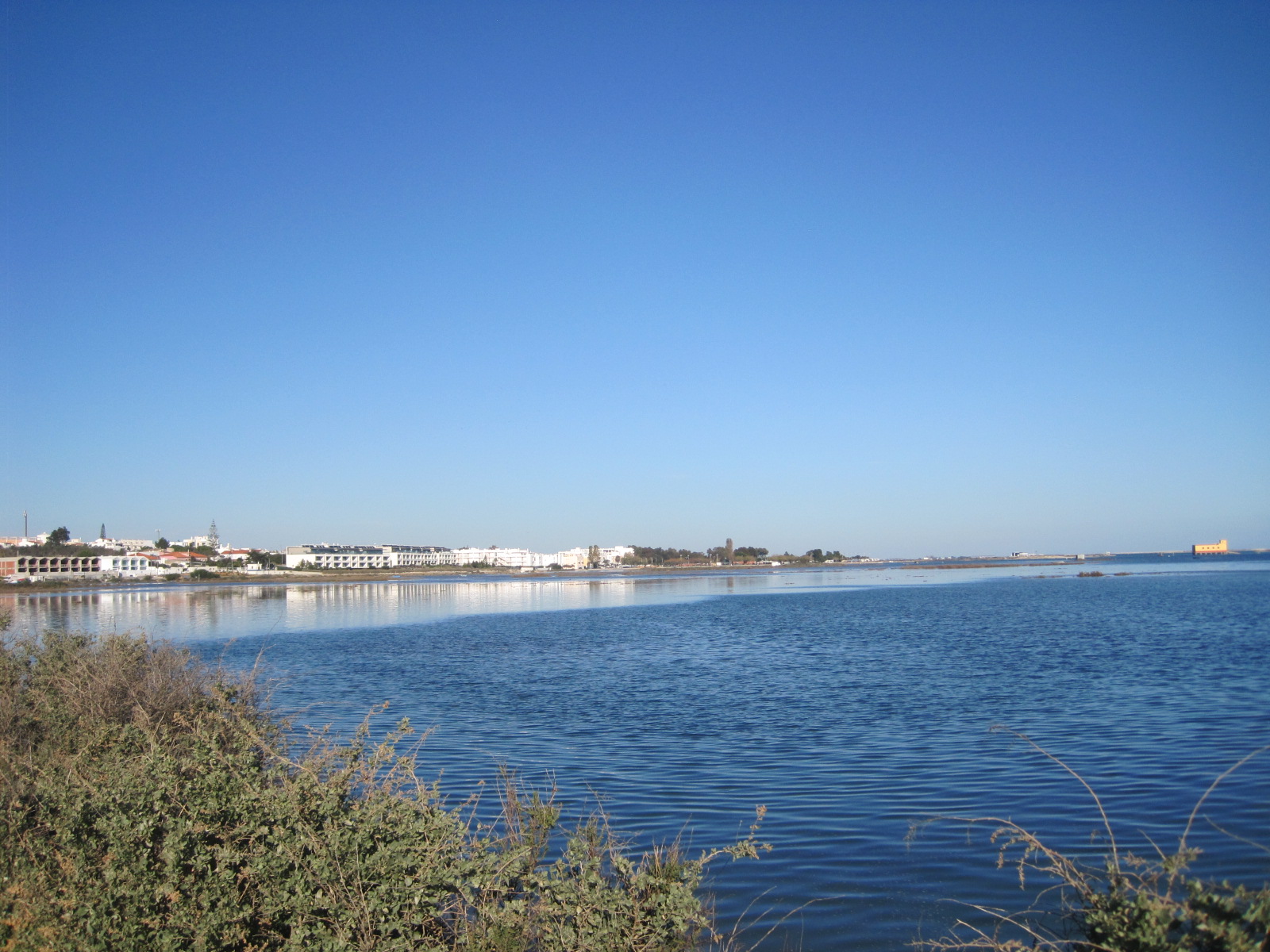
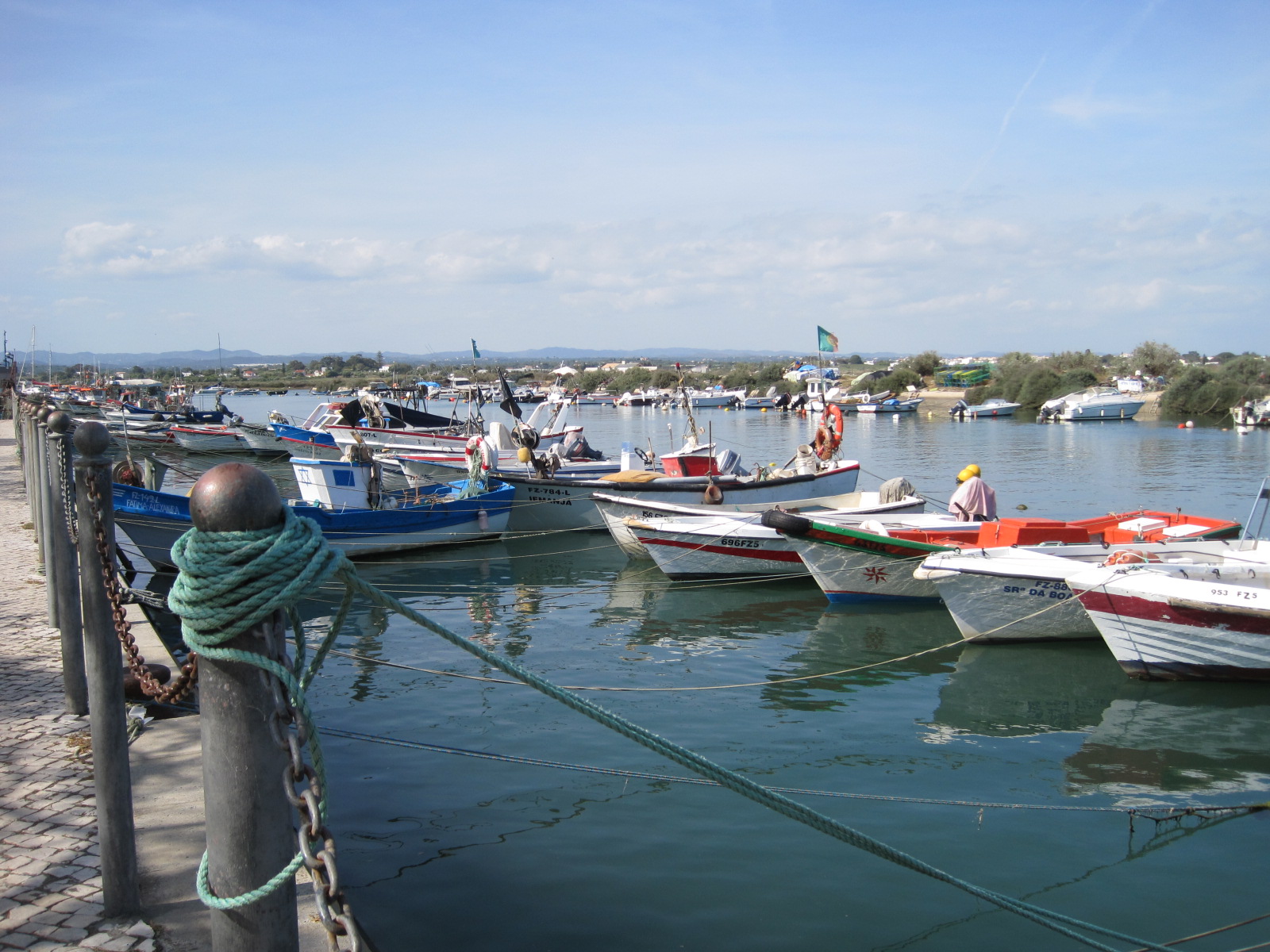
The sky is blue, and that’s a good start! I’ve taken you to Fuseta before. It’s a little off the beaten track, but beloved by campers for the beachfront camp site. New development unkindly overshadows the distinctive fishermen’s homes. Prime location is key, after all, but the fishermen pursue their livelihood as they always did. The settlement dates back to 1572, and the fishing boats still cluster together in the mouth of the Rio Tronoco.
Approximately 10km east of Olhão, you turn off the E125 and follow the narrow road, over the railway tracks and down past the river mouth to the shore. Except in high Summer you will find ample parking beside the camp site. With the sea on your left, walk between the fishermen’s houses and the new apartment blocks facing the sea. The salt marshes open out where the road ends.
It’s a distinctive landscape, and habitat for all kinds of birds. I’ve grown to love it’s oft times, unkempt appearance when the tide is low. Spears of sunlight glinting on high water will reward my patience later. Coots bob gently on the surface, while their longer-legged friends peck, and choose.
Paths lead between the salt pans but you would be ill advised to follow any that are not obviously well trodden. Cyclists zip past, some with a smile and a wave. Looking back, houses randomly dot the marsh borders, and in the distance the new builds gleam, whitely.
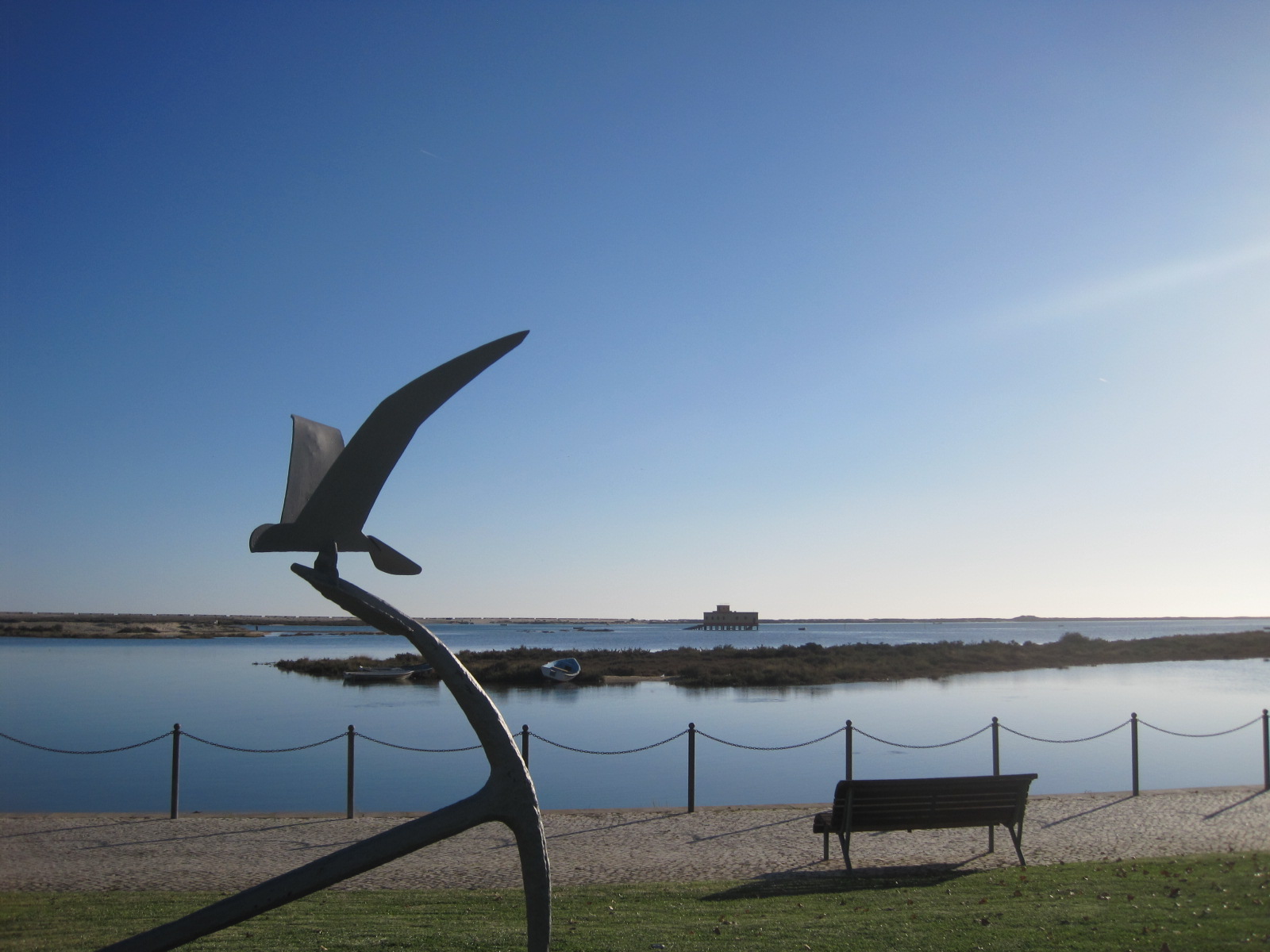
You can follow the cycle track all the way to Olhao if you wish, but I did promise you a shorter walk, so I’m meandering back, on the main path across the marshes. I know of a good bench or three, where you can watch the locals play boules and still keep an eye on the sea.
You’ll be wanting a stop at the beach cafe, but I might just tempt you to a stroll along the river mouth first? You know I like a boat or two!
It’s a little ragged around the edges, but Fuseta is a real and honest place, with a working population. I hope you enjoyed accompanying me on my stroll. Shall we head back to that cafe now? I hear there’s cake!
I’ve had a great time walking with you all this year. Thank you for the support. It has been amazing! I worry sometimes that the formula is growing stale. I know that I will carry on walking and sharing, because I love it, but I would hate for you to be bored. You can say so, politely, in the comments, if you wish. I promise not to take offense. For now, I’m going to put that kettle on.
……………………………………………………………………………………………………………………………
Not many shares this week, as you’ve all been busy with Christmas! Hopefully you’ll find time to read just a few excellent ones. Many thanks to my contributors! My Jo’s Monday walk page gives details of how to join in.
Drake’s post was wonderfully Christmassy! Happy New Year to you, sir!
Please do join me on Jo’s Monday walk next week, when I’ll be celebrating the launch of Jude’s new Garden Photography Challenge. I have a rather nice English garden to share. But first, I’d like to wish you a very happy and healthy New Year, and lots of walking!
A dilemma this week! Whether to take you back to those blue Algarve skies, or stay with reality, here in the UK? Ever the escapist, I’ve opted to leave reality on hold, just a little while longer. Vaqueiros is another of those pretty hill villages in the Eastern Algarve. A quirky little walk, this time I had the company of my walking friends, so no need to worry about angry dogs.
Again, the drive up into the hills from Tavira was a test for the driver, but pure delight for the passenger. Before coming to the Algarve I would never have expected to find hairpin bends and smoke coloured hills. Every twist and turn looks down across another tiny village, or out across a lovely panorama. With each bend I want to shout ‘stop the car’, and leap out with my camera. But, of course, that isn’t a practical option, and the dedicated walkers in our group would have been less than impressed. Coffee stops, however, are mandatory, and we congregate outside a miniscule cafe in Vaqueiros. I’m eye to eye with a languid grey cat, sitting comfortably atop a heap of beer crates. Raising my camera appears to be the signal for a sprint start. Another wasted photo opportunity! Nothing for it but to start walking.
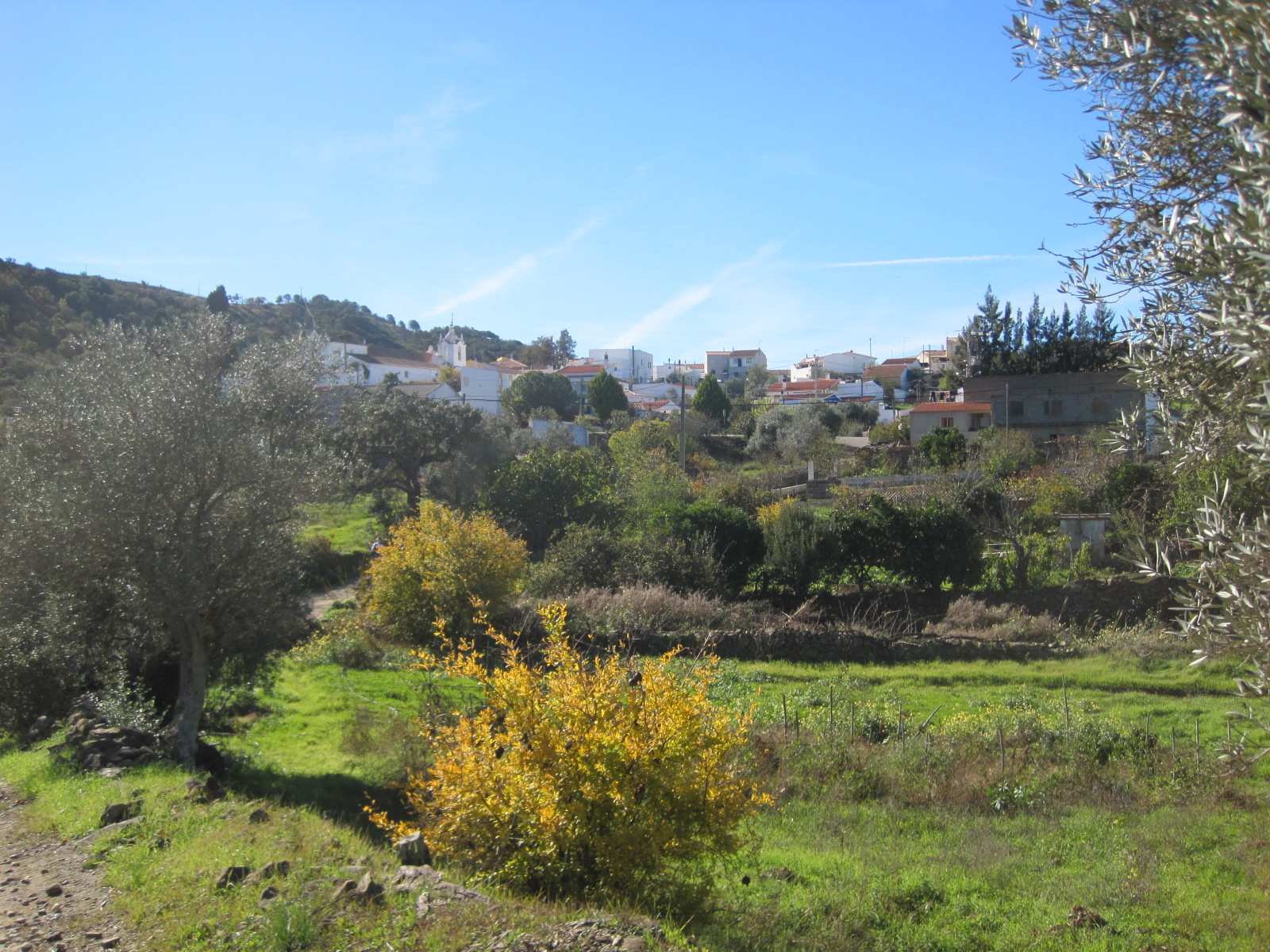
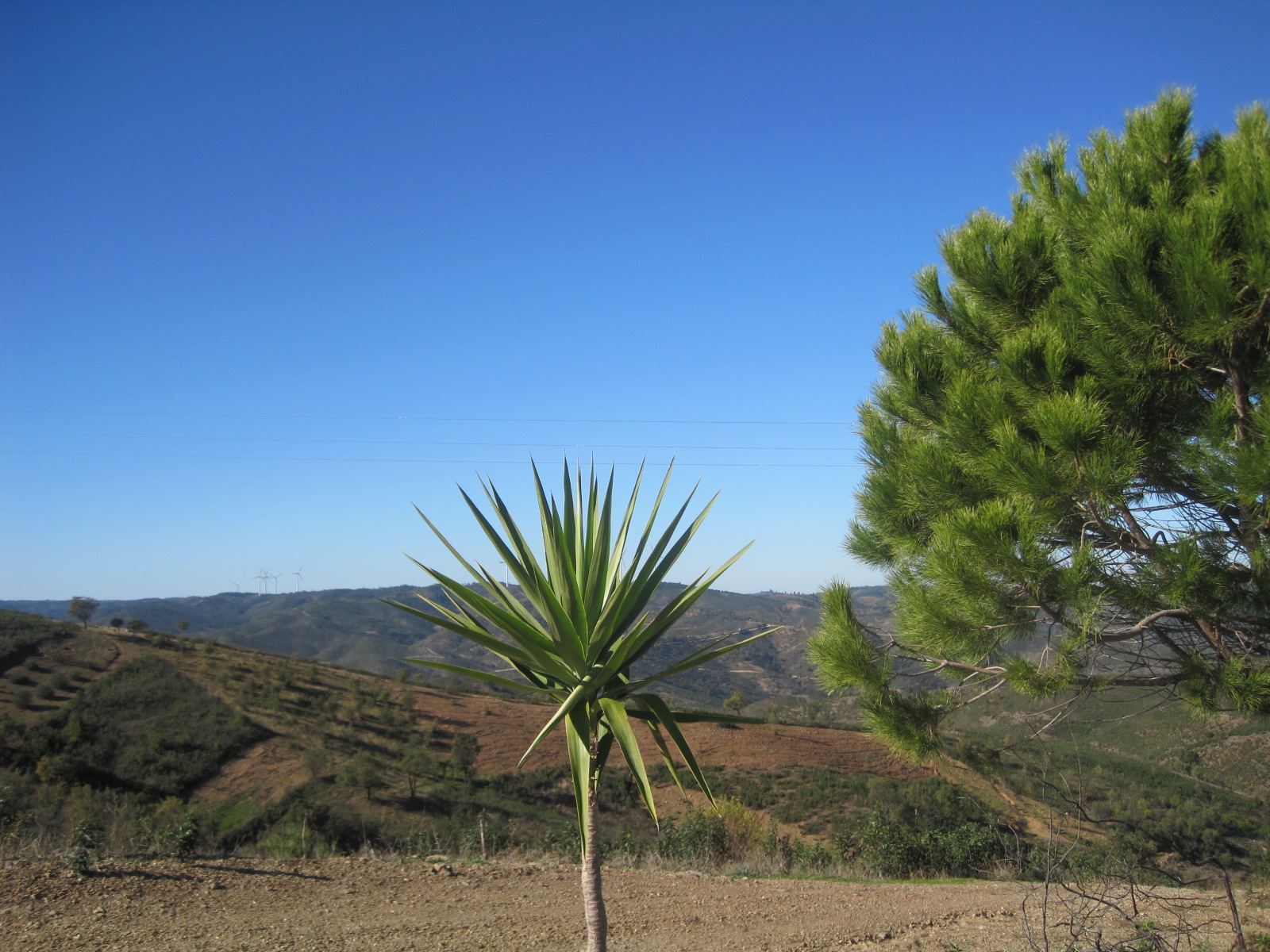
Vaqueiros is one of the villages along the Via Algarviana, a 300km walking and biking trail which crosses the Algarve. The walk today is a circular route of just 13km. In late November the sun is shining brightly but walkers are scarce. The olive trees are laden with fruits, soon to be harvested. Our route takes us out of the village, joining a gently rising track. Gnarled olive trees and umbrella pines are our chief companions.
Can you see Michael, in the deep shade, at the rear of the group of walkers? They are quite fit and walk at a decent pace. I’m always hanging back, looking for an interesting shot. Unless I get engrossed in conversation, which can sometimes happen. I try to maintain a balance between enjoying my companions and the landscape.
Red and yellow markers indicate that we are still following a trail, but we mostly rely on our group leader. An Algarve resident, he has been walking these hills for many years. His well-muscled legs handle the ups and downs with ease. Some of us are not so lucky! Along the route we come upon a couple of fords, but water levels are notoriously low this year. The rain came all in one week and everywhere is tinder dry.
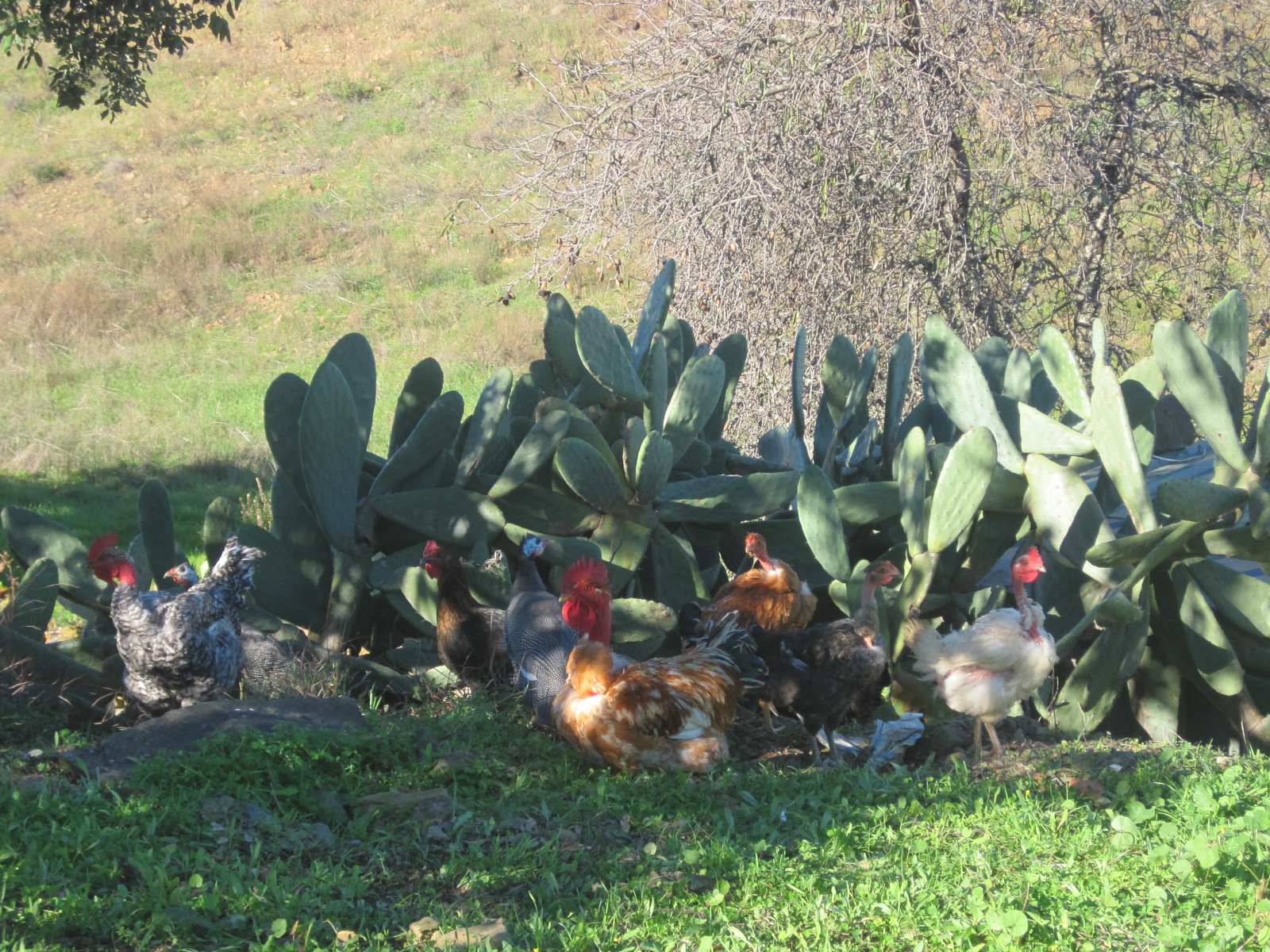
A cluster of hens are happy in the shade.
I mentioned at the beginning that this is a quirky walk. Up in these hills you unexpectedly come upon the remains of a theme park. ‘Parque Mineiro’ was a misguided idea which never actually came to fruition. Copper was once mined in this area and was presumably the inspiration behind the theme park. I wasn’t at all prepared for the sight of a little yellow train, and yet there it was, intact and still sitting on the rails.
I’m sorry to disappoint, but there isn’t a cake stop on this walk. Groans all round! The village doesn’t have one and in fact we took a picnic with us. We ended up back at Vaqueiros, outside the same little cafe. The lads helped to empty those beer crates while my tumbler of red cost but 40 cents!
It’s a lovely part of the world. This promotional video of the Via Algarviana is a nice introduction. There is a board near the cafe which shows way-marked trails, should you ever get that far.
And that’s my walking done till after Christmas, so may I take this opportunity to wish all of you a happy and healthy Christmas (yes, you are allowed cake! You can walk it off afterwards). Time to put that kettle on!
A last round-up before Christmas. Huge thanks to all of you who’ve followed along, up hill and down dale. I’ve enjoyed your company so much, and thank you for helping to keep me trim. Join me any time you like. Details are on my Jo’s Monday walk page.
………………………………………………………………………………………………………………………
Quick off the mark last week, Drake was in thoughtful mood :
Hope to see some of you next week, if you’re not too busy entertaining and having fun. I’ll be looking forward to a bit of fresh air in that gap between Christmas and New Year. Off I go, to wrap presents. I still have some to buy! Take good care till I see you again, and have a wonderful time with your loved ones.
My walk through Portugal’s Barranco das Lajes definitely comes in the category of ‘tales with a happy ending’, but for a while I wasn’t so sure.
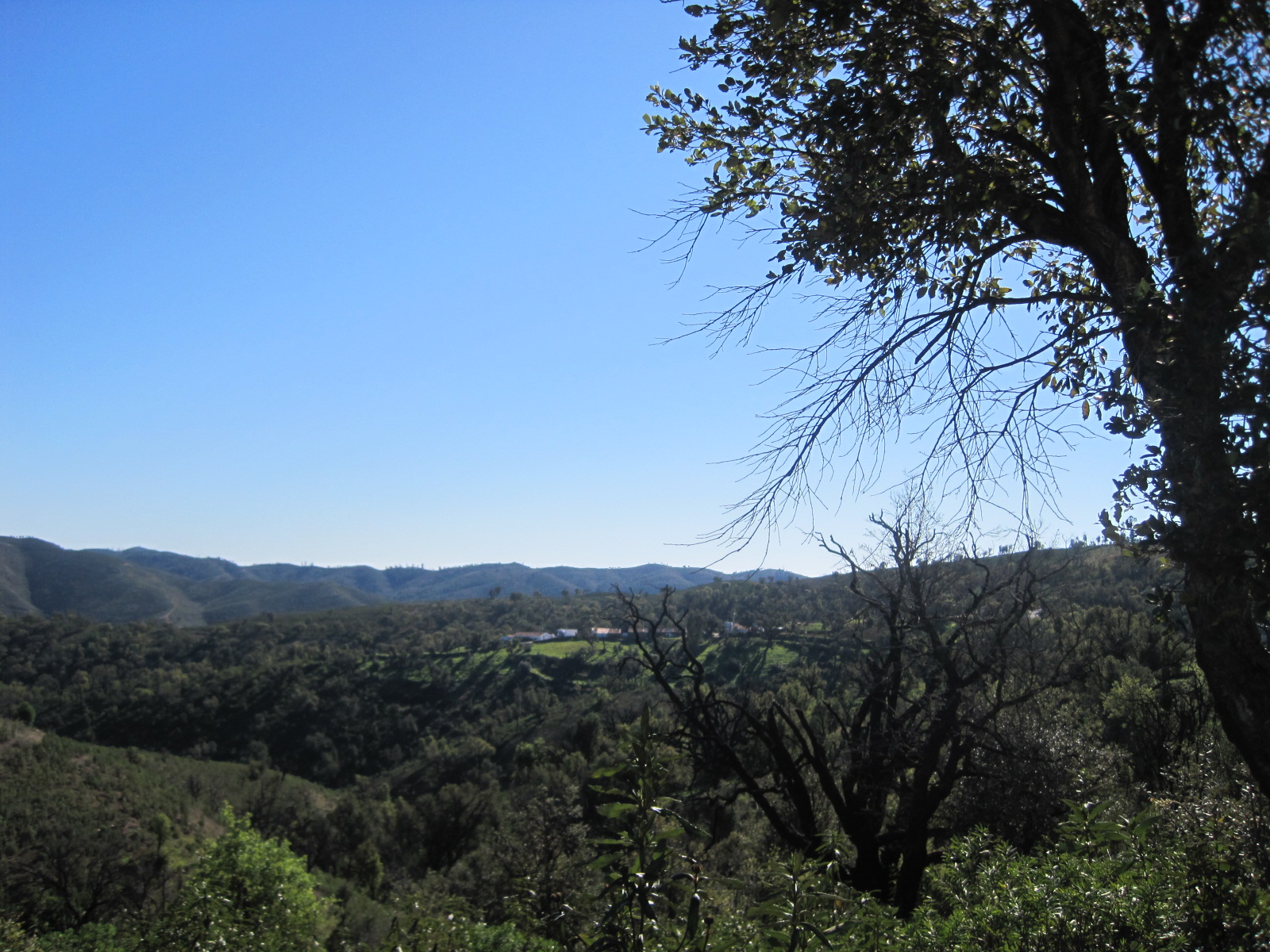
Let me set the scene. The skies were the clearest of blues. I’d been in the Algarve for long enough to take this completely for granted (a week!). I’d ambled on beaches, and been out with my walker friends. I’d even met up with a lovely blogger and her husband for coffee. (Hi Becky!) I was in as relaxed a state as I ever achieve. But those smoke blue hills on the horizon were calling me. Much earlier in the year I’d been there and resolved to come back for a walk.
Out came the guide to Walking Trails in the Algarve , which you might remember from my walk on the cliff tops at Carrapateira. This walk has a very different location. From my eastern Algarve home in Tavira it is a lovely drive along the N270 to São Brás de Alportel. As Becky points out in her most recent walk, directions in this guide are a little vague. Fortunately my husband has a good memory for roads. North we went, through the villages of Alportel, Cova da Muda, Javali, Parises, and Cabeca do Velho, climbing higher and higher into the hills. When it seemed we couldn’t go any higher, and my ears were popping, we reached the minute village of Cabanas- the start of the trail.
Sorry the map is a little fuzzy
Acorns from the Holm Oaks were our chief companions
A more peaceful spot you could not hope to find…. until! Over a farm wall hopped two dogs, the leader barking ferociously and heading straight for me. Barking dogs are a pretty common factor on any walk in the Algarve countryside. Most farmers have an animal or two to protect their property. Usually they are on a leash, or behind a sturdy gate. In such an isolated spot, the farmer obviously did not expect company. He shouted at the dogs, but not before the leader had reached me and leapt at the back of my knee. Ouch! I have to admit I was shaken and not a little worried that it had broken the skin, but I was ‘lucky’.
The walk follows the asphalt road a very short distance through the village of Lajes, before turning down a trail. I limped along feeling a little sorry for myself, and wishing I’d had a walking pole handy for defence. But it was such a beautiful day, and my surroundings so serene, it really was hard to stay grumpy.
Looking back at the village of Lajes
With the clearest of skies
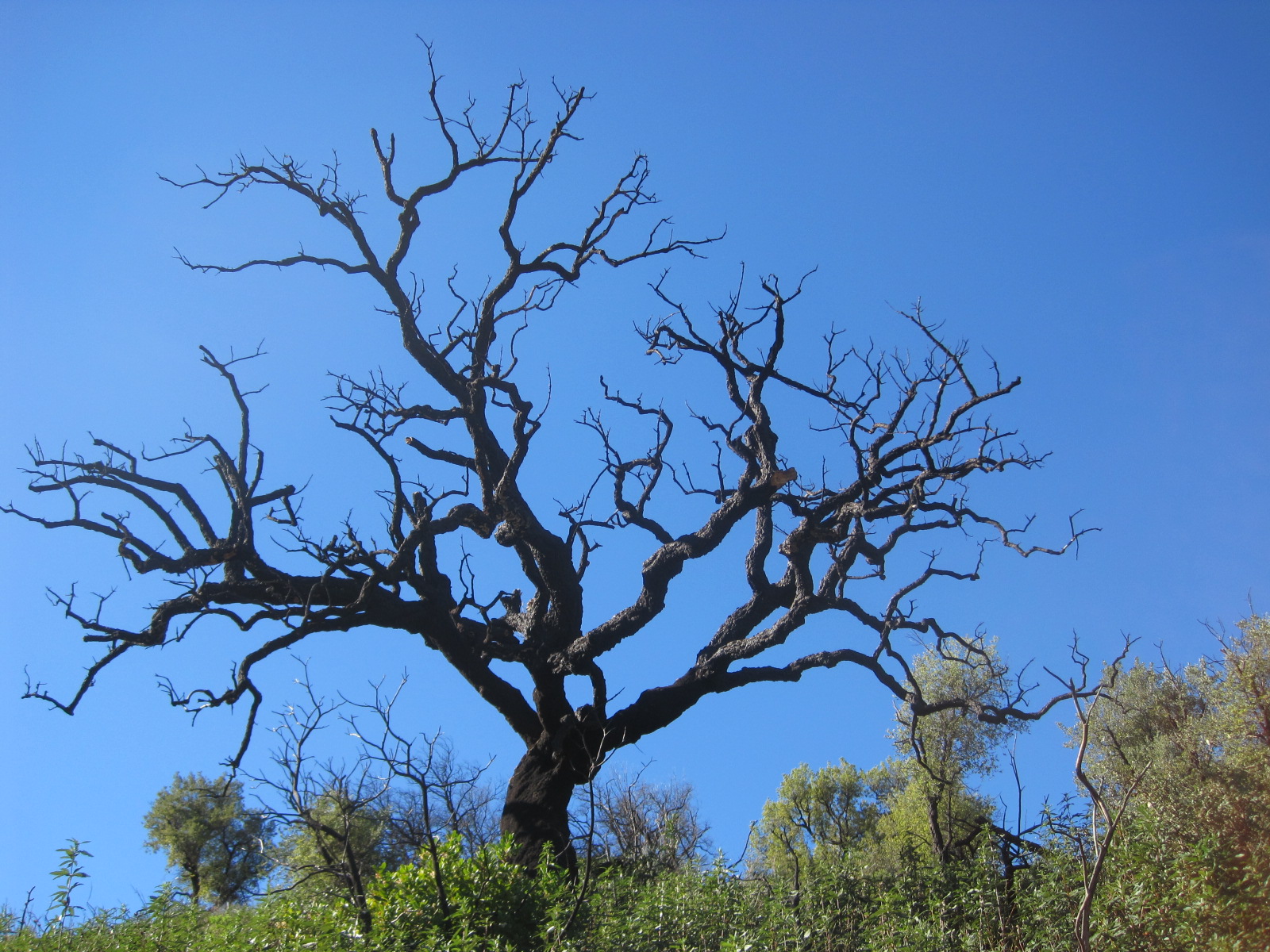
And interesting trees
The trail descended quite gently, but it soon became clear that I had made the wrong choice of footwear. My grazed toes did help to take my mind off my sore leg. Grateful for small mercies! A pause for a little discreet padding. Can you believe that I really was enjoying myself? But I sincerely hope that you will learn from my bad example. Meanwhile the trail passed through olive and fig groves, beneath numerous cork and holm oaks and down to a watercourse, with rustling bamboo.
Cork oak
Oaks and bamboo
Casting beautiful shadows
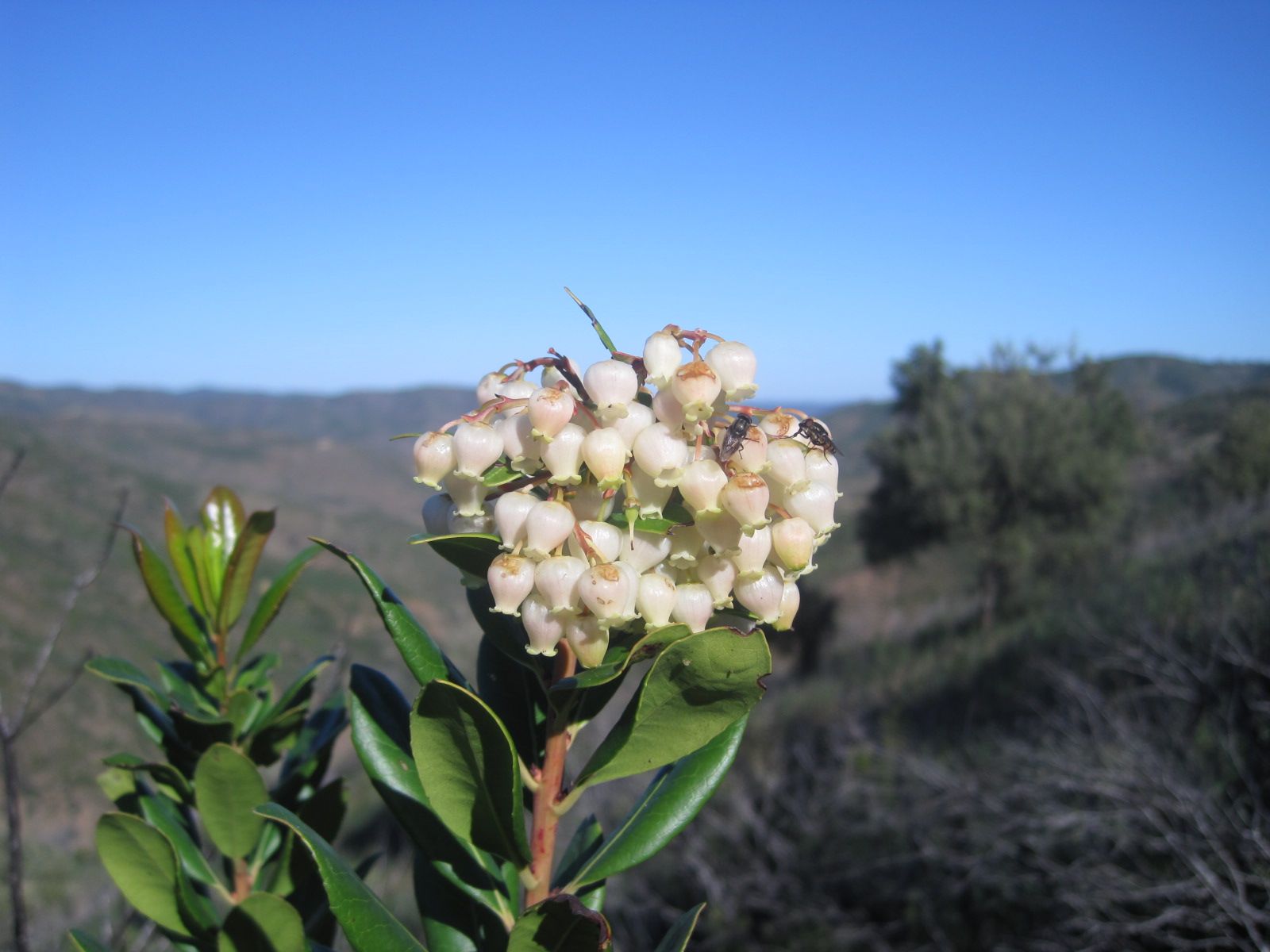
Climbing back out of the valley, I marveled at the early flowering fruit trees. I couldn’t decide whether these were the famous Strawberry trees (known for their powerful liqueur, Medronho) or Loquats. In Spring these valleys will sing with with wild flowers- the rose and white faces of Cistus, lavenders in lilac and green- but for now the predominant colour is green.
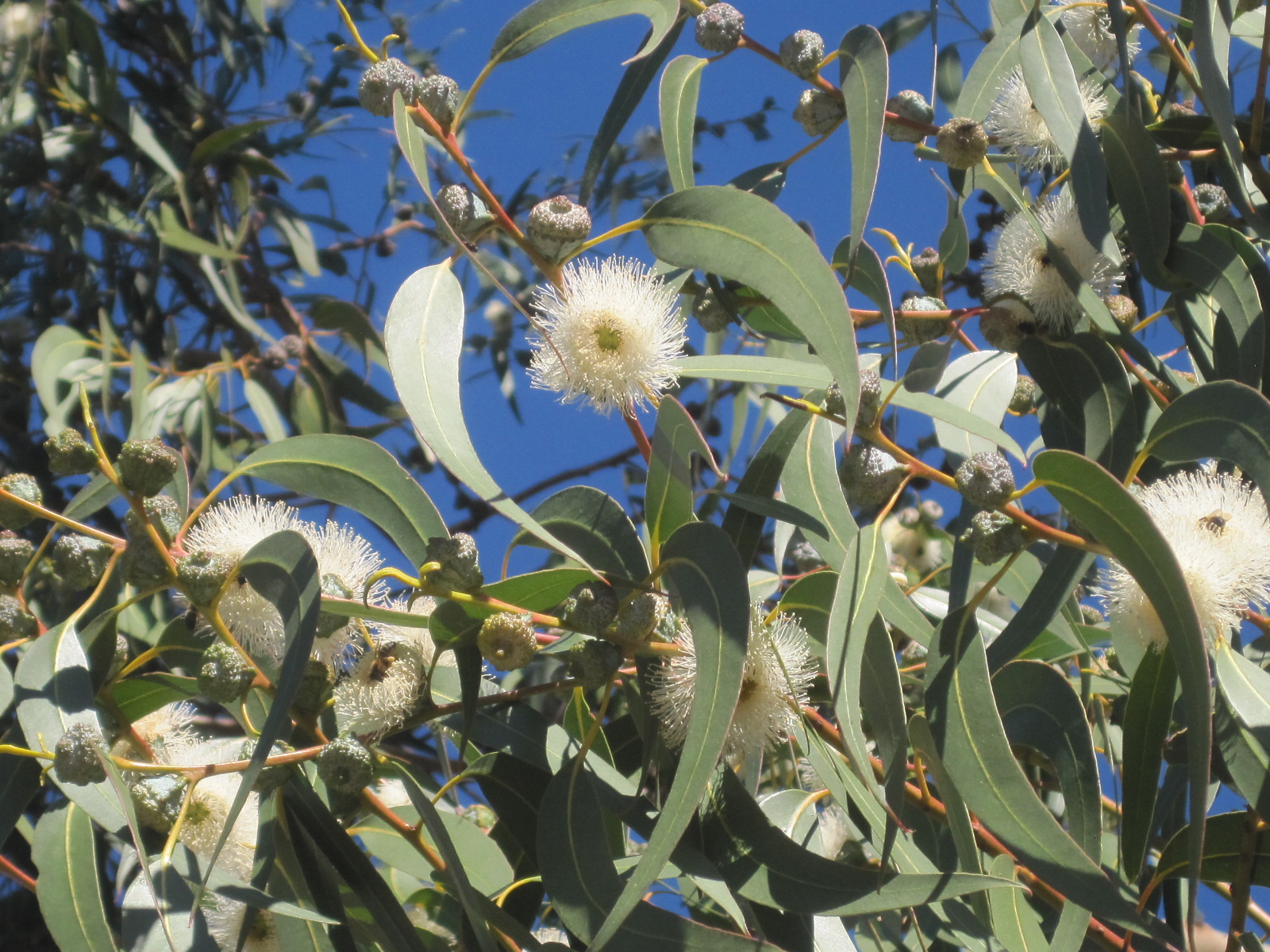
Another intriguing plant draped itself rather seductively through a Eucalyptus tree- a white variety of the bottle brush?
Almost at the end of the 5.5km walk, there is an optional loop up to Cerro da Ursa- a bit of a climb to a panoramic view. The good news is that having reached the summit you are then back at the level of the road. Even better, the car was merely yards away.
After all that trauma I’m sure you can guess what I did next? A whizz back down the hills takes us to the lovely little cafe, Tesouros da Serra, on the outskirts of São Brás. Fig and carob cake was exactly what I needed! Sore bits quite forgotten.
Just 2 portions left
And this was mine!
Should you be feeling energetic, details and a map can be found on the link to the Walking Trails guide. As estimated, the walk took around 2 hours, but we didn’t hurry. It was too beautiful.
I do hope you’ll read some of these great contributions, and I have to apologise for keeping some of them waiting rather a long time. I’m very grateful for your company and the lovely walks we share. Please join us if you have a walk, long or short- I really don’t mind which. Details can be found on my Jo’s Monday walk page, or just click on the logo above.
That’s all for now. I’ll probably be on my way to Nottingham when you read this and I’m sure that you understand that time with my daughter is precious. However, I hope to be able to reply to some of you whilst in transit and I’m an early bird so I can sneak some computer time in the mornings. I’ll catch up with the remainder on my return on Thursday, and join you for another walk next week. Take care till then!
Are you ready for a little evening stroll? I can’t promise you moonlight, but I think you will still enjoy the sights we’re going to see. I’m taking you to the historic city of Durham, where Lumiere 2015 has been lighting the streets with enchantment. This is the 4th event of its kind to take place here, and it attracts an international crowd.
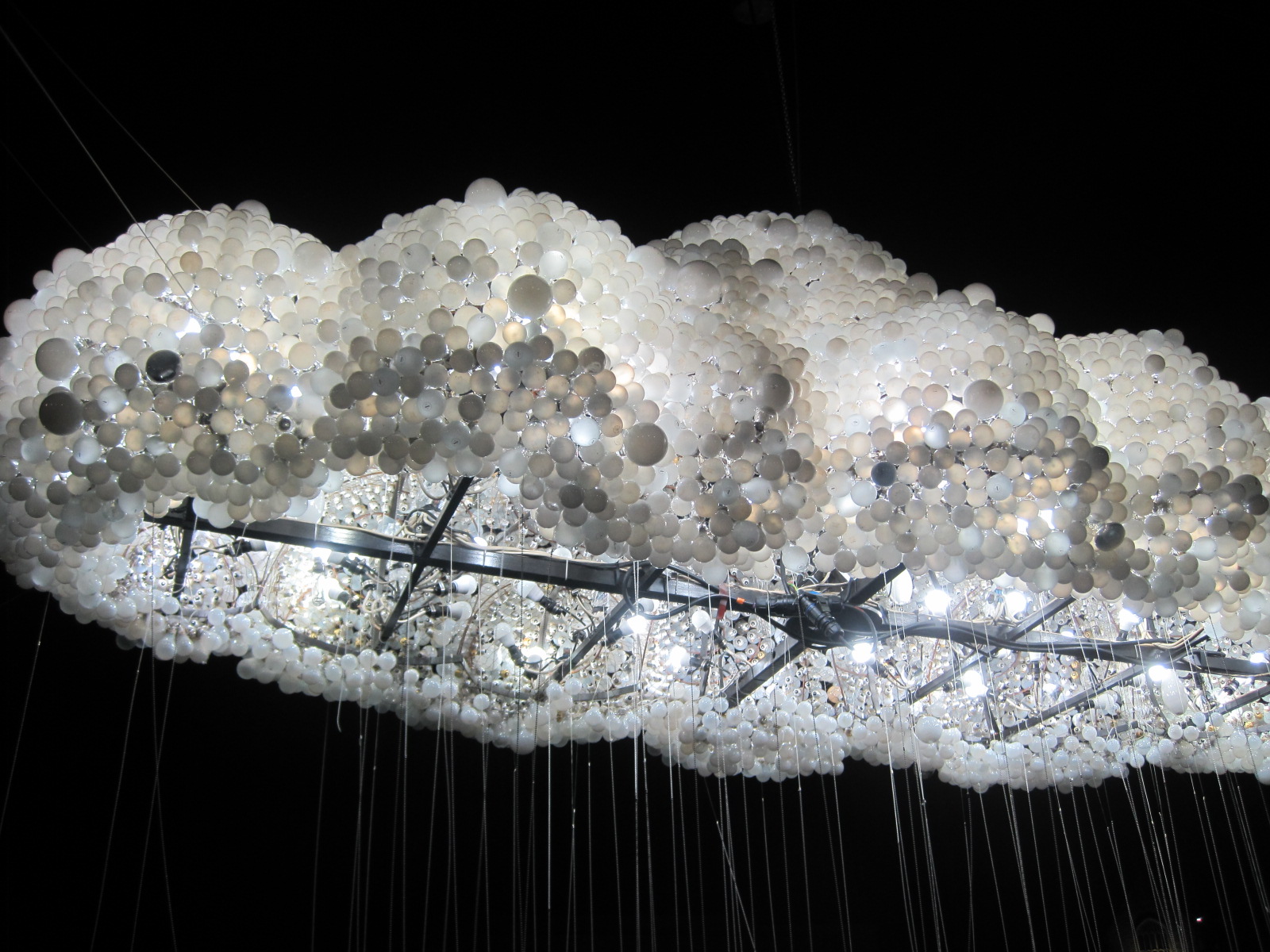
I have my map in hand, and I’m starting off with light installation no. 1, but I may well deviate from the route shown in the programme. There are so many distractions! I’m on Framwellgate Waterside, beside the River Wear, which winds through the centre of the city. Cloud, the work of a Canadian pair, is an interactive sculpture built from 6000 light bulbs. Tugging on one of the dangling switches turns them on and off. Rapt faces glow with pleasure as they look upwards and smile.
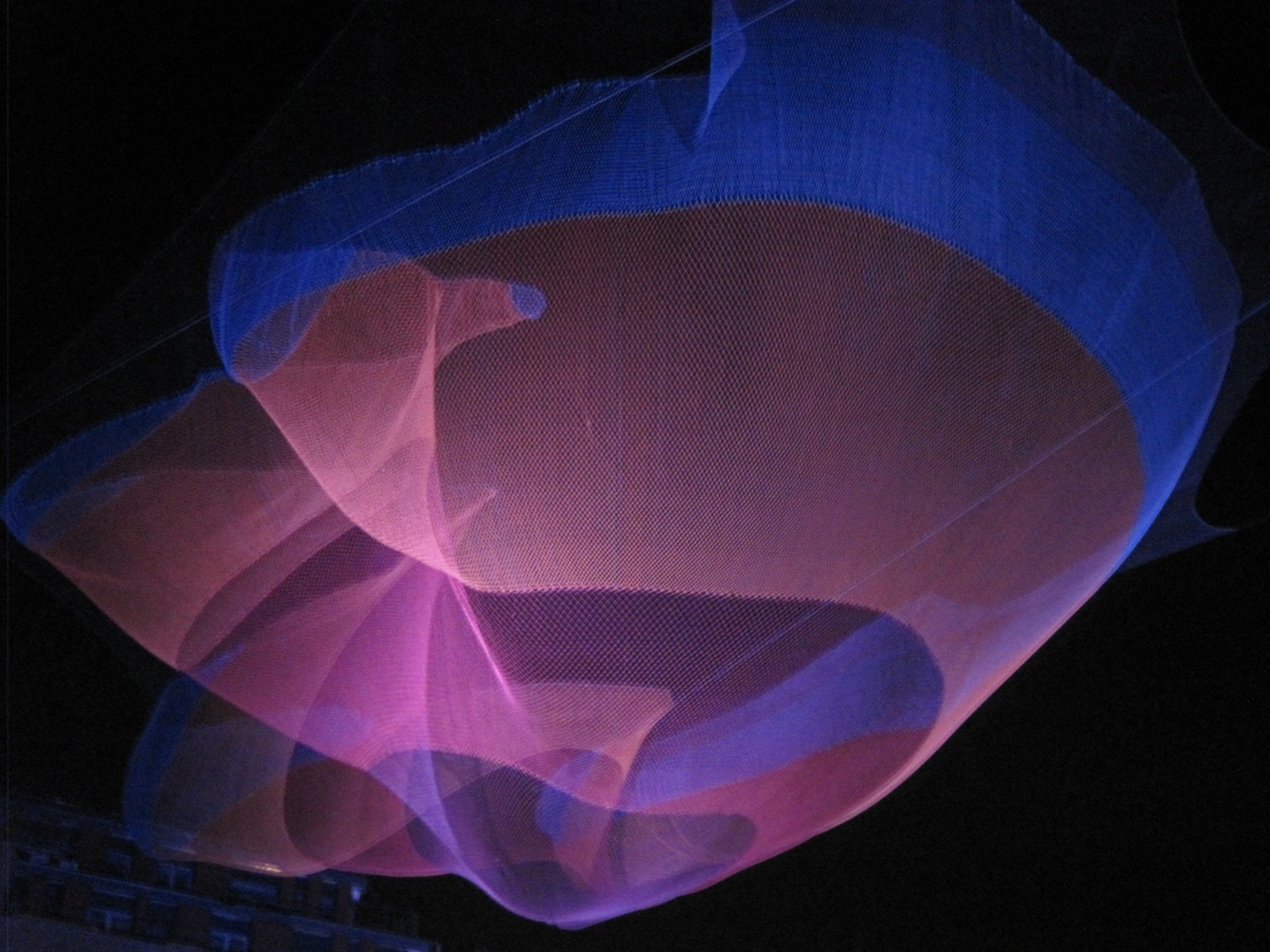
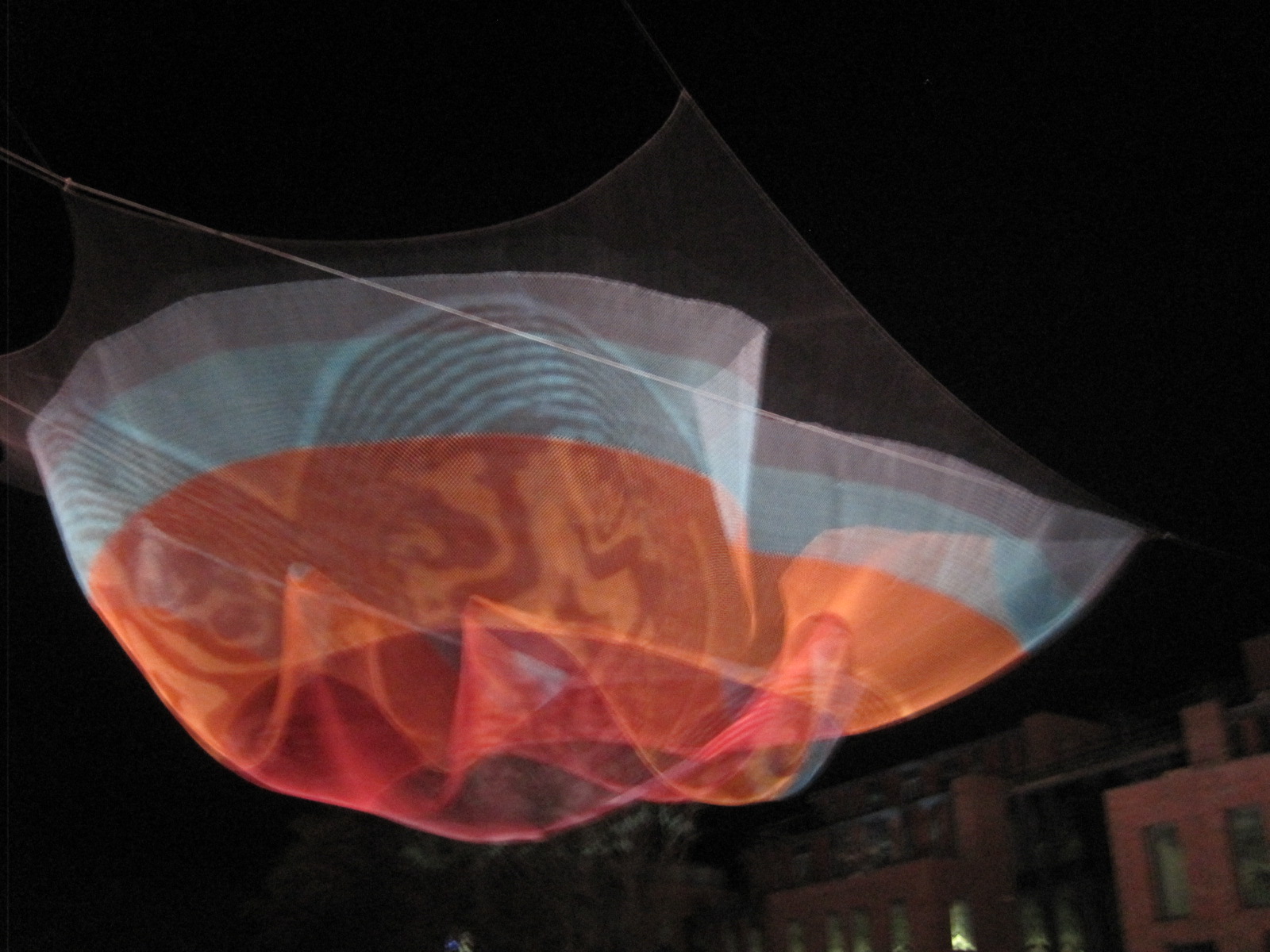
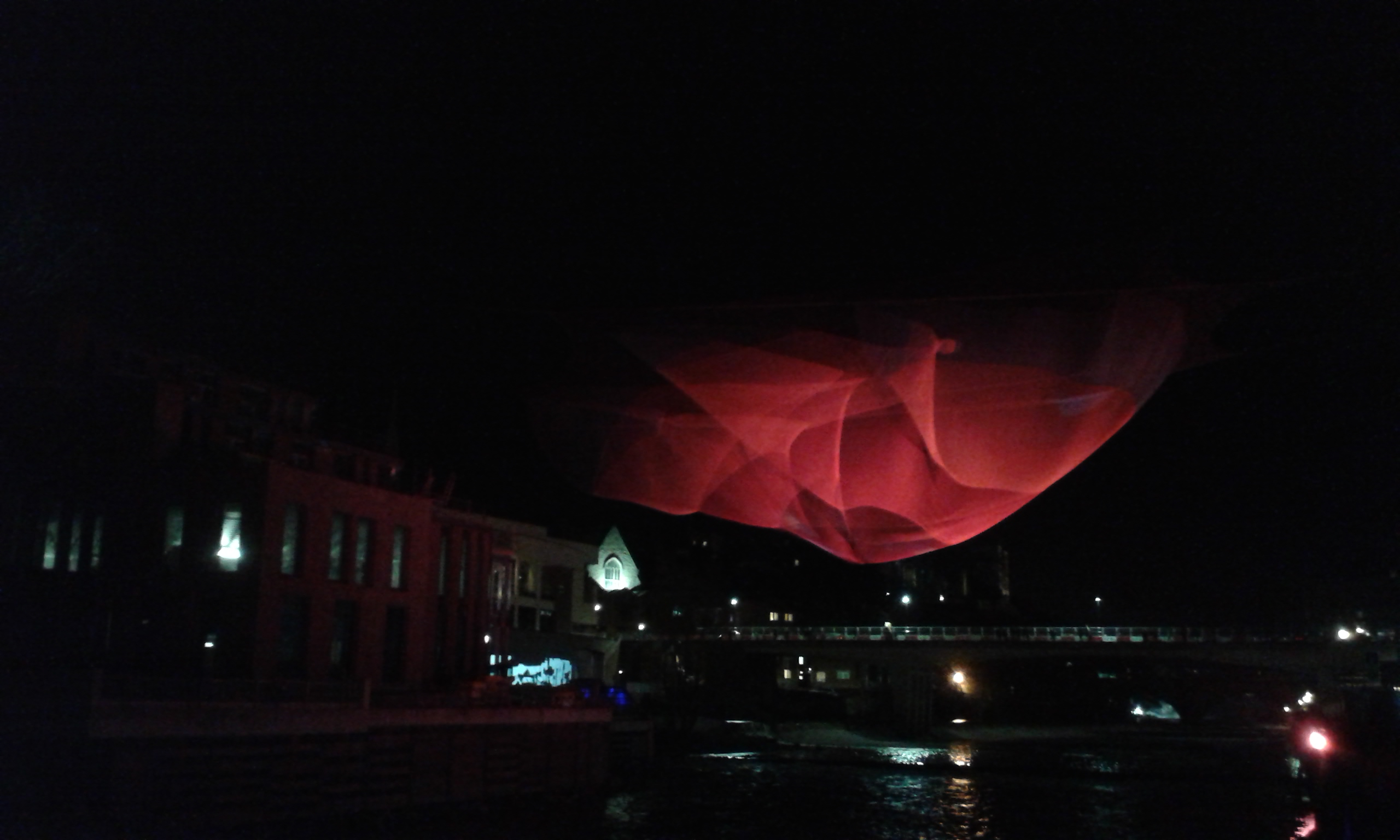
Behind me, flying the flag for the USA and swirling in the breeze like a merry kite, 1.26 Durham, installation no.2, is vying for my attention. Such was the strength of the 2010 Chilean earthquake’s vibrations that it momentarily sped up the earth’s rotation and shortened the day by 1.26 microseconds. Data sourced from NASA was used to turn this phenomenon into a 3D image, the basis for this sculpture. Strong but delicate, it asks us to consider the interconnectedness of our world. A specially designed app was created by a local company to enable you to change the light projected. How amazing is that? Far beyond me, I’m afraid.
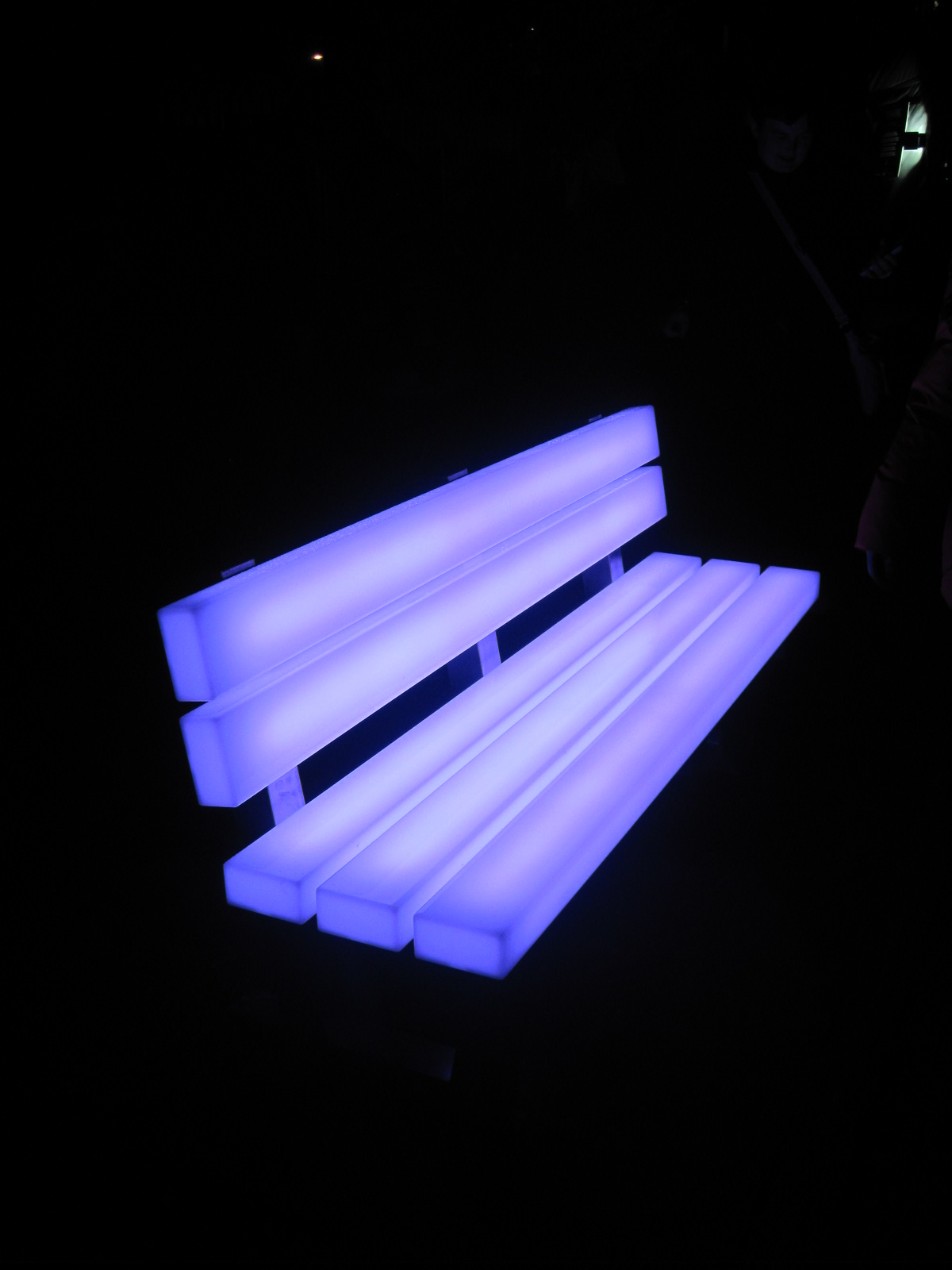
It billowed about gleefully and I scarcely noticed the rain that was beginning to fall. Not a good time for sitting on benches, but no. 4 in the programme, a German installation called Lightbench offered one in lilac and one in electric green.
Not a soul in sight!
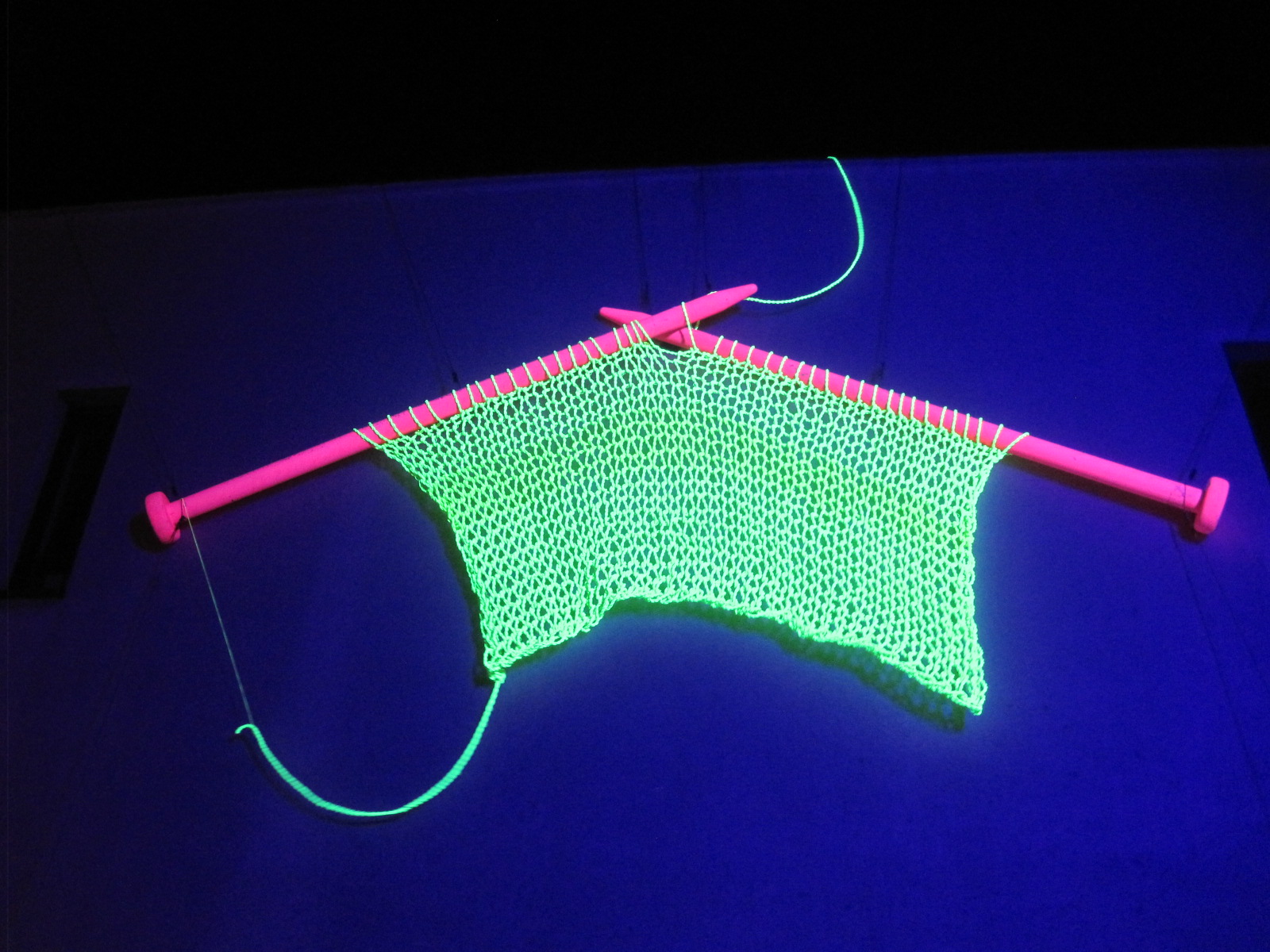
Where is no. 3 you might be asking? Over Milburngate Bridge and dangling on the side of a building, Big Knitting is a UK entry for which drain pipes had to be utilised as jumbo knitting needles. Ever heard of ‘magic’ knitting?
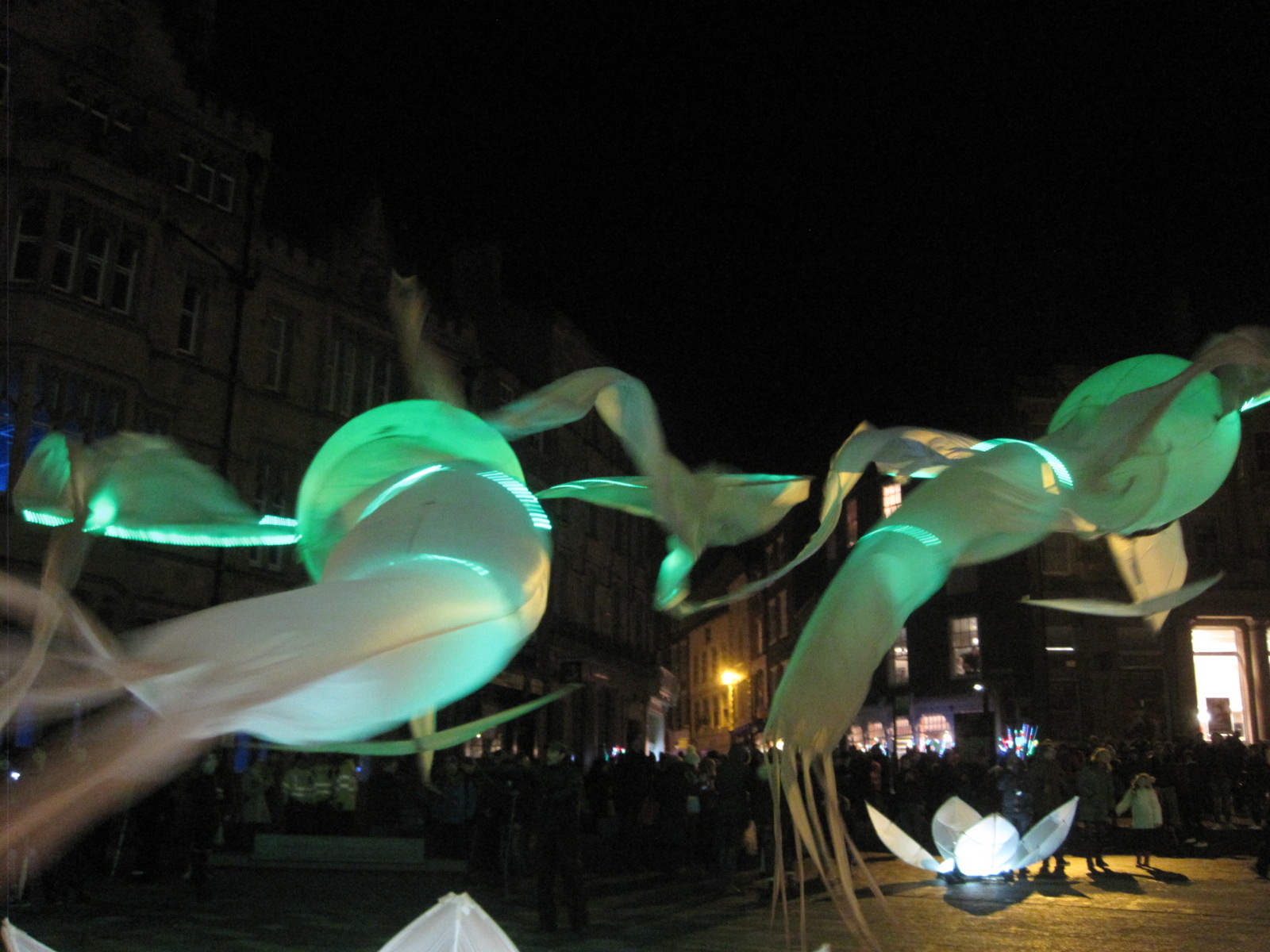
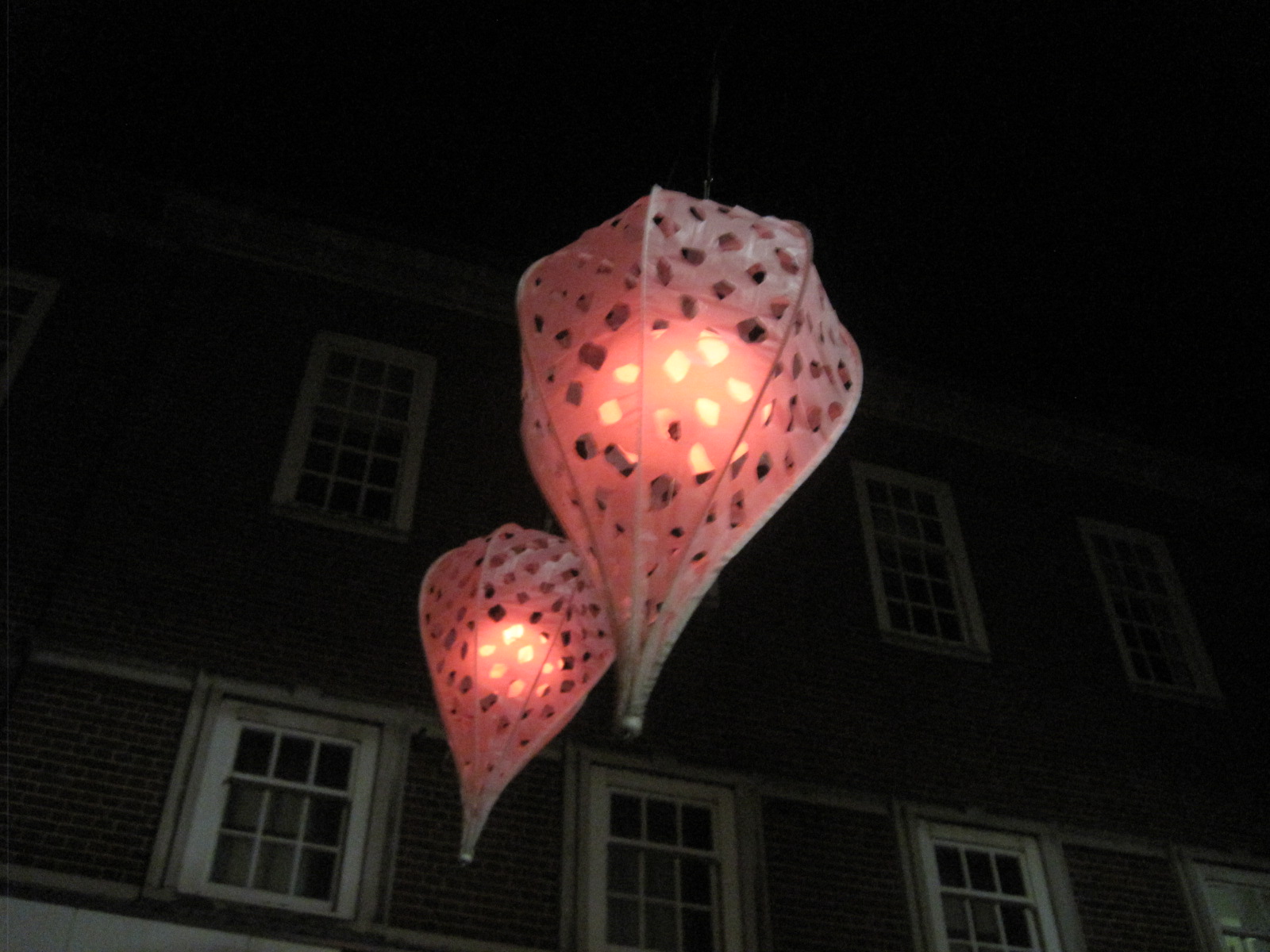
Through Market Place and around the Castle and Cathedral a directional flow was in operation to control the crowds, but there was nothing to stop you lingering to admire a French entry, Les Lumineoles. The gracefully gliding fish were one of my favourite installations.
I managed to capture a video of these sinuous and wonderful creatures, but alas, I can only display it sideways! Lesson learnt for next time I use my phone camera? Perhaps! A short walk from here, across Elvet Bridge, you will find The Red House, created by France. The Old Shire Hall has been illuminated in warm shades of orange and yellow, with rainbow windows. A pretty red brick building by day, at night it radiates colour.
Silver St. was all aglow with lanterns, but my next destination was Fowler’s Yard, where I hoped to see something rather special.
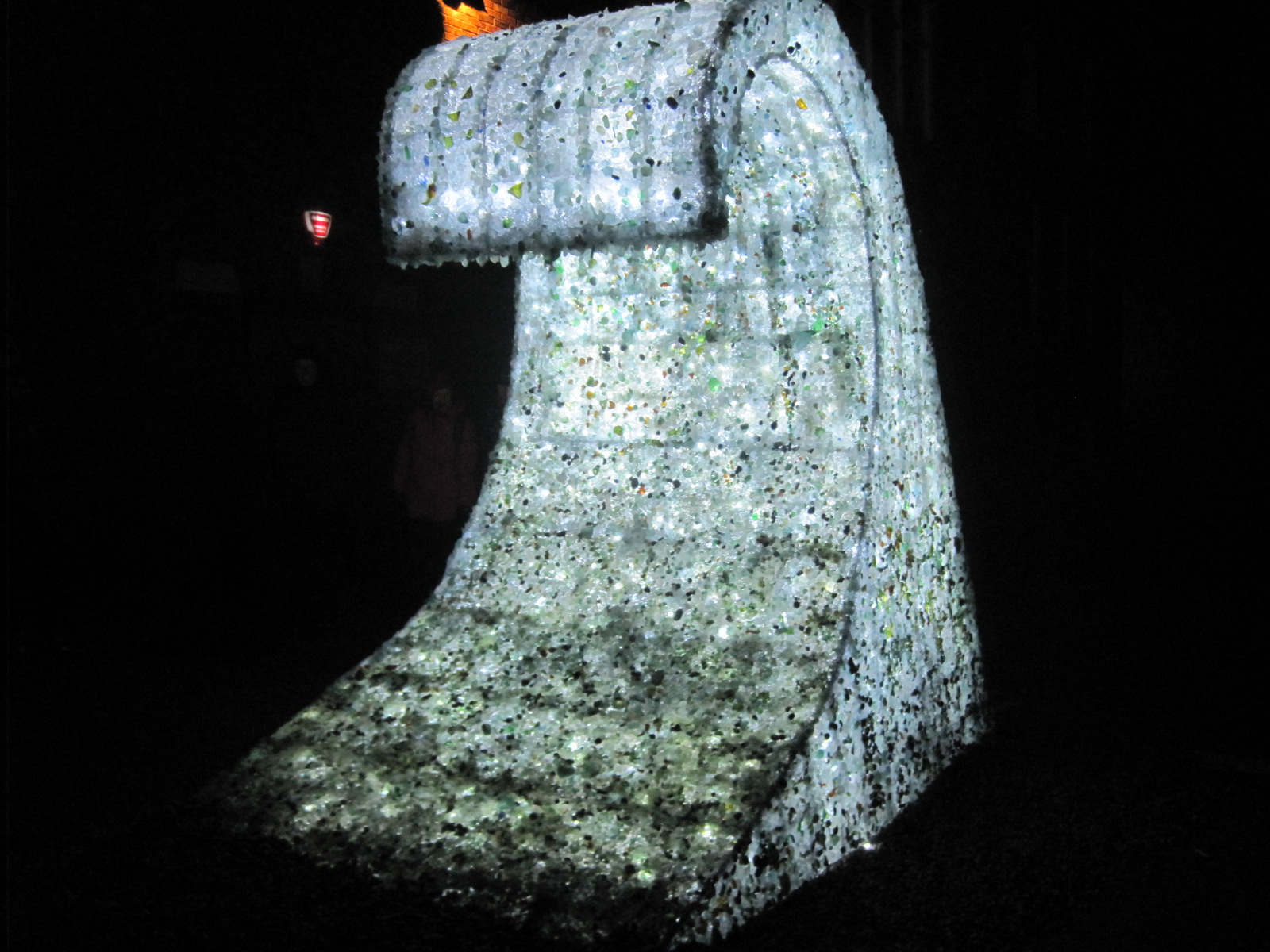
I first heard about Stu Langley’s Wave a few months ago when he contacted my husband for assistance in bringing his project to fruition. A giant wave, fully clad in sea glass, was designed by Stu as a tribute to East Durham’s industrial heritage. Seaham, on the north east coast, was once home to Europe’s largest glass bottle works. Waste from this was dumped into the sea, and continues to be washed ashore today in the form of sea glass. An artist who works in stained glass, Stu was enormously enthusiastic about his project, and the involvement of the local community. Soon we too were gathering sea glass to cover this 2.9 metre high wave.
The sea glass had to be affixed to the wave by hand. Definitely a labour of love. Stu was standing there proudly beside ‘his baby’ when we arrived. He was so pleased that Seaham are interested in buying his creation for display after Lumiere. One more step in the regeneration of this former mining area, which suffered large scale unemployment with the closure of the pits. Stu has another installation on display in North Rd.- Wheels of Industry, a Robin Reliant with themed stained glass windows. Sadly, in all the excitement, we didn’t get to see it.
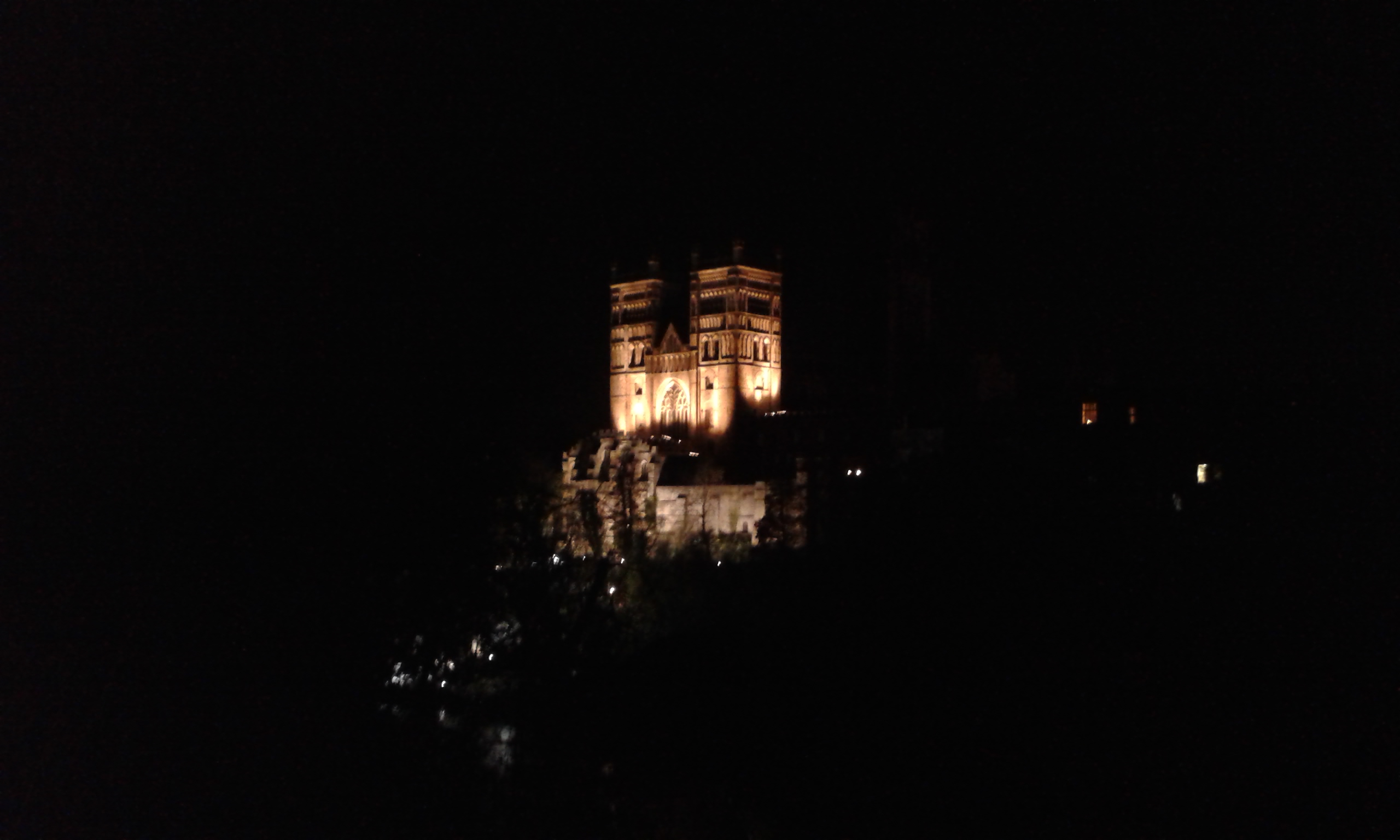
The lanterns lure us on towards Palace Green and the Cathedral, not quite sure what to expect. The previous two Lumiere’s had featured the Lindisfarne Gospels, marching with great drama across the front face of the cathedral. This year the son et lumiere was to be The World Machine – the story of the birth of modern cosmology from 12th century until the present day, and a collaboration of UK and Mexico. I really can’t do it justice with photographs, but there is a short video at the end of my post to give you a better idea.
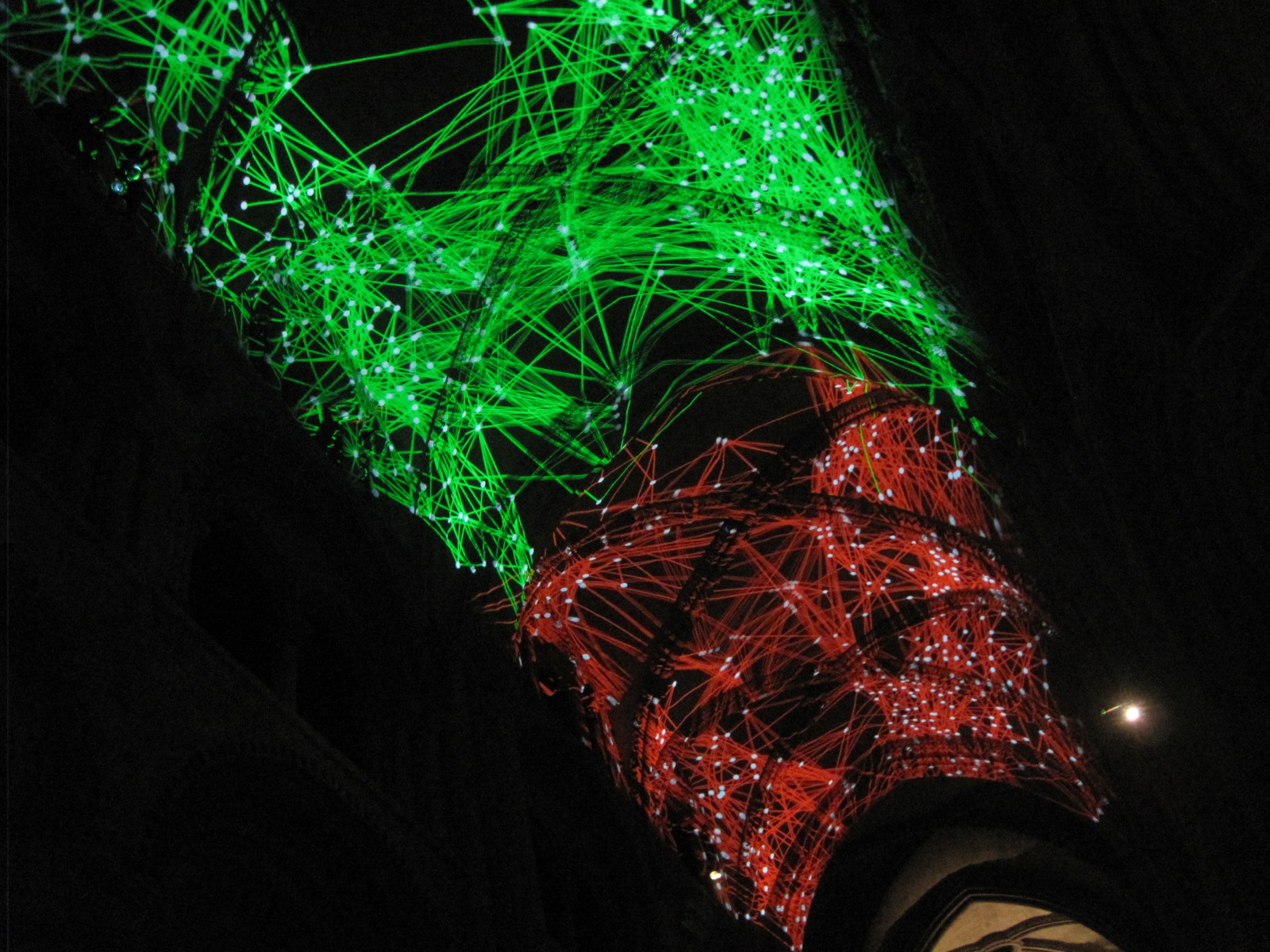
Let’s continue into the cathedral itself. Complex Meshes is another French installation, clinging colourfully to the ribbed vaulted arches, whilst music floods the vast space. This was an opportunity to take a seat, and simply wonder.
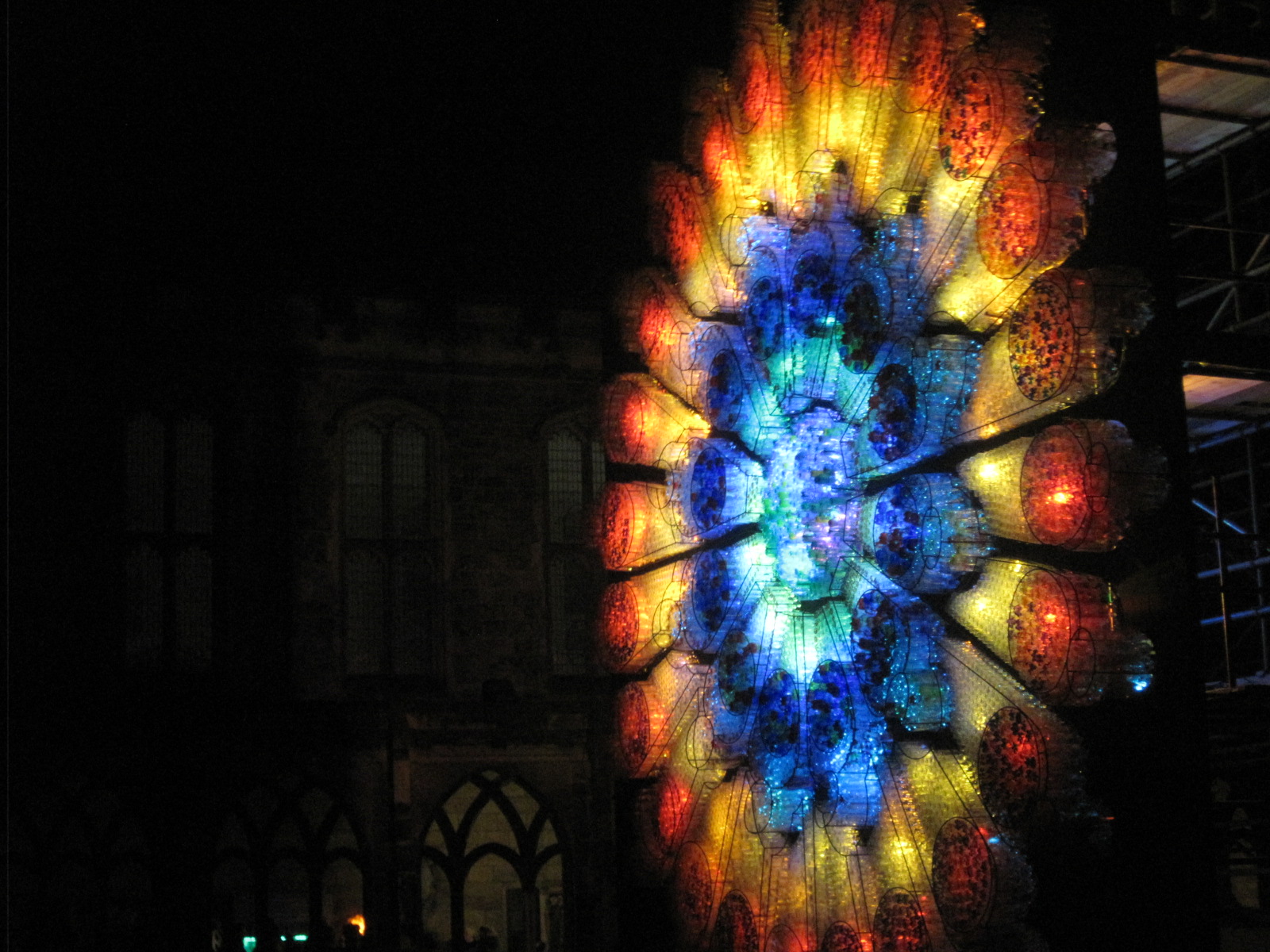
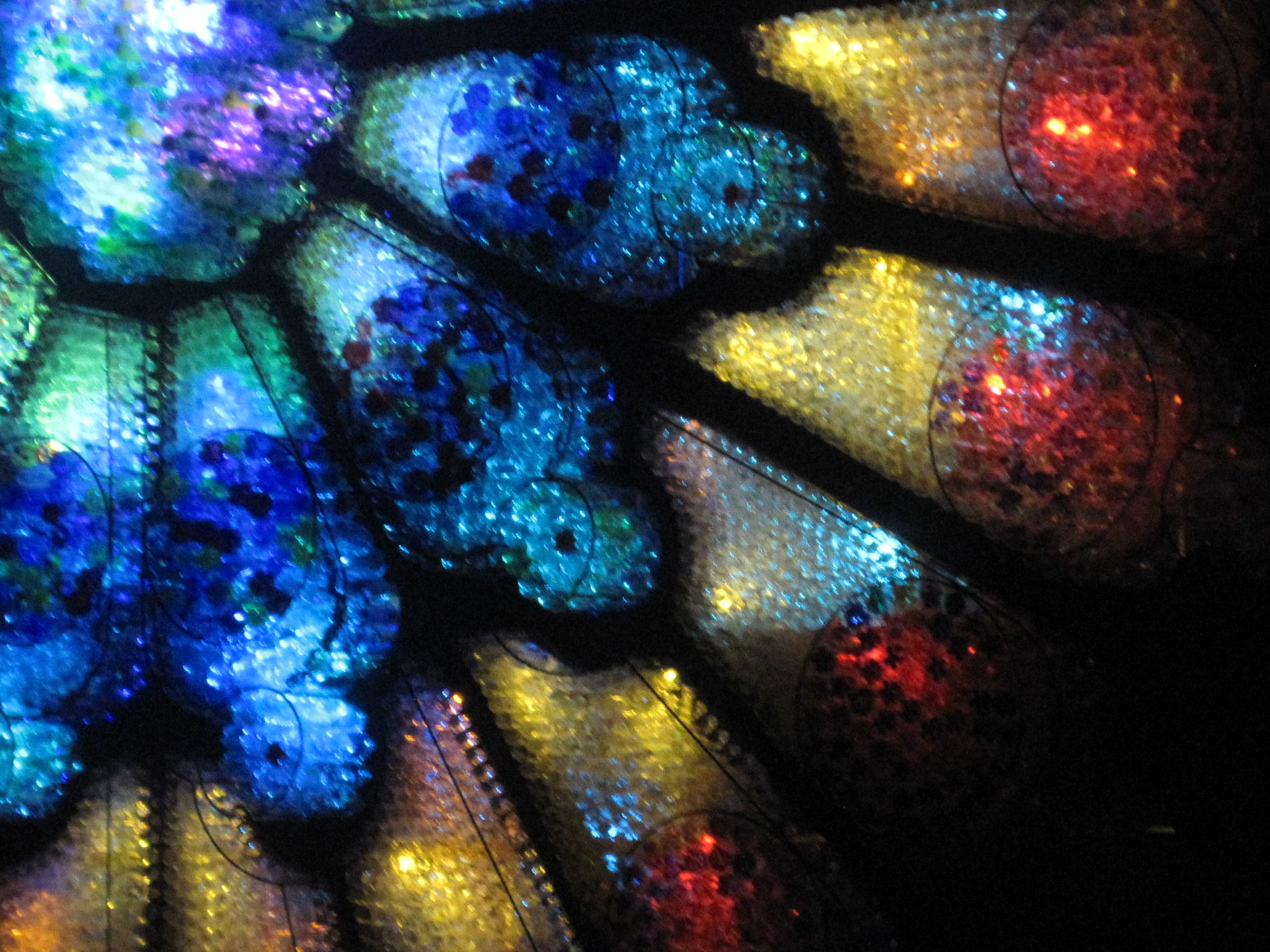
The cloisters , for me, are one of the cathedral’s most beautiful features. I was spellbound by them during Lumiere 2013, but this year it was my husband’s turn to get excited. Litre of Light is a replica of the cathedral’s own rose window, made from thousands of plastic bottles.
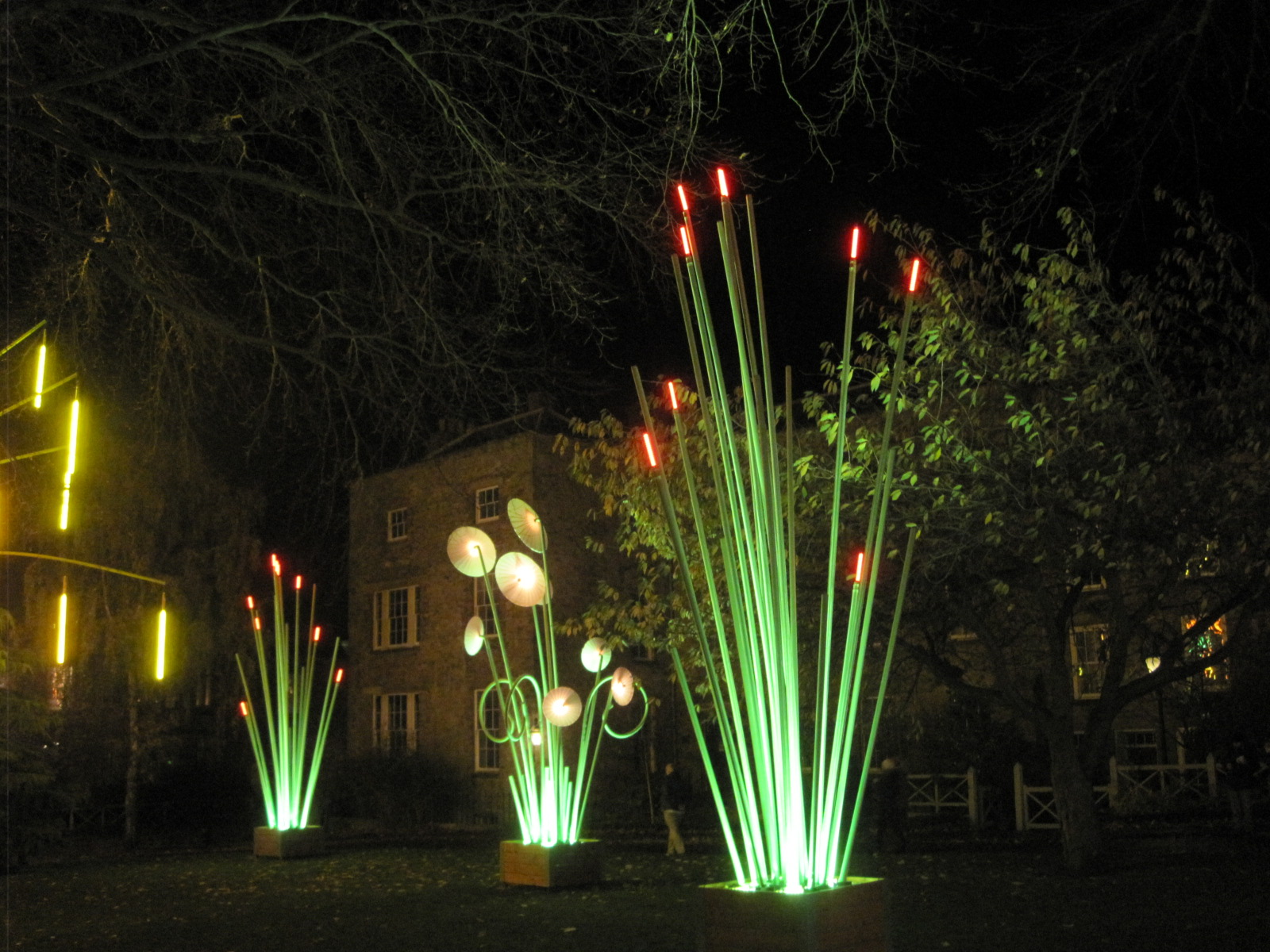
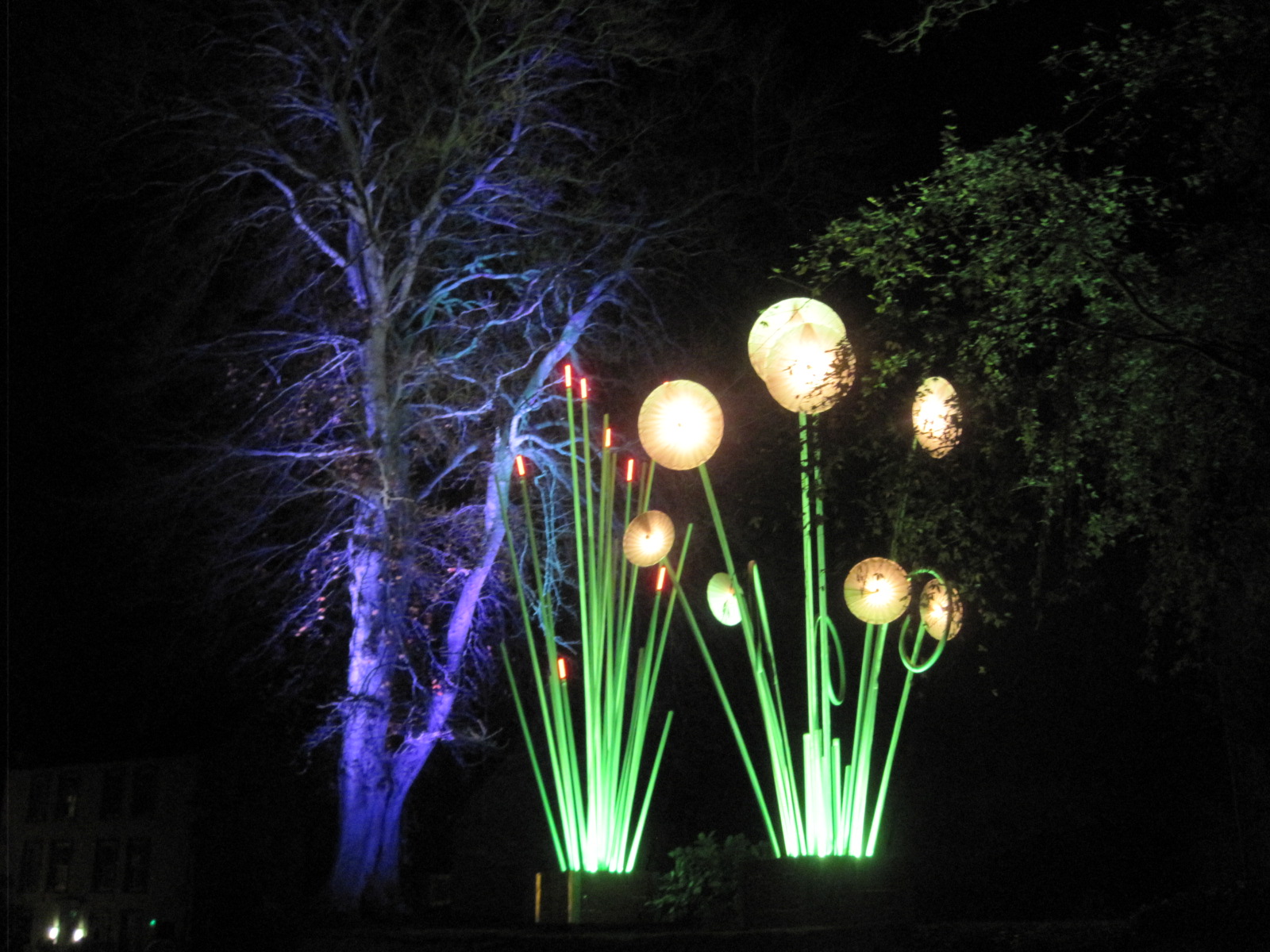
Leaving the cathedral, further delight awaits. Garden of Light, another French installation, brings a hint of fantasy. Giant illuminated plants bring a tropical vibe to a wintry English November. Smiling faces abound, and selfies too!
From this garden of delight, you are directed down to the river bank. At Prebend’s Bridge you find Rainbow River, a prism casting coloured patterns over the Wear. Crossing to the far shore the path rises quite steeply and you are treated to a view across to the cathedral.
Just for Lumiere, fog swirls mysteriously above the river, rising through the woods . Fogscape #03238 is a collaboration of the UK and Japan, conjuring up the spirit of St. Cuthbert in the mists.
South St. takes you past some lovely old Durham houses and back to the centre. There are other installations in the surrounding area if time and your tired legs permit. When I passed by Elvet Bridge early in my walk the crowds were quite dense, and so I came to miss one of the stars of the show, Mysticete by France. This company was responsible for Elephantastic in Lumiere 2013 and amazed all of Durham. Unfortunately the last showing was at 10.45, and unaware of this I barely managed to see the flip of the whale’s tail from the riverbank.
Durham can be subject to flooding and on the last night Mysticete had to be cancelled due to rising water levels. I do recommend that you watch this short video, which brings to life all the 3D effects and drama that I cannot hope to replicate.
What more to say other than ‘hope you enjoyed the show’? Terrible to think that, whilst I was there, horrific events were unfolding in Paris. The last couple of days have been harrowing. I would like to end on a positive note though. The future looks bright for young Stu Langley. He will be featured on the “One Show” in early December.
That’s it for another week. I’m exhausted, aren’t you? But exhilarated too. Please find time to visit all these wonderful walks I have to share, and huge thanks to all my contributors. If you’d like to join me with a walk, details can be found on my Jo’s Monday walk page. The logo takes you there. I will not be posting walks for the next two weeks however, as I take myself off to the Algarve. Kettle on and here we go!
…………………………………………………………………………………….
Gilly has out-bedazzled all of us with her Autumn scenes this week. Don’t miss!
That’s it for now. Once again my thanks to everybody. I don’t leave until next weekend so I will still be scurrying about visiting you all till then. In the Algarve I switch off from the world. Take good care of yourselves, please.
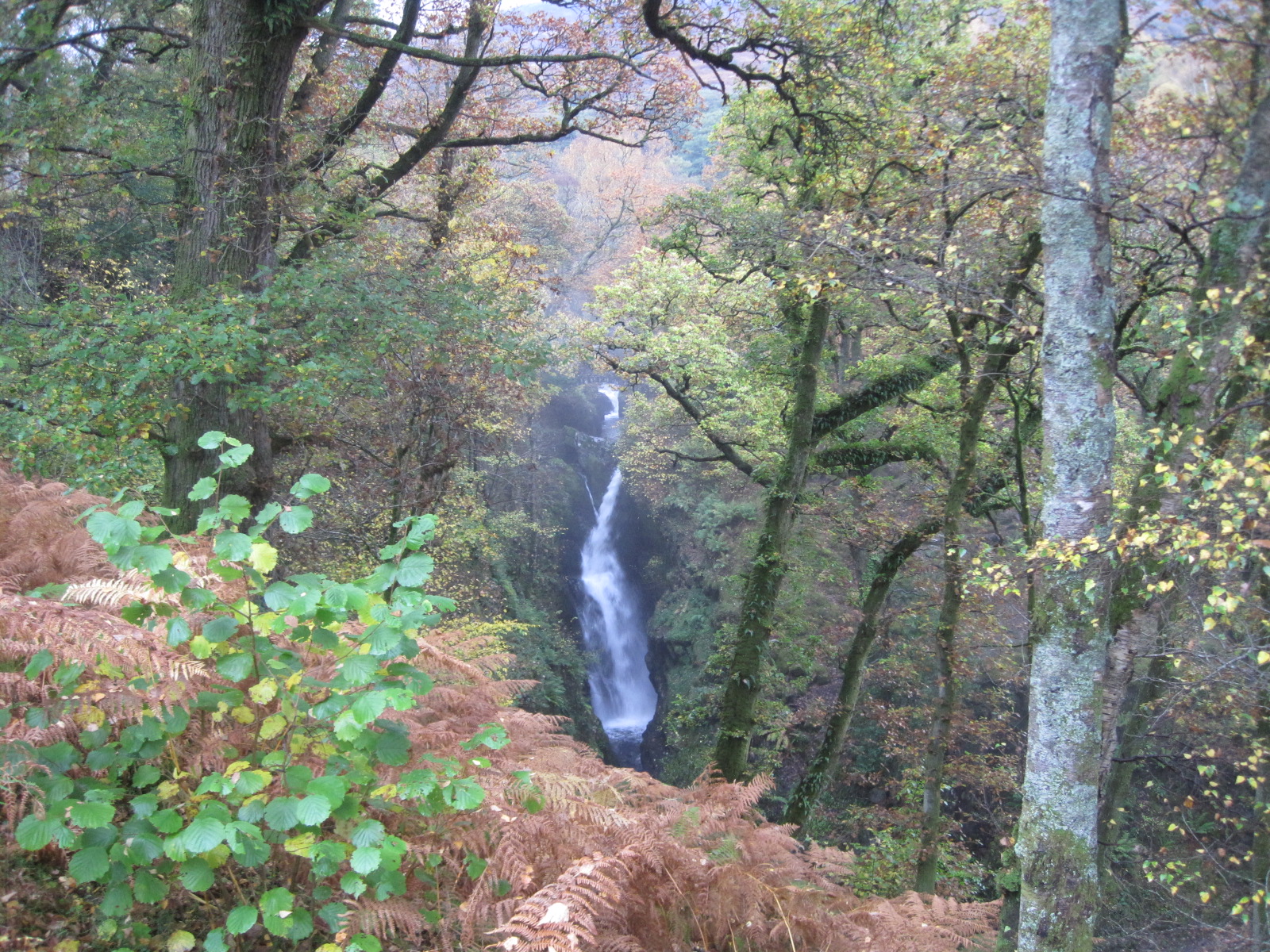
You have no idea how delighted I was to be able to visit Aira Force! The forecast wasn’t great and, as we approached the English Lake District, a swirl of damp cloaked the mountains. But a waterfall’s no good without the water, is it? And in Autumn, the canopy of leaves radiates! Driving through a tunnel of flame and gold, the senses are filled with wonder.
I had planned to walk to the falls from the nearby village of Glenridding, our base for the evening, but the road south from Pooley Bridge bypassed them. Carpe diem had never seemed so appropriate. A pocket of opportunity, as the drizzle ceased momentarily.
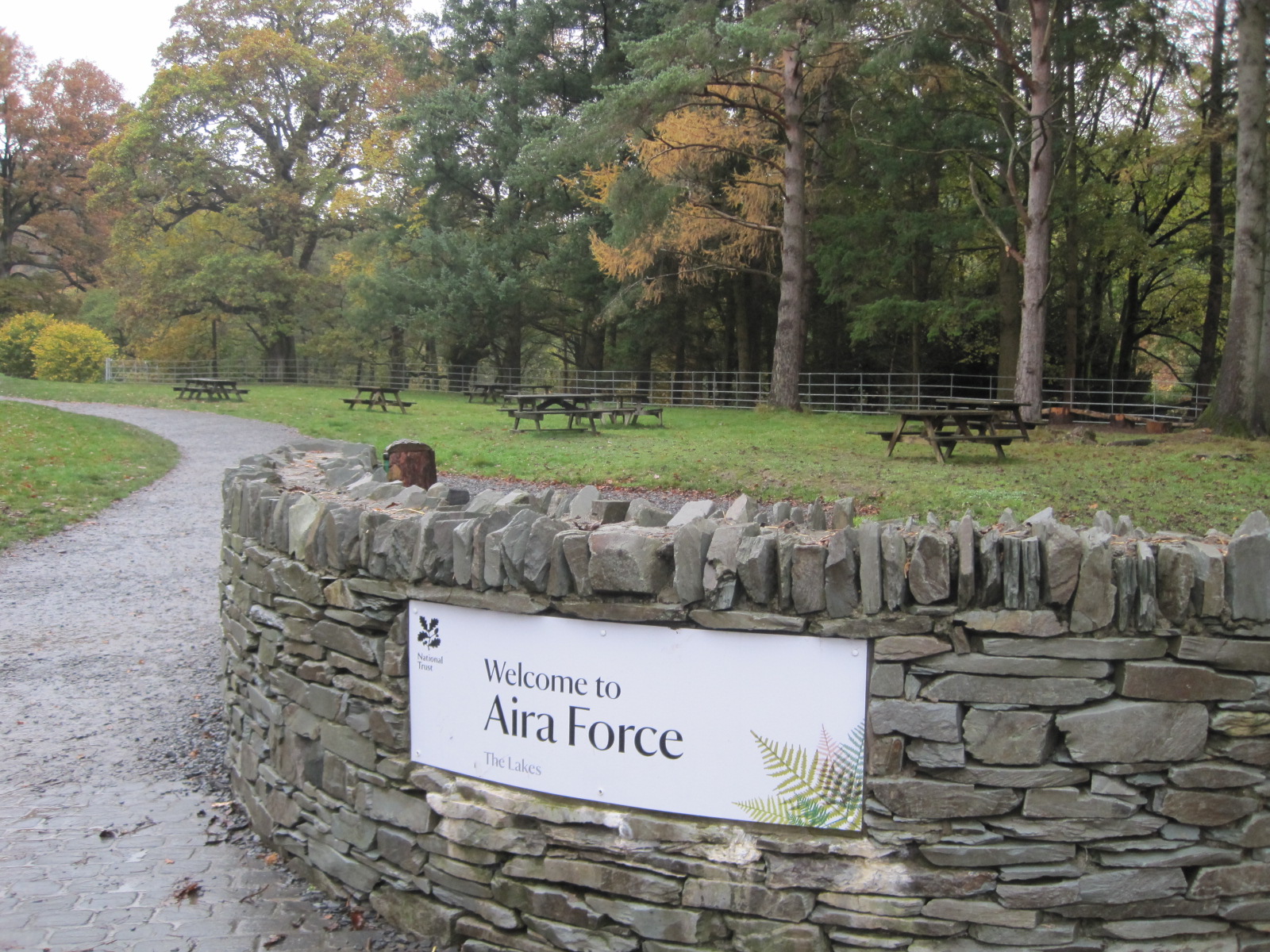
The National Trust car park
The car park was not as deserted as I might have expected, though the picnic tables were definitely unoccupied. There were just enough people to exchange smiles with, in a ‘good to be alive’ sort of way. A celebration of our good fortune.
Heading towards the Pinetum
A mingling of moss and leaves
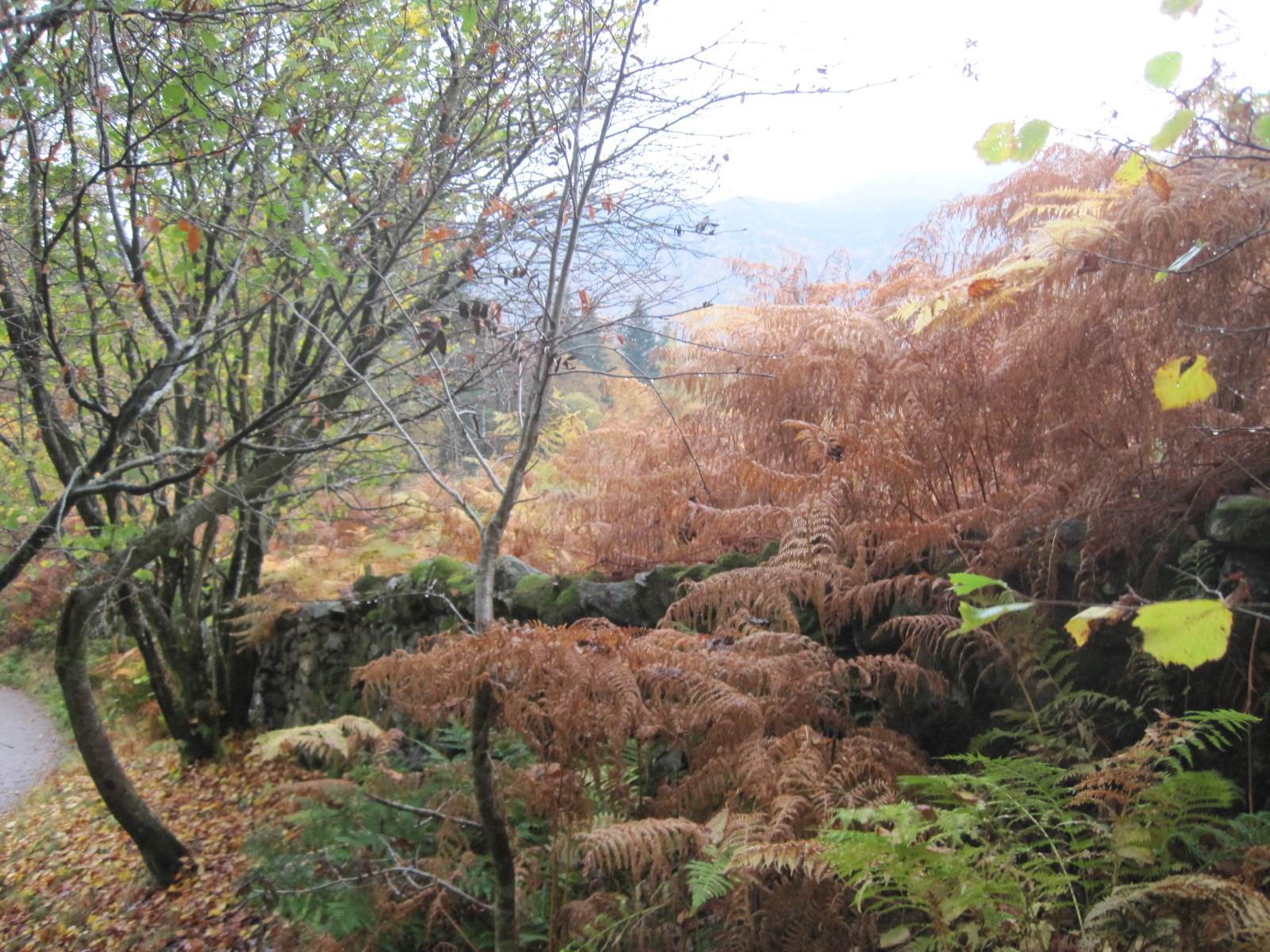
With beautiful bracken as a bonus
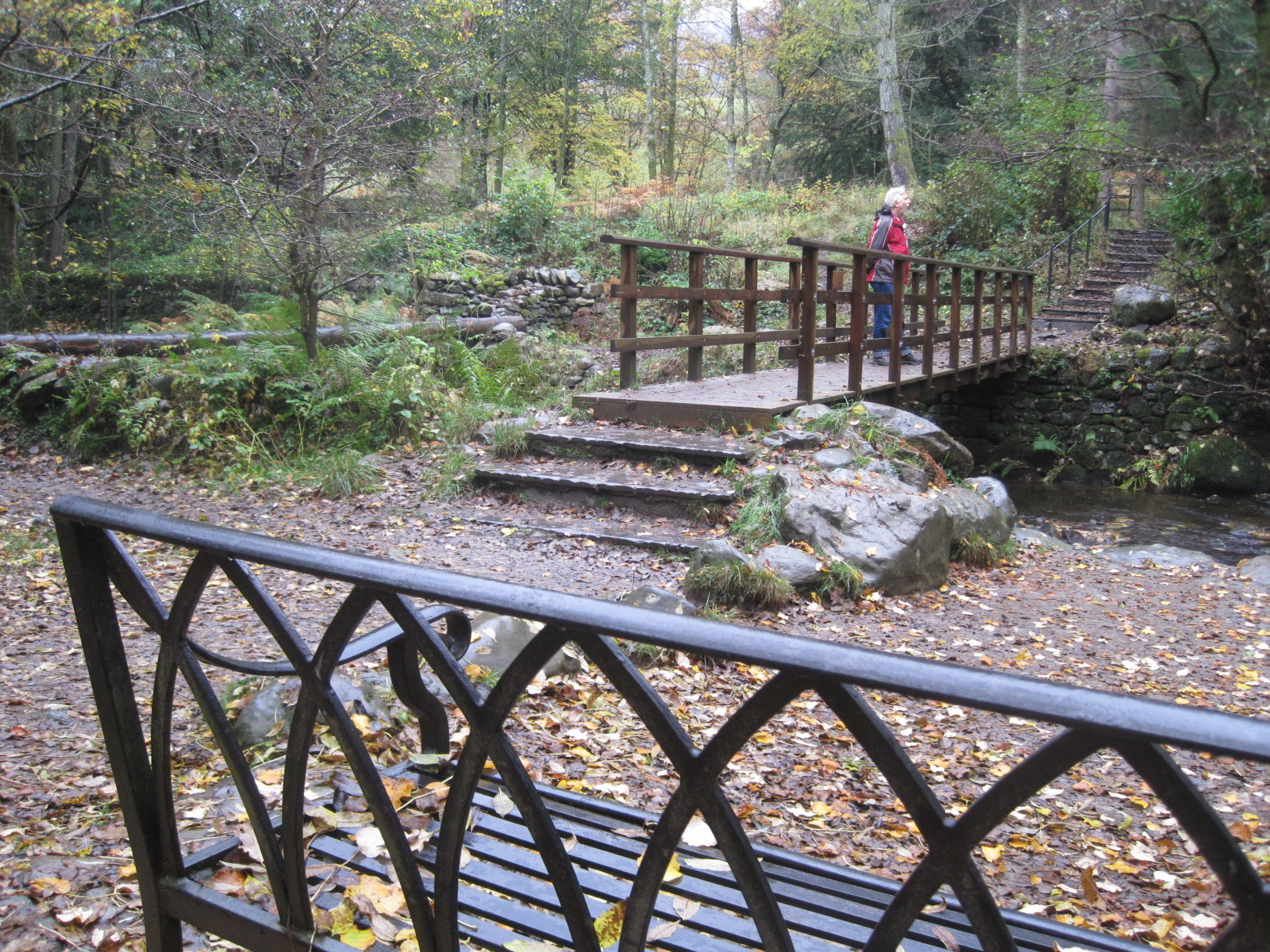
A seat for one
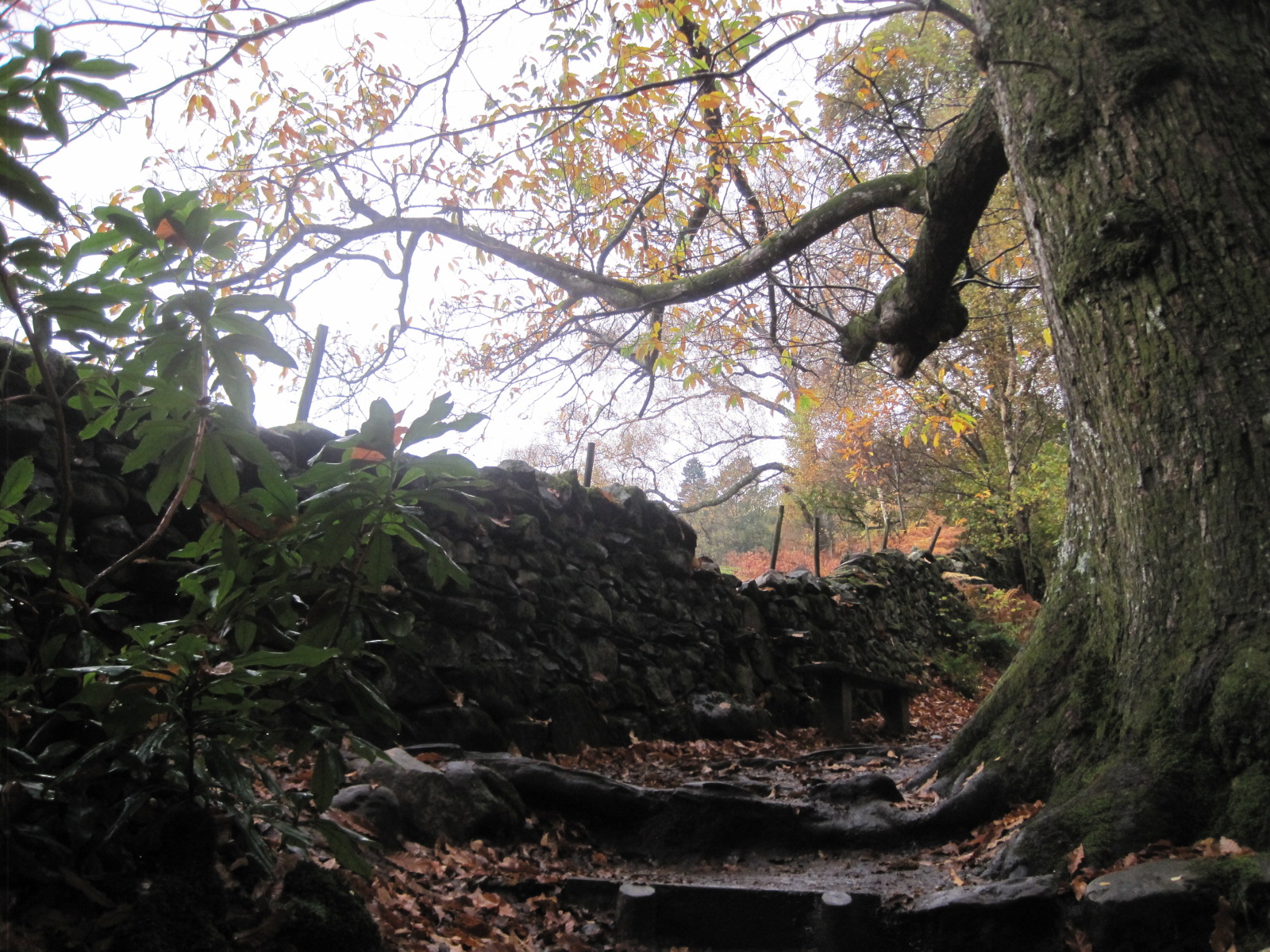
The drama of age
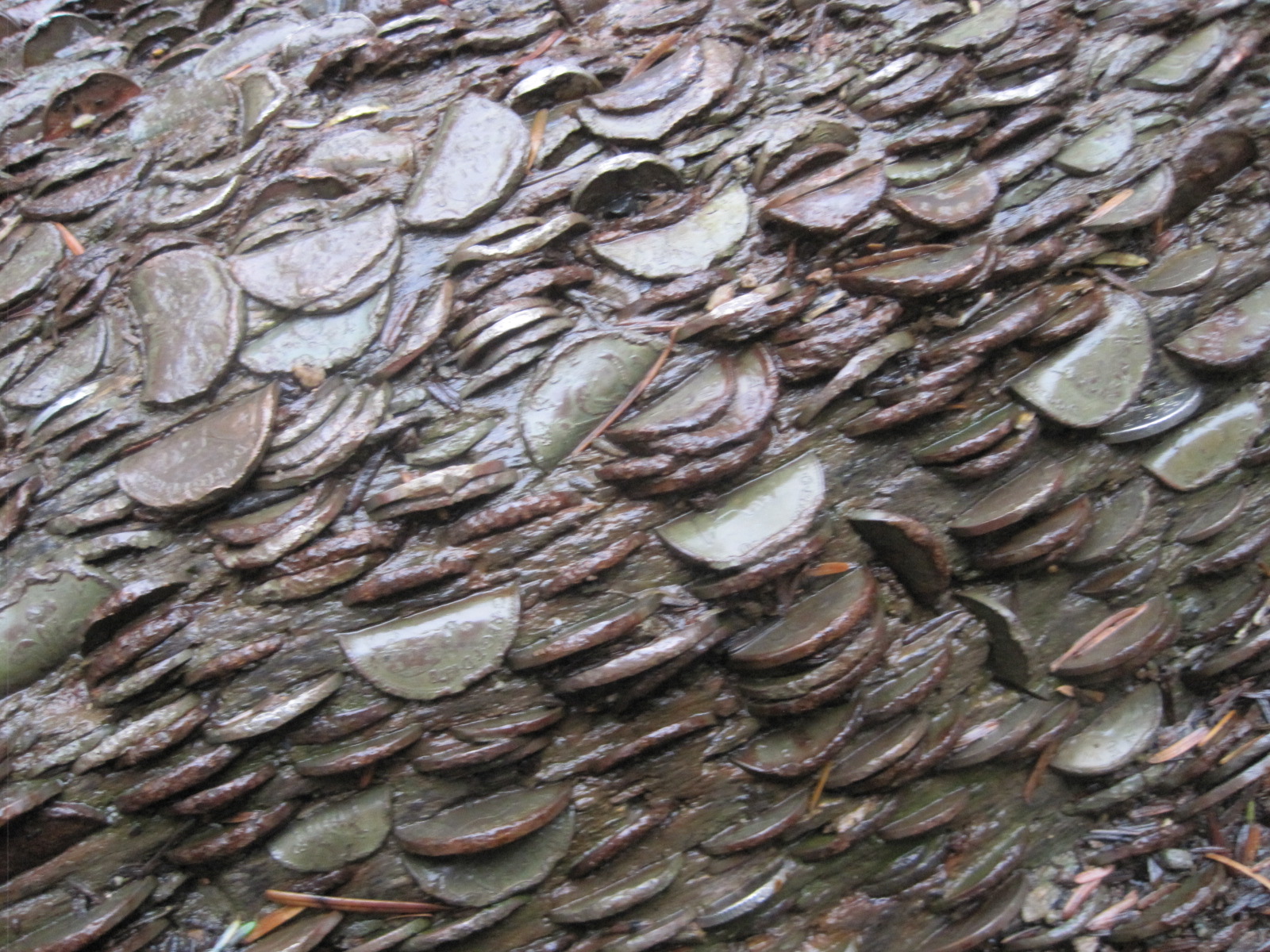
And a coin tree
Those coins get everywhere!
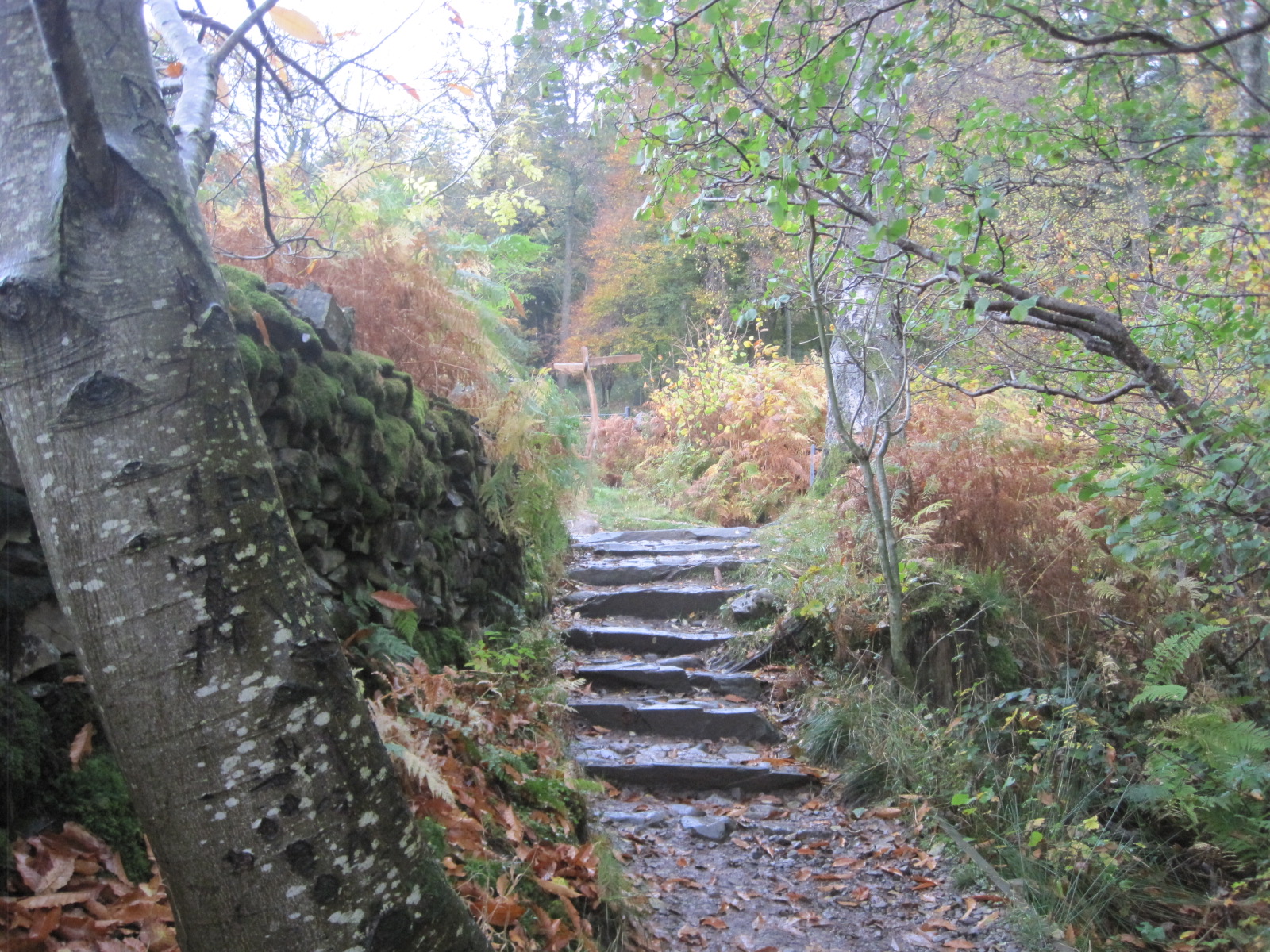
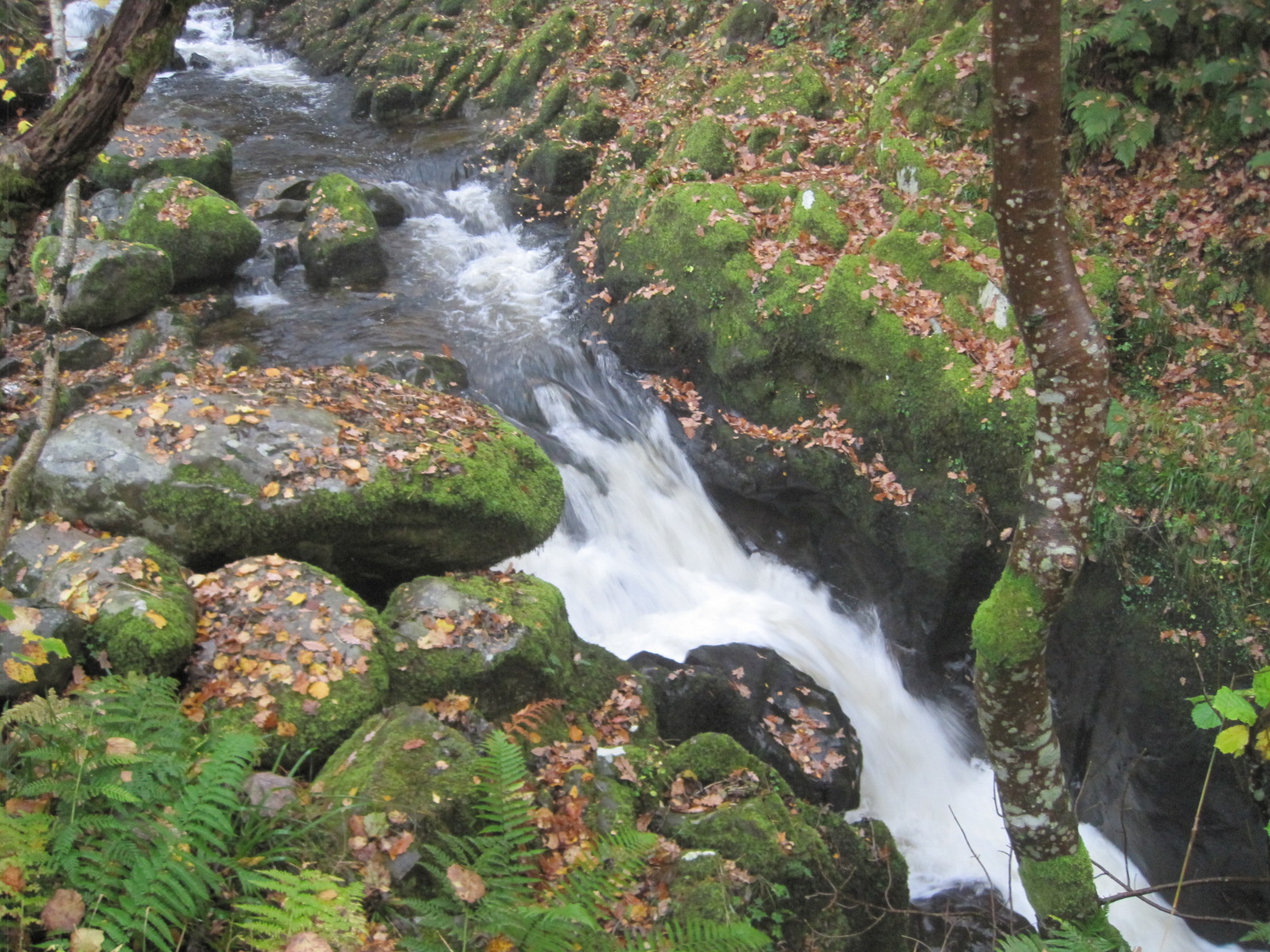
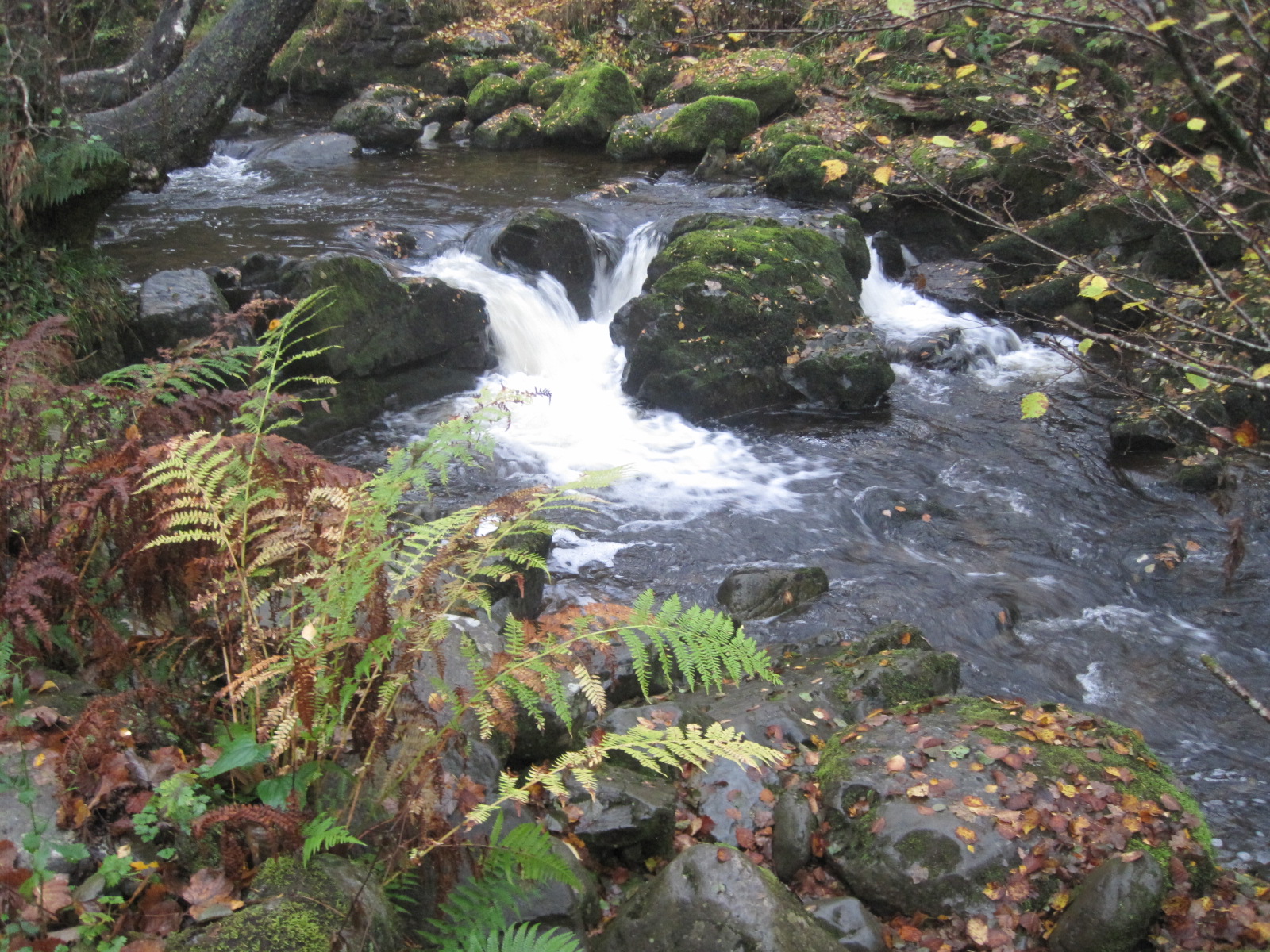
Treading carefully on the damp leaves underfoot, I could hear already the gurgle of water. The stream chuckled merrily on its way to the lake. Not far to go! But for me, it was upwards by a series of steps, pausing often to admire my beautiful surroundings.
Onwards and upwards!
The leaves and moss a constant companion
And bracken too
I was eager for my first sighting of the waterfall. Suddenly, through the trees, I caught a glimpse of its magnificense.
So alluring!
But first a little more bracken
And a few more steps
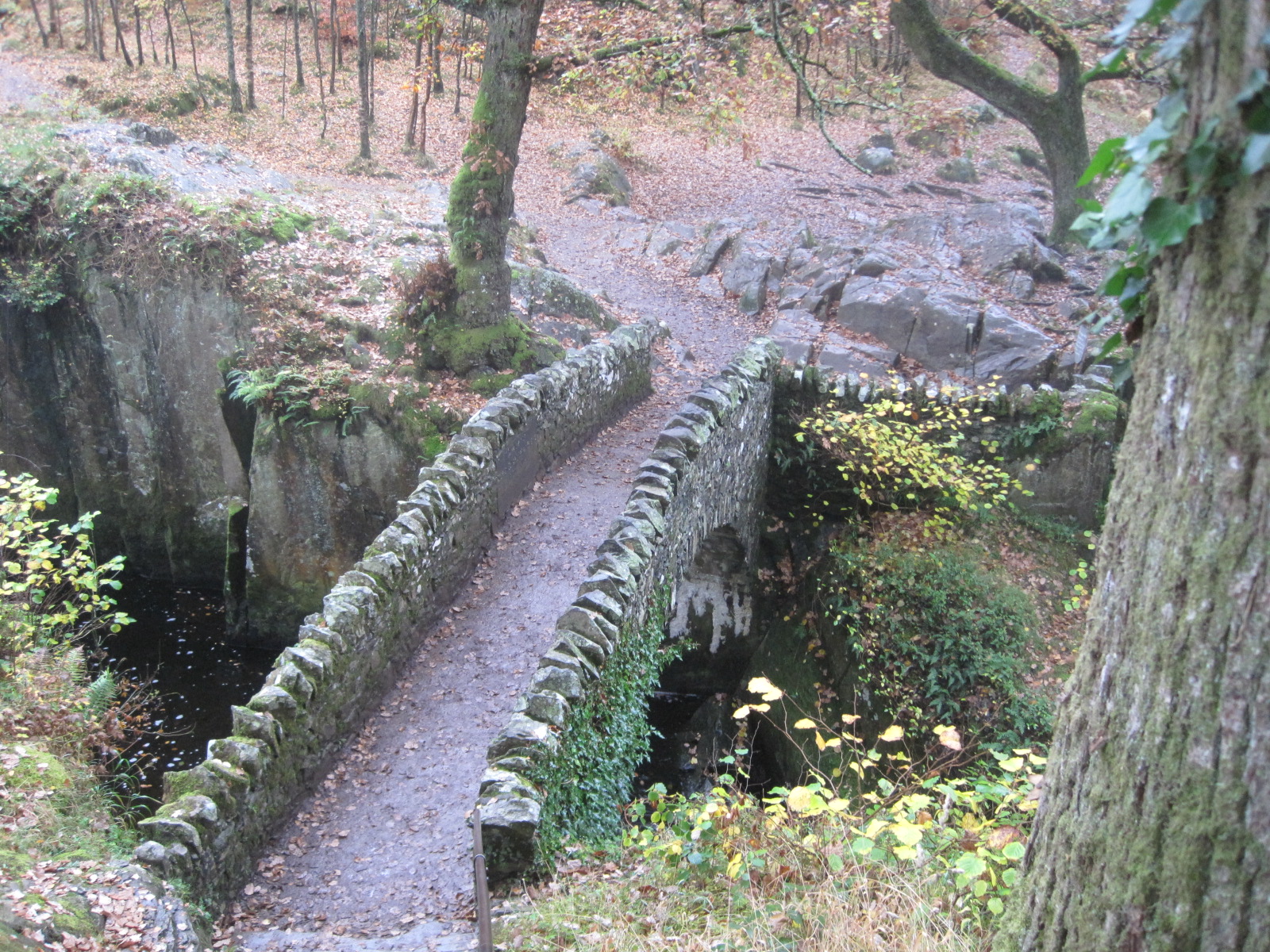
And we’ve reached the bridge
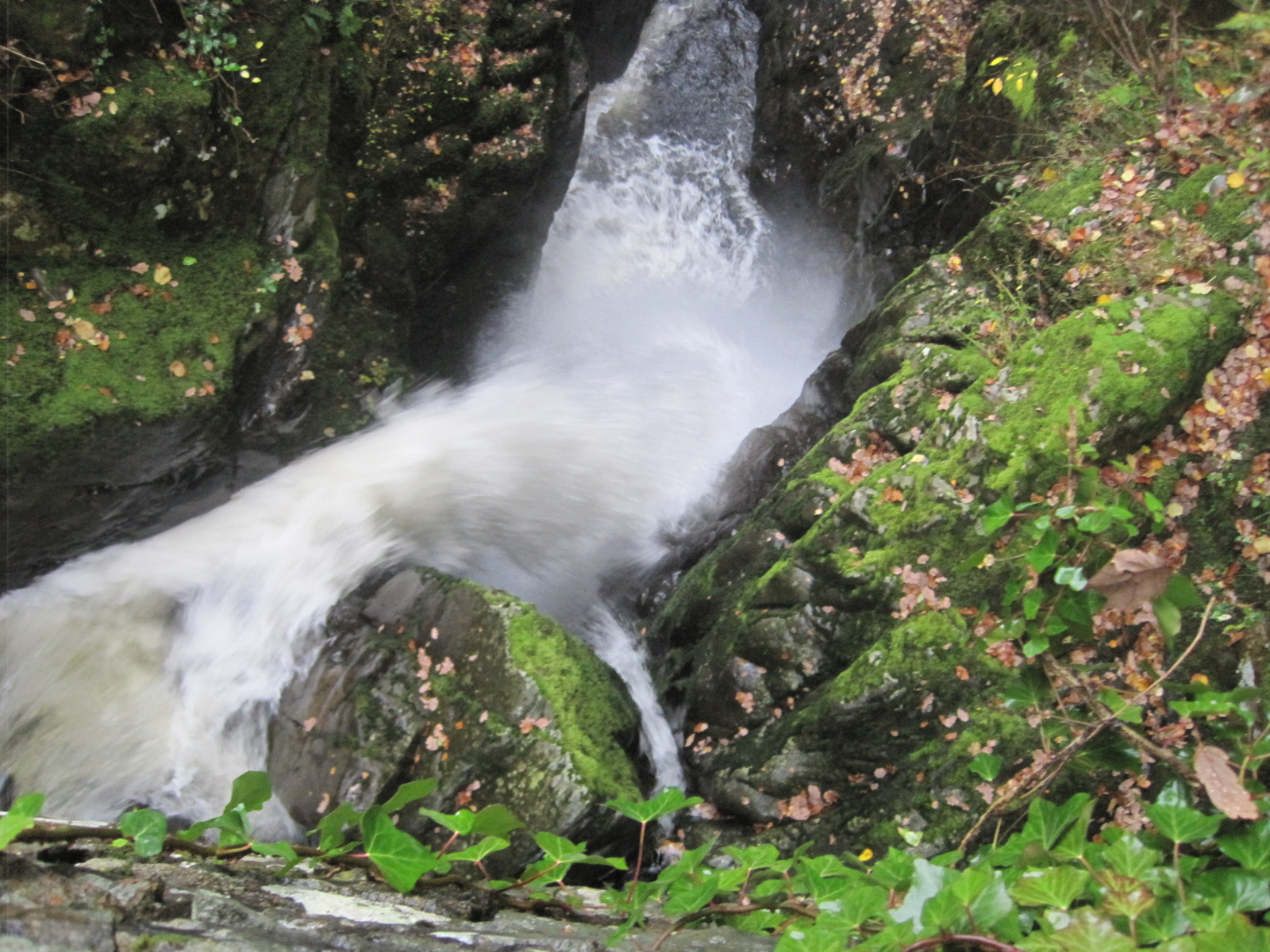
The sound of rushing water has reached a crescendo. Steps lead down to the bridge and I cannot stop myself from descending. I lean over and gaze in worshipful awe. From beneath me, the falls tear away to join the calm of the lake.
Leaping joyfully down to Ullswater
I peer in fascination
Loving the tumultuous excitement
The leaf a captive spectator
Leaving the lower bridge behind, I head on up to the top of the falls, the water my constant companion. That and the moss and leaves. It’s possible to continue up to Gowbarrow Fell and the trig point for views all along the lake, but on a murky day like this the visibility would be poor. And I’m so loath to leave the water behind.
My constant companion
Moss and bracken
Leaves
Chirruping water
And my other companion
The air feels increasingly damp and we decide to retrace our steps and cross over the upper bridge. The descent on the other side of the falls is down yet more steps, but they are well spaced, and not too slippy in stout shoes.
Heading back down
The leaves glistening with rain
And carpeting the steps
We can now look back at the full 65 foot height of the falls, which I found very difficult to photograph. My little camera has its limits, and I most certainly do. I have too much ‘white light’ in the shot. I tried different angles but it didn’t help. I’m sorry!
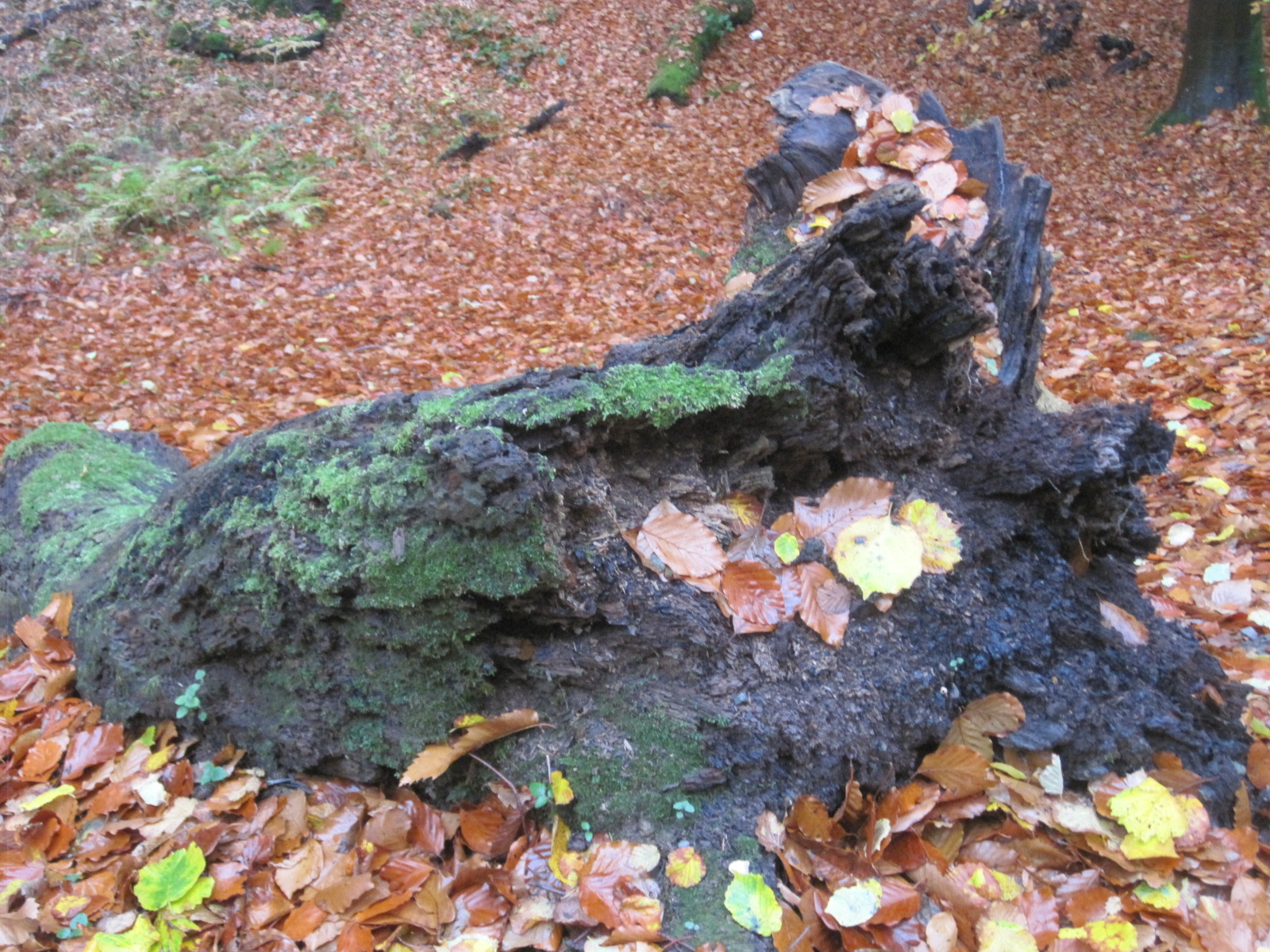
But I was much taken with this aged log
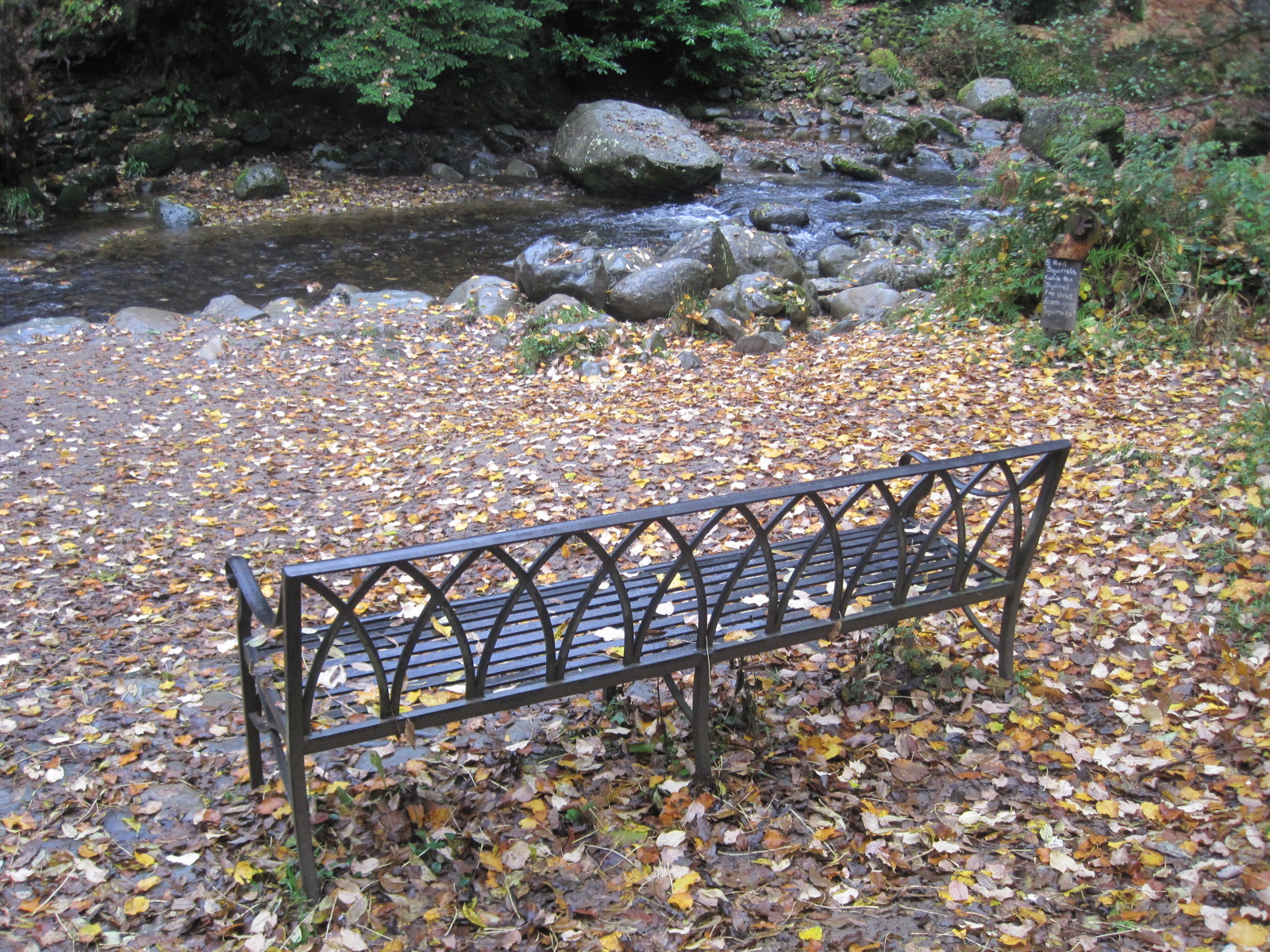
A certain person was getting rather impatient. I suspect you might be ready for a seat somewhere too. I spotted a lovely one but it was a bit damp.
What do you think?
He’s wondering when we’re going to get to cake!
I think we’ve had enough exercise, don’t you? I hope you enjoyed it, despite all those steps. This link will give you clearer guidance on how to negotiate the various paths, and National Trust can help you to get here.
Many thanks to so many of you who have again contributed to making my Monday walks a great place to be. Shall we get the kettle on, ready for a good read? If you’d like to join me you’ll be made very welcome. Full details are on my Jo’s Monday walk page. Just click on the logo above.
……………………………………………………………………………………………………….
Introducing Phoebe, in the lovely South of France, with not a drop of rain in sight. Please say hello :
Wonderful variety again this week so thank you all very much. It’s going to be a wild one, I think, so hang onto your hats! Have a happy one and I’ll see you all soon.
Now don’t be too alarmed! It’s not as bad as it seems, and if you really don’t have a head for heights- well, you can tak’ the low road, and I’ll tak’ the high road. To be completely truthful, I was out of my comfort zone for a short while, but we can blame the partner for that (and he’s not here to defend himself).
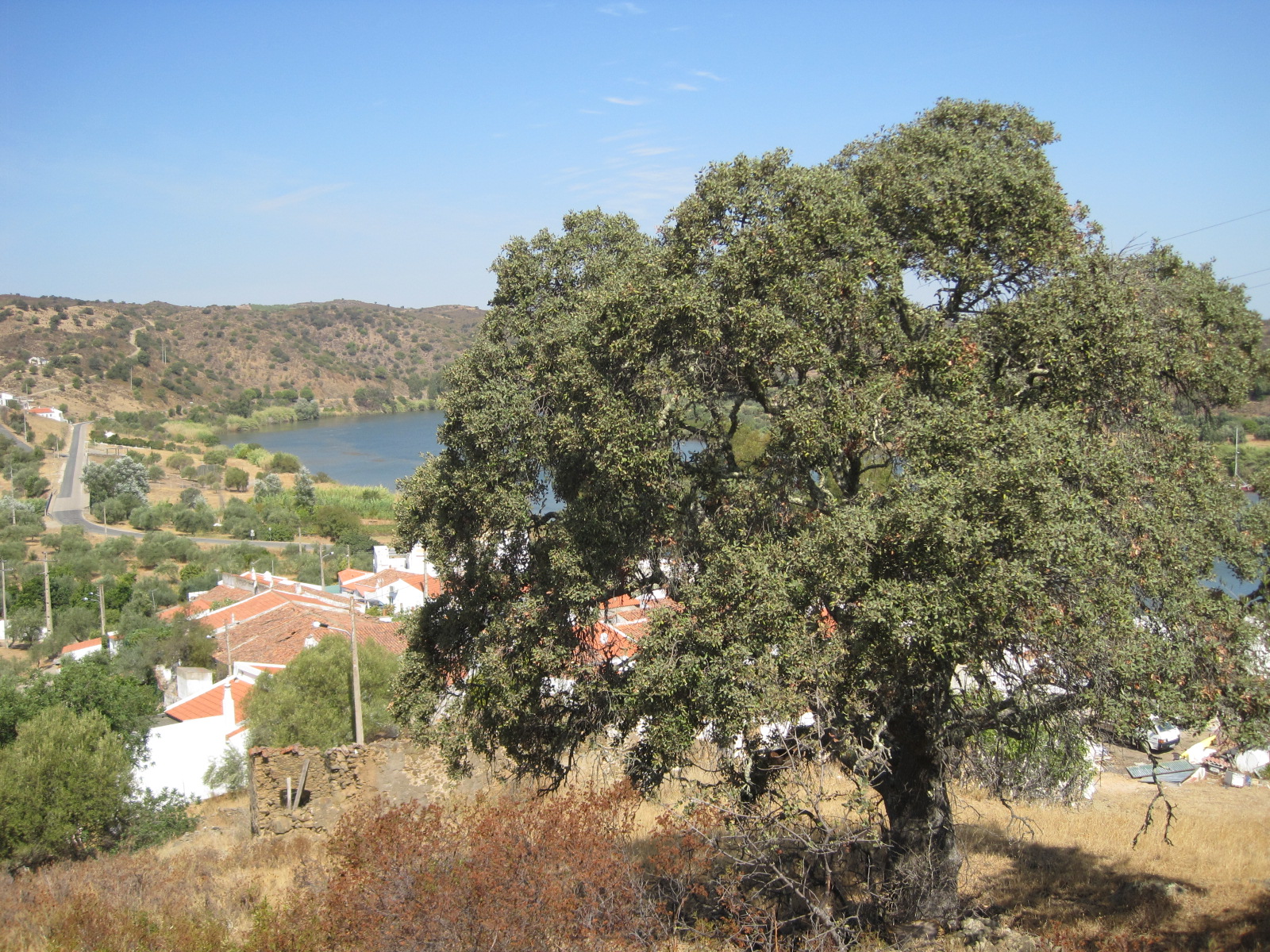
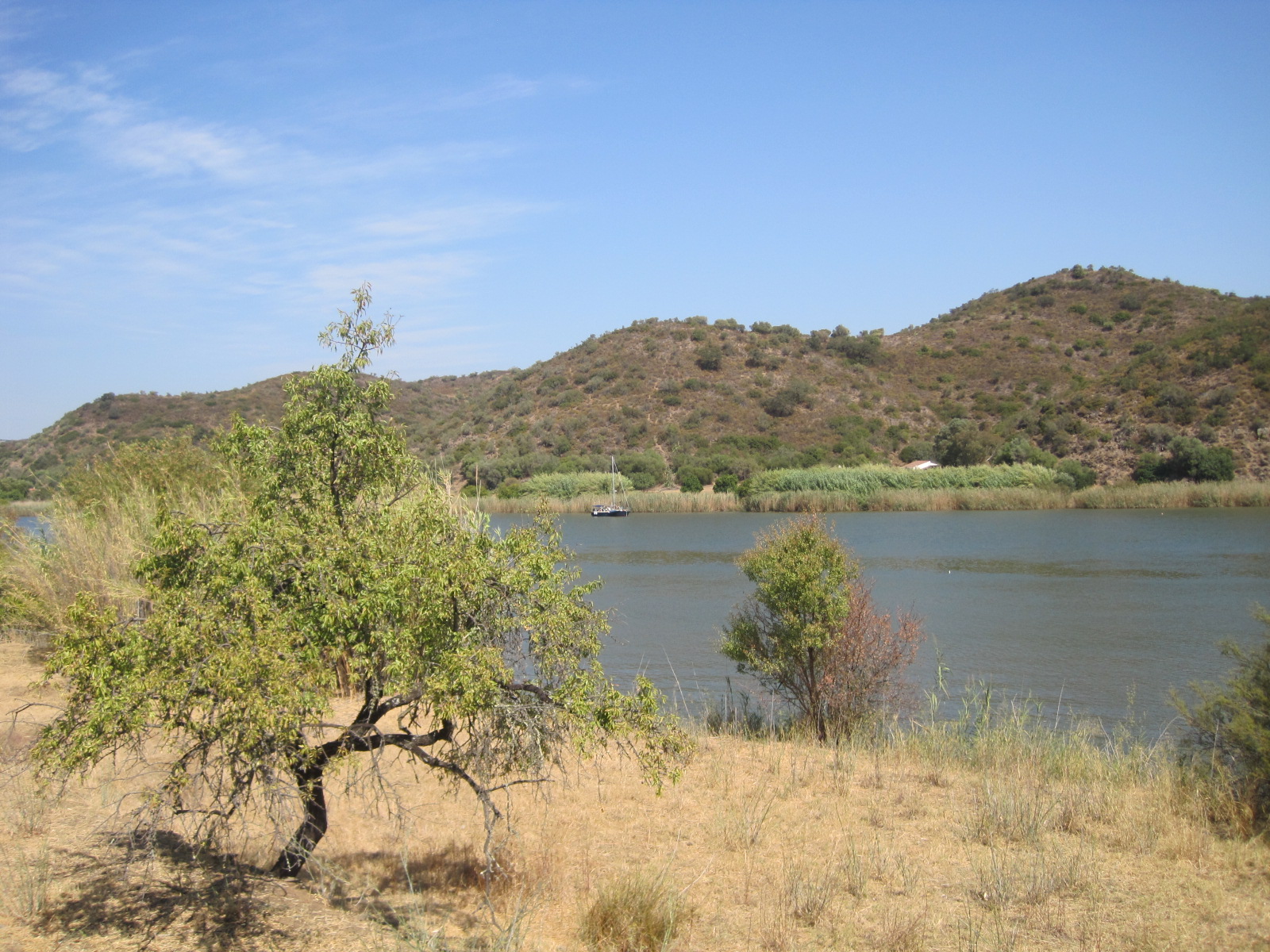
The area along the River Guadiana is wonderfully peaceful at most times of the year. In places the road stays quite close to the river, making for a lovely scenic drive. But, of course, you have to get out of the car to admire the scenery properly. You never know quite what you’ll find. Parking alongside the tiny village of Laranjeiras, our first discovery was the ruins of a Roman villa. Not a lot to see, but the remains appear to date back to the 7th century.
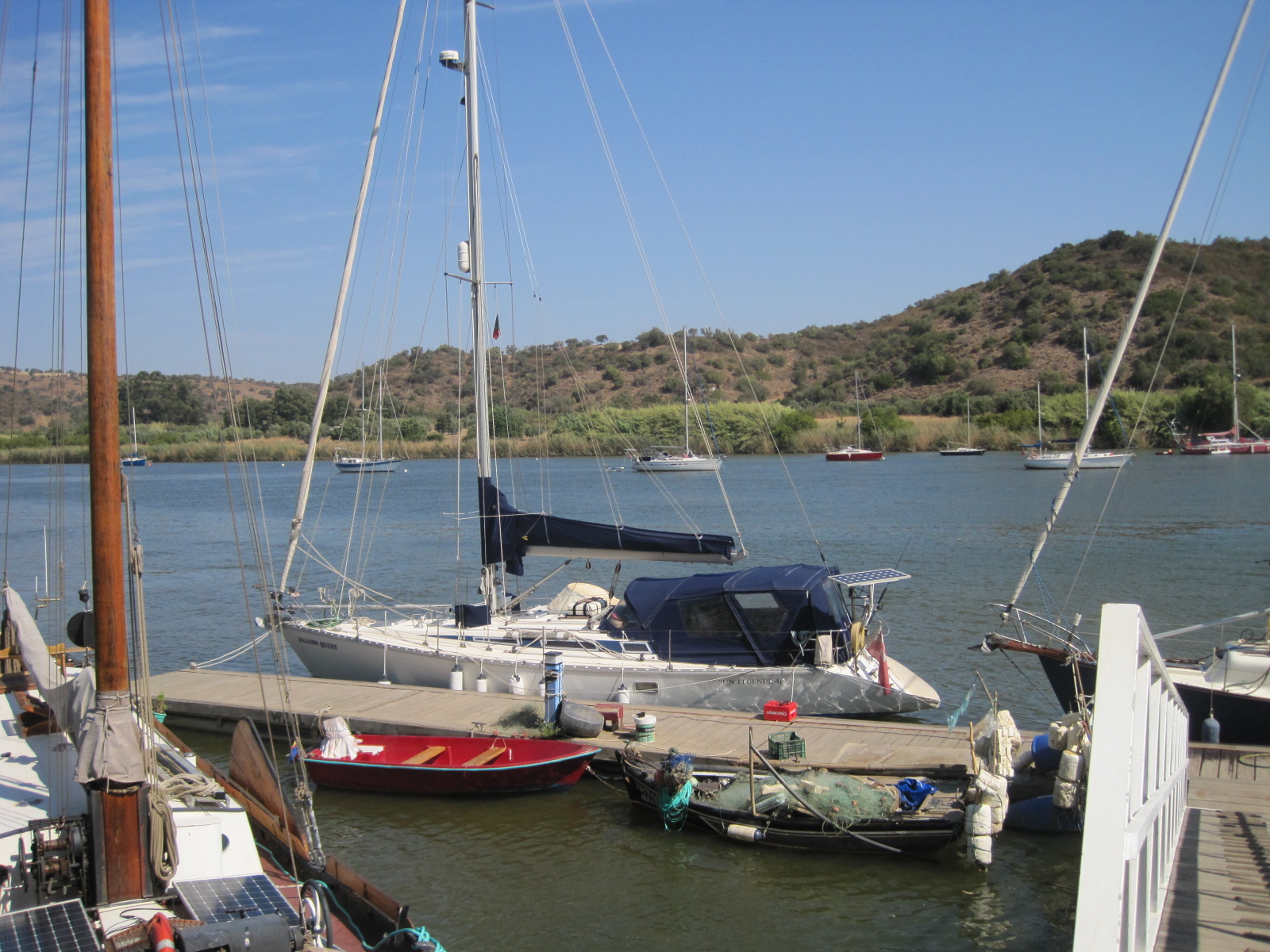
Strolling into the village, life seemed to centre around a little riverside cafe, from which you could watch the occasional boat mooring at the jetty. A couple of youngsters indulged in that age old pastime of skimming stones. Entertainment for me presented itself in the form of a boatman, with a delivery of tarpaulin for the little boatyard. His antics, trying to find a convenient space to offload his cargo in the minute space, kept me happy.
The moorings at Laranjeiras
Never content to sit for too long, I had a mooch about while Michael consulted the map. A path seemed to lead up the hillside and run parallel to the river before dipping back down at the next village, Guerreiros do Rio. Gamely, we set off.
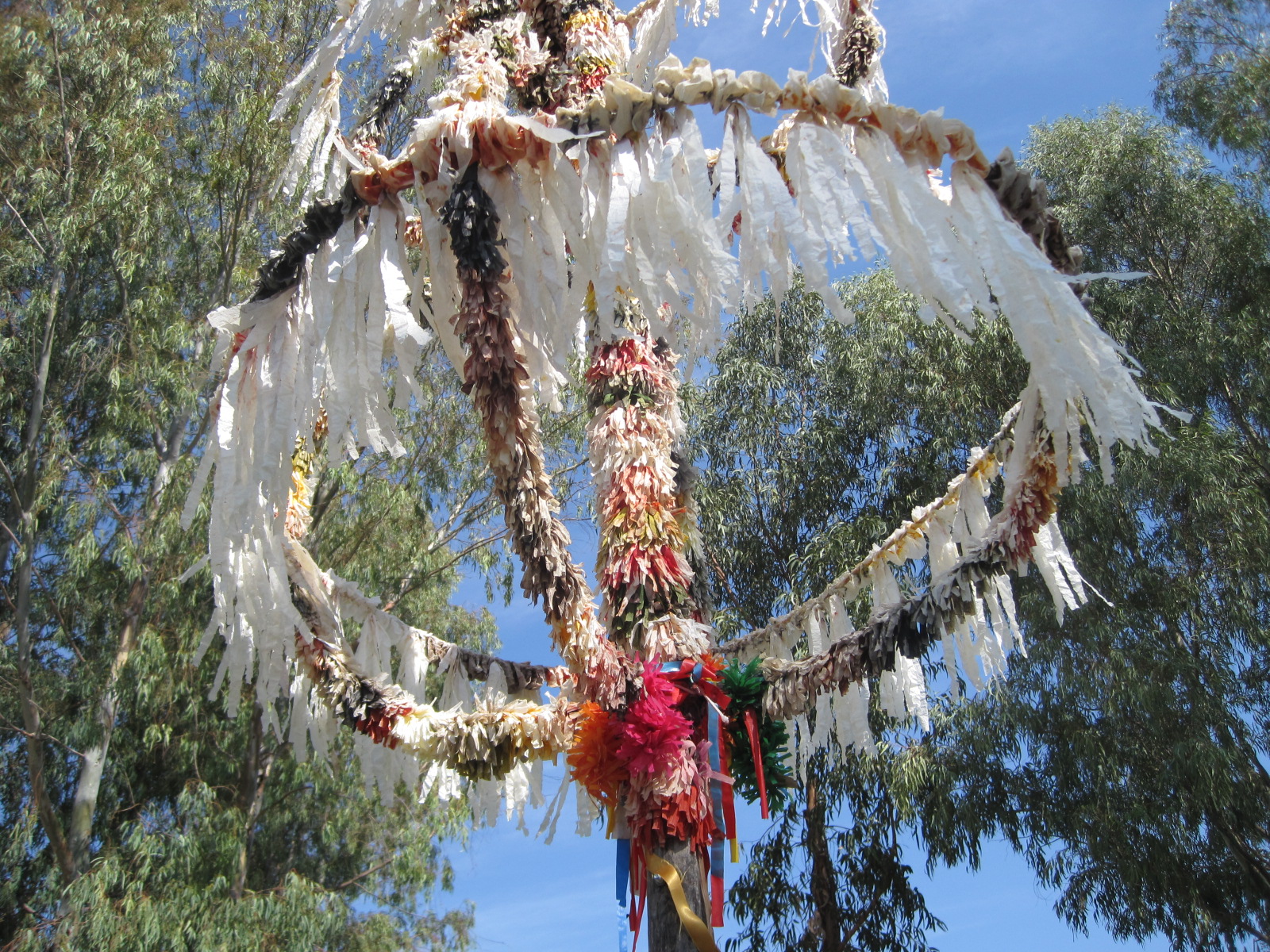
But not before I had admired this sign of celebration in the village
And then we climbed out of the village, and looked down
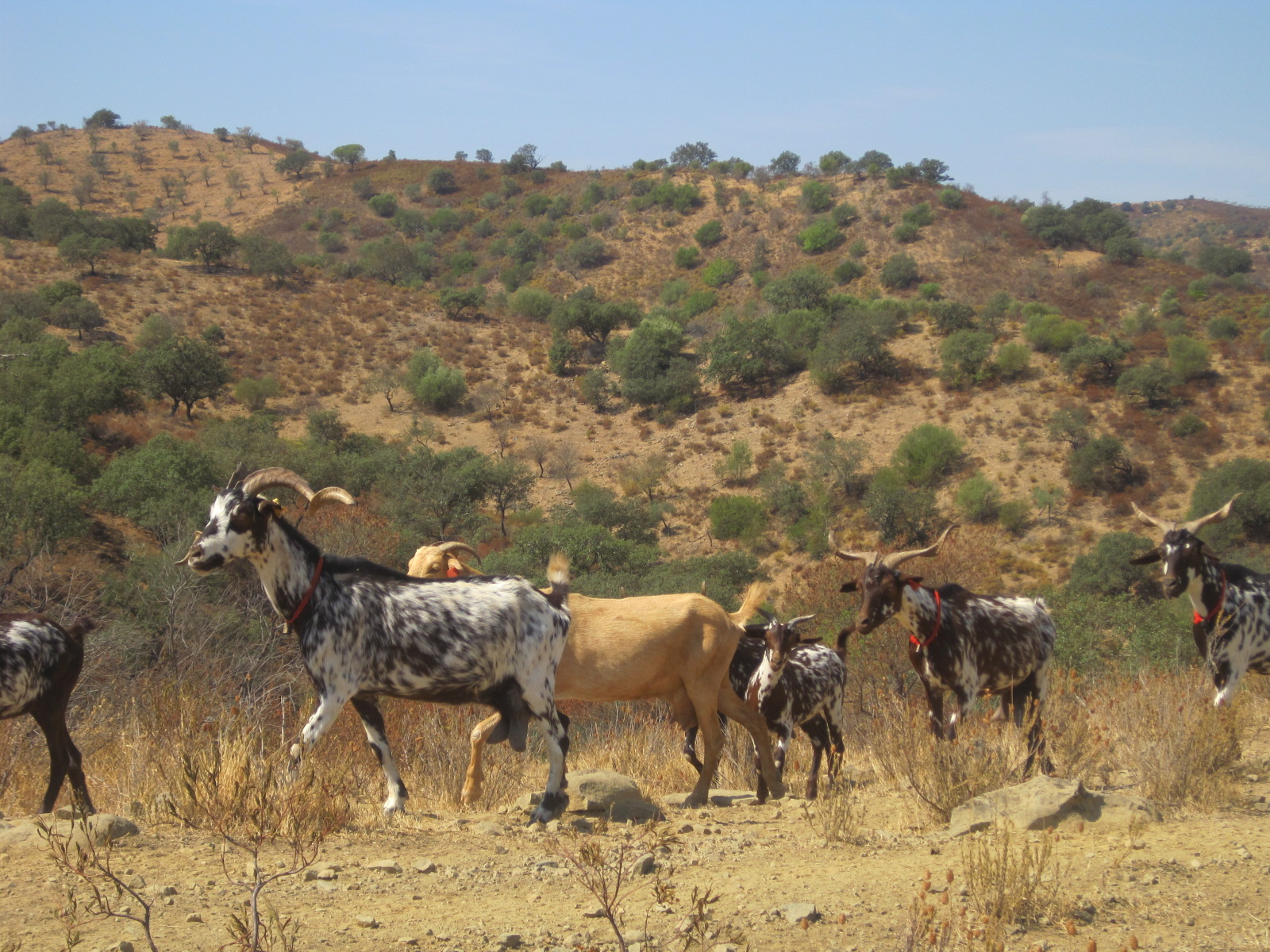
There wasn’t much sign of the path and it was a bit of a scramble. Stopping to catch breath, we heard a tinkling sound, and suddenly two dogs burst out of the scrub. They darted to and fro, rustling between them a magnificent herd of goats. Sighting us, the creatures pressed on, with nervous sidewards glances. The goatherd gave us a nod, a third dog rounded up the stragglers, and the pack headed for home. Happy to have found a proper path, we followed them.
Keep moving boys- they’re watching us!
The trail rolled off across the hills, but we were quite happy to take a branch that led back down to the riverside. Enough of adventure!
All was calm, down by the river
It looks dry, doesn’t it? It had been a long, hot Summer and was still very warm in early September. Just around the bend we reached the next village, Guerreiro do Rios. Time for a drink! As usual, I left Michael sitting in the shade, while I went off to explore the back streets.
Colourful fishermen’s huts
Not the friendliest of cats!
But an inviting doorway
And some pretty wall tiles
Traditional homes
And a Buddha in a yard
When I returned, one of those village cats had attached itself to Michael and was greedily begging the ham from his toastie. Good job he didn’t have the tuna kebabs he’d been fancying! Strangely, the cat was not at all interested in my glass of delicious white. I didn’t have time to hang about because I had discovered that the Museu do Rio was open! (the link is in Portuguese but you can translate it if you like)
We had passed the sign before, but never gone into this small museum, tucked away from the road. Here was my opportunity!
The Museum of the River
The outlook from the museum
Boats adorned every available surface
In glass cases and on the walls
Of course, there was one called the Guadiana
There were interactive displays
Telling the history of life on the river
A lot has been achieved in the space available. I chatted to the nice young lady at the till, who sold me a ticket for 1.50 euro. This was also valid for admission to the castle at Alcoutim, a few miles up the road. A bargain, I thought! The museum is open daily except Mondays.
For us it was time to amble back along the riverbank, occasionally stopping to admire passing craft.
Back at our start point
The tiny harbour at Laranjeiras
I hope you enjoyed our little Algarve adventure. It’s quite easy to just walk along the road and back between the two villages, if you don’t want to go following goats. It’s not a busy road. The riverside junction leading south from Alcoutim is the easiest way to find the villages.
Don’t let anybody tell you that the Algarve is just a strip of boring beaches, will you? Not in my experience, anyway.
And now it’s time to turn our attention to other people’s walks. Thank you so much to all my contributors. You take me to places I might never reach on my own. Anyone is welcome to join in, and it’s very straightforward. My Jo’s Monday walk page has all the details. Just click on the logo above. Let’s put the kettle on and settle in for a good read, shall we?
……………………………………………………………………………………………………………….
Benches actually have several uses in Anabel’s world. Highly useful on a walk!
Aren’t they a fantastic selection? Thank you very much everybody! I’m off to the Lake District on Thursday, celebrating another birthday, so hopefully I’ll have an English walk for you next week. Have a great time till then! Monday Escapes is on again this week if you’d like to join in.


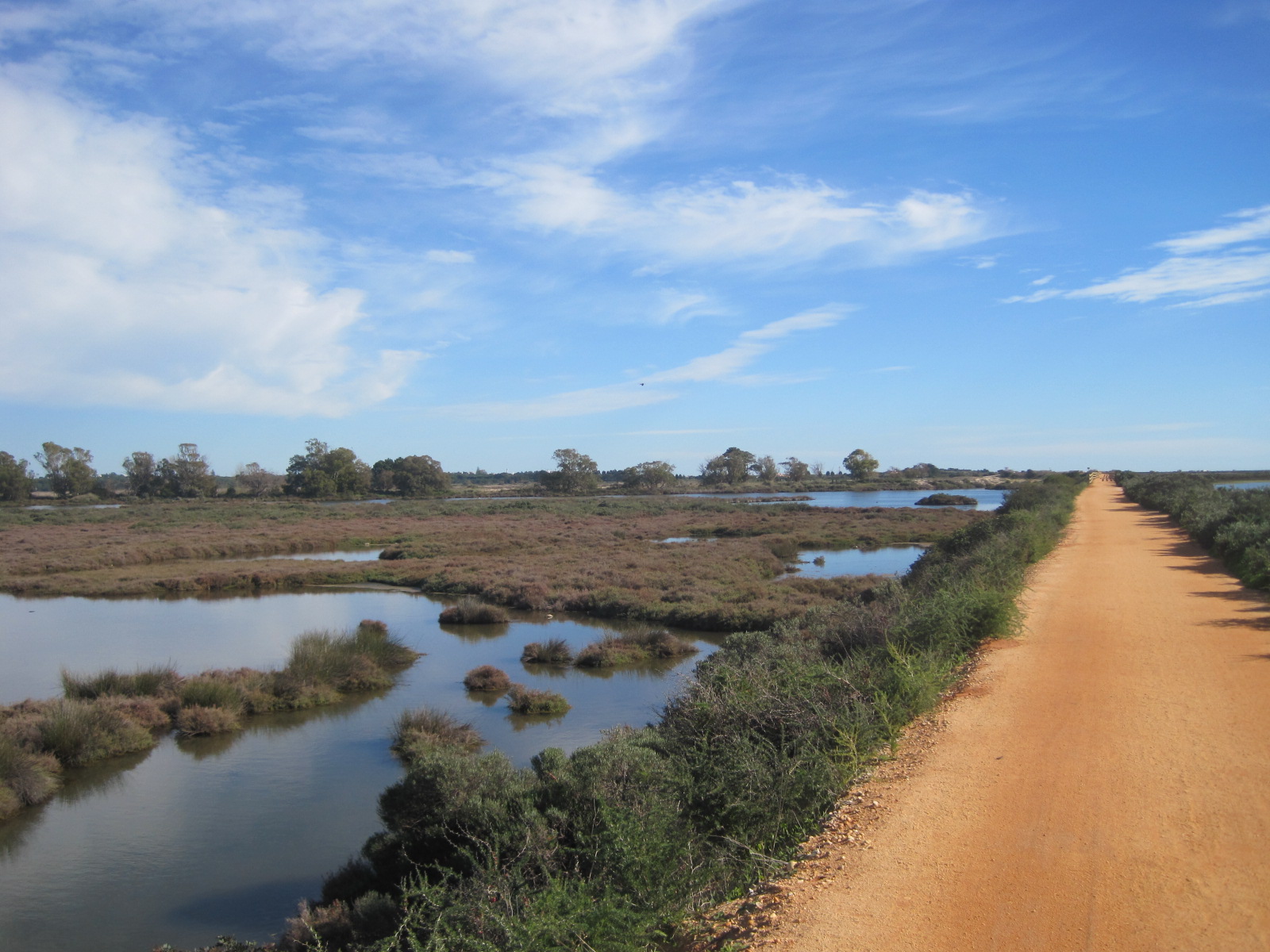 This new-looking red dust cycle track proved to be a false start. It led far into the distance, towards the airport, and seemed very popular with birdwatchers. Solid benches along the way attracted couples with binoculars, focused on the watery world. An about face proved necessary.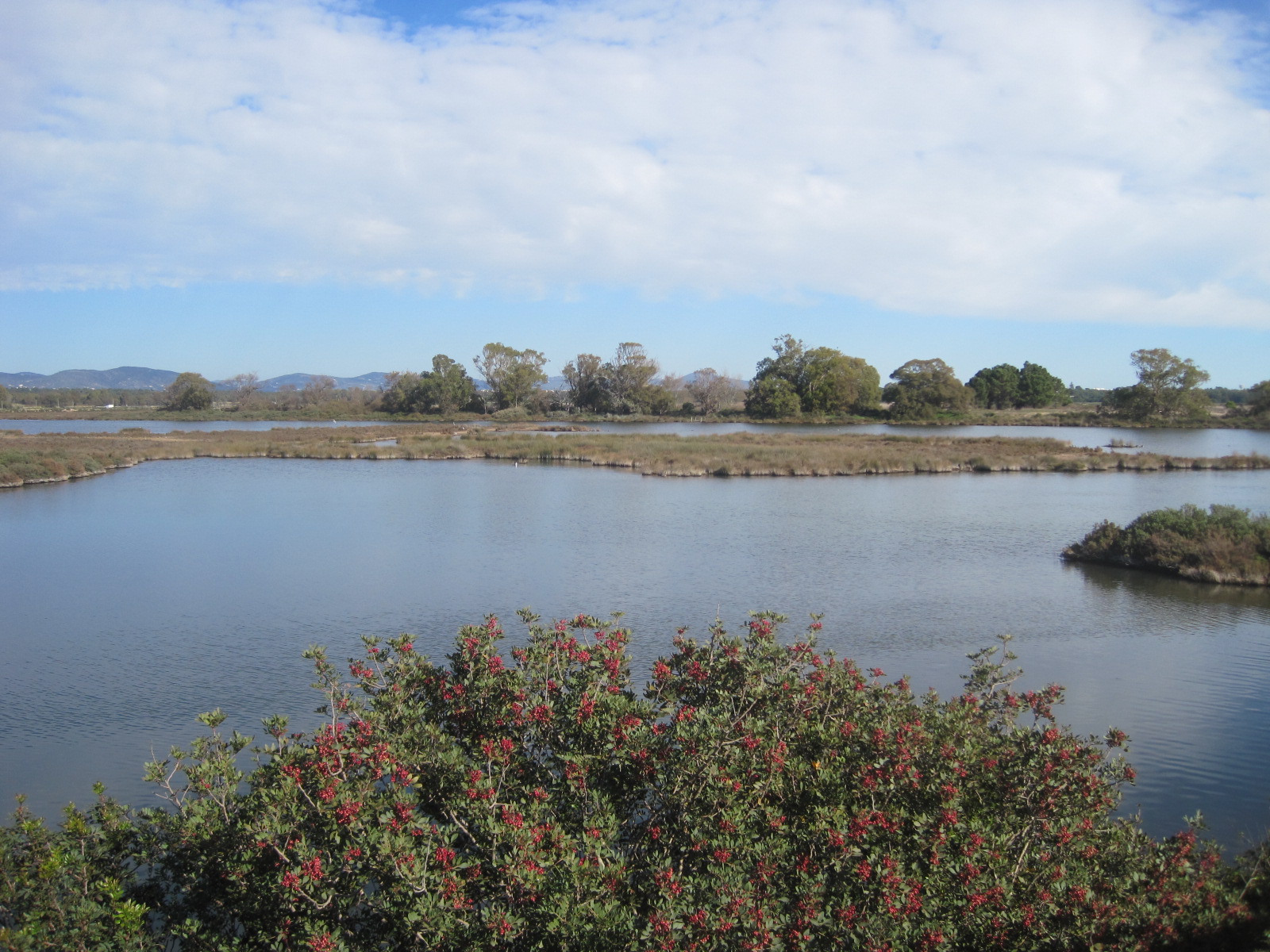


















































































 restlessjo
You must be logged in to post a comment.