Writing

D is for Douro

Rio Douro- the river of gold

This post is entirely aspirational.  I have long wanted to visit Porto and to cruise the Douro Valley.  So far we haven’t found a convenient flight from the UK and it’s quite a way north from the Algarve.  So permit me to dream a little.
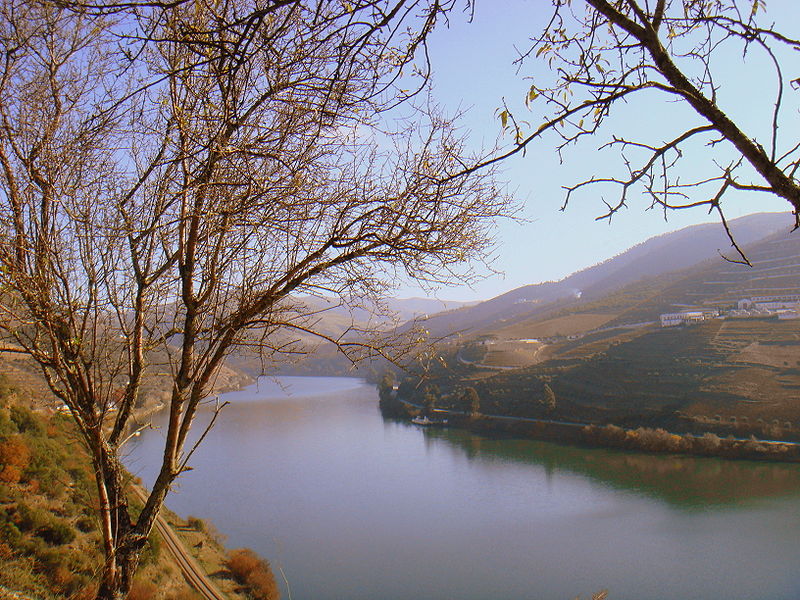
Upper Douro by Gustavo Motta for Wikipedia

The River Douro rises in Spain and flows 897 km till it reaches the Atlantic at Porto.  Over 100 of these kilometres form the border with Spain in a series of narrow canyons- an effective barrier between two often warring nations.   The third largest river on the Iberian Peninsula, in recent times the river has been tamed by a series of locks and dams, making it navigable for all of its Portuguese length.  Looking down from the sky I always try to fathom whereabouts on the Douro we are crossing as we make our way back to Northern Europe.
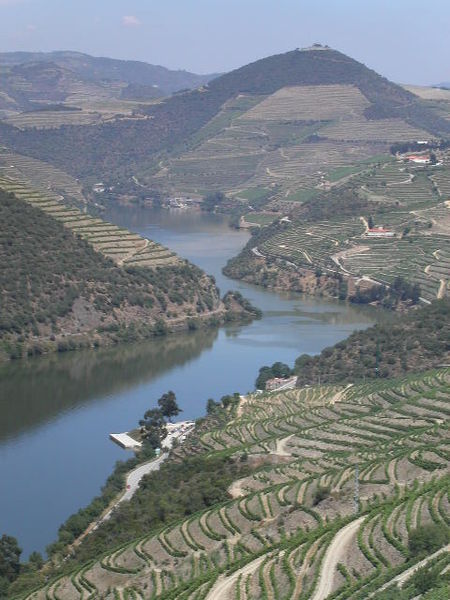
Peso de Regua, by Husond for Wikipedia

The Douro is blessed with a microclimate which creates exceptional conditions for the cultivation of almonds, olives and grapes- in particular the variety of grape used in the production of port wine.  It’s no secret that I love to sit by the banks of a river with a glass or two of port.  Hopefully one day that river will be the Douro.   The region around Pinhao and Sao Joao de Pesquiera is known as vinhateiro, the centre of this liquid gold, and the quintas lining the riverbanks testify to the success of the enterprise.
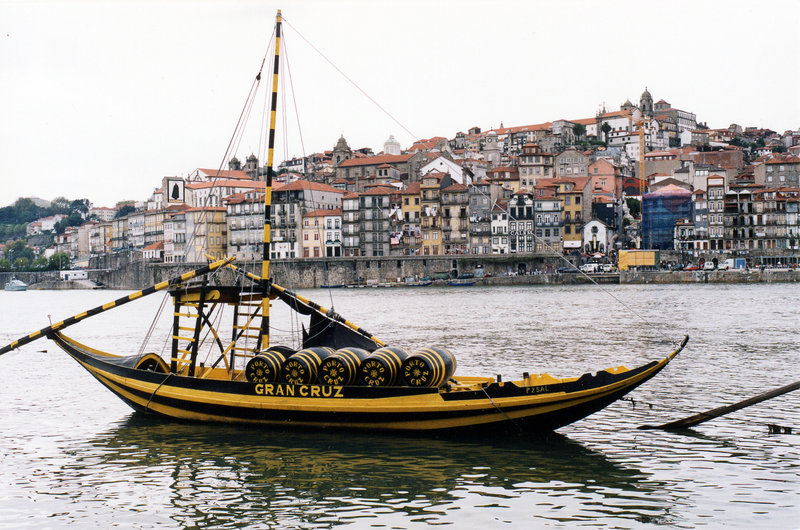
Barco rabelo by Thomas Seibel for Wikipedia

Traditionally the wine was transported down the river in flat-bottomed sailboats called barcos rabelos , some of which can still be seen today at the quayside in Vila Nova de Gaia, opposite Porto.  It was stored in oak barrels to mature in the cellars of numerous wine lodges.  After blending it would be bottled then stored again till reaching the level of maturation for that particular brand.  Names like Sandemans, Cockburns and Taylors are familiar friends.

A story goes that port was originally discovered by two English gentlemen, staying at a monastery in the Upper Douro.  They found that by adding a little brandy to the local sweet wine it would be better fortified to withstand the long sea journey home.  More probably, following a period of exceptionally warm weather in 1820 unusually sweet grapes were produced which was much to the taste of the British.  In order to capitalise on the British market the wine companies added aguardente or brandy to stop fermentation and fix the sugar content.
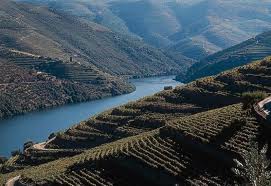
Vinhateiro

How am I going to get around so that I see the Douro from every angle?  There seem to be lots of choices.  One thing’s for sure, I will be visiting Sao Bento railway station in Porto, not just to see its magnificent azulejo tiles but to travel up the valley.  If I’m lucky I may even catch the Saturday steam train (May to October).  I know that the colour of the vines in Autumn is a spectacular red-gold, and that white blossom clothes the valley in Spring.
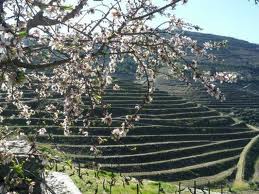
Blossom time in the Douro

The Dom Luis 1 Bridge leads over the river and into Vila Nova de Gaia and from here you can take a 50 minute trip beneath the bridges to admire Porto’s skyline.  This is just a taster.  The true beauty of the Douro reveals itself on a lengthier cruise up river.  How far you choose to go depends on how long you have available, and your tolerance for messing about in boats.  Mine is infinite, but if you’ve just come for peace and quiet you’ll be perfectly happy with a good book and the gentle slap of the water.
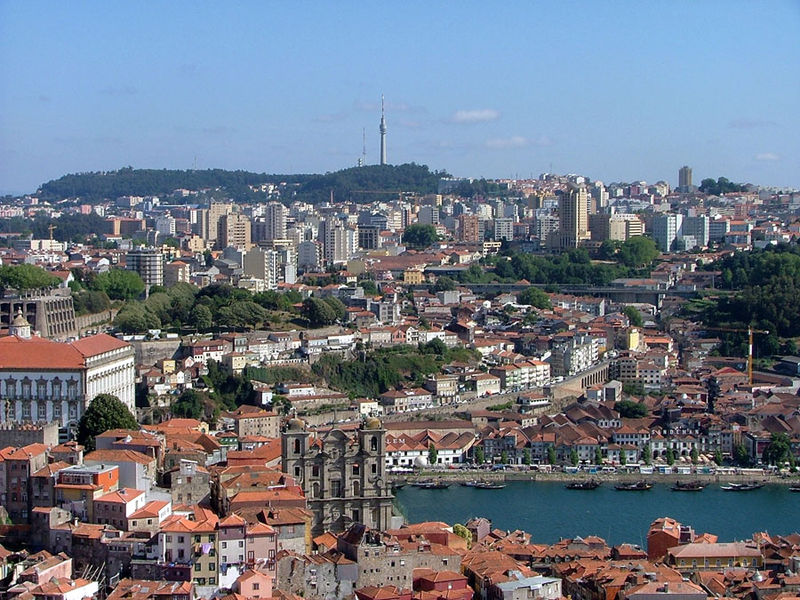
Vila Nova da Gaia,seen from Porto,by Jonik for Wikipedia

My impression is that the further you go up the river the wilder the scenery becomes, east of Pinhao with its beautiful railway station, the most spectacular.  I’m looking forward to the deep locks that have calmed the raging rapids.  You can combine a cruise with train journey for the best of all possible worlds, or to help shorten your trip. Peso de Regua is the collection point for the wine and from which it used to be shipped down river.  Less romantically these days transport is by tanker, but you can still see the sailboats in action at Porto on 24th June, the festival of Sao Joao.
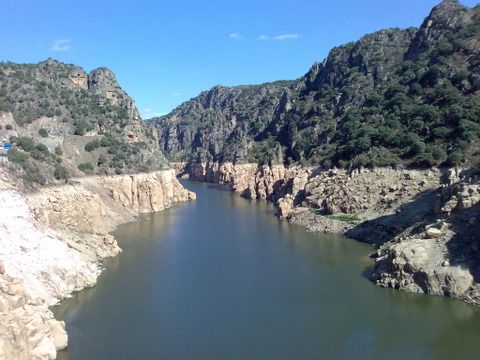
The Douro, near Miranda, from Wikipedia

You can drive up the valley for fine views but this is never much fun for the driver.  The train runs beside the Douro from Regua out towards the Spanish border, passing Pinhao and then crossing to the opposite bank all the way to Barca de Alva at the Spanish border.

Of course, you can also do the 5 star cruise from Porto all the way across into Spain, and take in the historic city of Salamanca.  This isn’t really my way (too easy! says husband Michael- and certainly not cheap).  I just know I’d want to linger somewhere that the boat didn’t, but I did say that I could dream and Salamanca does sound tempting.  Maybe for a special birthday?

http://www.portugaltravelguide.com/en/pinhao.htm will give you a flavour of the area.  Be sure to check out Amarante and Mesao Frio as well as Regua and Pinhao.

www.cp.pt/StaticFiles/CP/Imagens/PDF/Passageiros/horarios/regional/porto_regua_pocinho.pdf  provides basic rail information but you need to seek further for the steam train.  Now I’ve completed this I can’t wait to book!

My previous A-Z s of Portugal are:

a-is-for-alte/

b-is-for-beaches/

c-is-for-cacela-velha/

Six word Saturday

Travel writing makes me so happy!

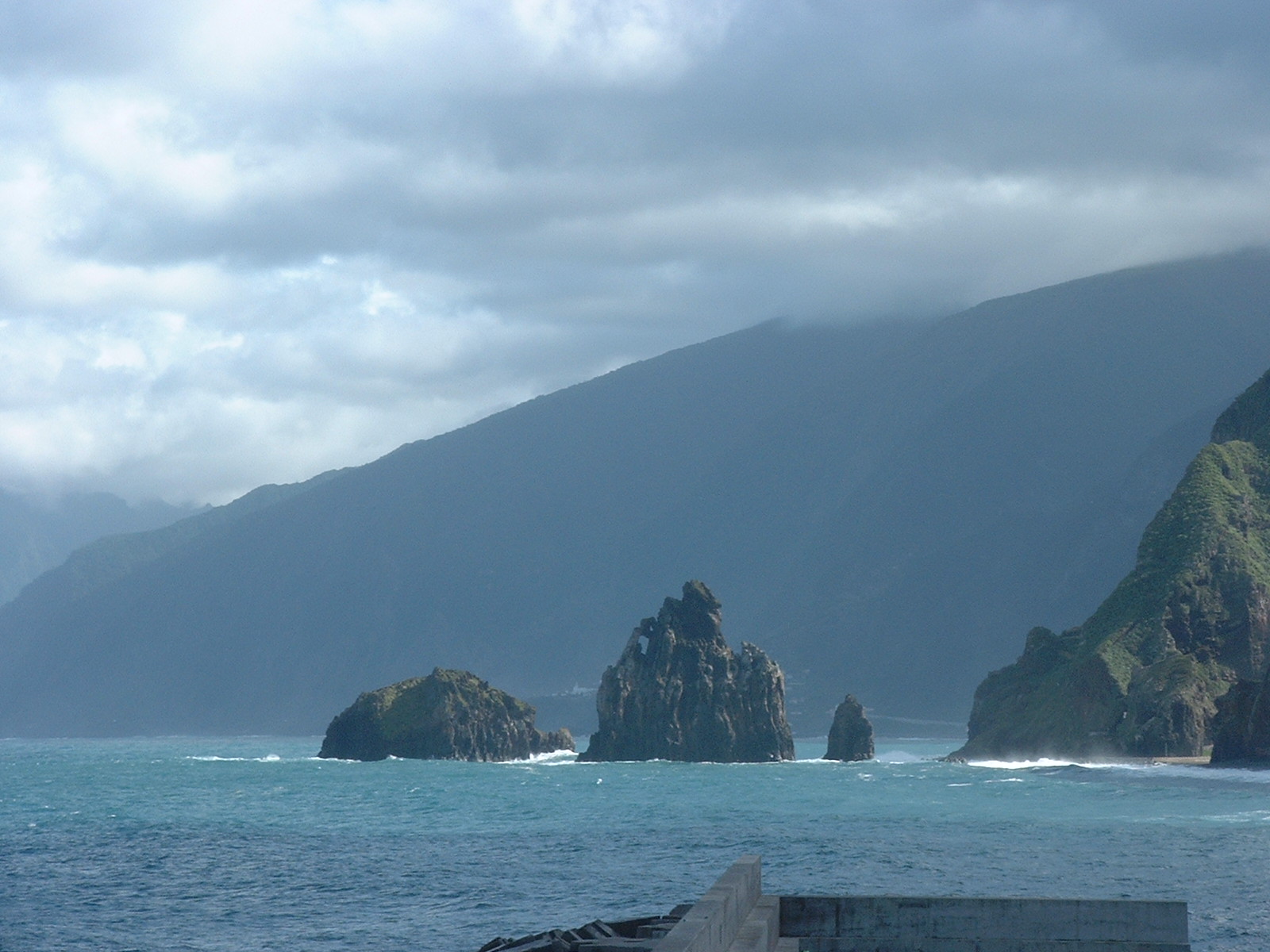
View from Porto Moniz, Madeira

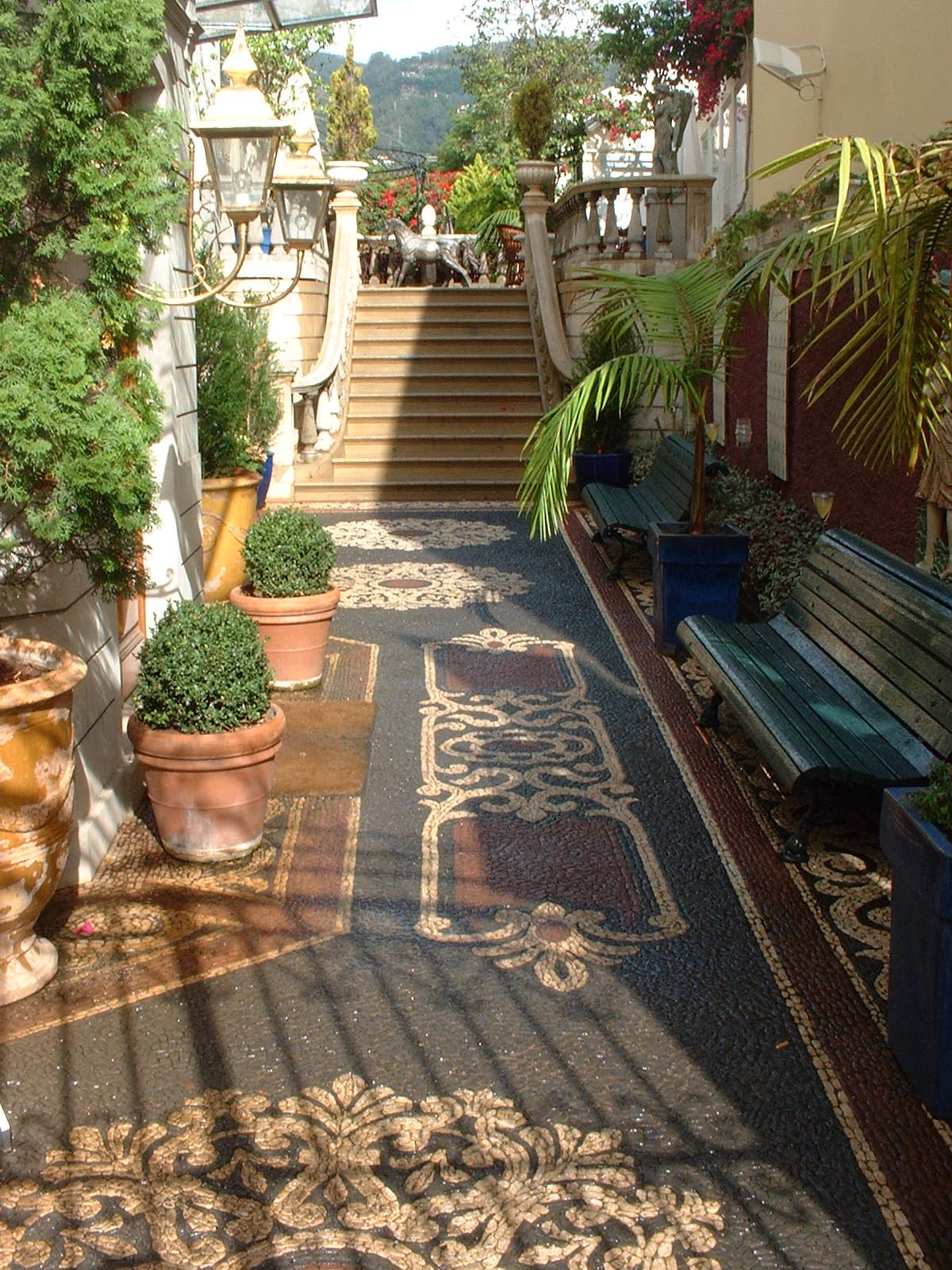
As seen through a Funchal gateway

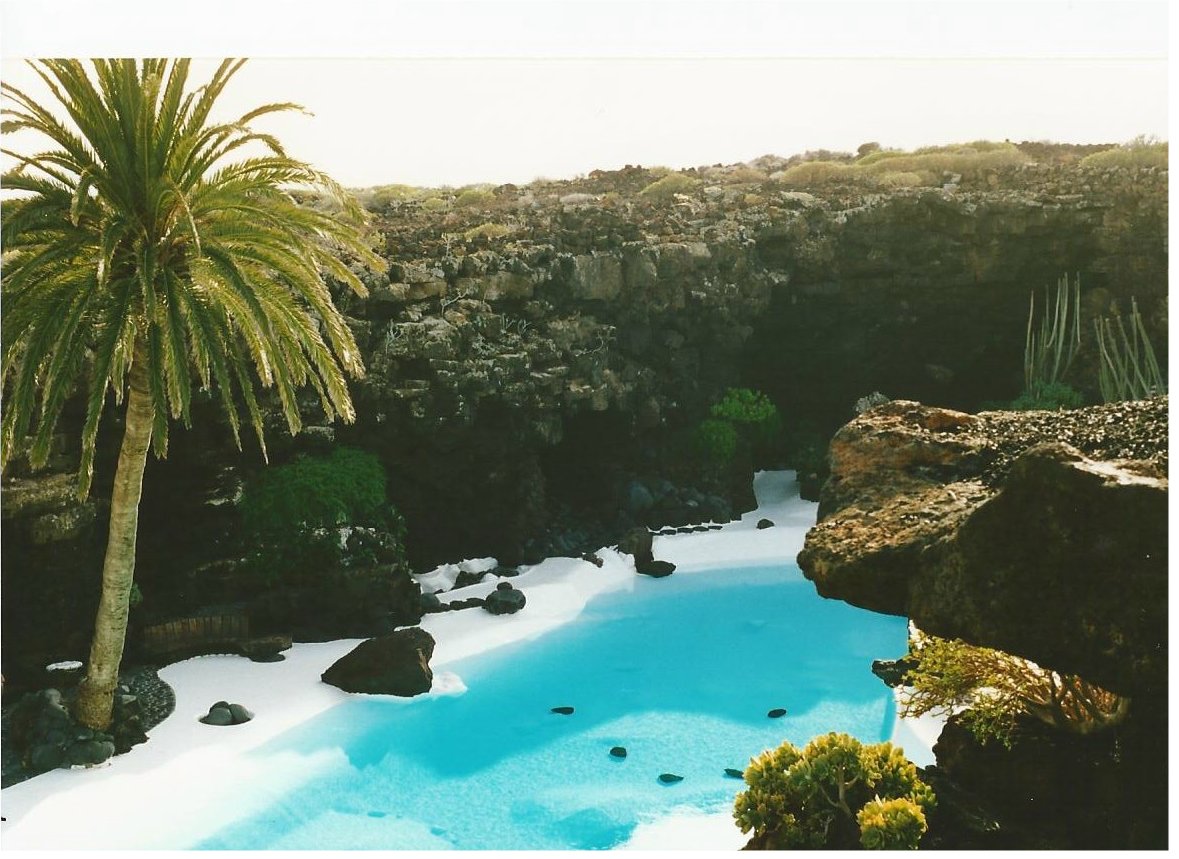
Jameos del Agua, Lanzarote

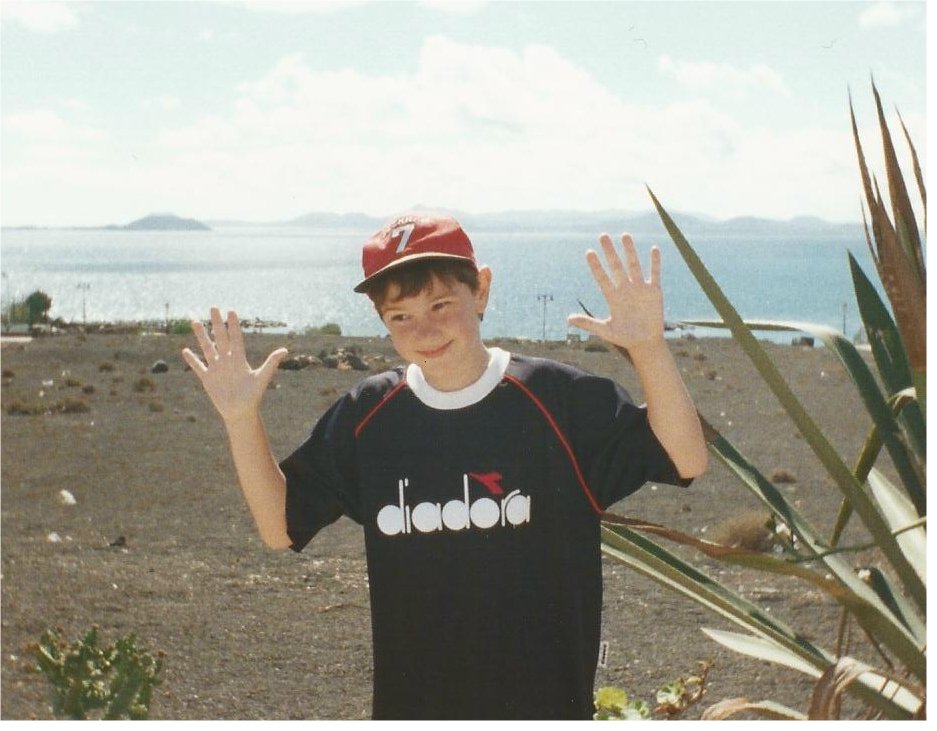
A much younger James on the beach in Lanzarote

It gives me the opportunity to revisit all those lovely memories and do a little research on new places.  It’s a win-win situation.

Meantime, pop along to Show my face to join in the Six Word Saturday challenge and see what other folk have been up to this week.


C is for Cousins

Cousin  =  kuzyn in Polish or kuzynka if you’re talking about a lady.

To complicate it a little more:

First cousin is brat cioteczny, or the female equivalent siostra cioteczna (brother or sister’s cousin).

It’s a very literal language and I love it, but it does get complicated.  Please don’t ask me any questions or I’ll have to confer with my Polish teacher!

Cousins are hugely significant to me.  I have a couple of English ones but they have been far outnumbered by my Polish family (apologies called for?).  Almost my first correspondence from Adam, son of much loved late Aunt Anna, in Kraków, informed me that I had “26 cousins, in the front line”.  That is before you start to count partners and children.  Overnight!  You could say that I was surprised.

I need to get past the sad part before I can throw myself into “cousins”.  Not ALL of them- you really don’t have THAT much time!

First I must pay tribute to Małgorzata, who I knew as Goscia.  Still in her 40s, soon after our family reunion she was diagnosed with leukaemia and within months was dead.  She was a hub in Adam’s bakery business, and a lovely vibrant woman.  I wish I’d had time to get to know her better.

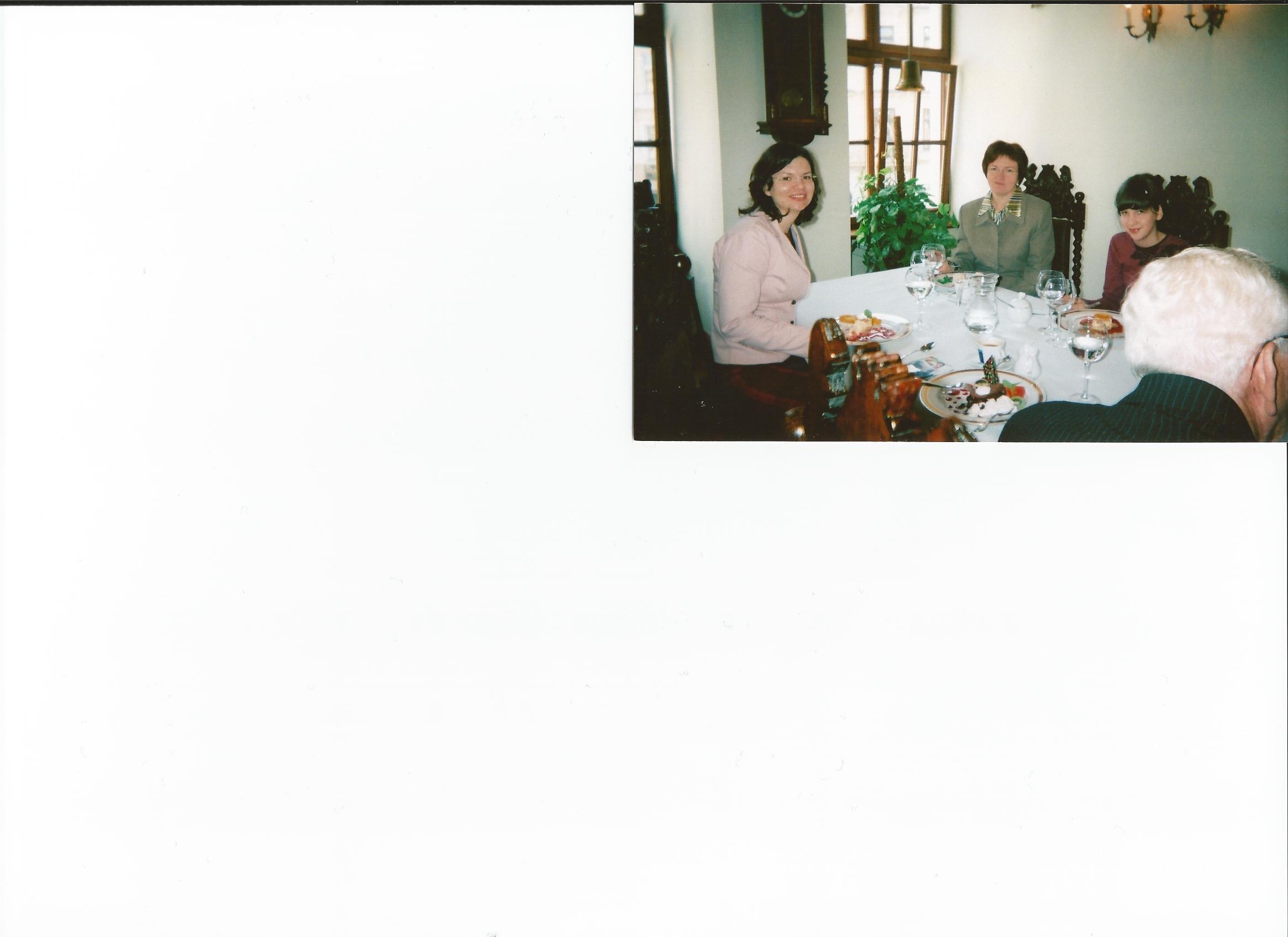
Weronika,Goscia and Ula in Hotel Wierzrynek

Also I must mention Dominik.  The family are still recovering from his death in tragic circumstances.  Also in his 40s, I have lovely memories of dancing with him at the weddings.

Dominik with Dad in happier times

I have so much to be grateful for.  Not the least of these is…

Adam

Meeting the family with Adam

My first cousin and first point of contact in the family.  He is a very special man.  Deeply religious and active in their parish church, he describes himself as “all accepting”.  What a wonderful way to be, and I wish I could be more like him.

He and his family could not have been more helpful and loving if they had tried.  Adam does not speak English, though he understands a lot more of it than I do Polish, but from the outset he was reaching out to us.  He used the help of the translator on the PC and his son, Łukasz, to introduce them to us and then to organise a full itinerary so that Dad and me could visit and “meet the family”.  No detail was left out.  From our emotional arrival at the airport onwards, he escorted and transported us everywhere.

Initially we stayed with Adam and his wife Marta in their lovely 3 storey Kraków home.  Adam had extended the property so that his mum could live with them after she was widowed.  Goscia lived there too, with Adam’s children Weronika, Łukasz and Ula.

What a time we had, strolling in Kraków’s medieval square, Rynek Głowny, Aunt Anna’s arm tucked alternately into mine or Dad’s.  It was Easter week and there were flowers, corn dollies and special Easter bread rings on the stalls, in the pale wintery sunshine.  We had coffee and cake at celebrated Hotel Wierzrynek- so special, Yehudi Menuhin, George Bush, Lech Wałęnsa  and Polish royalty are among those who have dined there.  http://www.wierzynek.com.pl/  For one day only I had celebrity status.

Adam and Marta in Hotel Wierzrynek

More was to come.  Adam drove us the three and a half hour journey north to Belchatow, to the old farm house where Dad was born.  Unbeknownst to us he had arranged for ALL of the cousins to be there waiting for us.  He honked the horn as he drove in through the gates, and in seconds we were surrounded by smiling faces.  Each wore a button badge to identify them to us.  Of course, Uncle Jakub and Aunt Lusia needed no introduction.

So here we are in tears again, but tears of joy this time.

Just one more little anecdote.  Not long after we had met, my husband Michael and me were holidaying in Tavira with son James.  Adam had not met Michael or James as they didn’t make the initial trip to Poland, so he undertook to drive all the way from Poland to the Algarve to  meet us.  He had only a few days available away from the business and the drive took him 2 days in each direction.  He, Marta, Łukasz and Ula stayed in nearby Cabanas and spent their days very happily at the beach.  There was some Portuguese dancing in the square one evening and his toes were tapping, itching to join in.  That’s the kind of man he is.  Caring, full of life.

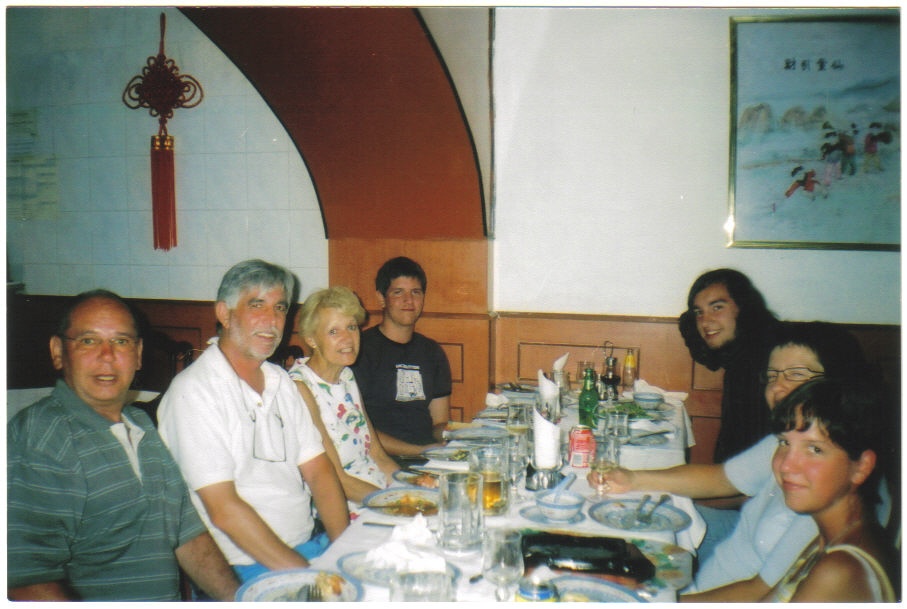
Adam and family in the Chinese restaurant, Tavira

We have been on numerous visits to Poland now, Dad sometimes even travelling alone, but one thing we can always rely on is that Adam will be there to organise and take care of us.  Full credit to Marta too- they have a wonderful marriage and we were privileged to spend their Silver Wedding celebrations with them in the Tatry Mountains.

Luckily there are lots more letters in the alphabet.  I shall need most of them to finish introducing the Polish family.  But this A-Z challenge isn’t just about me.  There are lots of fascinating stories and lifestyles being introduced on Julie Dawn Fox’s My personal A-Z challenge.  Visit the hub site or try out some of these.

http://algarveblog.net/2012/01/31/d-is-for-doors/

http://presepiocomvistaparaocanal.blogspot.com/2012/02/my-z-of-netherlands-is-for-almere.html

http://juliedawnfox.com/2012/01/19/e-is-for-eucalyptus-trees/

https://restlessjo.wordpress.com/2012/02/01/c-is-for-cacela-velha/

That last one’s a cheat- it’s me with my “Portuguese head on”, for those who don’t know me.  See you soon.

A hug a day…

What better way to start a day than with a hug?  I can’t really think of one, can you?  There are people I would love to hug, but they live too far away.  But this HUG is one that travels the world, seeking out those who promote hope, love, peace, equality and unity for all.  That’s a big ask because there are days when we all feel tired and despairing.  Just knowing that there are so many others who want the same thing- if we all put our energy into it, maybe one day we can make it happen.

I’m really happy to accept this award, and thanks to Alyson Sheldrake, who nominated me, and to Connie Wayne, for developing the HUG award on her blog A Hope for Today.  The details of what the HUG involves are in her link:

In accepting the award, I will:

Put this link http://ahopefortoday.com/2012/01/14/hope-unites-globally-hug-award-guidelines/on my site in a post where I accept the award

Go to Connie’s site and put a comment on accepting the award

Copy the badge to my sidebar

Include a link to Connie’s page

Look at the guidelines for passing the award on and be sure to give the recipient the link, too.

My nominations to receive the award are:

http://camsgranny.wordpress.com/  for her unfailing optimism and patience in trying circumstances

http://passionateaboutpets.wordpress.com/  for warmth, enthusiasm and humour

http://jfb57.wordpress.com/  overcoming the challenge of retirement

Thanks to all for reading me.  Here’s to sharing hugs.

Six Word Saturday

By Ian Britton for http://www.freefoto.com

 White crane stands on one leg!

Any of you who do t’ai chi will be familiar with the expression but it wasn’t at all what I had in mind when I started this post.  I was watching the BBC production “Earthflight”, and marvelling at the courtship dance of the Japanese white cranes.  In a week in which me and the other half had been a bit frosty with each other, for reasons I won’t go into, this struck me as suitable material for my 6WS.

If only it were so simple!  The images in my head did not match up to anything I could find on the wonderful web- “white cranes” resulted in the above image.  The “Earthflight” website offered video footage, but not the right bit and no “stills”.  Change of tactic called for.  I found some gorgeous Dancing Cranes by Lucy Wang on YouTube but then realised I don’t have the facility to embed a video without an upgrade.  Oh well- you live and learn! (slowly in my case- have a look on You Tube and think of me)

Just remains to give the other half a kiss and link to showmyface whose idea Six Word Saturday is.  Come and play if you want?  If not, I’ll see you next Saturday.


C is for Cacela Velha

There are far more important C’s in all of Portugal than this tiny smudge on the map.  There’s Coimbra, Castelo Branco, or even famous Cascais on Lisbon’s doorstep.  I’d love to visit all of them, but for me this personal C has to be about Cacela Velha (Old Cacela).

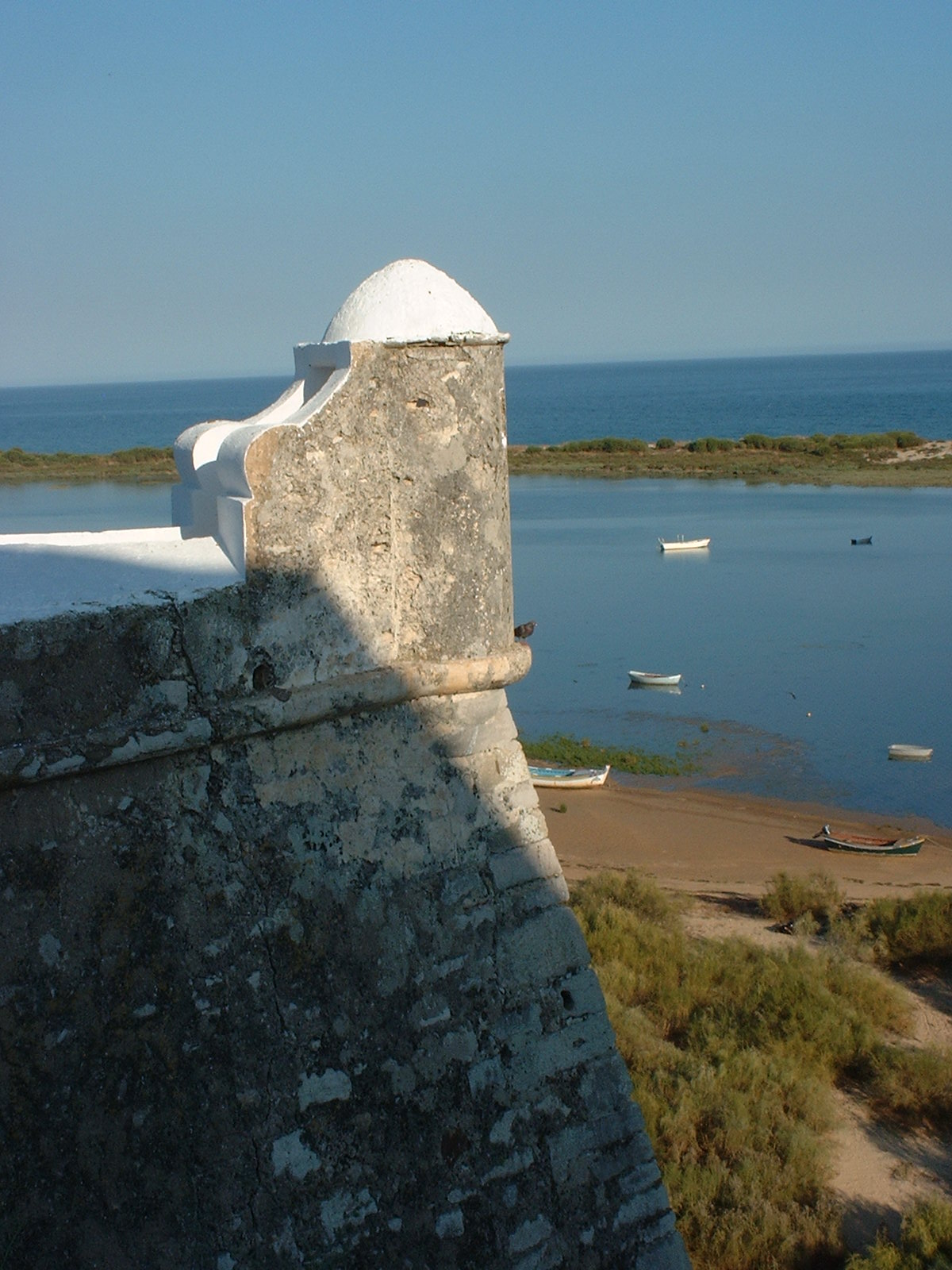
The fortress, Cacela Velha

How does a tiny village on the cliff edge of the Algarve, Portugal’s most touristy spot, cling on to the old days and keep faith with its roots?  I’m not sure that it can be done.

When we first came to the Algarve 8 years ago I had been avidly reading any and every book I could find to seek out the best places to visit.  The Rough Guide mentioned Cacela Velha, saying I should get there quickly before it was completely ruined.  I needed no second invitation.

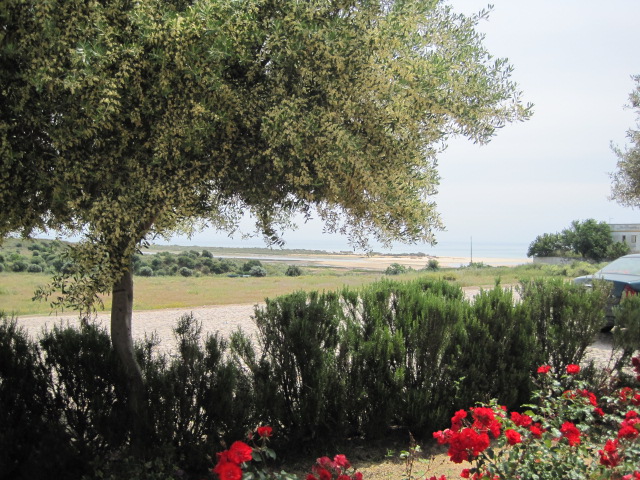
The location has certainly helped to keep Cacela Velha unspoiled,although the bulldozers lumber not too far away.  The nearest bus stop is on the E125, the old road along the Algarve, and a couple of kilometres walk along a twisting narrow road.  In this era of the car that is very little deterrent.  It sits above a beach which by Algarve standards is woeful.  Still you only have to see it to fall in love.  It is a photographer’s dream.

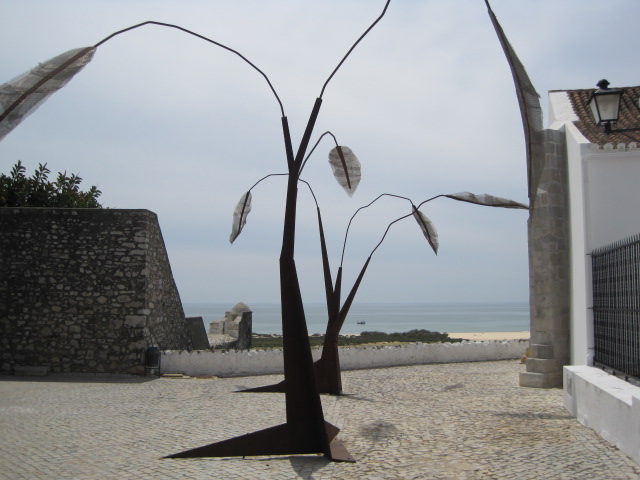
There is now proper parking where once there was scrubby grass, and a piece of “modern art” has appeared in the little square beside the castle walls.  I can live with this, but please, that’s enough!  It doesn’t need “fancification”.  It is truly beautiful in its own right.

New car park above and “artwork” below

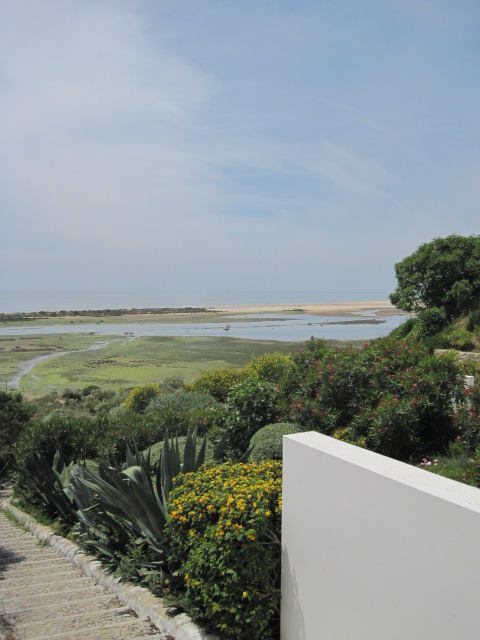
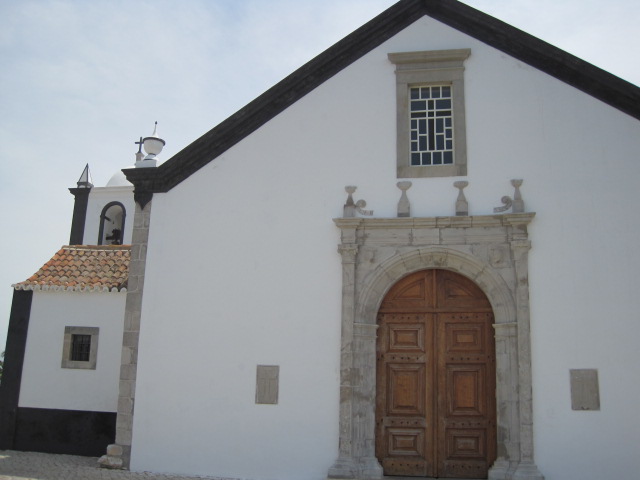
On a grey January English morning, I can picture it so vividly and feel the peace and calm of my first visit.  Just a church on a headland and the remains of a fortress- I suppose Praia da Rocha must have been like this once, though it’s hard to imagine.  A huddle of cottages snooze sleepily together, cats seeming to outnumber people.  An old well is the focal point of the village square, the church and cemetery majestically off to one side.  The magic is there already, but when you follow the path behind the church the vista that awaits you is spectacular.

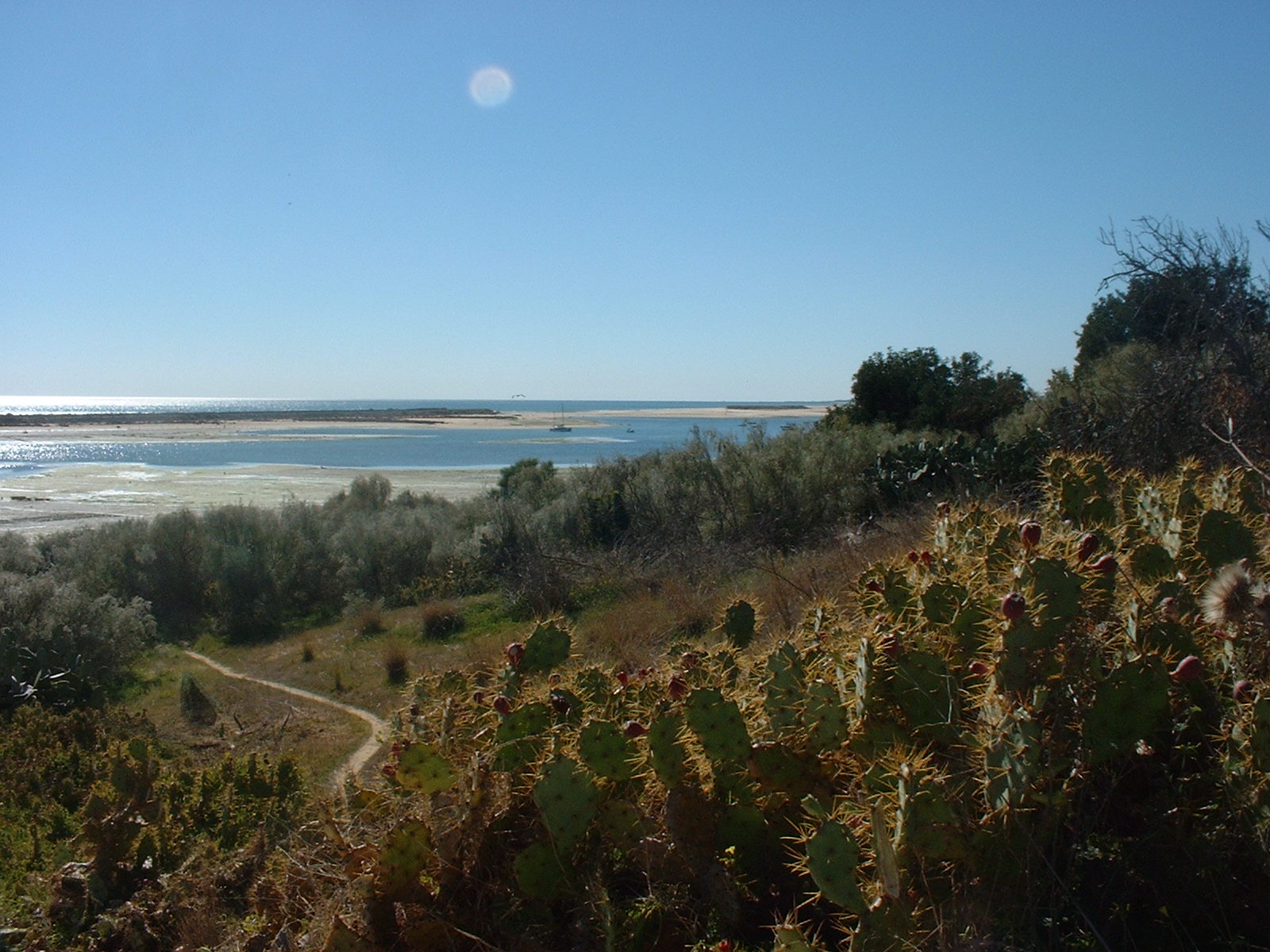
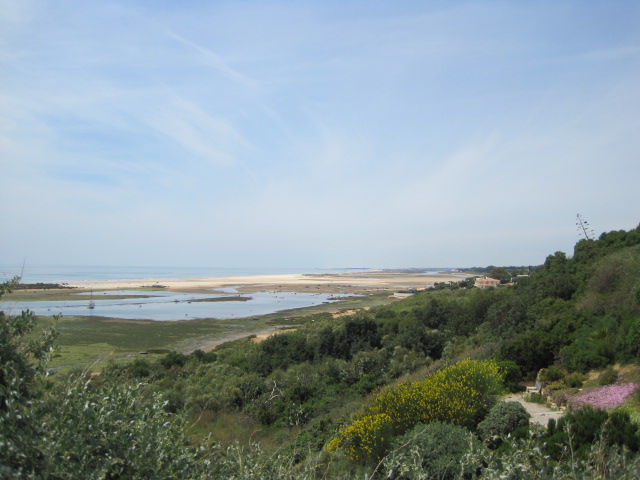
The shimmer of the water as it laps lazily at each sandspit stretches far into the distance, where sky meets sea.  A patchwork of gold and blue and green, I said that the beach is woeful but at this height it’s hard to tell.  You may be lured down the steps for a closer look and to take some photos from a different angle.  I can feel the photographers among you twitching to be there.

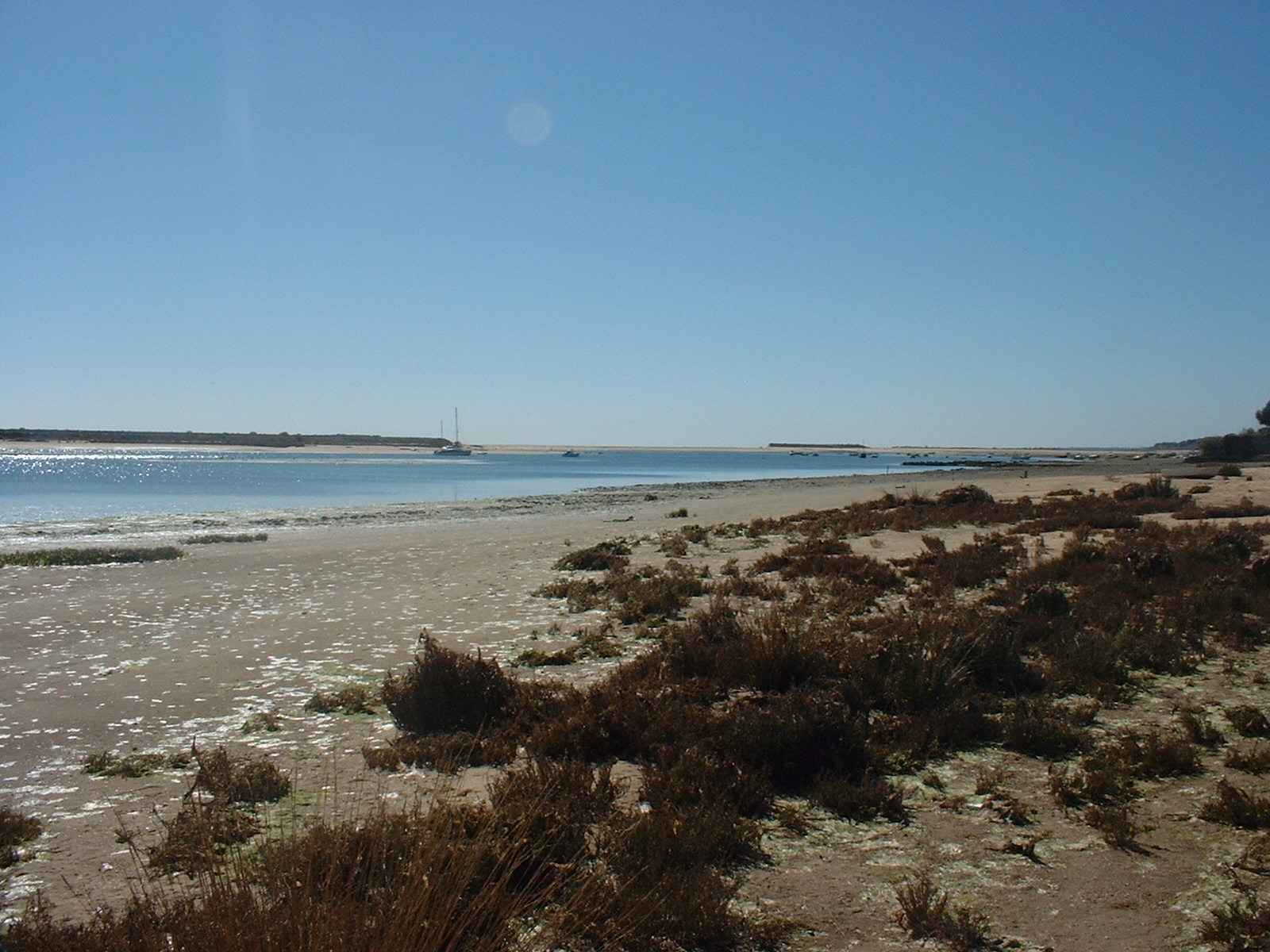
The beach isn’t up to much because it’s far back from the sea and you need to ferry across to Praia de Cabanas for the real thing.  I’ve never actually accomplished this as you need to catch the ferry from nearby Fabrica and parking there is increasingly difficult.  In any case, I’ve never needed to as I can more easily reach superb Cabanas beach from Cabanas itself.  If I then walk and walk and walk along the beach, in the direction of Spain, I come to a channel of water across which I can just make out the church, with fortress beyond, perched up on its cliff top.

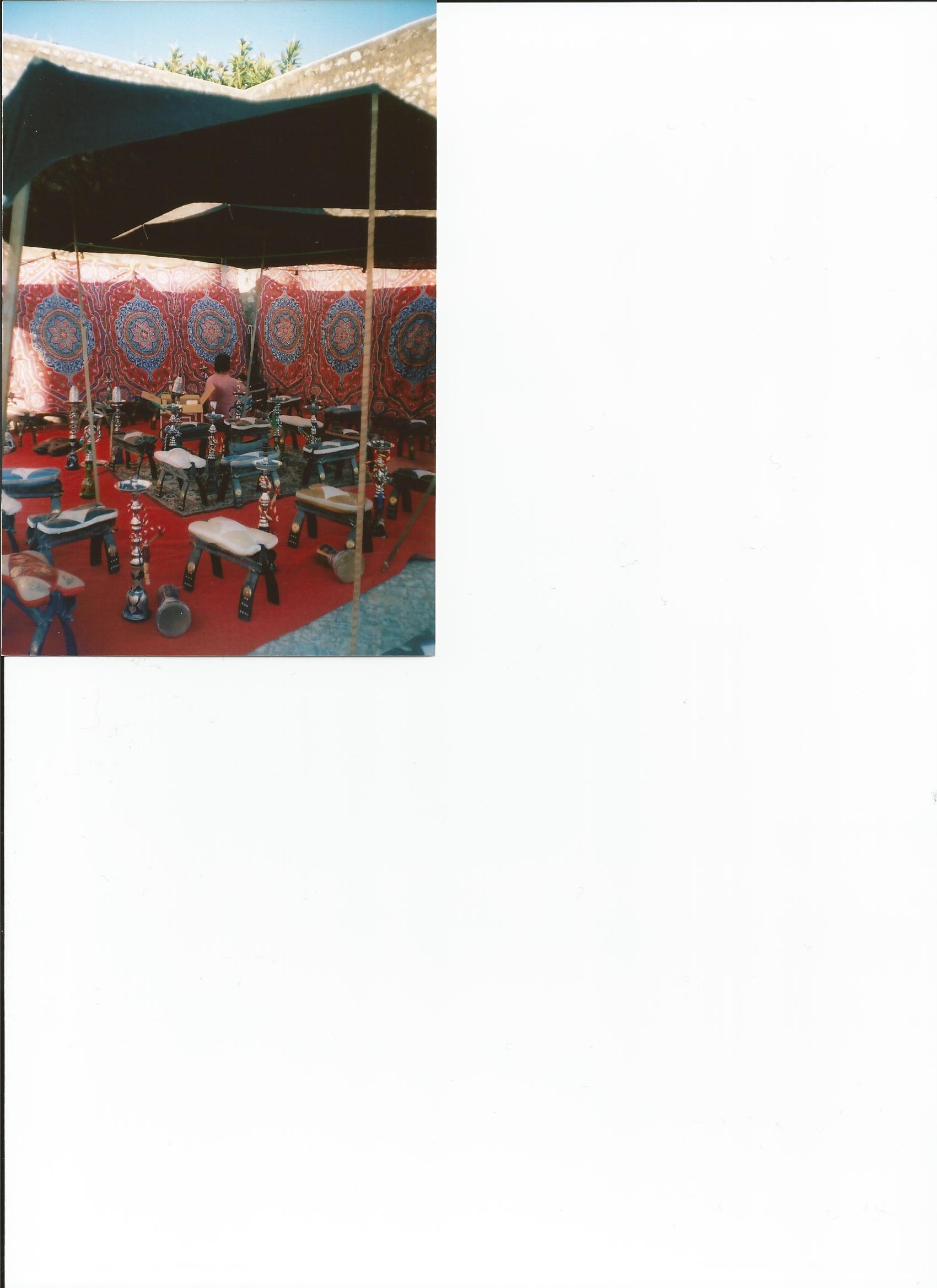
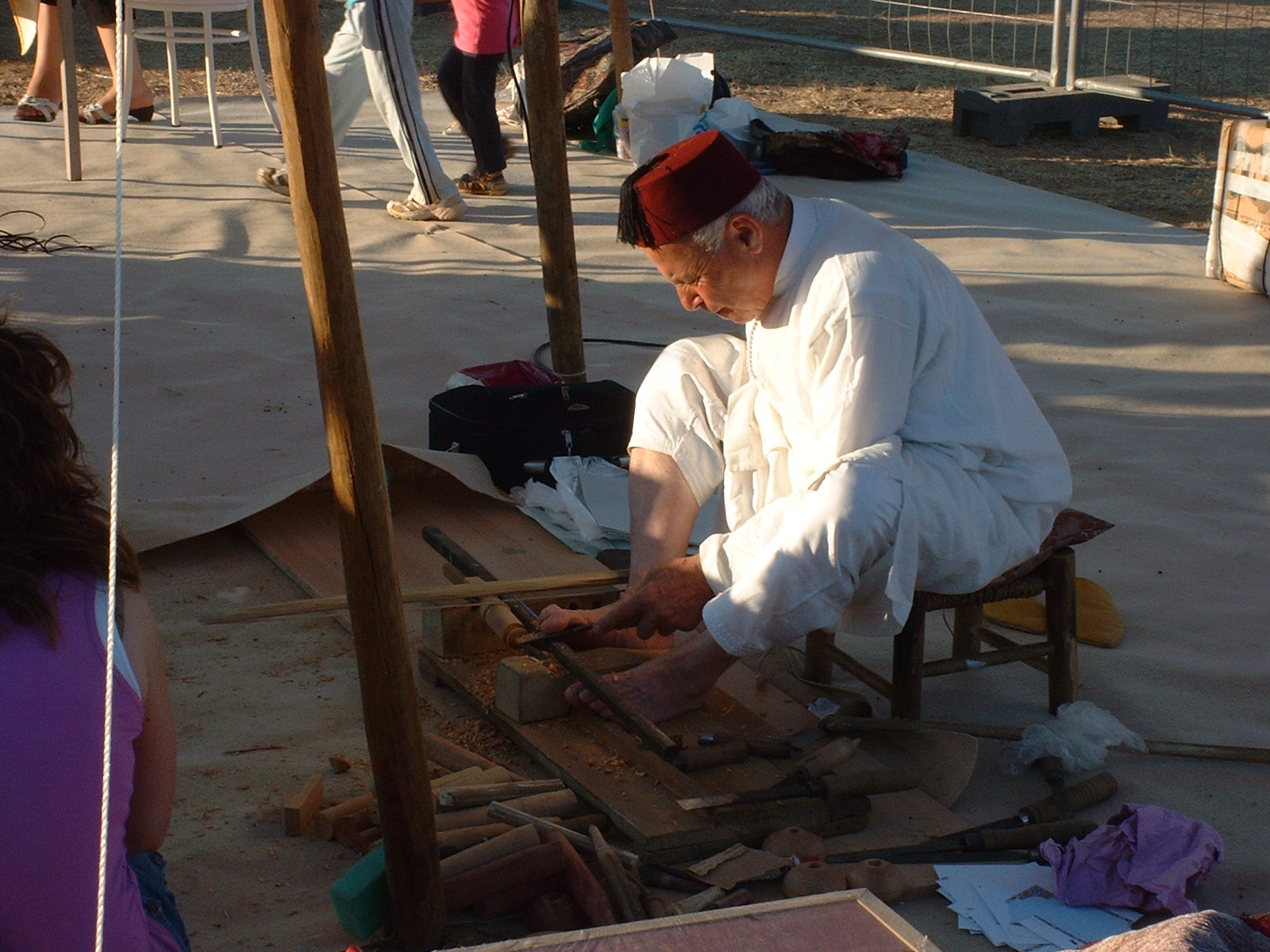
Cacela Velha was a stopover for traders in Phoenician times and in the 10th century was, in Arabic, Medina Qast’alla Daraj, so perhaps it is not surprising that the village comes alive in July to the Festival of Enchanted Nights, Noites da Moura Encantada.  Suddenly the place is transformed and vibrating with life.  Stalls full of trinkets, oriental lamps and elaborate mosaic tables fill the tiny square and spill over into the car park.  Stools, cushions, Berber rugs and hookahs appear, and mint tea is brewed, with an array of tantalising sweets and savouries.  Bizarre but somehow not really out of place, a belly dancer gyrates beneath the fortress walls.  Oriental music and aromas drift around the narrow corners.  A camel paws the ground, while a craftsman demonstrates with his wooden lathe.

But mostly the village is its peaceful self, and happy to be so.  The fortress which once warned of invaders from the sea is now home to the local branch of the National Guard.  A couple of restaurants have come and gone, and currently Casa Velha enjoys good popularity. Despite the proximity of two golf courses, Quinta da Ria and Quinta da Cima, the protection afforded by the conservation status of the Ria Formosa is holding back the tide.  Long may it continue to do so.

So that’s my ‘C’.  Just need to link to Julie Dawn Fox’s hubsite.  You coming along on the A-Z challenge?

B is for Bełchatów

IMG_6289

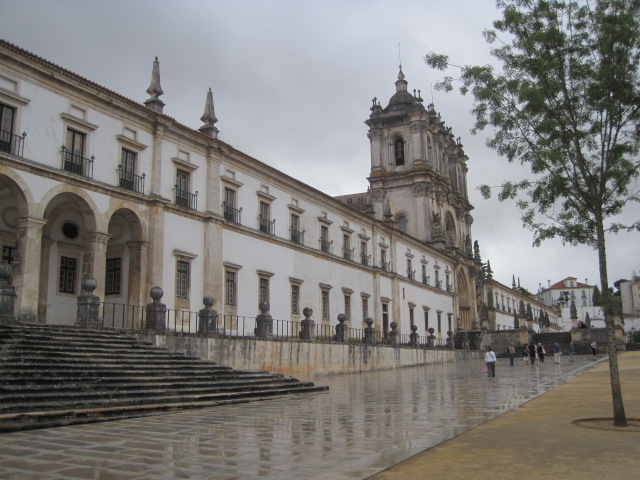
Bełchatów is an ordinary town, on the flat plains of Central Poland- 50km south of Łódź and 160km from Warsaw.  It has a football team, GKS Bełchatów, and a volleyball team (the national passion), Skra  Bełchatów.  There is no local rail link, so buses are the main form of transport.  If you look in Wikipedia you cannot fail to see that it has the largest coal-fuelled thermal power station in Europe- a blot on the landscape but a huge source of employment locally.  Quite randomly, it is twinned with Alcobaca in Portugal.  How strange that I visited the monastery there, one rainy day a few years ago.

Monastery at Alcobaca

Monastery at Alcobaca

You would have to dig quite deeply on Google to find out much more about Bełchatów, but for me it is a very special place.  It’s home to a large portion of my Polish family.  Funny how common threads run through life.  Many of my relatives work at the power plant, and in Hartlepool, my home on the northeast coast of England, we have a large and ugly nuclear power station.  Chief employer in our part of the world, my husband worked there for a number of years.

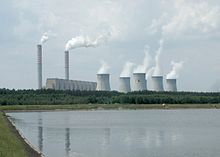
Bełchatów power station

Time to introduce some of my family.  Uncle Jakub lives with his wife Czesława (Czescia) in Groholice.  The oldest suburb of Bełchatów, and once a village dating back to the eleventh century, Groholice has lots of charm.  It also has a large and beautiful church, where Jakub’s son Krzysztof married Ilona.  They now have a lively little boy, Piotrek.

The church at Groholice

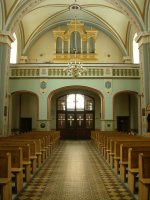
Inside Groholice

Krzysztof and Ilona

Directly across Ulica Ogrodowa (Garden Street) from Jakub lives daughter Bożena, with her husband Krzysztof and sons Dawid and Kuba.  At our first meeting I admired Bożena’s distinctive necklace.  When we parted a few hours later she thrust it into my hand as a keepsake.  We didn’t have enough words between us for a conversation, but that gesture spoke volumes.  Husband Krzysia (familiar form of Krzysztof) works at the power plant.

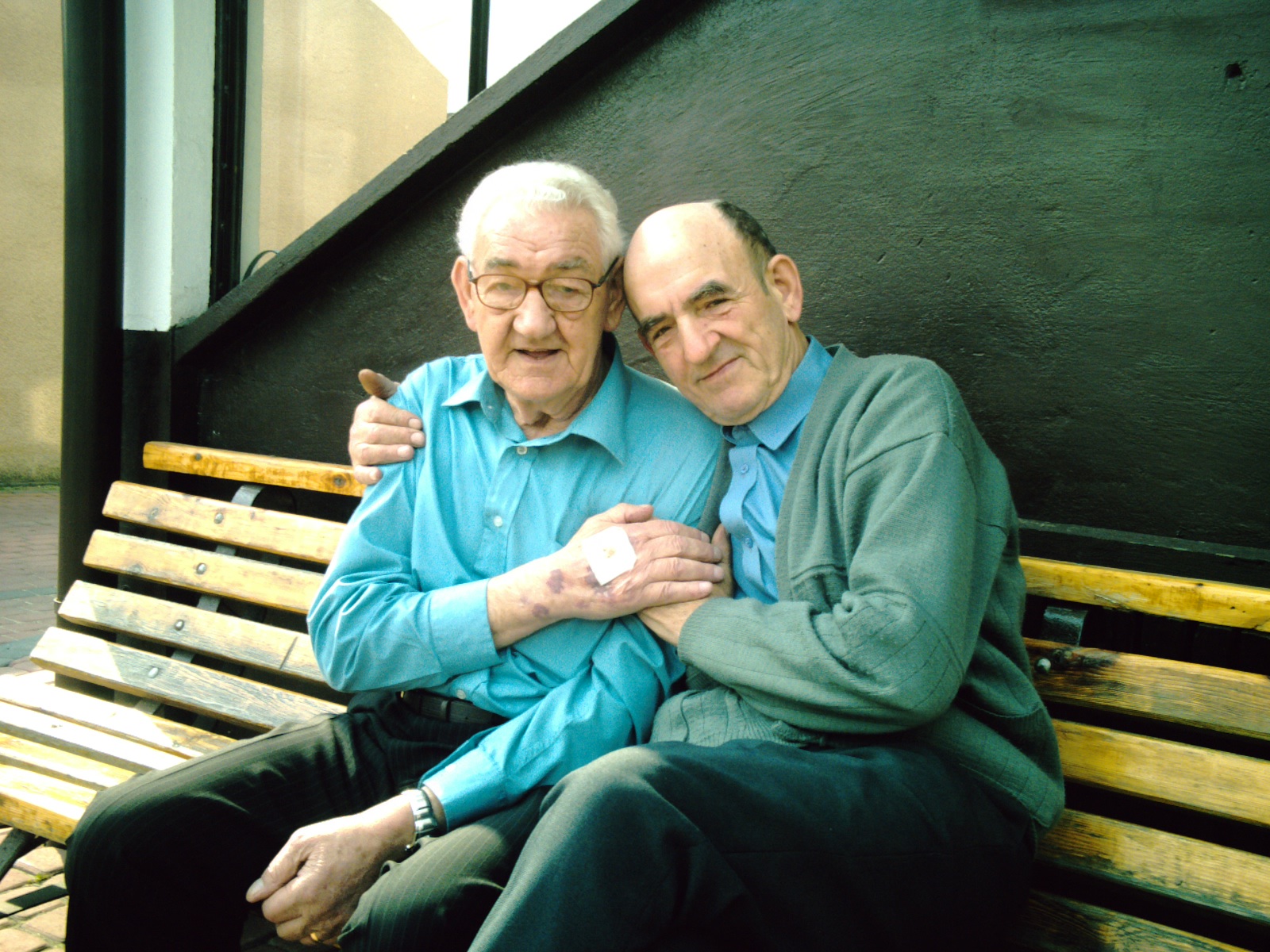
Dad and Jakub

Dad is 15 years older than Jakub and until March 2007 they had never met.  Now they are happy to sit for endless hours, smoking and playing dominoes.  Sometimes when visiting I take myself off for a wander round Groholice, admiring the characterful houses.  My usual route takes me down to the cemetery, full of flowers and beautifully maintained, as are all Polish cemeteries.  It is surrounded by woodlands and open fields so I can browse the headstones looking for more family, or simply enjoy the serenity.

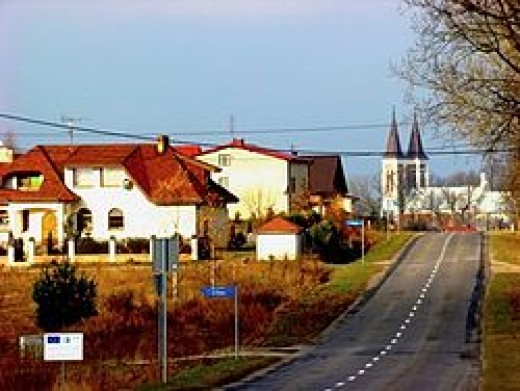
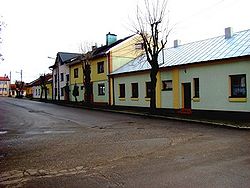
Groholice centre, courtesy of Wikipedia

Jakub’s oldest son Andrzej lives just a short walk away with wife Renata and son Michał.  Andrzej worked the clock round for 8 years, building his own home between shifts at work.  Now they have a lovely home, sheltered by woods, with plenty of open space where Michał can indulge his passion for running.  Now a tall young man with immaculate English, when we first met Michał was a shy child, cajoled by his father into translating for us.  I don’t know who was more embarrassed, him or me!  Polish children, in my experience, are much loved but expected to behave well, and they usually comply.

Renata, Andrzej, Bozena and Krzysztof

When in Poland I usually stay with family, but on one occasion I stayed in a hotel, with my husband Michael.  It gave us an opportunity to look around the centre of Bełchatów on foot.  Not known for my sense of direction, still I was confident I could find the huge outdoor market.  We were attending a wedding in the afternoon and I wanted some flowers to take to the church, and a present for my cousin Jadwiga’s first grandchild, Kinga.  Michael wanted some Polish slippers as he’d taken a fancy to the style!  At each home a supply of guest slippers lives in the hall- the floors are often polished wood or tiles.

Relaxing in Bełchatów

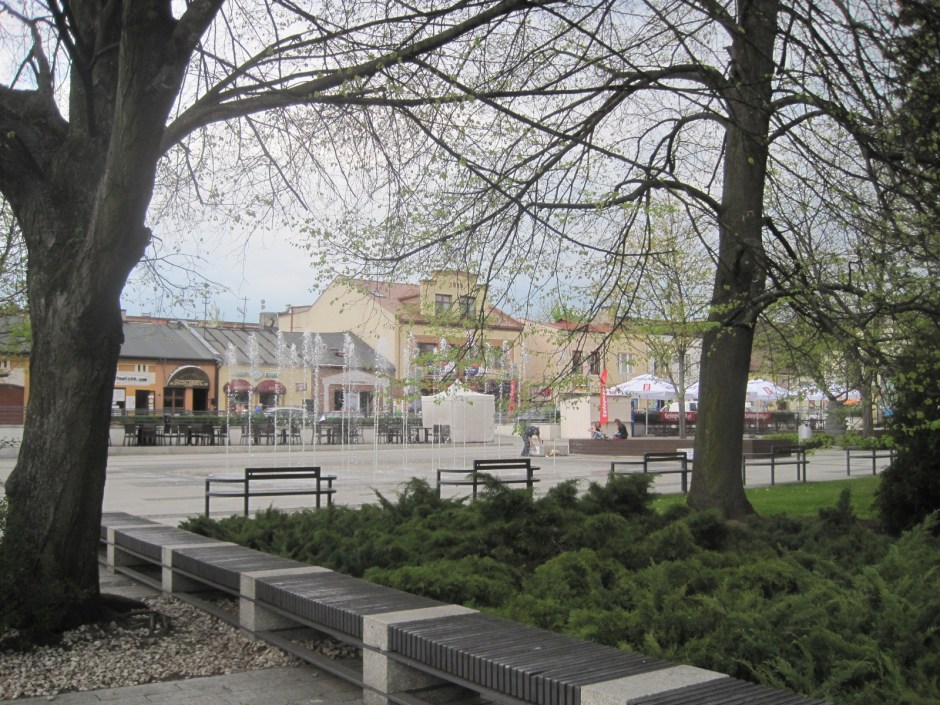
Placu Narutowicza- photo by Rafal Niewiadomoski (Portal Bełchatów)

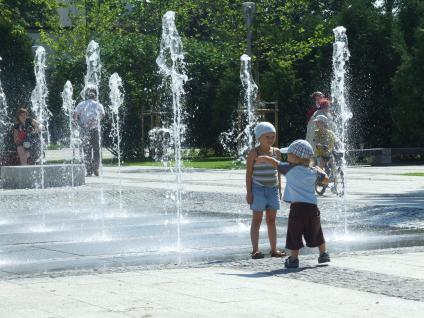
It was a glorious hot August day and we had been informed that a nearby park was having it’s official opening so we strolled in that direction first.  It had the kind of fountains that squirt high in the air unexpectedly, to the great delight of the local children.  I could happily have stood under a jet of water myself but instead we bought a drink and hitched up on a wall to watch the rehearsals for the evening performance.  A Michael Buble song was being performed rather well and the chorus were strolling through their steps, conserving energy.

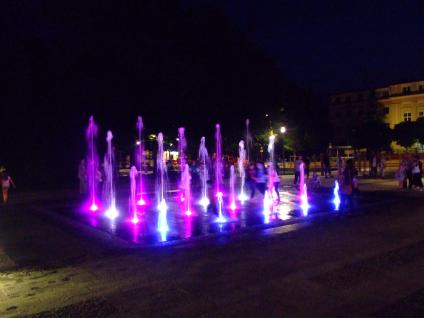
Placu Narutowicza by night- by Rafal Niewiadomoski (Portal Bełchatów)

Time to seek out the market.  As usual my sense of direction let me down and in halting Polish I enquired of several locals the whereabouts of the market.  Much arm waving let us know that we were in completely the wrong place and we were hot and thirsty by the time we arrived.  I was quick to purchase flowers and a lovely little frock for Kinga, but we were a long time finding Michael’s size in slippers.  Amazing how many shoe stalls!

Back to the hotel for my next challenge, while Michael sat quietly with a book.  I had bravely booked an appointment with the fryzjerka (hairdresser) as I knew that the Polish ladies would be very soignee.  I didn’t want to let the side down, and how lucky I was!  With little conversation other than that I needed to look good for na slub (the wedding) I was transformed into a swan before my very eyes.  I could have taken her home with me!

Herb Belchatow- the town’s coat of arms

This seems like a good place to stop.  I returned to Poland for a very special wedding in May 2014, and have been back several times since.  Many of the photos here are from outside sources, but I have since acquired lots of my own.  I linked to Julie Dawn Fox’s Personal A-Z Challenge, and to my good friend Frizz. He was playing Mr. Bojangles– one of my all-time favourite tunes.

Why not join us?

Six word Saturday

So little can mean so much!

And then there were two!

At t’ai chi this week, Liz said she had received over 350 jumpers!  Last week there were just 60.

Following on from last week’s Six Word Saturday, for just a couple of pounds I have knitted 2 jumpers, and derived huge satisfaction from doing so (at least half a jumper was completed this morning while watching Aussie Open Tennis!).  I Googled “fish and chip babies” and discovered that there are many, many people engaged in this endeavour.  How could there not be? 

Thanks to Show my Face http://www.showmyface.com/ for giving me the opportunity to share through Six word Saturday.


B is for Beaches

Ok, it’s predictable I know, but how could I have a home in the Algarve and NOT love beaches?  There’s nothing I like better than an amble along the beach, picking up the occasional shell for the collection.  Flat, calm and twinkly in the sunlight, or raging and frothing, I love being beside the sea.

Beach below Cacela Velha, Eastern Algarve

So where better than Portugal, with its wrap around beaches, north to south?  In theory I could walk the full length, starting off in my treasured Eastern Algarve.  Of course, I’d have to swim the odd river.  Perhaps I should take our inflatable dinghy with me- I’m not that much of a swimmer!  Think of the Podcam I could do, if, of course, I were skilled and steady-handed enough to point the video camera in the first place.

No.  Better to focus on my digital memories.  I’m starting in the east and going west, with a few impressions of the beaches that I love.

The beach at Praia Verde

Praia de Verde, not far from Monte Gordo, was one of the first beaches ever recommended to me.  The coast at the eastern end of the Algarve is quite flat so I was surprised at the drop down to the beach from what is essentially an upmarket holiday village.  The bay is beautifully shallow and I’ve seen some of the prettiest fish basking in the warm water.  One of the big attractions is the restaurant Pezhinos n’ Areia.  www.pezinhosnareia.com .  It was much more simple when we first visited and less expensive too, but I would still consider it for a special lunch.

Pezhinos n'areia

Of course, Tavira, my adopted home, can brag of a beach or two, but for the sake of brevity I’m going to refer you to an earlier post of mine.  https://restlessjo.wordpress.com/2011/10/20/impressions-of-an-eastern-algarve-shoreline/

Armona

Armona  This island was a strong competitor for my first post, “A is for”.  It is unlike anywhere I’ve ever been before and I find it hugely charming.  It’s reached by ferry out of the fishing port, Olhao, though you can also visit from tiny Fuseta, such is the length of these offshore islands of the Ria Formosa.

A path wends away from the harbour through myriad dwellings, many of them holiday lets, but they have enormous character.  Driftwood and shells vie with the plants in the sandy front gardens.  As you peak down the narrow lanes between them you catch glimpses of the sea and any one of them will take you to the shore.  If you continue across the island you will come to the ocean facing beach- an endless expanse, sufficient enough even for me!  There’s a beach bar here, or if you return to the harbour you have a choice of restaurants from which to look out across the water.

Livingstone daisies cover the beach in Spring

Barreta  Another island.  Are you sensing a theme going on here?  Also known as Ilha Deserta, this is Portugal’s most southerly point, and a longer ride out of Faro harbour.  Gazing down the beach there’s a real sense of isolation here, until of course, the ferry comes in.  It’s not the place to find yourself in the height of summer as there’s absolutely no shade other than the restaurant O Estamine.  Nevertheless it’s an enjoyable trip out with some compelling views. www.ilha-deserta.com

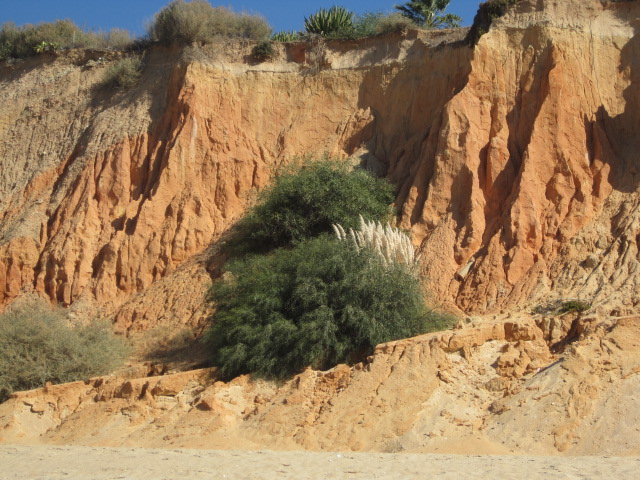
Once you head east from Faro airport, you reach the Algarve with which most people are familiar- red cliffs and golden sand speckled with rose.  It’s just one long glorious beach, backed by a variety of resorts.  Stacks puncture the sand and walking the cliff tops is a joy.  Commerciality has spoilt some of it, but in low season the beaches from Vilamoura to Lagos are more relaxed and it’s possible still to enjoy the wonderful beaches that brought development to the area.

Vale de Lobo

Algar Seco, Carvoeira

Praia da Rocha, off season

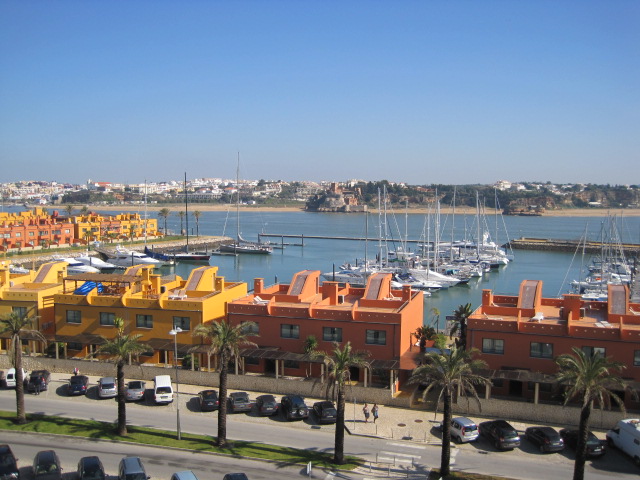
Portimao marina with Ferragudo in the distance

Coastline near Lagos

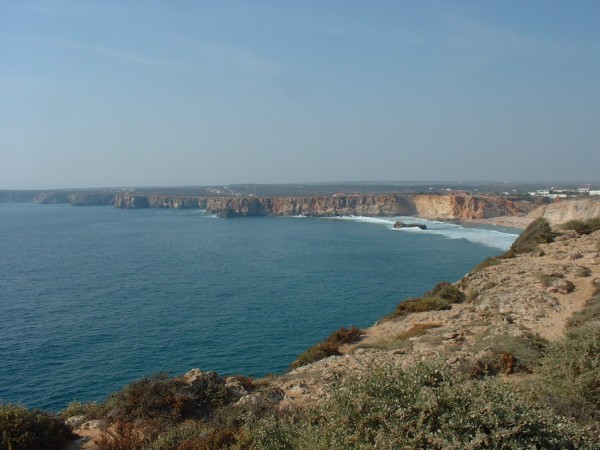
Looking towards Sagres

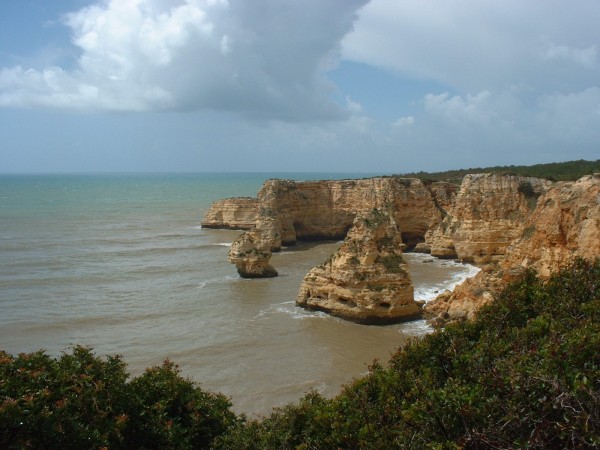
Praia de Marinha has some great memories for me.  We walked the cliff top to Benagil one Spring day and were caught in a sudden downpour- from blue skies to hail stones, I kid you not!- and back to blue skies.  The scenery was glorious and the fields full of flowers but I’ll never forget the disconsolate expression on my husband’s face as we trooped down the hill to the tiny cove at Benagil, rolled up umbrella in hand.  He soon rallied after a warming café duplo in the beachside bar.

Marinha beach

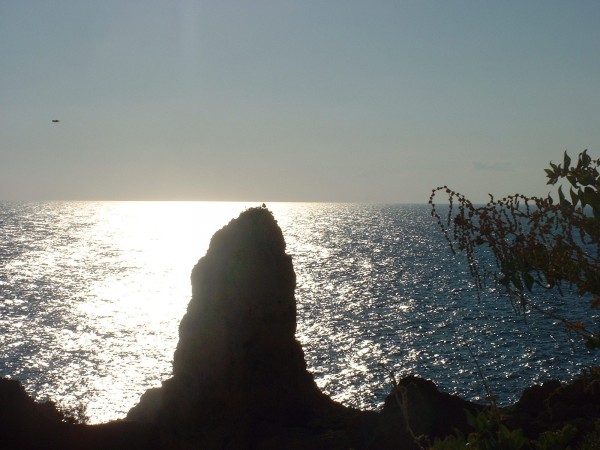
Stacks below Marinha

Clifftops above Marinha

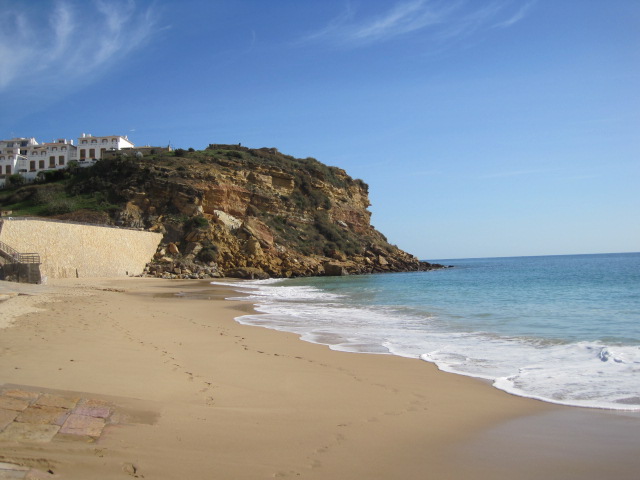
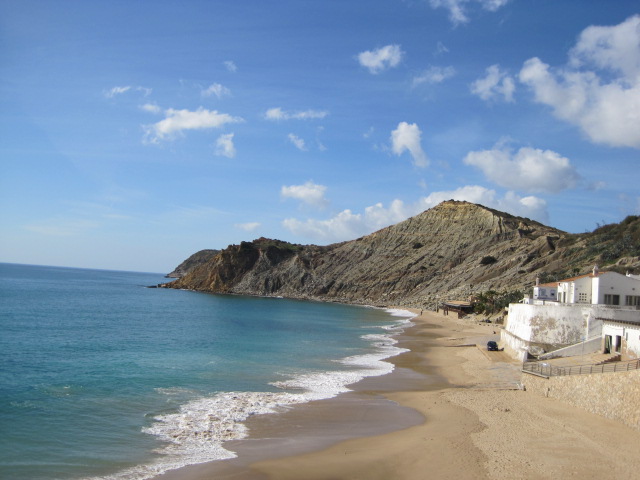
Burgau  I’m rolling along to the west now, to a charismatic beach.  The sandy cliffs are threaded with agave and aloe vera plants and after a swim (paddle in my case) there’s one of those beach bars where you could probably lose a day or two of your life.

Burgau beach

The beach bar in the distance

Amado We’ve turned the corner now and are heading up the Atlantic coast, where the beaches are wilder and largely untamed.  Small communities sit back off the beach and the campervan rules.

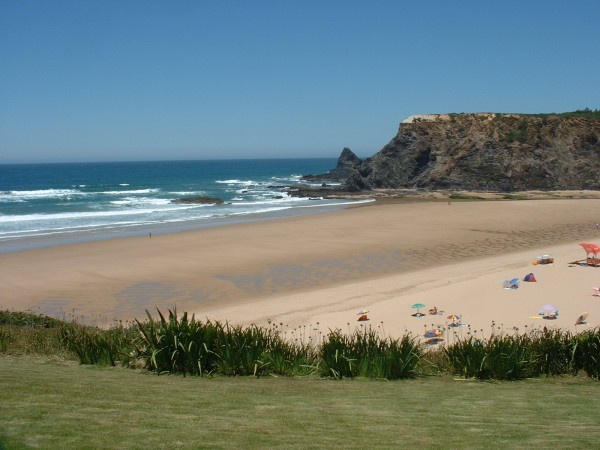
Praia de Odeceixe

Praia de Odeceixe  Oh, I loved this place!  Billed as “surf city”, it was still quiet when we were there last May and the expanse of beach was the equal of anywhere I’ve been.  You need good legs to get down and back up again, but there’s a rewarding little restaurant, Café Dorita, with good shelter from the winds but maintaining the views.  I expand on my visit in  http://www.simonseeks.com/travel-guides/praia-de-odeceixe-cautionary-tale__168002.

I’m still only at the Alentejo border and the beaches roll ahead of me.  There are many more I’ve yet to visit, and I’m sure, many more that you can point me to.  Please do join in, with your favourite Portuguese beaches and the stories that go with them.  Be assured of my close attention.  When it comes to beaches, I’m all ears.

For more great reads in the Personal A-Z series, try

http://juliedawnfox.com/2012/01/19/e-is-for-eucalyptus-trees/

http://algarveblog.net/2012/01/12/a-is-for-the-algarve/

http://wordangell.wordpress.com/2012/01/17/an-a-z-of-the-uk-arundel/

and don’t forget to sign in on http://myatozchallenge.com/if you want to join in.

Six word Saturday

Fish and chip baby jumper complete!

Fish n chip baby jumper

I haven’t knit for more than 20 years, but when I was asked at a recent t’ai chi class if I could, and learnt the reason why, I had to rediscover the talent.

The Cause is “fish n chip” babies in Africa.  These tiny scraps are sent home, newborn, from hospital, wrapped in newsprint for the want of other clothing.  Can this really be happening in our world?

With my usual flair, I bought wool from a kind market stall assistant, who donated half a ball leftover from her own contributions to this cause, only to find that I had no knitting needles!  I used to have a huge collection, including many from my late Mum, but remembered too late that I’d put them all into a charity sack.  The likelihood of me knitting again hadn’t been great.  After much texting of friends I finally acquired some and the above is the result.  Finally!

It made me really happy to knit this, so I’m starting another, on my borrowed needles.  Also, I’m remembering my manners this week and including a linkback to http://www.showmyface.com/ whose excellent idea Six week Saturday was.