It’s taken me so long to get around to my next Polish A-Z post, the letter E. Lots of interesting things got in the way, but here I am- good to go!
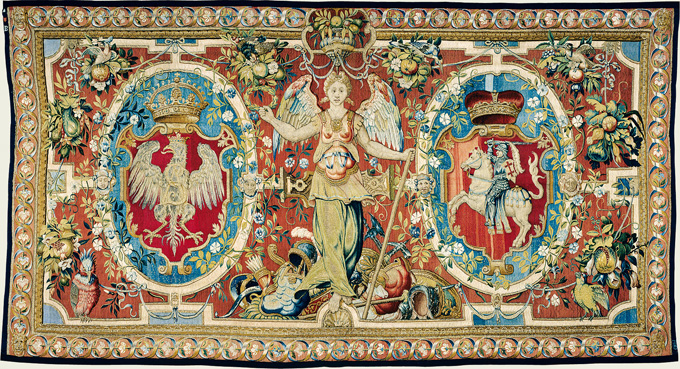
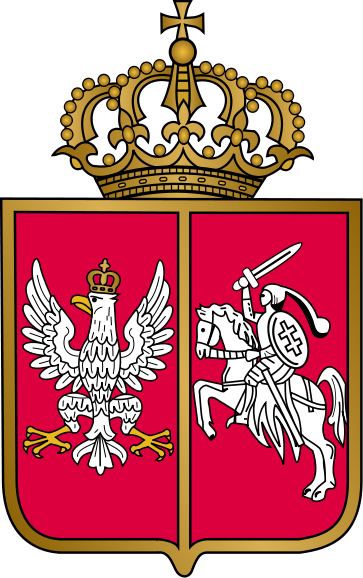
Tapestry of the Polish and Lithuanian Coats of Arms circa 1555, from Wikipedia Commons
Isn’t this a beautiful tapestry? I saw many in the collection in Wawel Castle in Kraków, but not this one. You may have noticed that I use the Polish Eagle in the logo for my personal A-Z of Poland? I thought I’d tell you a little about it.
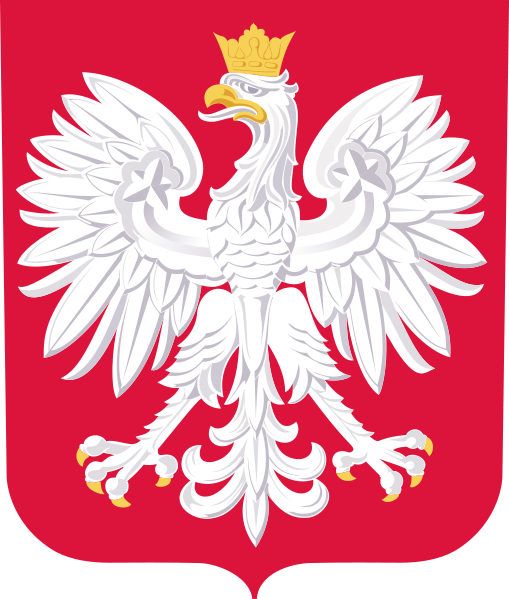
Orzeł Biały – The White Eagle
The White Eagle is the national coat of arms of Poland. It is a stylised bird with golden beak and talons, and wearing a golden crown, on a red shield. What species of eagle it is remains the subject of dispute. The symbol of an eagle appeared for the first time on coins made during the reign of Bolesław 1 (992-1025), and has been adapted many times throughout Poland’s tumbling history. Down the ages it has appeared on shields, coins, ensigns and seals.
Through numerous partitions of Poland, the eagle has clung on, sometimes accompanied by the Lithuanian symbol, Pahonia. After World War 2 the communist authorities of the People’s Republic of Poland deemed the crown “reactionary”, and had it removed from the eagle’s head. Still Poland remained the only Eastern Bloc country with no communist symbols on either its flag or coat of arms. After the fall of communism in 1989 the crown, of course, returned.
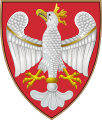
From the seal of Przemysl 2nd, 1295
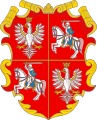
Coat of arms from Polish-Lithuanian Commonwealth
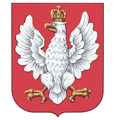
Polish coat of arms 1919-1927
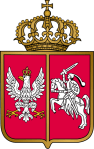
Coat of arms from the November Uprising
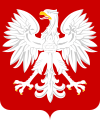
People’s Republic of Poland 1945-1989, without the crown
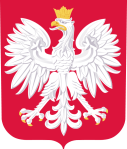
Current coat of arms, since 1990
There is a rather charming legend associated with the White Eagle. Long, long ago three brothers, Lech, Czech and Rus, left their overcrowded village in search of a new home. They rode for many miles, over mountains and rivers and through thick forests, till they reached uninhabited, wild terrain. At the top of a mountain crest they separated, each taking a different direction. Lech continued straight ahead, finally reaching a beautiful meadow, with a lake at its centre.
Just then an eagle swooped low and returned to its nest, high on a rocky crag. As it spread its wings in the setting sun, the tips appeared golden and the bird purest white. Enchanted, Lech declared that this was where he would make his future home. He named it Gniezno, after the eagle’s nest. He and his people built many houses. They called themselves Polonians, meaning “People of the Field”, and flew a red banner with a white eagle over the rooftops. Gniezno became the first historical capital of Poland, and Bolesław 1’s coronation took place in the cathedral in 1024.
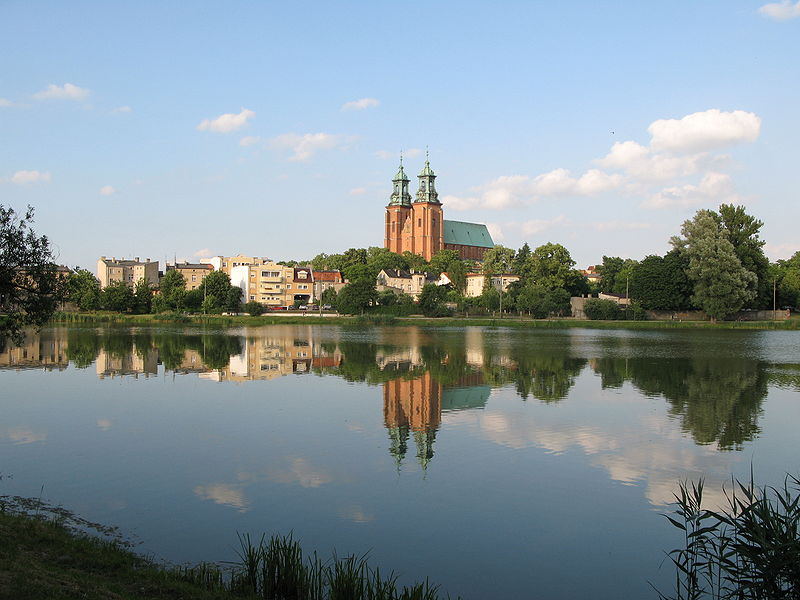
A modern day view of Gniezno- a nice place to set up home?
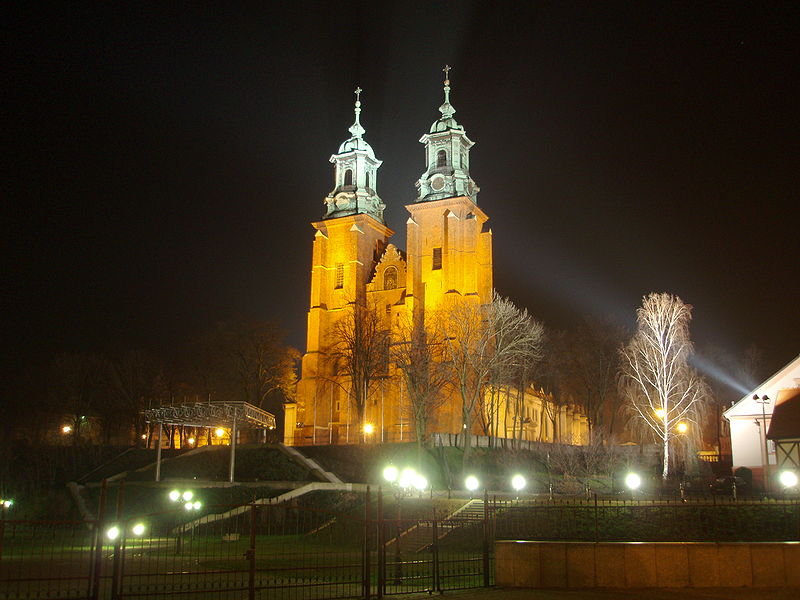
Gniezno Cathedral by night (both photos from Wikipedia Commons)
Today the eagle adorns many public buildings, the reverse of Polish coins, and the shirts of the national football team. Grateful thanks to Wikipedia for the selection of coats of arms and much of the information.
Elokwentny
There are few words in Polish beginning with the letter “e”, but one of my favourites is elokwentny, meaning, of course, eloquent. It is my heartfelt desire to become eloquent in the Polish language.
Edyta
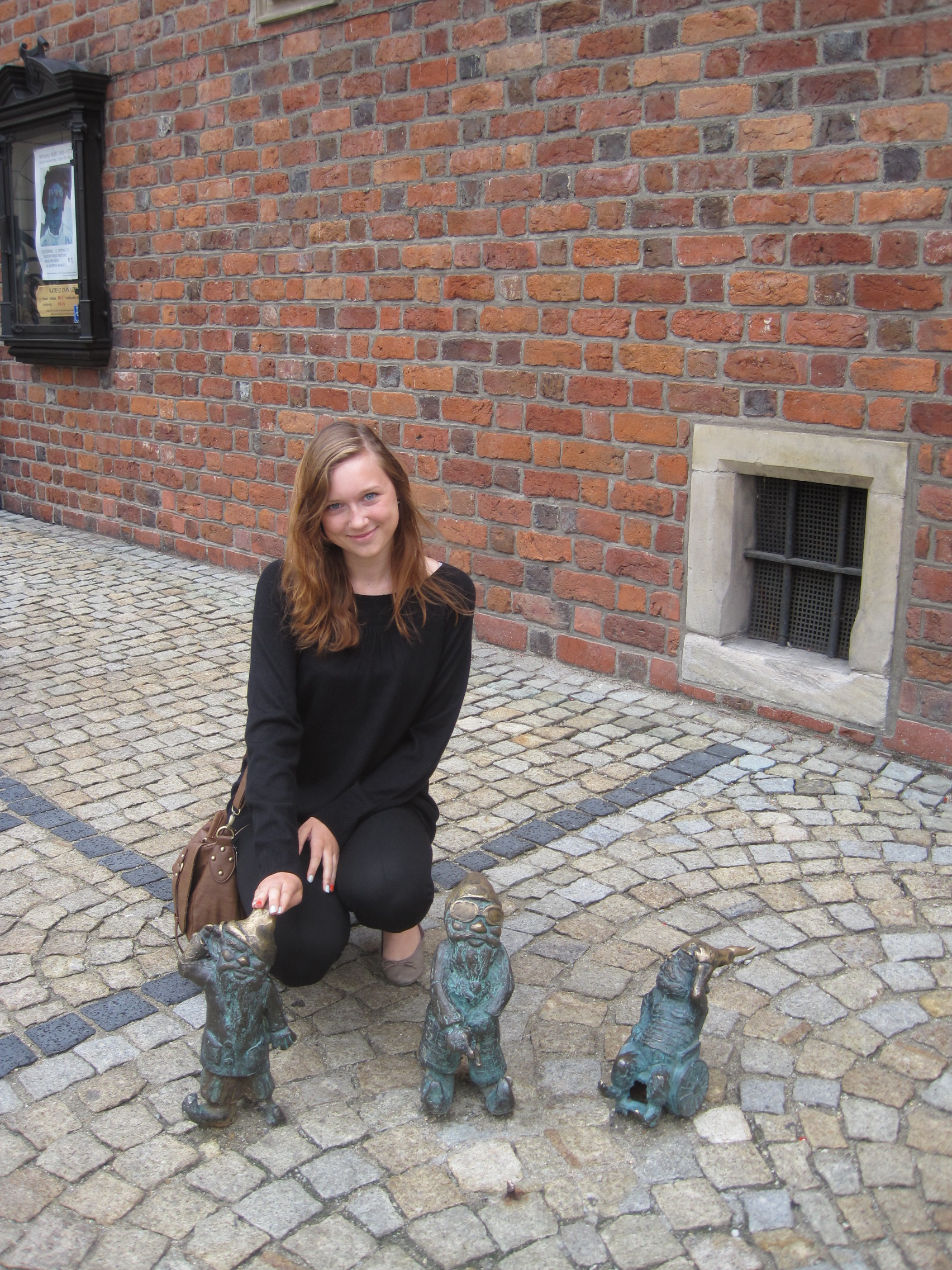
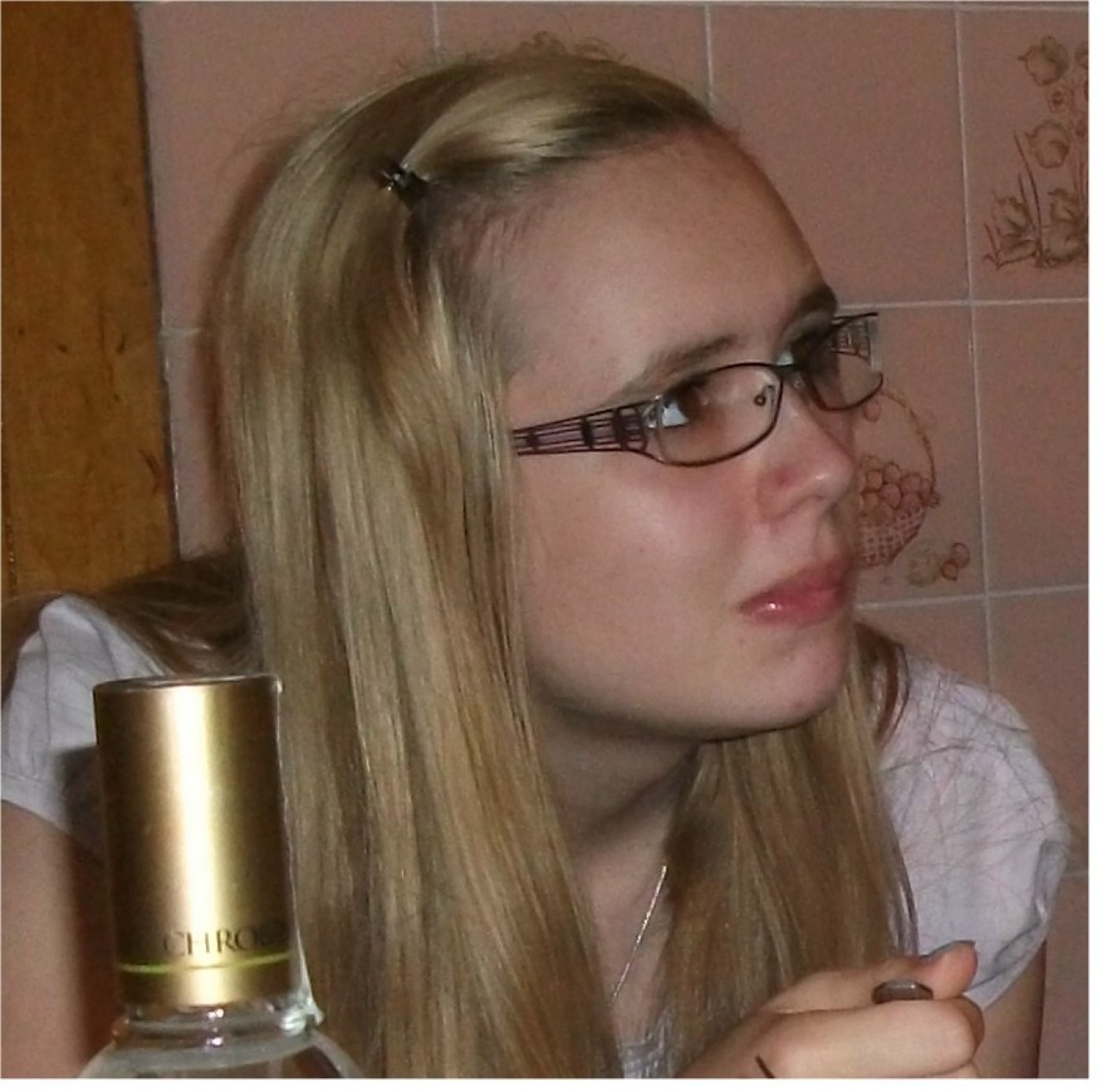
I think Edyta is a lovely name, and it’s one that I’d never heard of before meeting my Polish neice. Remember the young lady with the rabbit, from my A is for Aunts post? This is how she looked on Dad’s recent visit to Poland.
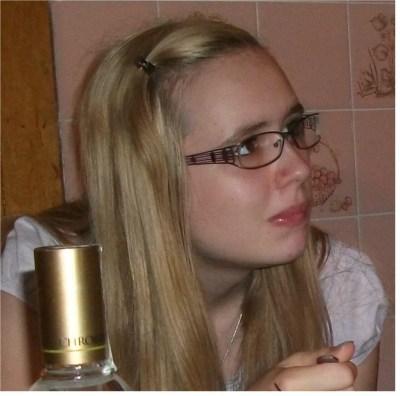
Growing up before my very eyes.
Once again I need to give credit to Julie Dawn Fox, whose idea the personal A-Z challenge is. Do any of you want to describe your homeland, or a hobby or enthusiasm, by way of the challenge? The details are all in the link or the banner below.

Share this:javascript:void(0);return false;








 restlessjo
You must be logged in to post a comment.