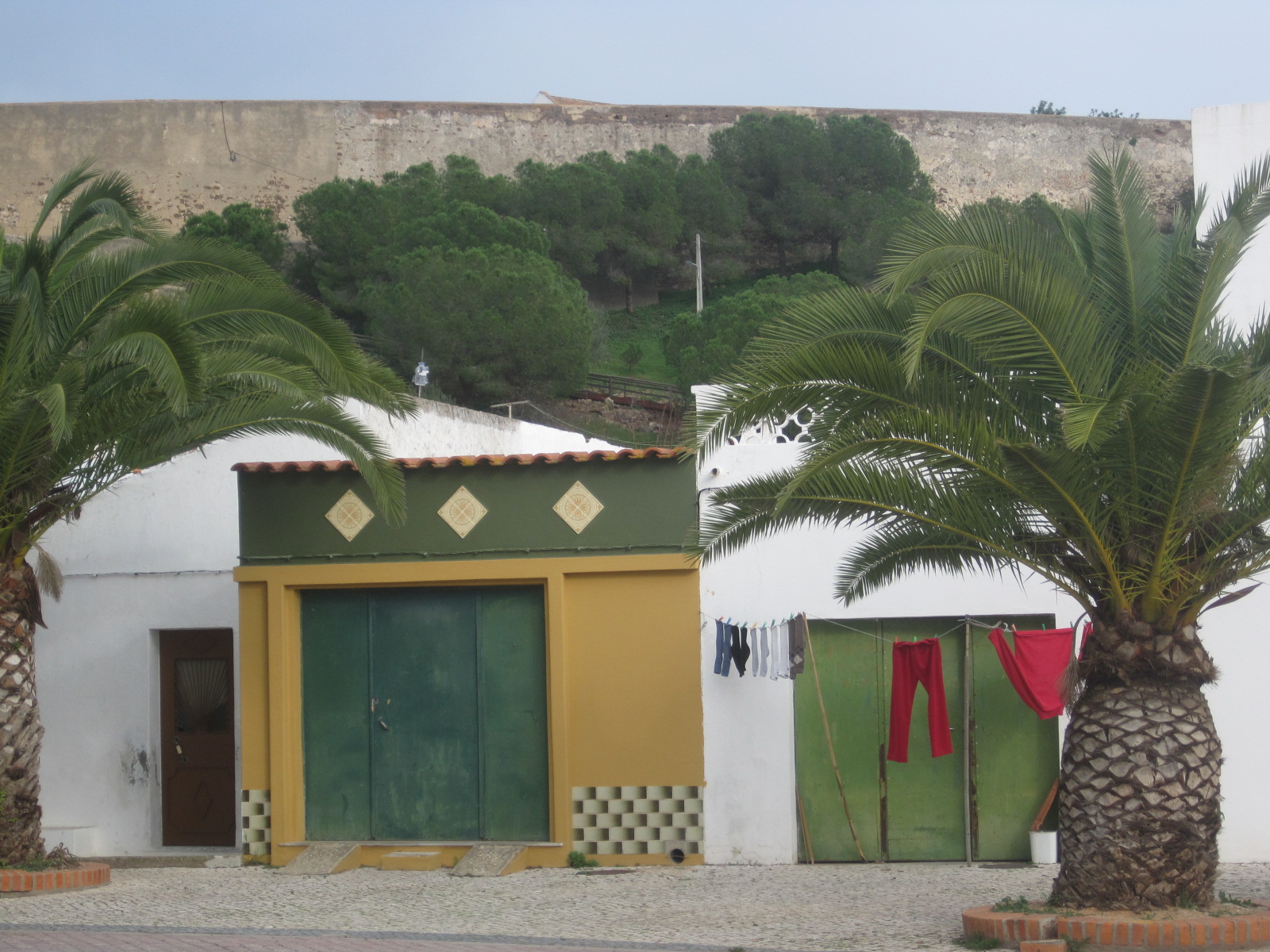
It’s an odd thing! Castro Marim is one of the most peaceful spots I’ve ever come across. Yet standing there, glowering, at the top of the hill, is a monumental castle. Part of the ramparts that once surrounded the town provide wonderful contrast in the domestic scene above.
Looking out from the battlements across the broad sweep of estuary, the town of Ayamonte, on the Spanish side of the River Guadiana, looks like many another. But as your eyes travel along the shore, you might spot the fortifications at the top of the town. This is the pattern all along this river, a natural boundary between Portugal and Spain. Like pugilists, ready to punch and counter punch, these two nations have squared up to each other down the years. But today, thankfully, all is peace.
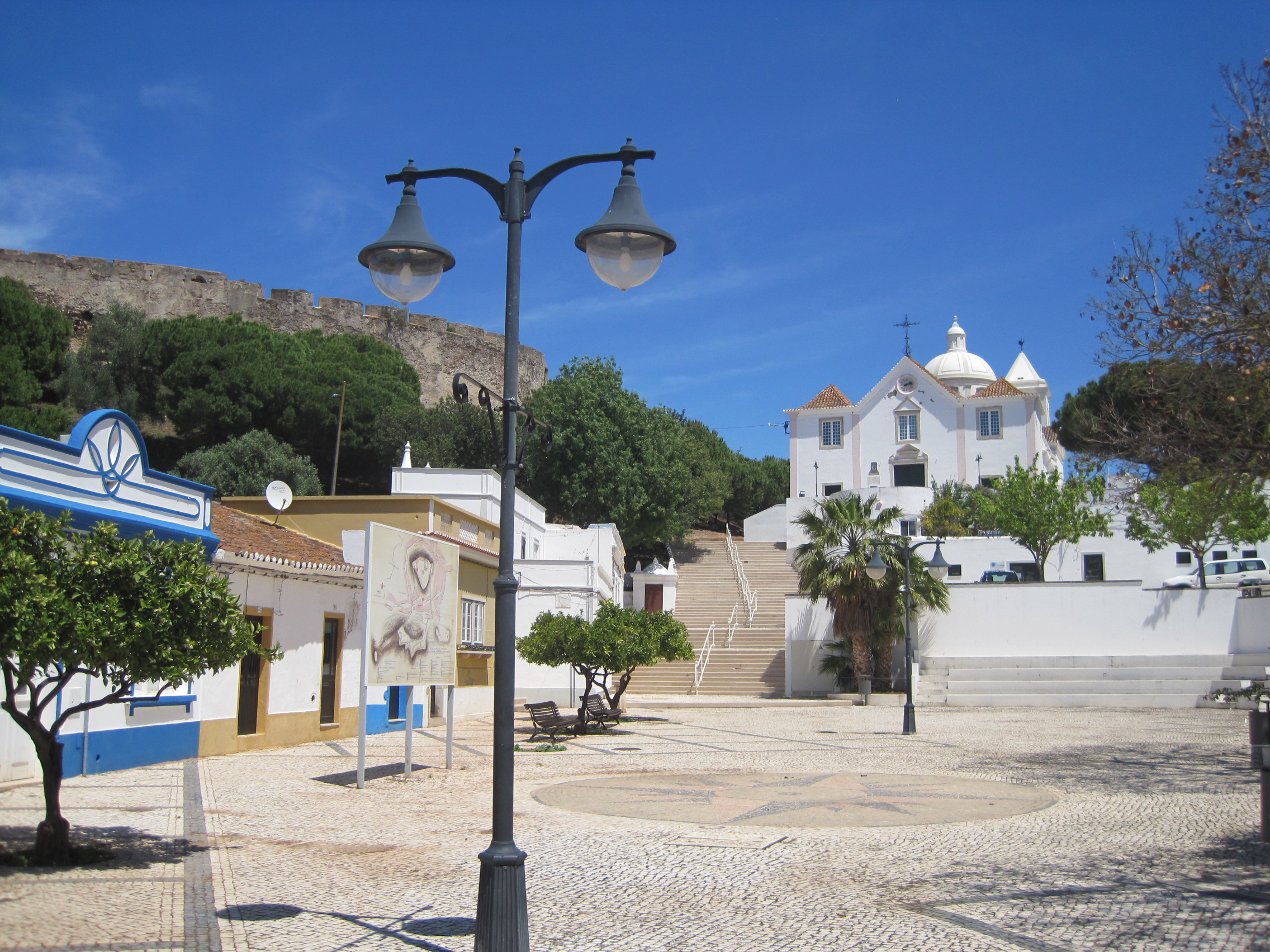
The castle walls and main church of Castro Marim
Castro Marim is a sleepy place, with one ancient street that straggles up towards the castle. The nature of the shoreline and the shifting sands of the Algarve has much to do with this. The first settlement here was back in the Neolithic period when Castro Marim was much closer to the sea than it is now, and surrounded by shallow waters. For thousands of years Castro Marim was a port that offered shelter to the ships that sailed up the Guadiana to collect copper from inland mines. Romans and Phoenicians settled here and such was its prosperity that Castro Marim was connected to Lisbon by a Roman road.
The castle and fortified wall that surrounded the medieval town date from the 12th century, when border disputes had become commonplace. Castro Marim subsequently became the headquarters of the Order of Christ, but went into decline when these were transferred to Tomar in Central Portugal. The castle fell into disrepair and was replaced by the fort of São Sebastião on a hilltop on the opposite side of town. The shifting sands did little to help the economy.
Today tourism has found Castro Marim in a small way. New housing surrounds the old town. The Architectural Museum in the partly restored castle tells of a fascinating past. But essentially the town is as self contained as ever, only rousing from its slumber each August for the Medieval Fair.
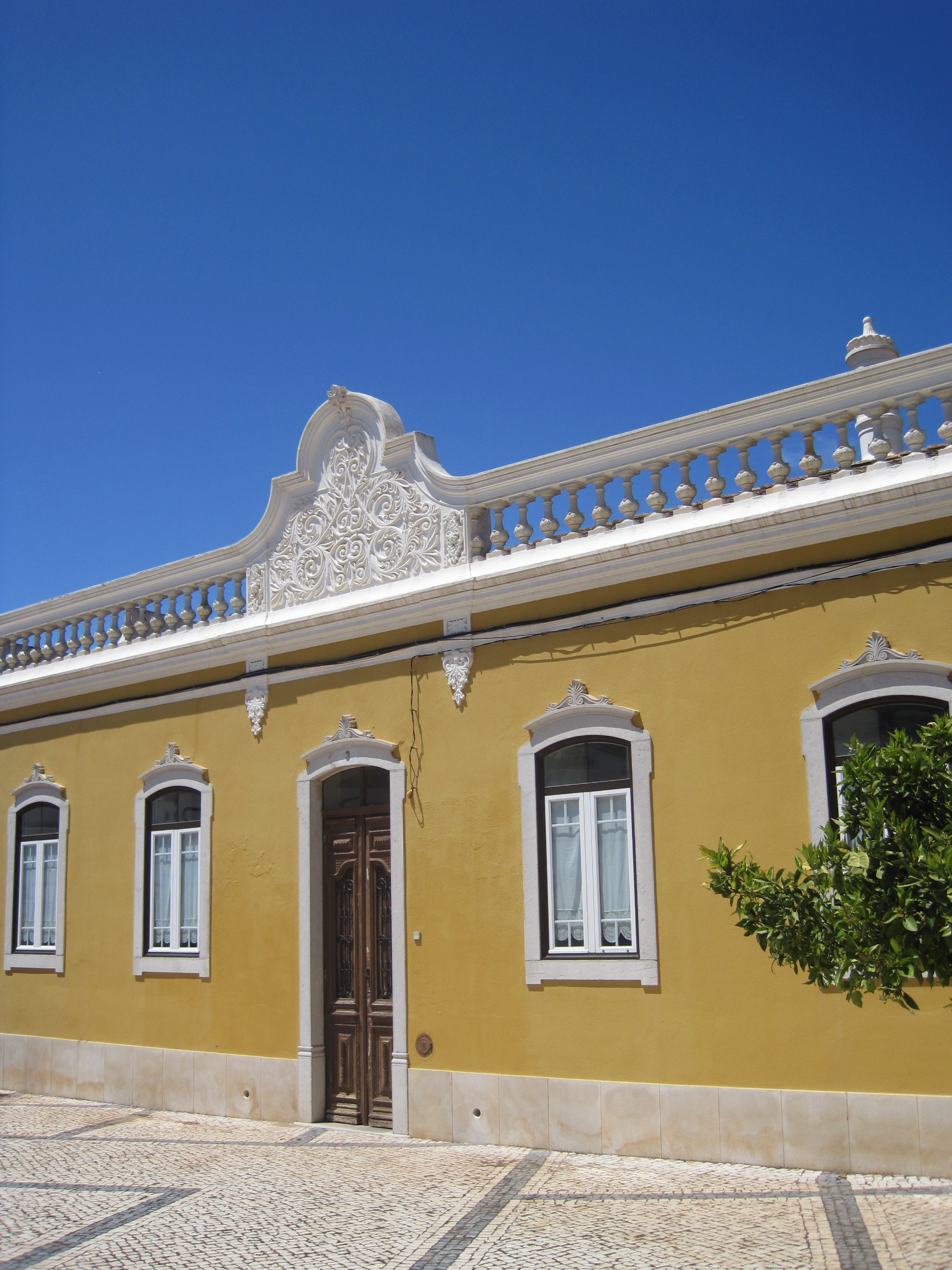
A typical townhouse


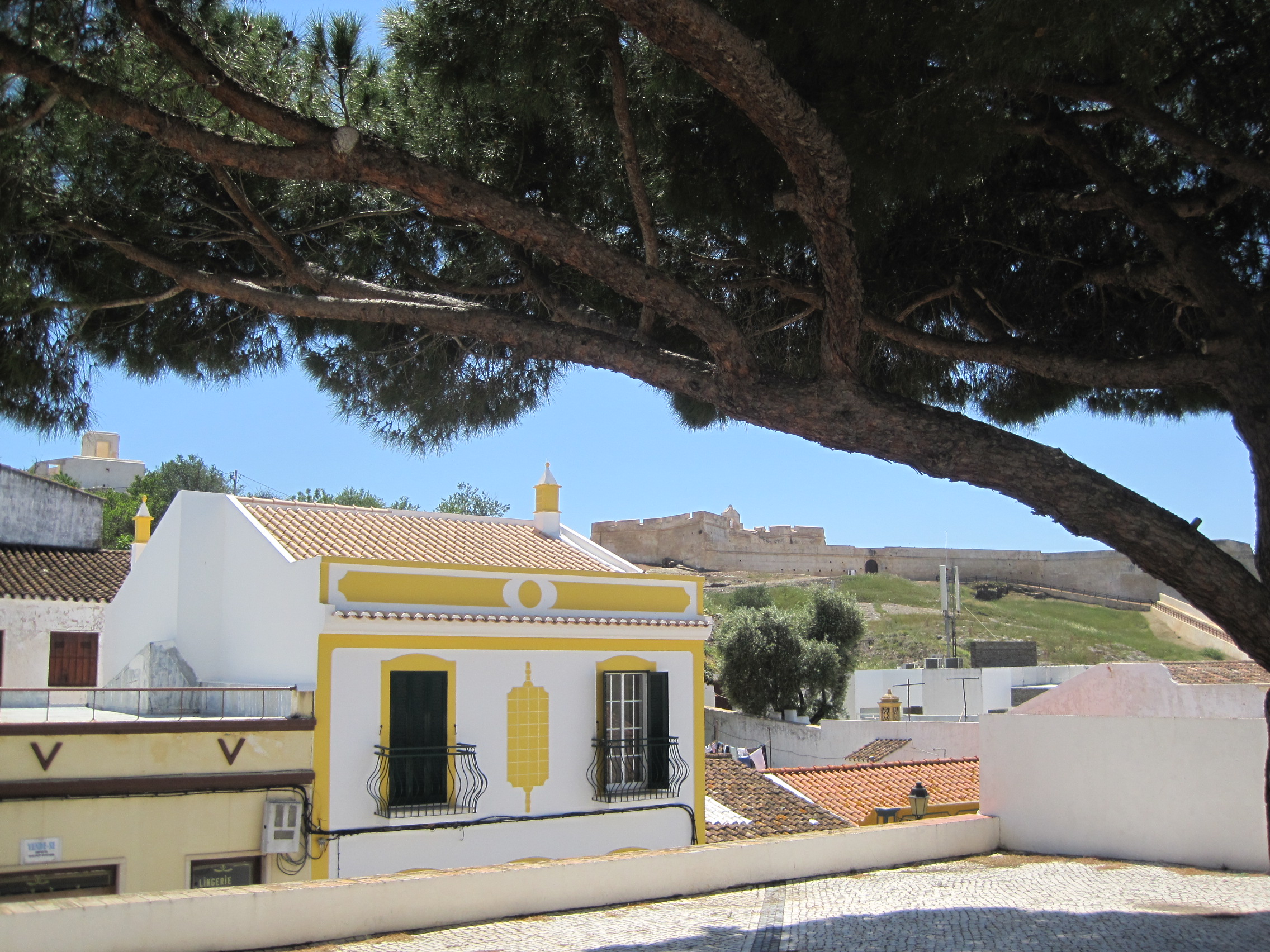
Looking across the rooftops to the town wall
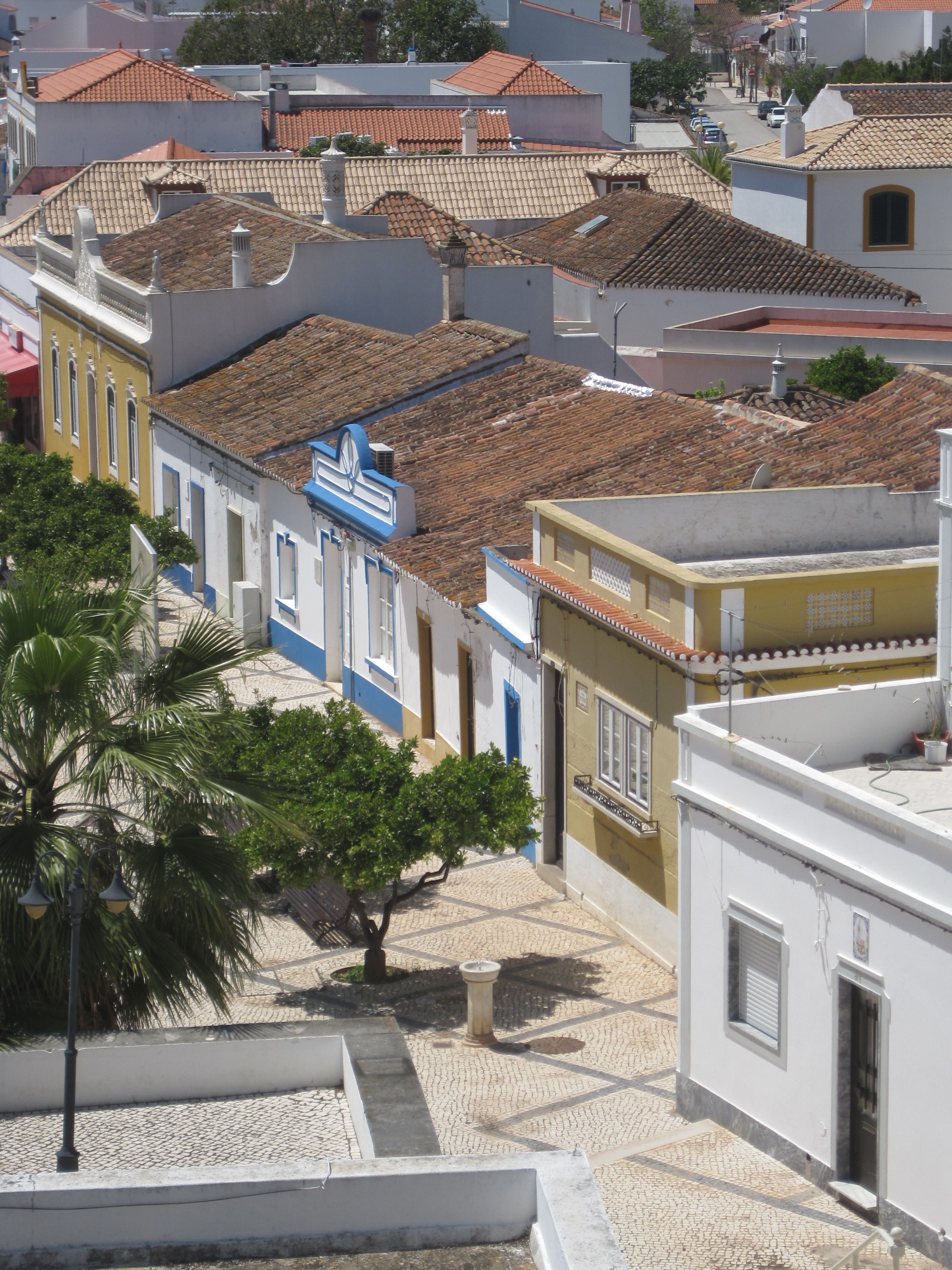
And down from the church steps
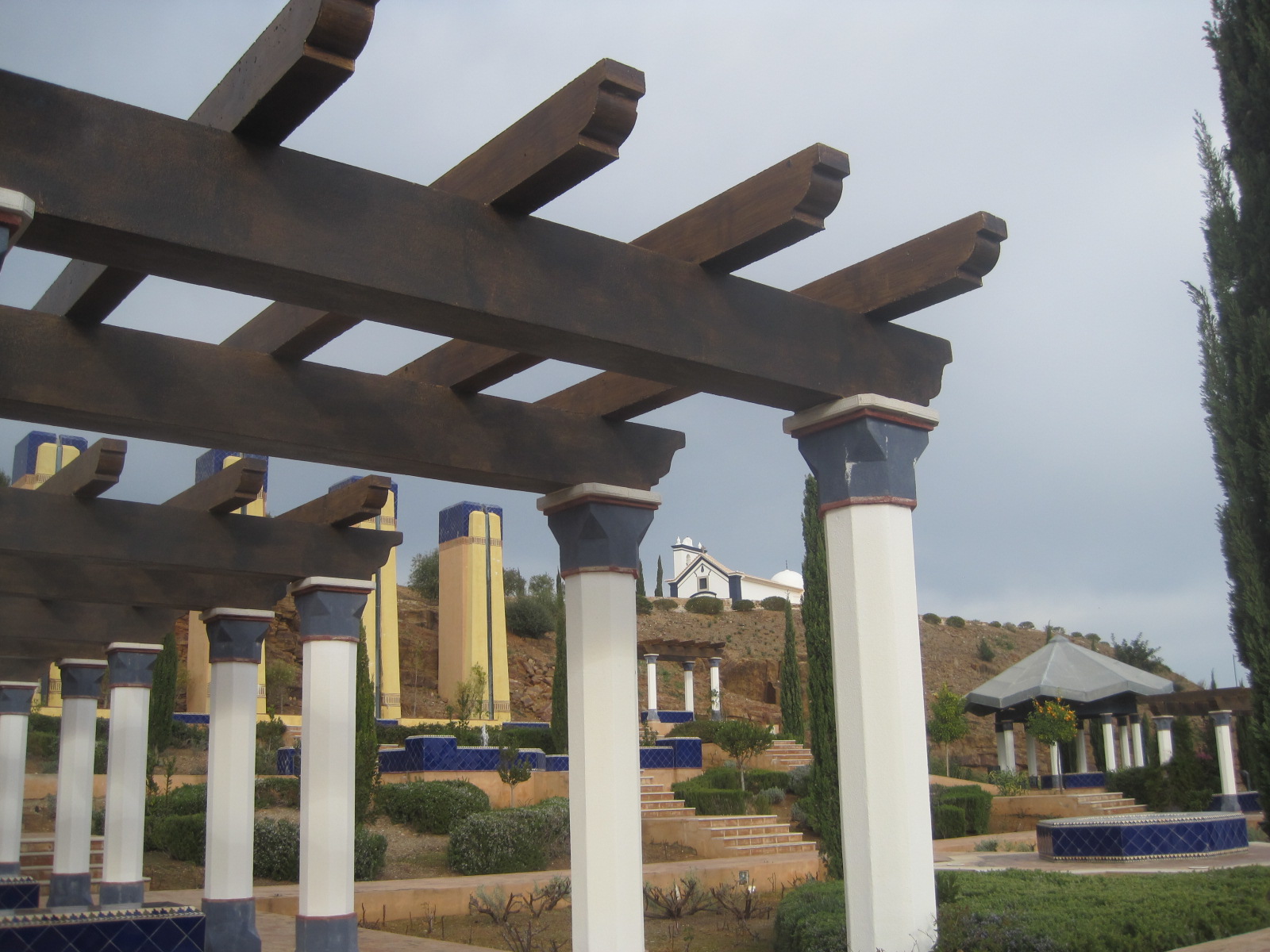
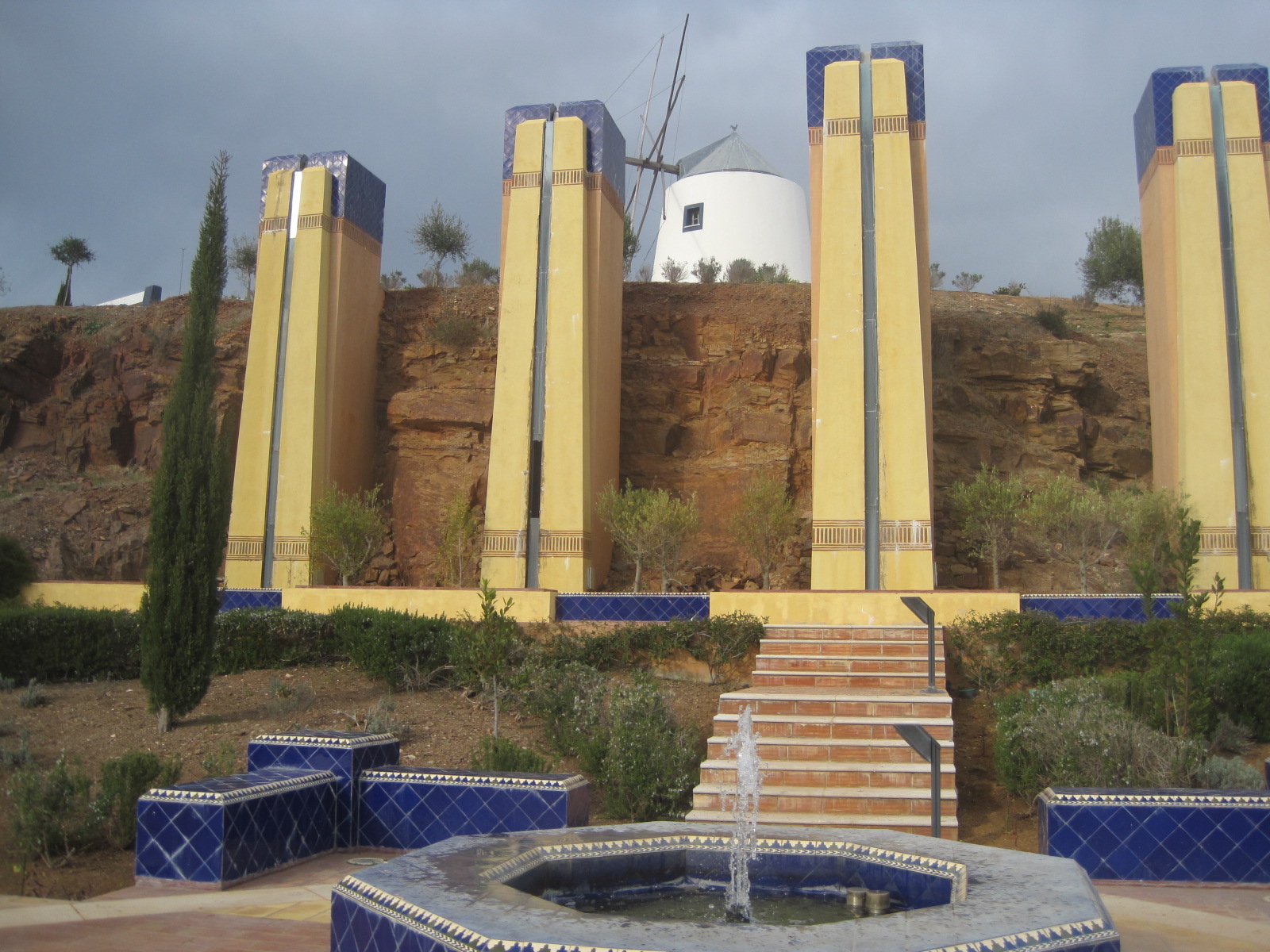
Gardens in the newer part of town, and the Chapel of S. Antonio
You may remember that I mentioned Castro Marim in A gift from the sea. You can gaze down on the salt pans of the nature reserve from the castle walls. And if you’re really lucky, you might catch a sight of the flamingos, stretching their wings in flight. For a better chance of seeing them, try my walk through the salt marshes.

Flamingos on the salt pans (courtesy of Mike Bradley)
Where to next? Maybe a tidal mill, or we could hop across the border. Or even join the smart set at Vale de Lobo. But not for golf. Come along and see.
 restlessjo
Nice place to visit. But I agree with Andrew Petcher: it seems a ghost city.
LikeLike
It does sometimes have that feel, Guiseppe, but I think they were all at lunch 🙂
LikeLike
Does anybody live there Jo? You did well to get all of those shots without anyone in the way!
LikeLike
They were all in the restaurants, Andrew 🙂
LikeLike
I like to get pictures without people but don’t always have the patience. Kim on the other hand will wait for ages for a place to clear to get the shot she wants!
LikeLike
Jo, you always take me on the most fascinating and beautiful tours hon. What gorgeous and colourful houses and scenes! Stunning shots too. Thanks for the lovely tour and for sharing hon. 😀 *big hugs*
LikeLike
Your kind of place, for sure, Sonel. Not too many folks! 🙂 Hugs in return.
LikeLike
Sounds like heaven Jo. 😀 *hugs*
LikeLike
I hope Castro Marim maintains it’s sleepy, peaceful feel until I get the opportunity to visit. Your photographs captured all it’s charms!
LikeLike
It has plenty, Elisa. I should have climbed up and got some shots from the castle walls but energy was a bit low after that walk. Sitting at a cafe seemed a better option.
LikeLike
A typical Portuguese town – don’t think I’ve been there yet, only driven past it. Next time I will definitely stop to take a look.
LikeLike
It’s a nice one, Cath. Quite a lot of character if you poke about a bit (as you say, like a lot of Portuguese places) 🙂
LikeLike
I’ll be doing a lot more ‘poking about’ later this year as we are moving back! Yippee, can’t wait! 🙂
LikeLike
Away from Singapore smog! Though it looks a very pretty place. Your husband’s got a job in Portugal? 🙂
LikeLike
Looks like a very peaceful spot, Jo. Beautiful pics, especially the rooftop one. 🙂
LikeLike
Thanks, Ad 🙂 Hard to know where the people get to, it’s so quiet. Then again, it was around lunch time.
LikeLike
You exhausted me walking through the salt marshes in the last post! Lordy, I spied the laundry and got confused thinking I had to walk backwards! Chuckle. Wonderful images of the little town, Jo! I always like the tone of your images. Positive and light regardless of the subject. I find that interesting and very appealing as well as causing your travel images to flow well together.
LikeLike
Thanks a lot, George! I exhausted myself on the last one, too 🙂
The photos were taken on two different occasions. The skies were a little grey on our January visit, so I compensated with some from a previous visit. You don’t go for long in the Algarve without seeing a blue sky.
LikeLike
So pretty Jo! I love the flamingos!
LikeLike
Thanks, Julia. 🙂 We were captivated by them. Never seen so many in one place!
LikeLike
It’s a very pretty place per you nice pictures, Jo. And it looks sleepy too.
But I wouldn’t trade if for where I am and I don’t think you should either. 🙂
LikeLike
You wouldn’t have a spare “R” key would you? 😉
LikeLike
I expect you’ve got sunshine, Jim? It’s a help 🙂
LikeLike
Fascinating!
LikeLike
Glad you like it, Dawn 🙂 I have some quirky windows for you tomorrow.
LikeLike
Look forward to it!
LikeLike
Oh Jo, you had me from the first photo. I’m ready to book a trip! By the way, we’re going to be 16 degrees tomorrow morning…I’ll think of your photos as I walk from the parking deck to my office downtown. 🙂
LikeLike
The temperature’s all over the place isn’t it, Jill? It wasn’t much more than 16 when we were in the Algarve- up to about 20C. That’s fairly normal for January 🙂 Fine if the skies blue (which it often wasn’t, but we don’t find much cause for complaint)
LikeLike
I was struck at how spick and span the town looks, despite its slumbering economy – that’s inspiring to me – and how pretty it is – lovely visit, Jo. 🙂
LikeLike
Hi Meredith! Hope your new life’s agreeing with you 🙂
It’s one of those places where when you do see people they’re busy sweeping their step.
LikeLike
What a lovely ancient treasure….so much history under those cobbles. My favourite sort of place Jo.
LikeLike
It’s a place to sit on a bench and daydream, Seonaid. 🙂
LikeLike
Amazing place thanks for sharing your world 🙂
LikeLike
It’s a lovely world to share, isn’t it, Eunice? (I’ll share the snow, too, if we get any 🙂 )
LikeLike
🙂 Awesome! We were close to getting nailed last night but guess what IT MISSED US!!!! Very happy today!
LikeLike
Just lovely!
LikeLike
Thanks, Cindy 🙂
LikeLike
It looks like a very tranquil spot now, love that town house! And is that a windmill I spy?
LikeLike
It is, Jude 🙂 I think it’s an original but I’m not certain.
LikeLike
Beautiful shots of beautiful Portugal. The Lady of Fatima door handle reminded me of how important Lady Fatima is in Portugal. Have you found that in your time there?
LikeLike
Thanks, Sue 🙂 The door handles are everywhere. Religion seems to come naturally in this part of the world, doesn’t it?
LikeLike
That is for sure! In Lisbon it seemed woven into the very fabric o the place.
LikeLike
Oh boy! I love this place. I keep dreaming of moving to Portugal, Jo, except I’d be near Sintra! A sleepy town, with salt flats and flamingos, yes, I could love to live here. Dreaming….. 🙂
LikeLike
I’m fine with you living in Sintra, Cathy. I can pop up and see you there when it’s too hot in the Algarve in Summer (and of course you can make return visits 🙂 )
LikeLike
That all sounds so wonderful, Jo. You know I would adore that life! 🙂
LikeLike
Hi Jo
We spent many happy holidays in and around Lagos – Your words and pictures capture the special and unique feel of a beautiful part of Portugal.
Regards
Dan
LikeLike
Hello again, Dan 🙂 The Eastern end has a flavour all its own due to the salt marshes of the Ria Formosa, but I know what you mean. There’s definitely an “ambience” to the Algarve. Thanks for your kind words.
LikeLike
This place is very beautiful and clean.
BE ENCOURAGED! BE BLESSED!
LikeLike
It’s a lovely spot, Francine. 🙂 Thanks for your comment.
LikeLike