Free walking tour

Walking with Aleksandra

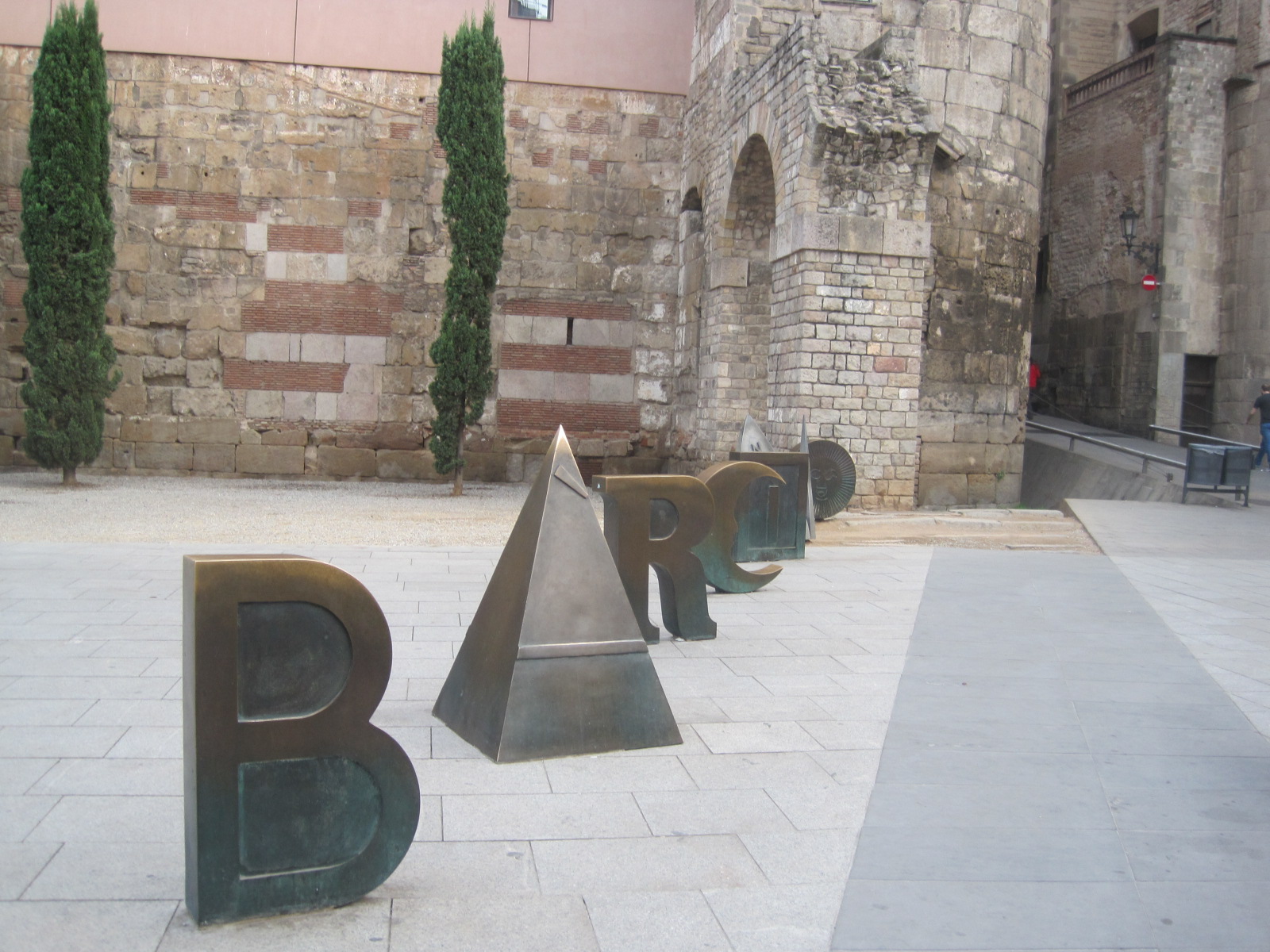
The letters spell Barcino, the Roman name for Barcelona

The letters spell Barcino, the Roman name for Barcelona

Something I love to do, in a new city, is to find a local to take me on a guided walk.  I did this very successfully in Porto, where I first came upon the concept of free guided walking tours.  Although I avidly read the guide books before I go, trying to see everything with your nose glued to a book is no way to experience a city.

Nor am I known for my sense of direction. (I’m the one on the street corner, turning the map around and around, with a puzzled expression on my face) So I was more than happy to meet with Aleksandra, on the steps of La Seu (Cathedral) of Barcelona, for a tour of the Gothic Quarter.  A slim, dark-haired young woman, she wore the promised orange vest till we were all assembled, a group of about 10. This included a young Russian couple from Moscow, and an American with his British partner and children.

Aleksandra is originally from Bosnia, but was brought up in Australia, and had spent the past 5 years living in Barcelona.  Her love of this “crazy city” is evident.  Swiftly we dived into the history of Barcino, as it was named by the Romans, and then we were off through the winding maze of streets.
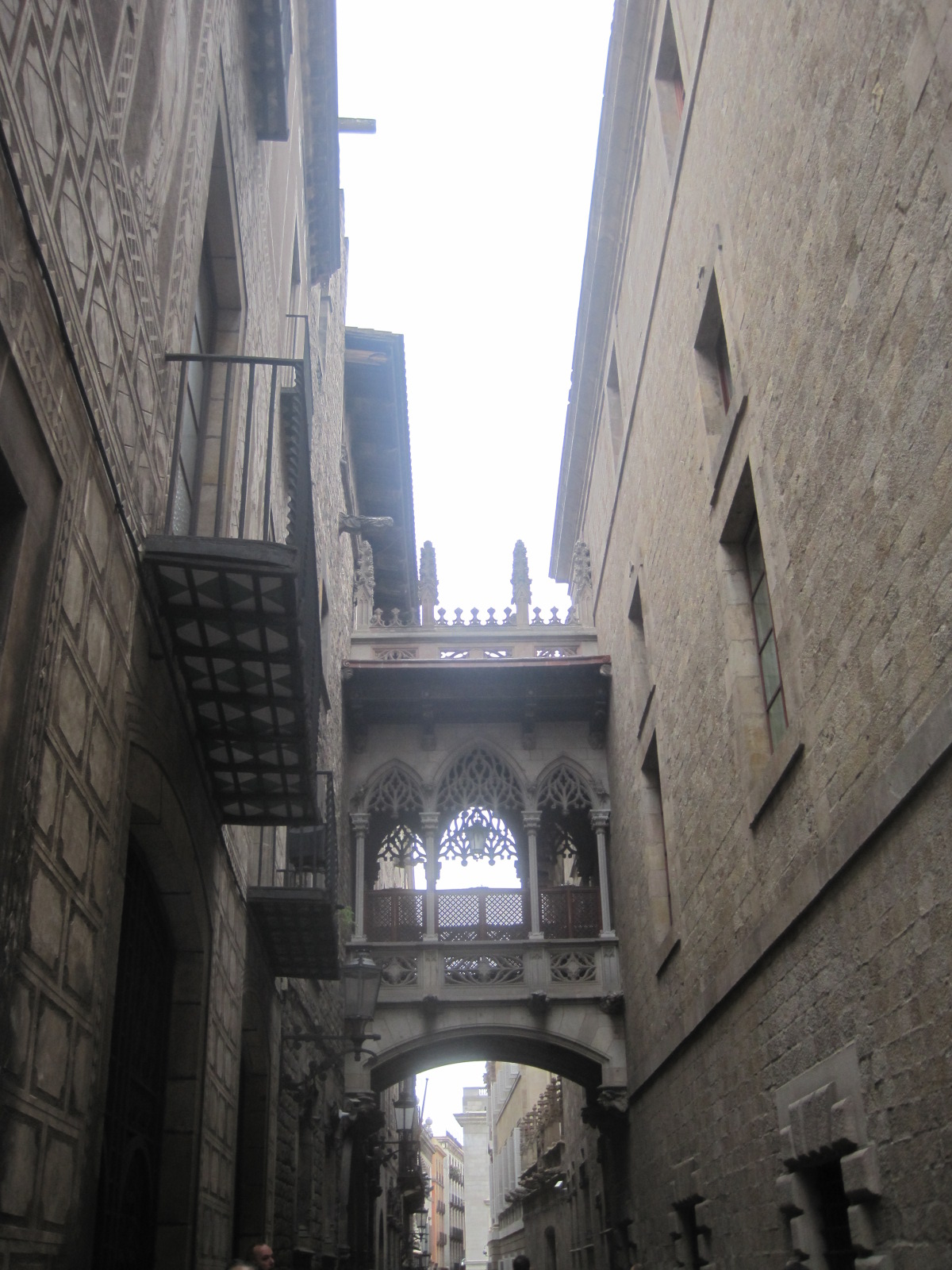
Within the city walls, i looked up.

Within the city walls, I looked up.

The sky was grey and a little threatening, but I was determined not to have my enthusiasm for Barcelona dampened.  Solid slabs of grey wall enclosed me, and then a fairytale “bridge of sighs” appeared overhead.  I seemed to be constantly looking up, even when we delved deep into the amazingly preserved 2000 year old Roman Temple of Augustus.  I had read about this, but doubt I would have found it on my own.
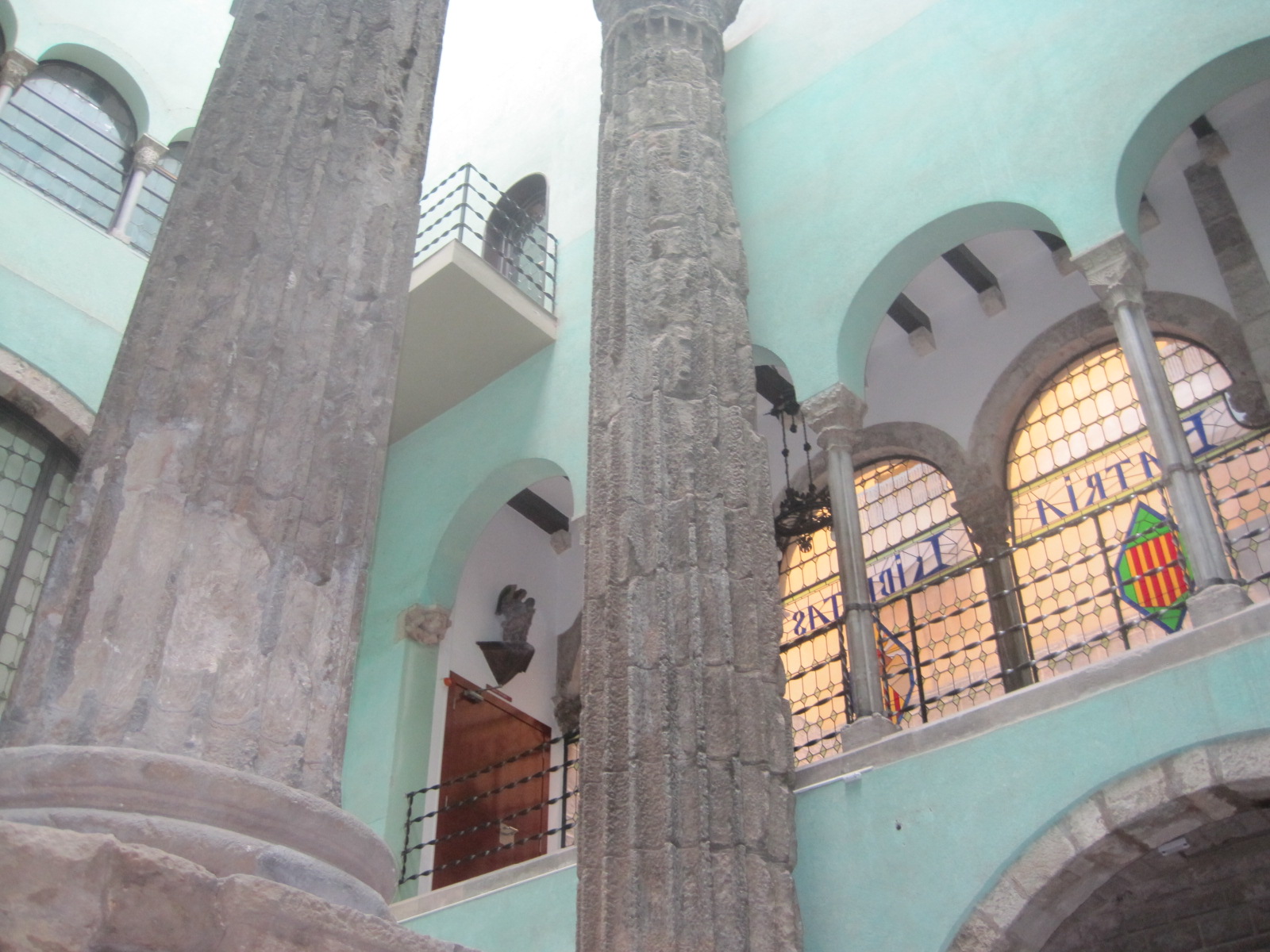
The ancient Roman Temple of Augustus

The ancient Roman Temple of Augustus

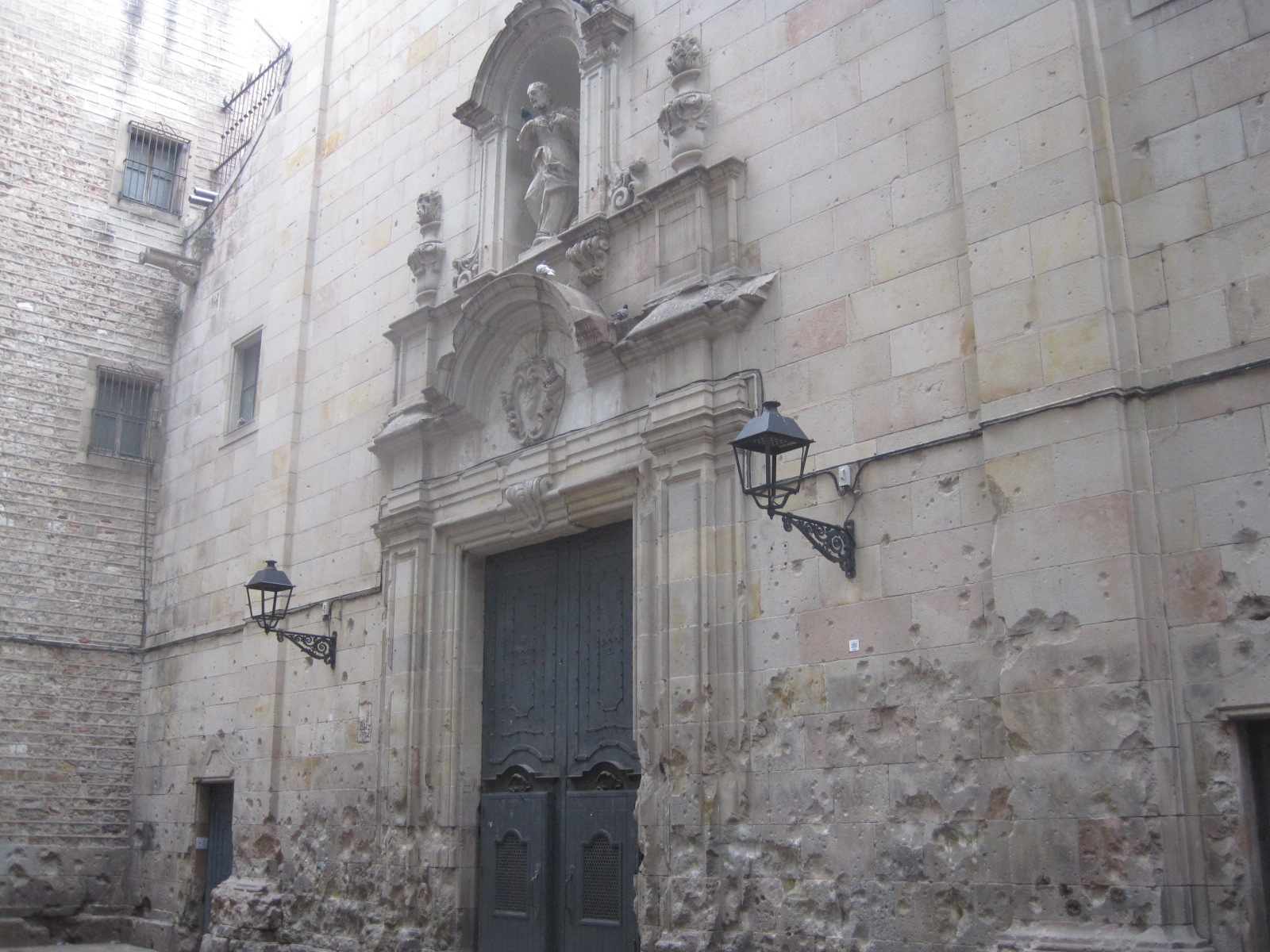
We were treated to tales of Wilfred the Hairy, and the significance of the national flag was explained, with it’s 4 red stripes of “blood”.  Casa de l’Arcadia, the Archdeacon’s House, had the prettiest little courtyard, and a legendary postbox.  Placa de Sant Felip Neri was a peaceful spot, disturbed only by its trickling fountain, but the bullet wounds in the walls of the church told a different story.  And then there was the brutal tale of poor 13 year old Eulalia, Patron Saint of Barcelona.  Being rolled down the street in a barrel of knives was just one of the misfortunes which took her to a gruesome early death for her faith.
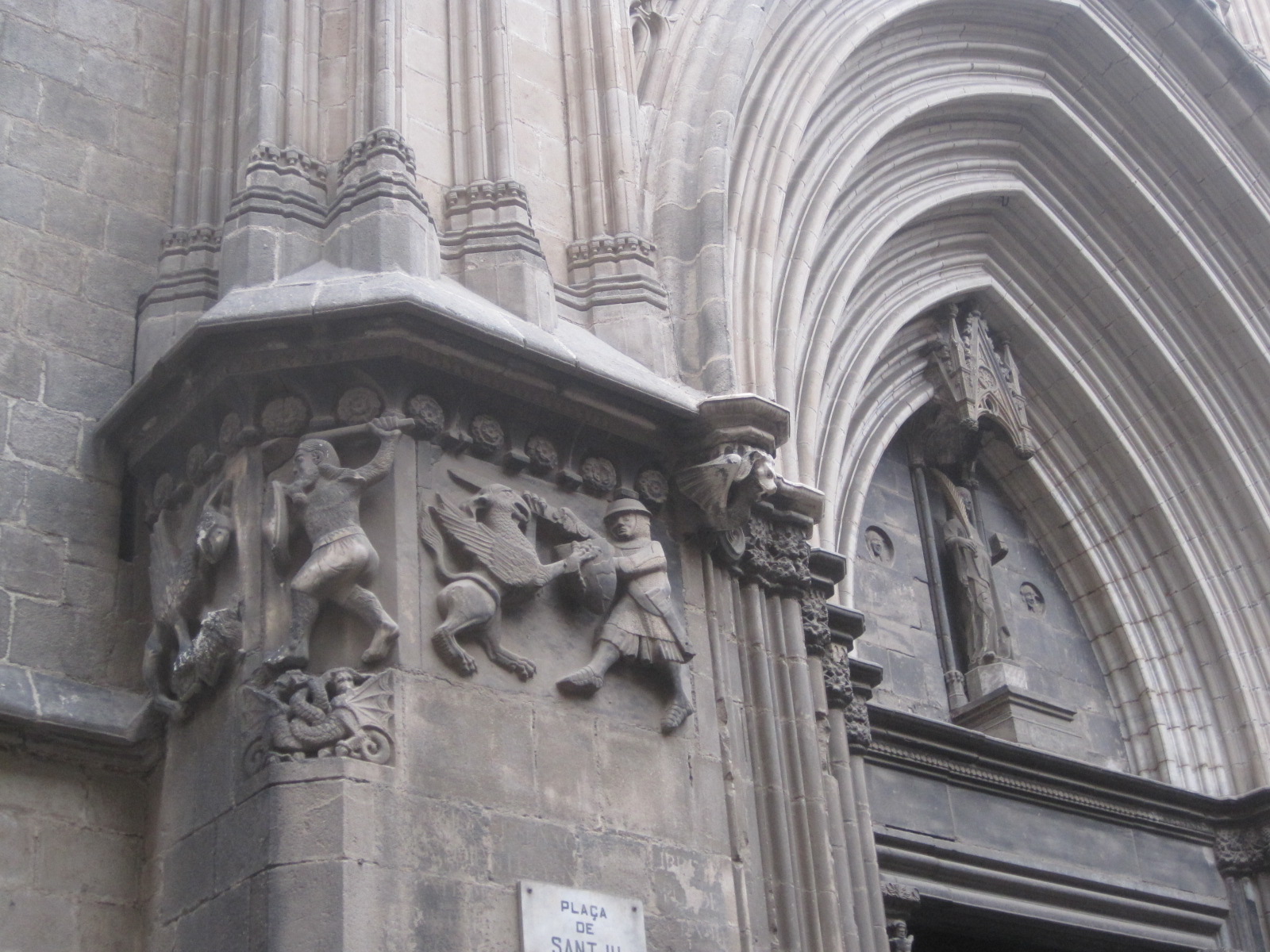
Wilfred the Hairy, and Jordi, fighting the dragon

Wilfred the Hairy, and Jordi, fighting the dragon

Tiles inside the Casa de l'Arcadia's courtyard

Tiles inside the Casa de l’Arcadia’s courtyard
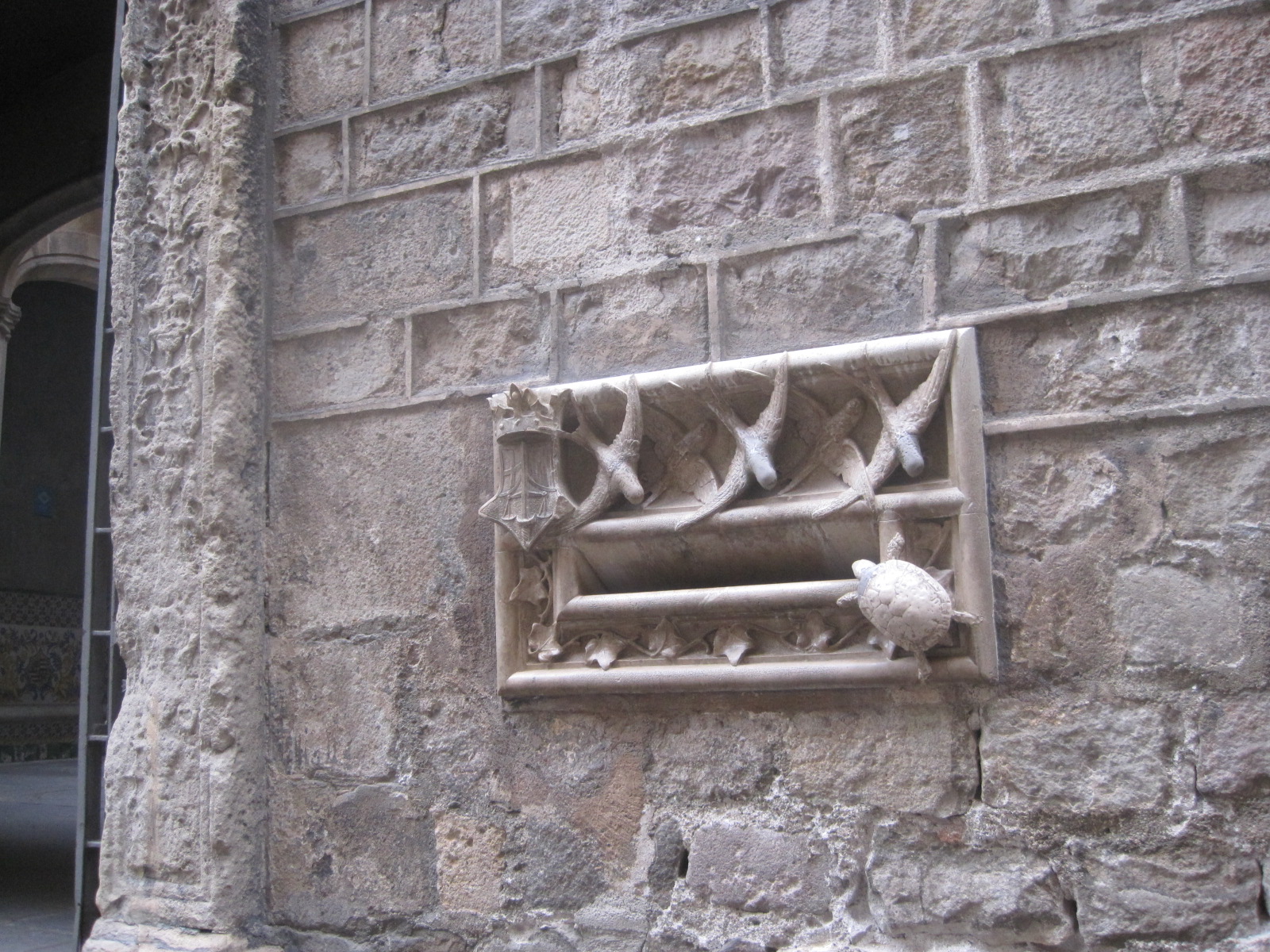
The Archdeacon's letterbox- stroke the turtle for luck!
The Archdeacon’s letterbox- stroke the turtle for luck!

The battered church walls in a peaceful space.

The battered church walls in peaceful Placa de Sant Felip Neri.
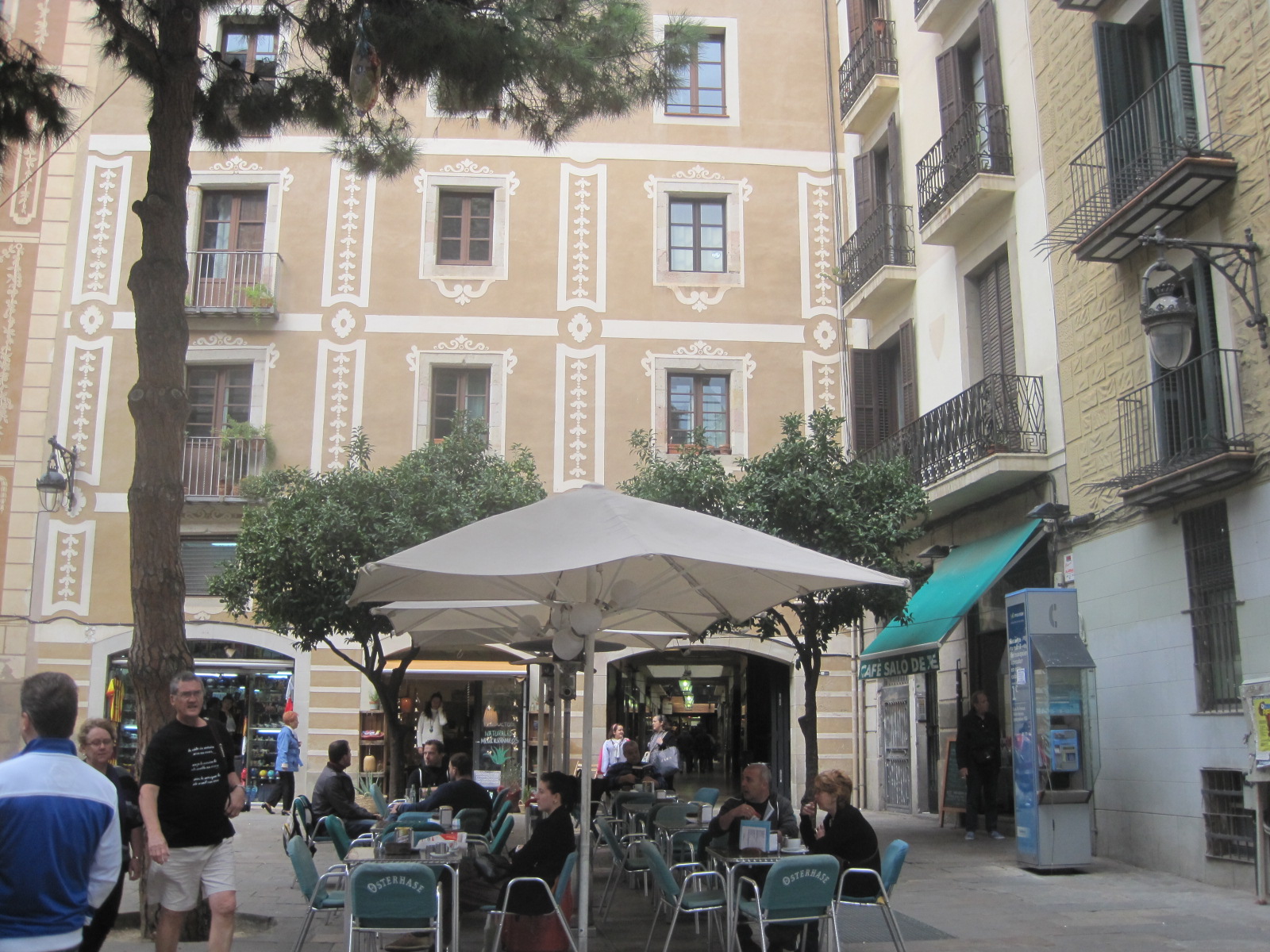
One of many pretty squares

One of many colourful squares

The shrine to Santa Eulalia
The shrine to Santa Eulalia

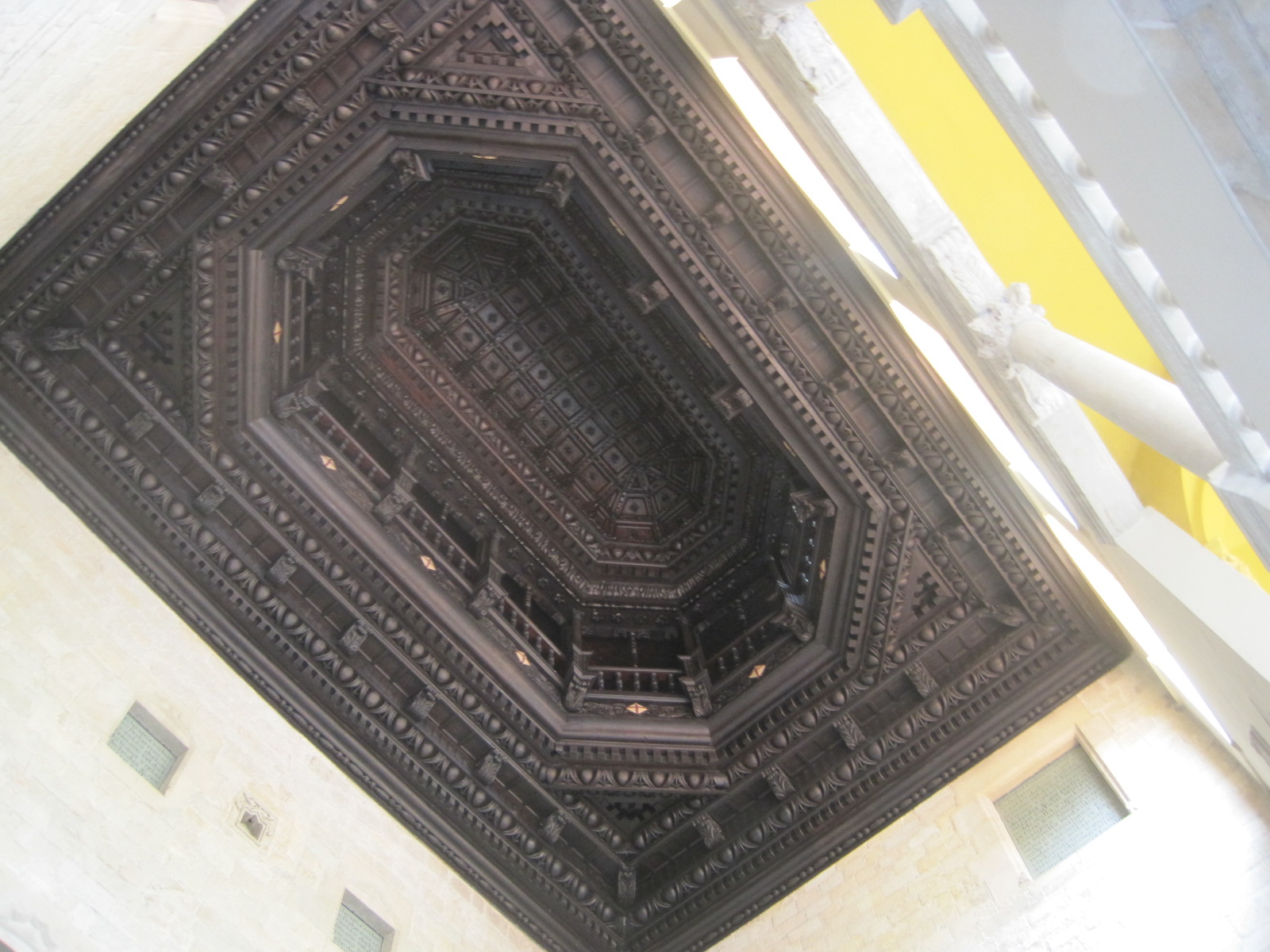
Fabulously constructed tiered wooden medieval ceiling

Fabulously constructed tiered wooden medieval ceiling

I hope you can tell that I was not bored throughout the walk, and I hope not to bore you.  Placa Reial, with its famous Gaudi lampposts, I could certainly have found on my own, but I thoroughly enjoyed Aleksandra’s take on the city.  Especially I liked the Placa del Rei, the King’s Square, with its imposing medieval architecture.

We ended up back at the Cathedral steps, and were given a list of Aleksandra’s recommendations of places to eat and drink.  Some had been pointed out to us en route, and I knew that a beeline was going to be made for Caelum’s cake shop.  Myself I had a date with El Quatre Gats, imagining Picasso sketching in a back room.  And then a tour of the spectacular Palau de Musica Catalan.
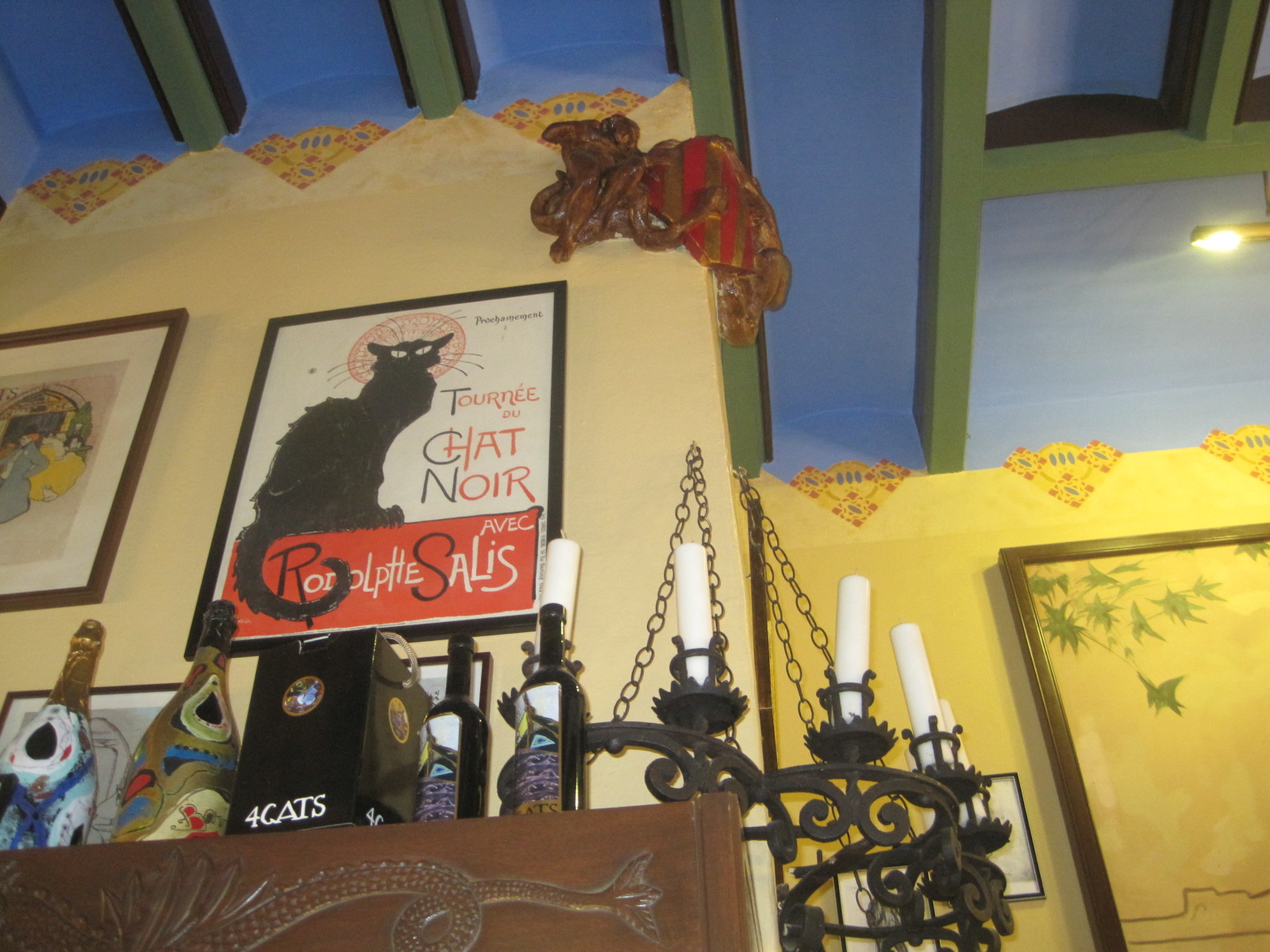
El Quatre Gats

El Quatre Gats

If you find yourself in Barcelona in the near future, I wouldn’t hesitate to recommend Orange Donut Tours.  The link will take you to Aleksandra’s website, and she also has a Facebook page.  You can tip her as much, or as little, as you like, once the tour is over.  Me, I wish I was starting it all over again!

P is for Porto

You knew it was coming!  The final post on my visit to Porto.  Just one more time I’m going to take you there, and try to capture the impact it had on me.

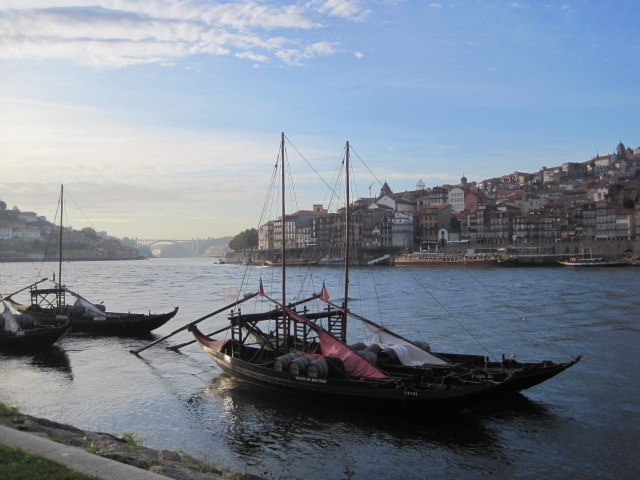
Looking out to the river mouth (Foz do Douro)

I’m not sure if it’s because it’s a northern city that I felt such an affinity with Porto.  At home I’m used to the north/south divide and the differing attitudes of the two.  Being “from the north” confers a kind of backward status, despite us having some beautiful cities of our own.  I felt a little of the same in Porto.  Like us north-of-Englanders, Porto is far from feeling inferior.  It’s proud of its past, and fighting for its future.

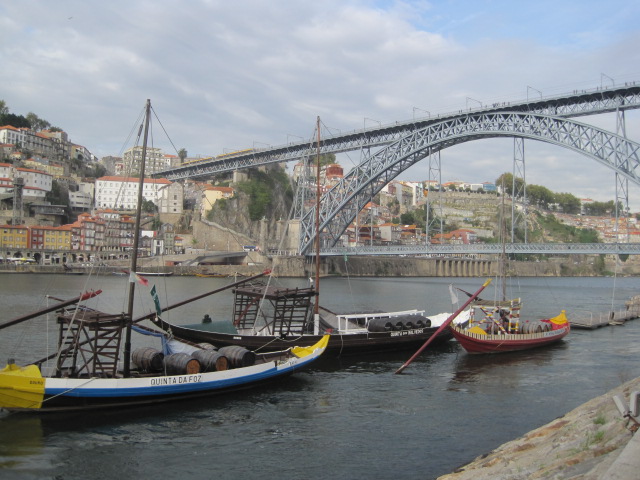
Barcos rabelos below Dom Luis I Bridge

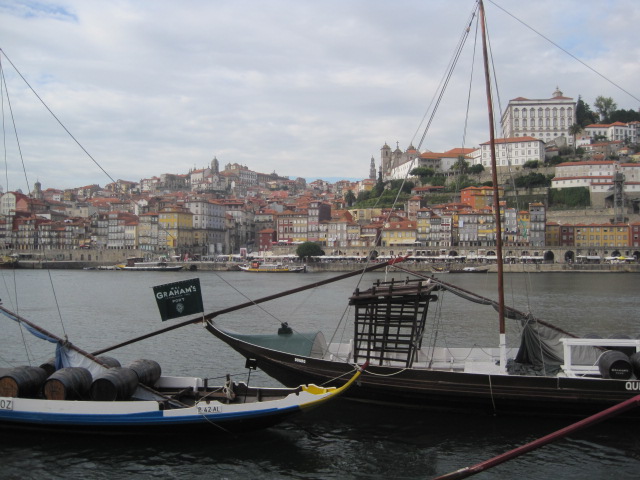
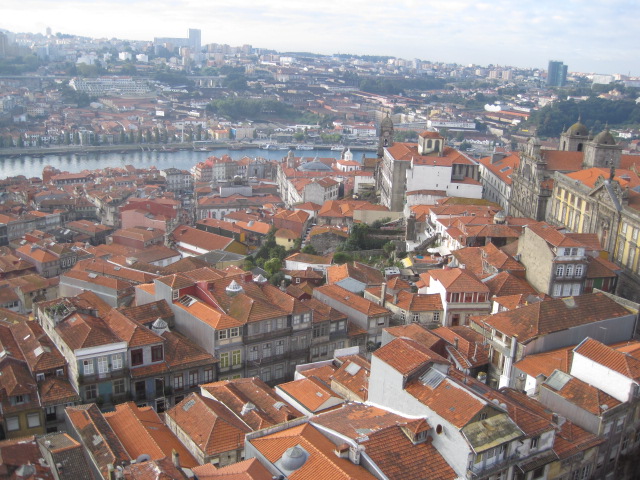
The lovely Porto skyline

In Roman times, the twin cities at the mouth of the River Douro were known as Portus, on the right bank and Cale, on the left.  During the Moorish occupation, the entire region between the Minho River, to the north, and the Douro, was called Portucale.  When Afonso Henriques founded the new kingdom in the 12th century, and became its first king, he named it Portucalia after his home province.  So you see, Porto and the Douro are an integral part of the Portuguese nation, and have every right to be proud.

They’re quite feisty too.  Porto is known as A cidade invicta, “the invincible city”, because of its unparalleled resistance to Napoleon during the Peninsular Wars.  In modern times too, the city was the centre of opposition to Salazar’s right-wing dictatorship.

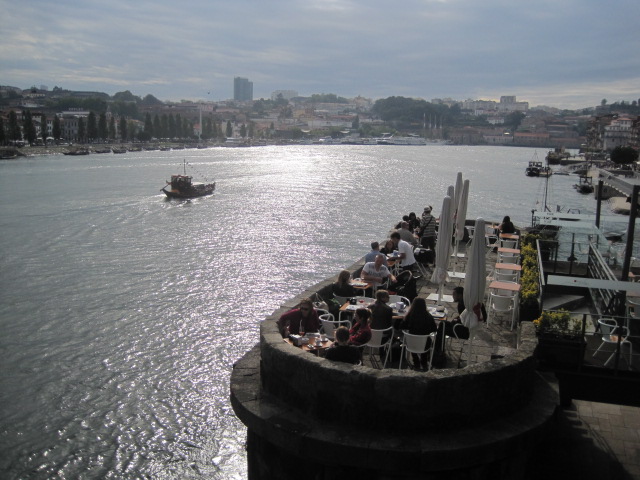
You can’t get much closer to the river than this cafe

One of the best things I did in Porto, and I would recommend it to anyone relatively fit, was the free walking tour with Pancho Tours.  I had in mind that the person we would be meeting beside the Dom Pedro IV statue in Praca da Liberdade would be a guy sporting an orange t-shirt emblazoned with the company logo.  Wrong!  A small, dynamic, curly haired bundle of fun by the name of Iris was our guide.  She proceeded to entertain and enthrall 24 of us multi nationals for two and a half hours!

Our tour group, captured by my husband, Michael

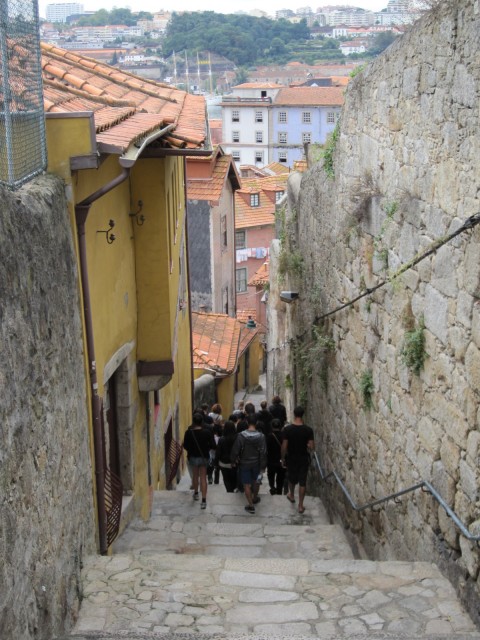
As you can see from the photo, there are many ups and downs involved in a walking tour of Porto.  It wasn’t an historical tour, but gave you a real insight into the city and an appetite to come back and see more.  At a brisk pace most of the important sites were pointed out, with essentials like the cheapest places to eat good Portuguese food, and where to buy the best cakes. (everywhere!)  Believe me, in Porto you’d soon burn up the calories.

One of the high points of the tour (literally) was the upper tier of the Dom Luis I Bridge.  The Metro rumbled past perilously close behind us, but the views were staggering.

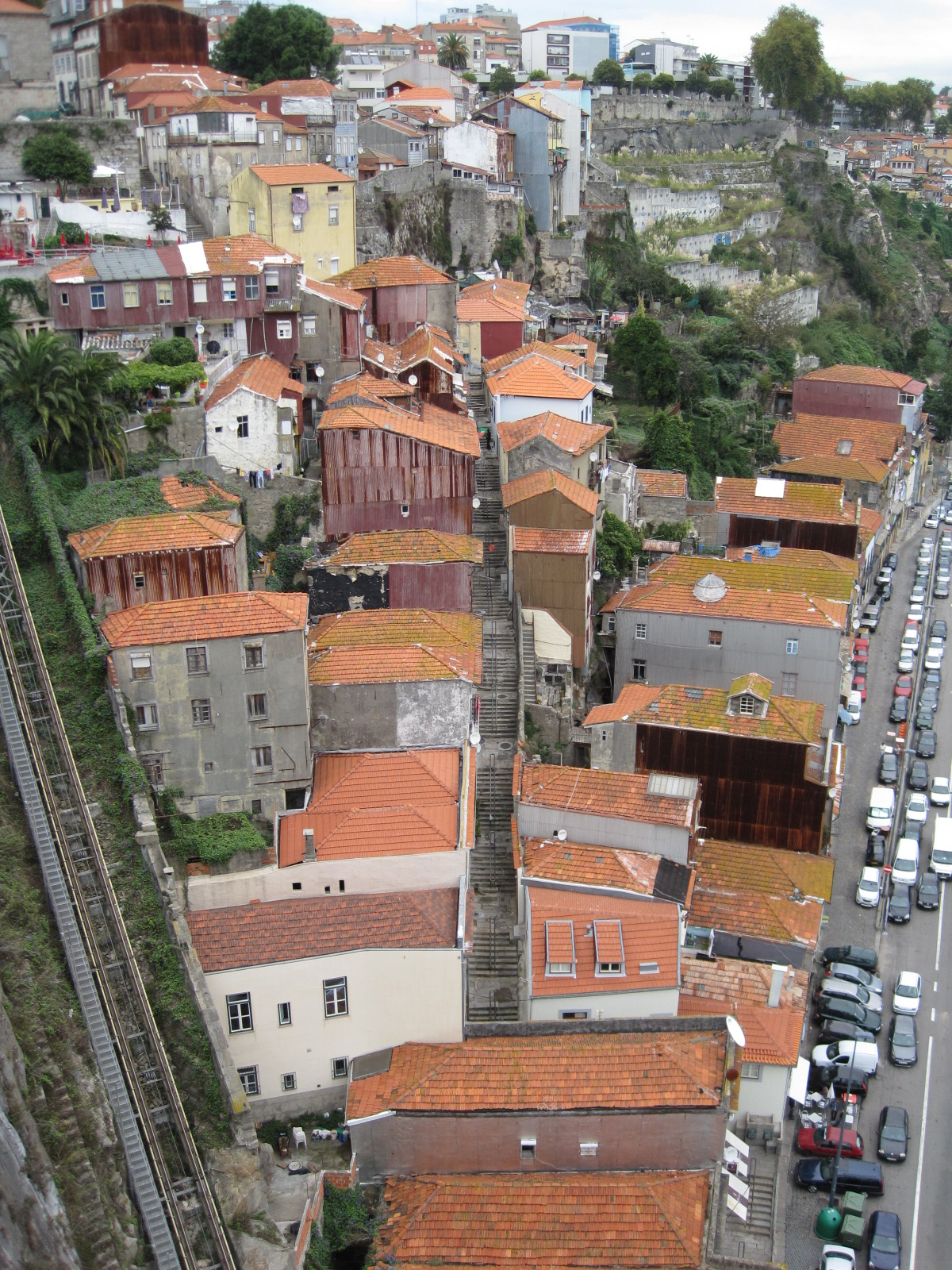
Michael’s again. The steps or the funicular?

We wound our way down the steps to the quayside, and, tour over, indulged in a meal in Iris’s company.(our feet needed a rest and it seemed a good opportunity to try the Francesinha– a chunky spicey meat-filled toasty smothered in cheese and served in a piquant sauce)

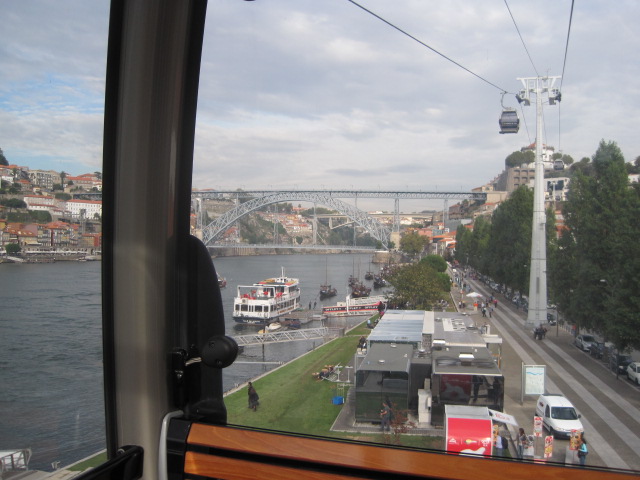
Riding the cable car over Vila Nova de Gaia

Back on my feet again, I couldn’t resist a ride in the cable car over on the Gaia side of the river.  I love a bird’s eye view!  My only complaint, the ride was over too quickly.   I compensated later by riding the funicular up to the clifftop.  It’s only as it glides into the old city walls that you realise how solid they once were.

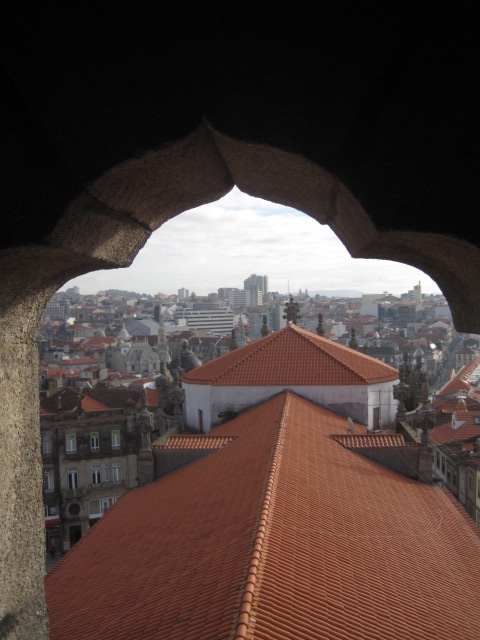
Still chasing views, and with a fresh pair of legs the following day, I undertook the 225 steps to the top of the Torre de Clerigos.  This six-storey granite tower was built in the 18th century as a landmark for ships coming up the Douro.  Well worth the climb!

The tower has some interestingly shaped windows

The view from the top

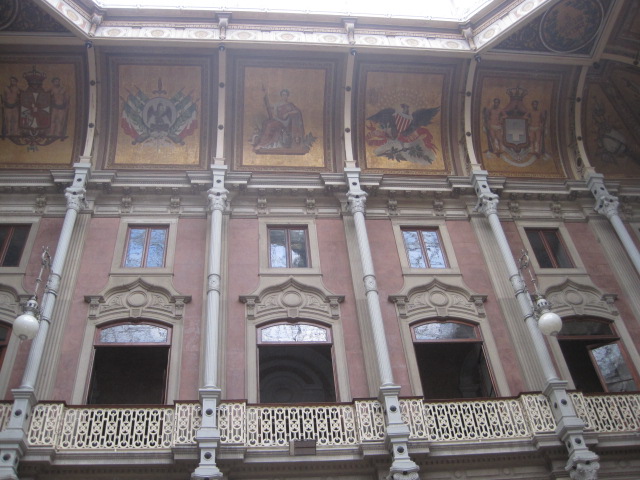
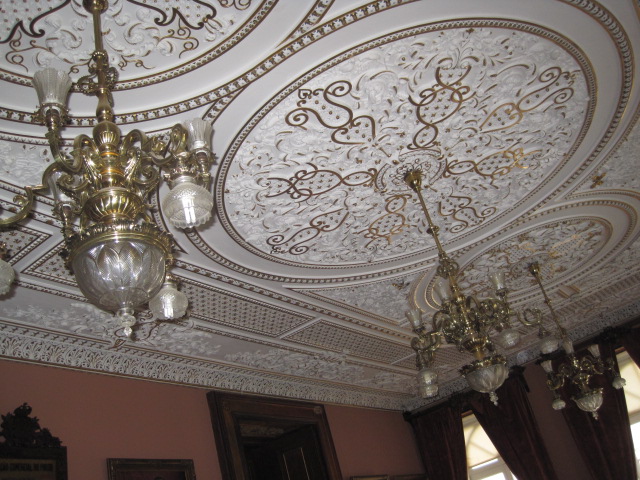
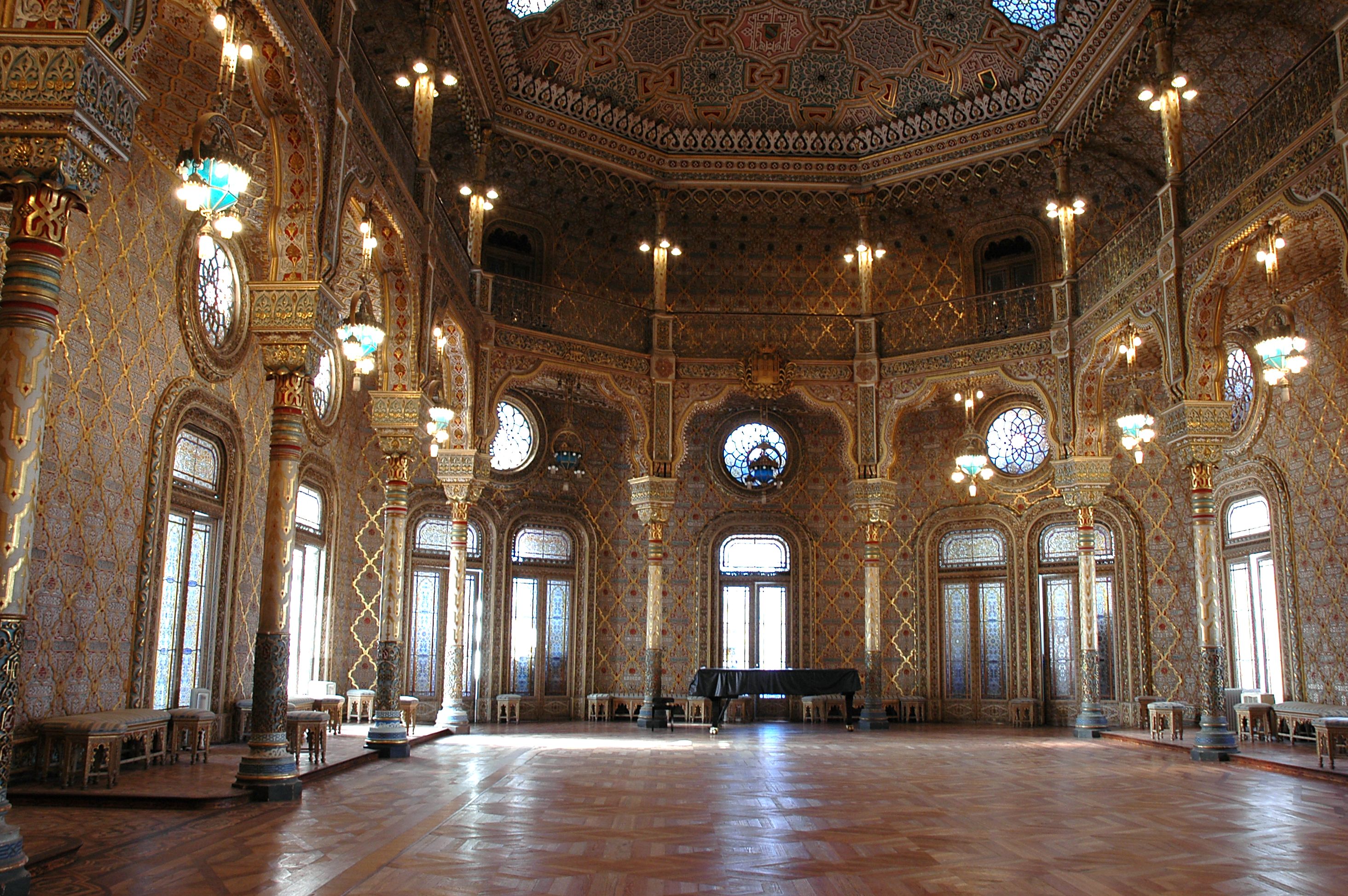
For a change I found myself looking up when I visited the Palacio de Bolsa, the former Stock Exchange.  The palace can only be seen as part of a half hour organised tour, but I was keen to see the famed Arab Salon.  Loosely based on the architecture of the Alhambra, it was without question built to impress, and it did.

The internal courtyard in the Bolsa Palace, decorated with heraldry

Just like my ceiling at home (er, not quite!)

The stunning Arab Salon- courtesy of Wikipedia

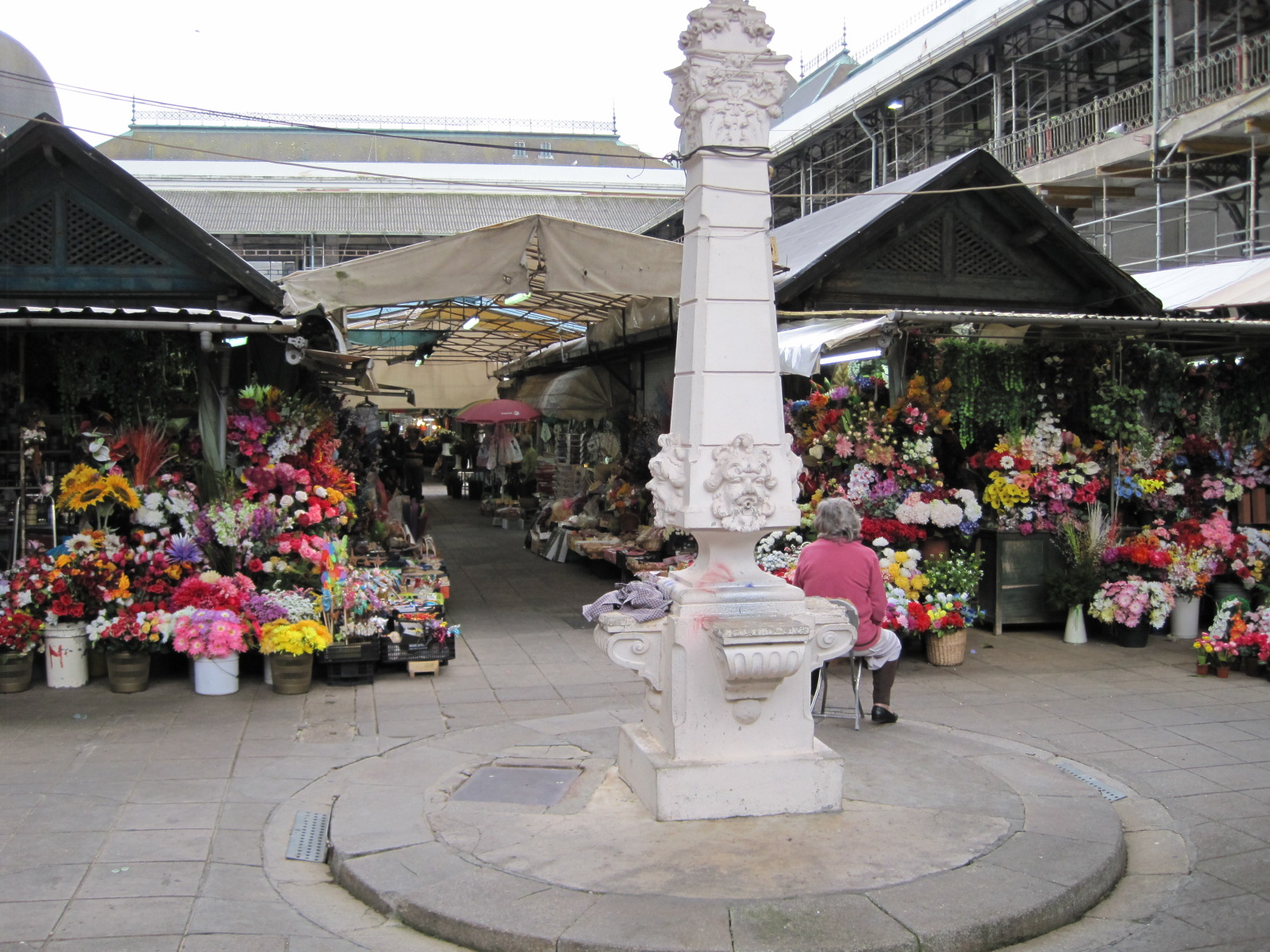
Not all of Porto is quite so perfectly preserved, and it’s part of the gritty reality of the place that the ramshackle lives side by side with the chique.  The indoor market at Bolhao was decidedly shabby, but for the people selling their wares in the little kiosks it was their whole life.  Iris informed us that it was soon to be another casuality of the city, as there are simply insufficient funds to restore it.  I was glad I saw it when I did.

Bolhao’s indoor market- courtesy of Michael Bradley

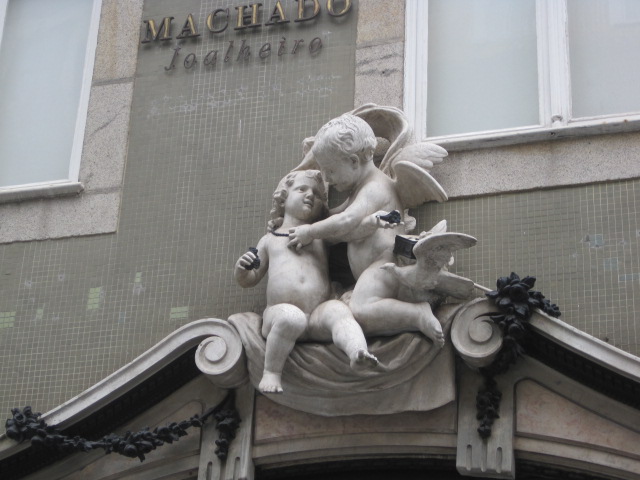
Cherubs on a peeling wall, Rua de 31 de Janeiro

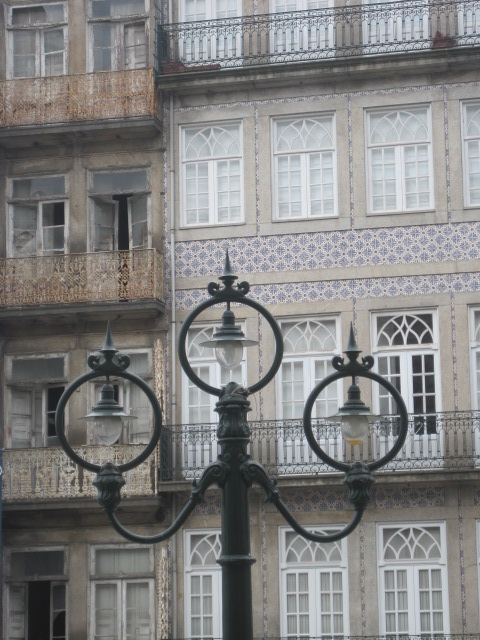
Renovated, and not, opposite Sao Bento railway station

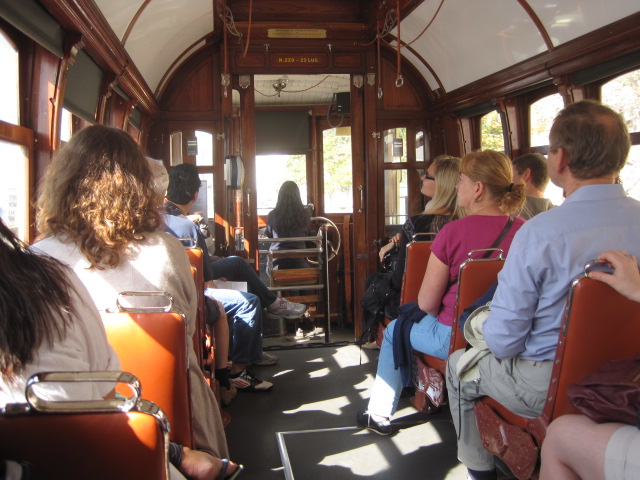
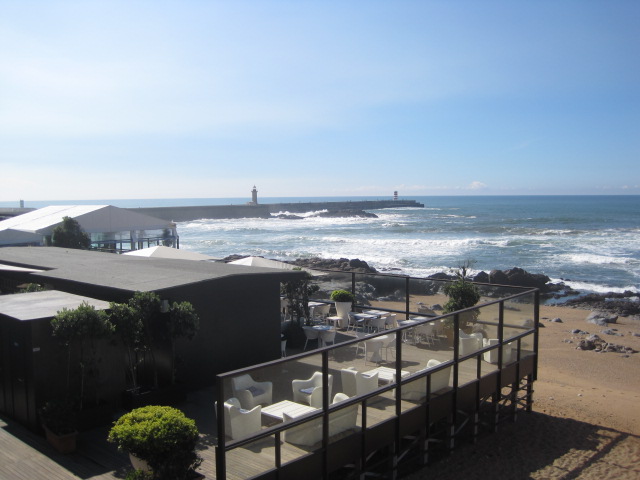
One of the shinier, newer parts of the city came as a real surprise to me.  I had little idea what I would find at Foz do Douro, other than the river mouth, so I mounted the tram with real excitement.  It trundled out along the shoreline with wonderful views to either side- the houses tumbling to the water on the one, and the ever widening river on the other.  The tram ends at Passeio Alegre, and from there you can stroll and stroll.

The lovely old tram, complete with lady driver

The view back towards Porto

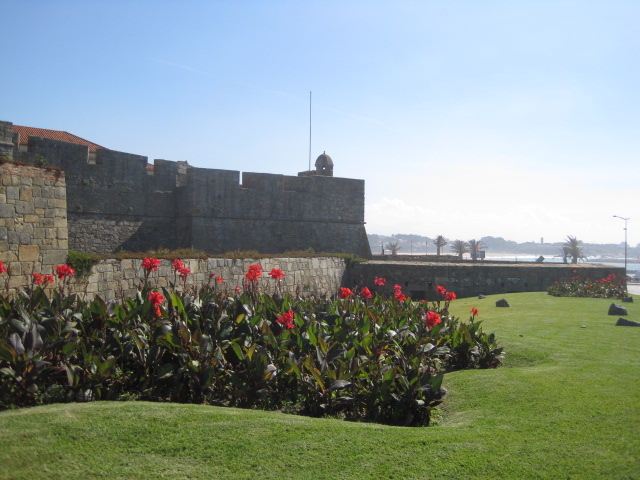
Forte de S. Joao Baptista da Foz

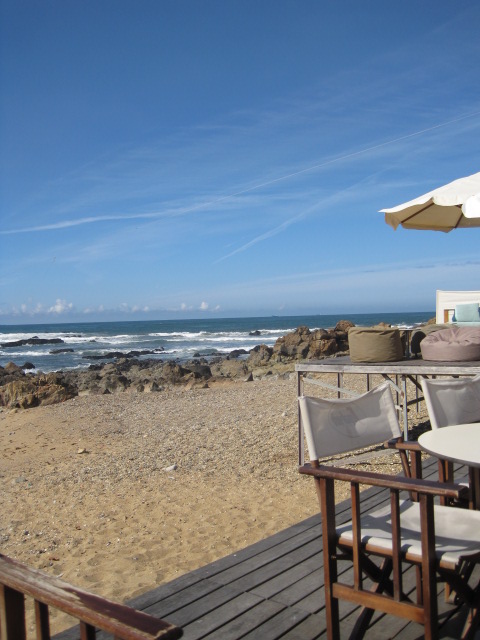
Suddenly I was at the seaside, with the tang of the salt air, and the snap of the waves.  The sunshine was radiant and I collapsed at a bar to feast on the sparkling water.

The waterside world in Foz do Douro

Squishy loungers were severely tempting

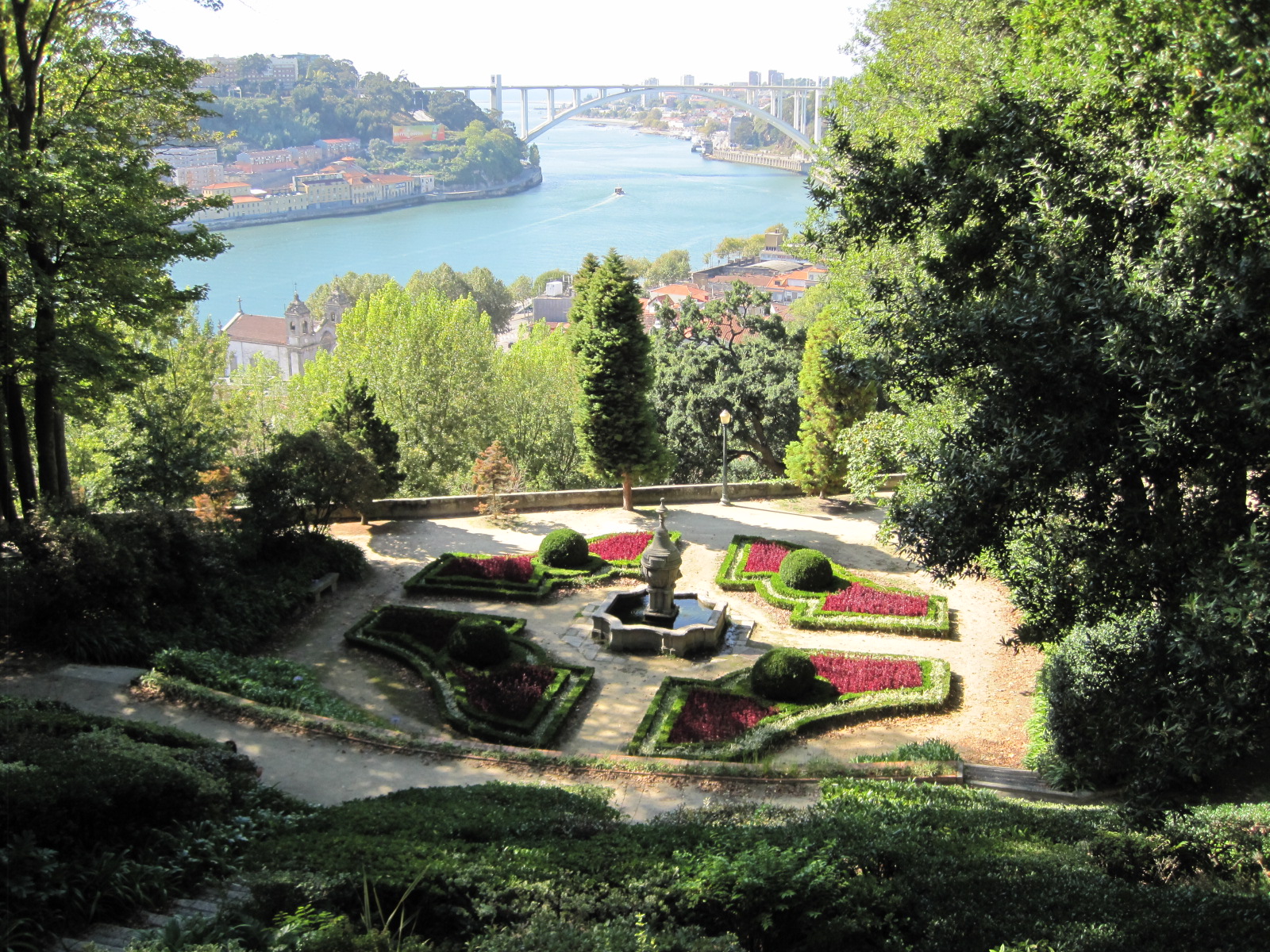
I wished I could have spent more time in this lovely spot, and if (when!) I return, I will certainly do so.  The tram has two routes and after I’d struggled up the steep incline to reach the gardens of the former Crystal Palace, I discovered that one of them bypasses the gardens.  It’s a peaceful spot, and I guess the views down to the river were compensation for the climb.

The Jardins de Palacio de Cristal- Michael does distance shots much better than me

You’ll notice that I haven’t even mentioned the “A” word once?  Azulejos, that is.  The reason of course is that I went to town on them in my Simply Beautiful Blue and White post.  If you didn’t see it and are thinking of coming to Porto, please take a look.  It might just convince you.  I still haven’t managed to fit everything in.  It’s probably a capital offense but I didn’t even mention port-wine tasting!  Well, you know I do my share of that anyway.

For now, I’ll leave Porto, with lots and lots of beautiful memories.  Many thanks to Julie Dawn Fox for giving me the opportunity to post this in My Personal A-Z of Portugal.  If you haven’t already seen her A-Z Challenge, click on the banner below.  It might give you some ideas.