Bede’s Heritage Trail

Jo’s Monday walk : Bede’s World

It was last Summer when I first came upon Bede’s Heritage Trail, quite by accident, in the sleepy hamlet of Whitburn, on the north east coast.   A 12 mile walk, it links the church of St. Paul’s in Jarrow with St. Peter’s, down the coast at Wearmouth.  I had inadvertently arrived, right in the middle.

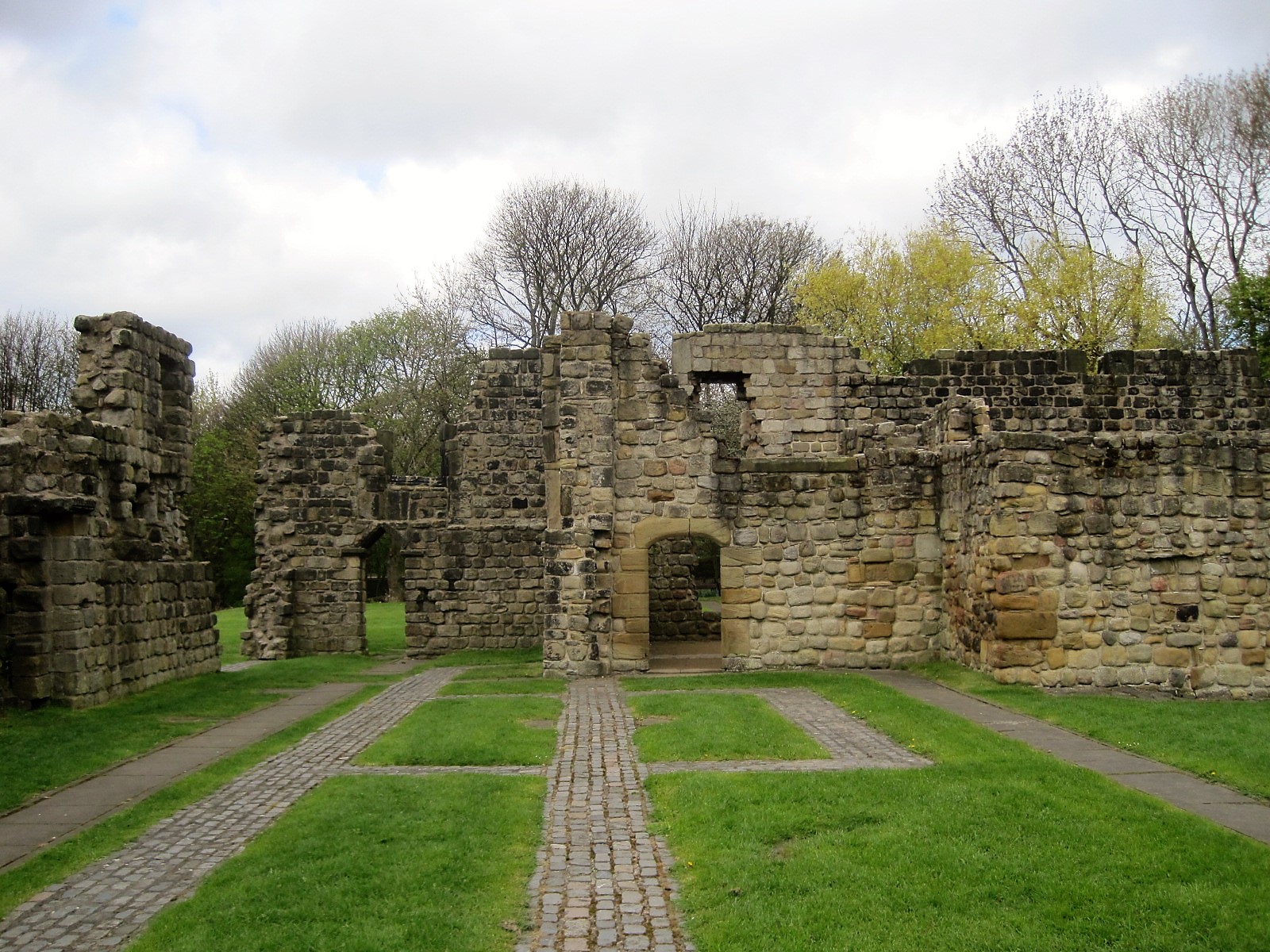
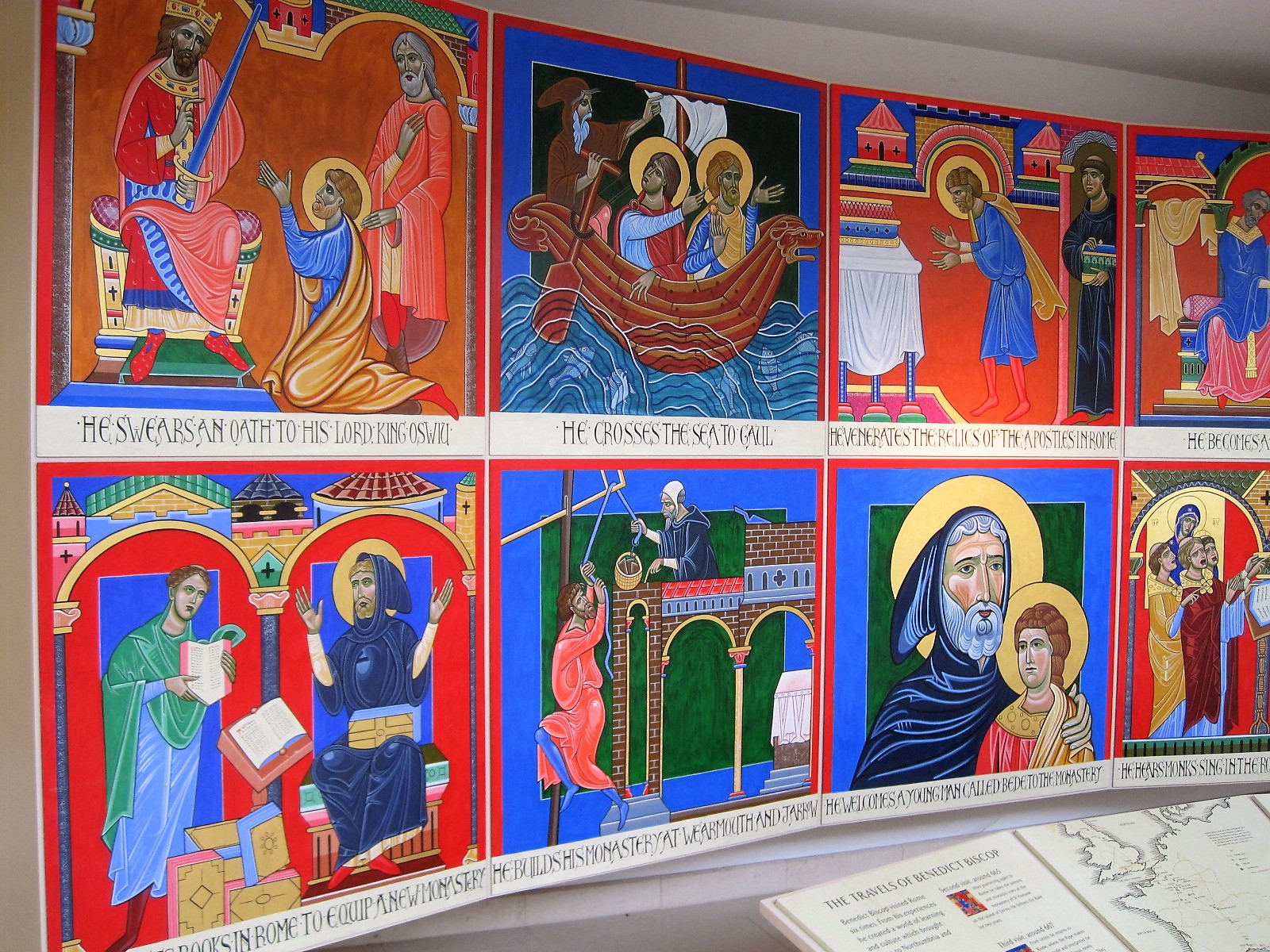
Benedict Biscop, a Northumbrian nobleman, had travelled to Rome 6 times and was inspired by the Christian life he found there.  In 674 he approached King Ecgrifth of Northumbria and was given a large estate on which to found the monastery of St. Peter’s, in Wearmouth.  It’s twin, St. Paul’s, was begun 8 years later, further north at Jarrow.  They were among the first stone buildings in Anglo-Saxon Northumbria, and St. Paul’s contains the oldest church dedication stone in England.  Part of the Anglo-Saxon monastery survives today as the chancel of St. Paul’s.  A good place to start, I think.

The Venerable Bede was educated in the monastery from the age of seven, and became the most important European scholar of his era. (born 673- died 735)  The founder of medieval historical writing, his works give a unique insight into life in the monastery.  The two buildings were regarded by Bede as ‘one monastery in two places’ and ‘bound together by the one spirit of peace and harmony’.    Monks would have traveled between them on foot, or by boat, using the small tributary of the River Don, which links to the Tyne.

I had scribbled details of the first part of the Heritage Trail on a slip of paper, intending to follow the route of the monks for at least a little way before returning to explore the museum dedicated to Bede.  As so often happens, a signpost created confusion.  Perhaps I should have ignored the cyclist.  In any event, Bede wouldn’t have had to tackle flyovers and underpasses.  And certainly not graffiti!

It was something of a relief to return to Jarrow Bridge, spanning the Don, alongside of St. Paul’s.  Gyrwe, the Anglo-Saxon name for Jarrow, means ‘place of the marsh dwellers’.  Arrows pointed me in the direction of Bede’s World, and from there I couldn’t go wrong.  A wealth of information, pleasingly displayed, I found the museum imaginative and entertaining.

Benedict Biscop was keen to build in the ‘Roman manner’ and spared no expense, importing skilled masons and glaziers from abroad, to accomplish this.  Over 1,000 fragments of coloured glass were discovered during excavation of the site of the monastery.  The Jarrow Figure was reconstructed using glass found under a collapsed wall.

The community of monks was very industrious during Bede’s lifetime.  One of their most notable achievements was the Codex Amiatinus, a complete Bible in a single volume.  It weighed over 34 kilograms (75 lbs), being made with 2060 pages of vellum – calf skins washed in a bath of lime, stretched on a frame and treated with pumice.

Bede Museum shares the grounds with Jarrow Hall, and the lovely old building provides light refreshments in its cafeteria. (and cake, naturally!)  With the sun shining brightly, it was time to take a stroll through the Anglo-Saxon farm.  Curly-coated pigs, Dexter bullocks, goats, ducks and chickens share the 11 acre site with reproduction thatched farm buildings.

A gentle green path, fringed with primroses and blossom, leads to a mound topped by a cross, and a viewing point over the industrial River Tyne.

It’s a nice green space in an urban setting.  I hope you enjoyed it with me.  I’ll take you to St. Peter’s another time.  Meanwhile, this leaflet contains details of the whole trail, and here is a link to Bede Museum.

Great to have so many of you sharing walks with me again this week.  I really appreciate it.  Please find time to visit each other.  I know it’s a struggle sometimes but it really is worthwhile.  Join me any time here on Jo’s Monday walk.

……………………………………………………………………………………

Starting with a fabulous hike in Japan, with Celia.  The vistas are wonderful :

Spring Hiking at South Takao

Much flatter, but still full of interest, join Anabel in Holland :

A walk round Utrecht

Coffee and Leonard Cohen – I find both irresistible.  And where there’s Jackie, there’s always food!

Turkish Coffee

Where would you expect to find an English garden?  In Munich, of course!  Thanks, Lady Lee :

A morning in English garden

Standing stones are always fascinating, aren’t they?  Suzanne has found some most unusual ones :

A Mystical Destination – AVEBURY

Drake finds me an idyllic piece of Greenland to share this week :

Covenant with nature

And Gunta has immense Redwoods and Trilliums!

Hike to Trillium Falls

A city I’m to visit soon, but just in passing.  I wish I could take this tour with Meg :

Warsaw street art

Emma is tireless when it comes to the Welsh coastal footpath.  Her love for it shows in her paintings :

Pennard Cliffs & Three Cliffs Bay

Something I’d really love to do.  I wonder if Susan would like company?

Walking the Golden Gate Bridge, San Francisco

From one iconic sight to another!  Hit the heights with Rosemay :

Hong Kong – A Walk Down The Peak (The Morning Trail)

That’s it for this week!  Distinctly cool here, but in England there’s another Bank Holiday coming up.  I’ll be taking you to some wide, open spaces next Monday.  Take care till then!
Jo’s Monday walk : Whitburn through the Looking Glass

Are you wondering at my title this week?  The village of Whitburn in north east England has a Lewis Carroll connection.  It’s generally accepted that he wrote “The Walrus and the Carpenter” while staying at his cousin’s home in Whitburn.

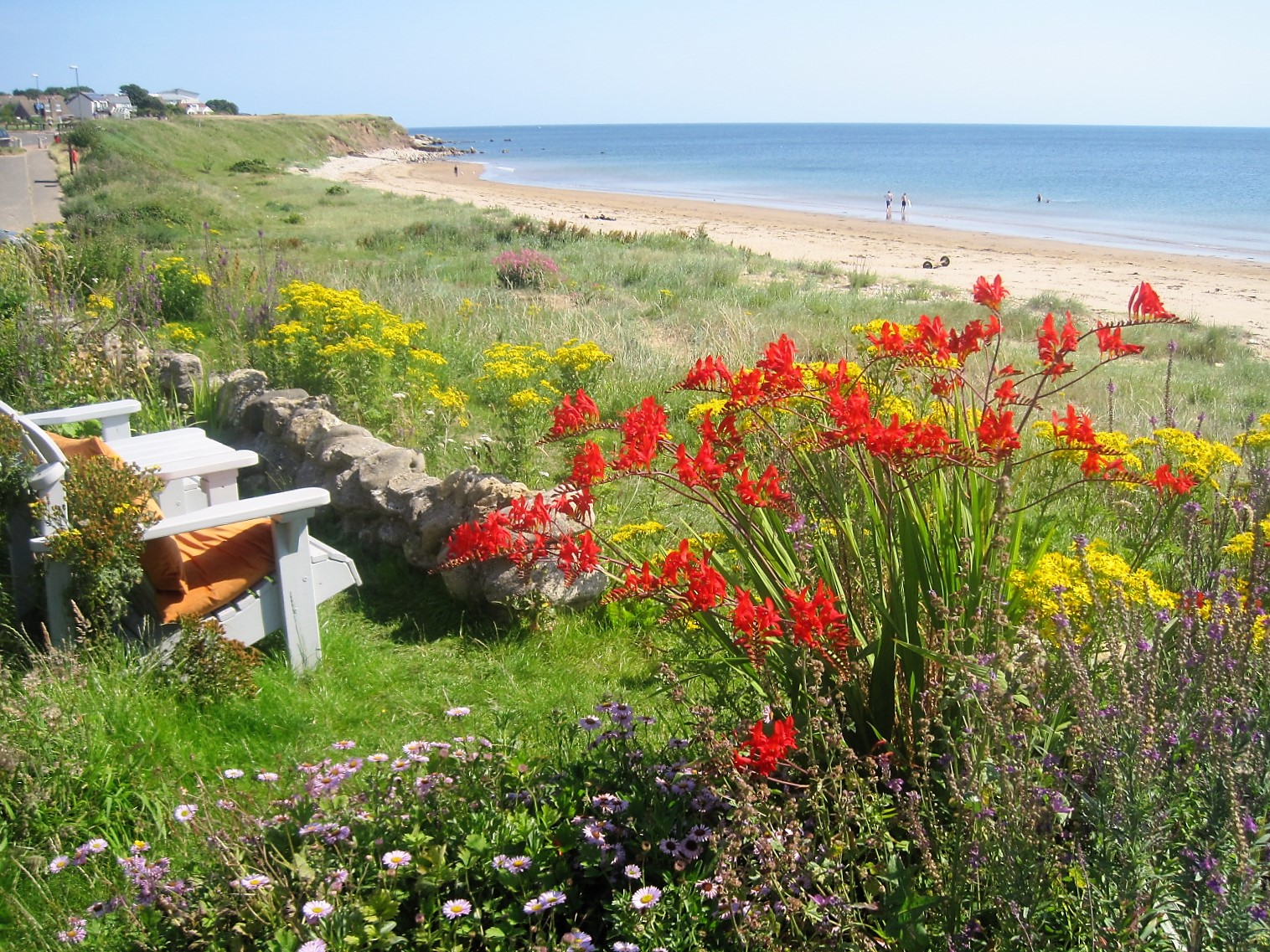
Charles Dodgson, whose pen name was Carroll, of “Alice in Wonderland” fame, regularly visited his cousin Margaret Wilcox, the wife of a Customs officer in Sunderland.  For entertainment on an evening they would make up verses.  ‘Twas brillig and the slithy toves Did gyre and gimble in the wabe’ started life here, and was published as ‘Jabberwocky’ in 1872.   I had no such rhymes in my head on the seafront at Seaburn.  The sun was shining warmly and I planned to head up the coast.

Looking good, don’t you think, and I’m not surprised that Carroll enjoyed strolling on this stretch of cliff top that leads north to Souter Lighthouse. I’m easily distracted sometimes and a wooden sculpture by the edge of the road beckoned me to take a closer look.

Welcome to Whitburn, the sign said.  Well, why not?  A path led invitingly past a swathe of vibrant wildflowers and I found myself in Cornthwaite Park.  There I found the legend writ large, ‘Whitburn through the Looking Glass’.

I love the reputation of this peaceful, rural location as a haven for shipwreckers. Following the attack of the Spanish Armada in 1588, the defeated Spanish fleet fled up the north east coast of England.  Two galleons ran aground in rough seas on Whitburn Rocks and the locals were not slow to utilise wreckage.  Two oak beams in the village smithy were said to have come from the wreck, and a bell used to call the Spanish crews to prayer was mounted in the parish church.

Leaving the park, imposing gates and a double letter box drew my eye to the most stylish and sumptuous of buildings.

Whitburn Hall originally belonged to the Carr family, but was bought in 1719 by the Williamsons, who remained in residence for 200 years.  During that time, Sir Hedworth Williamson trained racehorses on Whitburn Sands, producing a couple of famous Derby winners.  Horses are still a common sight, exercising on the beach.

Lewis Carroll would have been a regular visitor to the Hall.  Lady Hedworth Williamson was second cousin to Alice Liddell, to whom the ‘Alice’ books are dedicated.  Remember my Llandudno post?

Church Lane leads to Whitburn Church, and beyond that an expansive village green.  Set back from the road, a row of cottages with an idyllic location.  An elderly gentleman passed the time of day and acknowledged his good fortune at living there.

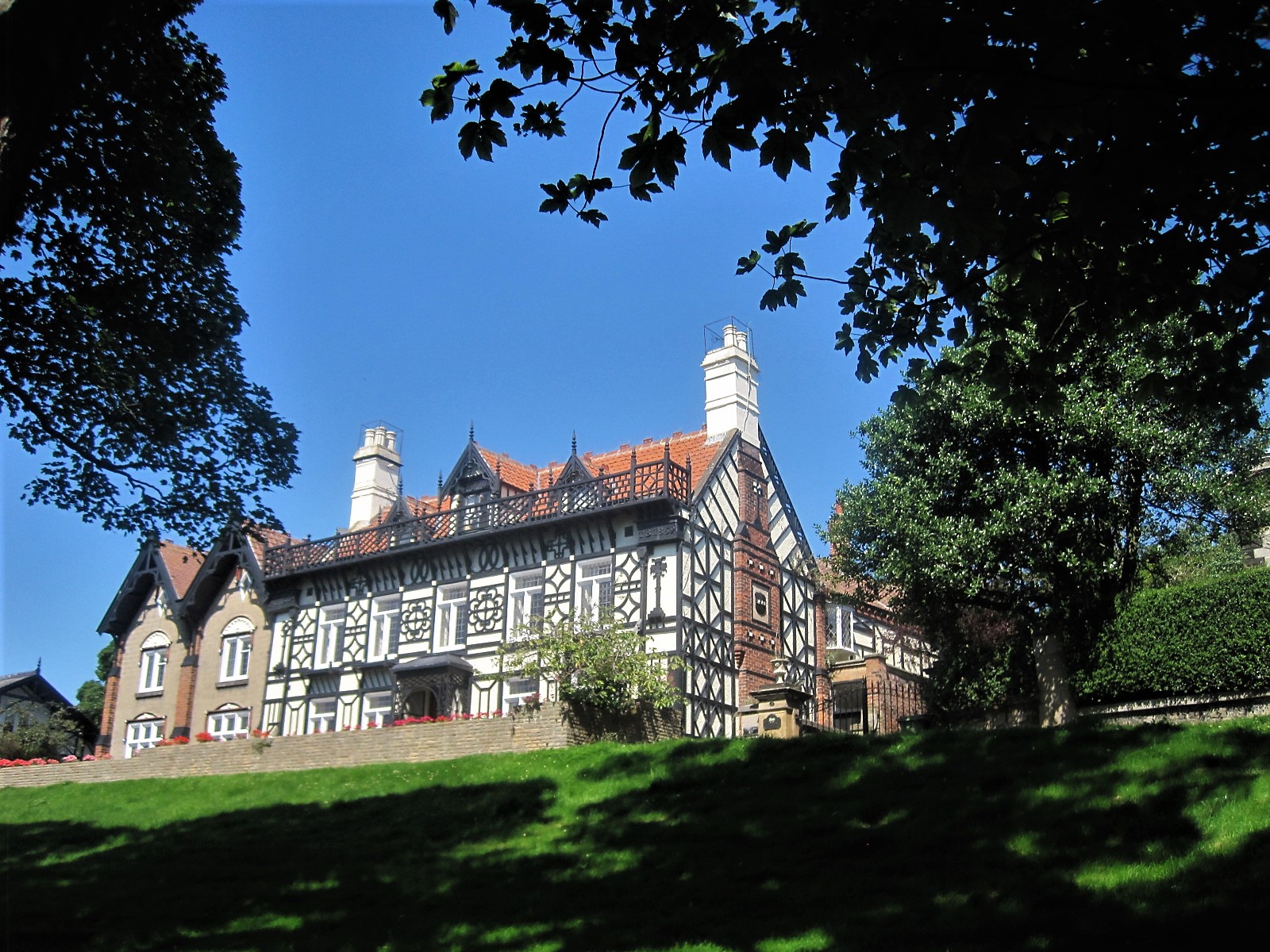
The cottages look up to strikingly decorative Whitburn House.  Thomas Barnes, the owner of a brickworks, tried to fence off the common ground in front of it, but in 1873 the courts decided that ‘the Bank’ and the village green should remain free for the use of all villagers.

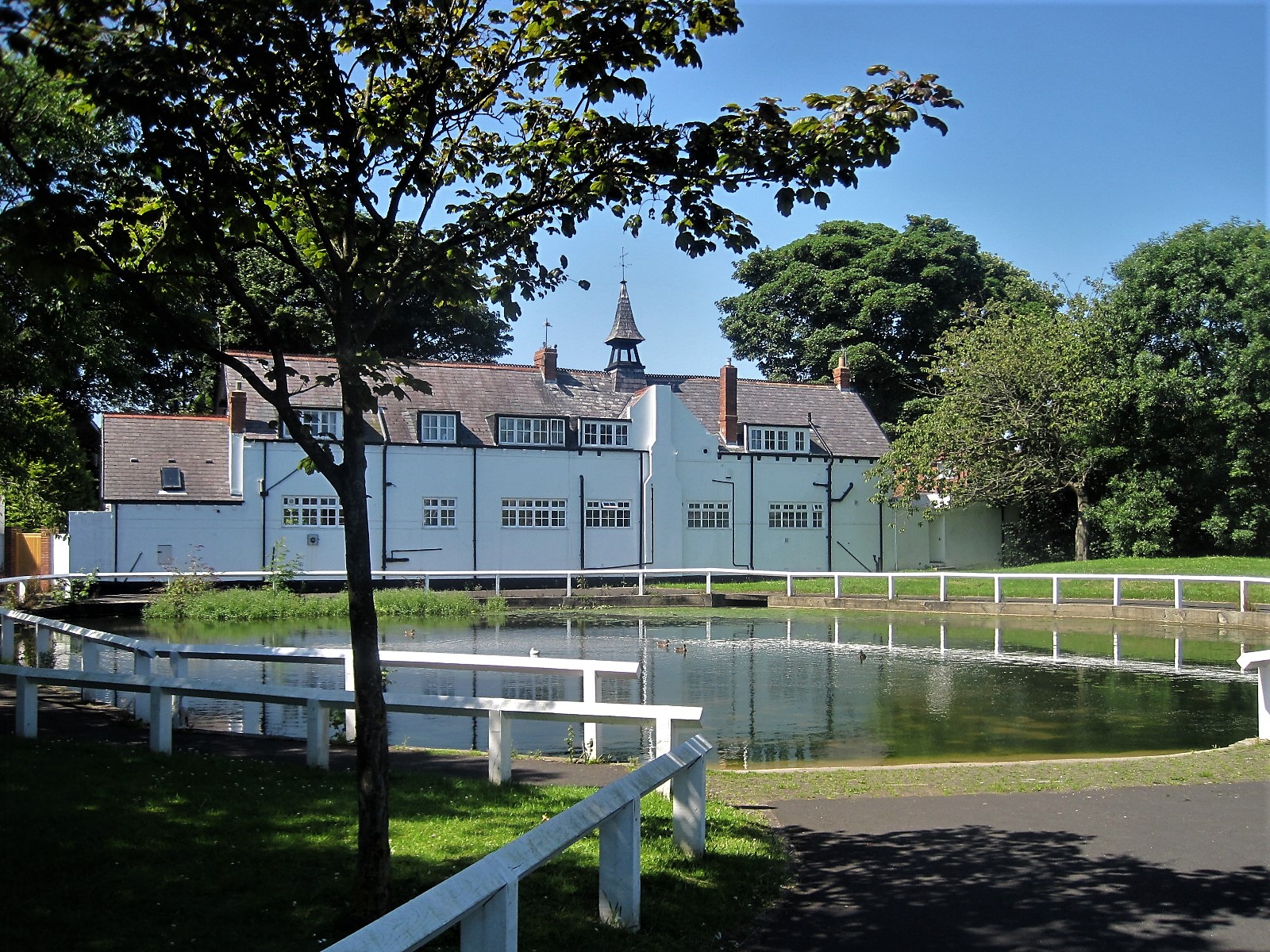
Did you notice the Tradesman’s entrance?  ‘Know your place!’, as it was in those days.  A window cleaner was tackling the vast frontage and I didn’t envy him.  From Whitburn House I turned right off Front Street into Sandy Chare.  I vaguely remembered a village pond from a previous visit.

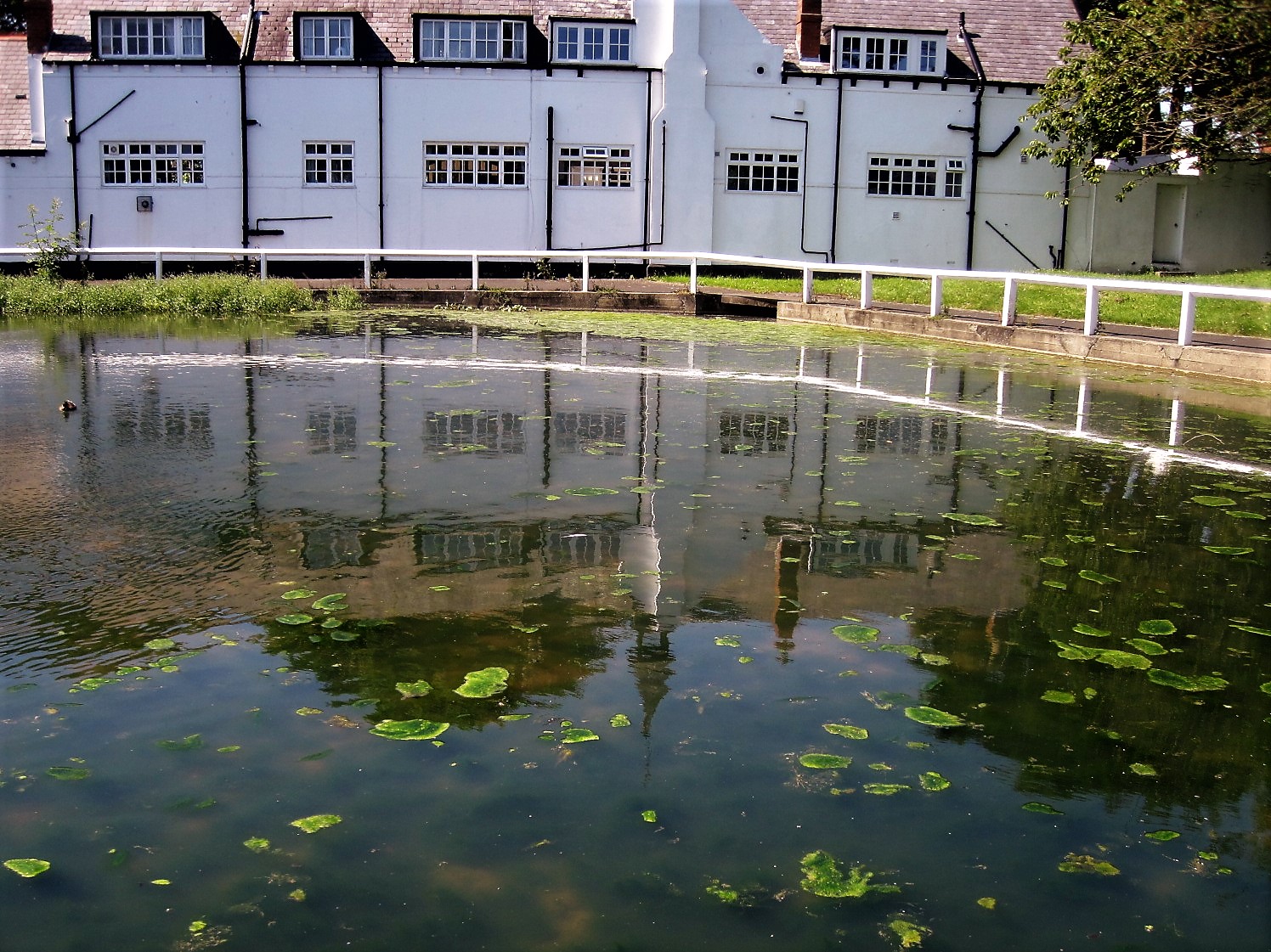
Serene as it looks, it has a bit of a tumultuous history.  Formerly known as the Horse Pool, the pond was used to wash coaches and the white building behind once housed stables.  In 1824 the first village school was built, beside the pond.  When a larger school was built in Sandy Chare, in 1852, the building became the Infant School.  In seriously wet weather the pool was prone to overflowing, and one villager recalls having to sit on his desk amidst rising water.  The headmaster gives a graphic account of the situation after the great storm of 1900. (you can read it if you magnify the panel above)

The sea was calling me back, and a return to the rough headland of the Bents.  My husband had food in mind, though we paused to admire the antics of a family of cormorants out on the rocks. ‘Latimers’ of Whitburn does a mean plate of food, with a sea view to boot.

On Front St. I had noticed a sign for Bede’s Heritage Trail and, looking it up when I got home, discovered that Whitburn is part of a 12 mile walk dedicated to the saint.  On June 29th each year there is an annual pilgrimage.  More food for thought, and certainly an outing for another day.  Here is the map.  I had unwittingly completed parts of section 4 and 5.  I hope you enjoyed it.

Many thanks to all of you for wandering with me, and for this wonderful selection of walks.  I hope you’ll find time to put the kettle on and sit back for a good read.  Join me if you can.  The details are on my Jo’s Monday walk page.

…………………………………………………………………………………………

Not quite a Beatles classic, Drake gives us Scandinavia with a smile this week :

Southern Norwegian mood

While Debbie does an easy snippet of the Fife Coastal path :

Inverkeithing to North Queensferry

And Lady Lee, a fierce-looking castle in Malta :

Traces of the Past- Citadel/Cittadella

Jackie is on hand with coffee and cake :

Smell the coffee

Which Tish could do with, after a hard day’s gardening.  A privilege for me to have her here :

Butterflies in the Buddleia, Bees in the Teasels and all’s well at the allotment

Join Vanessa and family in a gentle introduction to walking in Japan.  If you have the stamina you can climb Mount Fuji too :

Fujiyoshida/ Hiking the Tokai Nature Trail through rural Japan

Meantime, Meg goes bouldering, with due care and diligence :

Granite country

Got your parasols ready for twirling?  Rosemay has a lovely summery walk for us :

Promenade by the lake

And by contrast, Lynn flirts with an avalanche.  I kid you not!

A little snow on the mountain

Woolly explores the sad loss of Newfoundlanders on the Western Front :

Jo’s-Monday-Walk-Wk29_Beaumont-Hamel-Pt-1

Last September it was surely warmer and sunnier than now.  Or was it just having Jude’s lovely company?

Garden Portrait : Edinburgh Botanic Garden

Meanwhile Denzil’s pulled out all the stops to impress with his canal boats :

GR121 Stage 3 : Nivelles to Braines-le-Comte

Something for everybody, I’m sure you’ll agree.  It’s a miserable wet Monday here in the north east.  Maybe I’ll stop at home and do a little research. Have a great week everybody!