Poland

Six word Saturday

6ws-participating-in-banner

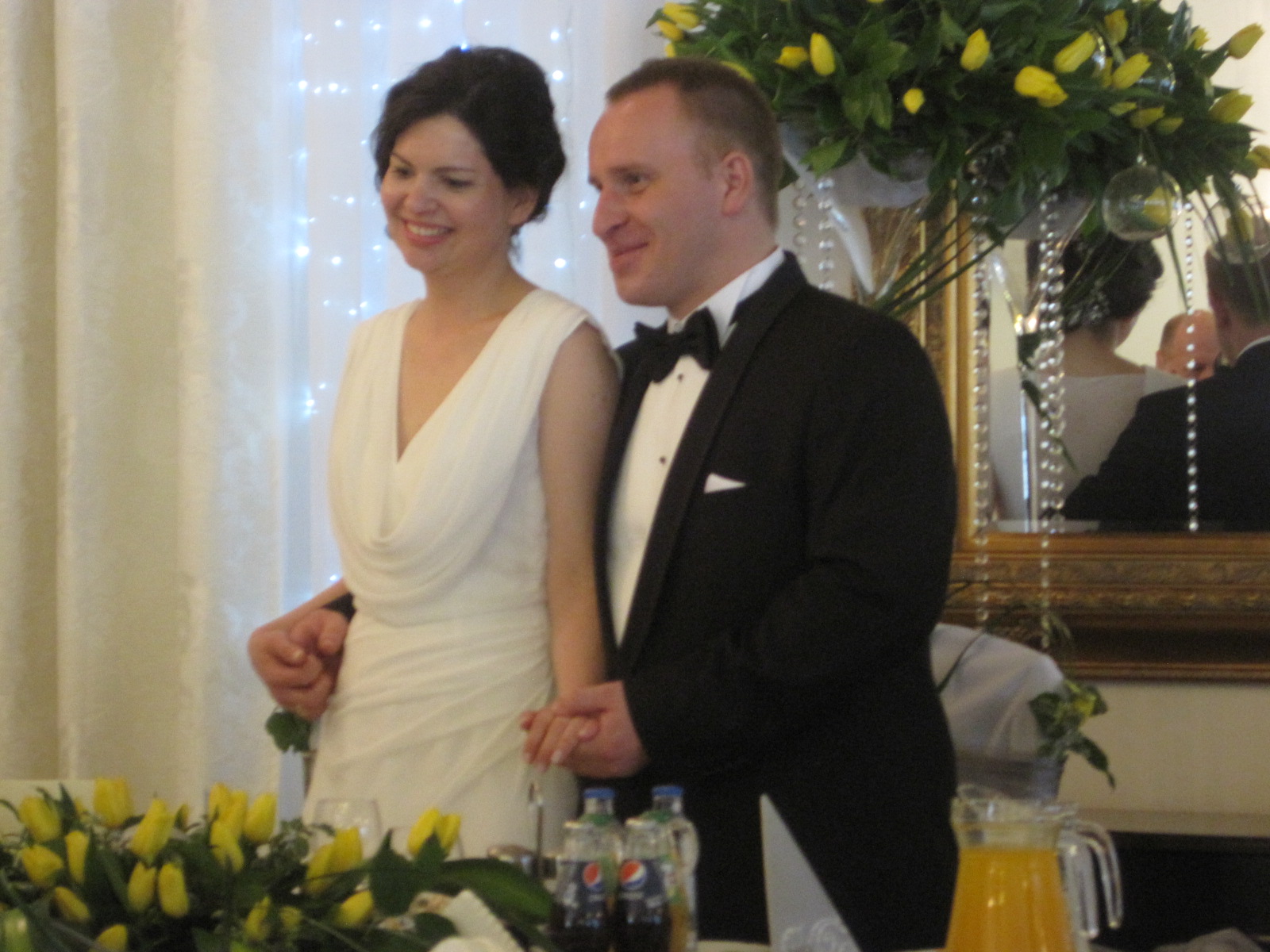
Weronika and Wojciech- health and happiness!

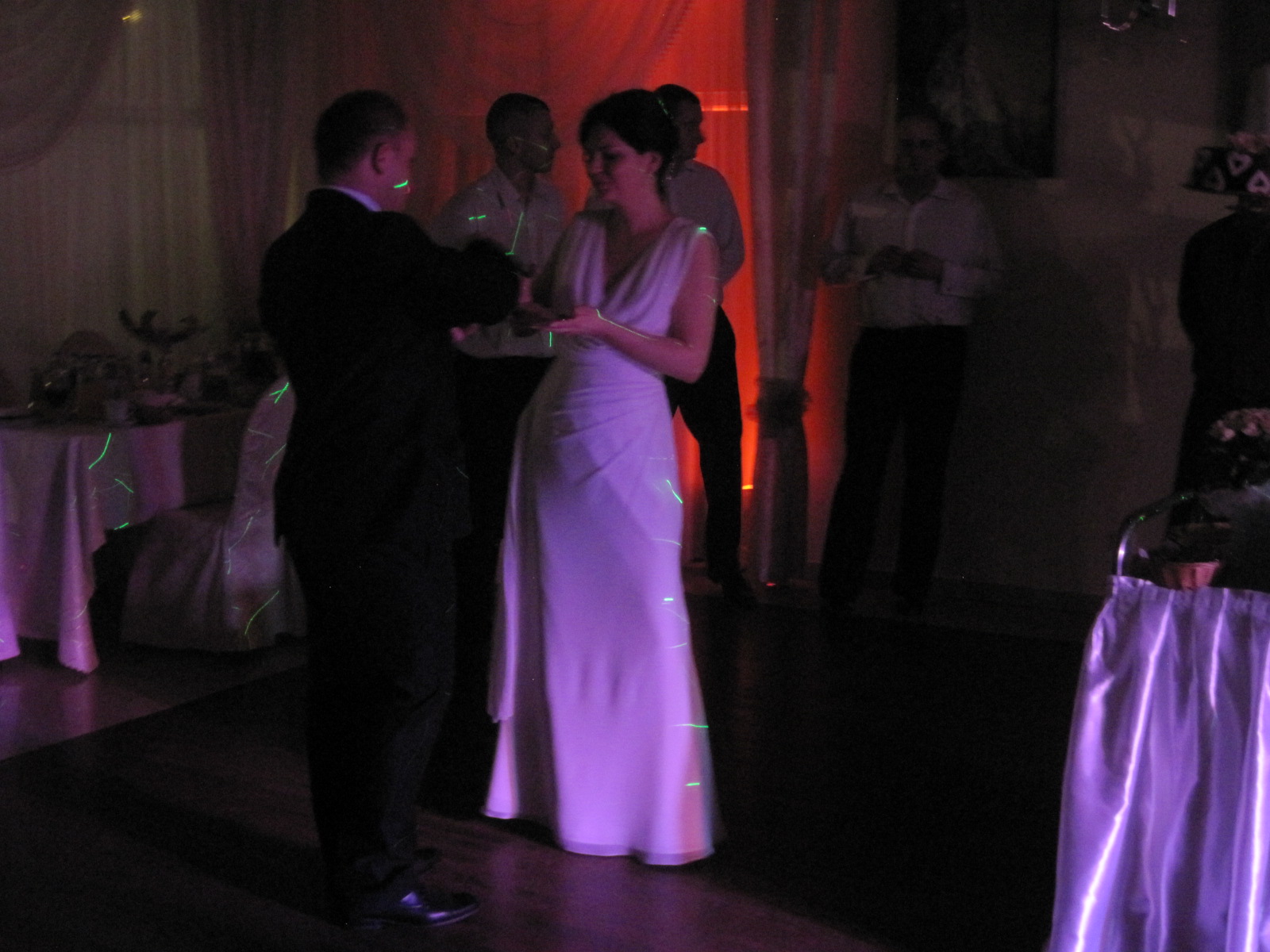
The bride and groom

The bride and groom

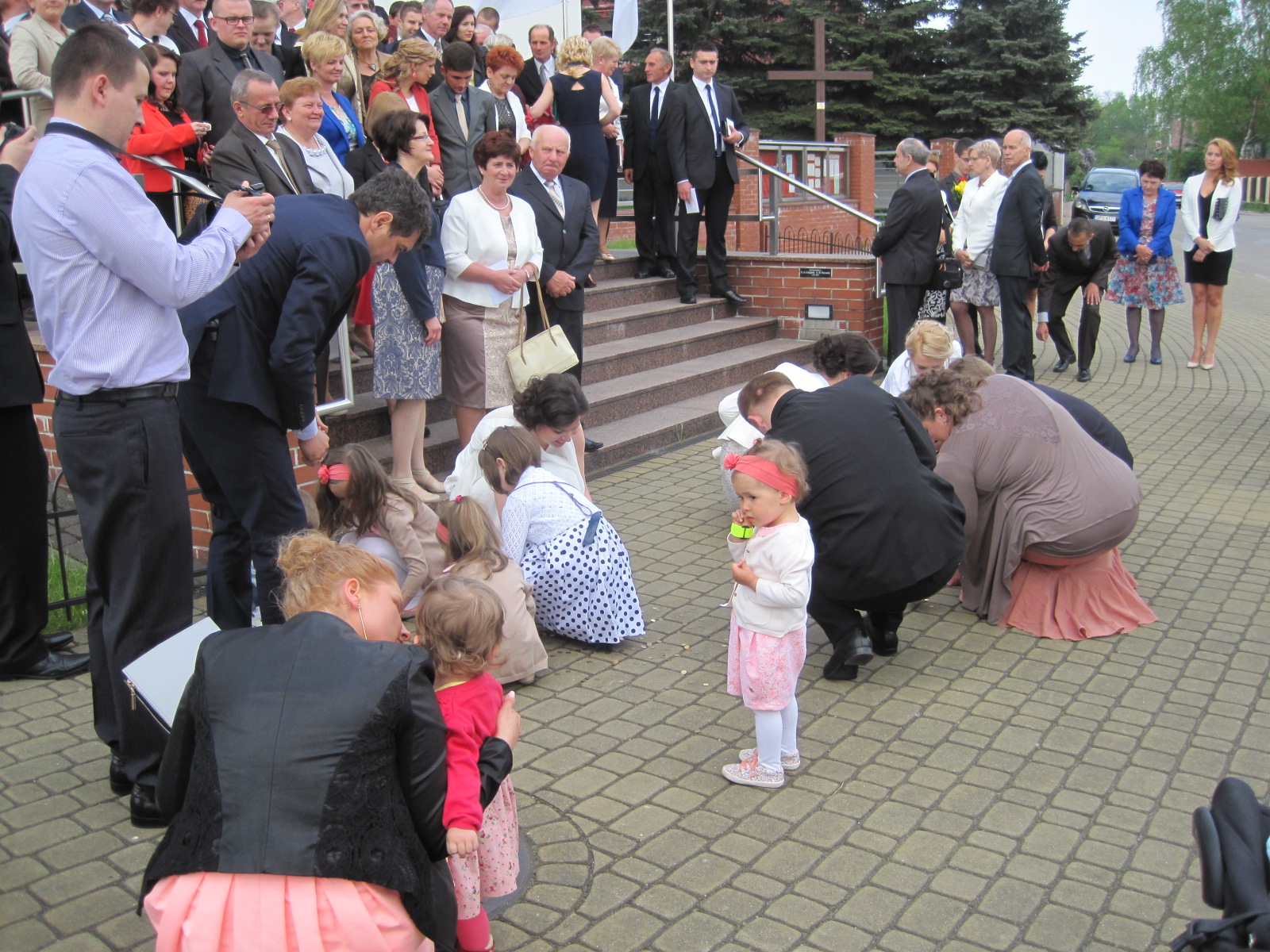
The children helping to pick up the 'lucky' coins

The children helping to pick up the ‘lucky’ coins, thrown outside the church after the wedding

Sweeping up the glasses smashed for good luck

Sweeping up the glasses, smashed for good luck, before the reception

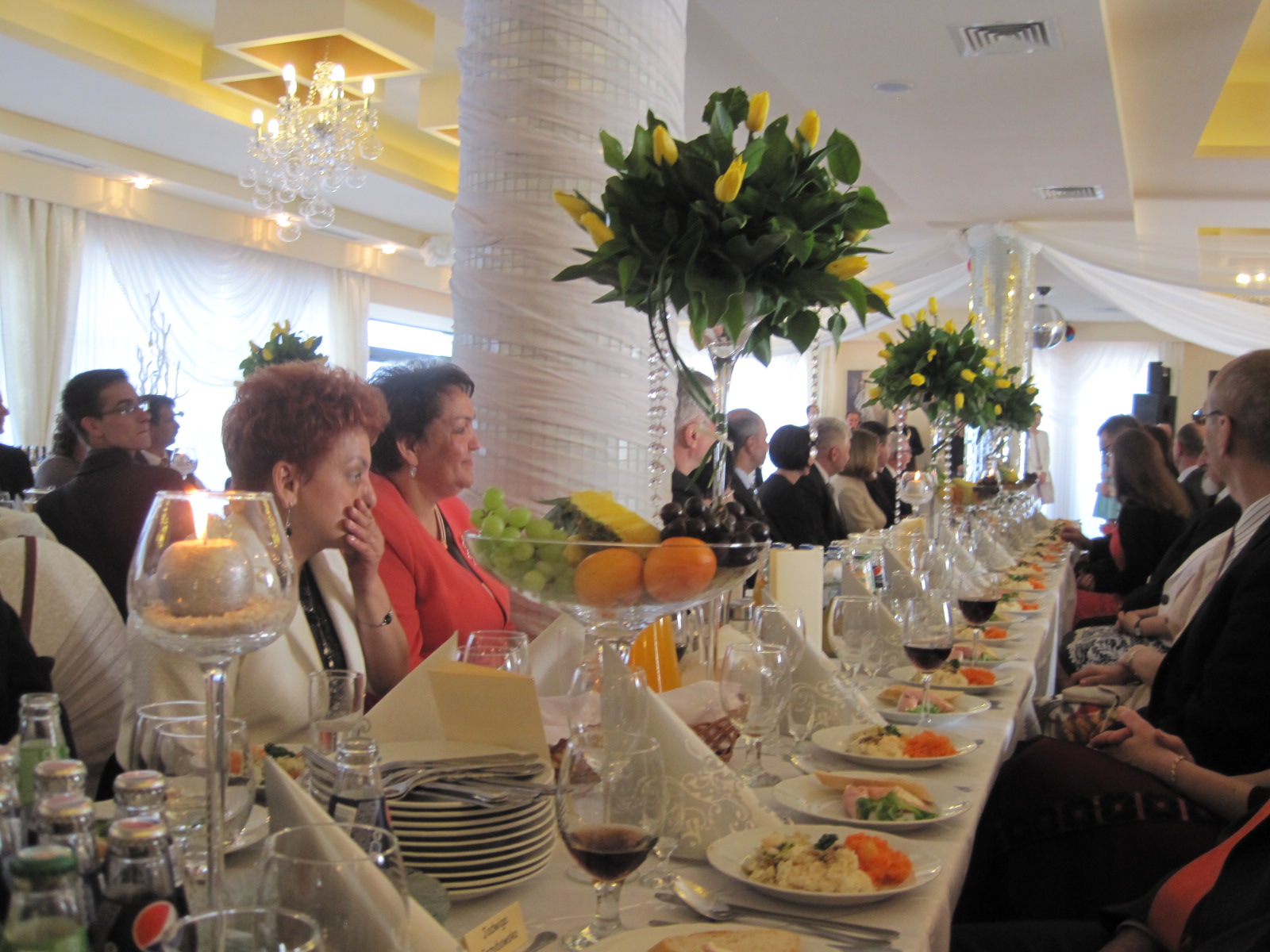
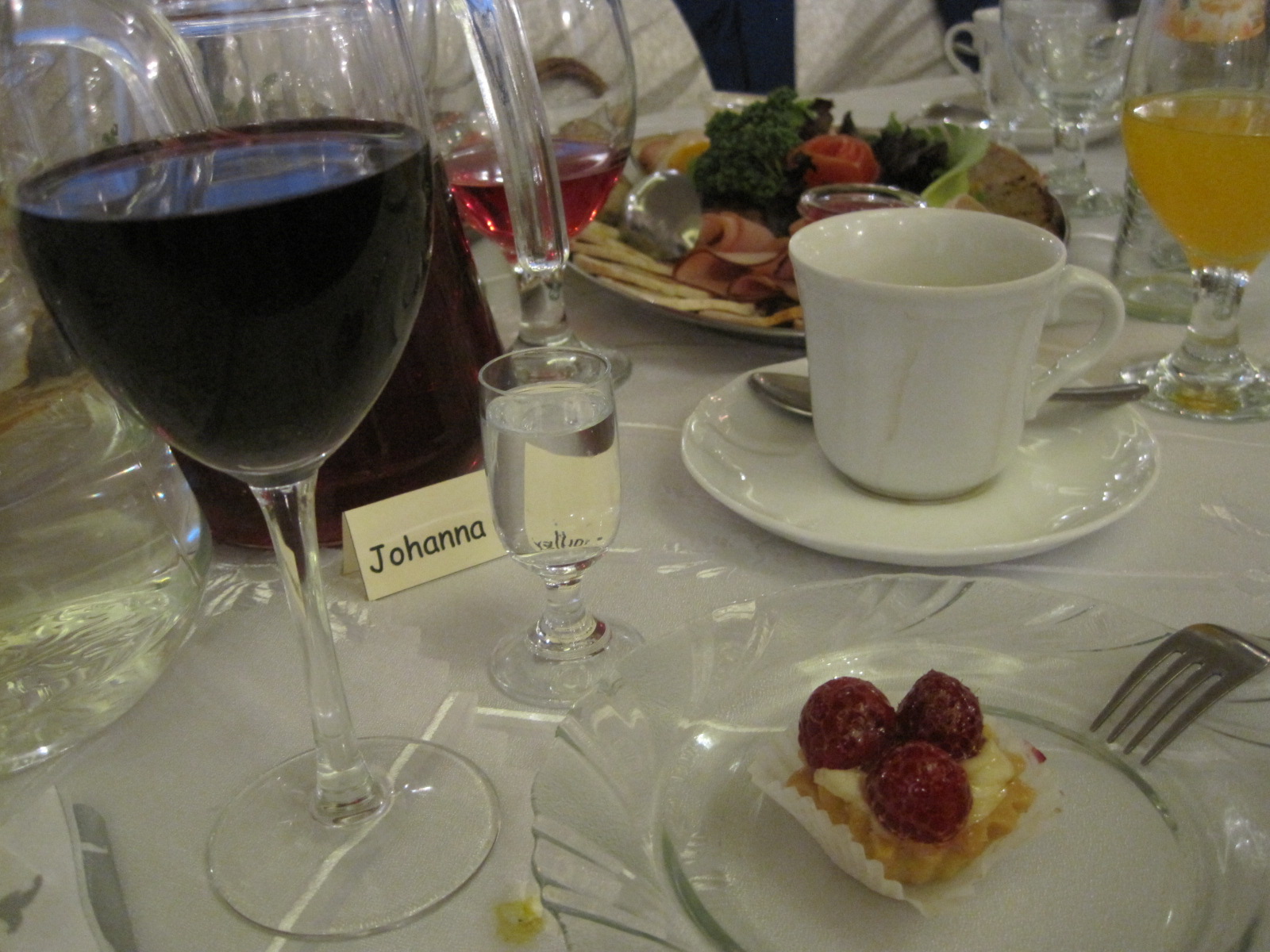
One of 3 tables at the 'wesele' or reception

One of 3 tables at the ‘wesele’ or wedding reception

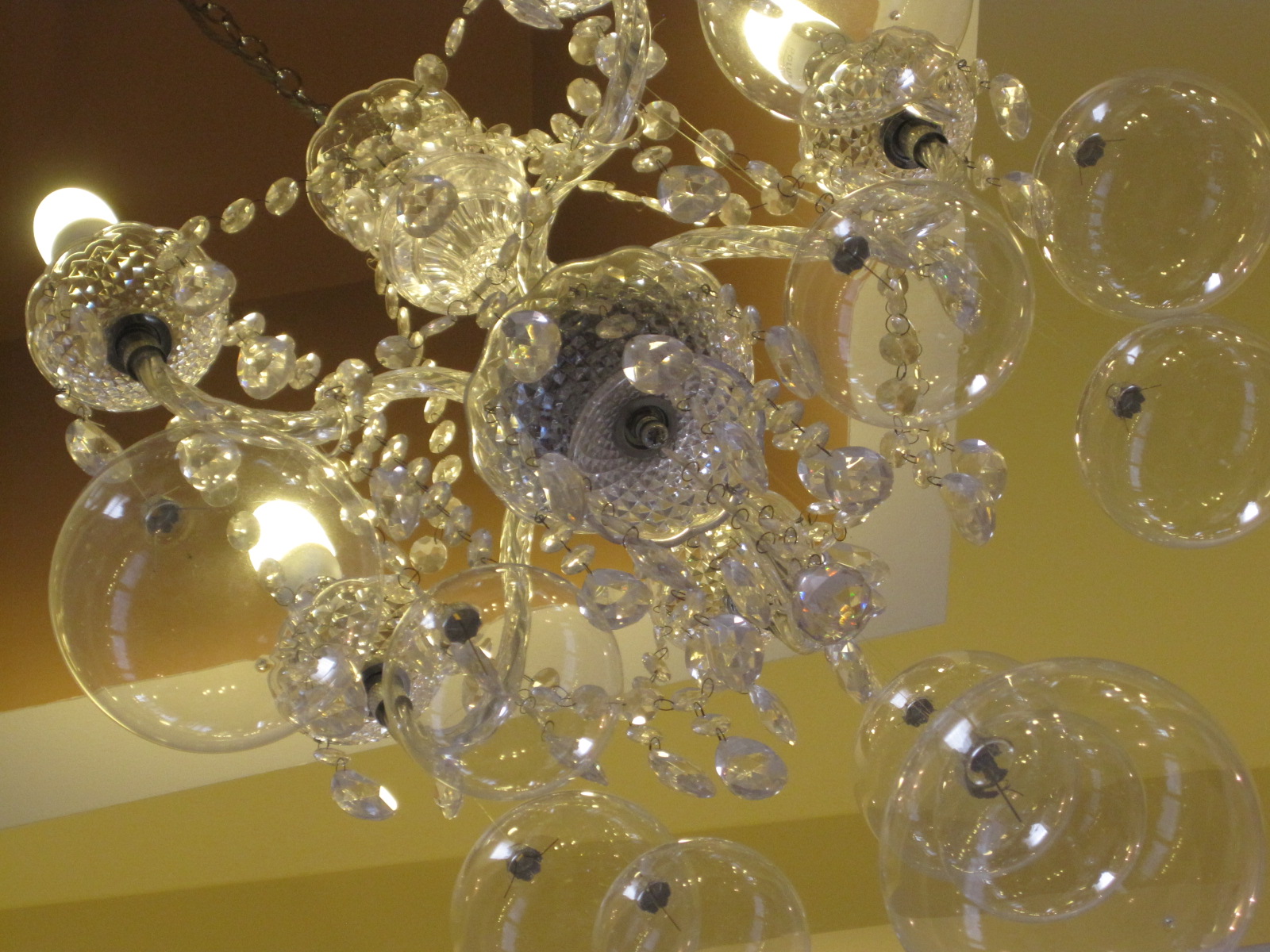
One of the chandeliers

The chandeliers were beautiful, weren’t they?

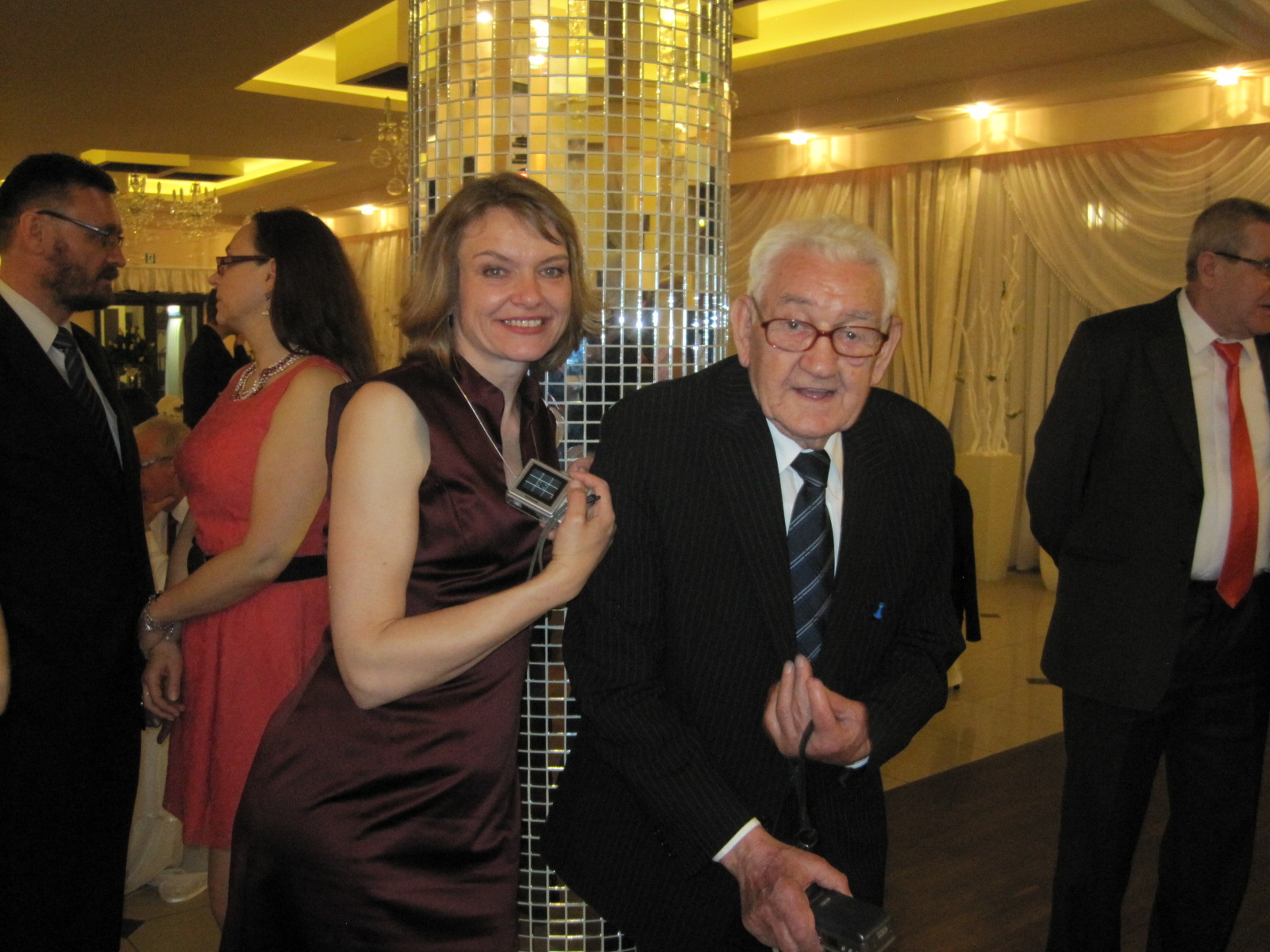
I was there!

I was there, too!

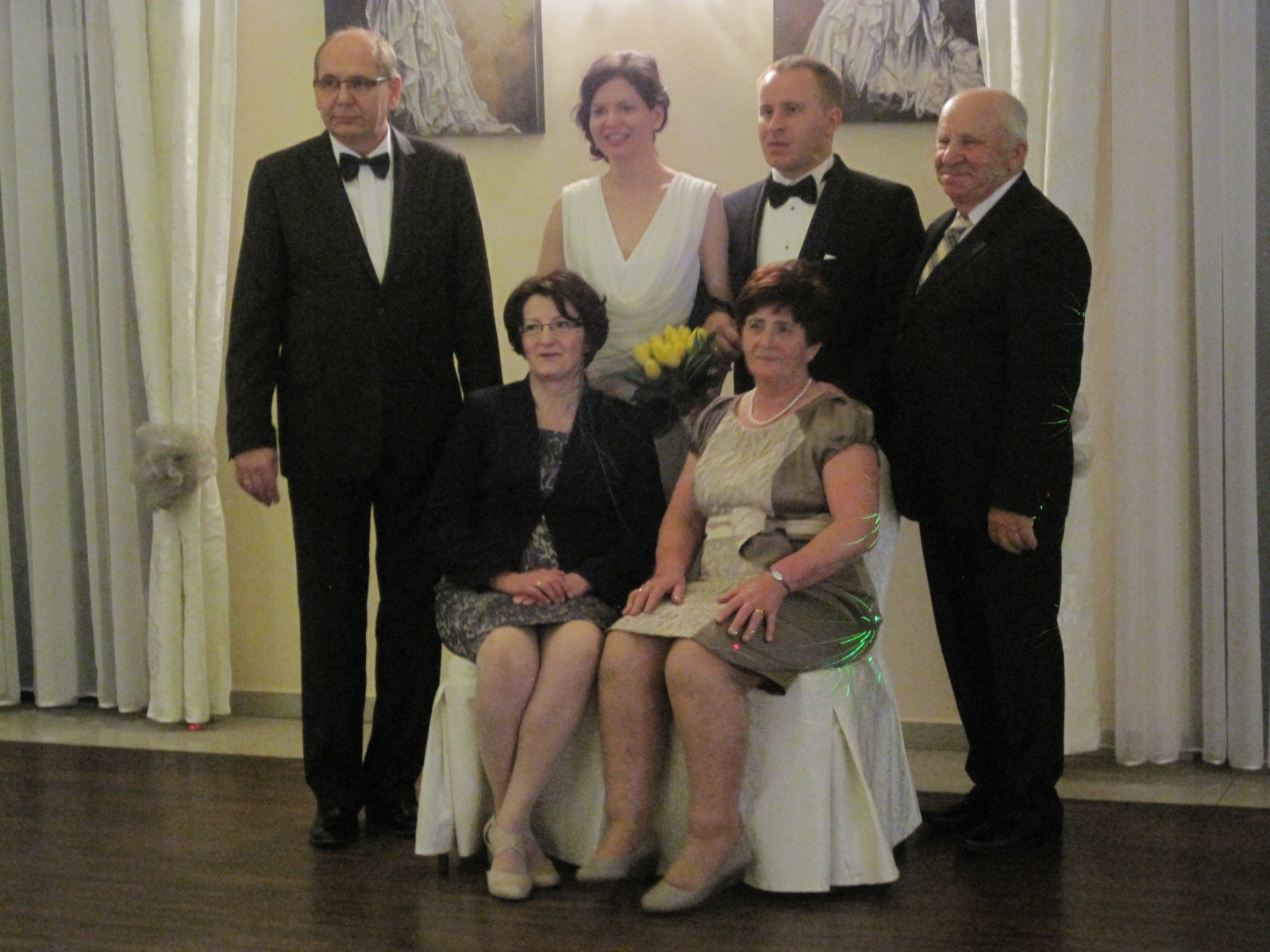
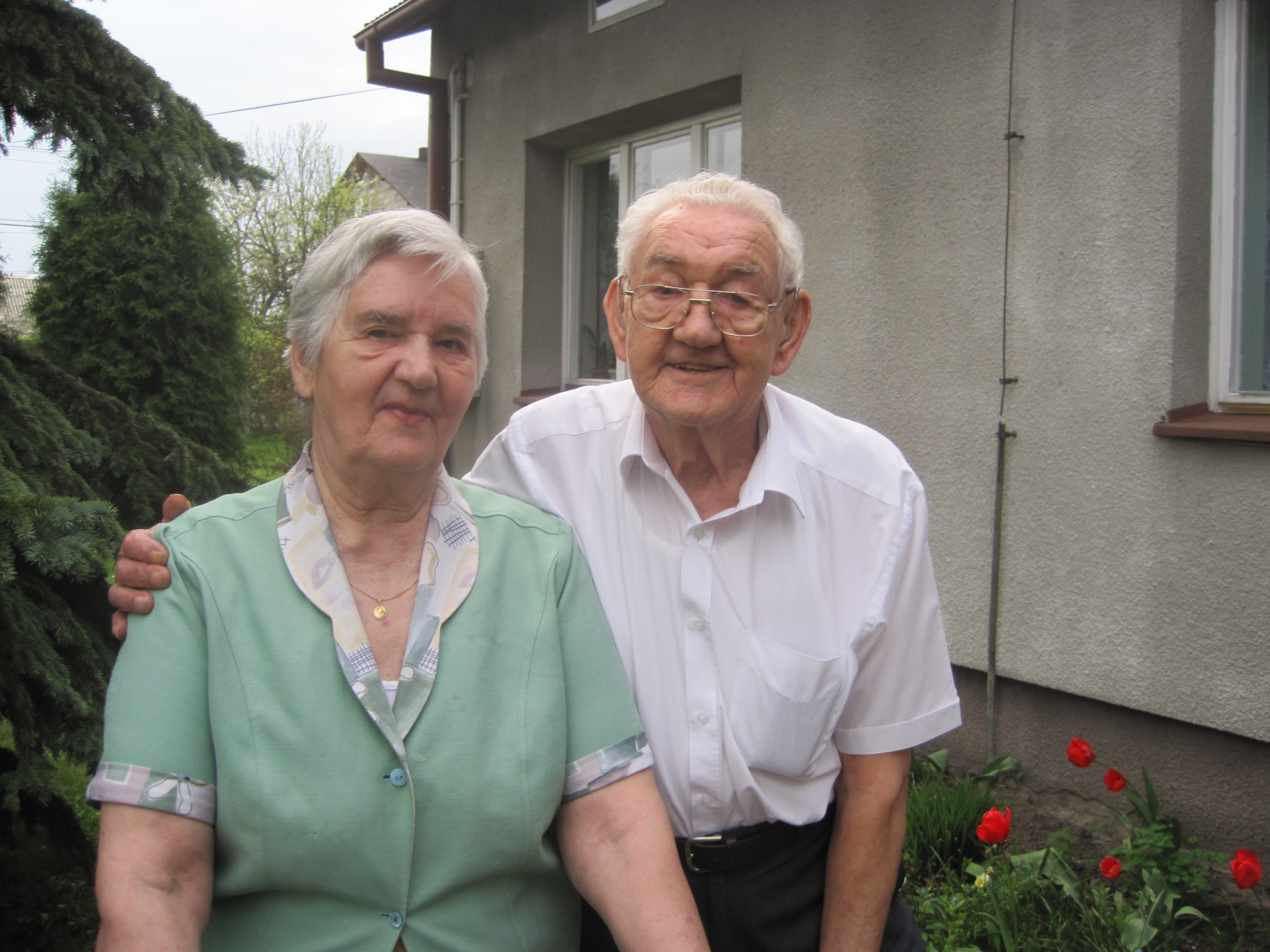
The bride and groom with parents

The bride and groom with parents

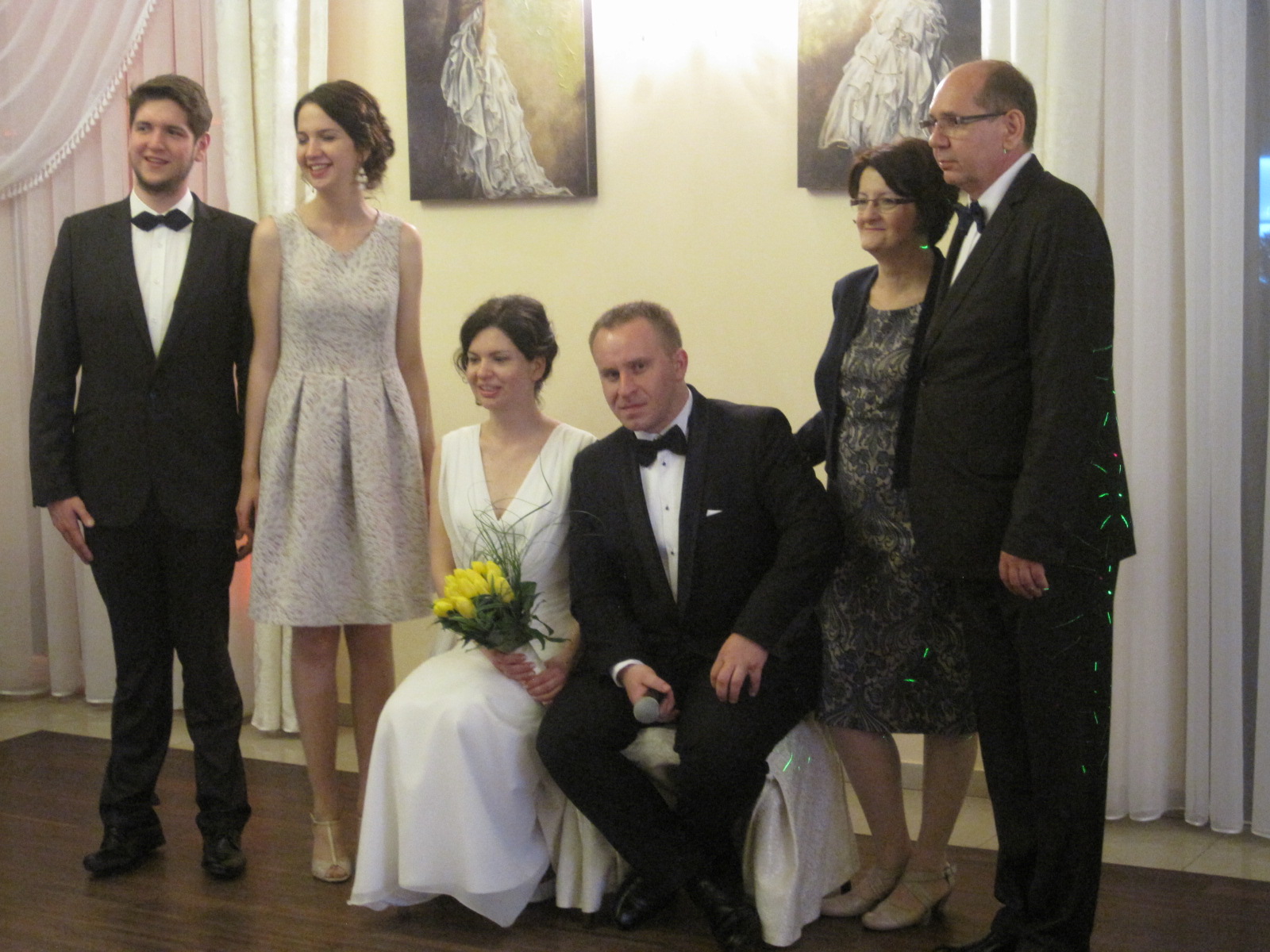
And with sister, Ula and brother, Lukasz

And with sister, Ula and brother, Lukasz

Dad 'dancing' with his walking stick and cousin Irena

Dad ‘dancing’ with his walking stick, and cousin Irena

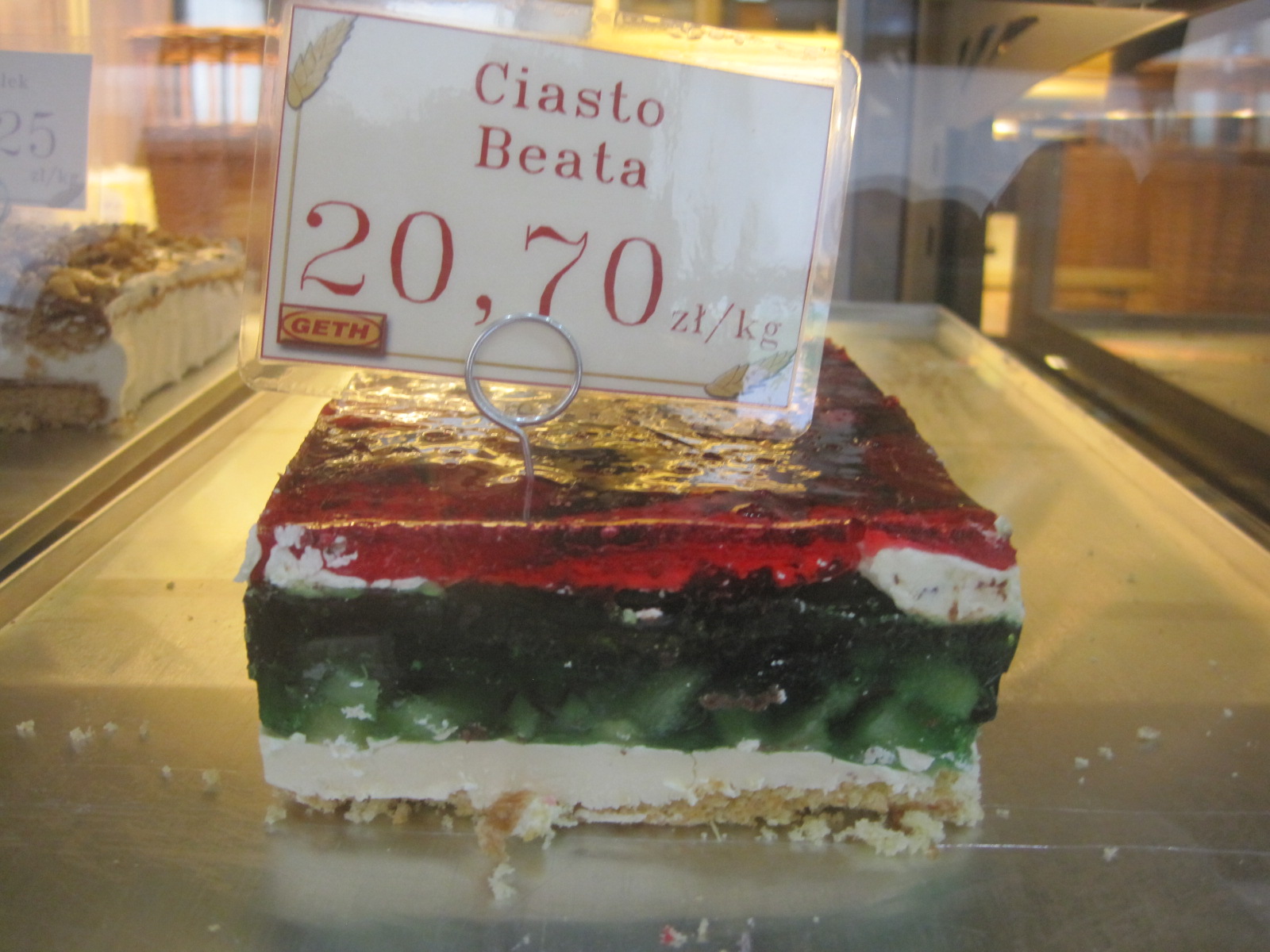
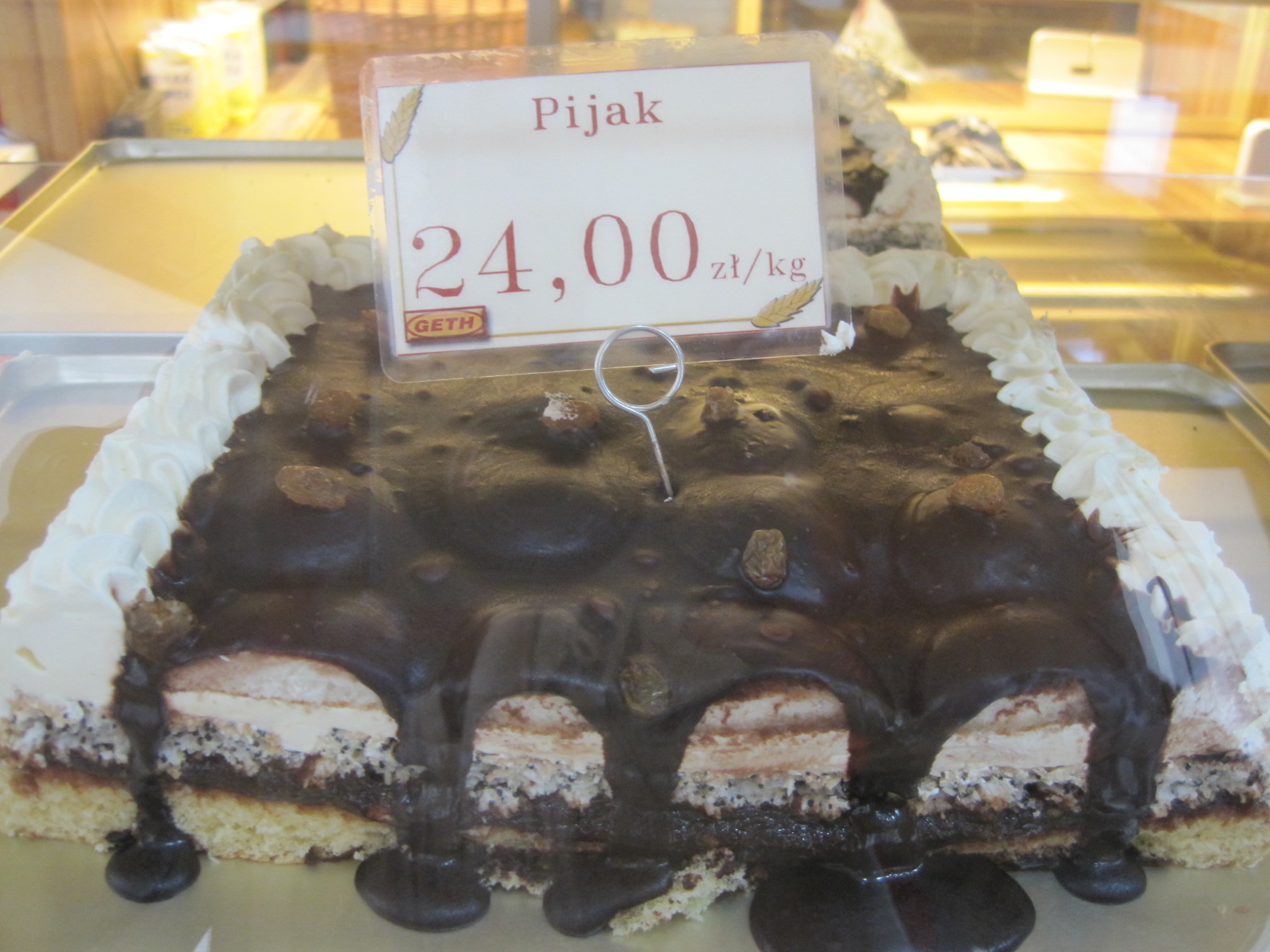
The cake!

The cake!

Feeding each other cake

Feeding each other cake

Maybe not the best of photographs, but certainly the best of occasions.  This is just a snippet from the Polish wedding I attended in Krakow last week.  I cannot thank everybody enough for their kindness.  I had a truly wonderful time, and I think you can see, the bride and groom did too. I know you’ll join me in wishing my neice, Weronika, and her husband, Wojtek (a simpler spelling) the very best of health and happiness in their future together.

My feet have barely touched the ground since my return, and my head is still full of Polish words like ‘slub’- the wedding!  Join me on my Monday walk if you’d like a look at some of the Polish landscape.  Meantime, hello again, and don’t forget to visit Cate at Show My Face to play Six word Saturday.  I’ll be playing ‘catch up’!  See you soon.


6wsButton

Wild! Fast! Panoramic! Epic!

A very tame kind of wildness

A tame version of wildness, but beautiful, don’t you think?

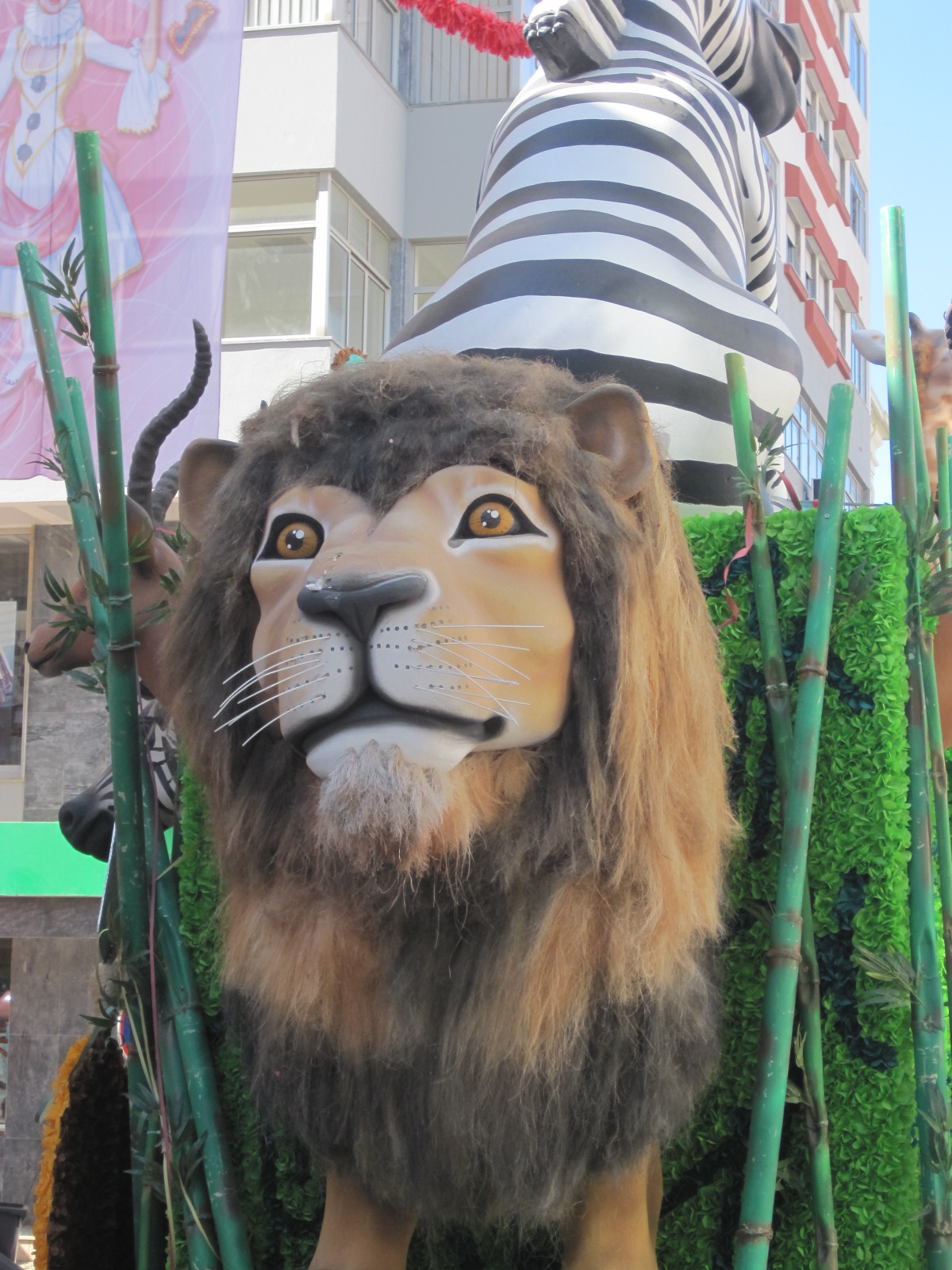
He’s one of my favourite photos from Loule Carnaval, and let me tell you, things can get a bit wild there.  It’s a while since I entered a photographic competition, so when I discovered that my friends at Blacks were hosting one with a pretty wild prize, I thought it was time to have a go.  It’s just a bit of fun really, but you never know where it might lead, do you?

The prize is £2000 to spend with adventure travel experts Explore.   When I opened the link to them and read “Burma for under £2000”, I was convinced to enter!  They organise walking tours and wildlife tours, and cycling tours, of course.  I wondered what a ‘tame’ option like rail journeys would offer and was beyond excited when I saw ‘Japan by rail’ and ‘India by rail’.  Go and have a look at the boat journeys ‘to die for’!  The Nile on a felucca or the Maldives on a dhoni?  I’ve taken a gulet cruise off the Turkish coast, so that’s one less to think about.

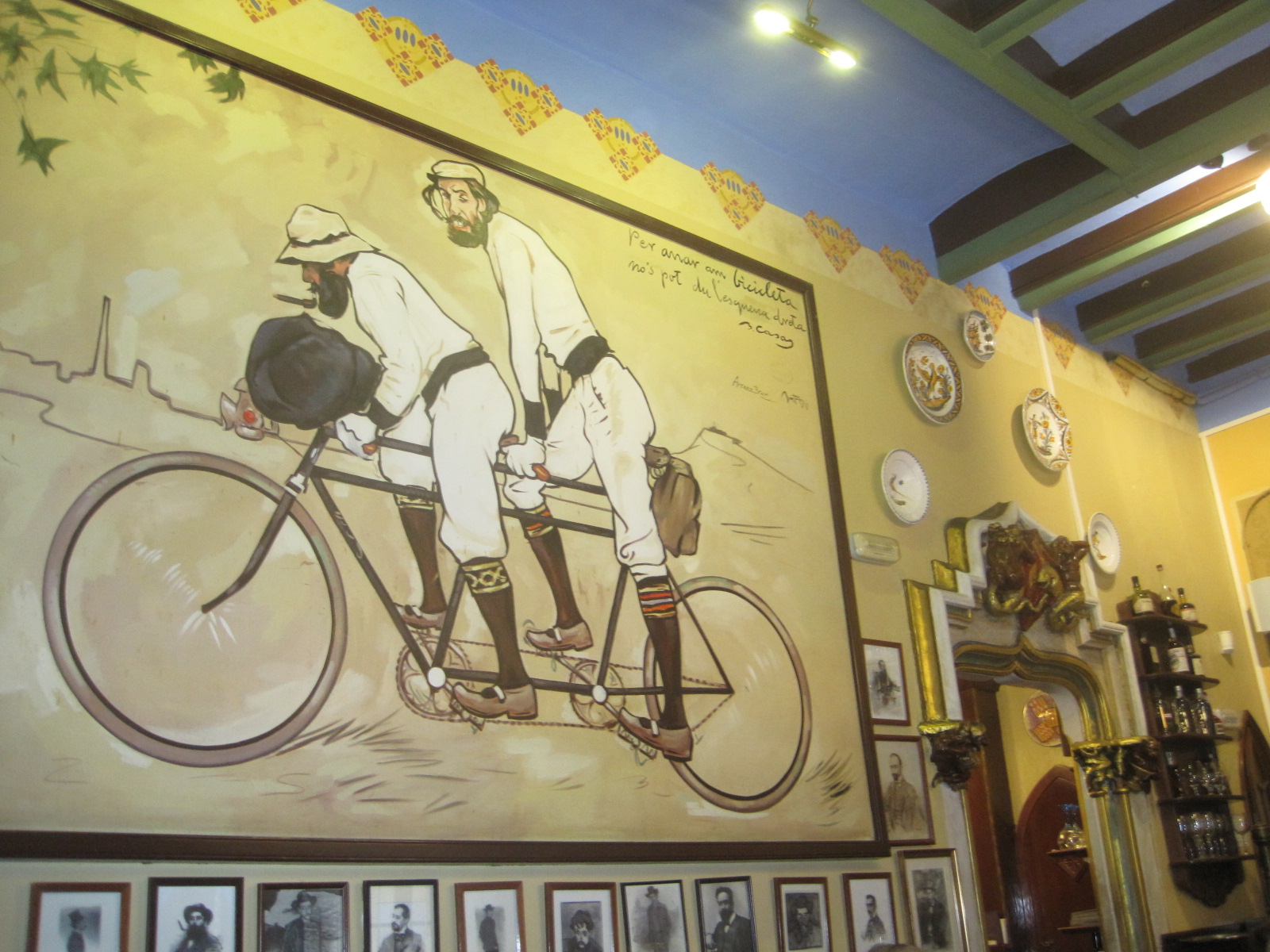
So, now you need to know what to do.  Simply, compose a blog post around the subjects ‘Wild, Fast, Panoramic, Epic’.  I’ll give you more details later but for now you should know that Leo the Lion, up there, is my entry for Wild. Well- you can go pretty fast with two pedalling, can't you? Well- you can go pretty fast with two pedalling, can’t you?

In case you haven’t guessed, this is my entry for Fast.  They do say at Blacks that you should be creative, and certainly have fun with it.  I haven’t made it onto that Shinkansen train yet, but I have been to Barcelona.  Stick with what you know, right?  El Quatre Gats was a venue for one of the most creative artists our planet has ever known.  I was walking in the footsteps of Picasso.

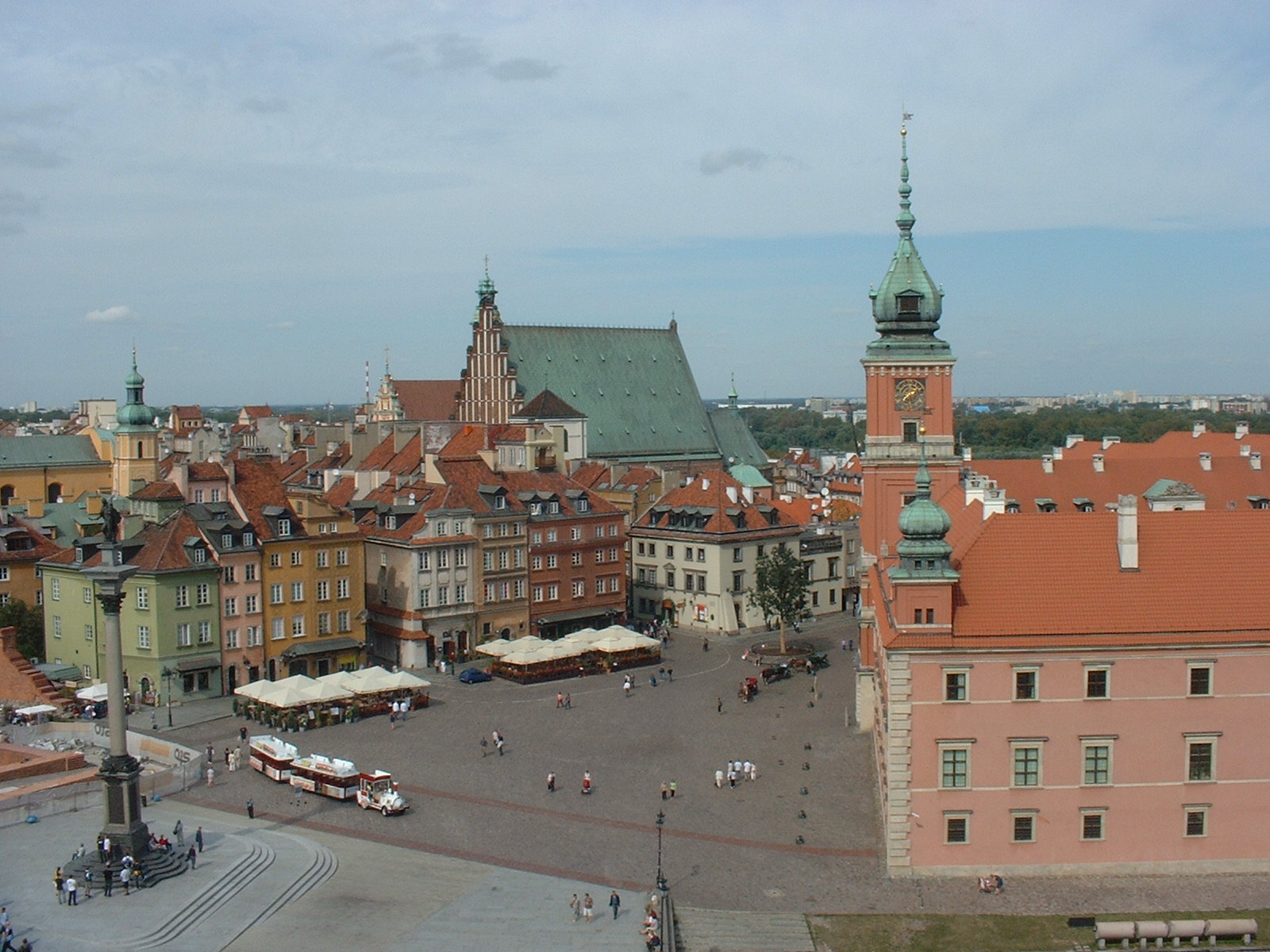
I looked up Epic in my dictionary to be sure of the meaning and it seemed to have connotations of history and grandeur.  A few places came to mind, but in the end I decided on Warsaw’s amazing reconstruction of Stare Miasto, the Old Town.  Nothing can have been on a more epic scale than the rebuilding that was necessary after it’s total annihilation in World War 2.

Plac Zamkovy

Plac Zamkowy- Castle Square

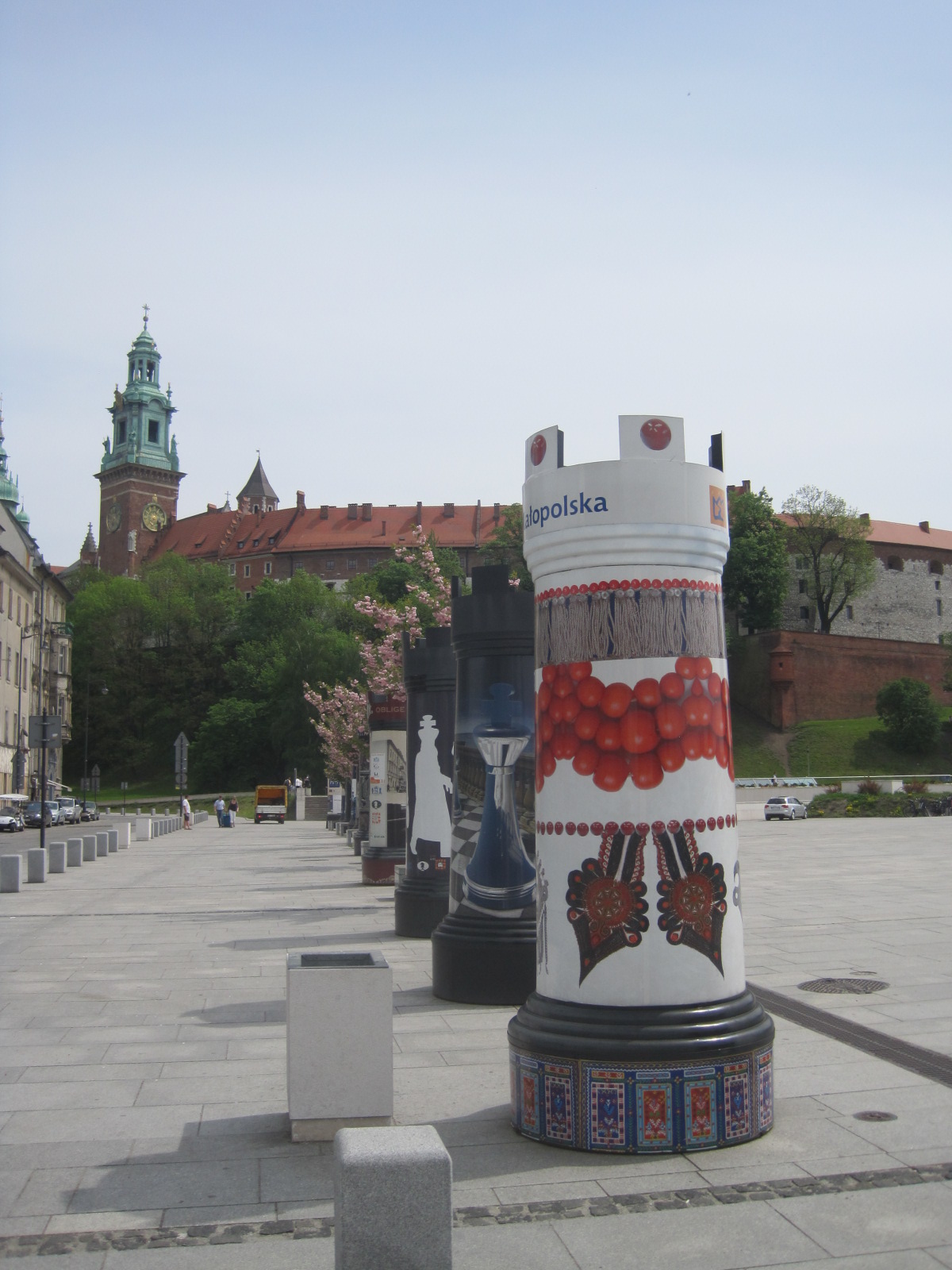
And while I’m in Poland I thought I’d finish on a slightly different, interesting panorama.  I was rather surprised by these chess pieces the last time I was in Krakow.  I’m returning next week for a family wedding so I’ll have to check if they’re still there.  Hope you like my Panoramic entry.

Beautiful -framed behind the chess pieces

Beautiful Wawel Castle and Cathedral, framed behind the chess pieces

So now you need some competition details, but you have to promise me not to win!  Otherwise how will I get to Burma or the Maldives?  The closing date for entry is Monday, May 5th at midnight.  You need to tweet your post to Blacks #epicadventures or put it on their Facebook page.  Full details are in the link.

I hesitate to wish you luck.  Oh, go on then!  Good luck!  But expect to be struck off the friend list if you win.

‘I’ is for Irena and “idziemy!”

Poland-eagle-150square

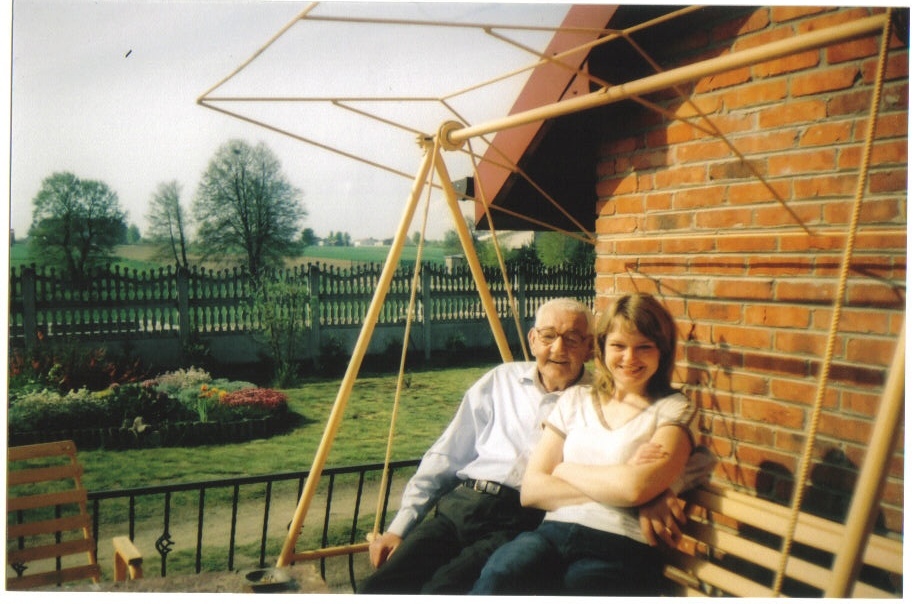
It’s way too long since I ventured into my A-Z of Poland, so I’m going to introduce to you another of my cousins.  A lady who loves to dance and always has a warm smile for me, Irena works hard for a living.  She and Arkadiusz (Arek for short) run a market garden in their home town, Bełchatów.  Arek grows many of his own plants and seeds to sell in his shop, which specialises in garden products.  Whenever she can, Irena helps out in the shop, which she loves to do. Usually this is in addition to factory work, or whatever she can find, to help with the family finances.

Irena with Dad in her garden, 2008

Irena with Dad in her garden, which provides plants for the shop

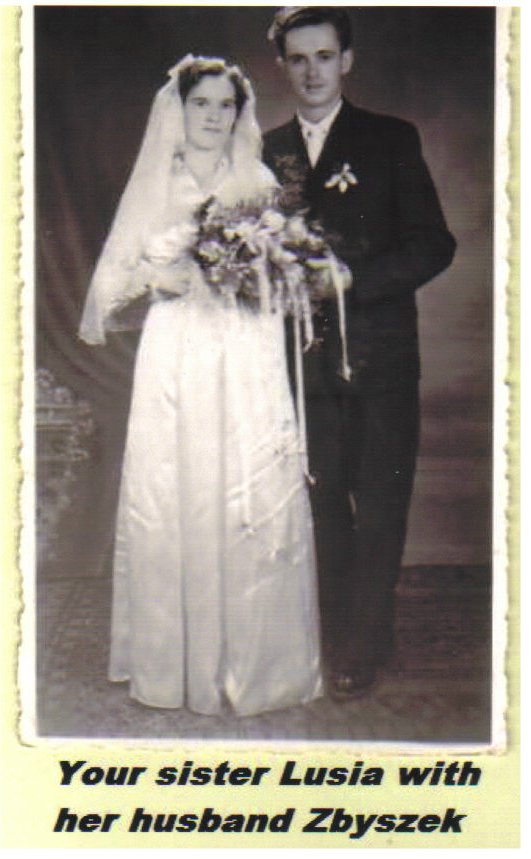
Irena is the daughter of my aunt Lusia, one of Dad’s sisters, and her husband Zbigniew, whom I never met.  When first we got together the photos would come out, many of them tiny squares of black and white, but precious memories, every one.  I would try to piece together the story and remember the names of family members who died long before I had the chance to meet them.

Lusia and Zbigniew

This is one of several photos that were emailed to us when Dad first made contact with his family. It’s a touching story, which many of you know.

Irena and Arek have two lovely children, Robert, a quiet young man, 22 this month, and his vivacious and beautiful younger sister, Weronika. (remember, the ‘w’ sounds like our’v’)

Arek in the foreground, with Irena behind him and Weronika, with golden red hair at the back

Arek in the foreground, with Irena behind him and Weronika, with golden red hair, at the back

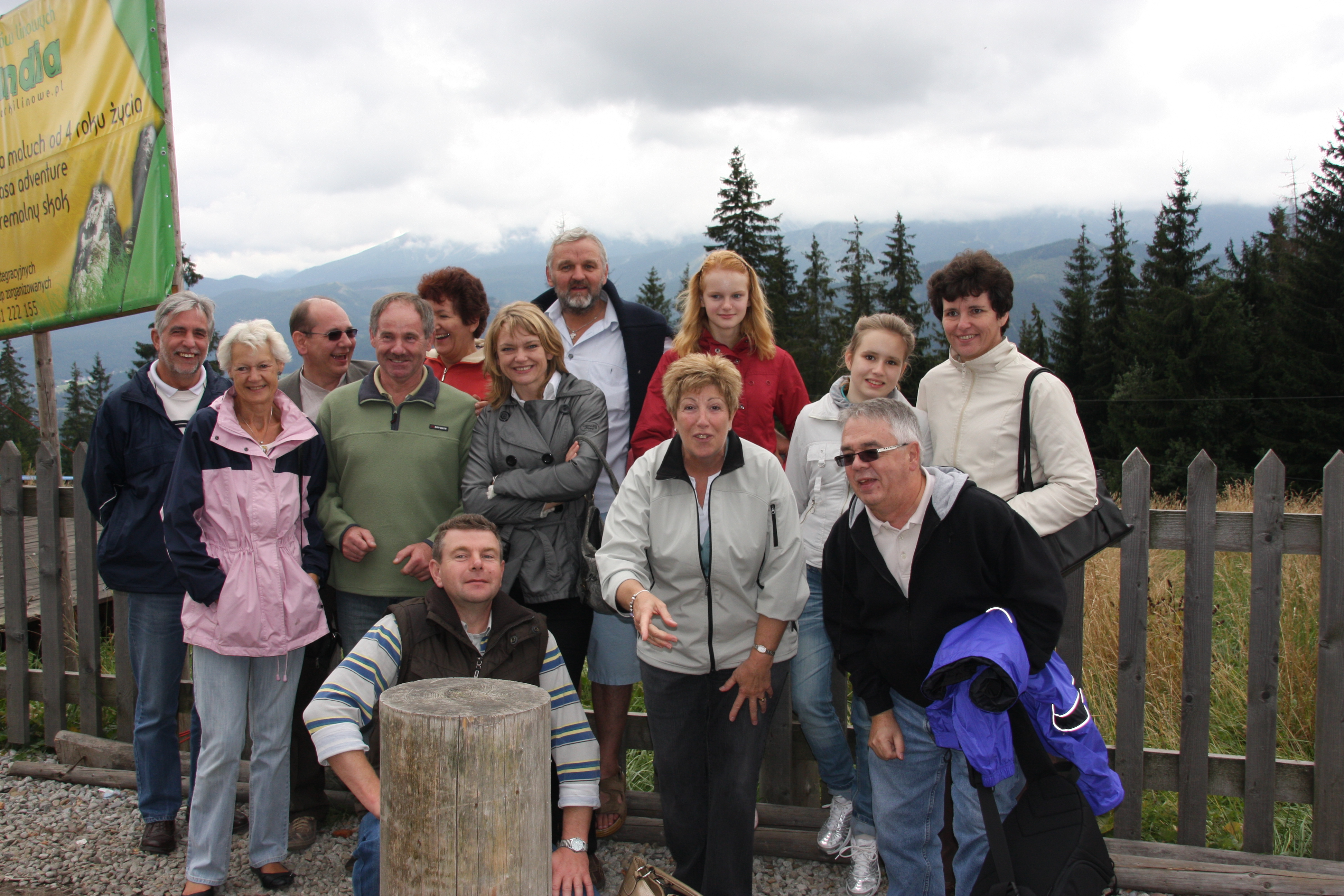
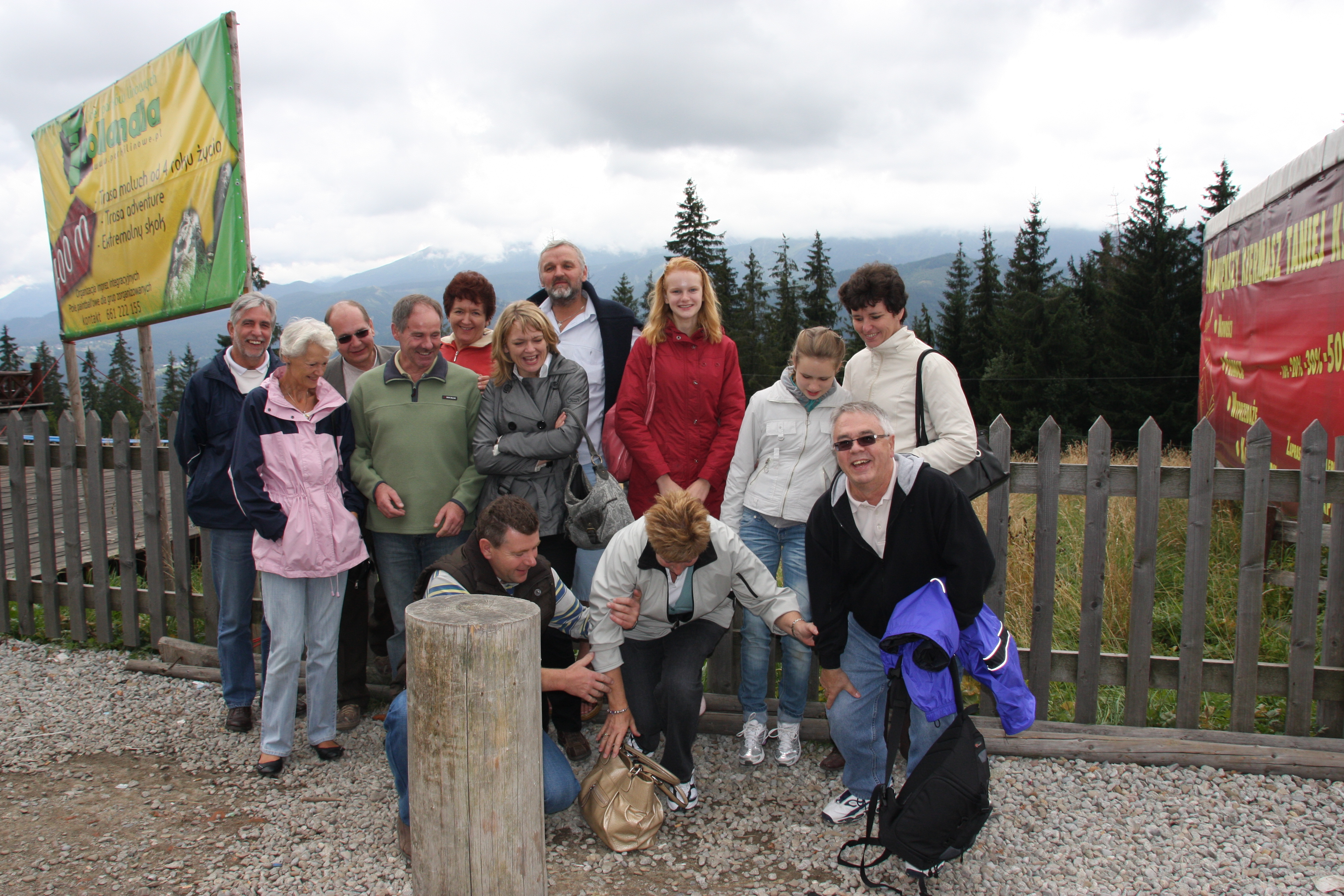
IMG_0554I should maybe explain what’s going on here.  Arek likes a bit of fun.  Several years ago the family were in Zakopane for a Silver Wedding celebration.  Lynne, my stepsister, and husband George, had joined us from Canada, and Lynne was practising with a new camcorder.  Her handbag, containing the camcorder, weighed rather a lot, so Arek was “helping” her to pick it up.

If you aren’t familiar with my Polish story, you could have a look at my Personal A-Z page.

Idziemy!  We go!

And so to grammar!  A silly saying that’s often used in our home, “I’ve already told you more than I know myself” completely applies to my knowledge of Polish grammar.  So, let’s start with a simple verb conjugation:

Iść- to go (on foot)

idę  – I go                                                   idziemy  – we go

idziesz  – you go (familiar form)      idziecie  – you go (polite form)

idzie  – he/she/it goes                          idą  – they go

Well, I got the hang of that.  But did you notice the (on foot)?  It transpires that there are numerous ways of saying you are going somewhere in Polish, and there is a separate verb for each of them! Thus ‘to go (by transport)’ uses the verb jechać.  Sometimes I can remember that verb (and it’s irregular conjugation), sometimes not!  Imagine my consternation when I later discovered that if I wanted ‘to go, by plane’ I needed another verb.  And so it goes on ….

I am a very bad student.  I used to love language at school but these days I have neither the patience nor the memory.  I recently discovered another ‘i’- Italki.  It offers the potential to converse in Polish (and many other languages), at any level, and I have been trying to convince myself to enrol.  I return to Poland on 29th April, for a family wedding, and this time I will be staying in a hotel with my husband, who will rely on my immaculate translation.  You’re right- there will be much nodding of heads and smiling.

Many thanks to Julie Dawn Fox for inspiring the personal A-Z Challenge, and to lovely Frizz, who prompts me to return to it whenever I see his A-Z (but never often enough).  Do visit these challenges if you can find time.  You will be richly rewarded.

banner4

U is for Urszula, Ursulines and “urodziny”

Poland-eagle-150squareEven though I’m a day late, I’m determined to post this today!  I already missed S and T, in spite of having slub. szczesliwy and Sukiennice at the ready, and Theresa, of course!  I can’t be everywhere! (a hard realisation for a lady like me to make)

220px-UrsulaGozzoli

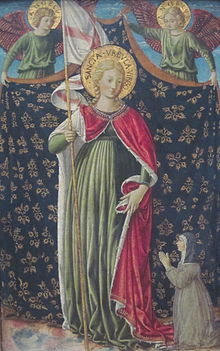
St. Ursula, from Wikipedia

In Poland many girls names trace back to a saint, and Urszula is no exception. The photo shown above is actually of an Italian Catholic saint, who was instrumental in the setting up of the Ursulines.  This is a religious order, founded in Brescia in 1535, and now a world wide organisation.

Urszula Maria Ledóchowska was a Polish religious sister who founded the Congregation of the Ursulines of the Agonising Heart of Jesus.  Doesn’t sound much fun, does it?  Born Julia Maria Ledóchowska on 17.4.65, she entered the novitiate of the Ursulines in Kraków.  She received the name of Ursula at the end of her training, and went on to become Mother Superior.  In Kraków she set up a home for female university students, then travelled abroad with the blessing of the Pope, fighting religious oppression.  She was active in St. Petersburg, Russia, in Finland, Stockholm and in Denmark.  In May 1939 she died in Rome, and was canonised by Pope John Paul II in May 2003.

Her feast day is May 29th, which may well be why my neice, Ula (short for Urszula), born May 28th, takes her name.  You’ve seen Ula before.  She’s the “lady of the cakes” who’s helping to run her Dad’s pieczywo de smakoszy (tasty cake shop) in Kraków.

Sampling the wares?

Here she is with her lovely Mum, Marta, my Dad and more cake (of course!)

Sampling the wares!

Sampling the wares!

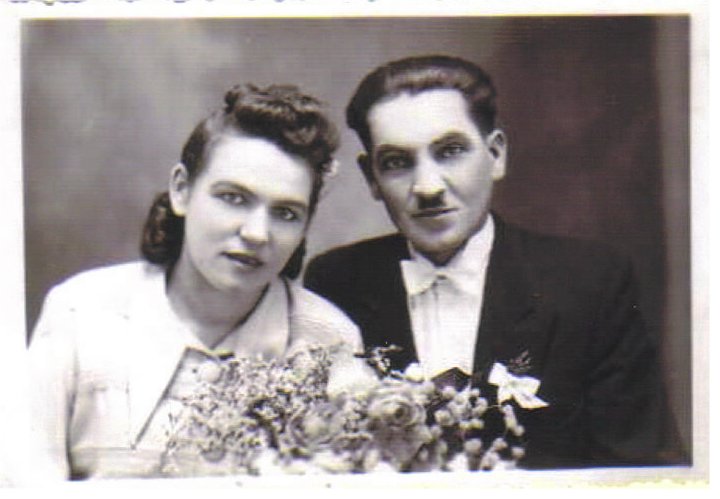
There was another Urszula in the family, Dad’s older sister, whom I never met. Over the years I have seen an assortment of photos, but know little of her history, other than that she died early.  Here she is, on her wedding day.

Ursula, with her husband, Ignacy

Ursula, with her husband, Ignacy

And that just leaves us with urodziny– birthdays!  You can imagine how many cards I send to Poland every year, can’t you?

I’m sure Frizz won’t mind that I’m slightly out of sync on his series of A-Z’s. He’s a very forgiving chap, and the letter V which is next up doesn’t exist in Polish. (W is pronounced “v”)  There is no timescale for Julie Dawn Fox’s Personal A-Z Challenge, which I’m sure you’ll agree is just as well.  I’d be very happy if you could check out both, and maybe even join in?

banner4

R is for “rodzina”

Poland-eagle-150squareRodzina is the Polish word for family, and what an important word it is.

For many years “Polish family”, to me, meant just Dad.  My English mother, Nancy, has been dead for 23 years, and, having no brothers and sisters, ours was a small family unit.  Then came the fateful phone call.  I’ve told the story countless times, but it still fills me with wonder.

Dad (centre) reunited with his brothers and sisters after 64 years

Dad (centre) reunited with his brothers and sisters after 64 years

Unknown to him, in Poland, awaited an enormous family.  Following the phone call, arrangements were made for us to visit.

From his second marriage, to Laura, Dad already had inherited quite a large English family.  Laura was a lovely lady, but she died on Dad’s 70th birthday, leaving him saddened and lonely.  My presence and that of my stepbrother, Tony, and his family, was not enough to fill the gap.  My stepsister, Lynne, though always in touch, was far distant in Canada.  That phone call changed Dad’s life.  It also made quite a difference in mine.

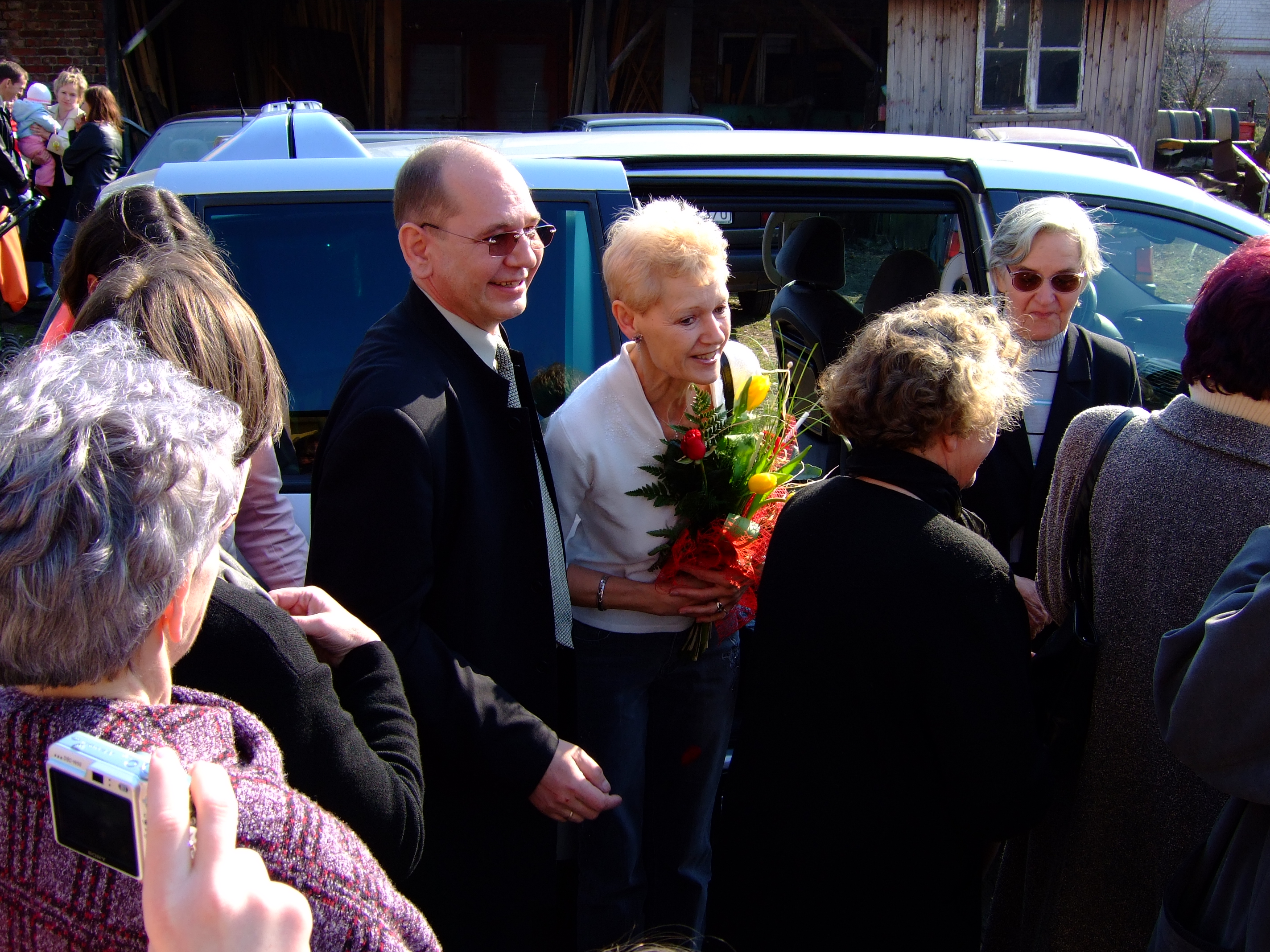
Arriving at the farm with cousin, Adam

Arriving at the farm with cousin, Adam

Zawady 31.3-1.4.07 003

My cousin Marysia, and neice, Kasia

Ewa in the forefront, Marysia and Jadzia on the right

Cousins, Ewa, forefront, Marysia and Jadzia on the right- Dad, centrestage!

If you’ve followed any of my Polish A-Z you’ll know that I have 26 cousins (one for each letter of the alphabet?) so it’s impossible to show them all here.  Off we went to Poland, with camera crew in tow.  Dad was featured on North East Tonight on 15th March 2007.  Watching the webcam still has me sniffling.

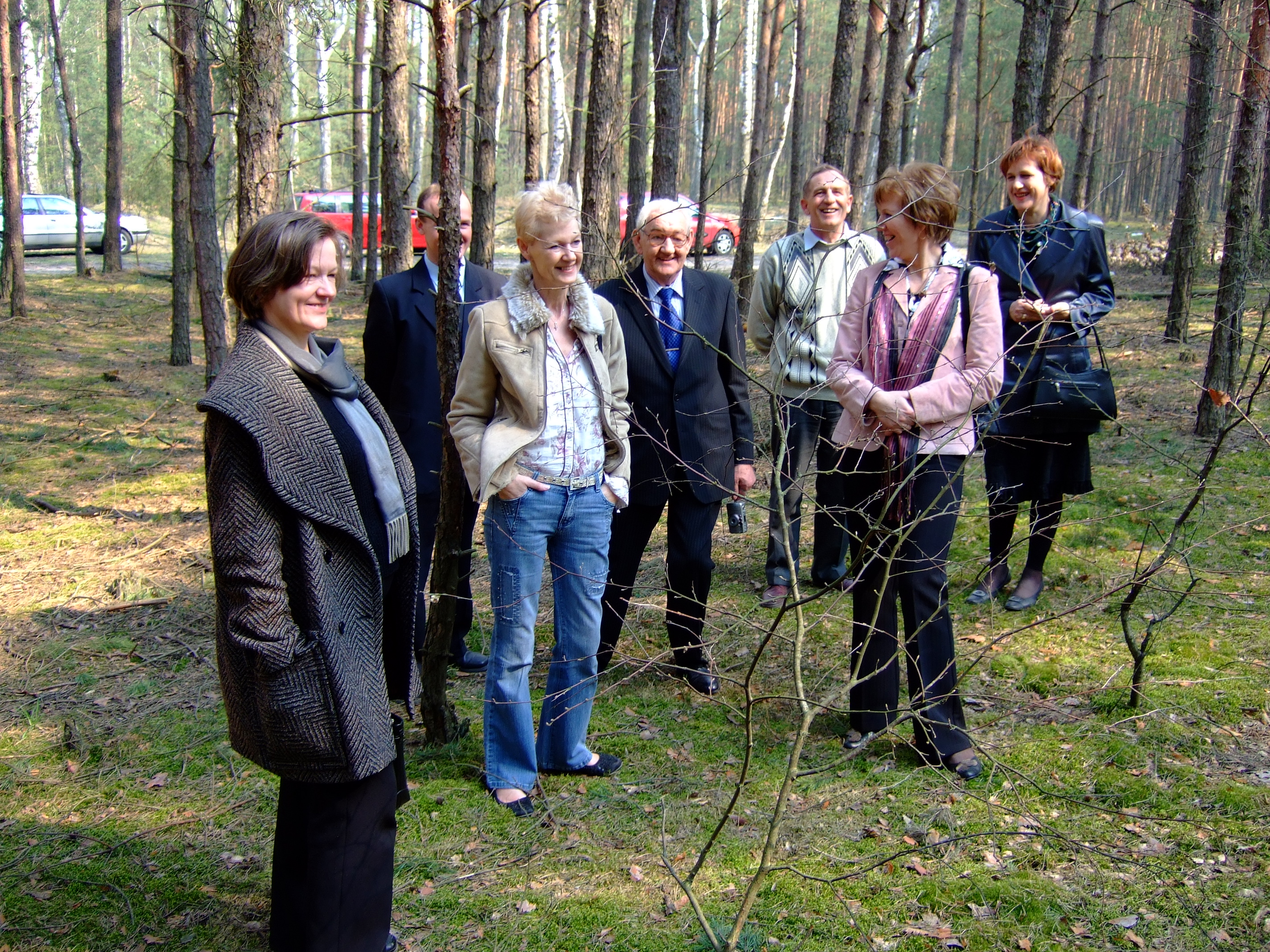
After a day or so in beautiful Kraków, with my cousin Adam, we drove north to meet the family.  The cacophony of tooting horns and voices as we drove in through the farmyard gates will stay with me for a very long time.  Then, in good old Polish fashion, jemy i pijemy– we ate and we drank! A drive through the woods helped Dad to familiarise himself with the place he had left behind so long ago.

Lighting candles

Lighting candles

As all Polish visits seem to do, we ended up at the cemetery.  They may celebrate life in fine style, but they never forget to honour loved ones.  And the bigger the family, the more the farewells.  Already I have said goodbyes to my much-loved Aunt Anna, and to uncle Włodek’s wife, Janina.  Cousins Gosia and Dominik were both much too young to die.  But life is seldom gloomy around my Polish family.

Life is full of smiles (here with neice, Ula)

Life is full of smiles (here with neice, Ula)

Nephew Lukasz with his sister Weronika, soon to be wedded to Wojtek (front)

Her brother, Łukasz, and sister Weronika, soon to be wedded to Wojtek

Beautiful scenery

Beautiful scenery, like Wawel Cathedral

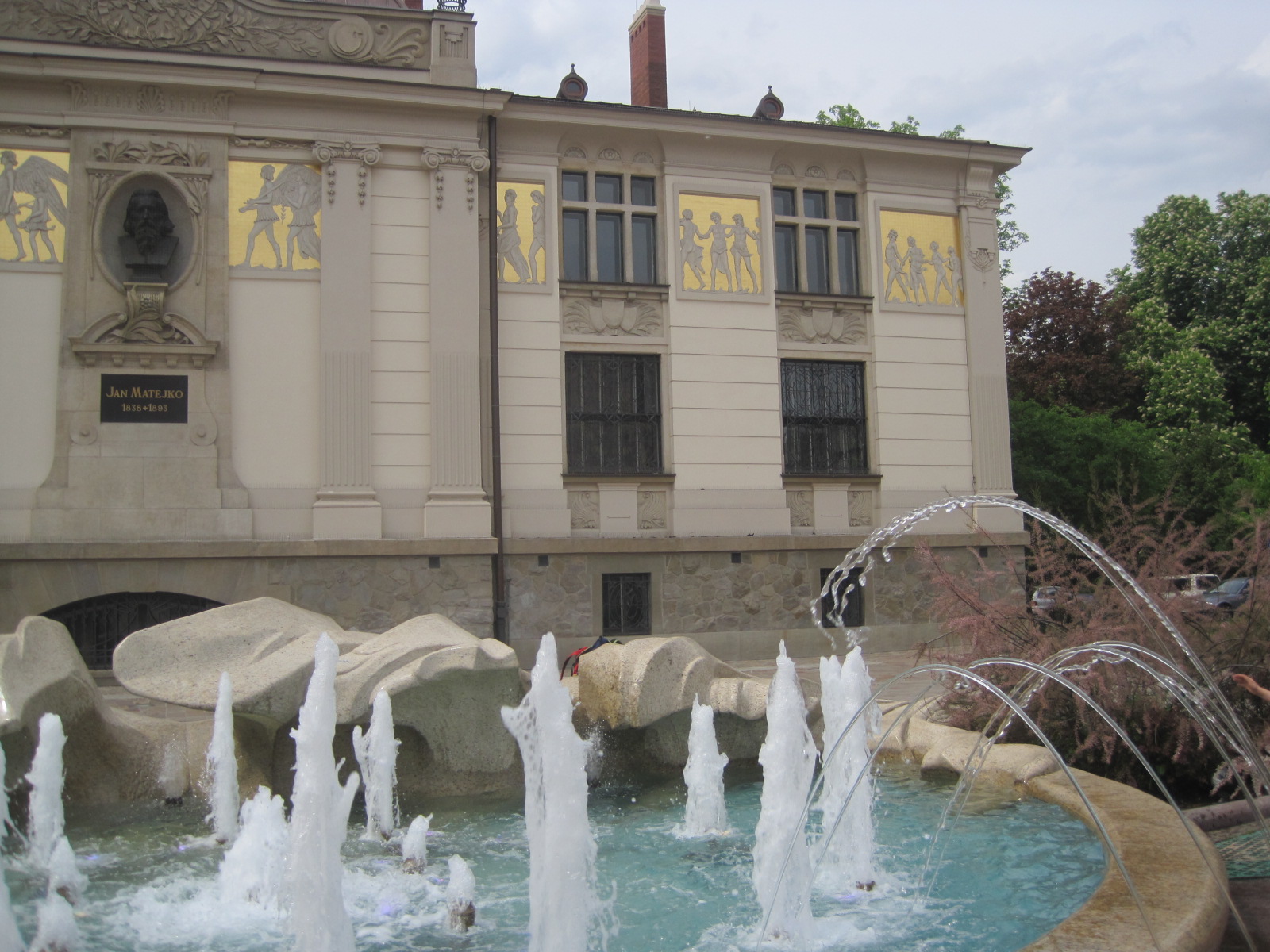
Like these fountains in Krakow

These fountains at Pałac Sztuki in Kraków

And a chess piece or two.

A chess piece or two

And cake!

And cake!

Dad has always been kind, caring and the very definition of a gentleman, whatever life has brought his way.  You can read more of his story here.  I hope you’ve enjoyed sharing tales of my rodzina Polska.  Many thanks to Julie Dawn Fox, who started me off on this Personal A-Z series, and to my good friend at Frizztext for welcoming me to his A-Z.  Please click on the links or the logos to see more.

banner4

P is for Pope, Piotrek and Przemek!

Poland-eagle-150square Poland is, by and large, a Catholic country, and one of the images that stays in my head from my very first visit is that of Pope John Paul II (or Jan Pawel, as he’s known in Poland).  I already had enormous respect for this very human and vital man, but I hadn’t fully realised the reverence for him in his homeland.  When I began to look into the story of his life, I understood why.

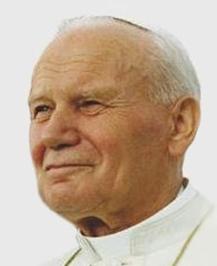
Pope John Paul II in 1993- courtesy of Wikipedia

Pope John Paul II in 1993- courtesy of Wikipedia

Karol Józef Wojtyła was the head of the Catholic Church from 16th October 1978 till his death on April 2nd, 2005.  Born at Wadowice in Southern Poland on 18th May, 1920, he was to become the first non-Italian pope since 1523.

He was the youngest of three children born to his parents, though his sister Olga had died before he was born.  In reality he should not have been born himself because his mother, Emilia, had been told that she had no chance of giving birth to a live child.  A devout Catholic, she refused an abortion, and the child did indeed live, though Emilia herself died in childbirth when Karol was just 8 years old.  An athletic boy, he loved football and sports.

In 1938 he and his Dad moved to Kraków, where he enrolled at the Jagellonian University.  He took philosophy, and developed a talent for languages (he learned 12, which puts me to shame!).  He had to take part in compulsory military training, but refused to fire a weapon.  In 1939, the German occupying force closed the university and he had to find work to avoid deportation.  His Dad died of a heart attack in 1941, so that, by the age of 20, he had “already lost all the people I loved”.  It was then that he began to think seriously about the priesthood.

Statue of John Paul II in the grounds of na Skalce

Statue of John Paul II in the grounds of na Skalce church, in Kraków

In 1942 he knocked on the door of the Archbishop of Kraków and asked to be admitted to the clandestine undergound seminary.  He had some narrow escapes, but survived the war years to spend a year as a village parish priest, before being transferred to Kraków.  He taught ethics at the Jagellonian University and gathered a little group around him that became known as “Rodzinka”-  his “little family”.  As well as prayer and charitable works the group went kayaking and skiing with him.

You have to remember that these were now Communist times in Poland.  The Faculty of Theology was disbanded at the university and priests were forbidden to travel with students.  Father Wojtyła asked his students to call him “Wujek”- the Polish word for uncle (which I love very much), so that it would not be obvious he was a priest.  The name stuck, and to Poles he would always be their beloved Wujek.

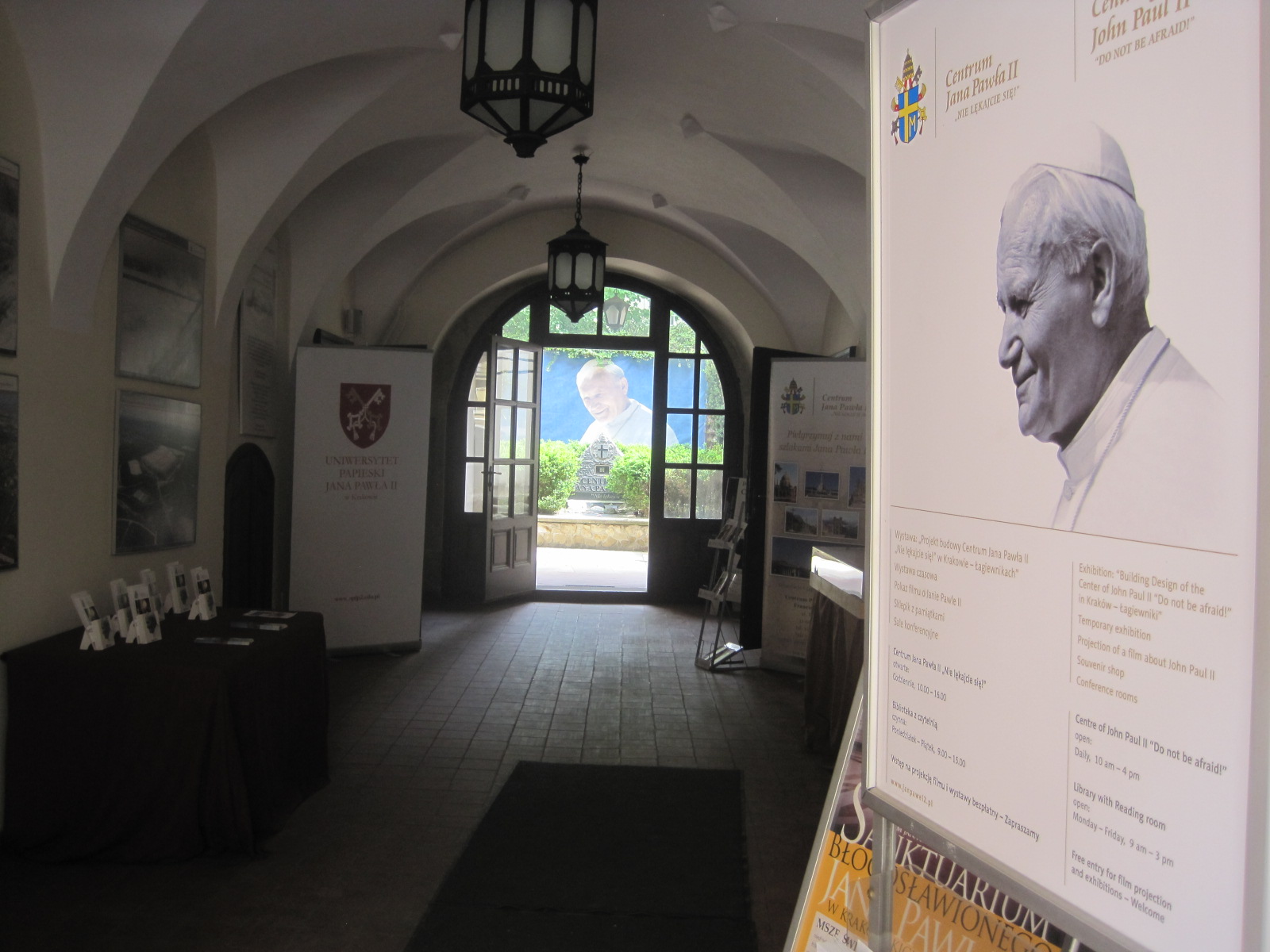
The museum dedicated to Pope John Paul. a beloved local

The museum dedicated to Pope John Paul. a beloved local

At just 38, Wojtyła was appointed Bishop of Kraków, and from there it was a steady rise to the papacy.  His mission was “to place his Church at the heart of a new religious alliance that would bring together Jews, Muslims and Christians in a great [religious] armada”.  He was to travel the world like no Pope before (129 countries in total!) in an effort to do so.

In June 1979 he made his first trip back to Poland as Pope.  His country was still completely under the Soviet thumb but he encouraged them to adhere to their faith and affirm solidarity with one another.  The Communists were not to relinquish power for another decade, but it was with the Pope’s encouragement and “soft power” that Solidarnosc was born as a movement.   In 2004 he was nominated for the Nobel Peace Prize for his lifelong opposition to Communist oppression and for trying to reshape the world. The full story is in the Wikipedia link at the top of this post.

Beside Wawel Castle in Kraków

Beside Wawel Castle, in Kraków

I was in Kraków in 2007 on the 2nd anniversary of his death, and the crowds and emotion were overwhelming even then.  Candles flickered as his voice was broadcast into the night.  Since then I have always been aware of his presence whenever I am in the city.

P is for Piotrek and Przemek

Piotrek is the English equivalent of Peter, and a popular name in Poland, so of course, I have a cousin of that name!  He’s the carpenter son of Lodzia and Zygmunt, and a lovely man with whom I have danced at a wedding or two.

Within the family we also have a diminutive Piotrek (Piotrus) who is a proper scene stealer, as small boys are.  He is the son of Krzystof and Ilona, whose wedding I went to in April 2008.

That just leaves Przemek!  He is the son of my cousin Adam’s sister, Basia (also my cousin- no wonder I’m confused!).  His English is impeccable.  He and fiance Marta were house-hunting when I was last there, so who knows if there’ll be yet another wedding in the not too distant future.

Przemek and Marta

Przemek and Marta

Well, I’ve bent your ears enough for one post so it’s time to say thank you to Julie Dawn Fox for hosting the Personal A-Z Challenge, and to lovely Frizz for also letting me tag along on his A-Z.  As always the links and logos will take you there.

banner4

N is for “Nie rozumiem”

Poland-eagle-150square

I’m having great fun trying to keep pace with both of my A-Z challenges, at Frizz’s weekly pace!  On Tuesdays the new letter comes out, so yet again I find myself leaping from Portugal to Poland.  It’s quite a stretch!

Can you guess what “nie rozumiem” means?  “I don’t understand”.

It’s probably the expression I have used the most in my visits to Poland.  Despite the best of intentions I struggle to get my ear attuned to Polish, and you can’t really say “please will you write it down so I can understand”.  It doesn’t seem polite somehow, and rather impedes the flow of conversation!

The mine at Belchatow

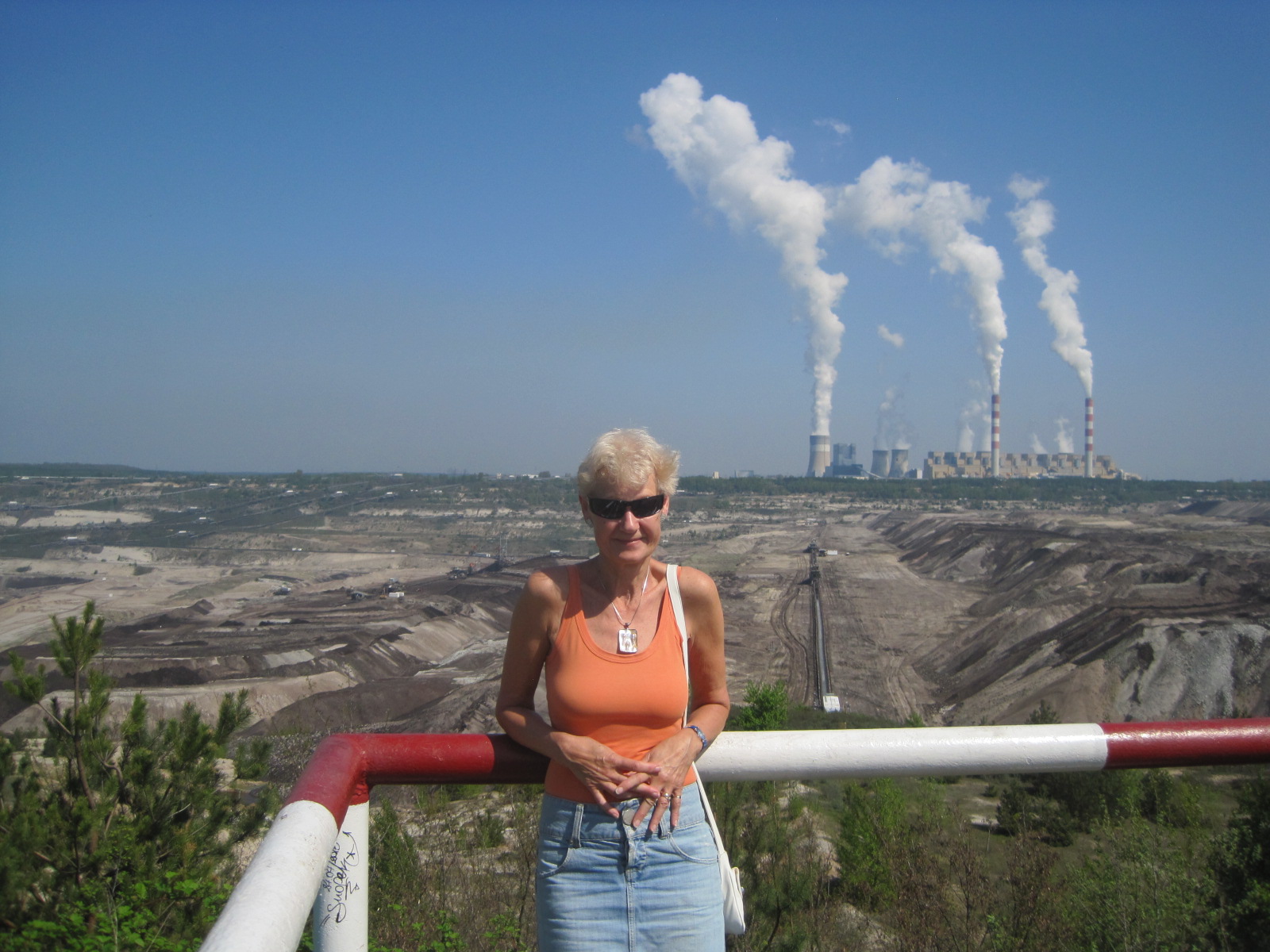
Another thing I’m not great at understanding is feats of engineering, but even I could see the type of industry that was going on when the family took me to inspect the nearby mine at Bełchatów.  This is Europe’s largest coal-fuelled thermal power station.  There are huge viewing platforms from which you can observe most of the process.  It’s the chief employer in the area and many of my family have worked there.  The technology looks impressive.

Seldom have I been photographed at an opencast mine

Seldom have I been photographed at an opencast mine

It's a monster!

It’s a monster!

Imagine having a lovely home like this right next door!

Imagine having a lovely home like this right next door!

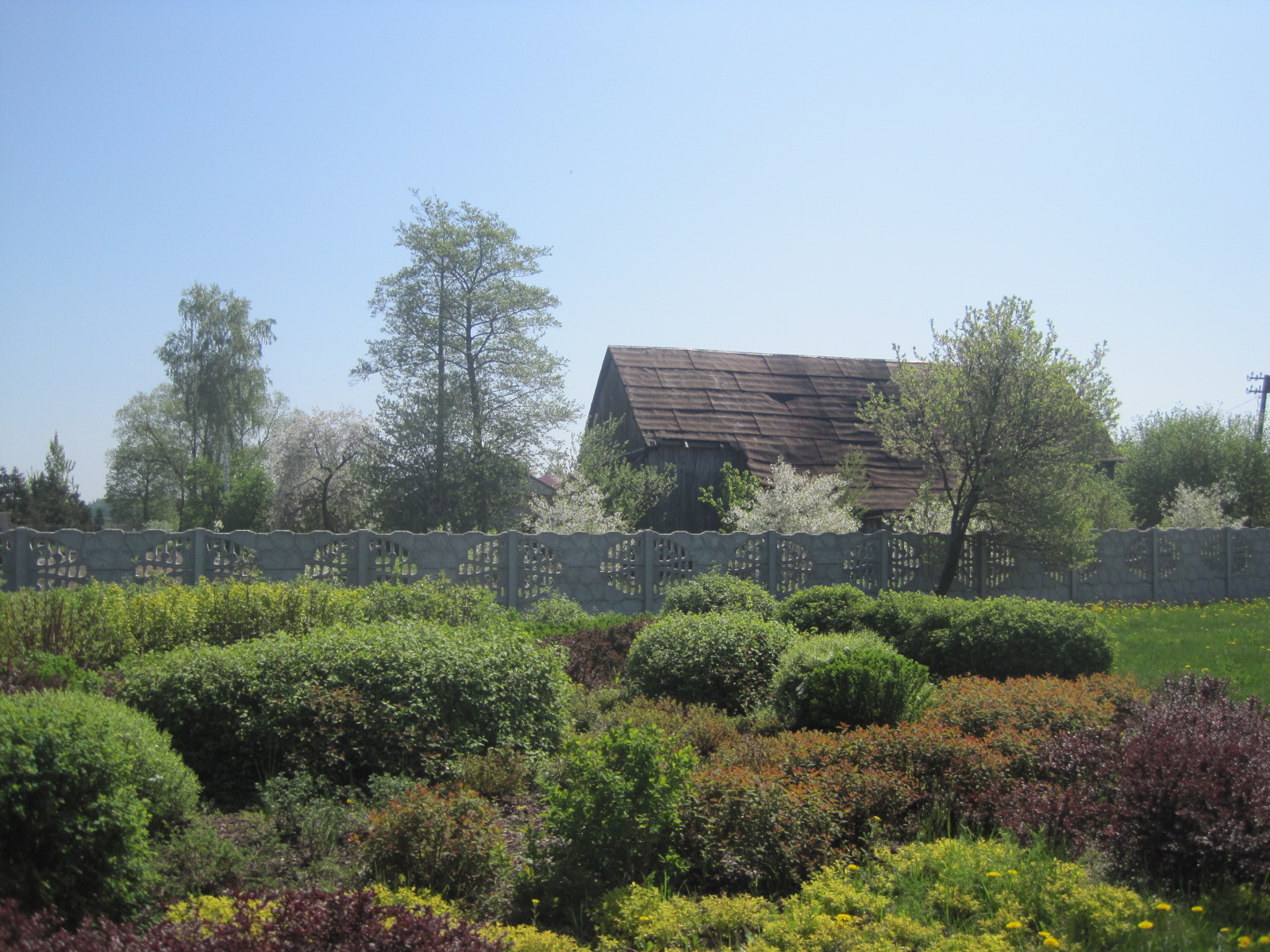
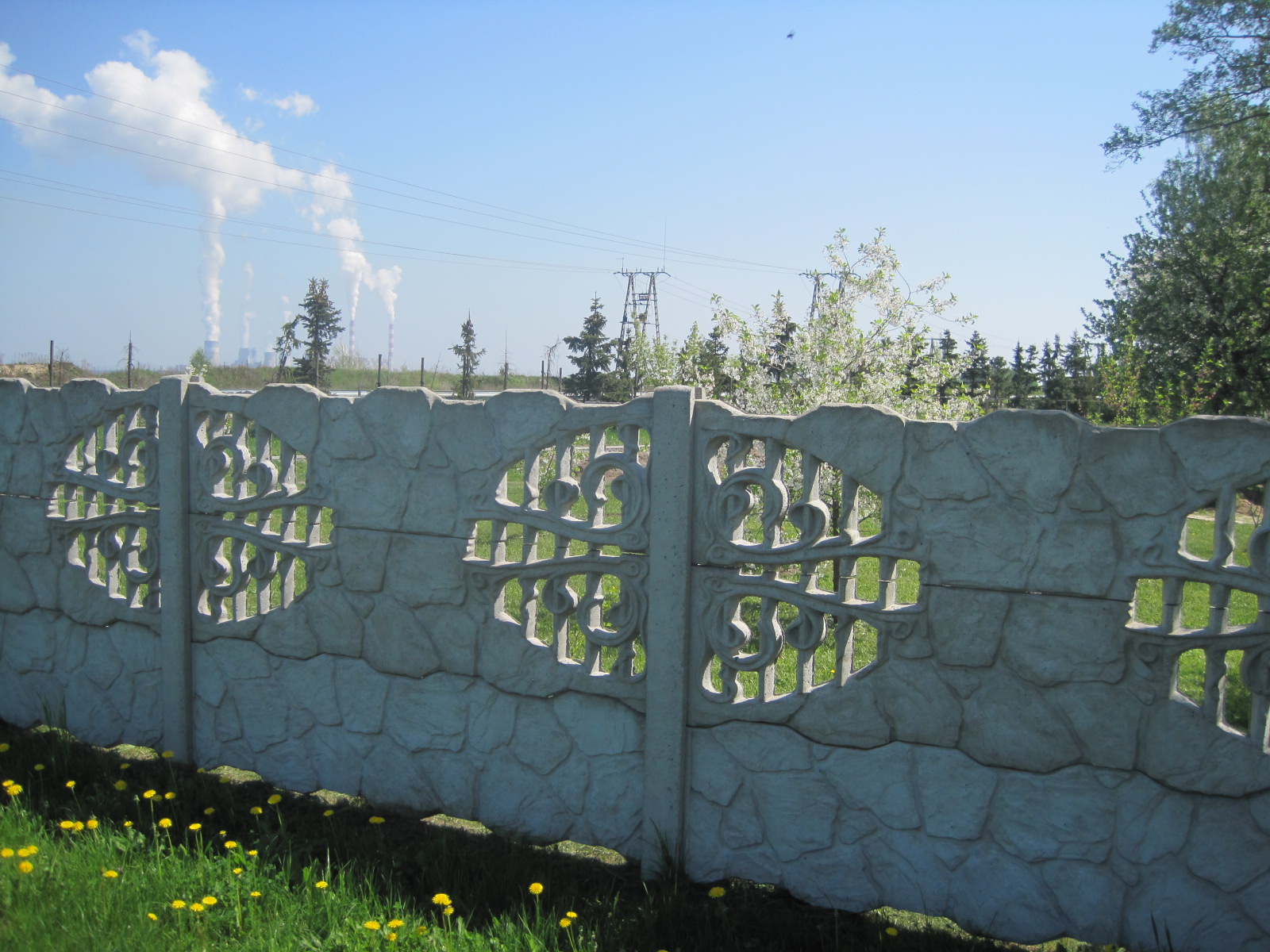
I rather like the Polish style of fencing (but not the view!)

I rather like the Polish style of fencing (but not the view!)

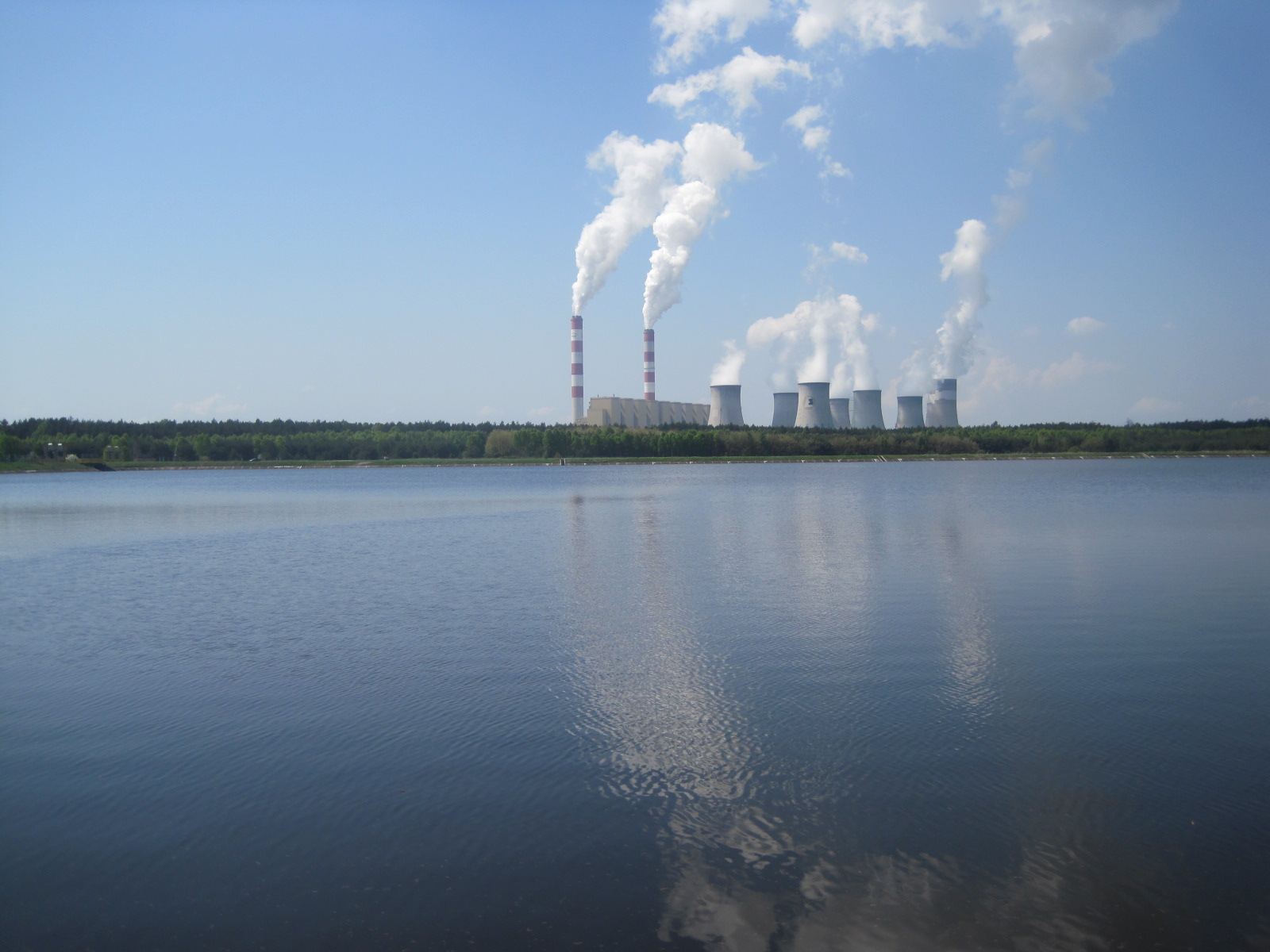
We drove all around the enormous site to a lakeside location with sports facilities, and, you’ve guessed it, a cracking view of the power station!  Apparently it’s very popular in Summer.  Bełchatów is far from the seaside.

Lakeside chalets

Lakeside chalets

The view!

The view across the lake

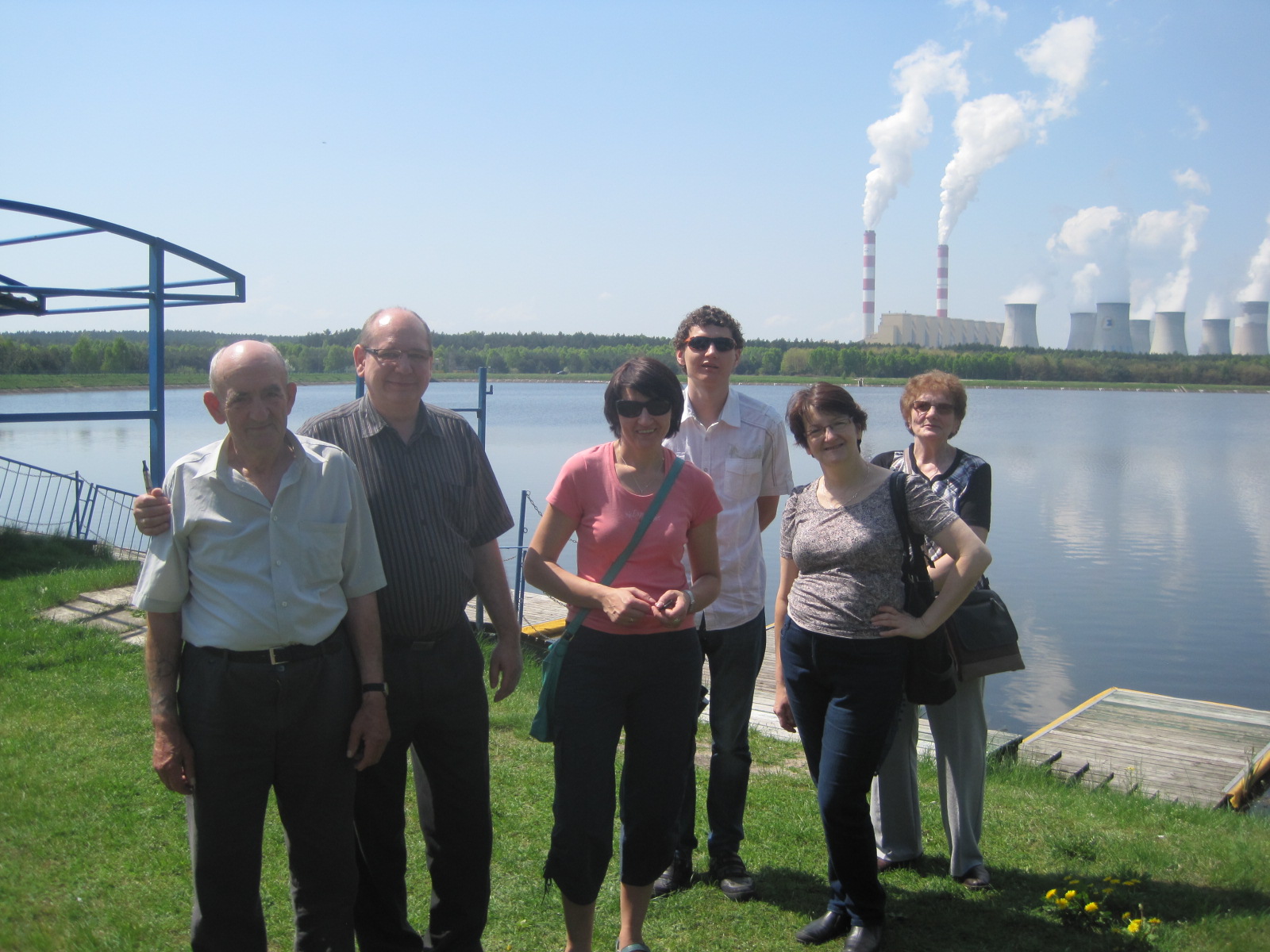
But the family were happy and smiling!

But the family were happy and smiling!

Left to right they are- Uncle Jakub, cousins Adam and Bożena,  Kuba in the background (Bożena’s younger son), cousin Marta, who is also married to Adam, and Czesława, Jakub’s wife.  I hope you are paying close attention.  There may be a test!

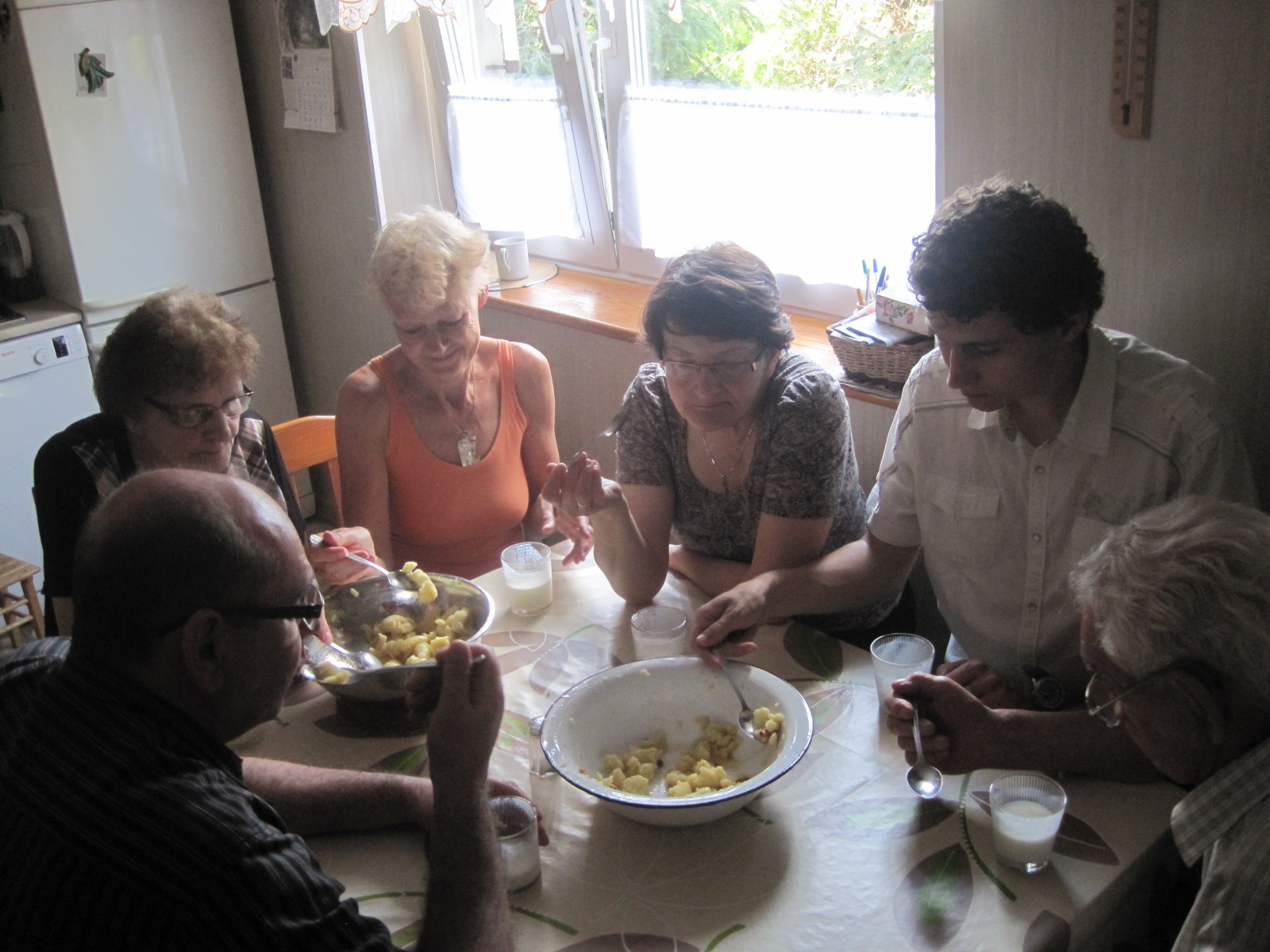
It was a warm day and afterwards Adam took us all for icecream.  There was one more treat in store.  Back at Jakub’s, Czescia cooked “ziemniaki z smażony tłuszcz”- potatoes with fried pork scratchings.  It was explained that the dish was very popular in the days when people had nothing in Poland.  Potatoes were an important staple and I have tasted some of the best potatoes ever, homegrown from Aunt Lusia’s garden.  I have to say that today’s dish was not much to my taste, but Dad and the family made short work of it.

Enjoying "old style" Polish cuisine

Enjoying “old style” Polish cuisine

I hope you’ve enjoyed my little venture into Polish culture today.  I have to thank Julie Dawn Fox for starting the Personal A-Z Challenge, a long time ago, and Frizz at Flickr Comments for helping me to catch up.  The links and logos give more information.

I can breathe a sigh of relief now because I have already posted the letter “O” for both Poland and Portugal.  You can read them from my A-Z pages.

banner4

M is for Mariacki and Marysia

Poland-eagle-150squareOne of my very first sights when I visited Poland for the first time was the Mariacki Church.  The splendour of the Rynek Główny in Kraków, Europe’s largest market square, is crowned by this church.  Later, on a guided tour given by my neice Weronika, we crept respectfully around the aisles and I looked up in awe.

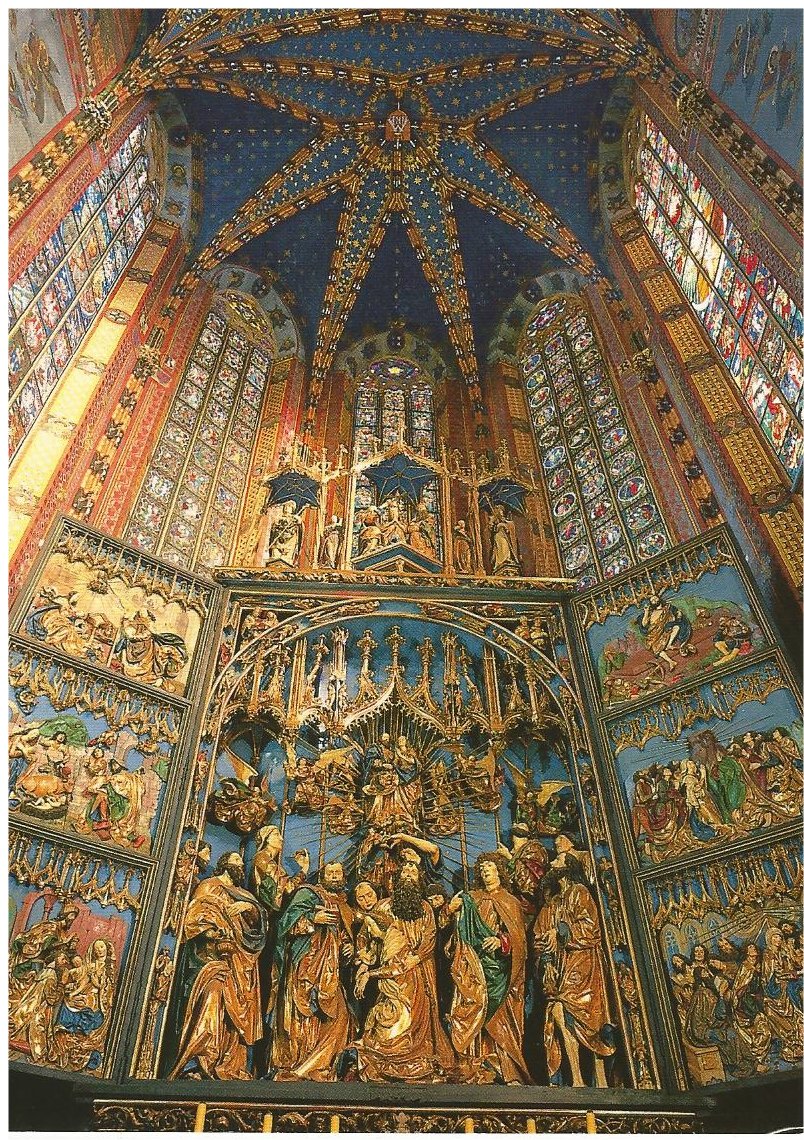
Veit Stoss Altar, Mariacki Church

The blue ceiling covered in stars was so joyous.  I almost said heavenly but that sounds too corny, however true.  I’d never before seen anything like it.

The showpiece of the church is the Veit Stoss Altar, depicted on these postcards. With great ceremony the altar is opened at noon each day to reveal the exquisite carvings beneath.

Gilded wood panels of the Altar in close up

Gilded wood panels of the Altar in close up

St. Mary’s Church, or Kościół Mariacki, dates from the 14th century and stands 262 feet tall (80m).  Today it draws the crowds largely for the appearance of the trumpeter, who performs hourly at the top of the taller of the two towers.  The sad little notes die away abruptly.  According to legend this commemorates the trumpeter who was pierced through the throat while sounding the alarm for an impending Mongol attack on the city.  These days it’s a happy occasion and he waves to the cheering crowd below before disappearing.

I don’t often use video clips in my posts but I accidentally came across this one and loved it.  The commentary is in Polish, but you get to see the trumpeter in close up.

The noon-time trumpet call, known as the Hejnał mariacki, is broadcast across the nation by Polish Radio 1.  More details are on this Wikipedia link.

Marysia is one of my Polish cousins.  In the very early days of our reunion with the Polish family I received a lovely email from her, introducing herself and family to me. She is married to Pawel, a musician with a wicked sense of humour. They have a daughter, Kasia, and son, Michał (do you remember that the last letter is pronounced “w”?)

Marysia is another of Zygmunt and Lodzia’s daughters. (I posted about them in L is for Lusia, Lodzia and Lodz)  She lives in the village of Zawady, near to Dad’s original old farmstead, but Marysia and Pawel have a beautiful modern home. Within the family there are many skills, and when it comes to home-making, these are readily shared.  Piotrek, Marysia’s brother, is a fine carpenter and the polished wood floors and banisters are all his work.

Kasia was only 20 when we first met, and had spent the Summer working in Nottingham, to help pay for her university studies.  This was an enormous coincidence as my daughter lives in Nottingham.  You can imagine her astonishment when I produced a Polish cousin living virtually on her doorstep!  A meetup was arranged, of course.

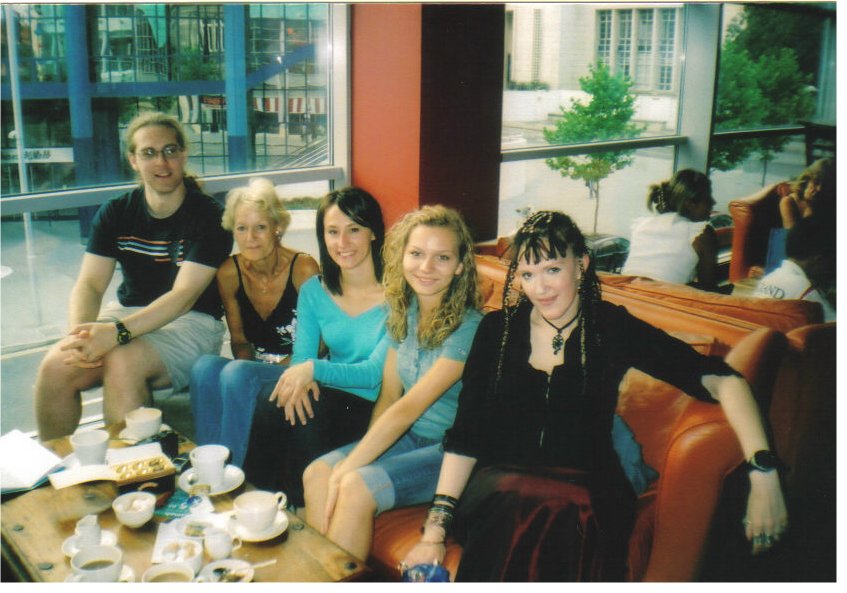
Lisa, Kasia, friend Paulina, me and Leo, in Nottingham

Lisa, Kasia, friend Paulina, me and Leo, in Nottingham

Kasia has now completed her education and, at the time of writing, is working in Germany.  Her younger brother is still studying.  Marysia herself runs a lovely little boutique in Bełchatów.  Confused yet?  I often am, too!

It just remains for me to thank Julie Dawn Fox, who began the Personal A-Z Challenge, and Frizz, who has welcomed me into his A-Z Challenge too.  This week it’s “mmm”!  Follow the links to find out more, and maybe join in?

banner4

L is for Lusia, Lodzia and Łódź

Poland-eagle-150squareThis is where my Polish friends might raise their hands in protest.  You see, in Polish there is a letter L and a letter Ł (ł in lower case).  The two are quite separate, but as there are 33 letters in the Polish alphabet and I am constantly short of time, I’m combining them in this post.  To English eyes they probably look very similar, but ł is pronounced like the English “w” in “wet”.

So, the city that I’m going to tell you a little about, Łódź, is pronounced Wooj, or something very like that.  I have never actually visited this city, which is the third largest in Poland, but it has always intrigued me for its name, which translates as “boat”.  This for a city which lies right in the centre of Poland, 84 miles south-west of Warsaw, and doesn’t even have a river running through it.  Apparently the city once had a total of 18 rivers, but they were covered over due to chronic pollution.

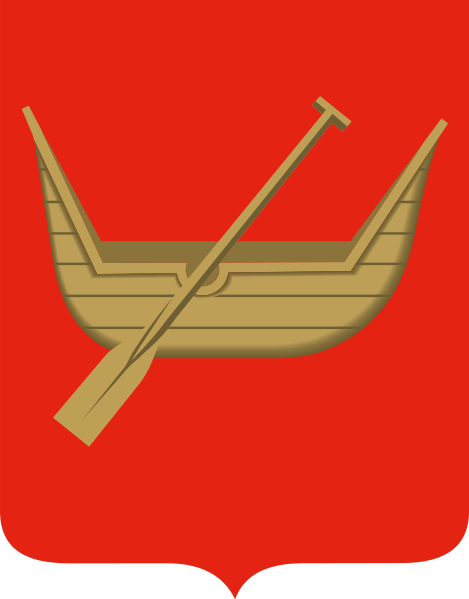
A boat, the coat of arms of Łódź- from Wikipedia

A boat, the coat of arms of Łódź- from Wikipedia

The first written record of Łódź appears in 1332 as the village of Łodzia, and in 1423 King Władysław Jagiełło (who you may remember from my J is for Jadwiga post) granted it city rights.  It was always at the crossroads of trade but at this time most of the inhabitants worked on grain farms in the surrounding flat lands. 

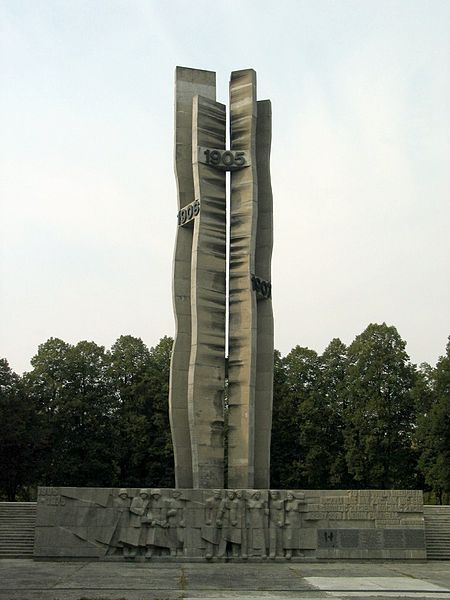
Like many another Polish city, the history of Łódź is colourful.  It lost its identity to Prussia in 1793, and then at the Congress of Vienna in 1815, became part of Russian Poland.  The Tzar gave territory deeds to German immigrants to clear the land and build factories and housing.  In 1825 the first cotton mill was opened and the textile boom began, with an eager Russian market on the doorstep.  Łódź has been likened to a “Polish Manchester” due to its prosperity from textiles.  Relationships with their Russian neighbours deteriorated rapidly, climaxing in the Łódź insurrection (or June Days) in 1905, which was violently put down by the Tzarists.
Łódź monument to the 1905 insurrection- from Wikipedia

Łódź monument to the 1905 insurrection- from Wikipedia

Many of the industrialists were Jewish, thus, during the Nazi occupation, the Łódź Ghetto was set up.  It was the last major ghetto to be liquidated due to the value of the goods the occupants produced for the German military.  The Germans requisitioned all factories and machinery and transported them to Germany so that Łódź was deprived of most of its infrastructure.  Refugees from Warsaw flooded into the city and in the aftermath of the Warsaw Uprising, Łódź became a temporary capital.  Apart from Kraków it was the only Polish city not to have been raised to the ground.

It’s not all doom and gloom.  I knew little about Łódź, but even I had heard of the National Film School, founded in 1948, and its famous student, Roman Polanski.  The film industry and new businesses locating in Łódź due to its excellent transport links have aided the slow rebirth of the city.  Renovation is ongoing on Ul. Piotrkowska, at 5km the longest main street in Europe. OFF Piotrkowska is a lively complex of cafes, restaurants and designer shops within 19th century former cotton mill buildings.

Sculpture of pianist Artur Rubinstein on Ul. Piotrkowska- from Wikipedia
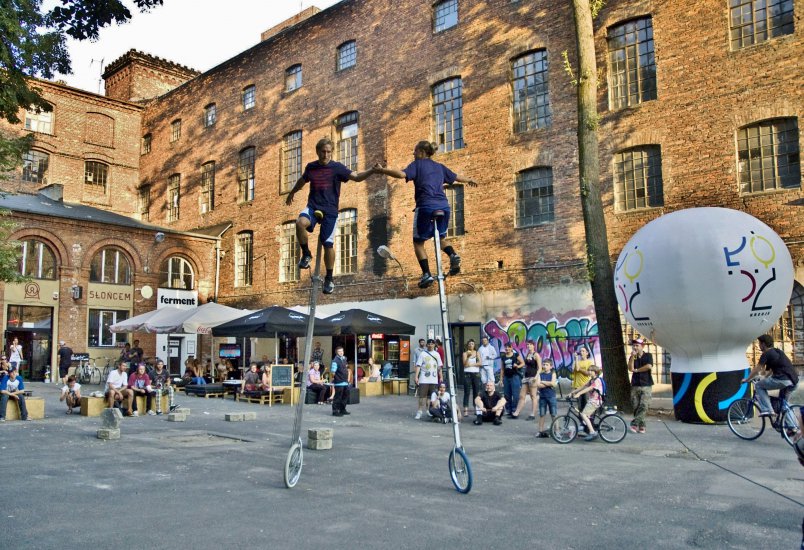
Sculpture of pianist Artur Rubinstein on Ul. Piotrkowska- from Wikipedia

OFF Piotrkowska- from "In your Pocket" Łódź guide

OFF Piotrkowska- from “In your Pocket” Łódź guide

Even better news is that the rivers I referred to at the start of this post are now the subject of a restoration project.  Who knows where it all might end for the city of Łódź?  Manchester isn’t doing so very badly.

Lusia and Lodzia

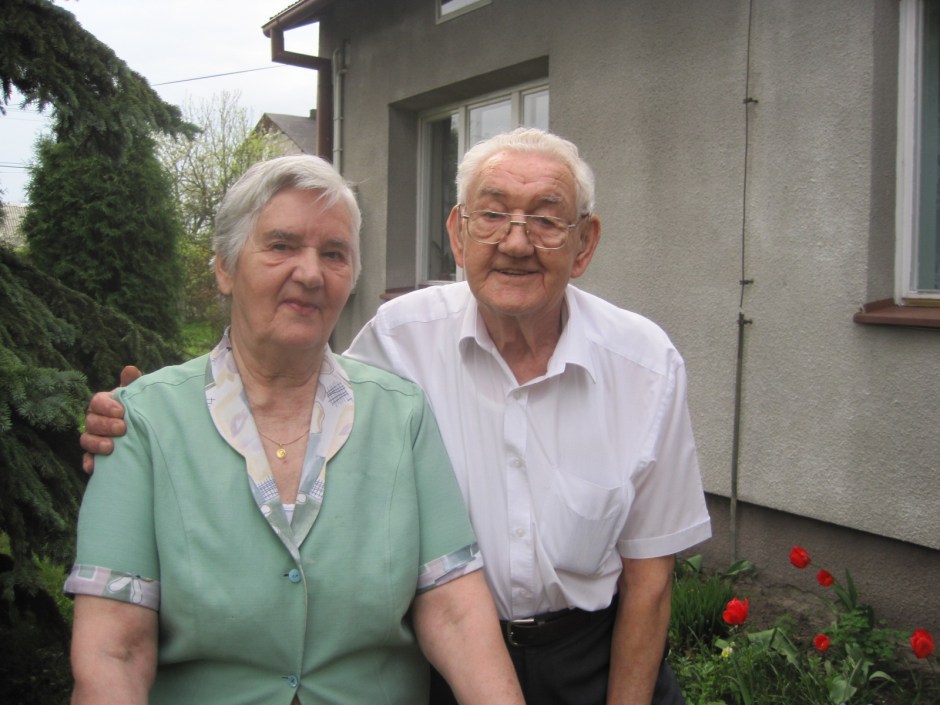
Most of my Polish family live in the neighbourhood of Bełchatów, about an hour south of Łódź.  As usual, when I was in Poland in May, I went to see my lovely Aunt Lusia in Zawady.  She is my Dad’s only surviving sister, and lives close to the farmstead where Dad grew up.  Her portion of land is a good size with a lovely pond and numerous fruit trees.  Lusia tended the huge vegetable plots herself when she was younger, but now much appreciates the help of her daughter Theresa, who lives with her.  Granddaughter Edyta completes the household (if you don’t count the rabbits, of which there are many!)
Lusia and Dad

Lusia and Dad

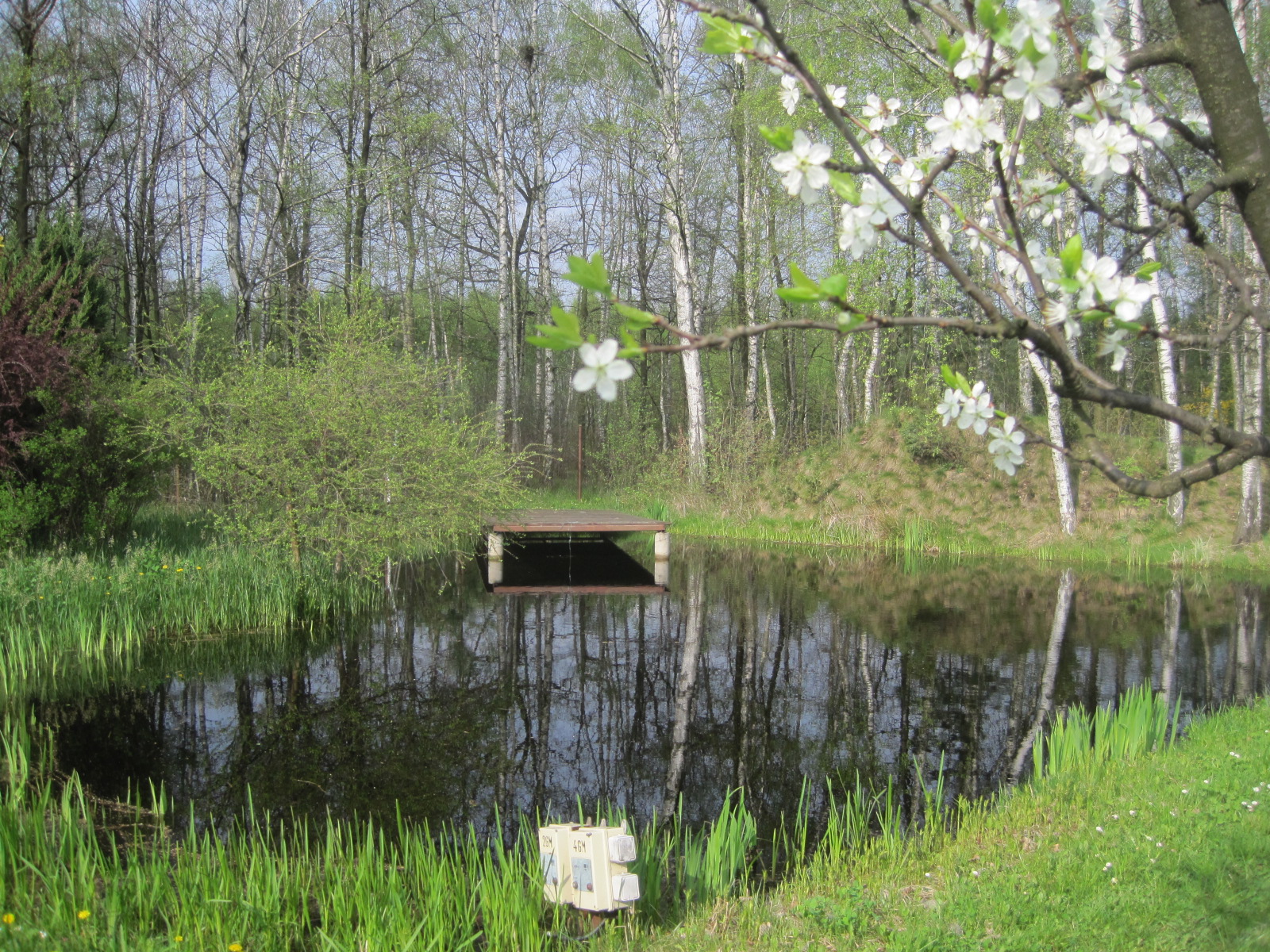
The pond at the bottom of the garden
The pond at the bottom of the garden

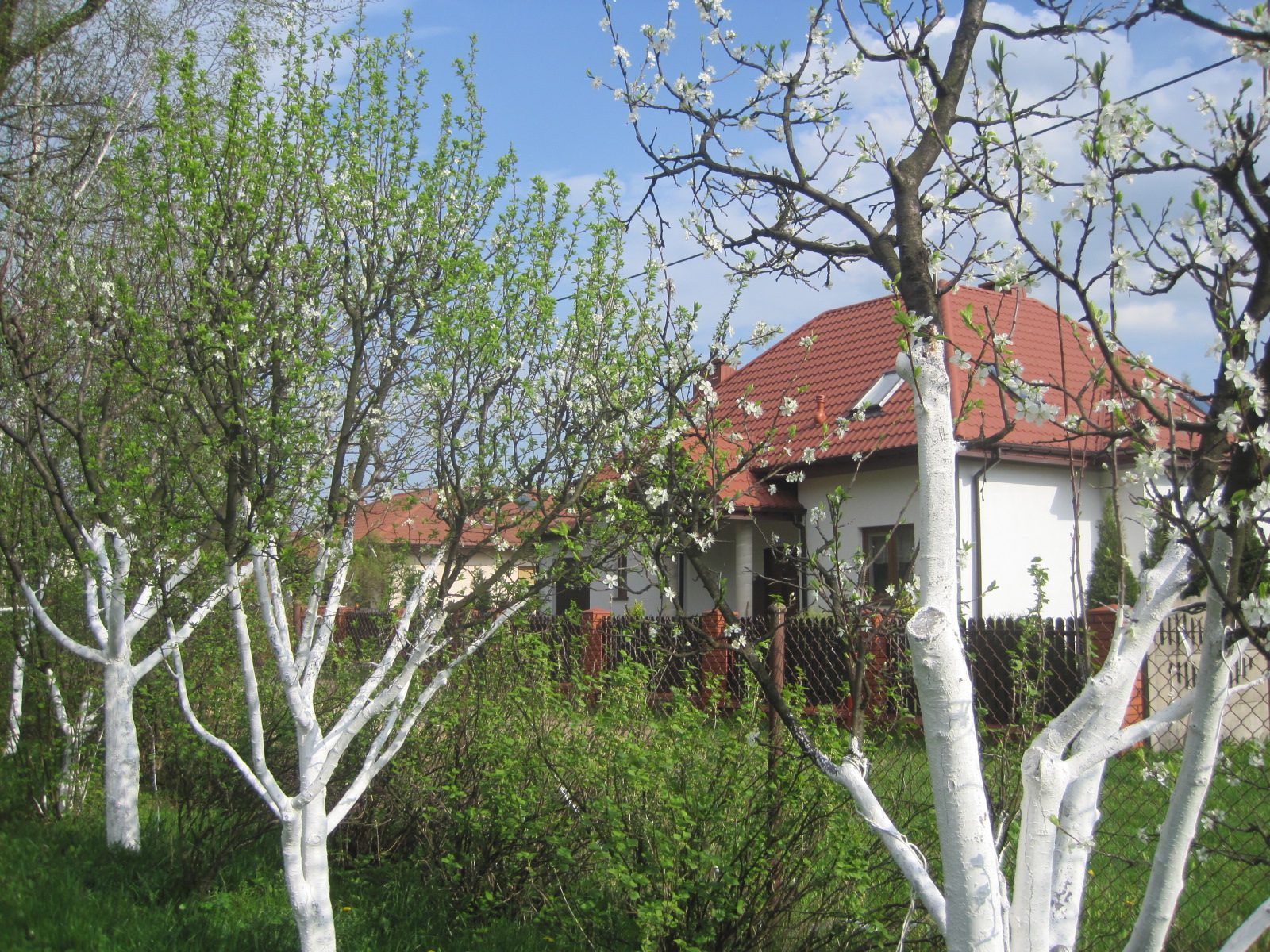
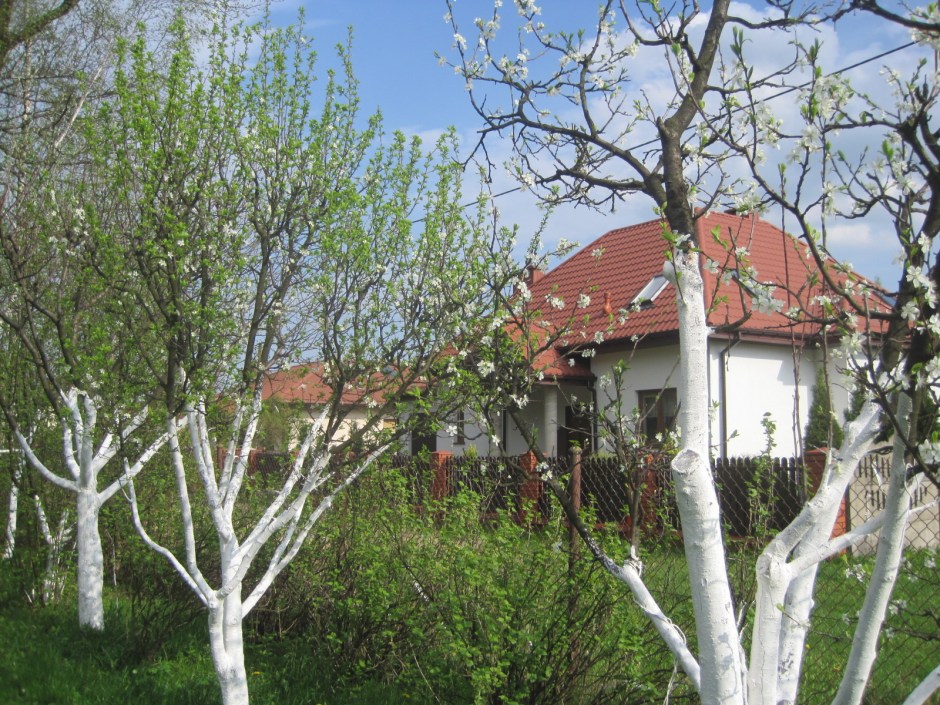
Fruit trees and the neighbours
Fruit trees and the neighbours

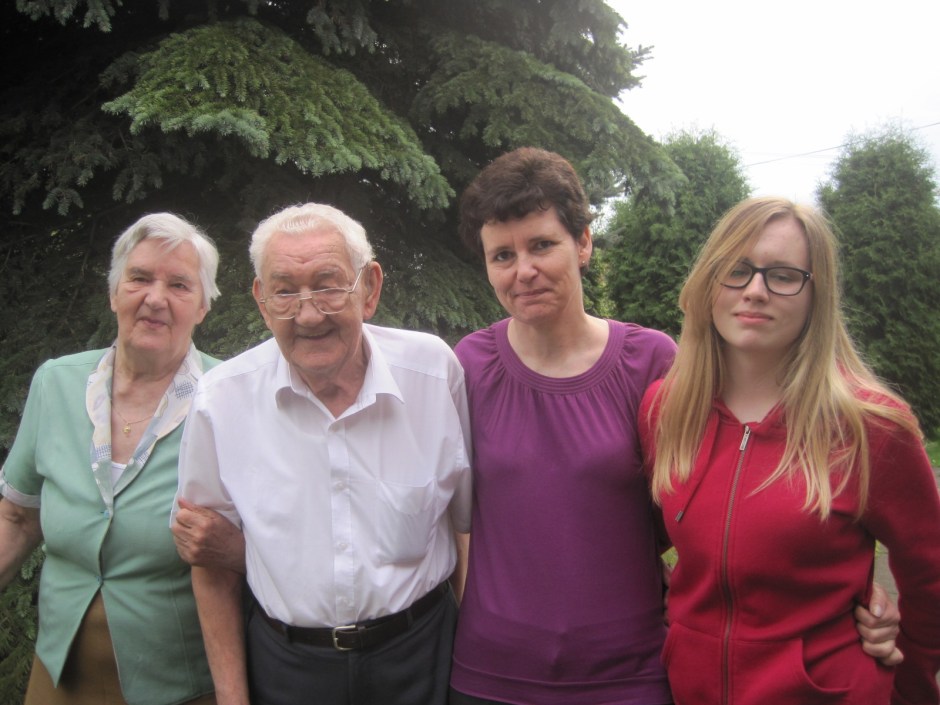
Lusia and Dad with Teresa and Edyta

Lusia and Dad with Theresa and Edyta

Most of the family have built houses on land from the original farm, and Lusia is now dividing hers to make life easier.  Her daughter Grażyna and son-in-law Marek live in a high rise flat in Bełchatów (I was there on my visit too!) and are now building a house next to Mum.  A widow for many years, I never met her husband  Zbigniew, but have seen photos of them as a happy young couple.  It will help Lusia to have family so close by.  A third daughter, Irena (who will feature in my letter “I”), also lives in Bełchatów.  One last little thing to share- Lusia’s given name is Otylia.  I’m not at all sure how Lusia comes from this, but that’s just how it is.

Just across the lane from Lusia is the home of Lodzia and her remaining unmarried family.  This is my Dad’s original home and was taken on by the oldest son Zygmunt, when their parents died.  Sadly Zygmunt himself died just months before the family reunion which brought Dad back to Poland.  He had tried so hard to find Dad, and maybe things would have gone differently if he had succeeded.

Lodzia has her sons Bolek and Piotrek helping on the substantial plot of land.  Dad remembers taking the cows to a stream when he was a small lad, but the cows are long gone (as is the stream, strangely enough).
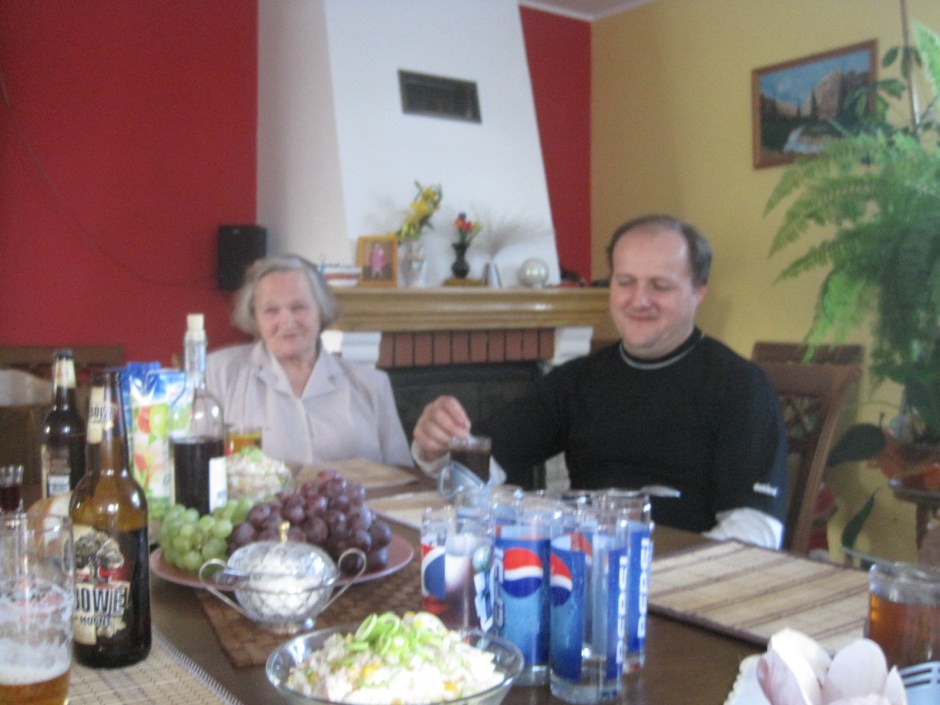
A slightly blurred photo of Lodzia and Bolek at Jadwiga's home

A slightly blurred photo of Lodzia and Bolek at Jadwiga’s home

You will have seen Lodzia on my blog before.  She is my lovely cousin Jadzia’s mum and we traditionally have supper at Jadwiga’s home, pictured above.  The farmhouse is now very run down and Lodzia does not have an easy life.  She also has the care of a blind son, Adam, who suffered the injury in an explosion many years ago.  Life is never all roses, is it?  My Polish family have had their share of tragedy, but they go on smiling and welcoming us each time.

 This post is part of my Personal A-Z of Poland, for which I owe thanks to Julie Dawn Fox.   I have put links to Wikipedia and my other posts for anyone who is interested.  The logo below will take you to Julie’s A-Z page, and I’m also linking to Frizz’s LLL-challenge, even though, as usual, I’m late!  MMM arrived this morning.
 banner4

J is for Jadwiga

Poland-eagle-150square

This is a novelty, isn’t it?  For anyone new to my blog, you won’t have a clue what I’m up to, or why.  Old friends might just remember the logo.  I’ll explain a little later.

Jadwiga is a Polish feminine name (pronounced Yad-viga).  The diminutive, or affectionate family form, is Jadzia.  The name originates from the German Hedwighadu meaning “battle” and wig meaning “fight”.  You might not realise the significance of this until I tell you about Jadwiga, Queen of Poland.

Jadwiga, "king" of Poland- image from Wikipedia

Jadwiga, “king” of Poland- image from Wikipedia

Jadwiga was queen of Poland, or rather “king”, from 1384 till her death on 17th July, 1399.  She was a sovereign in her own right rather than a mere royal consort, entitling her to the title of king.

Jadwiga was the daughter of Louis 1 of Hungary and Poland, and Elizabeth of Bosnia.  When Louis died in 1382 his eldest daughter Maria was elected queen of Hungary, but the Poles opted to end the union between the 2 countries by choosing Jadwiga as queen.  She was then just 9 years old. After 2 years of negotiations with her mother, and civil war in Poland, Jadwiga came to Kraków to be crowned.  In 1386 she was married to Jogaila, grand duke of Lithuania, to form an alliance of territories much larger than the one with Hungary, changing the balance of power in Central Europe.

Coat of arms of Jadwiga- image from Wikipedia

Jadwiga’s coat of arms- from Wikipedia

The marriage opened the way to the conversion to Christianity of the largely pagan Lithuanians.  Jogaila was baptised Władysław in Kraków before the marriage took place, and they ruled jointly, but with Jadwiga as the leading figure.  She led 2 successful military expeditions, helping Poland to regain lost territories.  When Jadwiga died from childbirth, her husband became Władysław II Jagiello, founding the Jagiellonian dynasty.

Jadwiga was a great patron of religion and scholarship.  From the sale of her jewellery she financed the restoration of the Kraków Academy, which became the world renowned Jagiellonian University.

After her death, Jadwiga was venerated throughout Poland as a saint, and was said to have performed miracles.  Details of these and more of Poland’s convoluted history are to be found in the above links to Wikipedia.  She was finally canonised by Pope John Paul II in Kraków on June 8th, 1997.

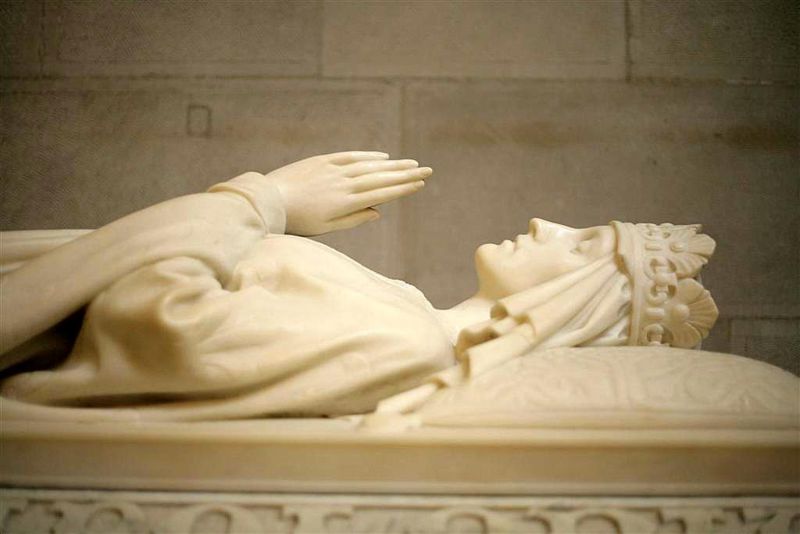
Jadwiga's tomb, in Wawel Cathedral, Krakow- from Wikipedia

Jadwiga’s sarcophagus, in Wawel Cathedral, Kraków- from Wikipedia

And now to my personal interest in the name Jadwiga. Time to meet my lovely cousin, Jadzia.  She is one of the daughters of my Dad’s older brother, Zygmunt, who died just months before the family were reunited, and so was never able to greet him on his return to Poland.  I have recounted Dad’s wonderful story in Exploring the Polish Connection, and have already introduced some of my cousins in this A-Z series.

Jadzia with some of her delicious homemade cake

Jadzia with some of her delicious homemade cake

Jadzia, Mam and brother Bolek

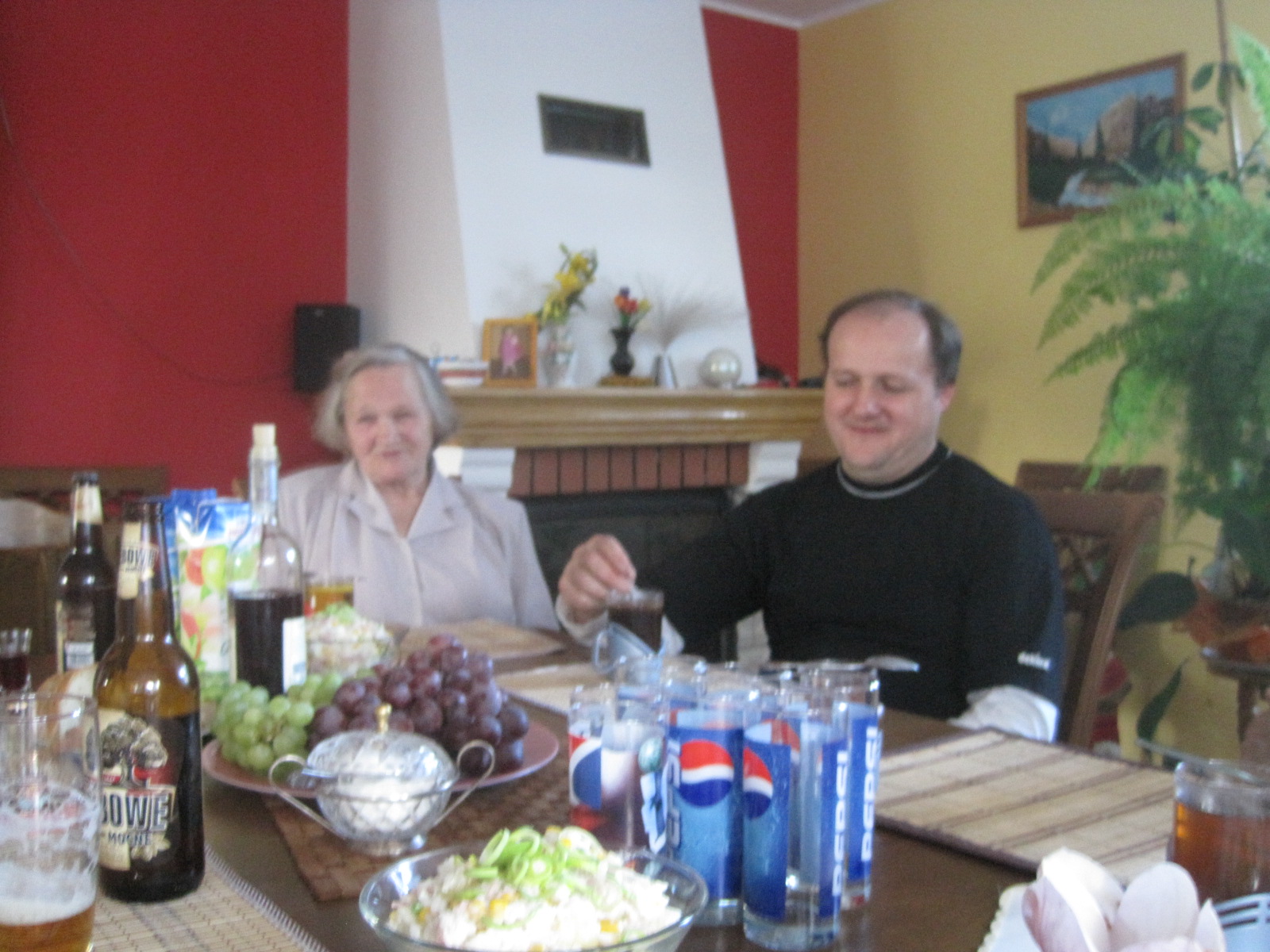
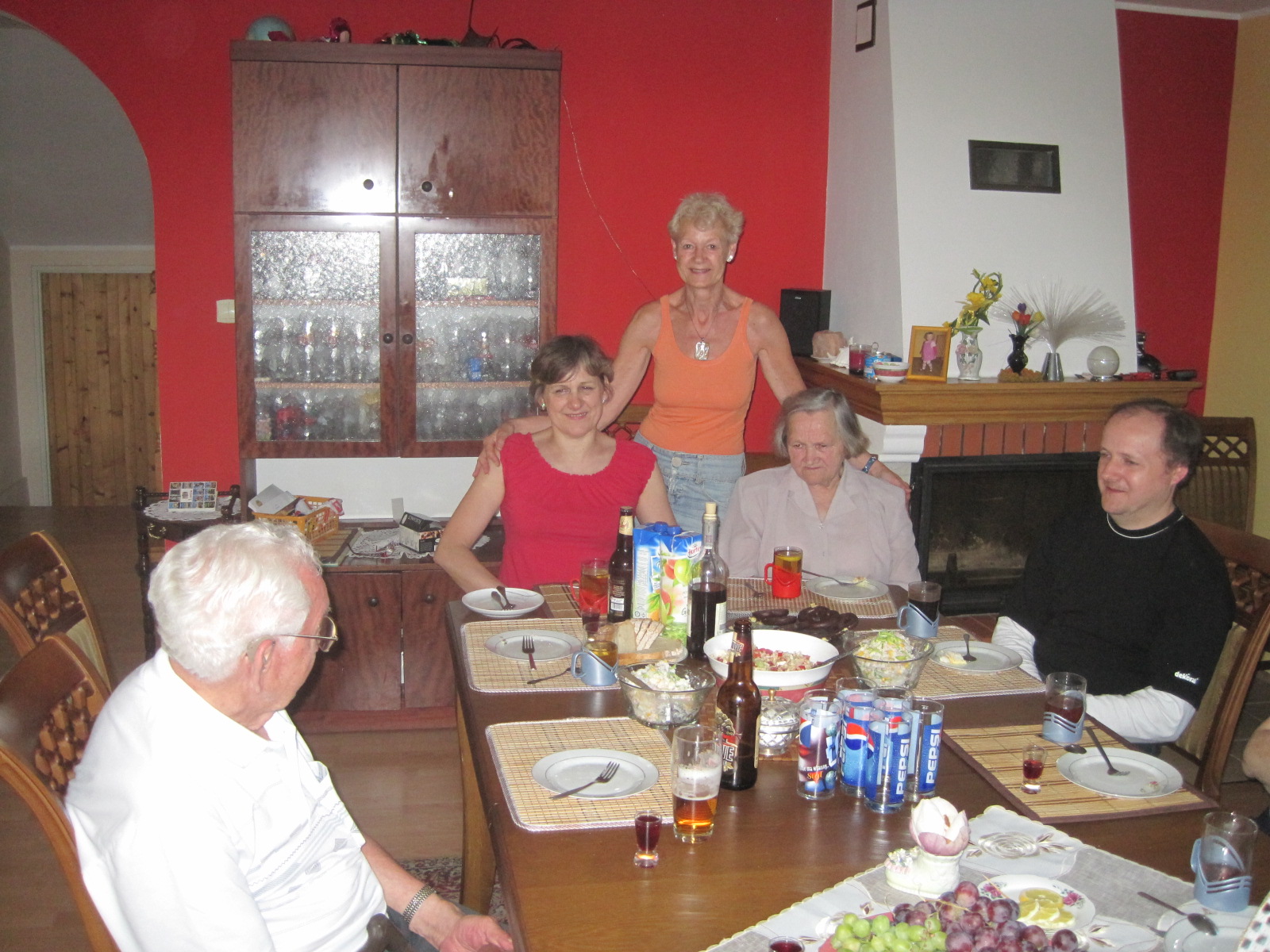
Jadzia, Mam and brother Bolek in her lovely dining room (Dad in foreground)

I have many times sampled Jadzia’s wonderful hospitality, and been present at the weddings of both of her children, Ania and Krzysztof.  On each occasion our time together has been too brief.  Jadzia has a little English and I have a very little Polish.  When we exchange emails we do so in our native languages and leave the other to puzzle out the meaning.  Ania is fluent in English, and of course, my Dad is an old hand at Polish.

In writing this post I am linking back to the original A-Z Personal Challenge begun by Julie Dawn Fox.  Life has overtaken me a little so I’ve been slow in reaching completion.  I have pages dedicated to my A-Z’s, both for Poland and for Portugal, at the top of the page, so you can see just how far I’ve progressed.  I would also like to enter this post in Frizz’s A-Z.  I have his permission.  When I began this challenge I hadn’t even “met” Frizz.  Since then he has enhanced my world enormously.

banner4