World Heritage Site

A tale or two : Chalkidiki

Mount Athos beach, Halkidiki

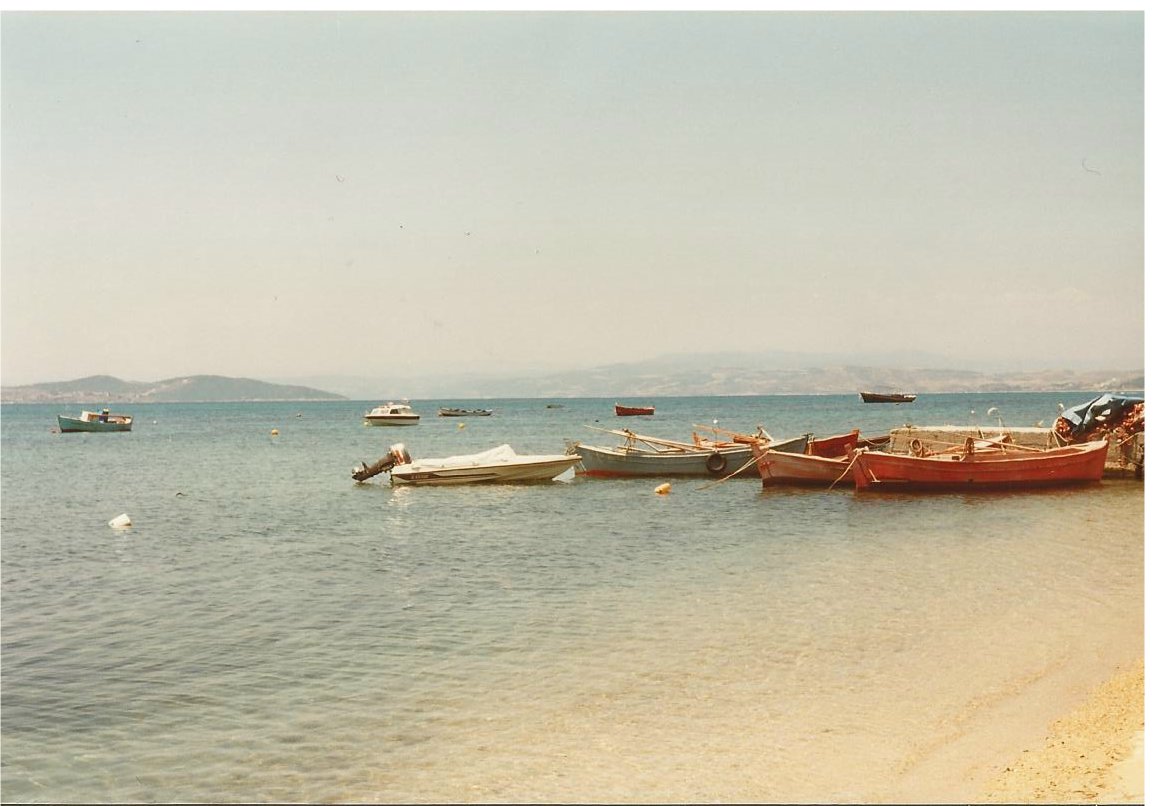
Ouranoupolis beach, Halkidiki

Serene, isn’t it?  I was curious to see a little of the Greek mainland.  Yet of all our Greek holidays, like this photo, it’s a little hazy in my memory.

Halkidiki (though I rather like the silent C) is the distinctive-looking three-pronged peninsula in the north of Greece.  Our base was at the tiny resort, Polichrono, on the third “prong” known as Kassandra.
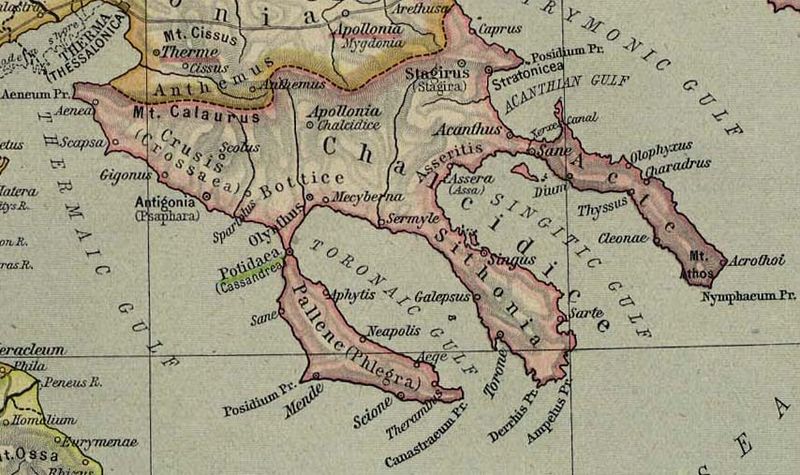
Map of ancient Chalkidiki, from Wikipedia

Map of ancient Chalkidiki, from Wikipedia

The sheltered beaches of the most westerly peninsula were quite popular at that time, the main resort being Hanioti.  Popular was not what I was looking for, and the peaceful sandy beach at Polichrono was timeless in its appeal.  I planned, of course, to visit Sithonia, the middle “prong”, and hopefully Thessalonika.  The third “prong”, Agion Oros, with its mysterious monasteries, was only accessible by ferry and with special permit.  A ferry ride was always on my list.

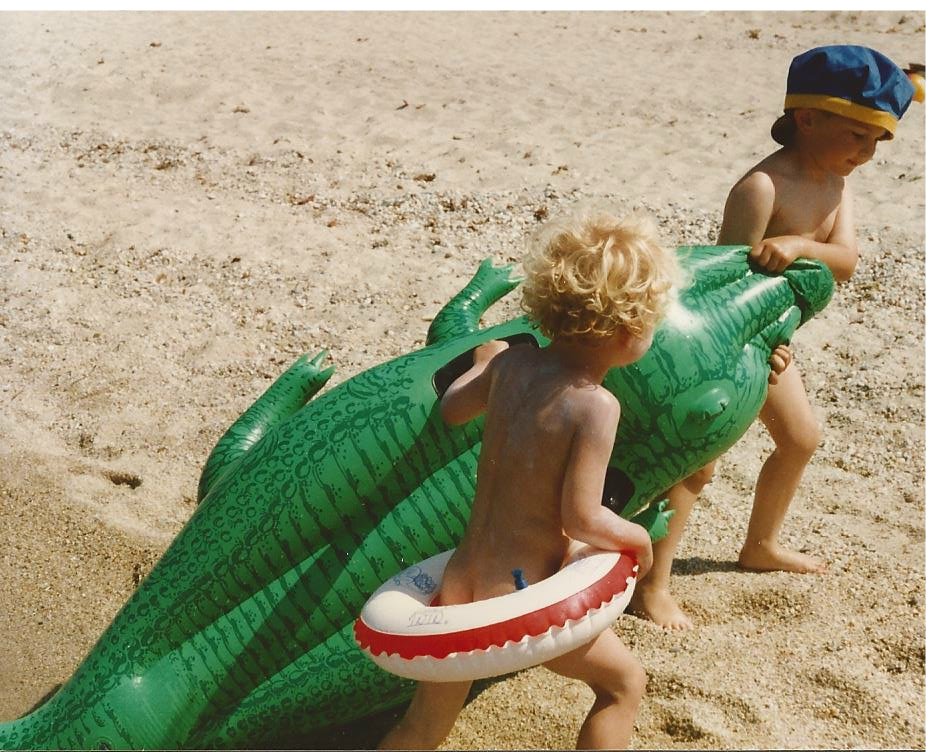
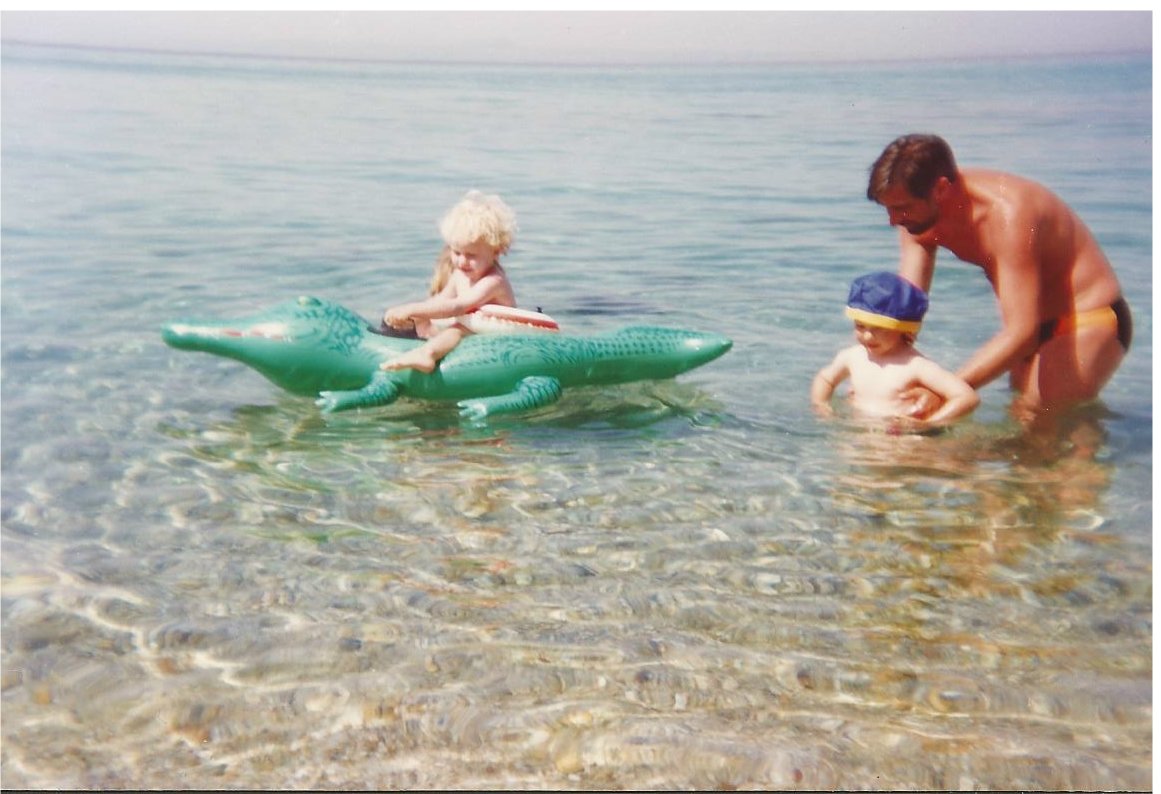
For 2 year old James, life was a beach.  With the purchase of a large green crocodile, he sealed the friendship of a lovely blonde mop-headed little boy called Kirk.  Not in the least shy and very adept in the water, Kirk led the exploits, grappling with the croc.  Land-based, their activities included constructing a huge, sand Tracey Island (for Thunderbirds fans everywhere) with a little engineering help from Michael.  Sometimes, while Dad worked, the boys drifted off to play with the Lego pirates, or Stingray- another favourite.
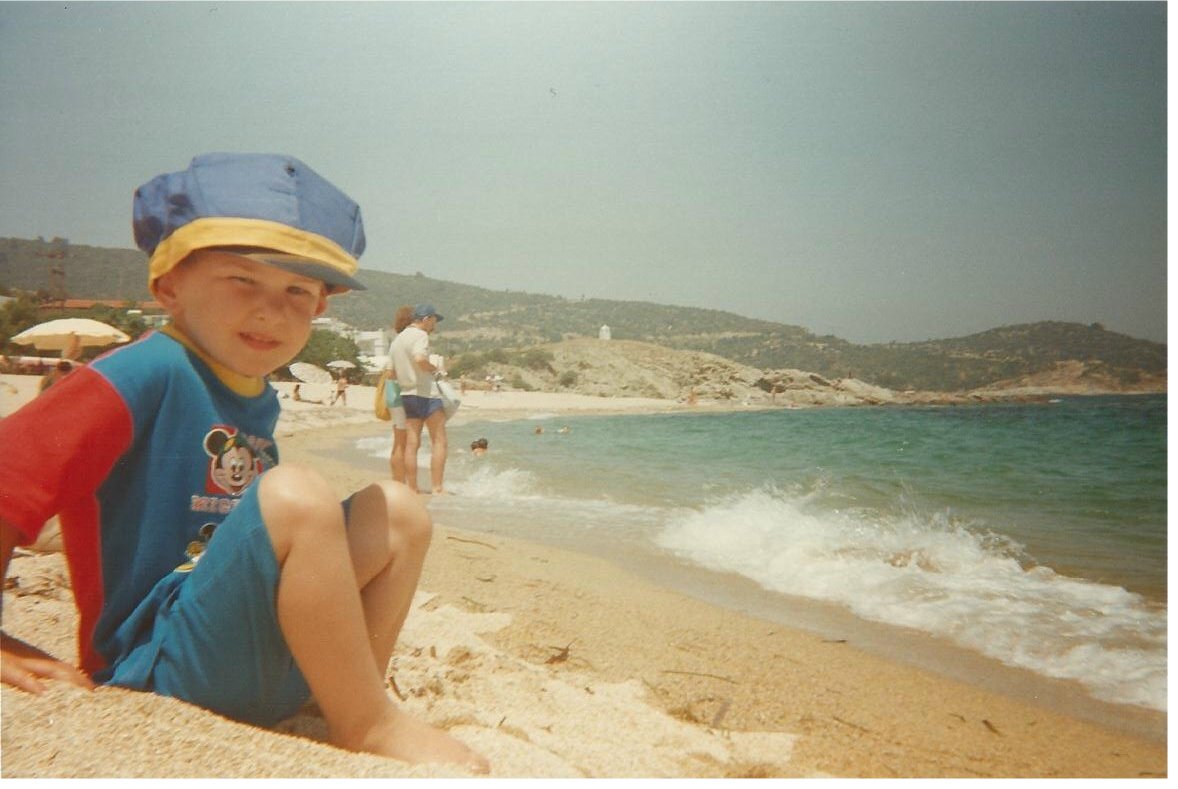
Life's a beach!

Life’s a beach!

Come on, Mr. Croc!

Come on, Mr. Croc!

Please don't eat me, Mr. Croc!

I know he won’t bite, but….

After a few days of lazy sunshine, the urge to travel was with me again, and we signed up for a coach tour of Sithonia.  An early start, in ‘jamas, was becoming the norm.  The scenery was pretty along the coast of Kassandra, becoming more dramatic as we rounded the curve to travel down the western shore of the middle “prong”.

Neos Marmaras made a sunny, pleasant, coffee stop, then on to some castle ruins at Toroni, and up the east coast of Sithonia.  A series of lovely bays, a lunch stop at Sarti then heading back, it was a bit of a marathon day.
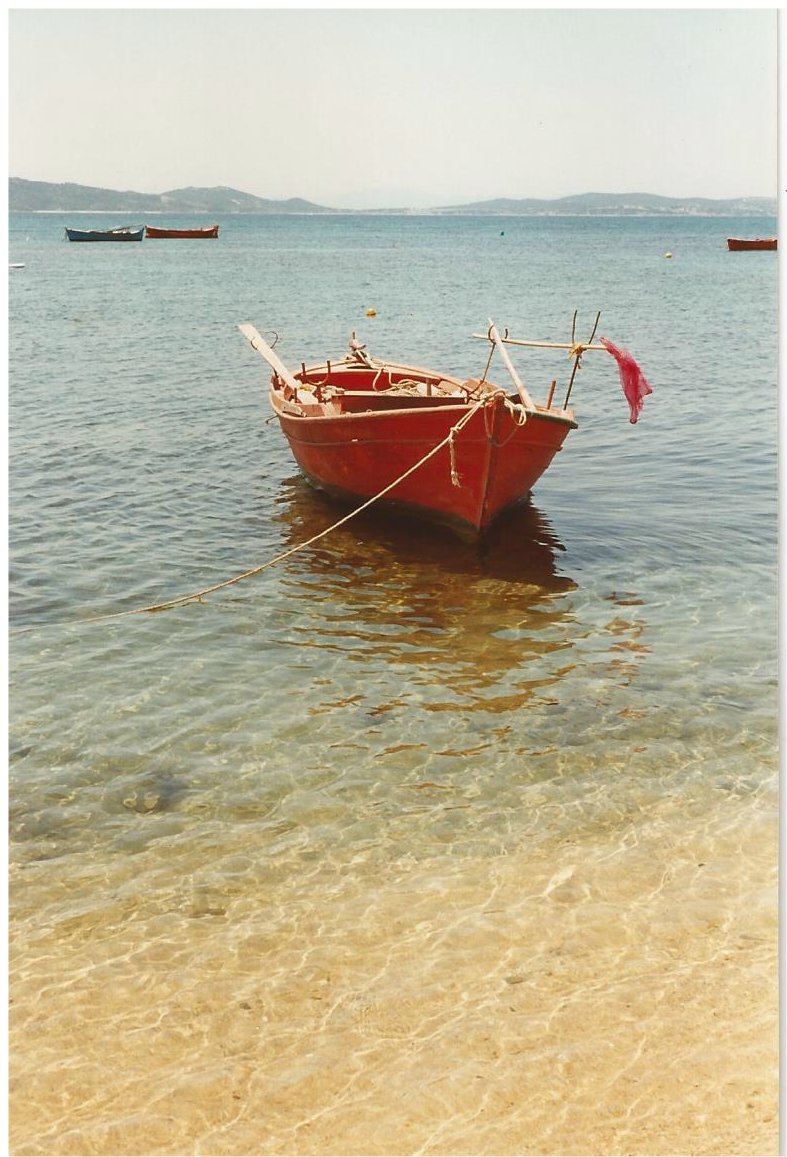
Flat calm in an idyllic bay

Flat calm in an idyllic bay

Naturally, beach time followed, and to my dismay the prospect of a trip to Thessalonika was vetoed.  Still, I had one more treat to come.  Mount Athos was an intriguiging destination.

Yet another World Heritage Site, Mount Athos, the “Holy Mountain”, is home to 20 Eastern Orthodox monasteries.  The number of daily visitors to Mount Athos is restricted, and all are required to obtain a special entrance permit.  Residents must be males over the age of 18, and must be either monks or workers.  Women are expressly prohibited from entering the territory, known as the “Garden of the Virgin” by the monks.  Quite sensibly, the reason for the prohibition is to make living in celibacy easier for those who have chosen to do so.  Knowing that I was forbidden entry didn’t spoil my day out.

The enormous ferry, complete with swimming pool, set sail from lovely Chroussos Bay.  3 and a half hours at sea passed surprisingly quickly, especially the last half hour, spent looking out for 8 of the monasteries perched along the coast.  Ouranoupolis was a pretty little spot for lunch and a paddle, before the shorter, more direct sailing homewards, excitingly accompanied by dolphins.
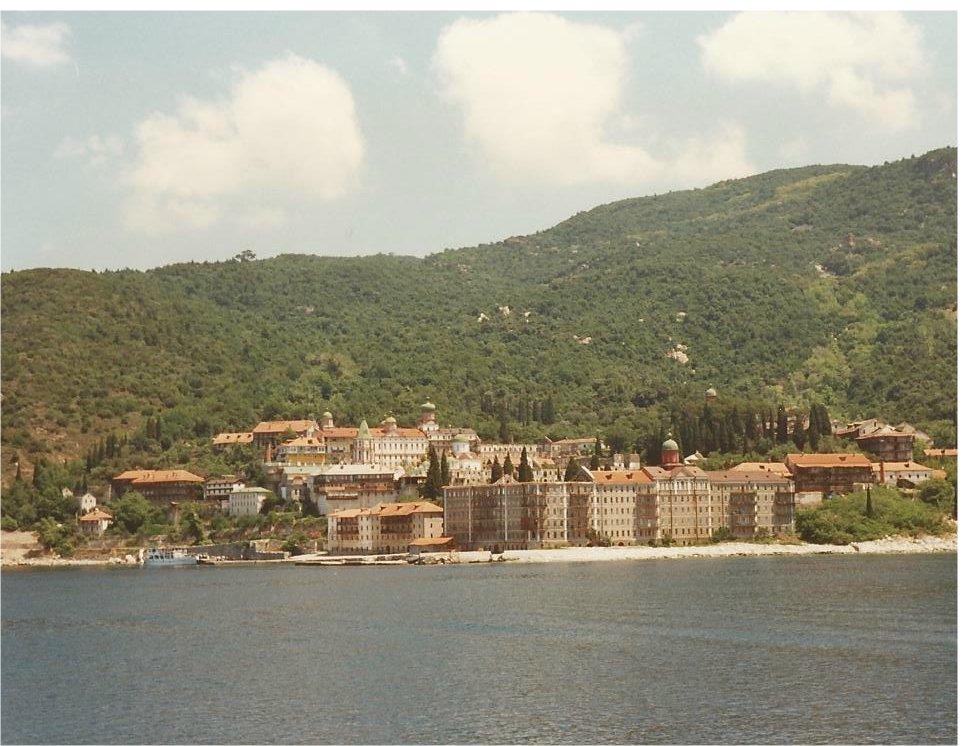
Ag. Panteleimonos monastery, Mount Athos

Ag. Panteleimonos monastery, Mount Athos

Moni Grigoriou
Moni Grigoriou

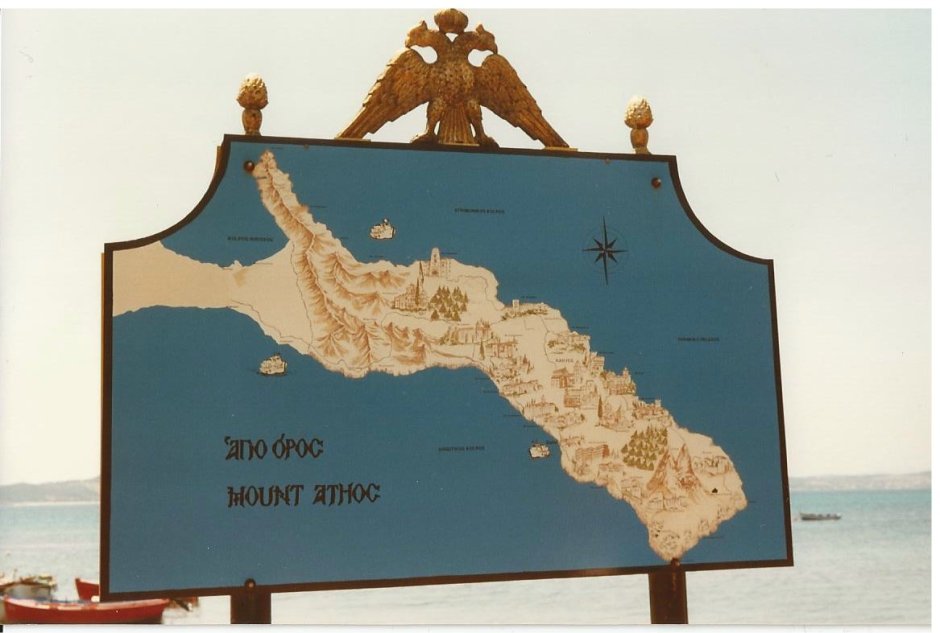
The Mount Athos peninsula

The Mount Athos peninsula, Agion Oros
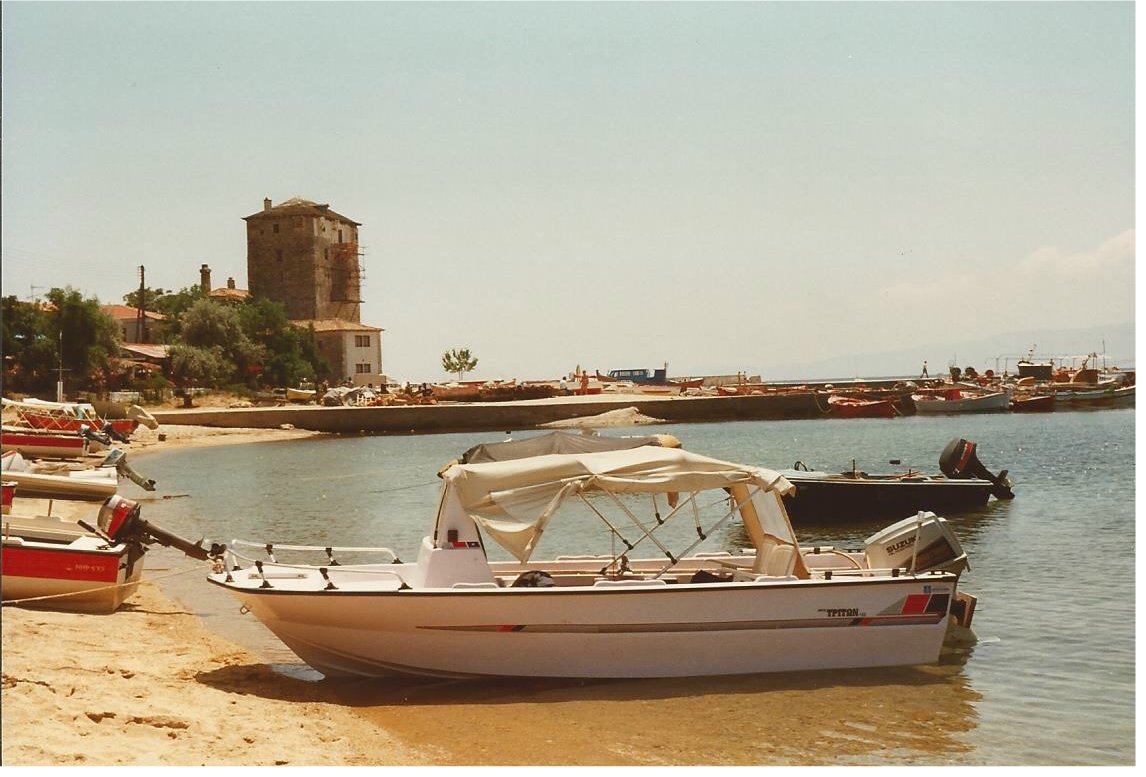
Our destination, pretty Ouranoupolis

Our destination, pretty Ouranoupolis

And so, another chapter in my Greek odyssey comes to a close.  I’m leaving you with a calm Halkidiki sunset.
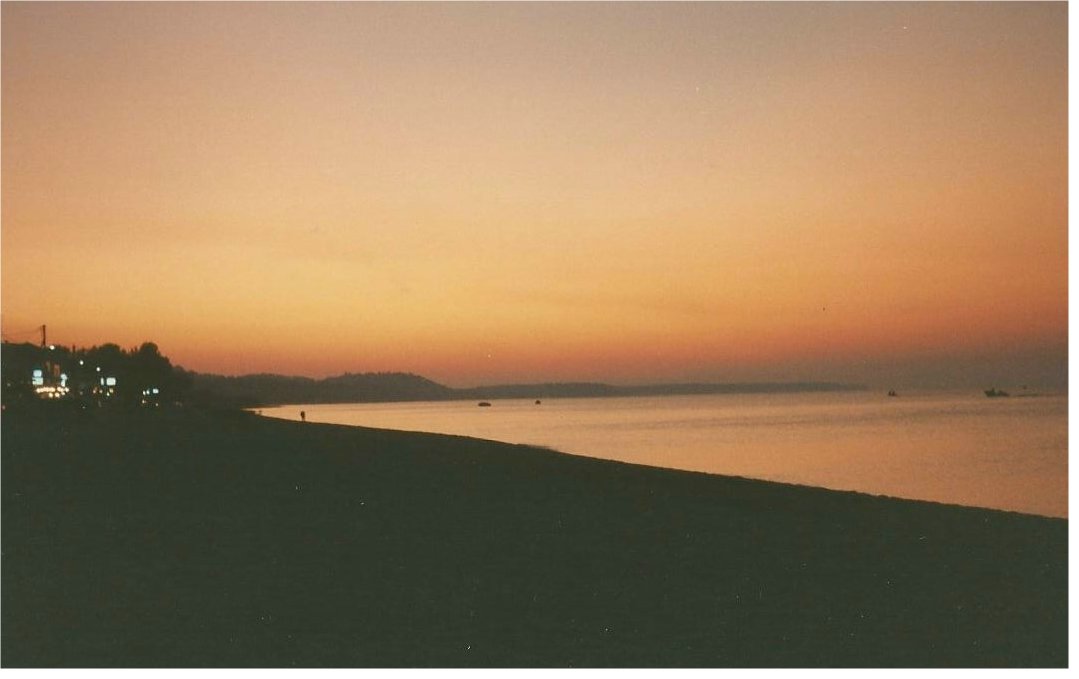
Sunset, Halkidiki

Just one last Greek story to tell.  Can you guess which island I’m going to next?

H is for Happy Heart

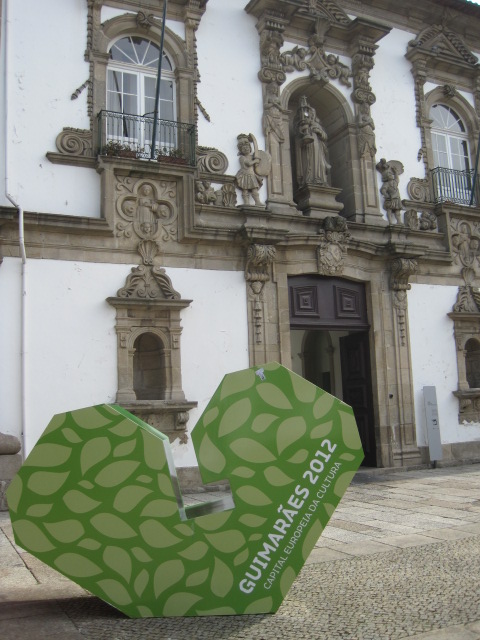
Guimaraes, European City of Culture 2012

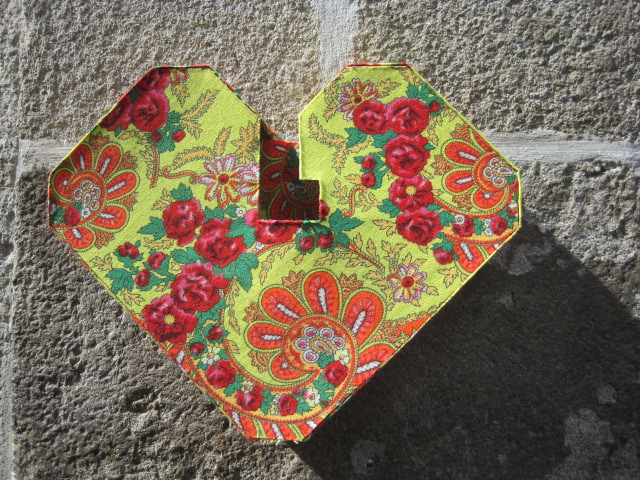
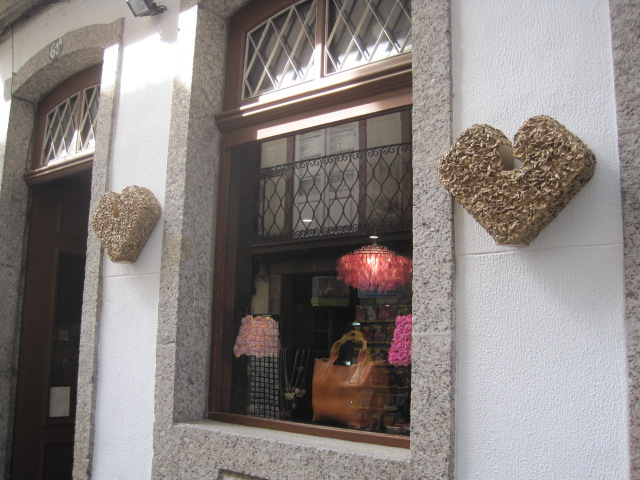
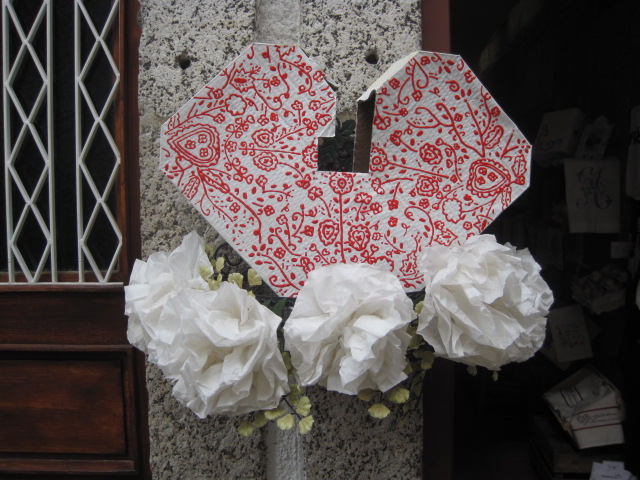
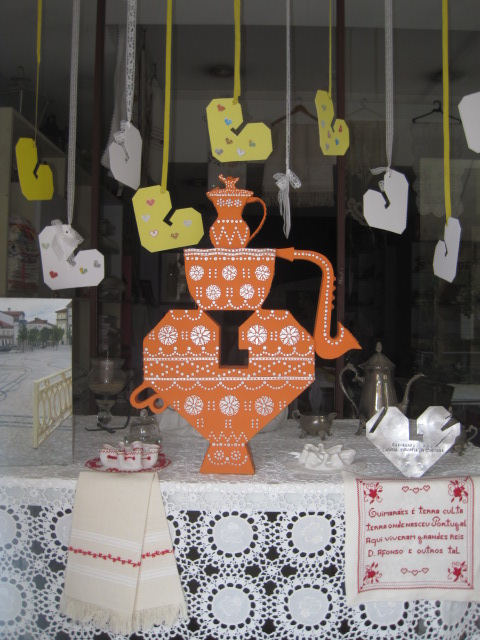
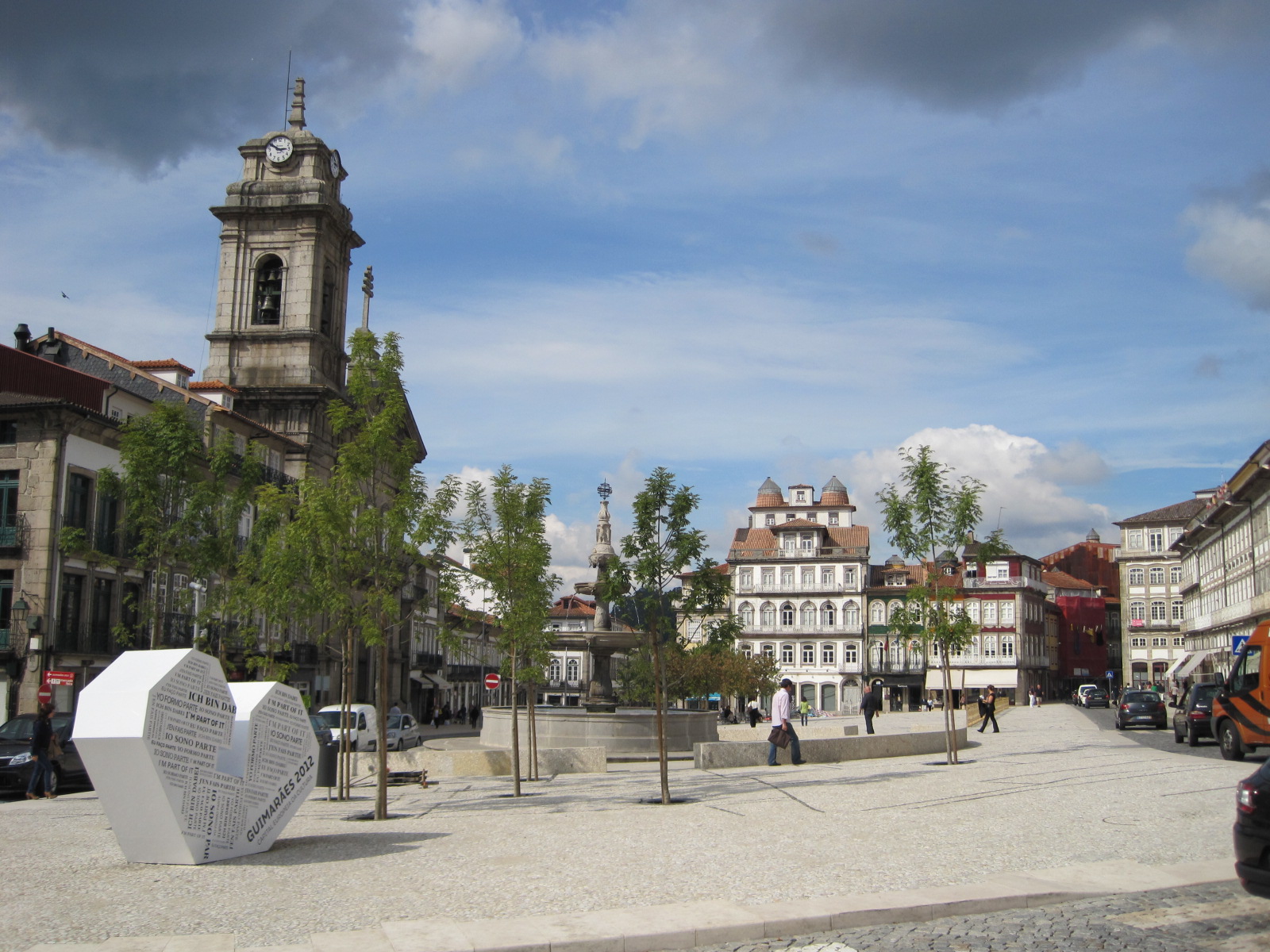
I was immensely taken with the heart logo which pops up everywhere in Guimaraes this year.  Designed by Joao Campos, it was inspired by the crenels of Guimaraes Castle and the helmet of King Afonso Henriques, the first king of Portugal.

I couldn’t be so close to Guimaraes without paying a visit in this, its special year as the European City of Culture.  “You are part of it” is a theme running throughout the year, and the logo is an important symbol of this. You might enjoy the promotional video  http://www.guimaraes2012.pt/index.php?cat=49&item=912&kword_cat= (choose 2012) I caught the train from Porto’s fabulous Sao Bento railway station to arrive on a sleepy Tuesday afternoon.

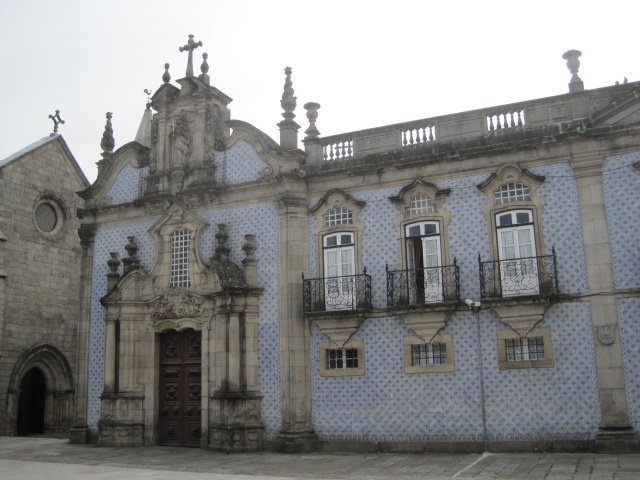
I didn’t know quite what to expect of Guimaraes, except that it would have a historic significance for the nation.  Everyone I had spoken to said it was very charming and captured “traditional Portugal”.  Of course, you know by now what traditional Portugal means to me, so, at the first hint of an azulejo, I was in through the doorway of the church of Sao Francisco.

Igreja de Sao Francisco

More cherubs!  I’m happy.

Michael’s photo of the altar was much better than mine

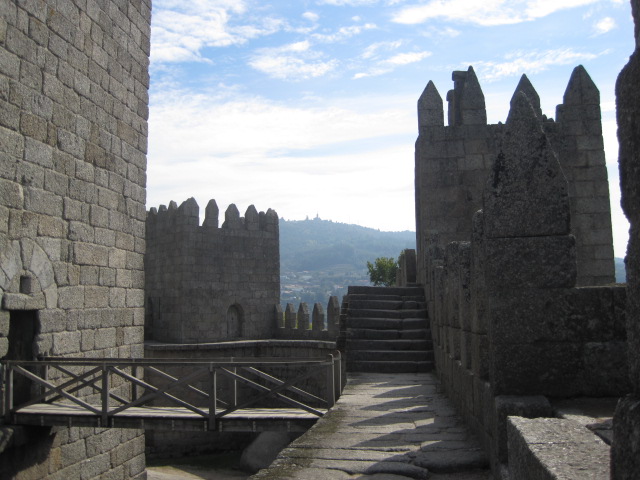
Guimaraes has its origins in the distant 10th century.  The widow Countess Mumadona Dias ordered the construction of a monastery in her estates at Vimaranes (Guimaraes today).  Constant attacks from the Moors and Normans necessitated a fort to defend the monks.  The Castle was built on a nearby hill, and a settlement grew up between the two, enclosed by walls.

In the 12th century, the County of Portucalem came into existence and the Castle became the residence of Count D. Henrique.  King Afonso Henriques was probably born here, and christened in the tiny chapel.  In 1128 the nearby Battle of Sao Mamede was instrumental in the founding of the Portuguese nation.

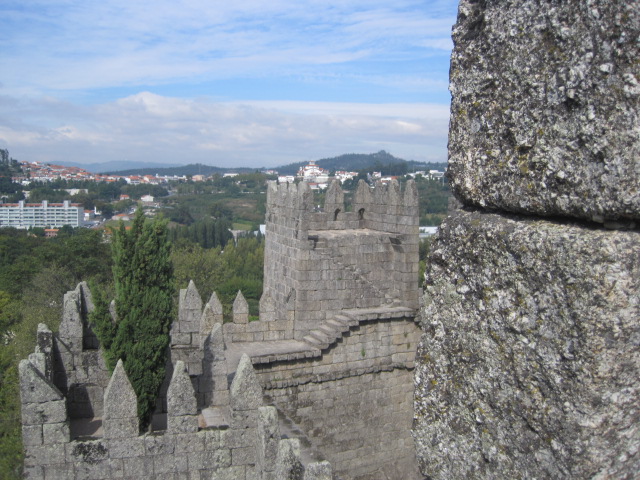
Modern Guimaraes from the castle walls

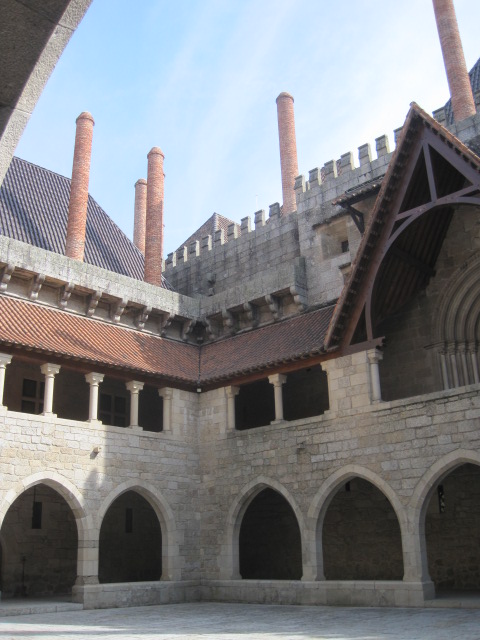
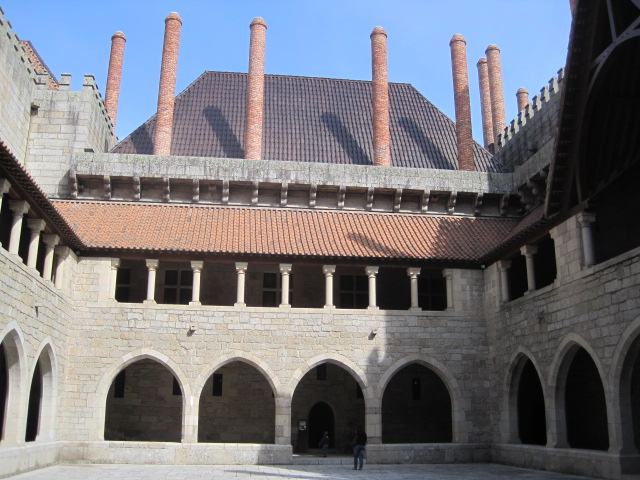
Walking back down from the vantage point of Guimaraes Castle, you cannot but be drawn to the Palace of the Dukes of Braganca.  I have visited the marble enhanced Braganca Palace at Vila Vicosa, and was intrigued by the difference.  Built in the 15th century, it is a unique example on the Iberian peninsula of a fortified house in the manorial style.

Braganca Palace with its distinctive chimneys

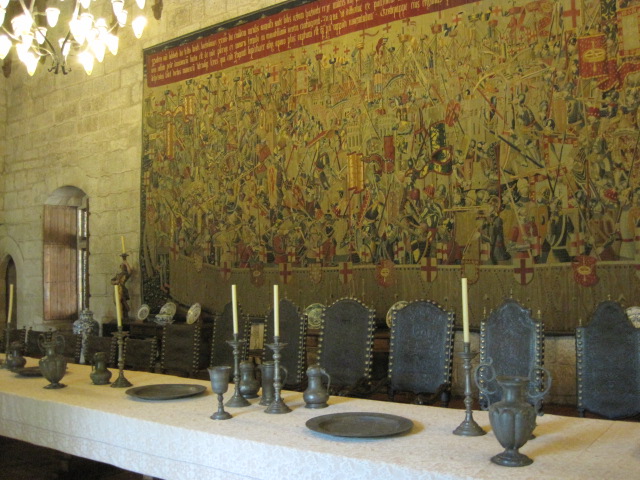
A collection of tapestries adorn the walls

A central courtyard captures the sunlight

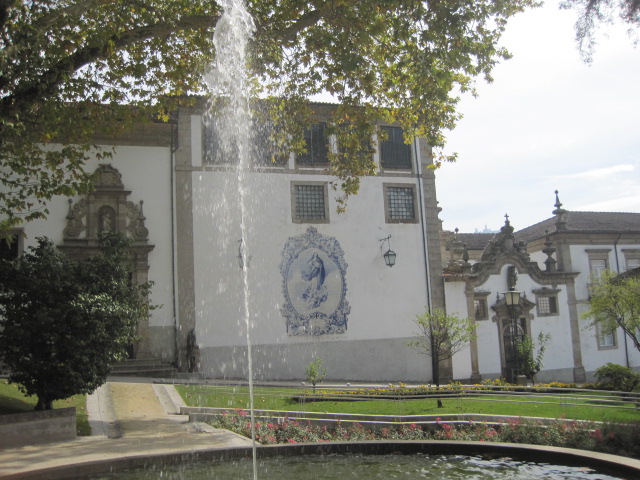
The city’s first street, Rua de Santa Maria, unravels gently into the cluster of the old town, but not before you pass through Largo Martins Sarmento.  The fountain, with chapel beyond, makes a pretty picture.

Largo Martins Sarmento

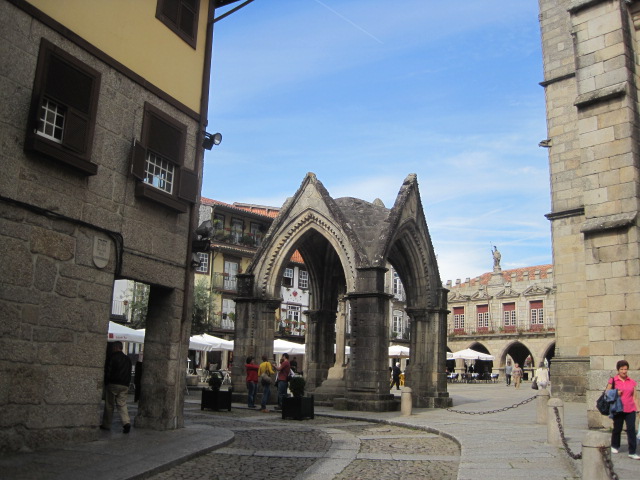
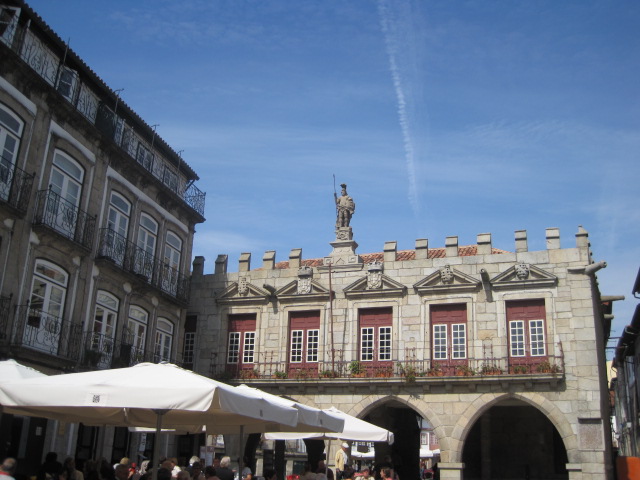
The narrow streets wrap around two large squares, Praca de Santiago, and Largo da Oliveira.  The photo everybody’s keen to take features the old Council Chambers and Gothic Salado Monument.

Largo da Oliveira and Salado Monument

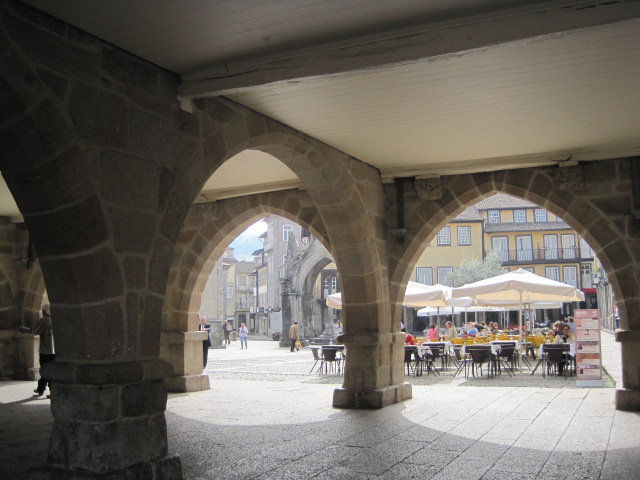
The square seen from beneath the old Council Chambers

Nice spot for a coffee, or something stronger

At the end of the 19th century, Guimaraes achieved city status, and sadly the city walls were demolished.  Let me end in Largo de Toural, the focal point of modern Guimaraes, and outside those city walls.  The legend “Aqui nasceu Portugal” – here Portugal was born- sits proudly on a remnant of wall.

One last heart in modern Toural Square- another Michael photograph

The old centre has UNESCO World Heritage status and this year every effort has been made to turn Guimaraes into an inviting tourist destination.  If you like what you see, there’s still time to visit.  The events are posted on www.guimaraes2012.pt

Me, I have a “happy heart” whenever I’m in Portugal.  Many thanks to Julie Dawn Fox who gave us the idea of “My Personal A-Z Challenge”  Follow the links to discover more, and maybe join in yourself.