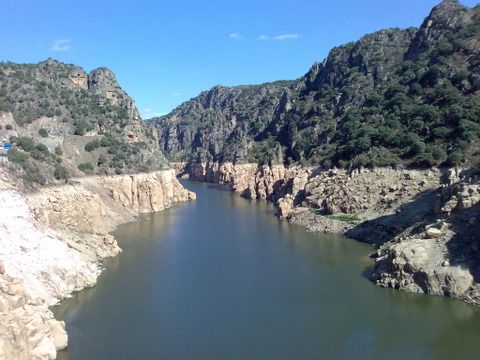
Pinhao

More blue and white, with a splash of gold

It’s no secret that I love the gentle blue and white of azulejos.  But gold?  That’s where the River Douro glides onto the scene- a golden river.  When I looked out of my bedroom window that first morning in Regua, I was so excited to see the mist swirling delicately at the end of the garden.  I could barely wait for breakfast to head down to the riverside path and the gleaming water.
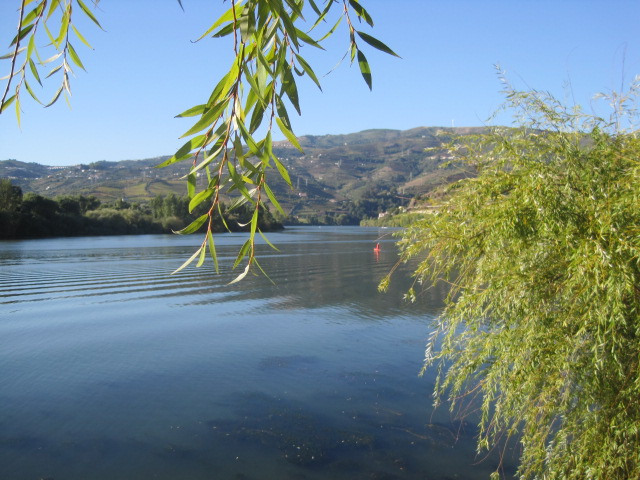
Sunlight glistens on the water, from the riverside path
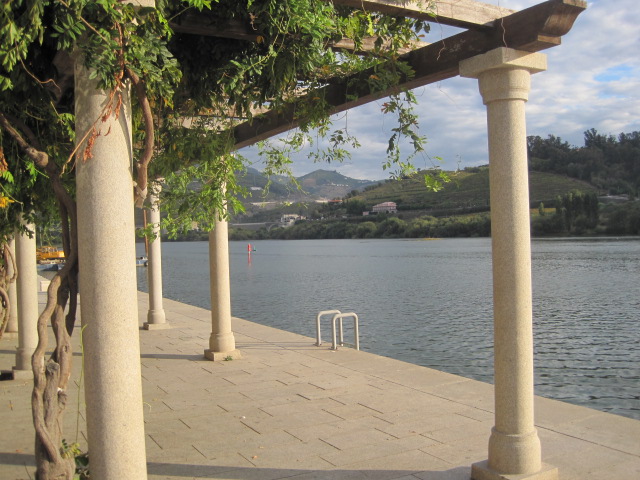
I love a stroll- don’t you?

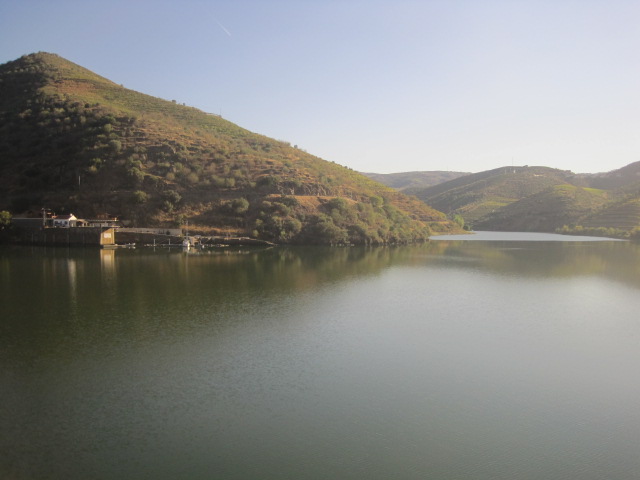
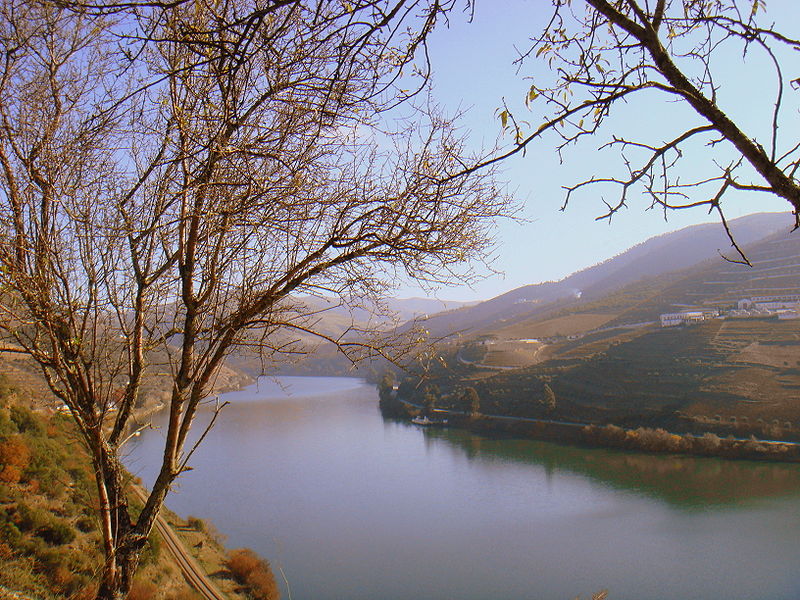
I planned to see as much of the river as I could, but was thwarted at the outset.  The boat to Barca D’Alva at the Spanish border was not running.  It was low season and there was no longer a demand.  I resigned myself to following the river upstream on the train- no real hardship as, from Peso da Regua to Pocinho, the tracks hug the river bank.  First stop, delightful Pinhao, sleepy in the morning sunshine.
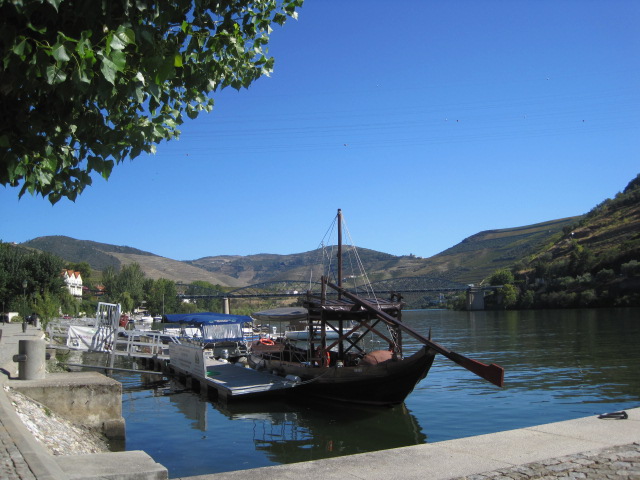
A barco rabelo awaits passengers at Pinhao

Of course, you know what else I found, don’t you?
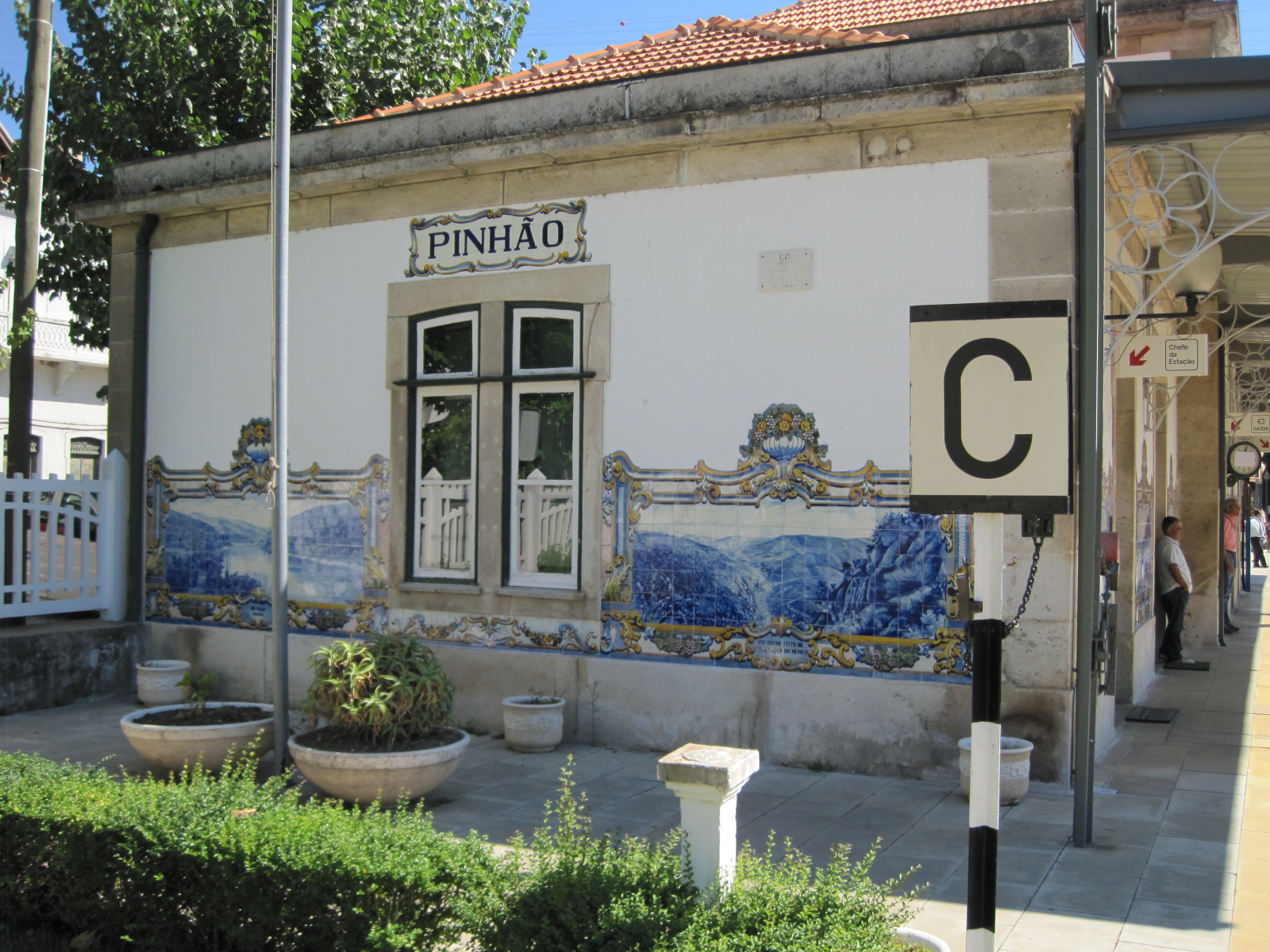
A railway station covered in azulejos- perfection! (Michael’s photo, this one)
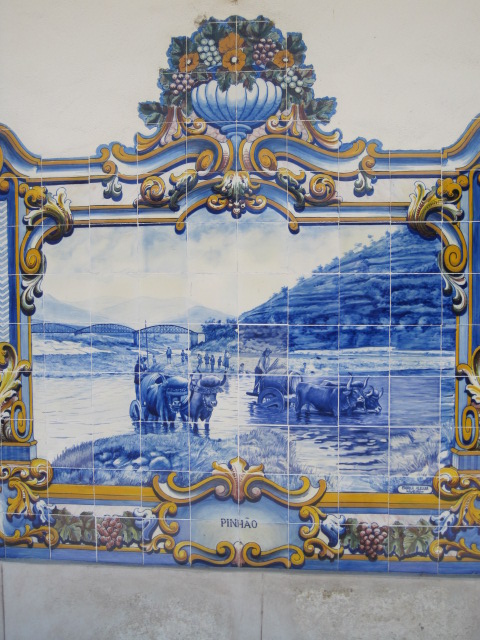
And then you have the splash of golden yellow, too
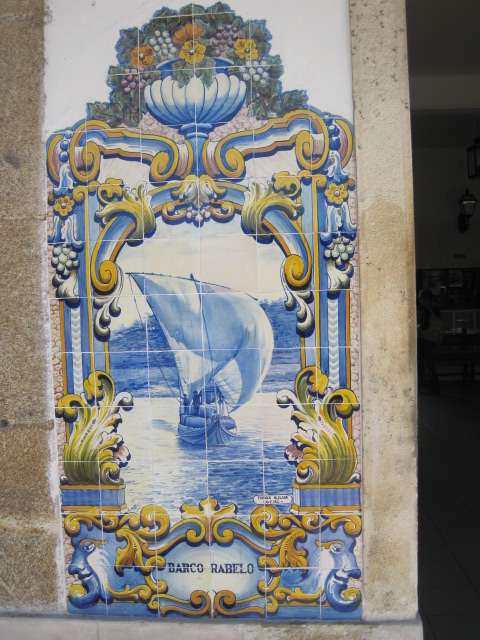
I so love these boats- one day I’ll have these tiles on my Tavira home
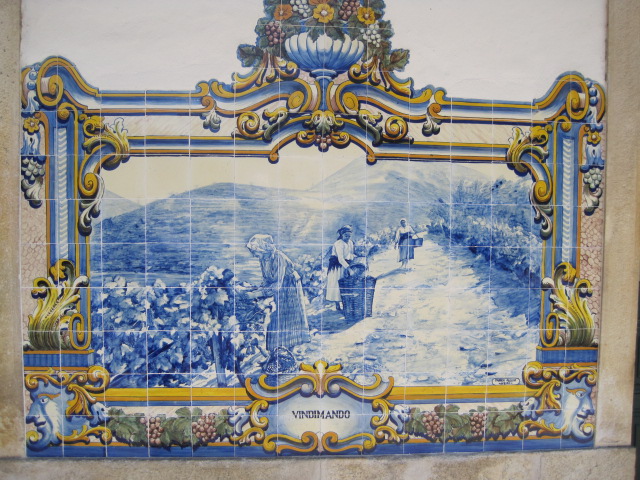
The wine harvest
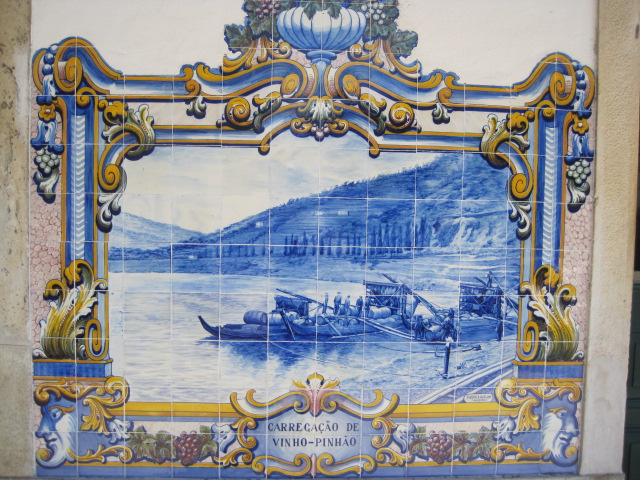
More boats- what else?

I couldn’t resist a sashay through the fabulous Vintage Hotel, and even an expensive glass of wine on the terrace. (Michael blanched at the price, but you only live once, don’t you?)  Couldn’t afford twice!
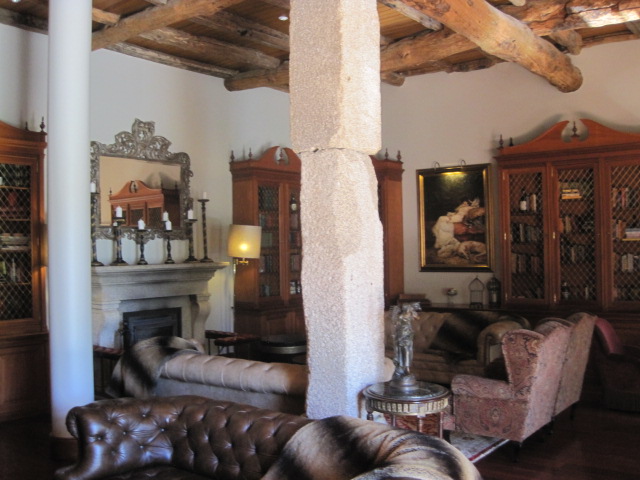
The Vintage Hotel, Pinhao

Just to prove I was there
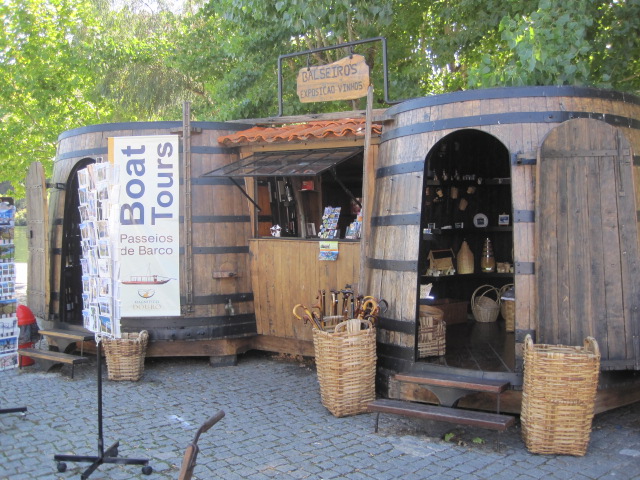
A novel ticket sales office
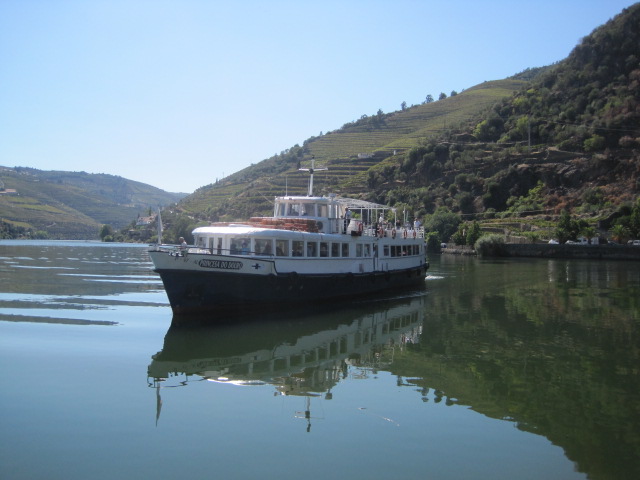
The occasional boat disturbed the peace

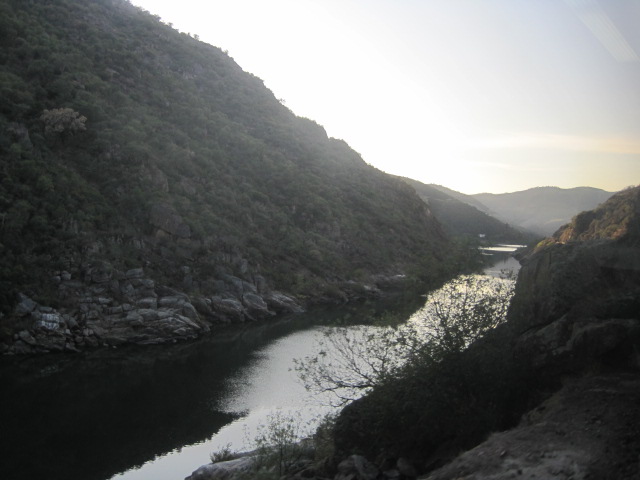
Time to get back on the train for the ride up to Pocinho, through increasingly rugged territory.  Apologies for the blurry images out of the train window.  I had to try.

At Pocinho we hopped off the train and back on again, as the sun was starting to sink.  Just time to capture a quick azulejo on the platform.
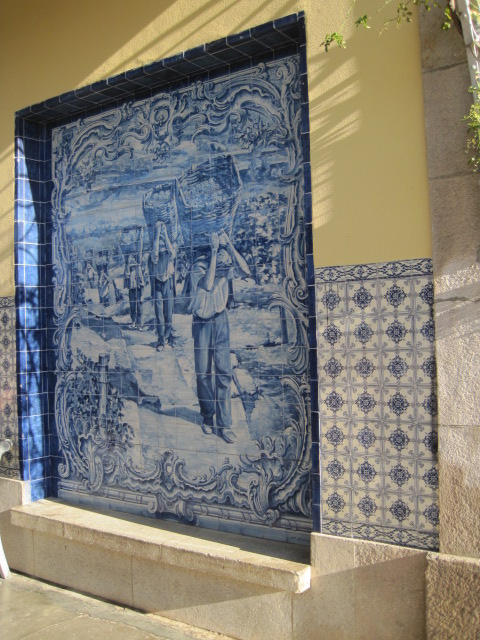
On Pocinho platform
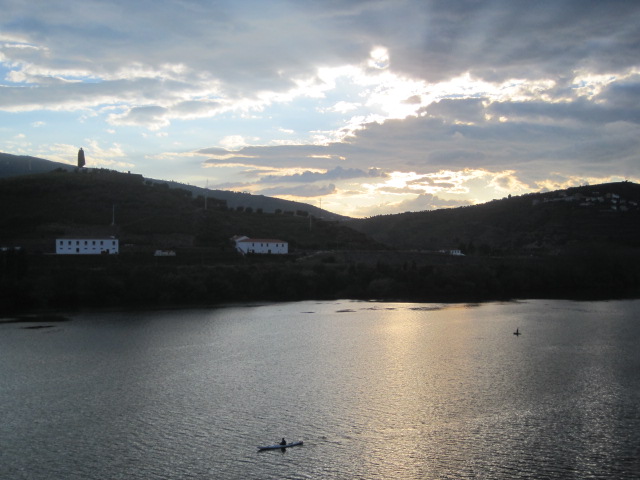
Regua, as the sun sets on the Sandemans figure on the hillside
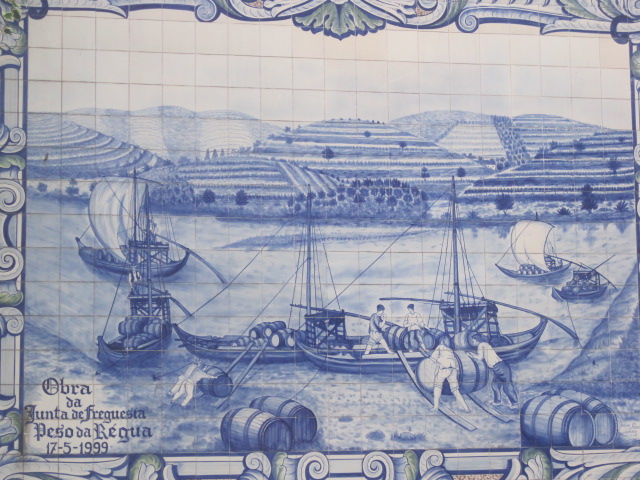
Azulejo, Peso da Regua-style

With a train strike in the offing and a shortage of boats, I wasn’t sure how I was going to get back to Porto.  Luck was on my side, however, and Tomaz do Douro came to my rescue.  On the quayside the crew were readying the “Via Douro” for departure.  She was unbelievably beautiful!

Via Douro with tiny Porto Cruz moored alongside
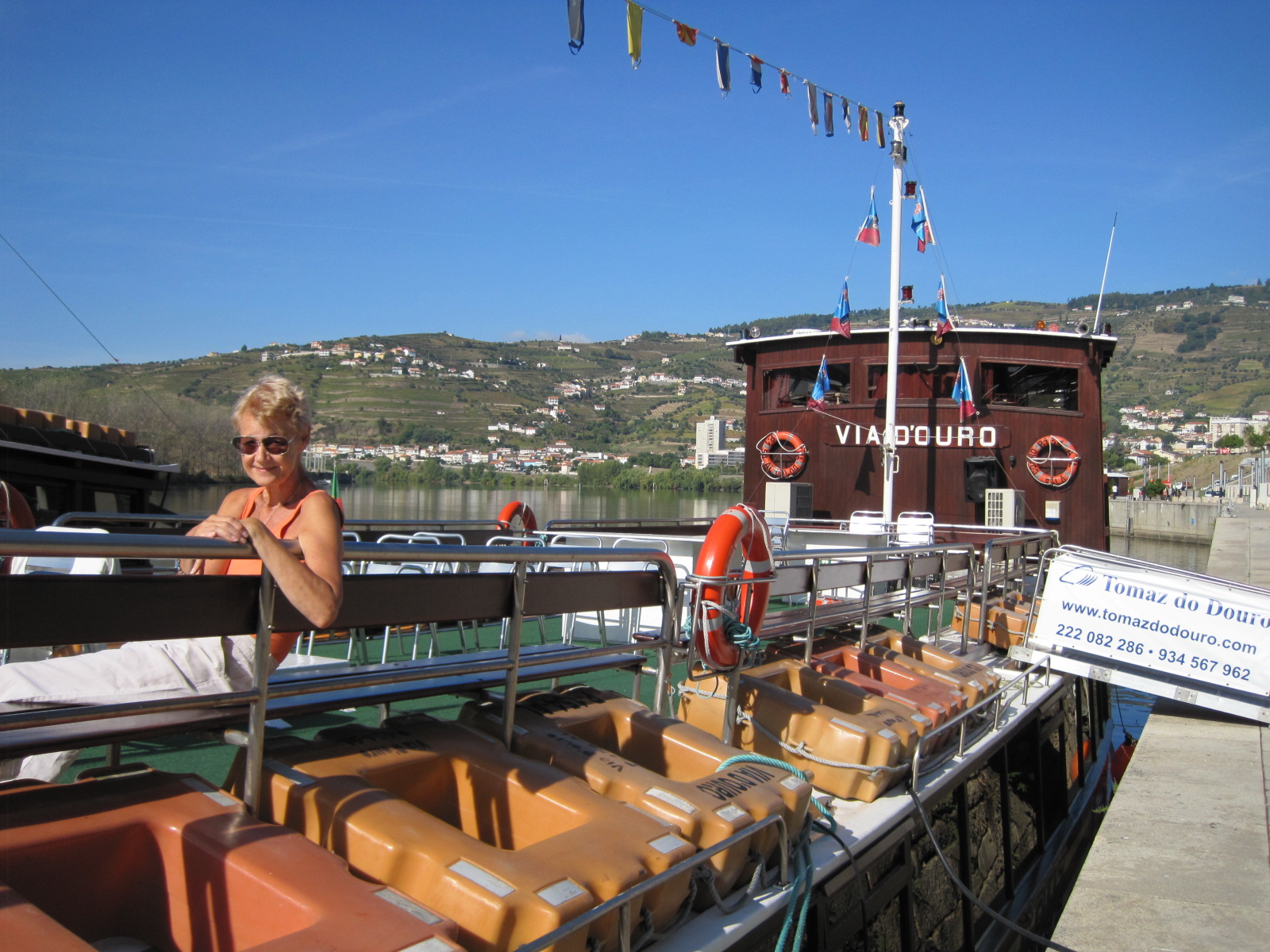
All aboard!
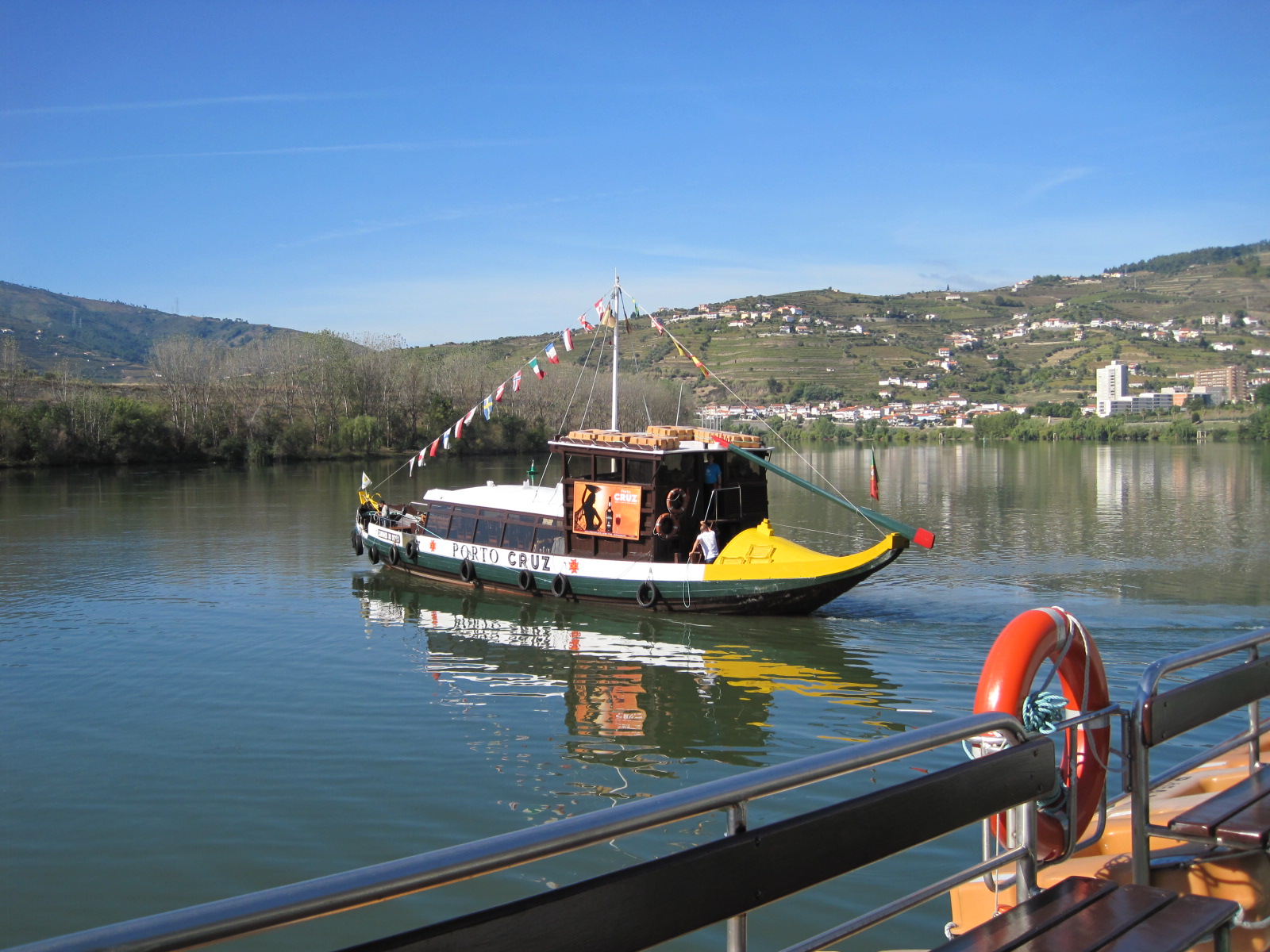
Porto Cruz pulls away and we’re ready to cruise

Those last 3 photos are Michael’s.  I seem to have done something strange to my camera in the excitement of the moment, and launched into landscape mode!
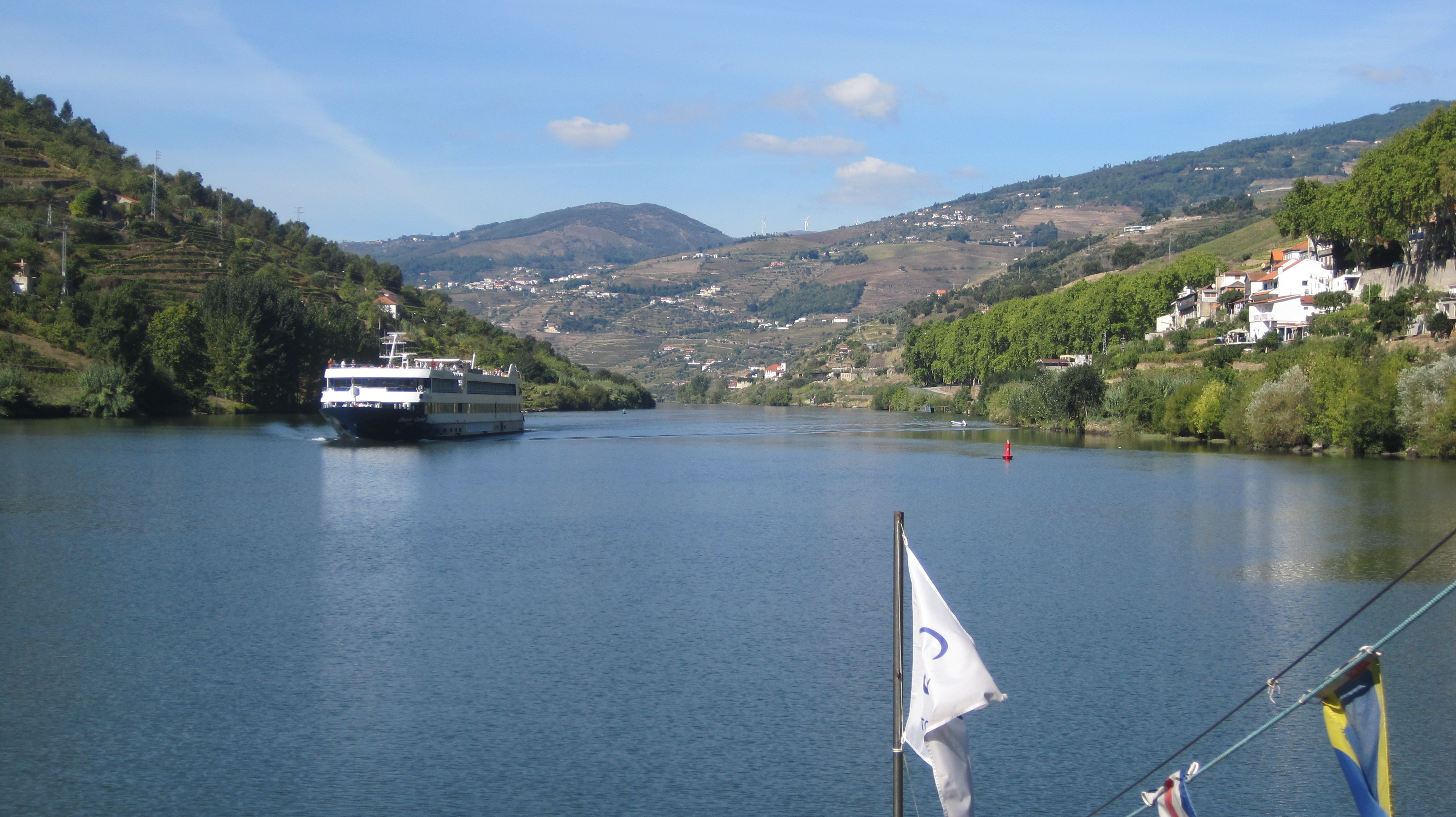
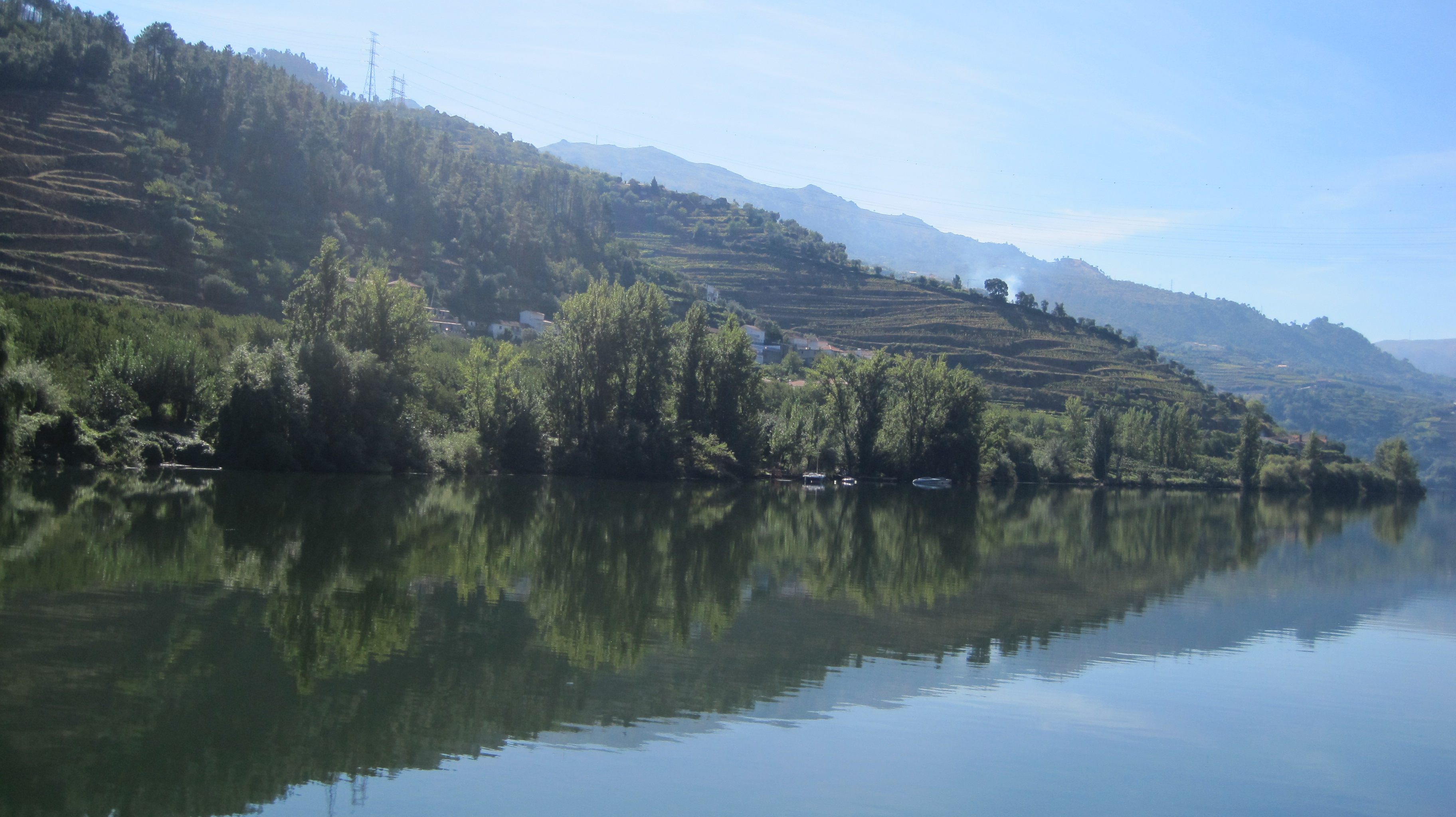
Never mind!  The next 6 hours will forever be etched on my memory.  In the company of a young American couple (who later revealed that they were on the last day of their honeymoon!) we dined very nicely indeed, and exchanged travel tales, while gazing out at the sublime scenery.

The deepest lock in Europe provided hoots of laughter as we were briefly splattered with water in passing underneath.  Then the wonderful moment of sailing into Porto itself.  The sun sparkled on the quayside, and Porto rose majestically above us.
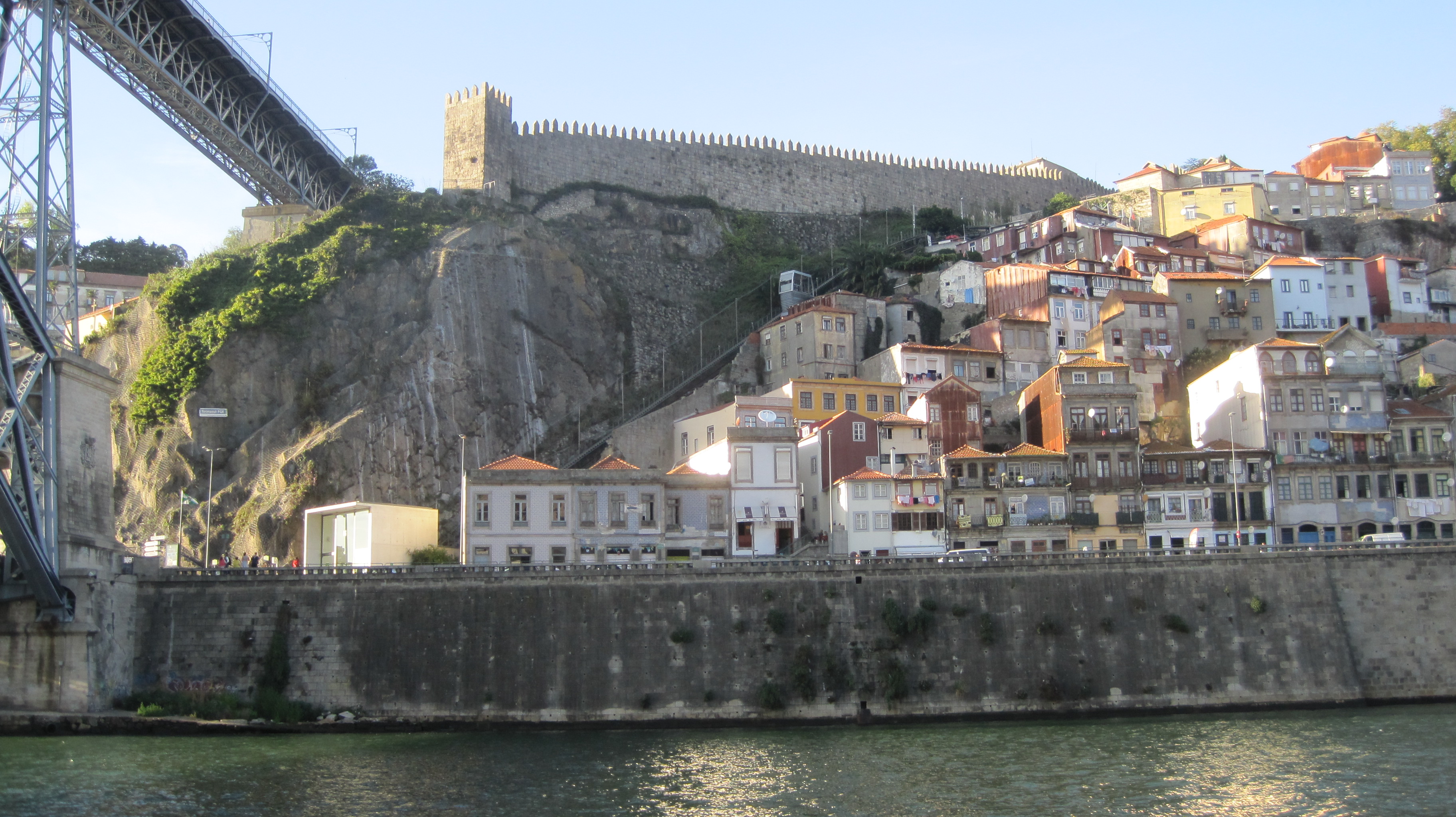
Sailing beneath Dom Luis Bridge, the walls and funicular

Moored at the quayside, the former Royal Barge, Spirit of Chartwell

What a journey!  What an ending!  I hoped you enjoyed sharing it with me.  For yet more blue and white, my previous post focuses on azulejos in Porto.   https://restlessjo.wordpress.com/2012/10/16/simply-beautiful-blue-and-white/

D is for Douro

Rio Douro- the river of gold

This post is entirely aspirational.  I have long wanted to visit Porto and to cruise the Douro Valley.  So far we haven’t found a convenient flight from the UK and it’s quite a way north from the Algarve.  So permit me to dream a little.

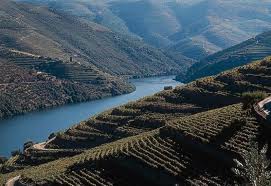
Upper Douro by Gustavo Motta for Wikipedia

The River Douro rises in Spain and flows 897 km till it reaches the Atlantic at Porto.  Over 100 of these kilometres form the border with Spain in a series of narrow canyons- an effective barrier between two often warring nations.   The third largest river on the Iberian Peninsula, in recent times the river has been tamed by a series of locks and dams, making it navigable for all of its Portuguese length.  Looking down from the sky I always try to fathom whereabouts on the Douro we are crossing as we make our way back to Northern Europe.

Peso de Regua, by Husond for Wikipedia

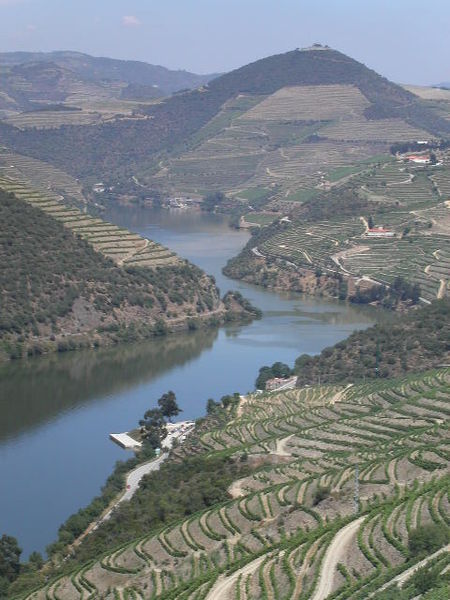
The Douro is blessed with a microclimate which creates exceptional conditions for the cultivation of almonds, olives and grapes- in particular the variety of grape used in the production of port wine.  It’s no secret that I love to sit by the banks of a river with a glass or two of port.  Hopefully one day that river will be the Douro.   The region around Pinhao and Sao Joao de Pesquiera is known as vinhateiro, the centre of this liquid gold, and the quintas lining the riverbanks testify to the success of the enterprise.

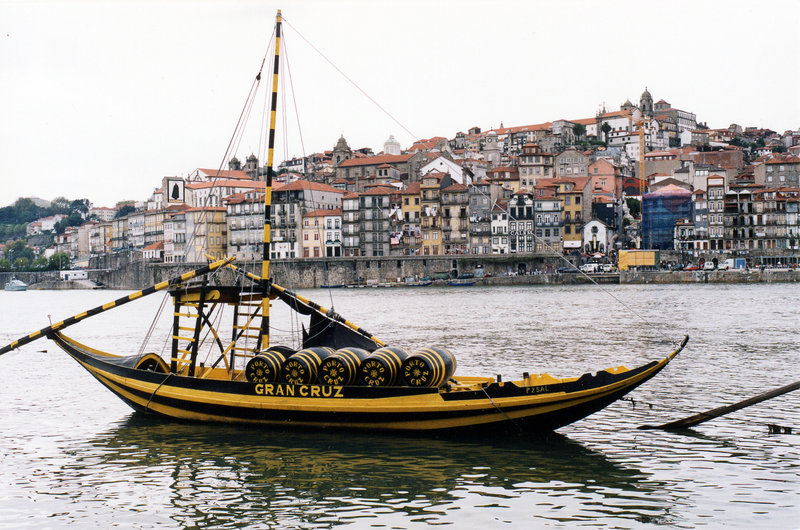
Barco rabelo by Thomas Seibel for Wikipedia

Traditionally the wine was transported down the river in flat-bottomed sailboats called barcos rabelos , some of which can still be seen today at the quayside in Vila Nova de Gaia, opposite Porto.  It was stored in oak barrels to mature in the cellars of numerous wine lodges.  After blending it would be bottled then stored again till reaching the level of maturation for that particular brand.  Names like Sandemans, Cockburns and Taylors are familiar friends.

A story goes that port was originally discovered by two English gentlemen, staying at a monastery in the Upper Douro.  They found that by adding a little brandy to the local sweet wine it would be better fortified to withstand the long sea journey home.  More probably, following a period of exceptionally warm weather in 1820 unusually sweet grapes were produced which was much to the taste of the British.  In order to capitalise on the British market the wine companies added aguardente or brandy to stop fermentation and fix the sugar content.

Vinhateiro

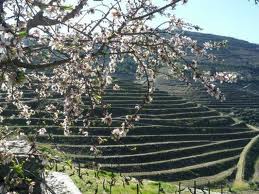
How am I going to get around so that I see the Douro from every angle?  There seem to be lots of choices.  One thing’s for sure, I will be visiting Sao Bento railway station in Porto, not just to see its magnificent azulejo tiles but to travel up the valley.  If I’m lucky I may even catch the Saturday steam train (May to October).  I know that the colour of the vines in Autumn is a spectacular red-gold, and that white blossom clothes the valley in Spring.

Blossom time in the Douro

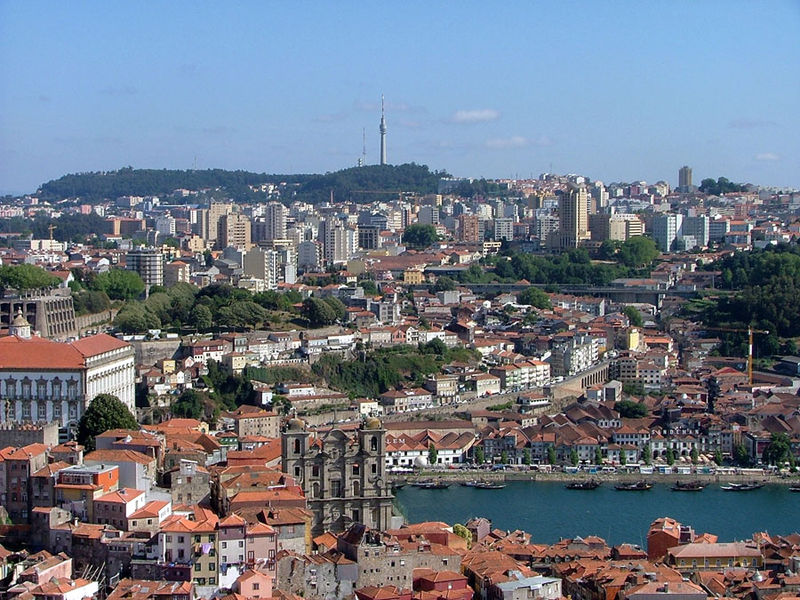
The Dom Luis 1 Bridge leads over the river and into Vila Nova de Gaia and from here you can take a 50 minute trip beneath the bridges to admire Porto’s skyline.  This is just a taster.  The true beauty of the Douro reveals itself on a lengthier cruise up river.  How far you choose to go depends on how long you have available, and your tolerance for messing about in boats.  Mine is infinite, but if you’ve just come for peace and quiet you’ll be perfectly happy with a good book and the gentle slap of the water.

Vila Nova da Gaia,seen from Porto,by Jonik for Wikipedia

My impression is that the further you go up the river the wilder the scenery becomes, east of Pinhao with its beautiful railway station, the most spectacular.  I’m looking forward to the deep locks that have calmed the raging rapids.  You can combine a cruise with train journey for the best of all possible worlds, or to help shorten your trip. Peso de Regua is the collection point for the wine and from which it used to be shipped down river.  Less romantically these days transport is by tanker, but you can still see the sailboats in action at Porto on 24th June, the festival of Sao Joao.

The Douro, near Miranda, from Wikipedia

You can drive up the valley for fine views but this is never much fun for the driver.  The train runs beside the Douro from Regua out towards the Spanish border, passing Pinhao and then crossing to the opposite bank all the way to Barca de Alva at the Spanish border.

Of course, you can also do the 5 star cruise from Porto all the way across into Spain, and take in the historic city of Salamanca.  This isn’t really my way (too easy! says husband Michael- and certainly not cheap).  I just know I’d want to linger somewhere that the boat didn’t, but I did say that I could dream and Salamanca does sound tempting.  Maybe for a special birthday?

http://www.portugaltravelguide.com/en/pinhao.htm will give you a flavour of the area.  Be sure to check out Amarante and Mesao Frio as well as Regua and Pinhao.

www.cp.pt/StaticFiles/CP/Imagens/PDF/Passageiros/horarios/regional/porto_regua_pocinho.pdf  provides basic rail information but you need to seek further for the steam train.  Now I’ve completed this I can’t wait to book!

My previous A-Z s of Portugal are:

a-is-for-alte/

b-is-for-beaches/

c-is-for-cacela-velha/