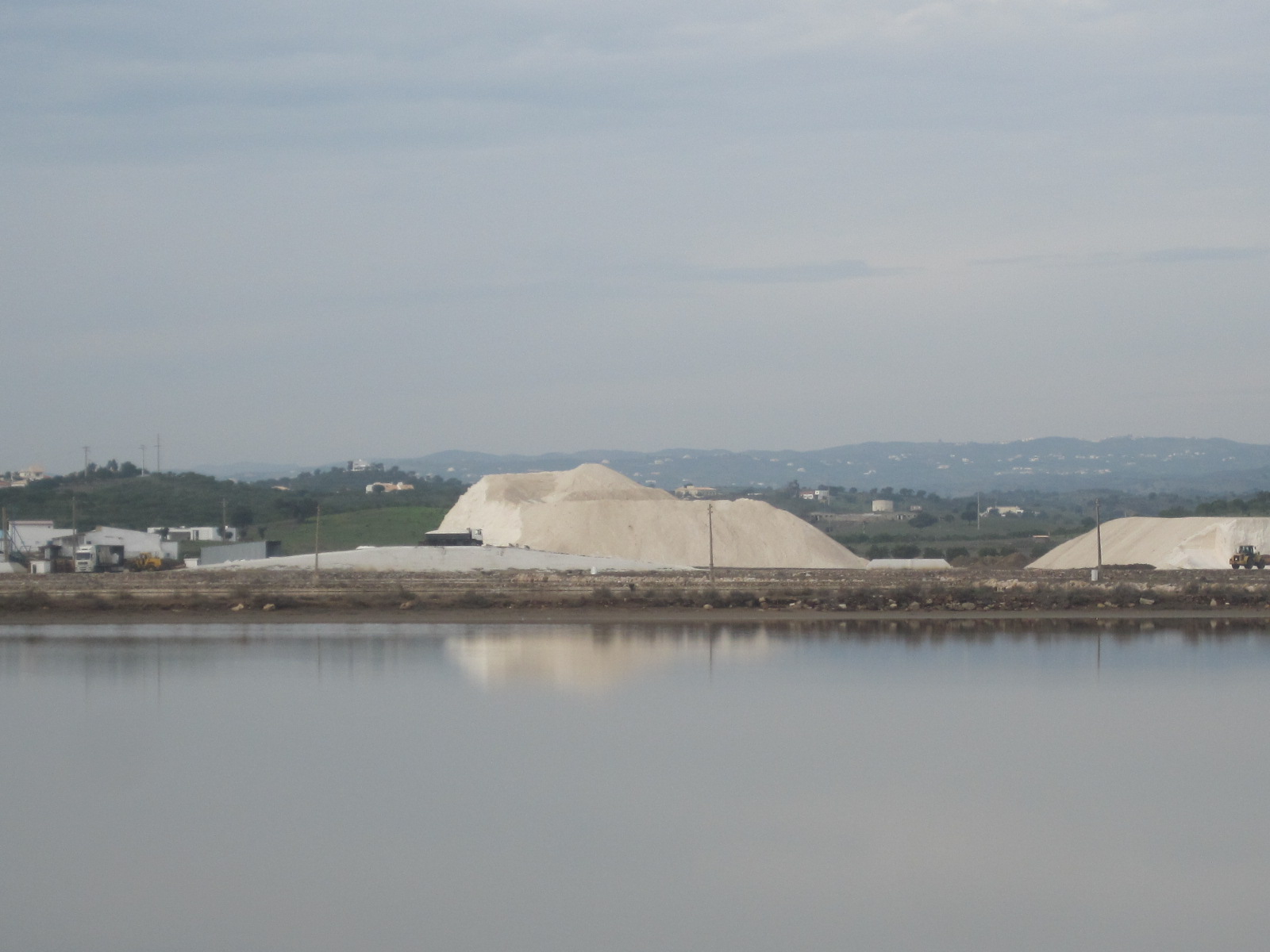
A salt mountain, carefully harvested.
One of the best things about visiting the Algarve off season is being able to take long walks. The 12km circular of the salt pans at Castro Marim Nature Reserve was one of the highlights of my recent stay.
The sapal or salt marshes are a special feature of the Algarve. It is one of the few areas where harvesting sea salt, begun in Roman, or even Phoenician times, continues today. There is an art to skimming the salt crystals off before they grow big and heavy enough to sink to the bottom. The end product is mineral rich, though needing hours of toil in the heat of Summer. The distinctive sight of the salt pans, evaporating in the sun, always fascinates me.
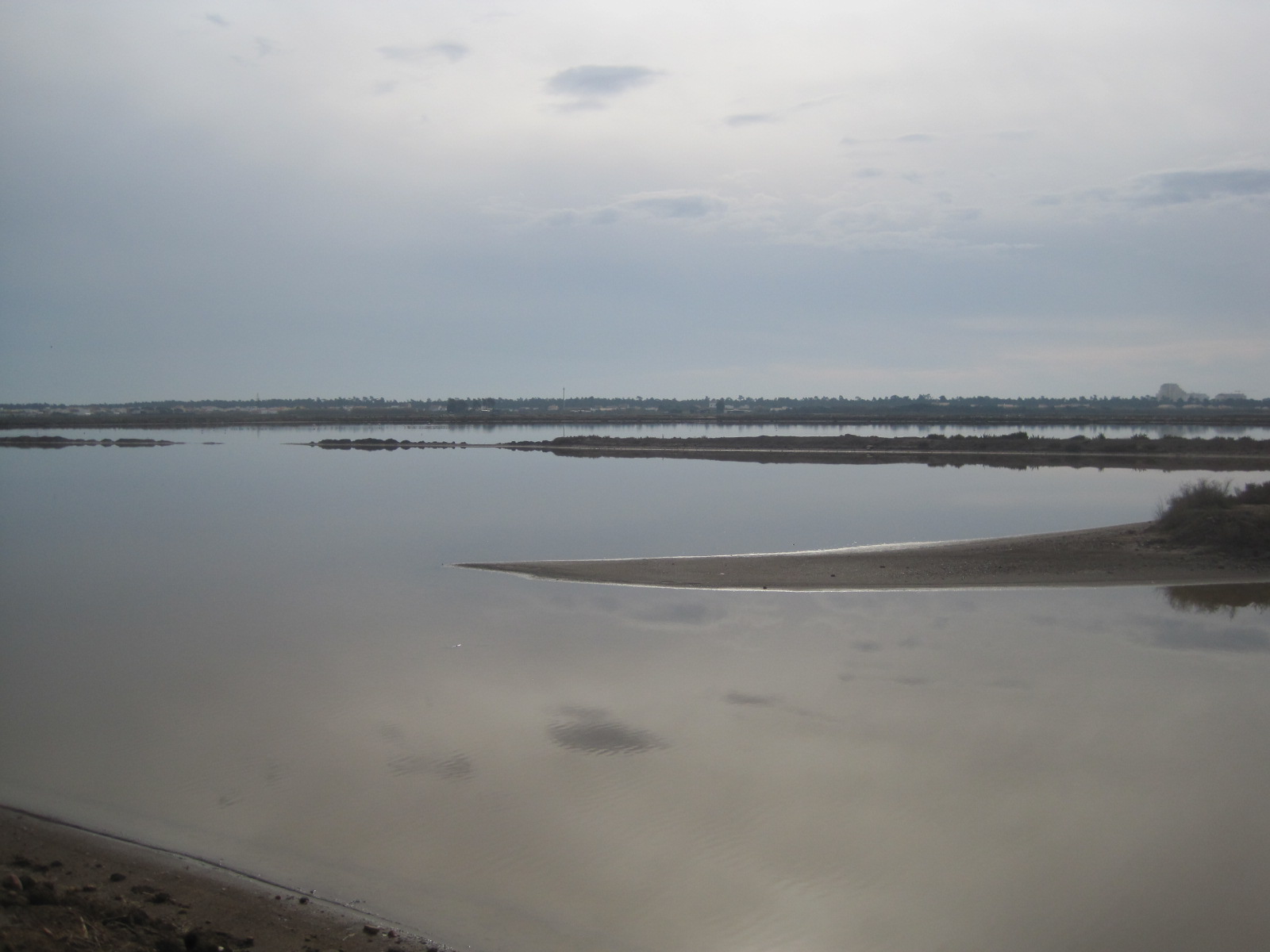
The wide, flat landscape of the reserve
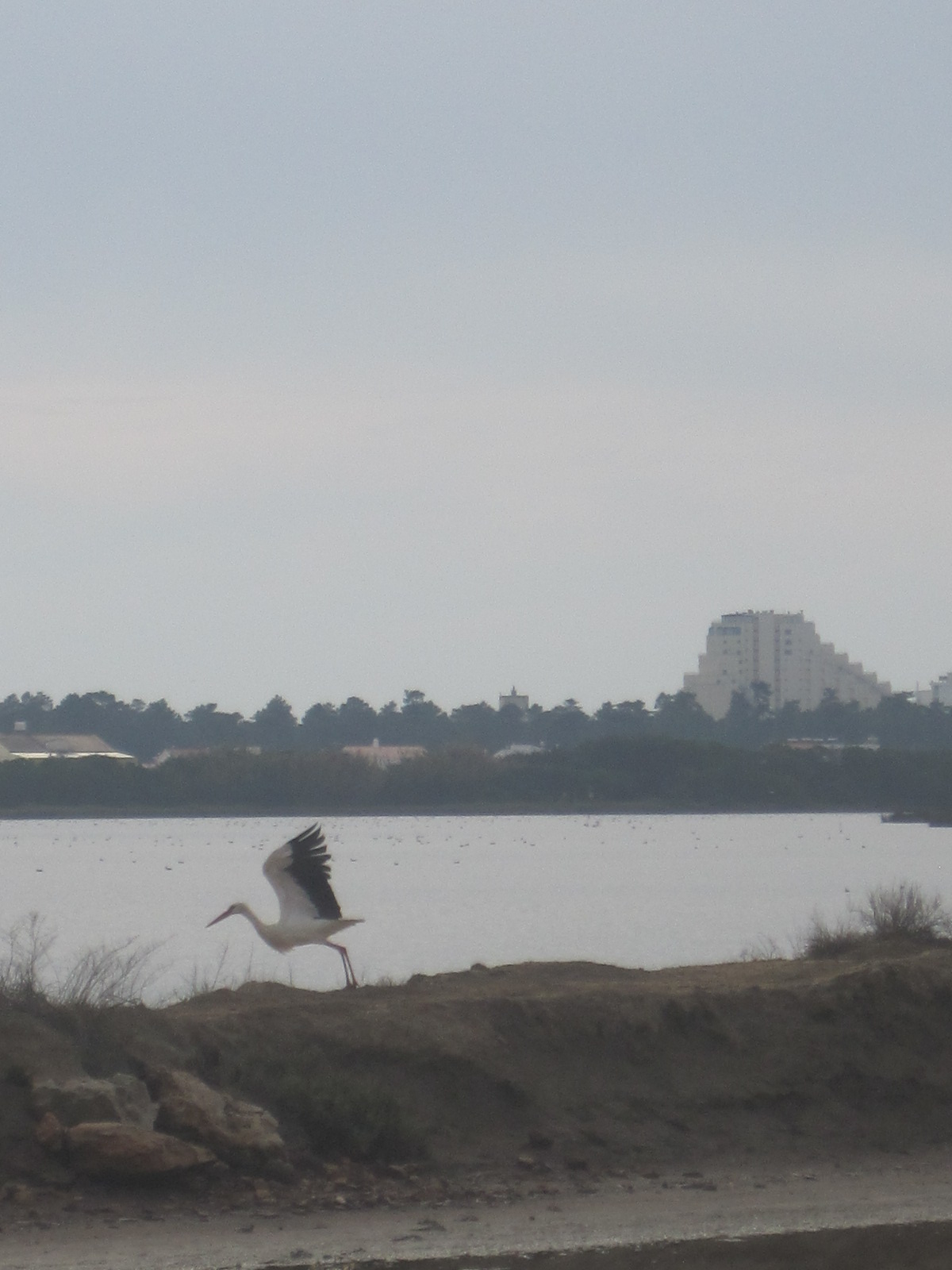
Then suddenly, a white stork takes off across the water…
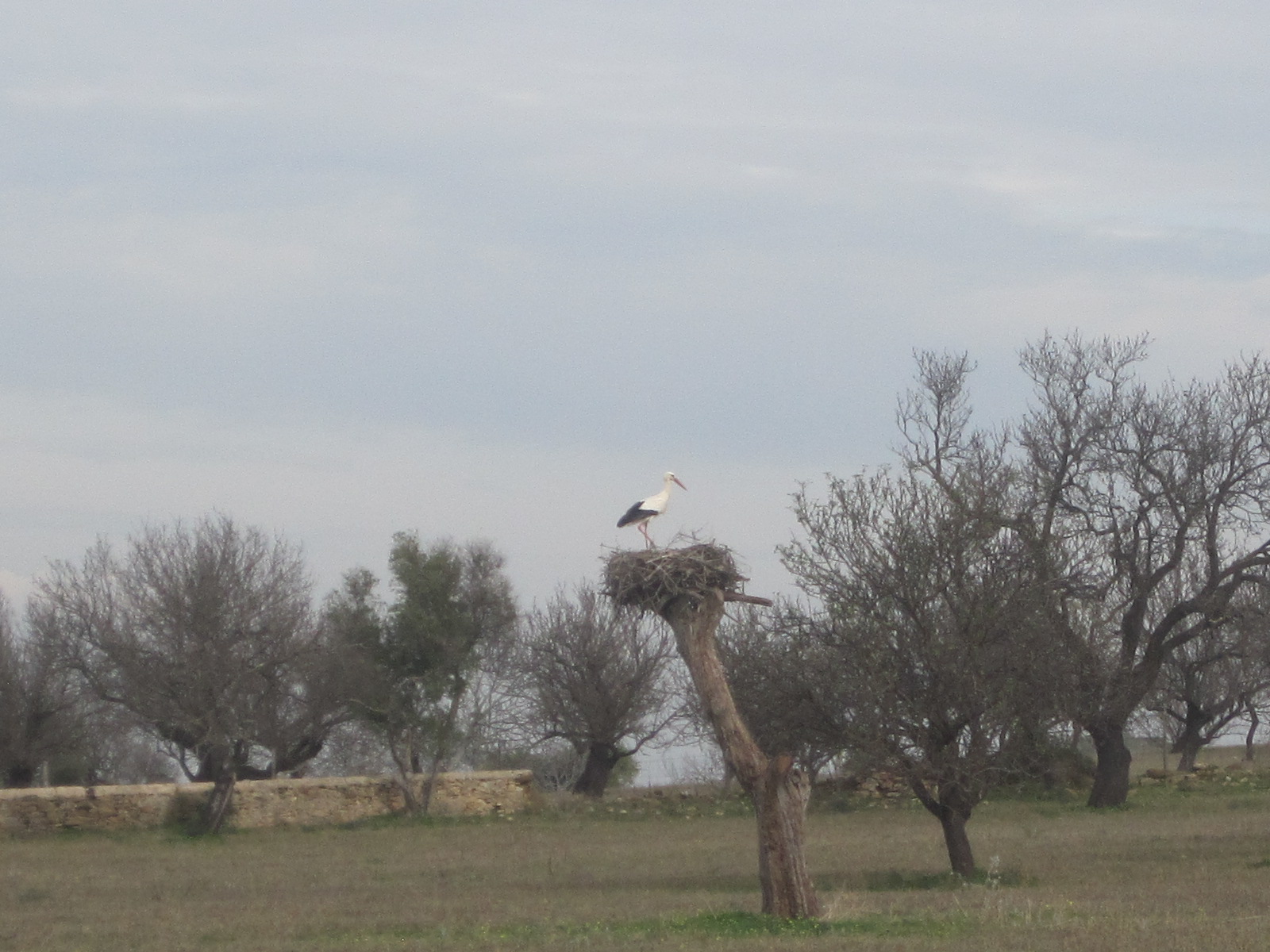
Maybe, to visit this nearby nest?
The walk starts off, without too much promise, along an unsigned dirt track which doesn’t appear to lead anywhere. Olive and carob trees line the neighbouring field. In the distance, across the salt marsh, you can see the towering piles of salt and the refinery. As you head towards them a river appears on your right. Beyond it, in the distance, hovers the sleepy town of Castro Marim, its mighty castelo perched high on the hill. The twin peaks of the road bridge, which crosses the River Guadiana into Spain, are barely visible.
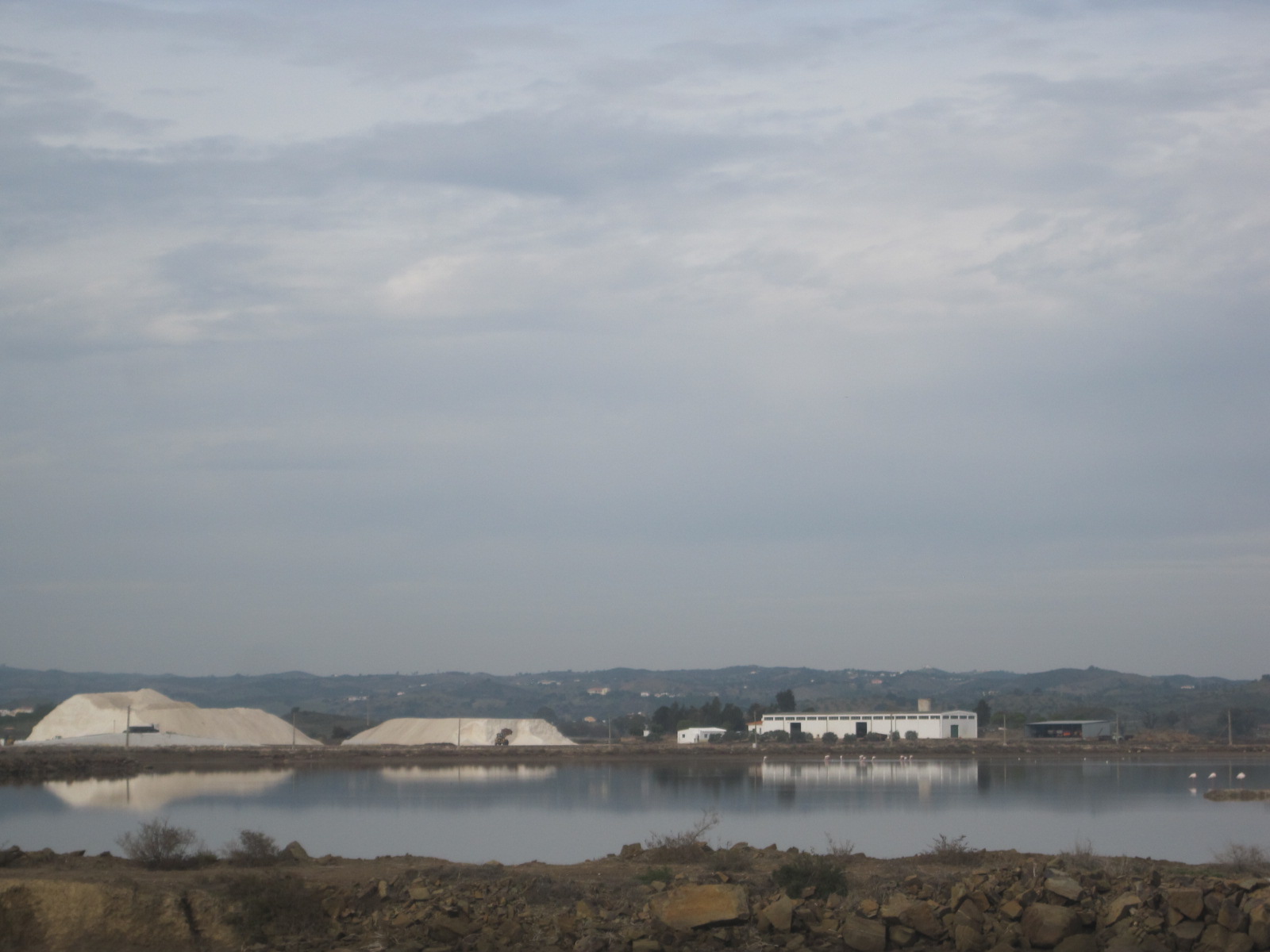
The salt mountains beckon across the lagoon

Can you see the flamingos in the foreground?
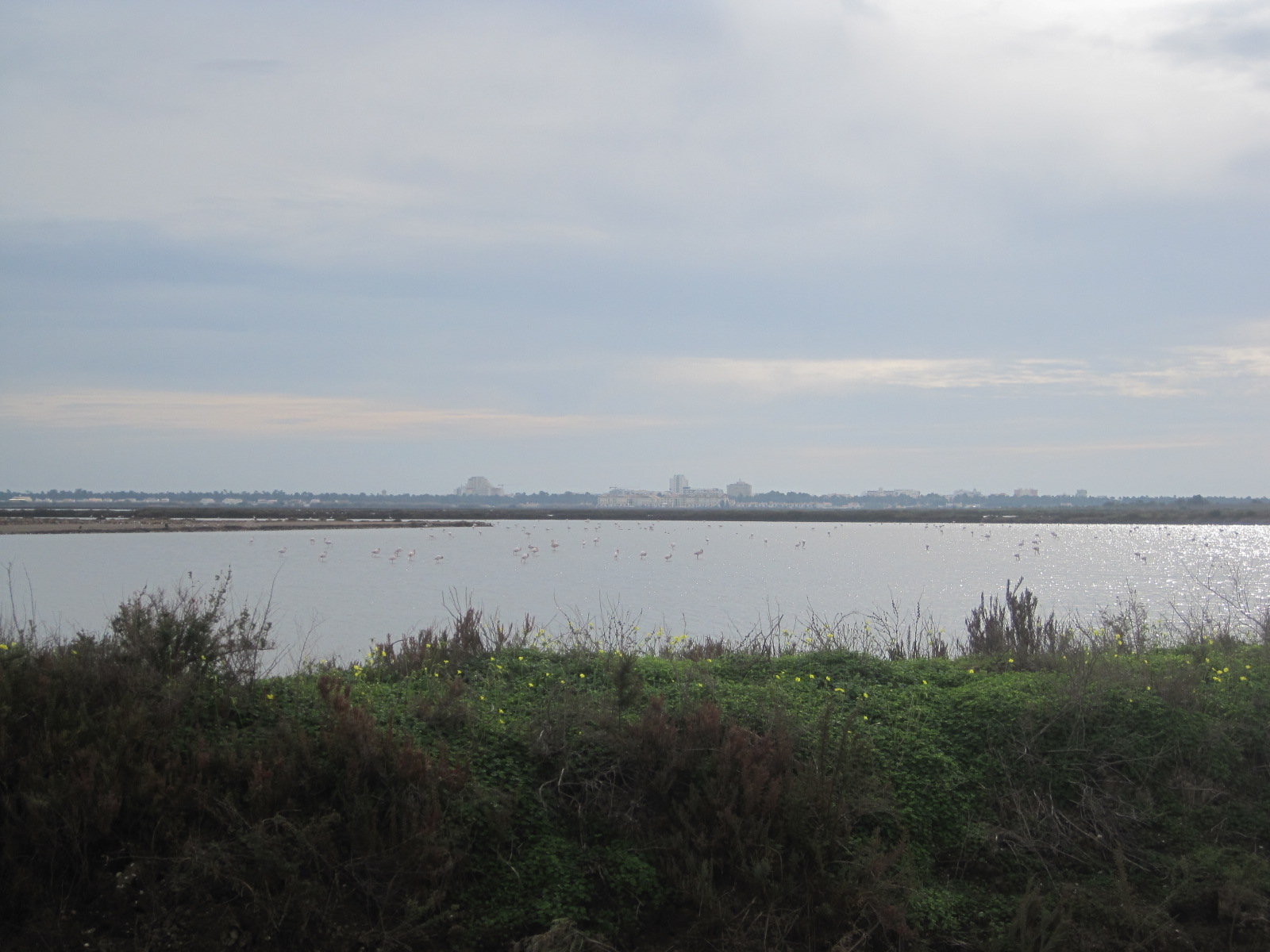
They were everywhere on the salt marshes
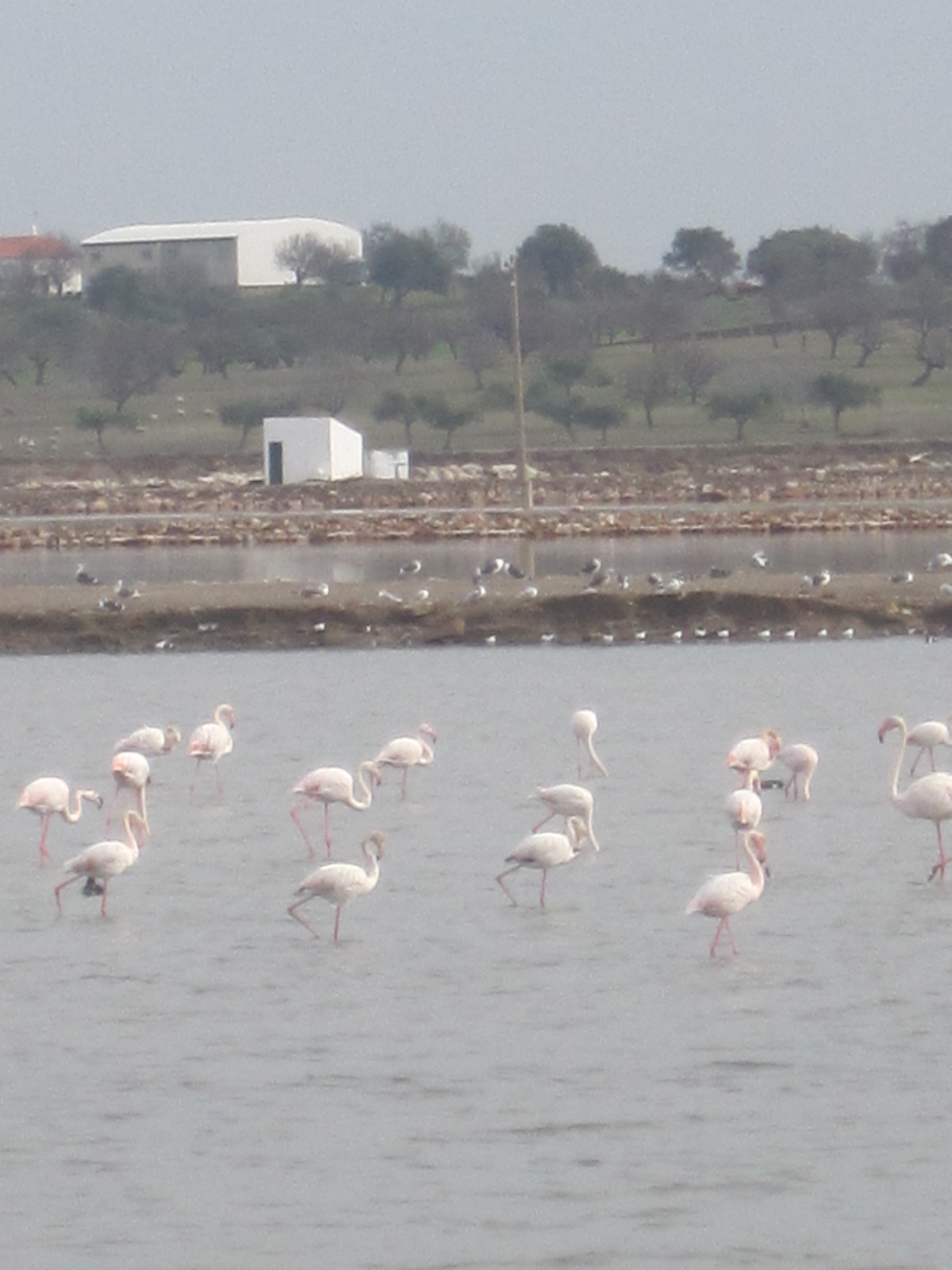
Seeming to be busy, and happy to be there.

In the distance, across the river, the hilltop fortress of Castro Marim
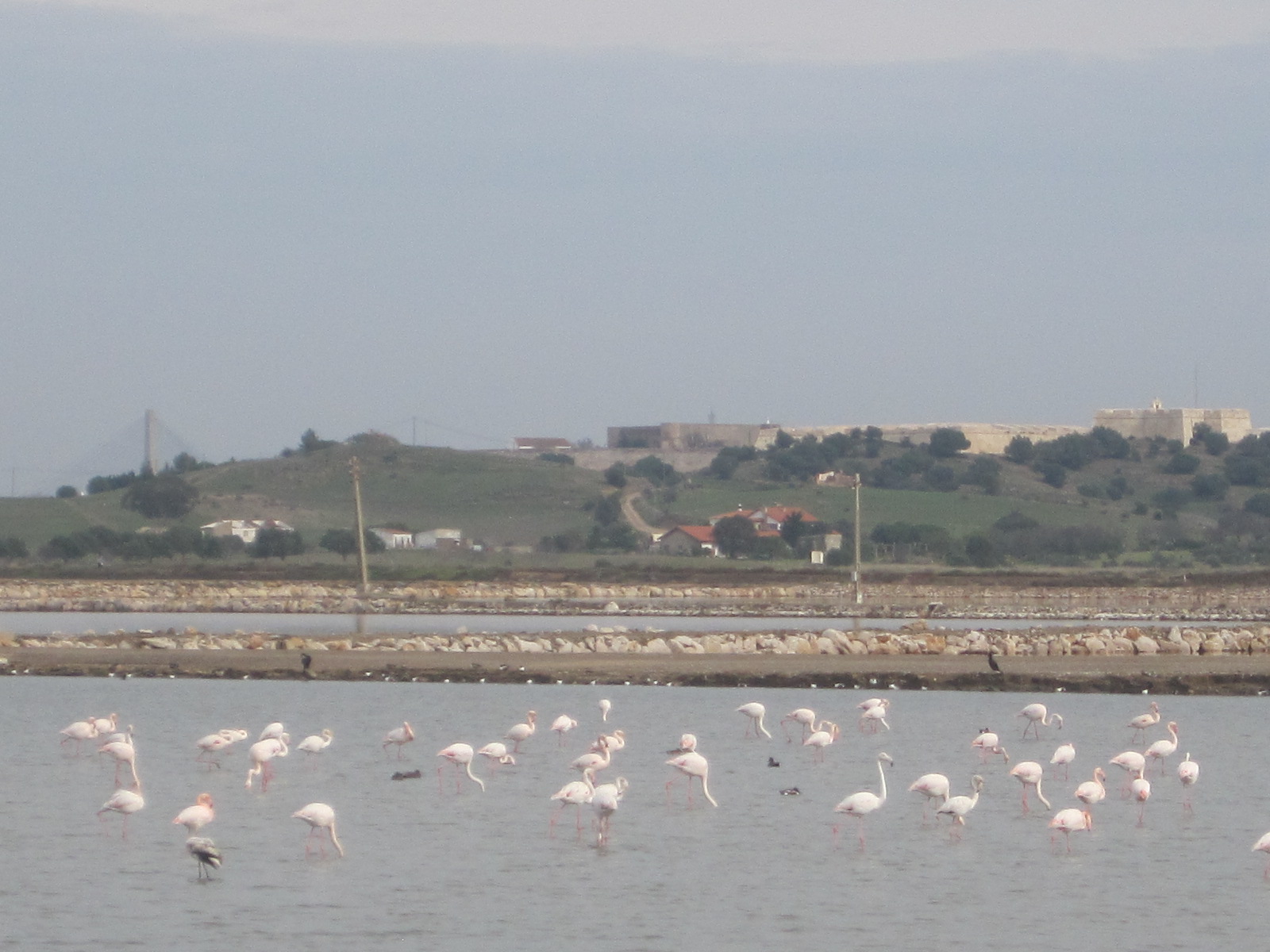
And just faintly you can see the bridge to Spain, crossing the Guadiana
I’m not very knowledgeable about birds, but you can’t fail to be impressed by the quantity of them, indulging in this salt spa. Heron, white storks, spoonbills and egrets are common sights. The landscape seems vast, but it is not until you reach “the gate”- the entry to the saltworks- that you begin to realise just how far you are from your start point. And to wonder how you will get back there.

The infamous “gate”.

- It’s not only the flamingos that flourish here
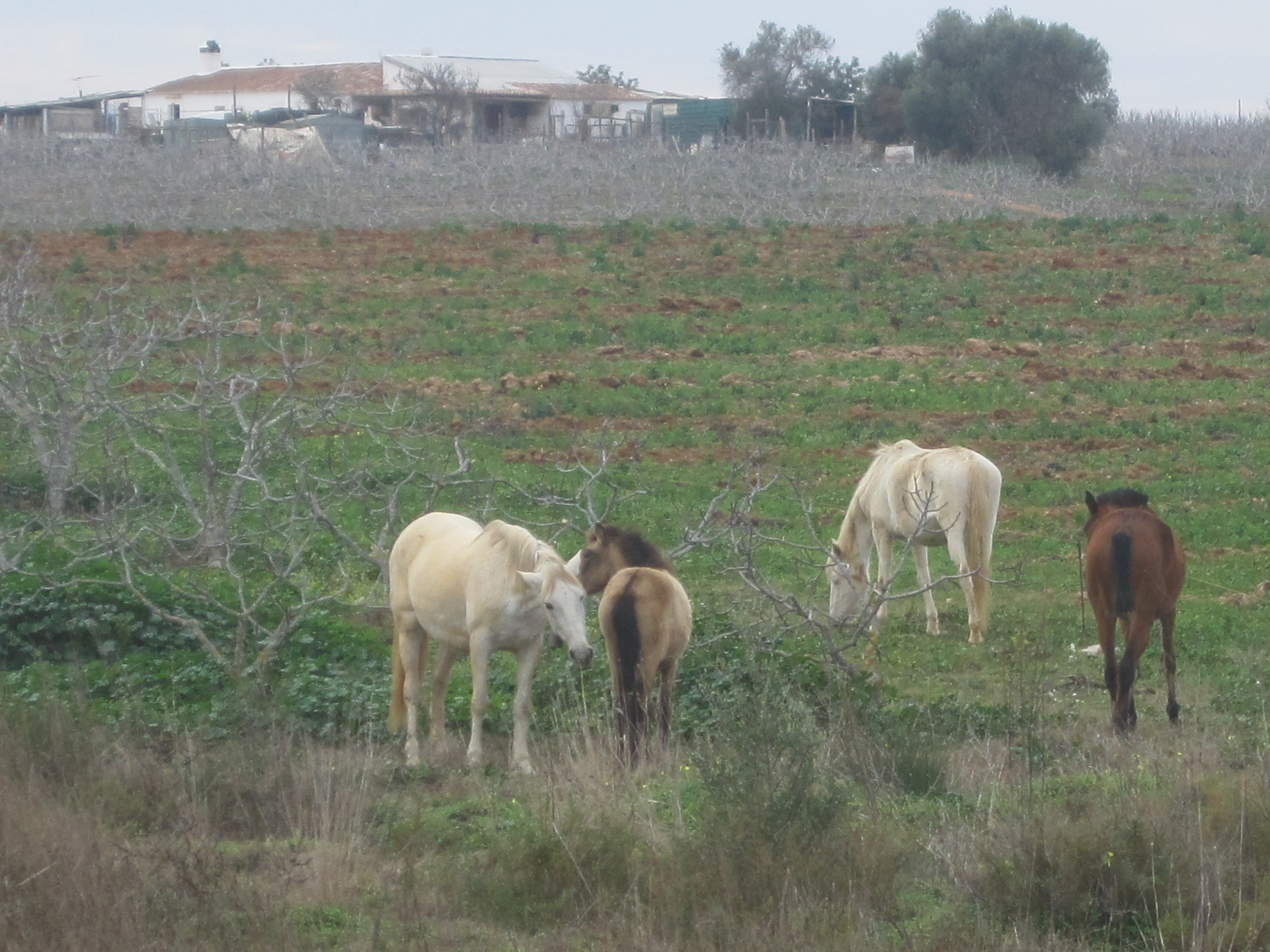
This family of horses seem quite at home.
The horses are wearing bells round their necks, as were some cows we passed earlier. Maybe, because they have young? In 2000 hectares of salt pans, there’s a lot of wandering to be done!
According to the guide book, the next landmark is a pumping station, a far off speck on the horizon. Arriving here is when the adventure really begins! You turn left, into the salt pans themselves. The book warns that you must never deviate from the track to attempt a shortcut, as many are dead ends. If you tire and despair of making the end, you should turn around and retrace your steps.
This last section is a bit of a leap of faith, as it crosses the pans on an overgrown, narrow ridge, and does not appear to have an ending on dry land. It does, though, of course. It feels quite surreal being out there, surrounded by water and sky. It’s a little tricky underfoot- a mix of smooth, hardened mud and shrubs- but well worth the effort. Nor did I want to contemplate retracing my steps, by this stage!
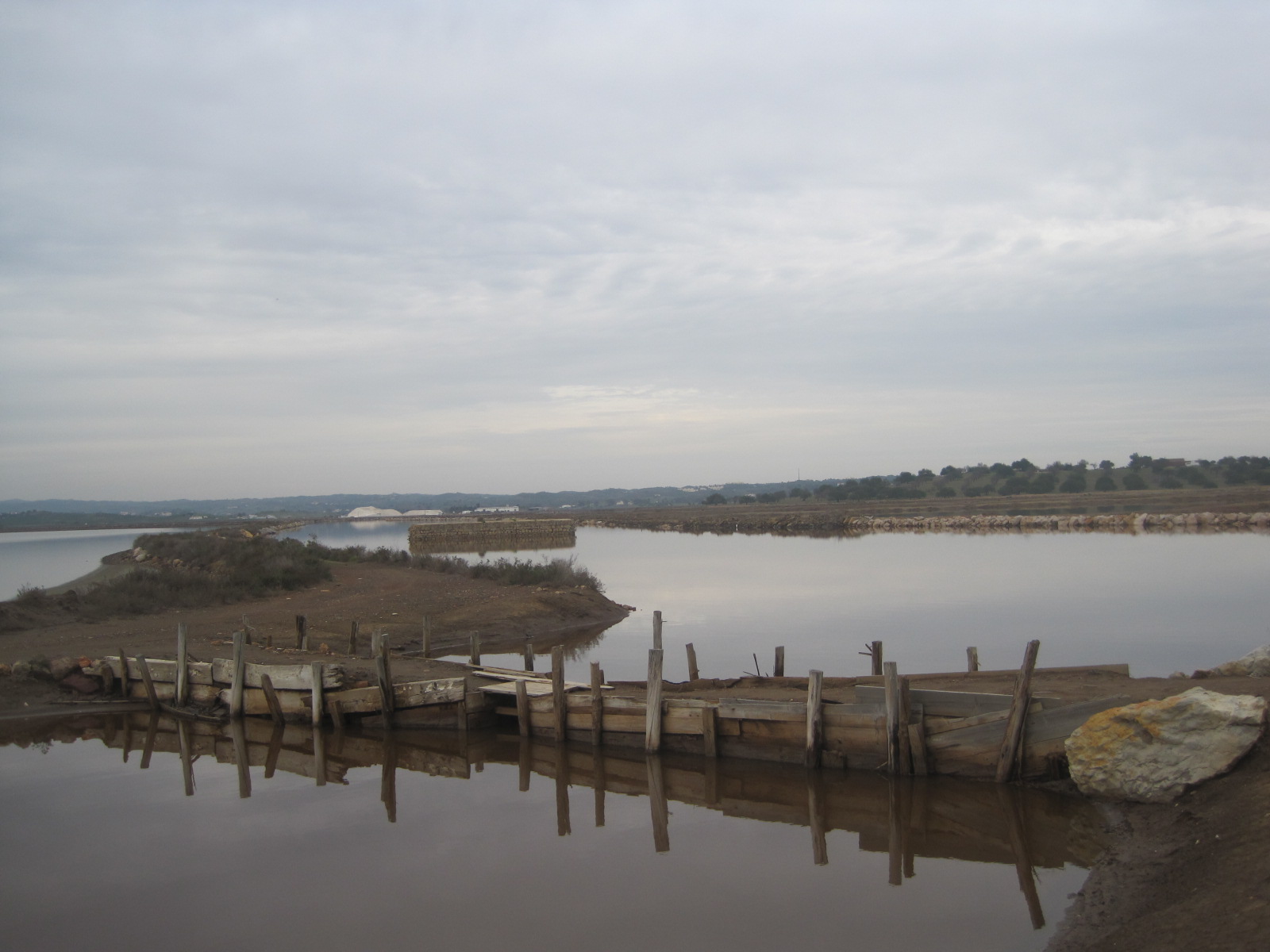
All is peaceful and calm
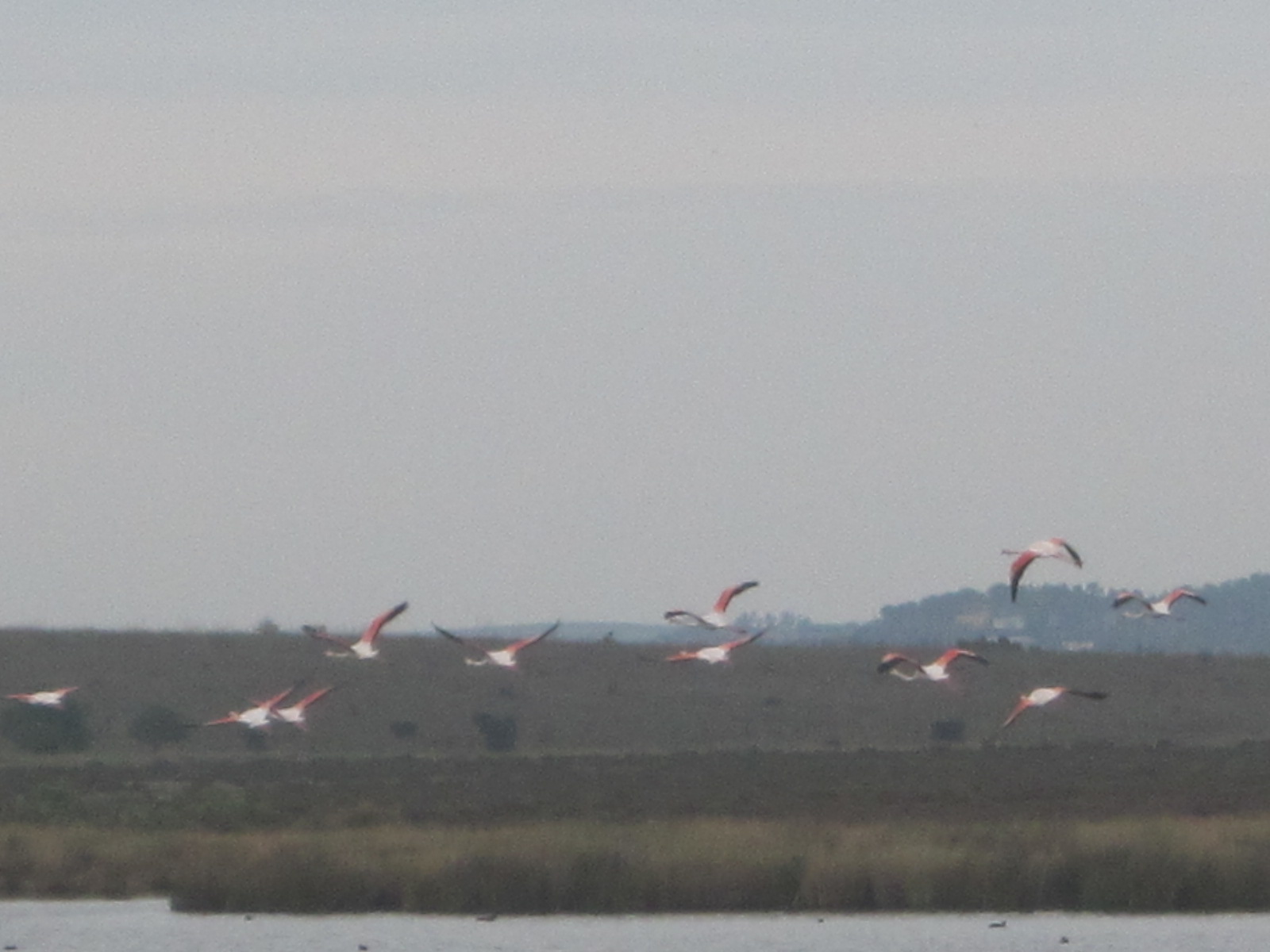
And then, that magical moment when the flamingos take flight!
The ultimate magic, as you pick your way around the reserve, is that moment when you approach a flock of birds. Seemingly minding their own business in the salt pans, they obviously have one eye cocked for nare-do-wells. Panic, or simple good sense, sends one of them into the air, and in seconds the sky is full of beating wings. Those pallid-looking flamingos have the most glorious crimson underside to their wings, and the sight of them above me, at full stretch, is one I will never forget.
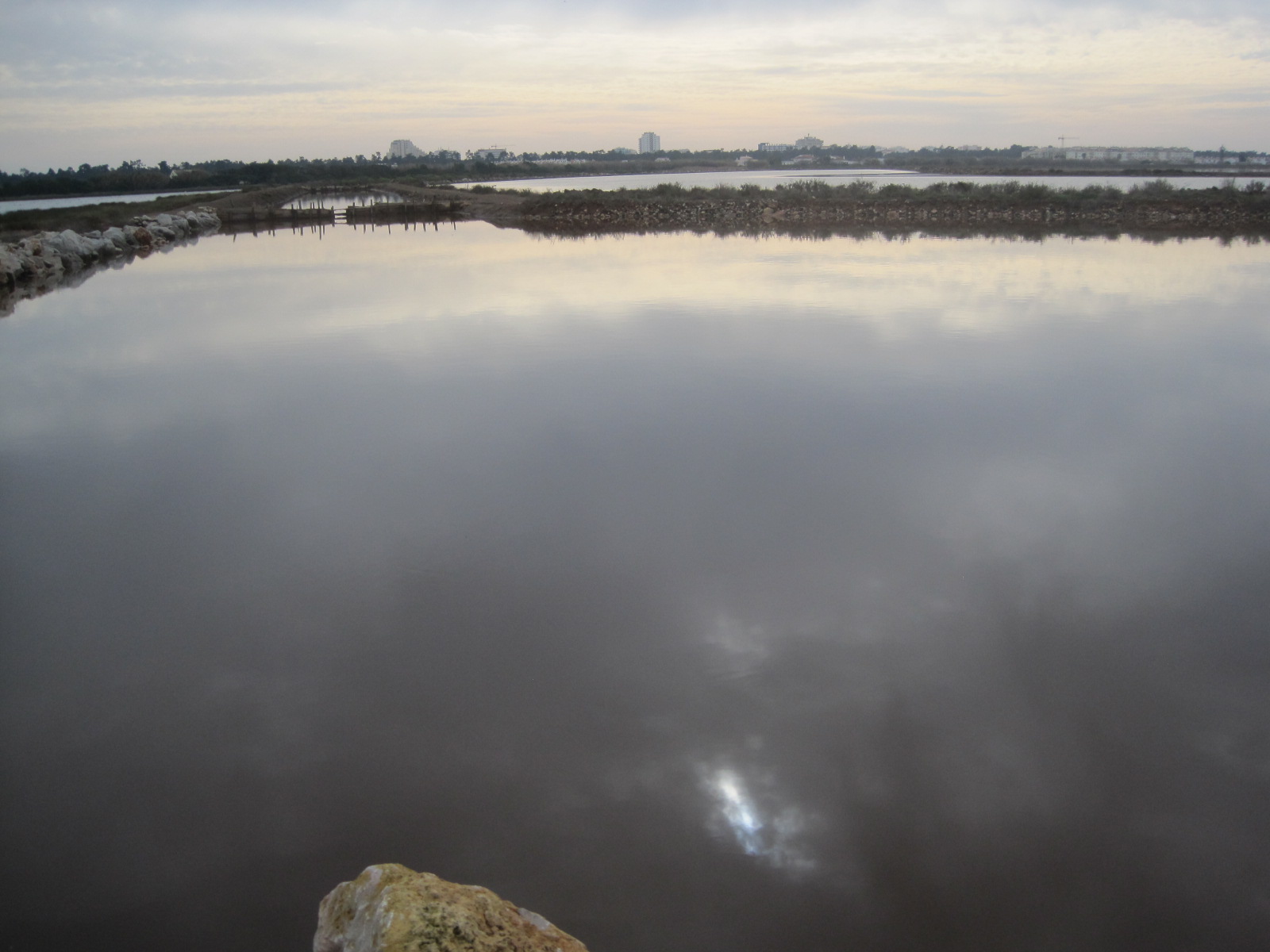
In a world where sky and water are one
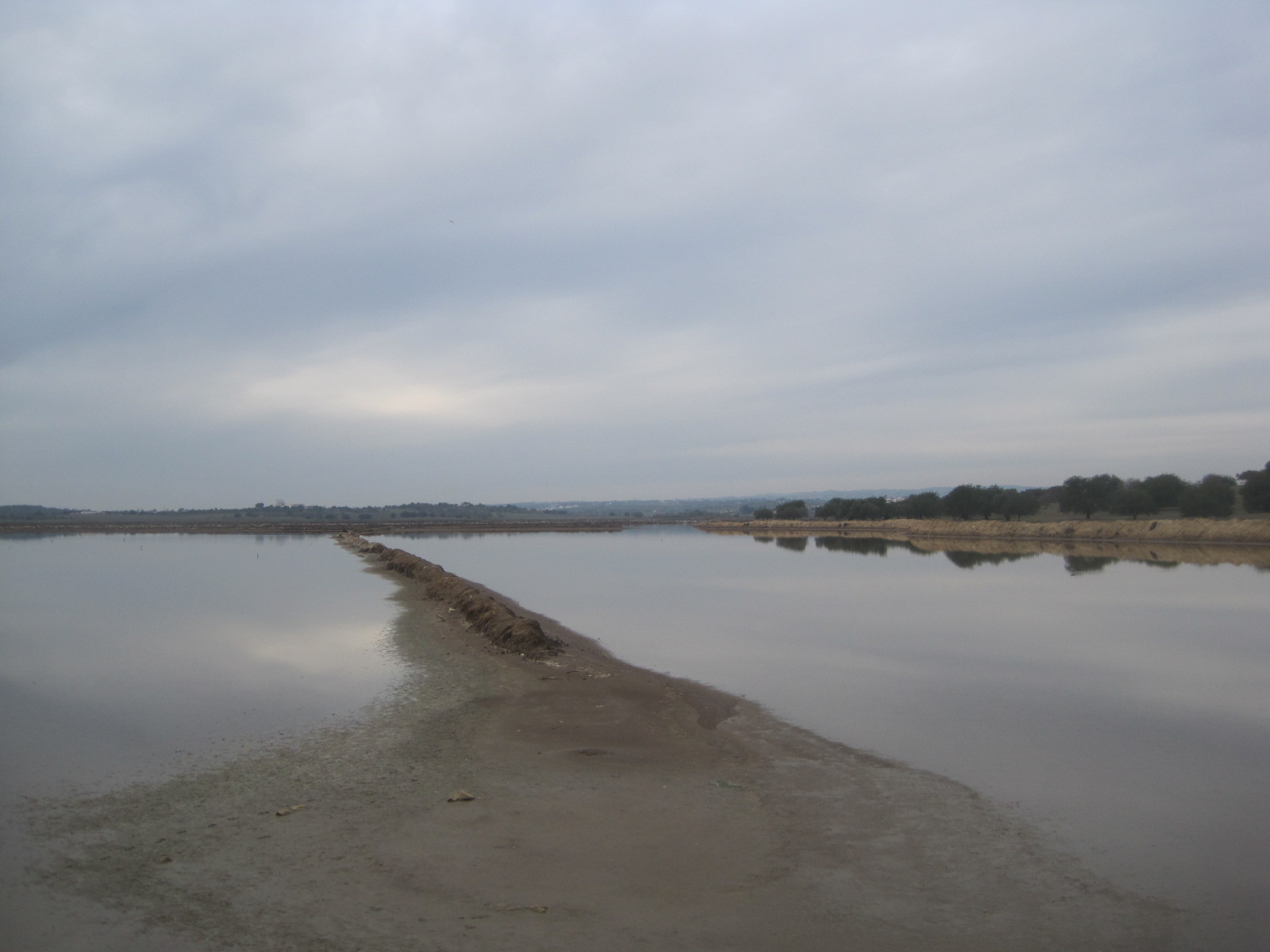
And the horizon seems far away.
The book I was using was “Algarve Walks” by Julie Statham, walk no. 22. It has been revised and reprinted a number of times and I have quite an old copy, so there may be some variation. It’s not a difficult walk, but if you don’t fancy the last part you should retrace your steps from “the gate”. Don’t even think about doing it in Summer- there is no cover whatsoever. And don’t forget the bottled water!
I’ll be taking you to Castro Marim another day. You’ll like it there!
 restlessjo
You must be logged in to post a comment.