Monsaraz

‘M’ is for Monsaraz

404322_287595227969825_100001580503329_842365_806400363_n

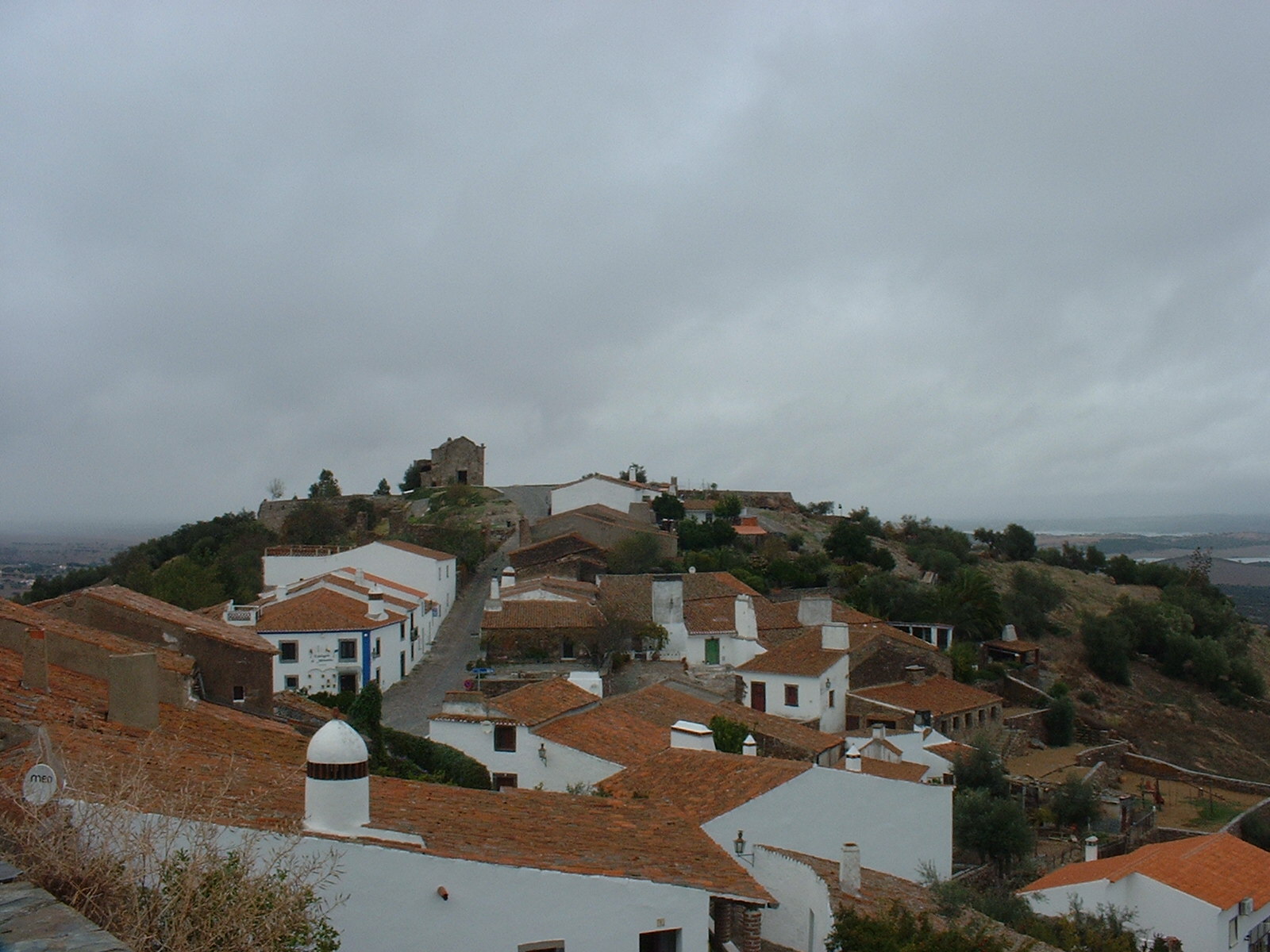
I’m going to struggle for photos for this post, because I visited Monsaraz on a damp, if not soaking wet, day!  Seems to be a recurring theme on here lately, doesn’t it?  But such was the impact it made that I loved it anyway.  Some day, I hope to return and see it like this.
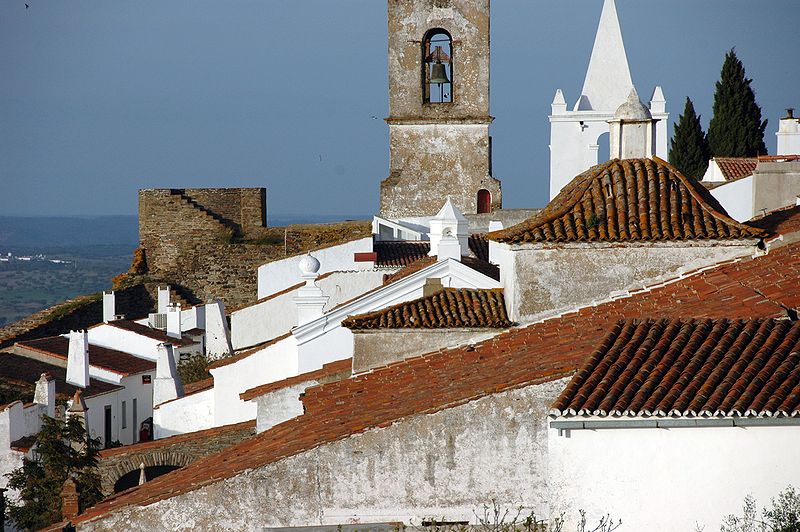
So will you excuse me for borrowing from Wikipedia?

So will you excuse me for borrowing from Wikipedia?

It must have been an anniversary or a special occasion, because I was sitting at a table in “A Ver” when I first heard about Monsaraz. This Tavira restaurant is named for its view down over the rooftops and the prices are more than we would normally pay.  But treats are treats, and so I happened to be sitting at the next table to a couple whose evening was interrupted by the wife’s mobile phone. The wife excused herself and was gone for some considerable time.

I can’t remember what prompted me to start the conversation, but before too long the husband was telling me about this beautiful place that I must see for myself.  The fact that it was a 4 hour drive or more seemed insignificant to him.  And so Monsaraz nestled in my imagination until I could make it a reality.
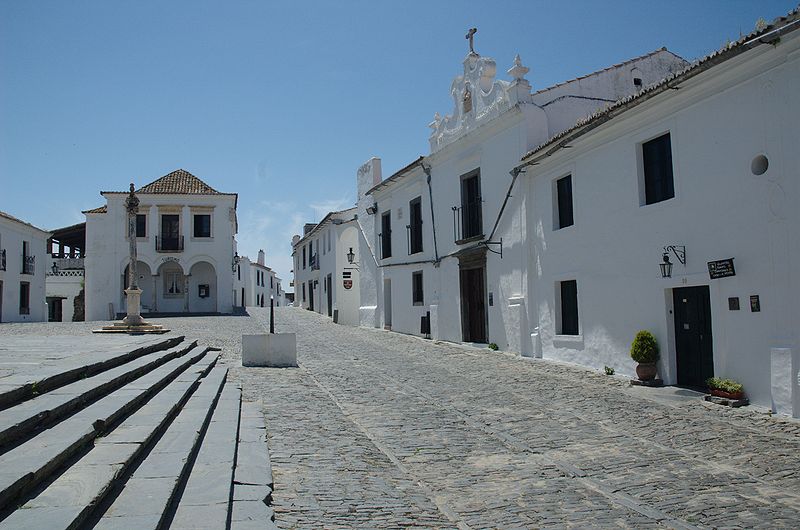
The town square and pillory on a sparkling day- @ Wikipedia

The town square and pillory on a sparkling day- from Wikipedia

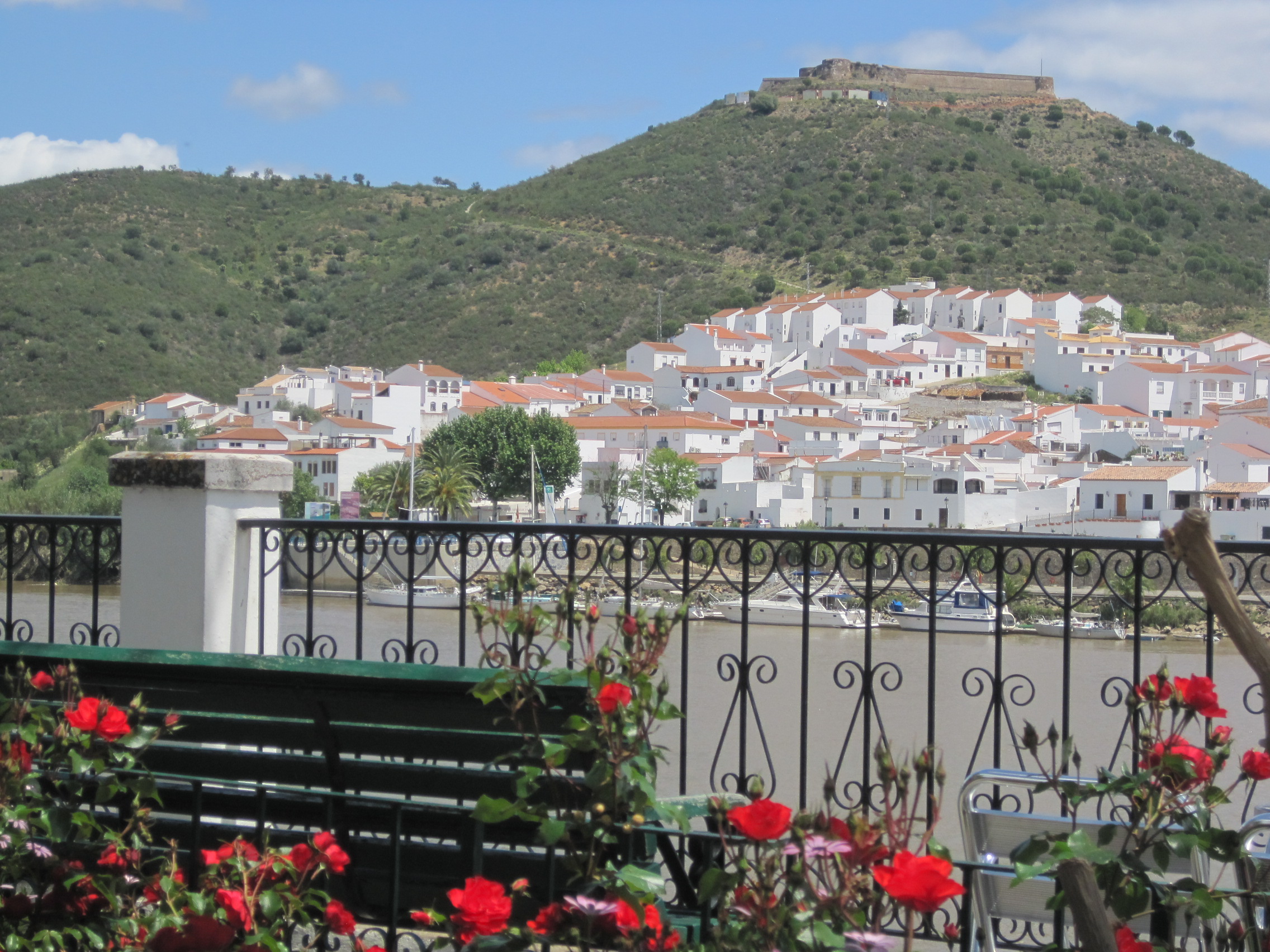
The “Rough Guide”, always my bible, confirmed what I wanted to hear.  Monsaraz is a tiny, hilltop, walled village with sweeping views across the Guadiana to Spain.  It’s name comes from the Iberian word for Cistus landifer, the Gum Rockrose.  Xaraz thrives in dry, acidic slate-based soil, thus Monte Xaraz was a hill surrounded by Rockroses.

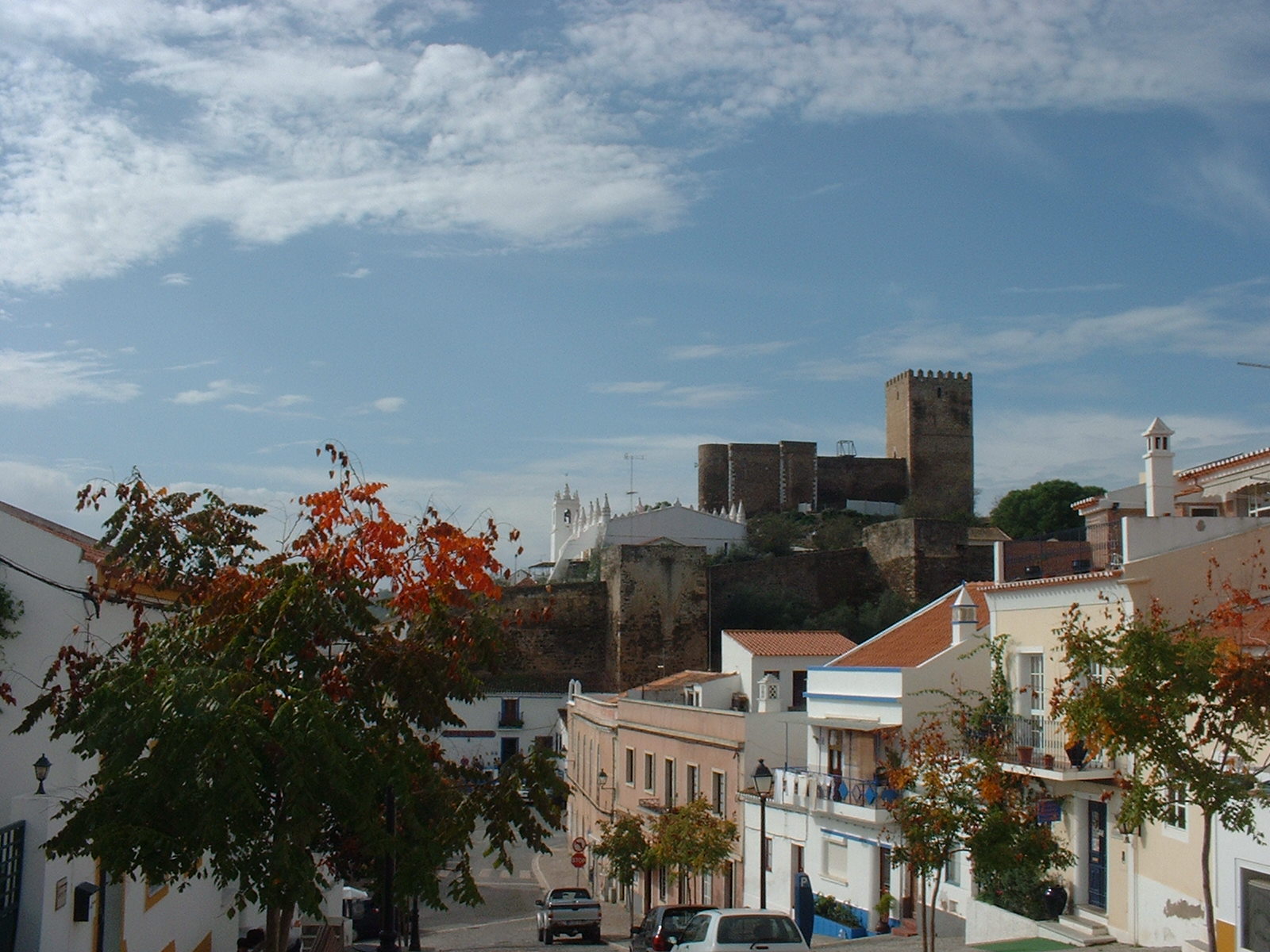
Monsaraz is one of the oldest settlements in the South of Portugal, and there are many menhirs and neolithic remains in the area. Due to its strategic location, there was certainly a fort there before Roman occupation.  Then came the Moors, and in 1232 it became a stronghold of the Knights Templar.  In 1640 it was refortified, during the Portuguese Restoration War and the border struggles.  Then land reforms and the growth of farm estates heralded change.  These days Monsaraz is no longer embattled, but there are still signs of the past.
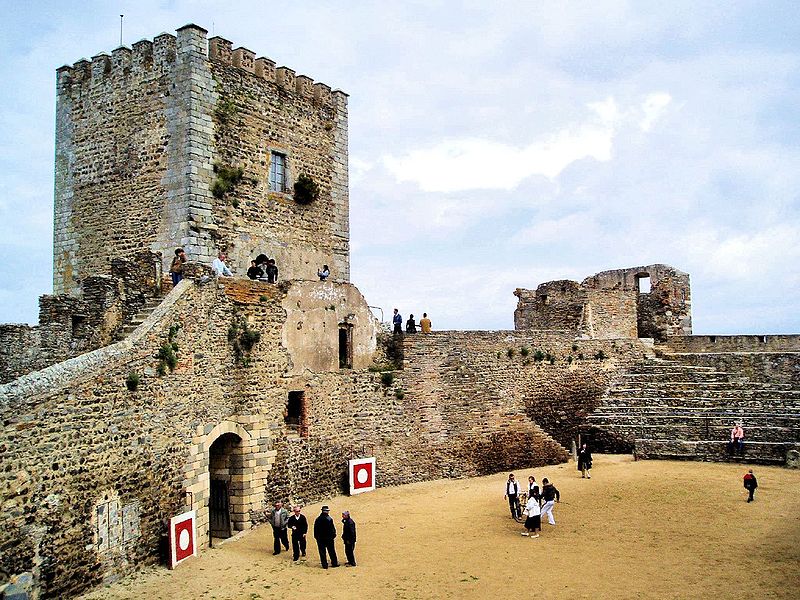
The castle and keep- @ Wikipedia

The castle and keep-  from Wikipedia

In late October 2009 I journeyed north from the Algarve, across the wide, empty plains of Alentejo.  My destination lovely Evora and proud Elvas, but on the return leg I knew I would visit Monsaraz.  The weather was autumnal this much further north.  Leaving Elvas I headed directly into a rainbow and travelling south the weather steadily deteriorated.  I clung tenaciously to the hope that I would be blessed with a patch or two of blue sky, but it was not to be.

I stepped out of the car under leaden skies and looked up at the castle walls, and then out across the Guadiana.  Nothing could prevent an idiot grin settling on my face.  I grabbed Mick by the hand and started up the slippery damp cobbles, and through the narrow archway in the walls.
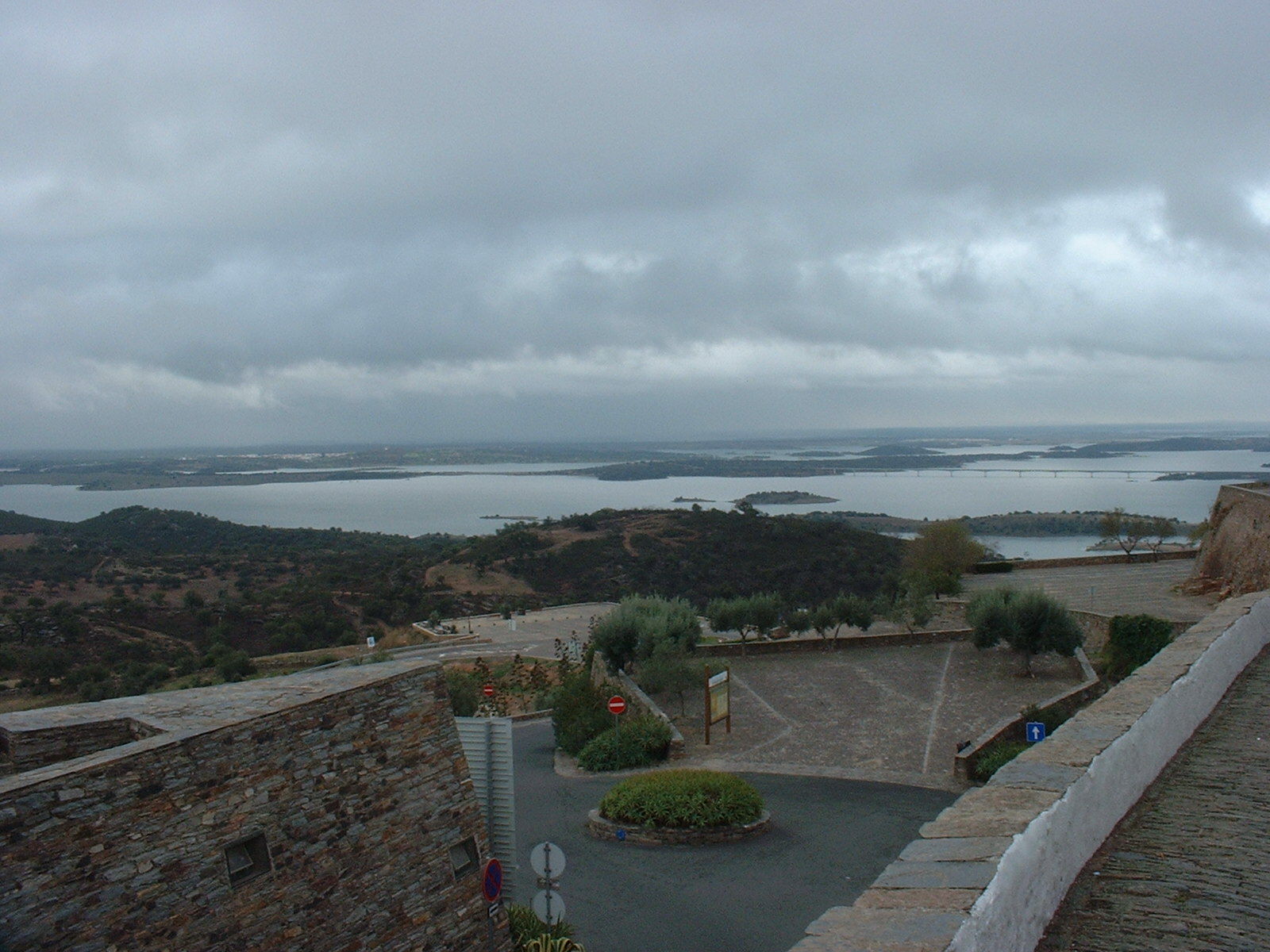
Looking out from beneath the town walls, across the Guadiana

Looking out from beneath the town walls, across the Guadiana

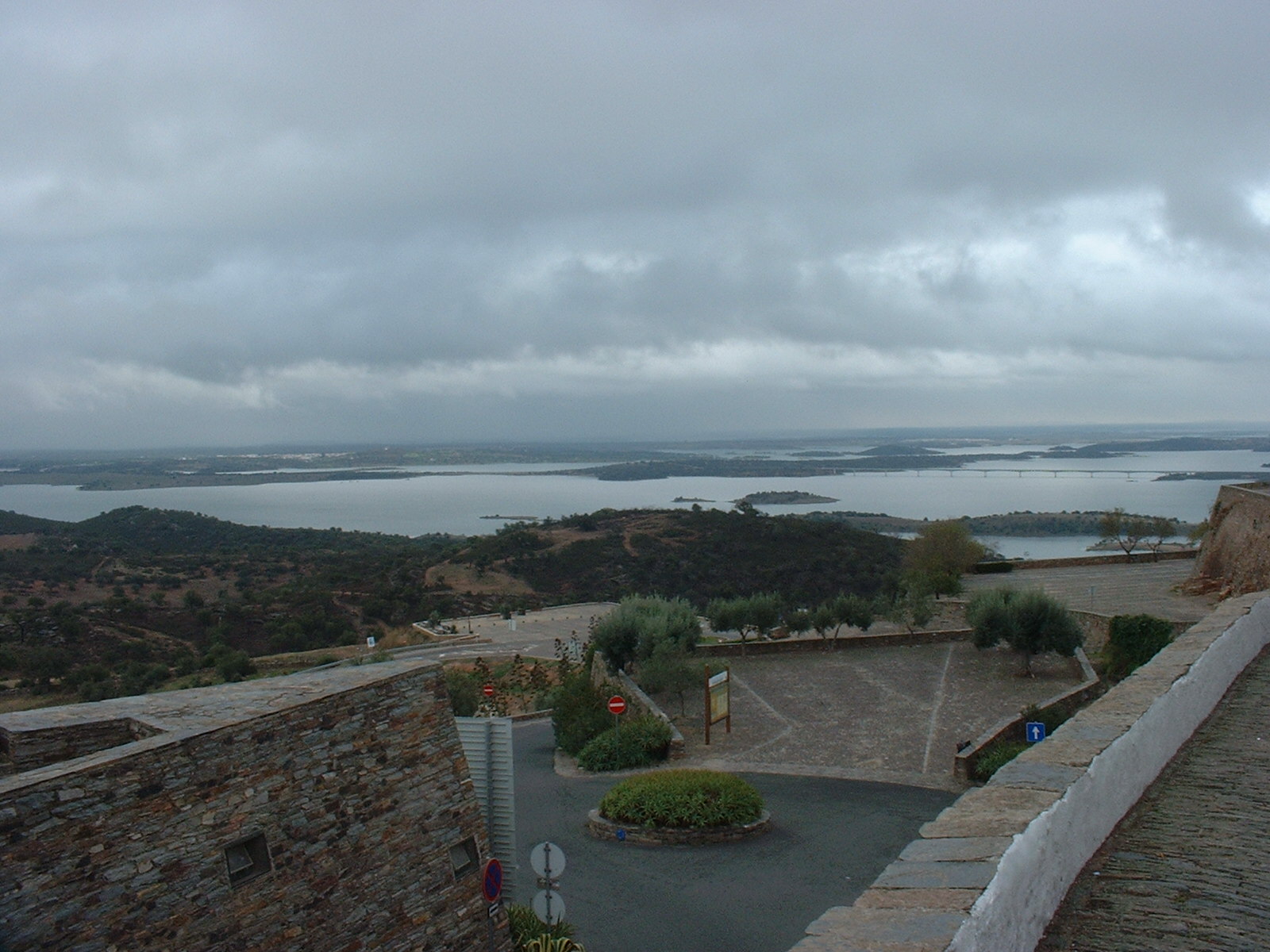
Medieval Monsaraz has only one main street, Rua Direita, with the village square at its centre.  The Inquisition House and the pillory point immediately to troubled times.  I was more intent on escaping the chill as I slipped inside the Chapel of Sao Bento, with its serene warmth and frescoes.  The main church, Nossa Senhora da Lagoa, was closed.  Climbing up to the castle walls, in a light drizzle, I felt I had reached the summit of a watery world.   The plains below had been flooded by the creation of the Alqueva Dam, boating heaven in Summer and a vast body of water.

The castle is topped by the Witches Tower (Torre das Feiticeiras) and within, the unexpected sight of a bullring, complete with tiered seating!  Currently it’s used for Festivals and fireworks, so no sad bulls.  As the rain increased its pace, tiny Cafe de Cisterna provided shelter, warm turkey pies and a slab of delicious cake.  Despite all that water outside, a drinking supply for the villagers had required a huge cistern to combat the blazing summer sun.  It was just visible through a barred window and then the weather really did drive us away.
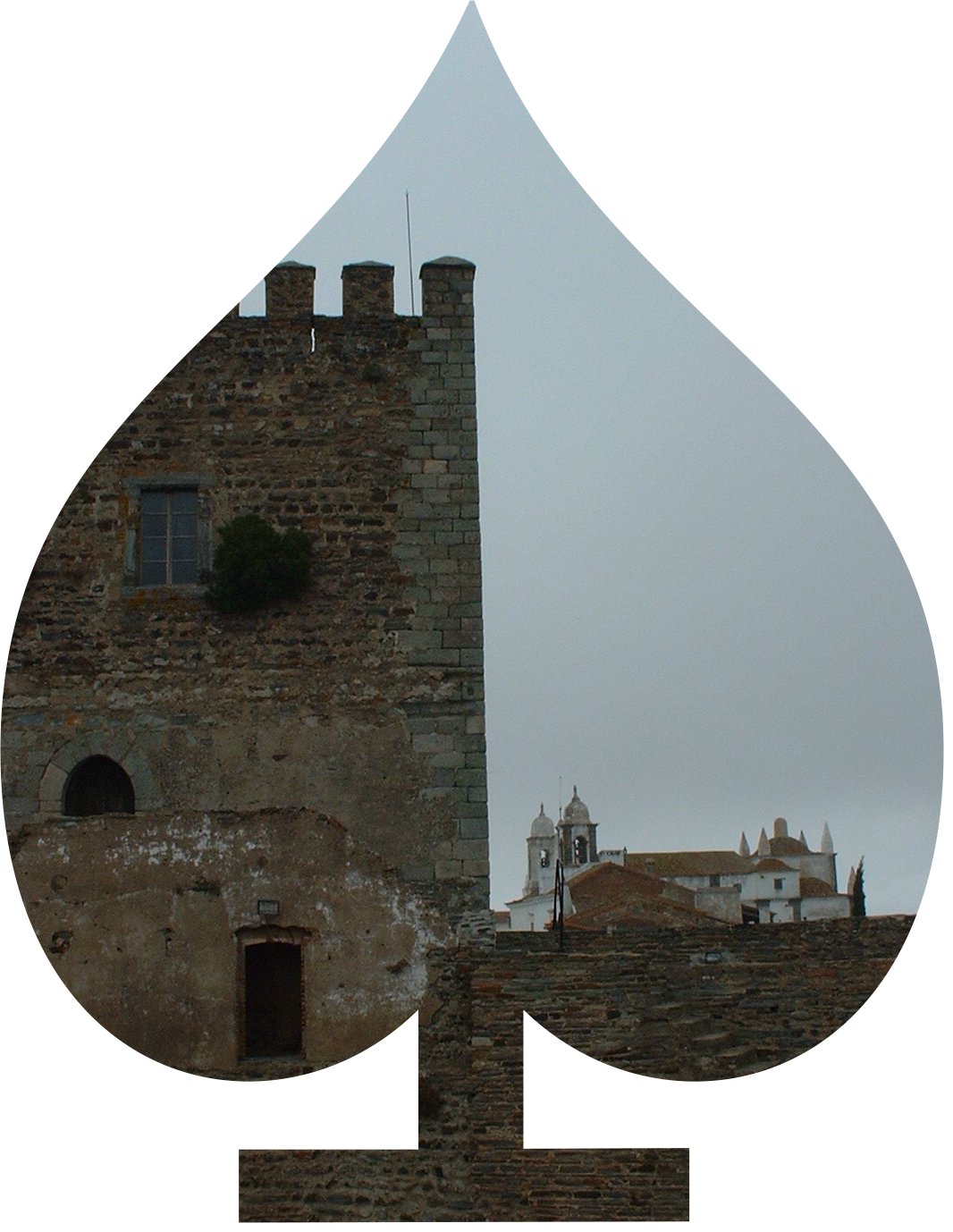
A castle in spades!

I had planned a leisurely route back, crossing over the dam by a bridge to Mourao, but visibility was so poor that I had no choice other than to agree as Mick pointed the car due south.  In a couple of hours I was back under the blue skies of the Algarve.

I’ve found a site with some lovely atmospheric photos of Monsaraz, if you click on this link.  And you can get a better look at the whole trip on my E is for Elvas, and Evora.  It wasn’t all rain!

Meantime it’s thanks again to Frizz for prompting me to respond to his Tagged ‘M’ and to Julie Dawn Fox for the Personal A-Z Challenge.  And many thanks to you for reading!

banner4

G is for Guadiana

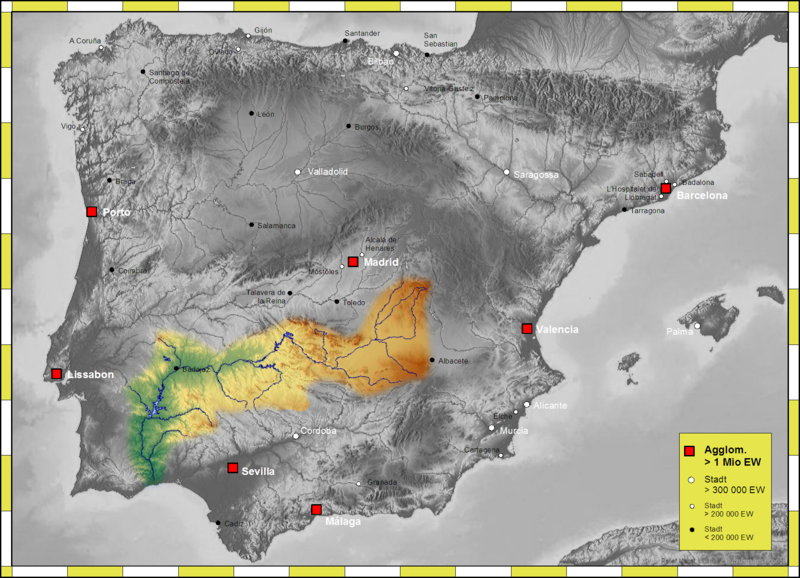
My next post seems to flow quite naturally from my recent trip across the Guadiana River.  More than 800 kilometres long, if you look at it on a map it’s very clear that the bulk of this river is in Spanish territory.  It rises in Castile-La Mancha and shortly after the Spanish city of Badajoz, turns south, forming the border with Portugal for most of the remainder of its length.

Guadiana’s origin- from Wikipedia Commons

It’s this southern area that I love, and with which I’m familiar.  The Guadiana glides out into the Atlantic Ocean.  At the river mouth a brief ferry ride connects Ayamonte on the Spanish side with Vila Real de Santo Antonio in Portugal.  The difference between the two cultures is tangible, and the time difference simply serves to accentuate this.  Unless you time it carefully you will frequently find that Ayamonte is engaged in a prolonged siesta when you arrive.  The elegantly tiled main square and pretty calles are still worth a stroll, but remember to switch to buenas dias when you order your tapas.

Main square, Ayamonte

A street corner in Ayamonte

Vila Real de Santo Antonio (as opposed to Vila Real in the north) is one of the architecturally more interesting towns in the Algarve.  Demolished by a tidal wave following the 1755 earthquake, it was rebuilt on a grid plan by the Marques de Pombal.  Using the same plan he had pioneered in Lisbon’s Baixa district, the rebuild was completed in just 5 months.  The attractive main square bears his name and is often the scene of lively cultural events.

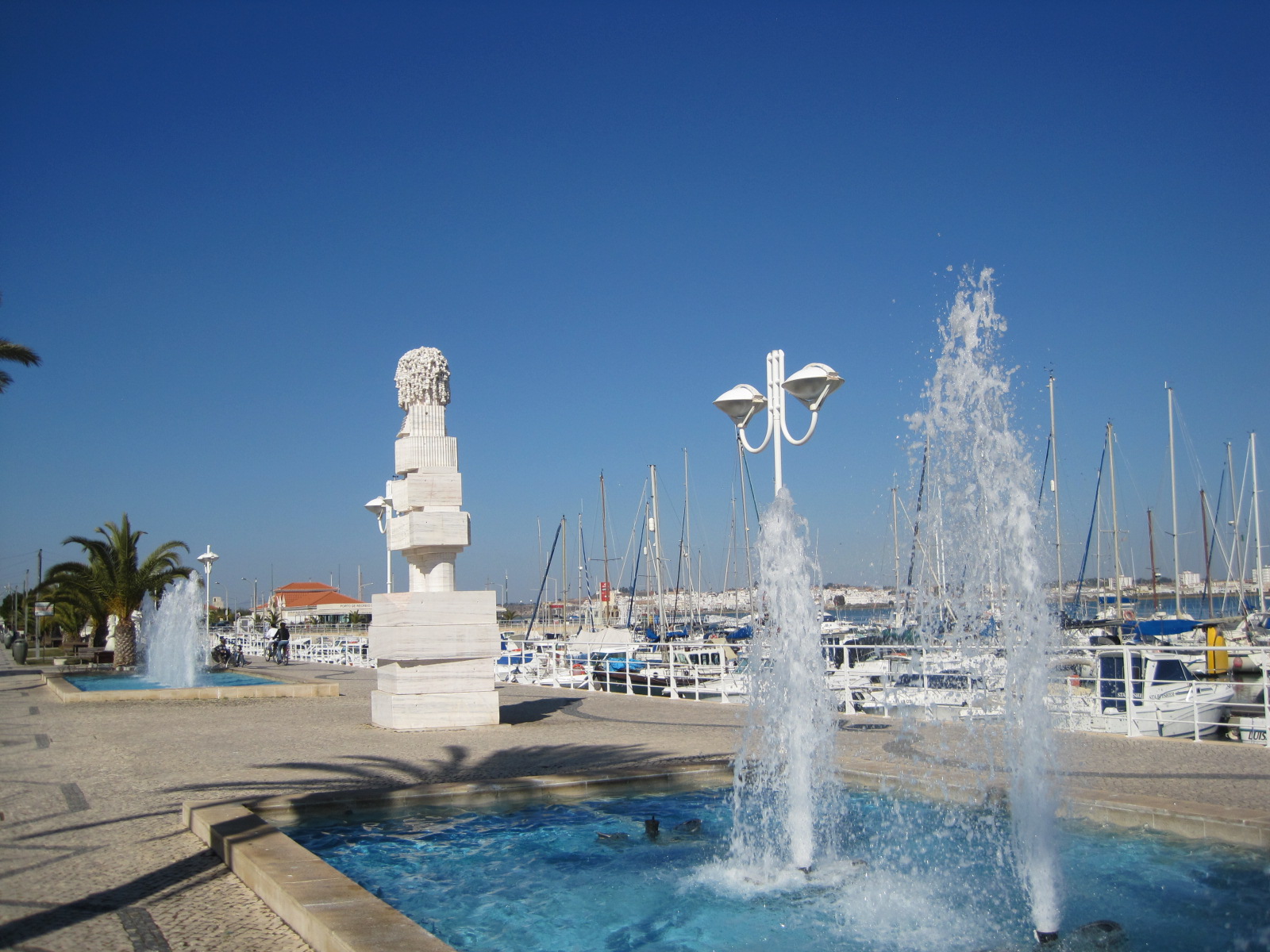
I love to stroll along the mosaic tiled river bank, picking a favourite yacht from the dozens moored in the extensive marina.  4km to the north, the arcs of the bridge linking Portugal with Spain are clearly visible.  In summer a very pleasant boat trip can be taken up the Guadiana, to the Foz de Odeleite, where a restaurant and refreshing swimming pool await.

River front at Vila Real de Santo Antonio

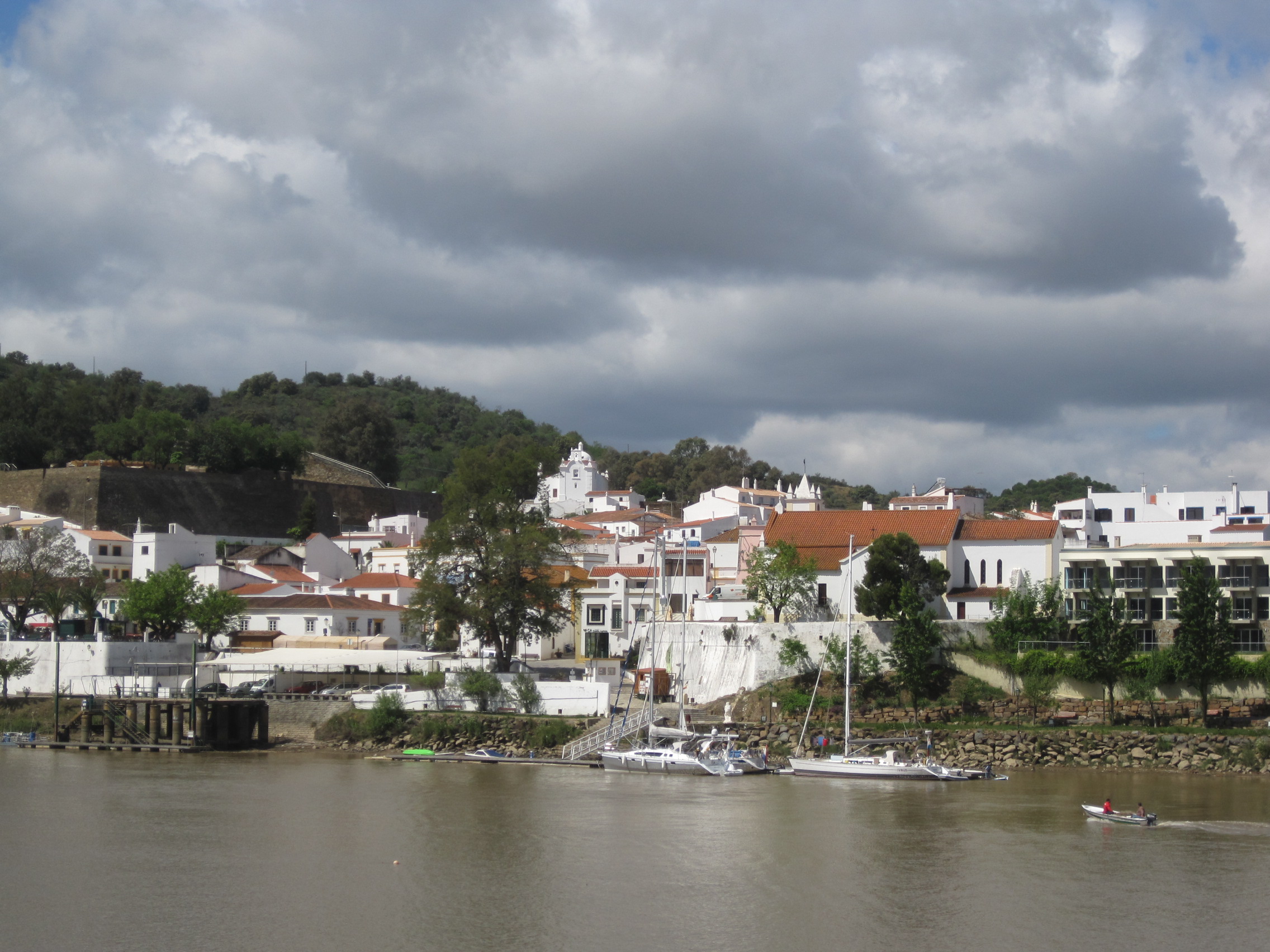
The swift and often empty IC27 runs north from Vila Real to connect with Alcoutim, the next town along the river.  Alcoutim has a long history as a river port.  It was fortified by the Greeks, Romans and Arabs, and the commanding castle dates from the 14th century.  Not much battling goes on these days and Alcoutim is a delightfully sleepy spot to simply sit and stare.  Across the river, idyllic Sanlucar de Guadiana looks back.  If you can catch the small ferry, a wander through Sanlucar’s immaculate white streets is a lovely distraction.  Restoration is taking place on the castle ruins so that might prove a rewarding trip for the future.  The Romeria takes place the first weekend in May, for a feast of flamenco frocks. Just ask Flat Ruthie.  She’s been!

Alcoutim from the river

Sanlucar de Guadiana from the river bank at Alcoutim

The banks of the Guadiana are wonderful for walkers, and the riverside road back down towards Castro Marim, from Alcoutim to Guerreiros do Rio, is one of the loveliest I have ever driven.  For now though, continue north on the N122, over the border into the Alentejo.  Set high above the Guadiana, at Mertola, are the mighty ruins of yet another Moorish frontier castle.  The region is home to the rare black stork and little other than birdsong disturbs the peace, though copper was once mined locally.  At the top of the winding streets the mother church, Igreja Matriz, looks down.  Behind the altar on the eastern wall the mihrab (prayer niche) testifies to her former life as a mosque.

Mertola hilltop fortress and Igreja Matriz

North of Mertola the river carves through a deep gorge with limited access by road.  For intrepid types the reward is the Pulo do Lobo waterfall and some remarkable rock formations.

Despite a lot of opposition to the project initially, the Alqueva Dam today presents a serene surface.  It’s a developing market for gentle boating holidays.  The 250square metre reservoir was created by damming the Guadiana, causing substantial loss of natural habitat, not to mention the compulsory relocation of the hamlet of Luz.

One of the best vantage points for viewing this vast expanse of water is the tiny hilltop village of Monsaraz.  It has to be one of the most charismatic places I’ve found in Portugal, and believe me, I’ve found a few.  Within its fortress walls there is essentially just one street, Rua Direita, with a village square, two churches and a castle, topped by the Torre das Feiticeiras (witches tower).  Following Moorish occupation, it became a stronghold of the Knights Templar.  Strangely the fort now contains a small bullring, which comes into its own for the annual village celebrations.  The festive fireworks must be visible for miles.

The Guadiana from Monsaraz

Monsaraz, remote and interesting on a grey November day

From here the Guadiana continues north, swinging a right into Spain, through Badajoz and Merida, and is, sadly, lost to me.  This is, after all, my A-Z of Portugal.

If you would like to join Julie Dawn Fox’s My personal A-Z challenge, just follow the link or click on the banner below.  It doesn’t have to be about travel.  If your passion is food or books you can still join in.  We have an A-Z of Art on Alyson Sheldrake’s The Thought Palette and and lately an A-Z of Films by DML Designs.  Be as creative as you like.  Read my posts on my A-Z pages.  Hope you’ll enjoy!