Travel

Celebrating light with Durham

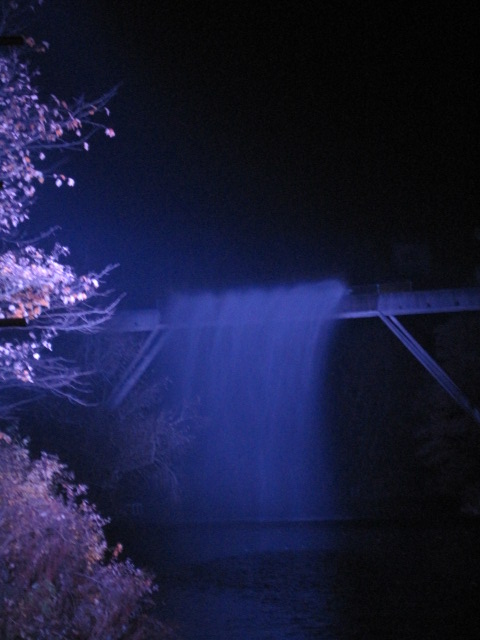
The Waterfall

The Waterfall

When a city you know and love hosts an international event you just have to be there.  Never mind if the result is a black eye.  It’s called suffering for your art?

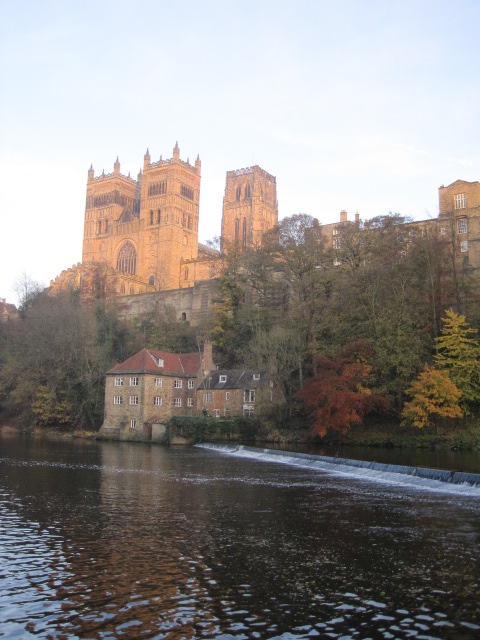
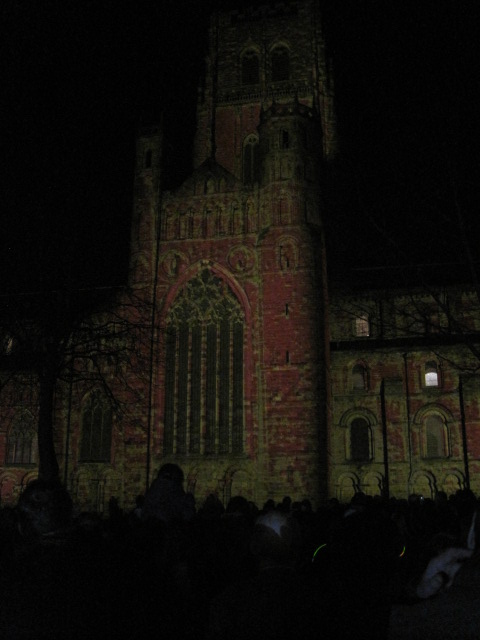
Durham Cathedral

Durham Cathedral and the weir

In late Autumn’s fading light we wandered along the riverbank awaiting the moment of revelation.  So many times we had strolled these ancient cobbled streets but this evening something strange was in the air.

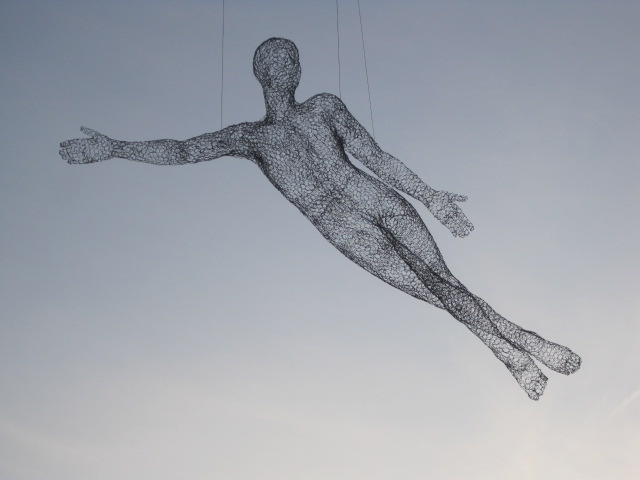
Flying man

Flying man

He and his many friends hovered above us, saying little but seeing much.  Slowly the light faded, the sense of anticipation building.

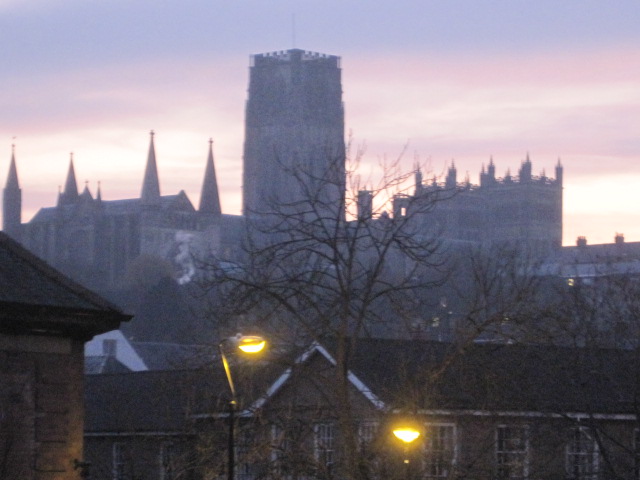
Cathedral spires

Cathedral spires

Durham County Council had worked overtime to provide a festival guide with a route map around the 35 installations.  As 6.30 approached we joined the shuffling crowds on Palace Green to await a spectacle that would stay with us forever.  The street lights dimmed and we collectively held our breath.

Flushed red

The Cathedral face flushed with red

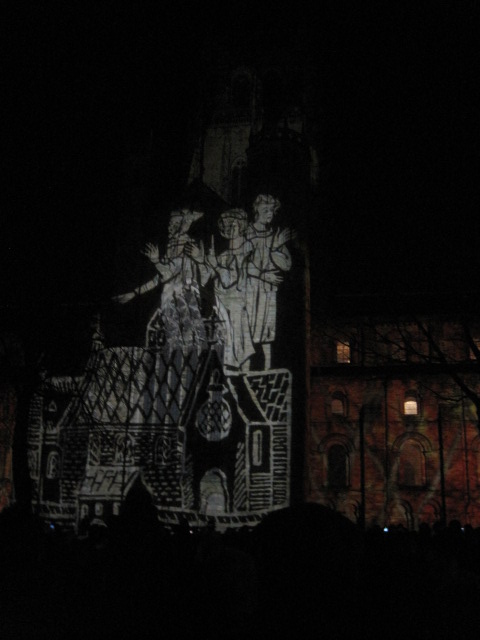
Music crashed into the hush and a flood of red illuminated the front portal of the Cathedral.  Wave upon wave of images followed, their theme the Lindisfarne Gospels.

The Gospels So hard to capture, without specialist equipment, the drama unrolling before us.  “Crown of light” its formal title, had been recalled by popular demand from the previous Lumiere Festival in 2009 and it was very easy to see why.  I cannot begin to do it justice here but maybe you can gain some appreciation from www.lumieredurham.co.uk

When silence descended again it was time to set off on a voyage of discovery.  The street lights remained off to maximise the effects, which made negotiating the riverbank a little tricky.  But the views were spectacular.

The snow dome

The snow dome

One of our favourites had to be “I love Durham” in the Market Place.  The Marquess of Londonderry statue was captive inside an enormous snow dome, the like of which I have never seen.  I couldn’t conceive how such a thing was possible and the magic of the whirling snow flakes enthralled the crowd.

So much more was there to see.  We lingered beneath the towering illuminated viaduct as trains slipped across, seeming not to wish to disturb the soundtrack to the patterns created on the side wall of the North Rd Methodist Church.  Up the steps to the Gala Theatre, head swivelling to take it all in.

And then disaster befell.  My eye was caught by “60 second Cathedral”, a Polish projection of skydivers on the Claypath Library.  Triumphantly I gestured to my partner, before tumbling head over heels over a concrete block.

Thank you to the people who scrambled to put me back together again.  Michael looked more dazed than I felt!  I was just gratefull that my fall had come at the end of our  tour and we could go home with the memories intact.

On the right track in Weardale

I am a compulsive collector of leaflets and travel articles.  Tell me whereabouts you’d like to go and you can be sure I’ll dig deep and find the very leaflet to take you there and show you everything there is to see.  Trouble is, I end up with far more leaflets than places I’ve been to.  So life with me is a constant struggle to keep up with the leaflet collection- just ask my husband!  But sometimes we end up in the most beguiling places.

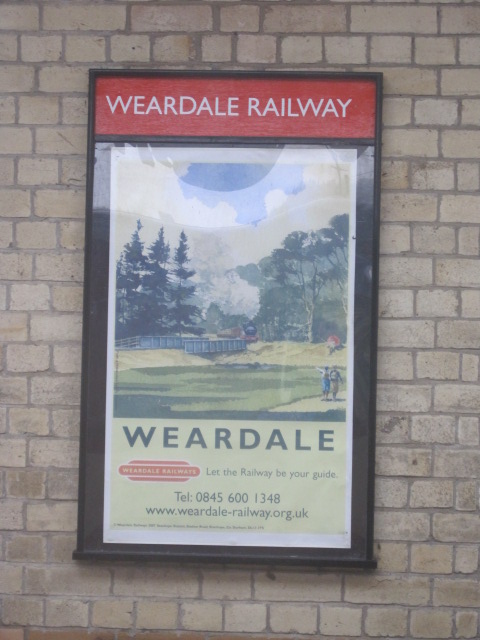
Weardale poster

Weardale poster

Take Tuesday, for instance.  A bit of a grey and murky one, but that hint of Autumn colour’s still out there.  How long will it take us to get to Wolsingham? I ask the unsuspecting husband.  My motive?  One of the prettiest train rides I’ve ever taken.

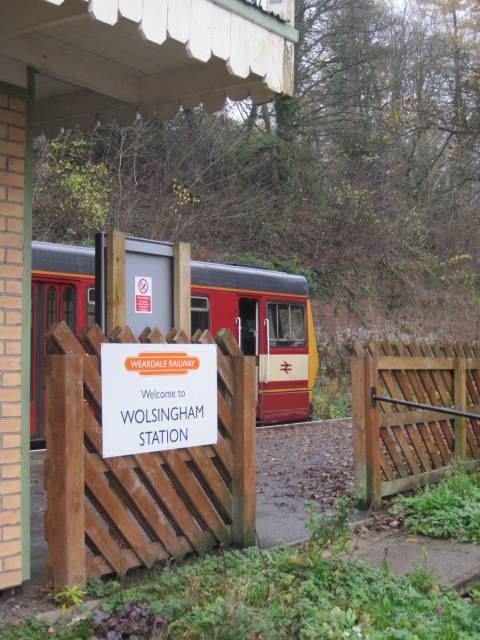
Diesel at Wolsingham

Our diesel train awaits at Wolsingham

Wolsingham is a pleasant market town on the River Wear in the North Pennines, an area of truly outstanding natural beauty.  The railway station is on the edge of town and was completely deserted when we arrived.  The conductor was more than happy to discuss options.  It was a designated Heritage Day, which meant that a steam train would be running at intervals throughout the day.  We were more than happy to climb aboard the waiting diesel, certainly the first time we’d ever had an entire train to ourselves.  How could this railway line pay for itself we asked the conductor.  He explained that it had been purchased primarily for freight, but that in Summer it was easily viable.

Weardale Railway

On the Weardale Railway

We were soon to see why.  The railway closely follows the River Wear along the valley and we were constantly rewarded by chuckling, gurgling stretches of water.  At one point the guard was required to climb down from the train to manually open the crossing gate- when did I last see that happen?  We were heading for Stanhope, just 20 minutes away, but first we would pass by Frosterley.  We had noted from the timetable that if we wanted to disembark there we needed to tell the guard in advance.  Just as well we didn’t as I later discovered that the Black Bull Inn, one of the main reasons to go there, only opens Wednesday to Sunday.

Fully restored in 2005 to a traditional English pub of the 1800s, with flagged floors and open fires, the food looks fabulous.  Interestingly this is the only pub in England with its own peal of bells, housed in an adjoining building.(Telephone 01388 527784) On the website www.blackbullfrosterley.com the links More and Bells will lead you to “The Bellringers Tale”.

River Wear

Hard to capture

Passing through thickly wooded slopes, the friendly conductor told us that the views of the river were better at this time of year.  In Summer they would be lost in leafy foliage.  Camera in hand, I tried hard to capture the abrupt splashes of red, but never quite made it.  A couple of weeks earlier we would have been bathed in an amber glow.

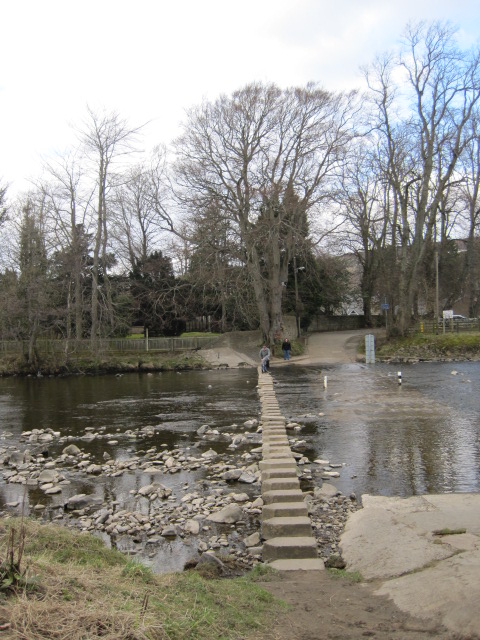
Stepping stones at Stanhope

Stepping stones at Stanhope

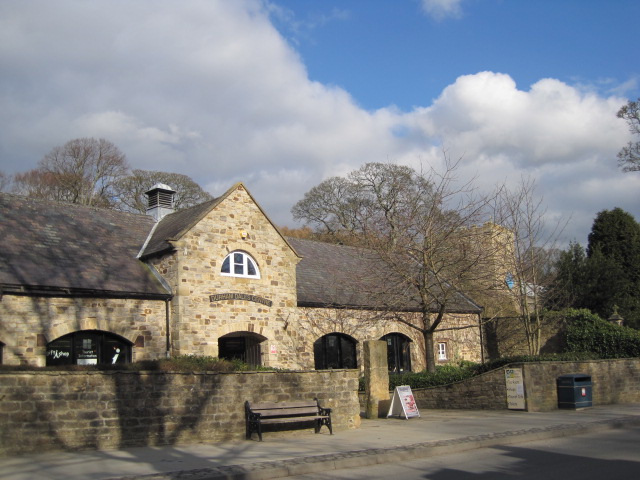
In no time at all we were gliding into Stanhope station.  I had previously walked the river banks and crossed the stepping stones here.  Today’s excitement for me was the train, but Stanhope is a lovely small town.  The Tourist Information office is situated in the Durham Dales Centre on Front Street, an interesting venue in its own right.  A happy hour or two could be spent here on one of those cold, dreary days that sometimes hit this part of the world.  The café sells a good array of warming food and there are several craft shops to browse.

Durham Dales Centre

Durham Dales Centre

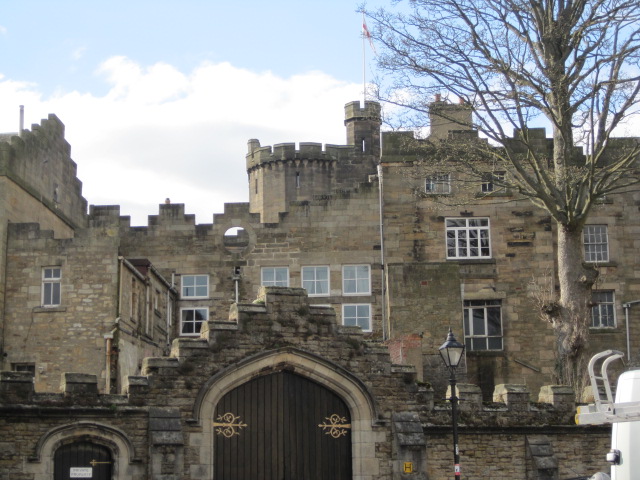
Stanhope Castle

Stanhope Castle

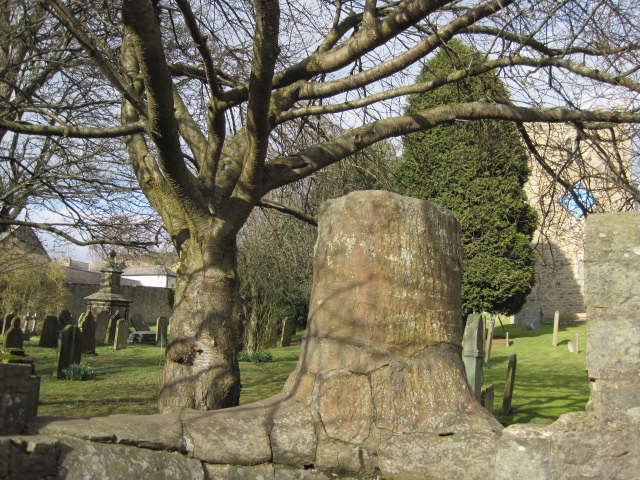
Fossil Tree

Fossil Tree

Further along Front St you have fine views of privately owned Stanhope Castle, while 12th Century St Thomas Church overlooks the Market Place.  A real crowd pleaser, the 320 million years old Fossil Tree stands in the grounds, while the Victorian font is made of Frosterley marble.  Dropping down The Butts will bring you to the riverside walk and Castle Park, home of the county’s only open-air heated swimming pool (May to August).  Or you could walk (or drive) to beautiful Tunstall Reservoir.

Tunstall Reservoir

Lovely Tunstall Reservoir

Back at the station the steam engine is warming up for the journey back to Wolsingham.  Manned chiefly by volunteers, steam events take place throughout the year.  From 26th November the Santa Specials take to the rails.  For full timetable details and the history of the railway: www.weardale-railway.org.uk  The railway continues on to Bishop Auckland, a short walk from the main-line station.

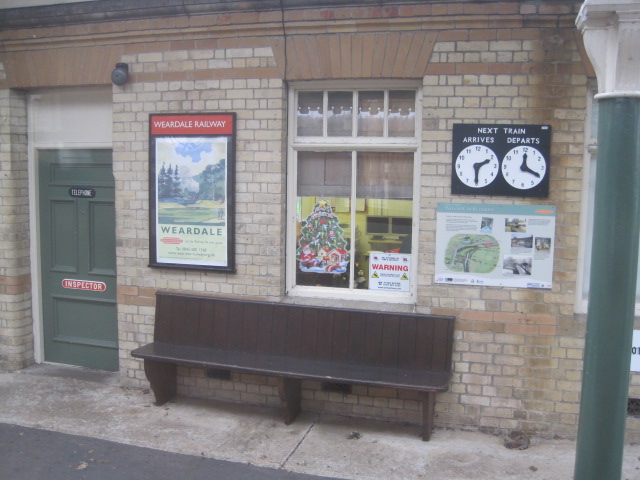
Wolsingham Station

Wolsingham Station

In Wolsingham we park at the Demesne Mill picnic area and wander back to the High St.  All is quiet and peaceful and we pop into Peggotty’s Tea Room, off Market Square.  Mince cobbler, a favourite of mine, is on the menu for £6.95, and in the attached bakery a variety of Tiffins are displayed.  Cranberry and white chocolate is barely resistible for 99p.    

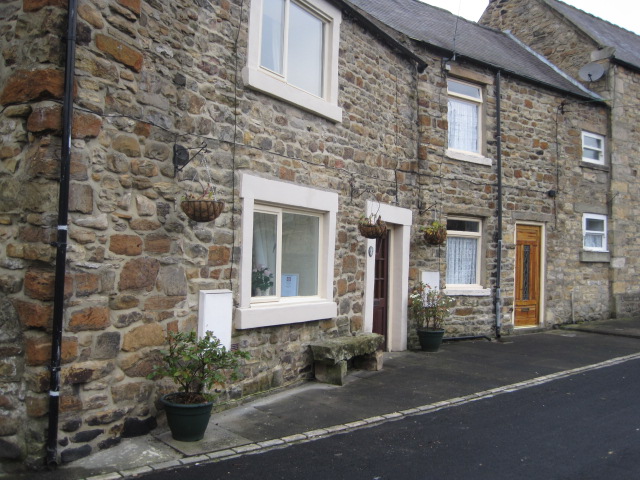
Stone cottage, Wolsingham

Old stone cottages, Wolsingham

Time to return home, just an hour down the road, and move the leaflet to the bottom of the pile- mission very happily accomplished!

Enchantment at Almourel

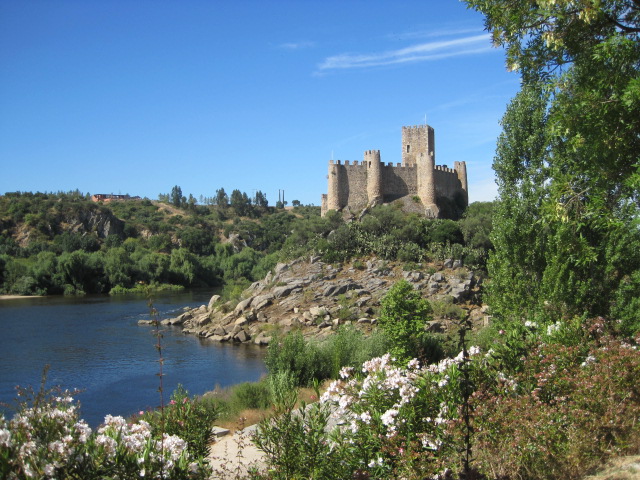
Almourel Castle

Romantic Almourel

Hidden in Portugal’s quiet depths we found another Templar treasure.  A more serene setting I have yet to find, wholely at odds with the history of the Knights and their battles against the Moors.  We had travelled from Constancia in the Ribatejo, at the junction of the rivers Tagus and Zezere (a name that delighted me), so we knew all about sleepy and tranquil.  Still, nothing prepared me for this.

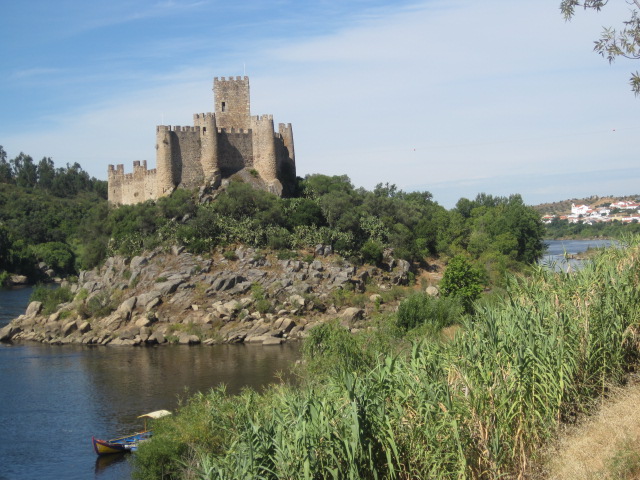
A little before 10 in the morning we rounded a corner and there it sat, with barely a ripple reflected in the water.  A tiny ferry boat lay at anchor, awaiting a boatman and maybe even a passenger or two.  Castles just don’t come any more enchanting than this.  Nothing to do in the still morning air but to breathe in the calm and admire.

Almourel Castle

The ferry boat awaits

How and why was it here?  The name seems to derive from the Arabic, almoran meaninghigh rock”, appropriate for a huge chunk of granite.  The site was known in Roman times, and used for defence purposes then.  It was during the Reconquista period, when the Portuguese were trying to break free from the stranglehold of the Moors, that it came into it’s own.

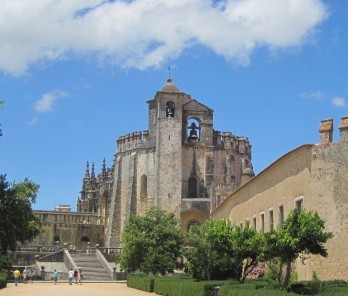
The Knights Templar were entrusted with the rebuilding and fortification of the castle, in a line of defence of the then capital, Coimbra.  Like the mighty Convento do Christo at Tomar, they gave it nine circular towers, enclosing a quadrangle, and a jail tower at the centre.  It was completed in 1171, two years after the castle at Tomar.

Convento do Christo at Tomar

Convento do Christo at Tomar

With the Moors evicted from Portugal, Almourel was abandoned and fell increasingly into disrepair.  Further damage was inflicted by the 1755 earthquake, but all good castles have a happy ending.  The castle became a listed building in 1910.  Further renovations took place and during Salazar’s dictatorship events were held there.

Today there is no sign of any conflict…. just a ferryman plying his craft.

Almourol ferry

The lone ferryman

Naturally there’s a legend befitting the castle.  A tale of Moors, Christians and treachery.  The Arab lord of Almourel’s daughter fell in love with a Christian knight, and gave away the secret of a passage into the castle beneath the Tagus.  When the knight ambushed the castle, the lord and his daughter flung themselves from the ramparts rather than face capture.

There is no charge to visit the castle, generally open from 10am till 5pm.  Simply pay the ferryman his minimal fee.

A tale of three weddings

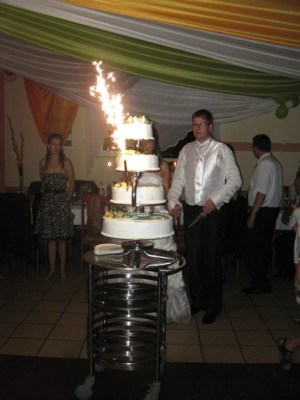
To call a Polish wedding an explosive occasion would be no exaggeration.  I have vivid recollections of fireworks raining down from the pinnacle of a sparkling tiara of wedding cakes.  But I’m getting ahead of myself, as usual.
It all started one April with two wedding invitations, for back to back weekends, to the offspring of two different Polish cousins.  Fortunately both lived in close proximity, in the neighbourhood of Belchatow, Central Poland.  It was only a year since we had been reunited with our Polish family, and neither Dad nor I could wait for the experience, which we had been warned would be “lively”.

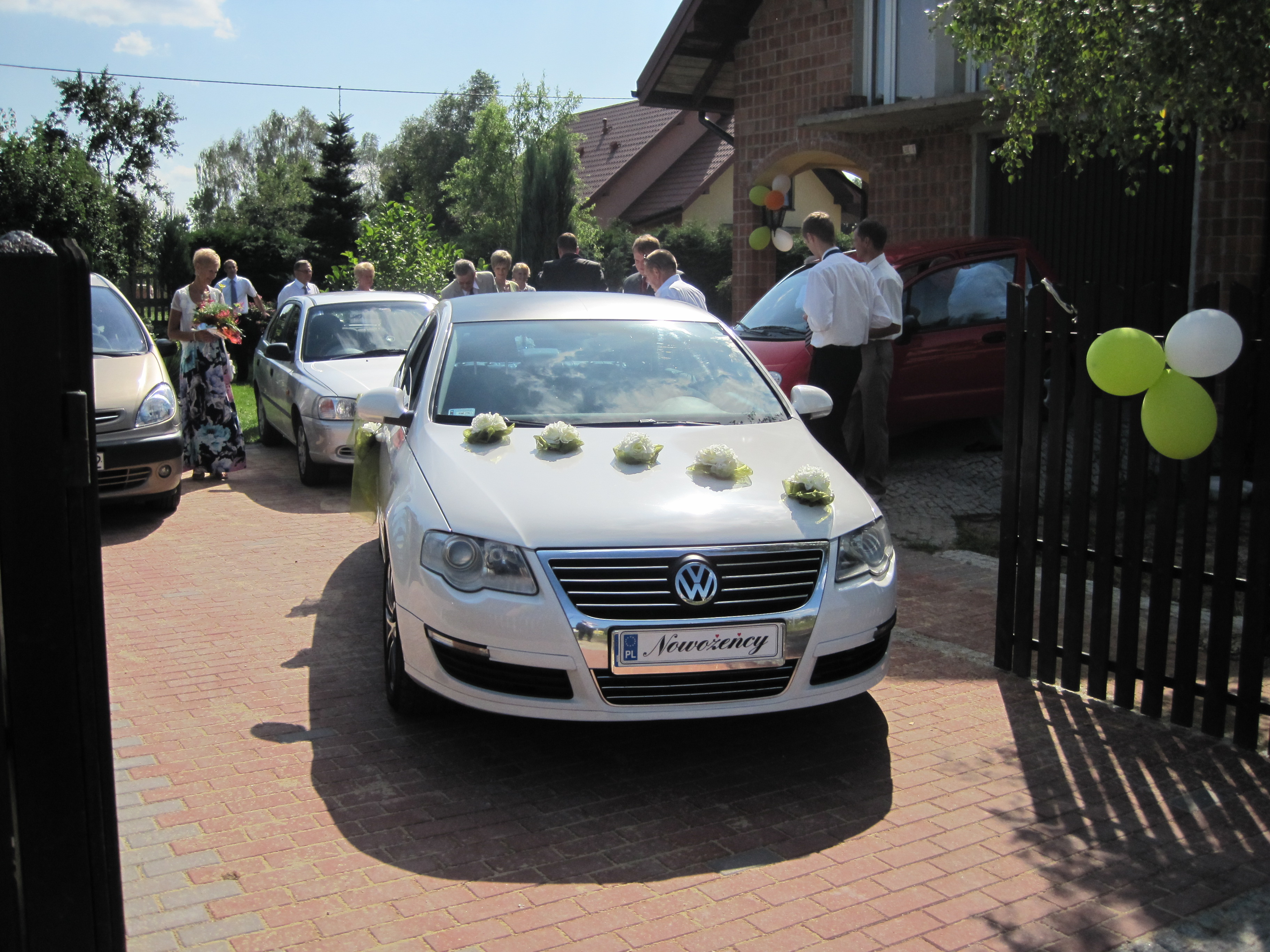
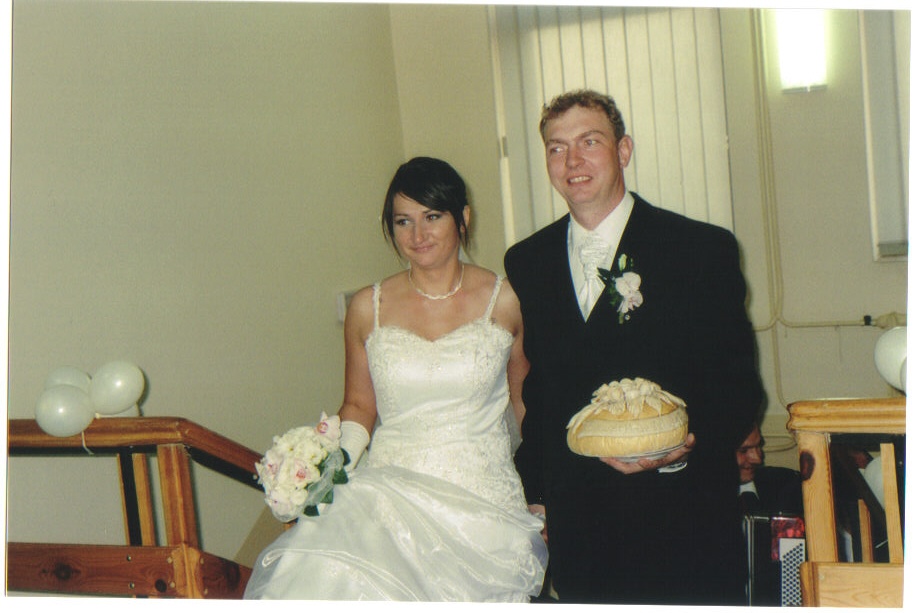
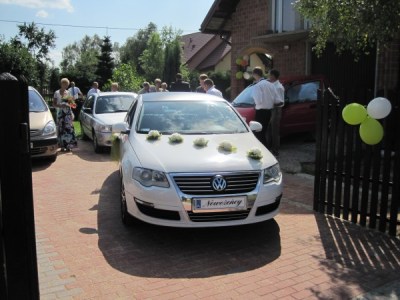
Jemy, pijemy, tanczymy-“we eat, we drink, we dance”, sums it up, and we certainly did!  A Polish wedding is a very traditional and religious occasion, both romantic and innocent in a heart-warming way.  Prior to going to church, the bride, groom and parents assemble at the bride’s home for a blessing.  Bride and groom then travel together to the church in a car adorned with paper flowers. The guests follow them in a humorous cavalcade.  Road work barricades may be set up at intervals, to be bypassed on payment of a bottle of vodka!  The guests toot car horns and heckle.
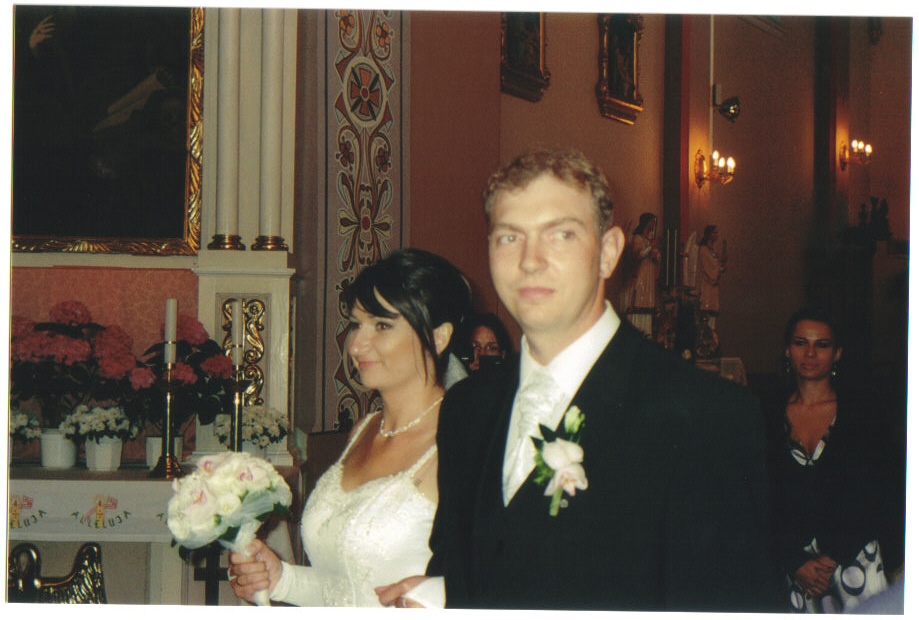
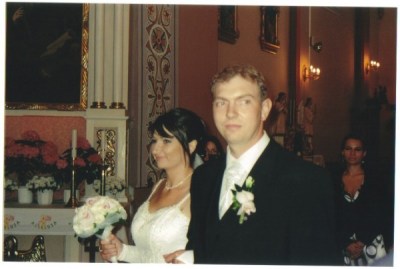
The church service, around 5pm Saturday, is a solemn and beautiful occasion.  Then, the fun starts.
At the reception, the tables groan beneath their load.  Pyramids of fruit and sweets are surrounded by savoury platters.  Cake cuddles up to the vodka.  We raise a toast and sing the traditional Sto lat– 100 years.  Comes my favourite part- the bride and groom take to the floor, at the centre of a heart made from the guests floral tributes, or perhaps candle tealights.  The guests join hands and slow dance around the room.
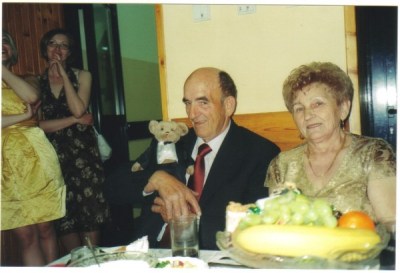
Food next, accompanied naturally by vodka, and copious quantities of fruit juices, herbata (tea) and kawa (coffee).  Laden trolleys approach and the tables are heaped with soup, then chicken, pork, fish, pasta dishes, it just keeps on coming.  At every pause in the conversation, someone proposes na zdrowie- good health, and another shot of vodka disappears.  Just as your stomach is protesting “no more”, the band strikes up and the whole room are on their feet.  A gentle polka becomes faster and faster, the room whirling past.

Several numbers later the band subsides and it’s back to the tables, where yet more food is being delivered.  The vodka bottles are replenished as soon as they are empty.  A hot beetroot drink, tasty in small quantities.   Beer for those not drinking vodka.  Not wise to mix them, but Dad has left his sensible Polish head at home.  Still he gamely gets up, walking stick in hand, when the music starts up again.  Which of the nieces to gallantly partner?  A kiss on the hand, the reward for a dance, bestowed by every Polish gentleman.
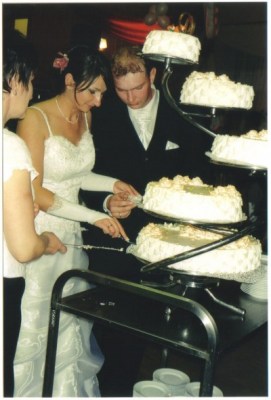
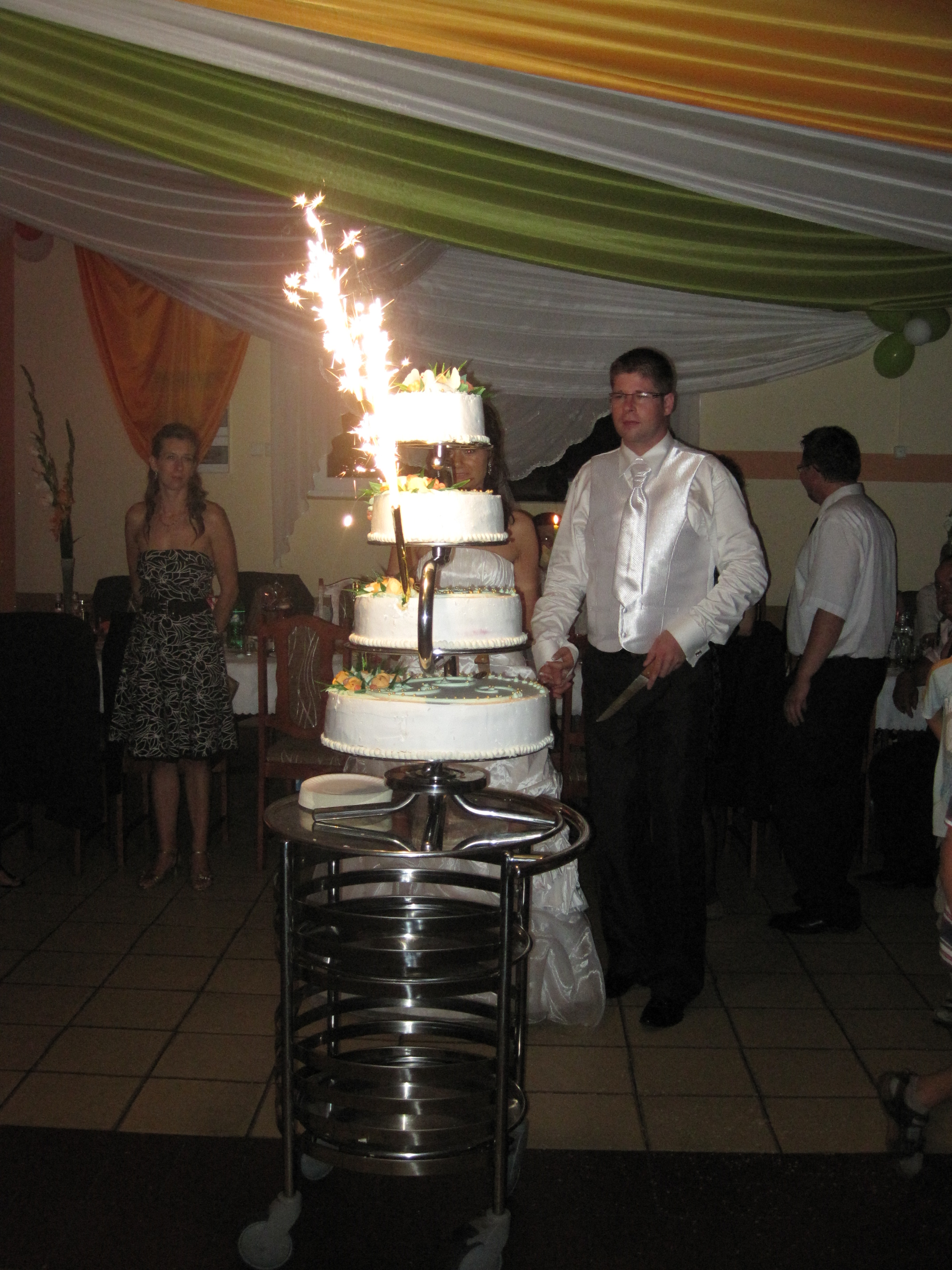
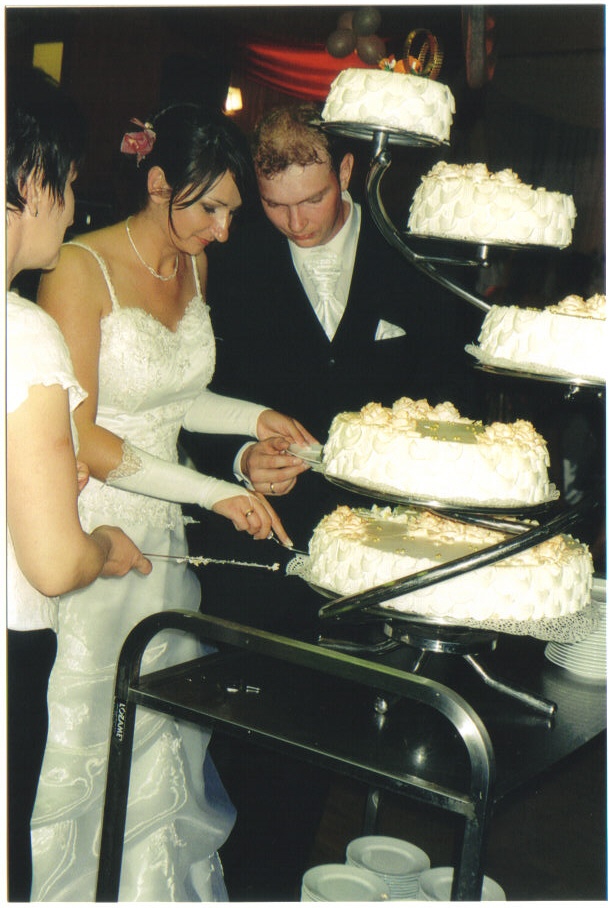
At midnight the lights are dimmed and a hush falls.  The wedding cake makes its entrance, fizzing joyfully with giant sparklers.  Oohs and aahs, then it’s distributed and eaten and we’re dancing again.  This is how the night passes by, eating, drinking, dancing, laughing and smiling.  As dawn breaks the feasting comes to an end.  But only for a little while- the party reassembles after a bit of a nap. At 4pm Sunday we’re ready to go again!

Astonishing to English eyes, the soignee, sophisticated bridal party don jeans and grab mop and buckets to clean up in readiness for the next guests, then back into the glad rags!
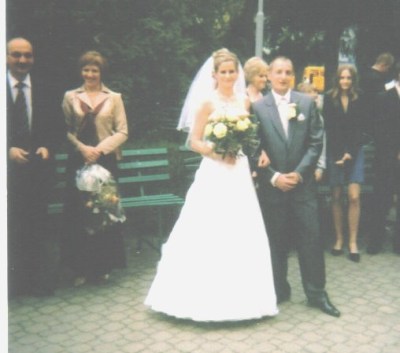
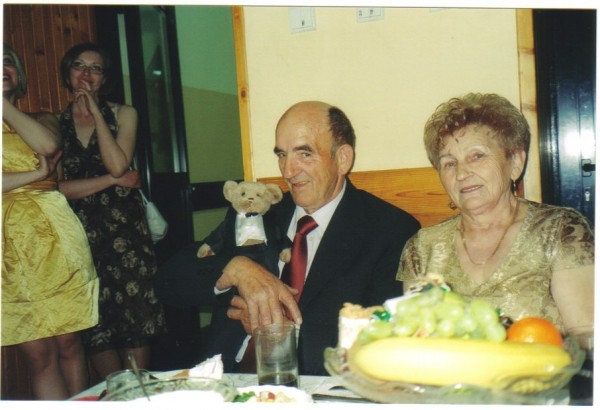
Let me introduce you to Ania, daughter of my cousin Jadwiga, and her new husband Hubert.  We had never met as they had been working in Reading to finance the wedding and a fresh start in their homeland.  None-the-less we couldn’t have been made more welcome, to the extent that the bride’s parents sacrificed their own bed for us.
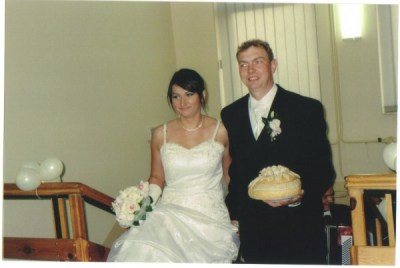
The second wedding was for my Uncle Jakub’s son Krzysztof and his partner Ilona.  We stayed with Jakub and his wife Czescia and no-one was displaced from their bed.  The wedding was at the impressive parish church at Grocholice.  Construction work had begun on the marital home- a joint effort with family contributing skills and labour according to their abilities.  Till completion they would live with Ilona’s parents.
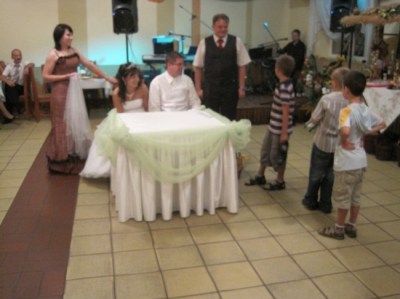
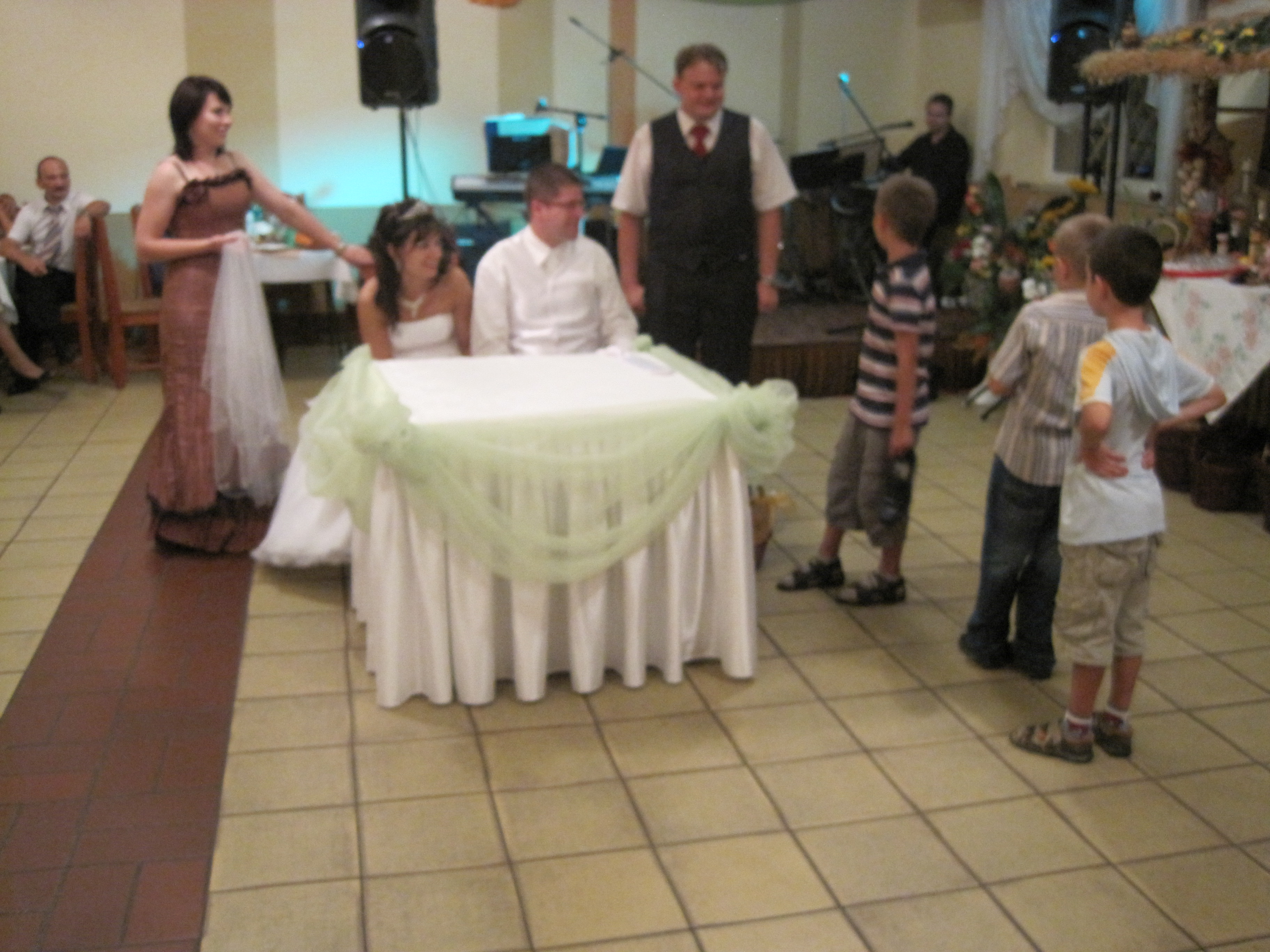
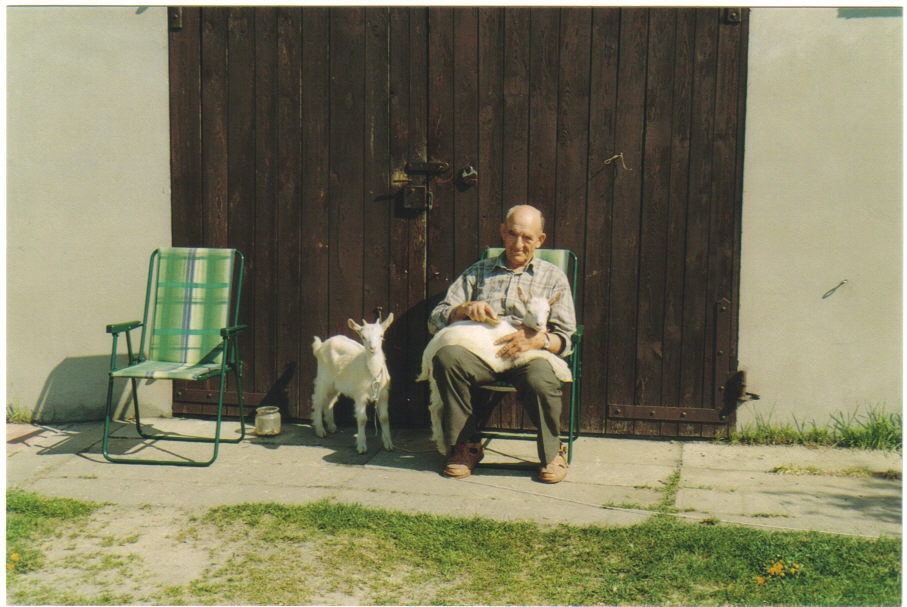
It’s obvious that stamina is a requisite for Polish weddings.  At the poprawyny (the second wedding celebration) more emphasis was placed on younger members of the family.  The odd solo was performed on stage by the least shy of the little ones.  Silly games were entered into with gusto, a favourite being a “family” version of musical chairs.  The prize was invariably vodka.  Most memorable of all was the presentation to my Uncle Jakub of two delightful baby goats.  He has a good plot of land with hens and beehives.  The kids were a huge hit with the grandchildren.
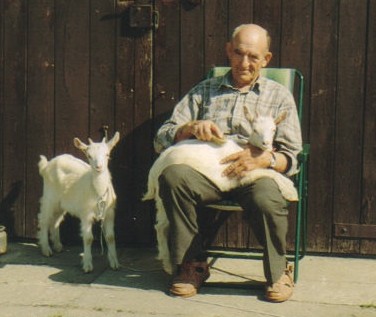
Eating, drinking and dancing continued throughout the celebrations, till my legs were turning to jelly.  Ania contrived to extend her wedding into the Monday.  I’m not sure if this was due to an excess of food or a larger than usual family.  For Krzysztof the party ended and the cleaning began after 10pm on Sunday evening.  A party and a half!

You’re thinking I can’t count, aren’t you?  It was after Ania’s wedding that it was confided to me that her younger brother, also a Krzysztof, was to marry his sweetheart Marzena the following year.  Both of them live and work in Southern England and we were delighted to be asked back to Poland the next August to take part in a third wonderful Polish wedding.
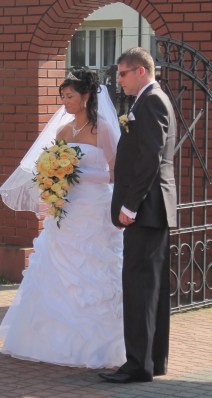
Since then, babies have been born.  But that’s a different tale altogether.

Exploring the Polish Connection

It’s a strange thing.  In the habit of writing travel guides, I hadn’t really got my head round the idea of blogging when I started here.  The freedom to write about anything….well, it’s kind of mind boggling more than blogging!

It occurred to me that I should be sharing the Polish saga.  I’ve often been asked when I’m going to write the story of Dad’s life.  I’ve shied away from it a bit.  I don’t want to offend or misrepresent anyone, and there’s such a huge cast of characters.  Still, it’s the kind of story that when you tell it to someone, you invariably have an “isn’t that amazing?” response.  So, here is the abridged version.

Dad and Jakub

At the age of 15 Dad was rounded up from the family farm at Zawady, a small village south of Łódź in Central Poland, and “escorted” by the Germans to work on the land in their country.  At 79, it had taken Dad 64 years to be reunited with his family.  As the war faltered to an end, Dad and a fellow worker turned their backs on Germany and walked many, many miles to freedom in France.  Joining the armed forces, Dad eventually ended up in Coventry, where he met and married my mum.

Links with home continued, and I remember a tin box of letters and photographs.  I never learnt Polish as Dad was focused on integrating with the North East England community of Hartlepool, my mother’s birthplace.  How I regret this now!

I don’t really know how it came about, but gradually the communications home ceased.  The Communists were in control in Poland, and must have been instrumental in disrupting the flow of letters.  The family were scattered.  Dad came to believe that he was the only survivor of 9 brothers and sisters.  If only he’d known!

One January Friday night, 13 years ago, I returned home from a “Girl’s night” to find that Dad had phoned.  I wasn’t to worry but I should phone him back as soon as possible.  He could barely speak to me for excitement!  He had received a phone call from Poland on behalf of his sister Anna.  She wanted to speak to him urgently to confirm that he was her long lost older brother.  A link had been established via the internet.

There began the strangest but most wonderful phase in our lives.  Overnight I went from having one Polish parent to having 2 new aunts, 2 new uncles and 26 Polish cousins, with their husbands, wives and children!  Emails in halting English went back and forwards and arrangements were made for a reunion. The excitement was immeasurable, but mixed with anxiety on my part.  What would they make of me and how would I communicate?  A crash course in Polish seemed called for.

My cousin Adam owns a bakery business in Krakow, and it was through him that all arrangements were made.  Though not speaking English himself, this warm-hearted and generous man was determined that we should meet and finally know our Polish family.  Our visit was planned with military precision to enable us to spend time with as many family members as was possible.  On this first occasion I had but 5 days begged from my employer.  Dad, of course, stayed longer, with a lifetime’s absence to make up for.

Stepping out at Krakow airport was one of the most emotional occasions I can ever remember.  Among tearful hugs and kisses I mumbled “Bardzo mi milo”, a shortened version of “pleased to meet you”, which was the only bit of Polish I could summon.  TV cameras followed our progress and my Aunt Anna calmly told the world that she had always known that her brother Aleksander was alive somewhere.  If he had been deceased she would have felt his spirit- Polish people in the main are deeply religious.  Anna was in poor health, but had lived for this moment.

What followed was to become a sequence of wonderful memories:- a stroll together in weak April sunshine through Krakow’s stunning Rynek Glowny (main square), Anna’s arm tucked through mine; a meal in the sumptuous surroundings of historic Wierzynek Hotel;
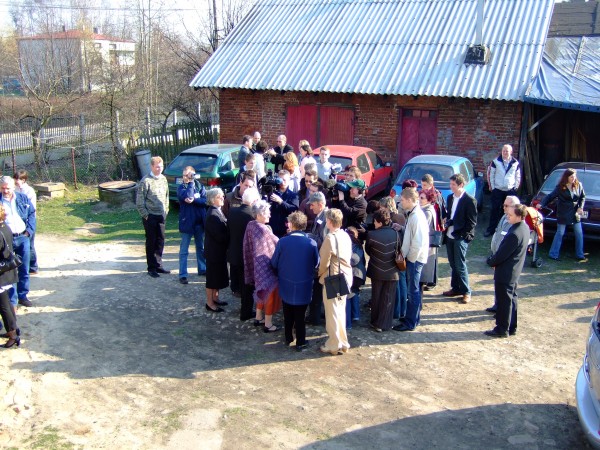
but surely, best of all, the moment when we arrived at Dad’s old farmhouse home.  As we pulled through the gates into the farmyard, Adam blared his horn and a sea of family surged forward to greet us, many wearing name badges, for we had no hope of remembering them all.

Flowers were pressed into my arms with shy smiles as the introductions were made: Aunt Lusia and her family; my Uncle Jakub, 15 years younger and born after Dad left home so that this was their first ever meeting; Lodzia, the wife of my Uncle Zygmunt, nearest to my Dad in age and who tragically had died just weeks before- she now ran the farm with the help of her sons.

Then the many, many cousins and their children.  These unfortunates were pushed forwards if they had even a hint of English, to engage me in conversation and an endless round of questions. Uncle Wlodek, living on the German border, had been unable to make the trip, but his son Wojtek, wife and children were there.

Dad, meanwhile, had recovered his native tongue as if by magic, and was gamely tackling the introductions head on.  Anyone who knows the Polish people will know what comes next.  Huge quantities of food and not a little vodka were consumed.  It would have been impolite to refuse so in the following days, as we were passed from one home to the next, we ate and we ate and we ate!  I realised where Dad’s sweet tooth came from as we sampled every variety of delicious cake, often before sitting down to a full meal.

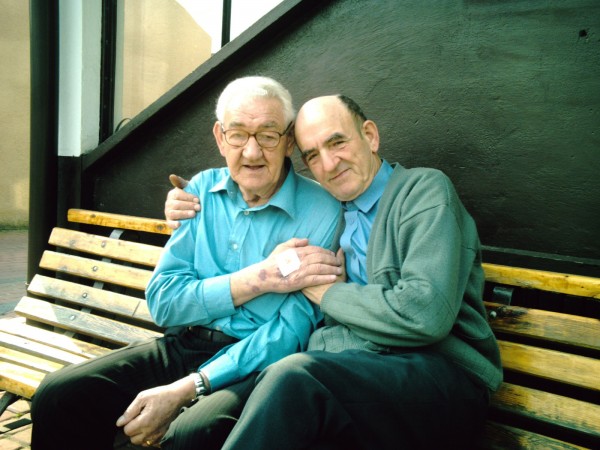
And that’s where it all started.  Sadly my Aunt Anna, seen here with Dad and her son Adam, died on 25.11.09. We made numerous trips before and since then, and I have so many wonderful memories.  Dad died in October 2017, but my Polish legacy and the connections we made live on.

Sunshine on the water

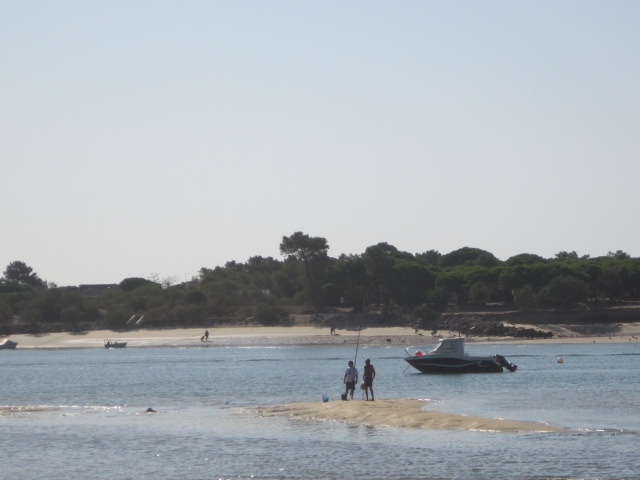
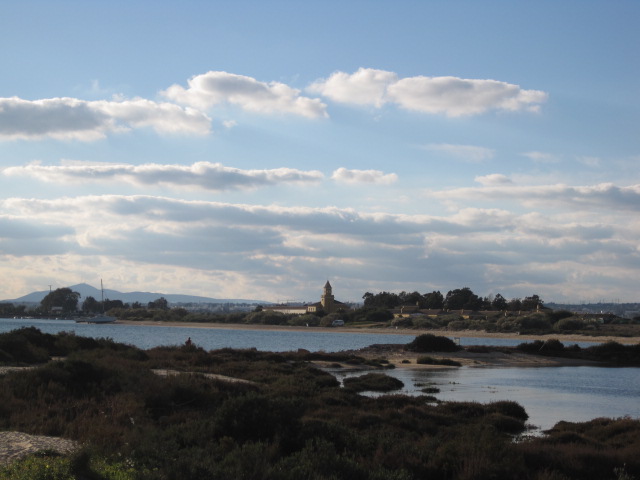
I’m not much of a sailor but I truly love the sea.  That glint of sunshine on water always lifts my spirits, and calls to mind that old John Denver song.  A warm mid-October day finds me strolling on the Eastern Algarve beach of Ilha Tavira.

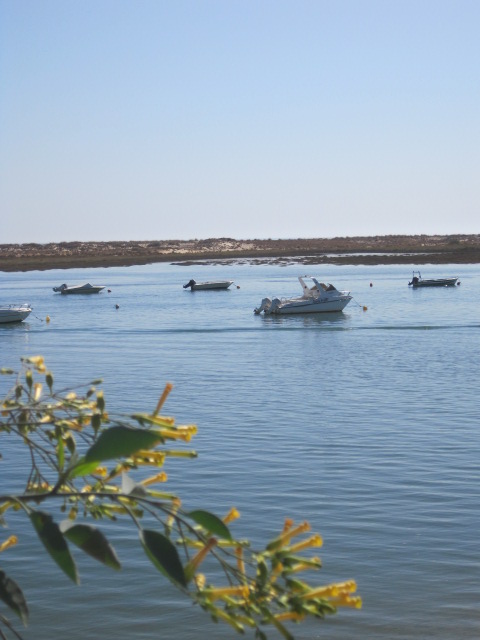
The ferry had carried us out from Quatro Aguas, the meeting point of river and the salt water channels of the Ria Formosa.  Sailing boats bobbed alongside, trying to pick up a breeze on the silky calm water.

In the salt pans flamingos still lingered, not yet needing to head south for the winter.  As we cross over the island beneath fragrant pines, the warm breeze rushes to greet us.

Michael spreads a towel.  I wander from beach to shallows, slowly following the sand martins as they dart industriously about.  The retreating tide wriggles and squirms backwards.  Tiny pinpricks in the sand indicate where small sea creatures lurk, clinging on for dear life.  Portuguese fisher folk are only too keen to wrest them from their homes.

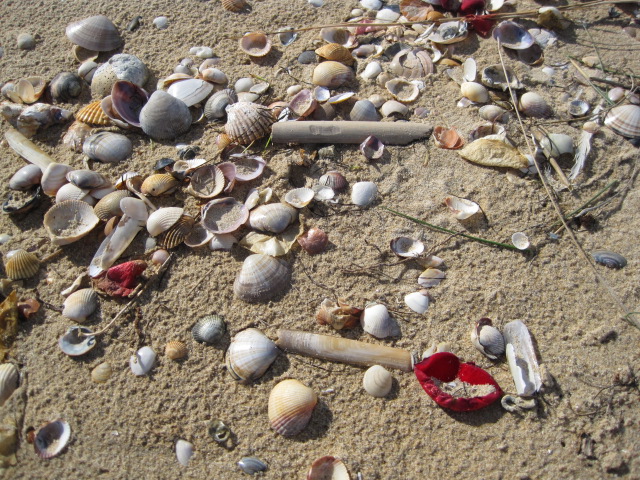
A lady nearby collects shells.  “Gorgeous, aren’t they?” I ask.  “Yes, I’m going to make them into a necklace”.  A magical idea for an enduring souvenir.  Perhaps I could try?  I like to think I have an “eye” but I’m really not good with my hands.

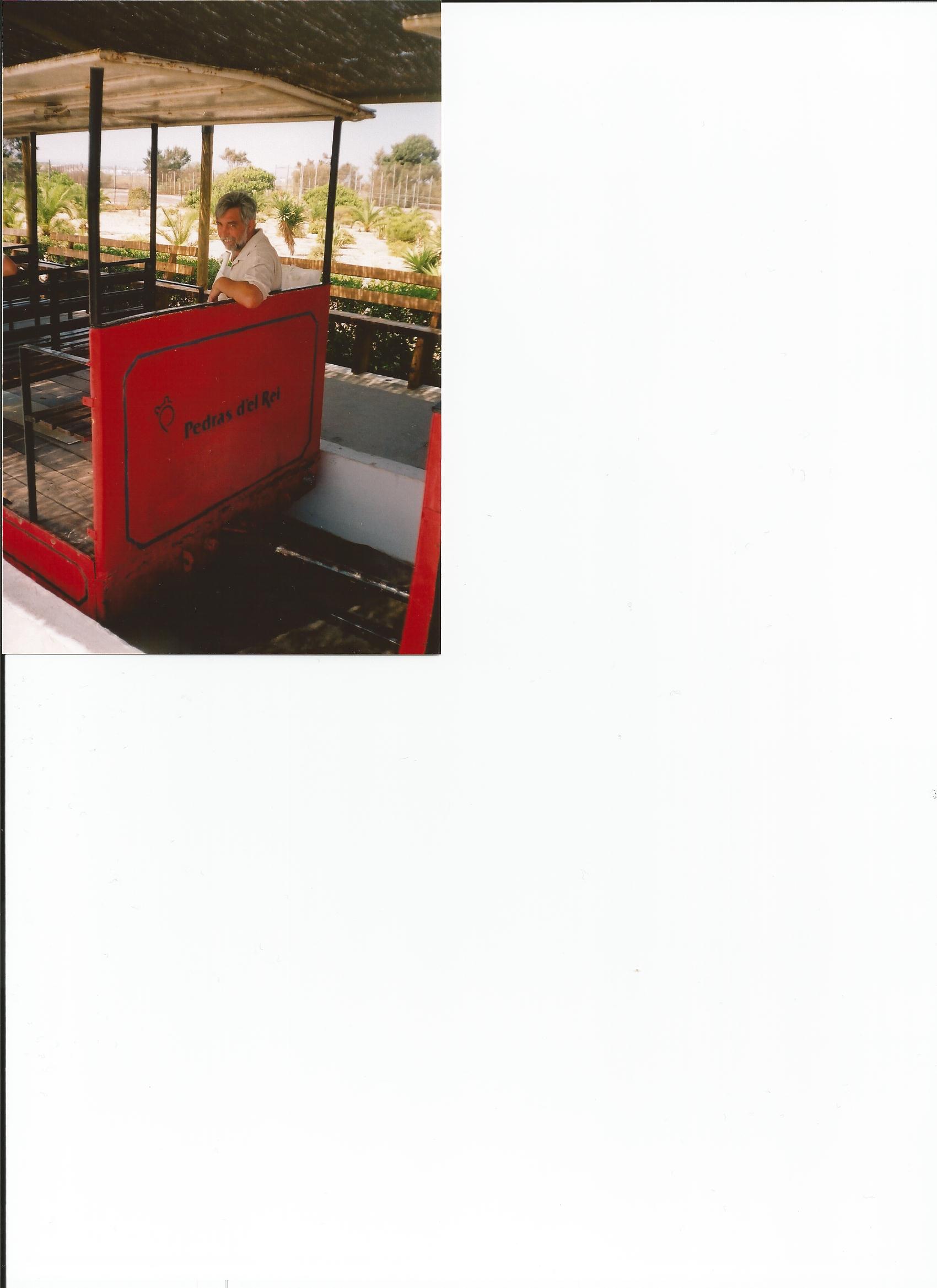
Train at Barril

Two days later we have crossed to the island from Barril, using the land train that always makes my husband smile.  The same sea, a different day- urgent waves slapping the shore.

A Dutch family launch themselves with huge delight into the bubbling foam.  All along the beach, castles and sea defences tumble, childish faces both captivated and dismayed at the rampant destruction.   Adults just stand and gaze at this awesome display of power.

Looking inland hazy blue hills rise gently to the heights of Monchique.

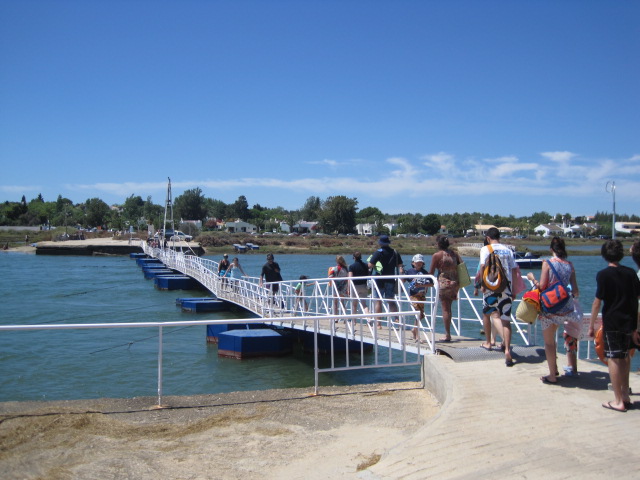
Another ferry, small and bustling this time, takes us from the smart new boardwalk at Cabanas across the lagoon to another impeccable stretch of beach.  Hot today and calm enough to lay at the water’s edge as it laps over you.

How can so much beauty be contained within a few short miles?  The images play over and over again in my mind.

Obidos – chocolate cups and pure theatre!

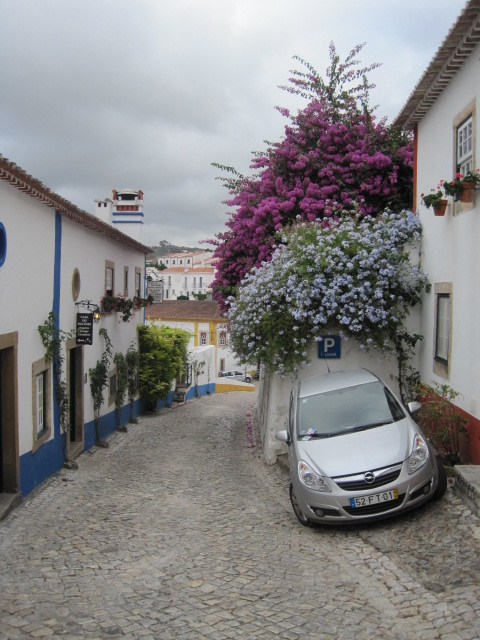
There can be few settings better suited to a Medieval Fair than Obidos- a charismatic walled town, suspended in Central Portugal in a seeming time warp.  Given to his bride Isabel as a wedding present by King Dinis in 1282, this is one very special small town. 

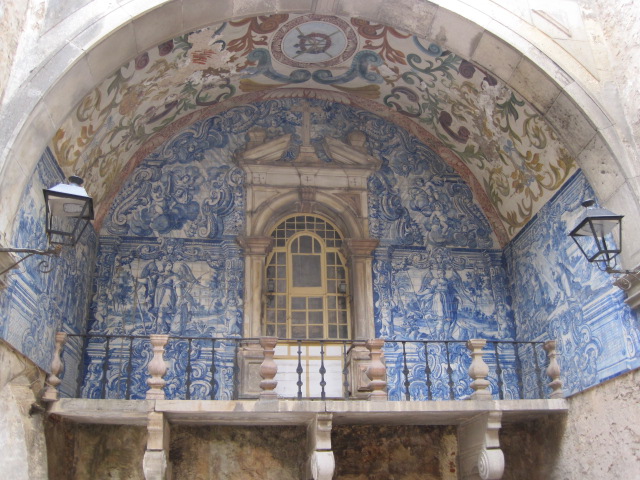
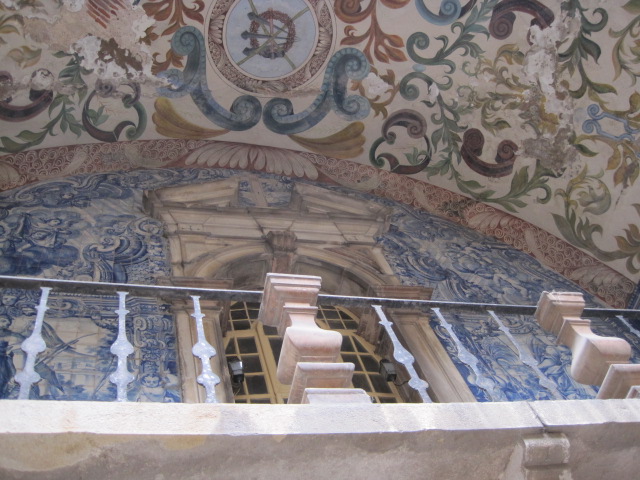
Porta da Vila

Porta da Vila

Passing under the Porta da Vila, the main gate, your eye is drawn upwards to a balcony nestled beneath an arch full of azulejos.  These characteristic blue and white tiles are seen everywhere in Portugal, though rarely to better effect.

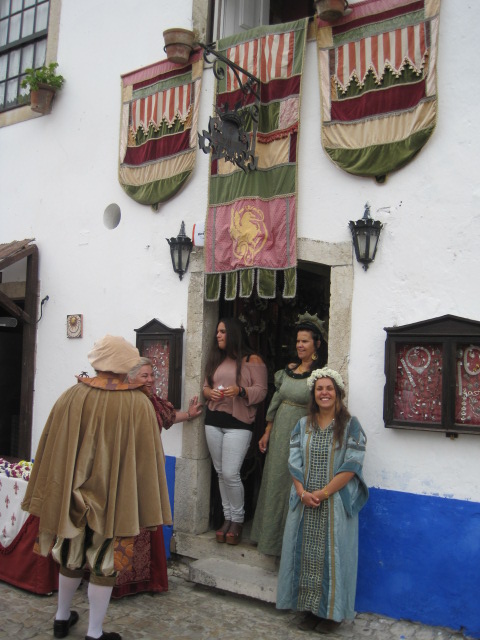
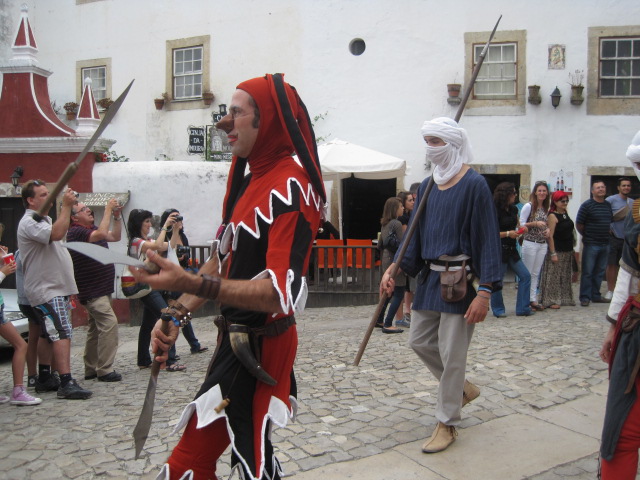
I had great expectations for my visit but was quite unprepared for what transpired. I was enchanted and completely drawn into the atmosphere of the place.  It came as no surprise that maidens with floral crowns wandered the streets, nor that tabards and hose adorned a majority of males.

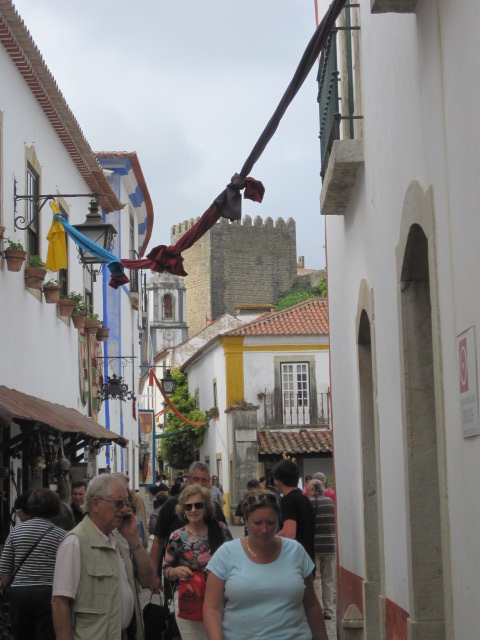
Banners overhead knitted the narrow streets together.  Tiny shops beckoned and beguiled.  

By the castle walls a booth had been erected. The realisation dawned that I had walked into a  Medieval Fair!  7 euros could buy admission to an evening of entertainment, inside the Castelo, from 5pm till midnight.  According to the programme, there was a parade at 6pm.  Much jingling of horses and good natured banter preceded it.

Finally a disdainful looking knight on horseback wheeled around, summoning his minions.  A flare of trumpets and the steady beat of drums and they were off. The hunting dogs looked regal. A juggler and jester entertained.  Threading through the narrow streets they circled the town, pausing frequently to engage with their audience.

Around the castle, barbecues and food stalls smoked and sizzled. The lights came up as day faded into warm evening.  The castle stood tall behind the courtyard.

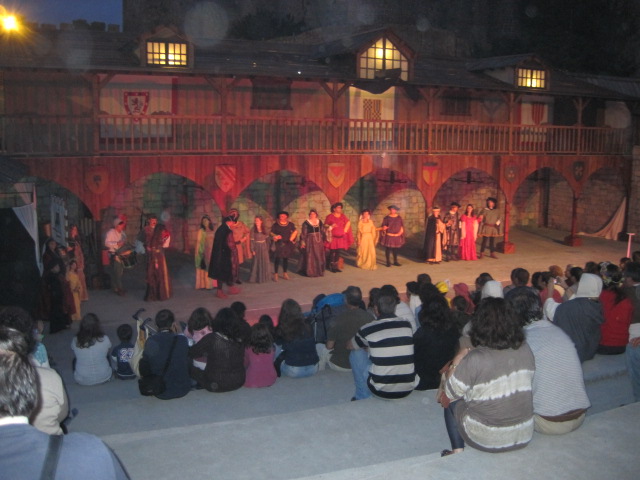
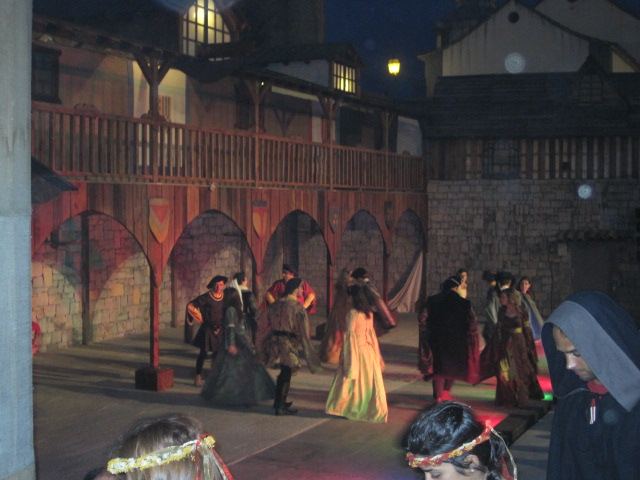
Courtly dancers took to the stage, bowing and dipping to medieval strains. There was Falconry and Jousting.  Periodically the drummers leapt in to heighten the atmosphere with their furious thrumming.  But unquestionably the star of the show was our jester friend, “the fool”, with an hour or more of silliness and audience involvement.  A Portuguese Tommy Cooper, he transcended language, holding the crowd in the palm of his hand.  My sides were aching at his antics.  Midnight came all too soon.

A sweet treat- Ginja d’Obidos Still absorbing sights and sound, it was time to return to the hotel.  I planned on a chocolate treat to round off the evening.  At intervals along Rua Direita, small counters were set up.  On each, delicate, diminutive cups of chocolate awaited the cherry brandy liqueur known as Ginja d’Obidos.  First you drink the liqueur, then you eat the chocolate cup.  Inspiration!

And finally…

Casa de Relogio

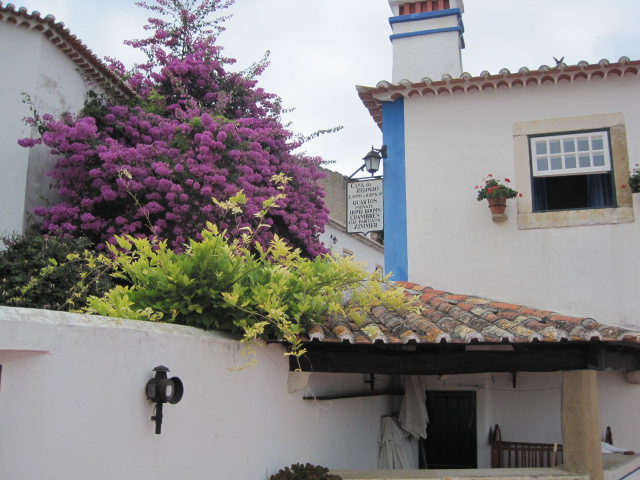
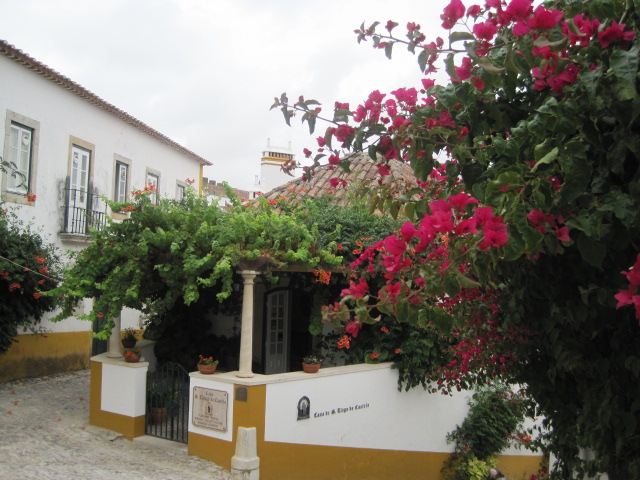
I stayed at the Casa de Relogio, just outside of the town walls, and was made warmly welcome by the owner.  Our hire car was parked on a postage stamp of space outside our bedroom window. (Rua de Graca, Obidos 2510-999)The towns architecture is quirky and interesting. On a fine day you can walk around the ancient walls, peering down or off to the horizon.

I can highly recommend the restaurant O Conquistador.  The  warm bread and cheese to start was exceptional and I loved my lombo do porco no forno with rice, peas and wonderful roast chestnuts.  The javali (wild boar) also got the thumbs up, and the scrumptious house red was served in earthenware mugs. (Rua Josefa d’Obidos tel. 262 959 528)

The Medieval Fair takes place in July.  Another highlight of the town’s year is the Chocolate Festival in March.  Both children and adults can take part in culinary adventures with chocolate, feast upon chocolate and cakes, and wonder at the remarkable display of chocolate sculptures.

Whenever you choose to visit, I think you’ll find that Obidos has a magic all it’s own.

Torture in Teesdale

This slideshow requires JavaScript.

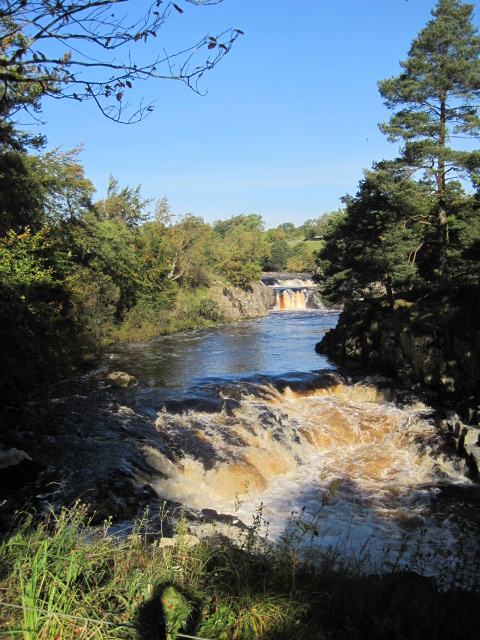
I loathed and detested our walk leader as he dragged us ever further up the soggy uneven hill, determined to find the summit. Glad I stayed with him though, as what followed was memorable- views over little known Lunedale and Grassholme Reservoir. The legs were seriously tired as we trekked back to the car alongside the gurgling energised River Tees.